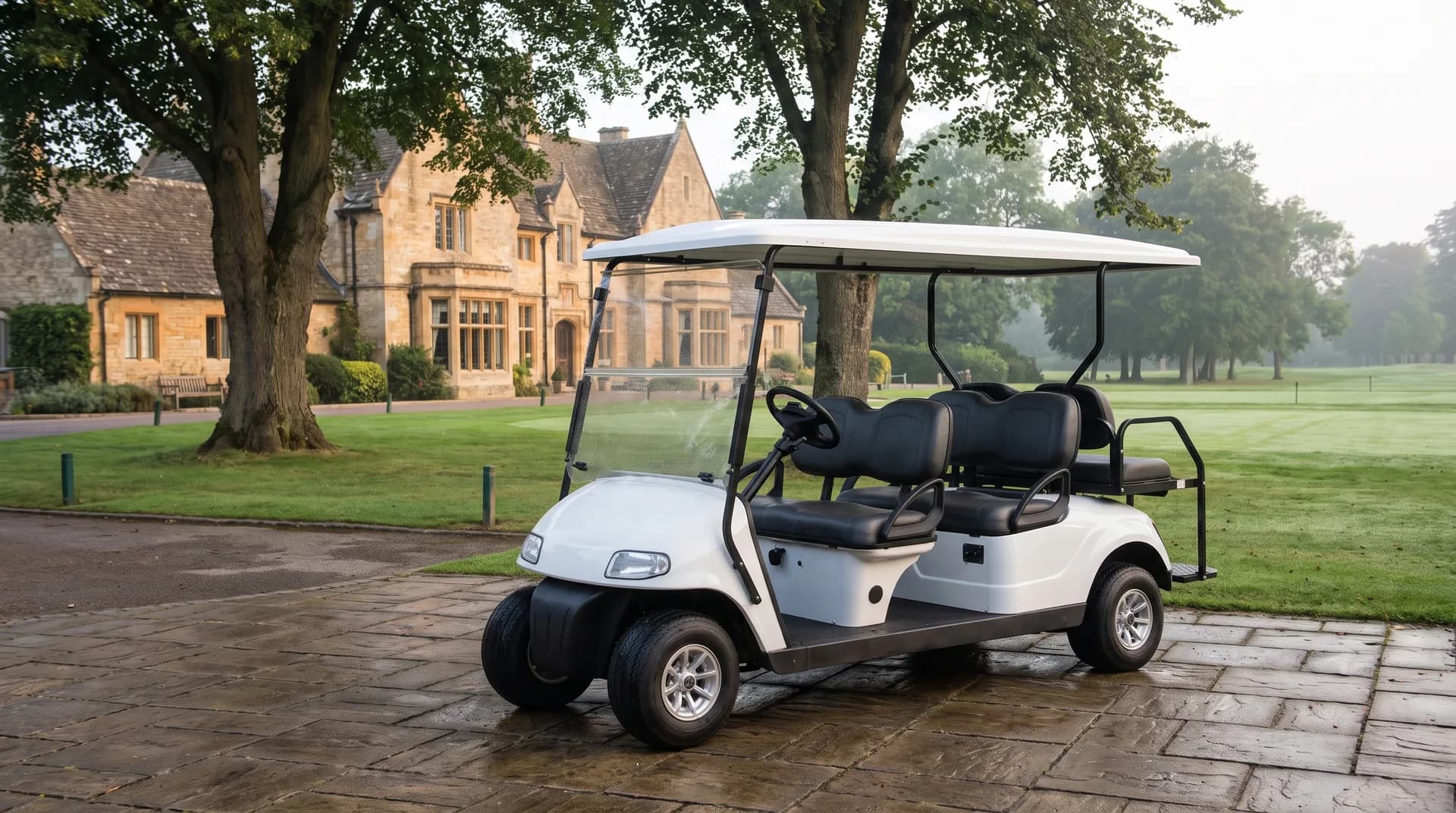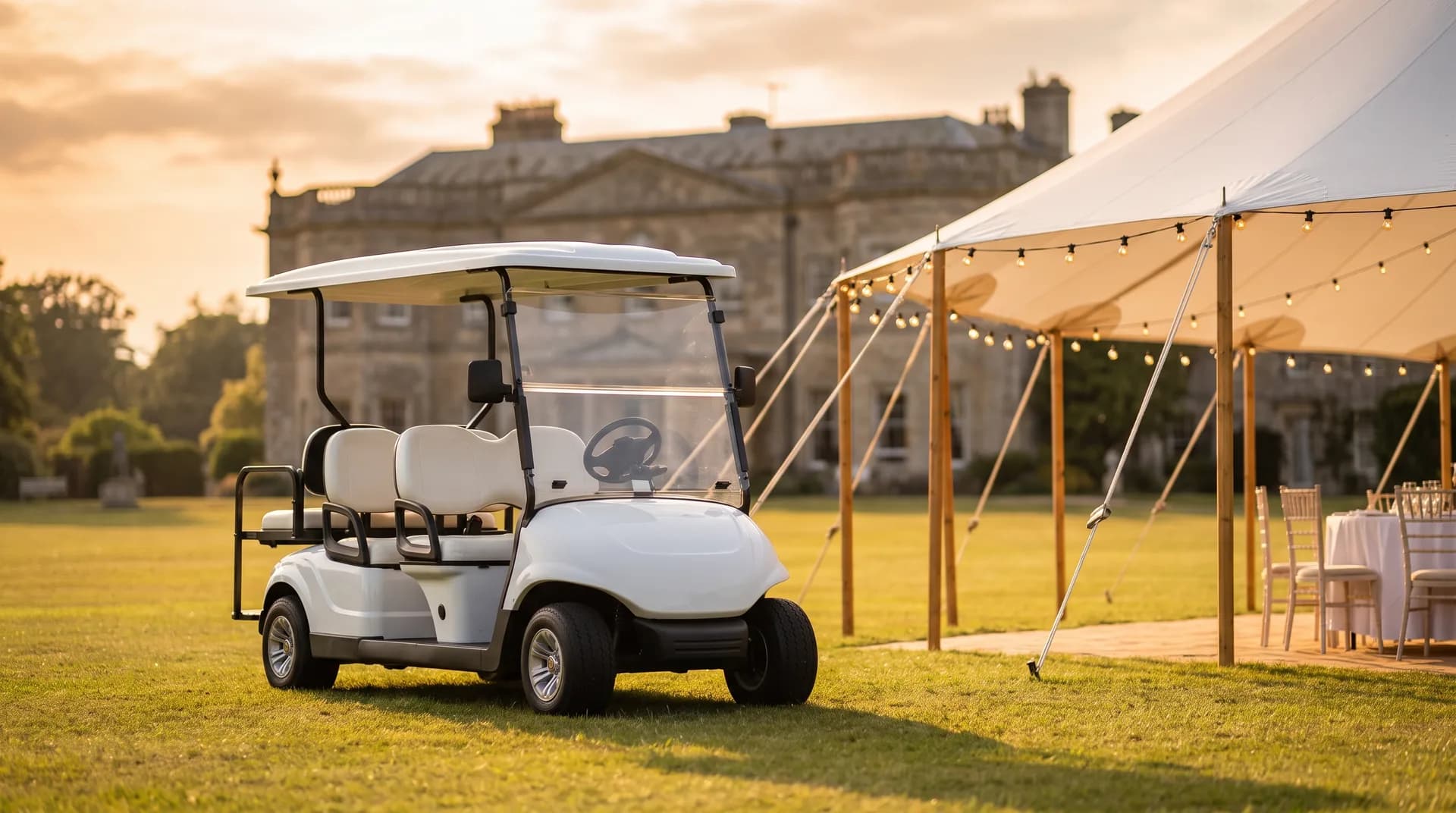
The short version: buy the six-seater if your typical load is four or five people and your site has gates, tight turns or storage limits; buy the eight-seater if you genuinely and regularly move six or more people and your routes are wide enough to let the longer machine work. At starting prices the decision is worth around £4,600, £18,900 for our S6 against £23,500 for our S8, and the wrong choice costs you either capacity you needed or length and money you did not. This guide puts the 6 seater vs 8 seater golf buggy question head to head on price, footprint, turning, storage and typical duties, and covers the option many buyers overlook: two smaller buggies instead of one big one.
- Starting prices: six-seater from £18,900, eight-seater from £23,500, a gap of around £4,600.
- Buy for your typical load, not your maximum: a machine that runs half-empty every day is wasted length and battery.
- The eight-seater's extra length shows up in turning circles, gateways and shed space, walk your tightest route before deciding.
- Six-seaters are the flexible middle: big enough for most guest and staff duties, small enough for estate paths.
- If your demand comes in twos and threes rather than sixes and eights, two four-seaters can beat either.
6 seater vs 8 seater golf buggy: the short answer
Count the people on your typical run, not your busiest day of the year. If the answer is four or five, the six-seater carries them with a seat spare, costs less to buy and run, and fits places the eight-seater will not. If the answer is genuinely six or more, most days, the eight-seater earns its length: one driver moves a whole party in one trip instead of two, which halves driver time and doubles throughput on a shuttle loop. Buyers who size for the occasional peak usually regret it; a buggy that runs half-empty is dead length, dead battery and dead capital. Our size chooser guide covers the full ladder if you are not yet sure you need six seats at all.
Price, footprint and turning: the practical gaps
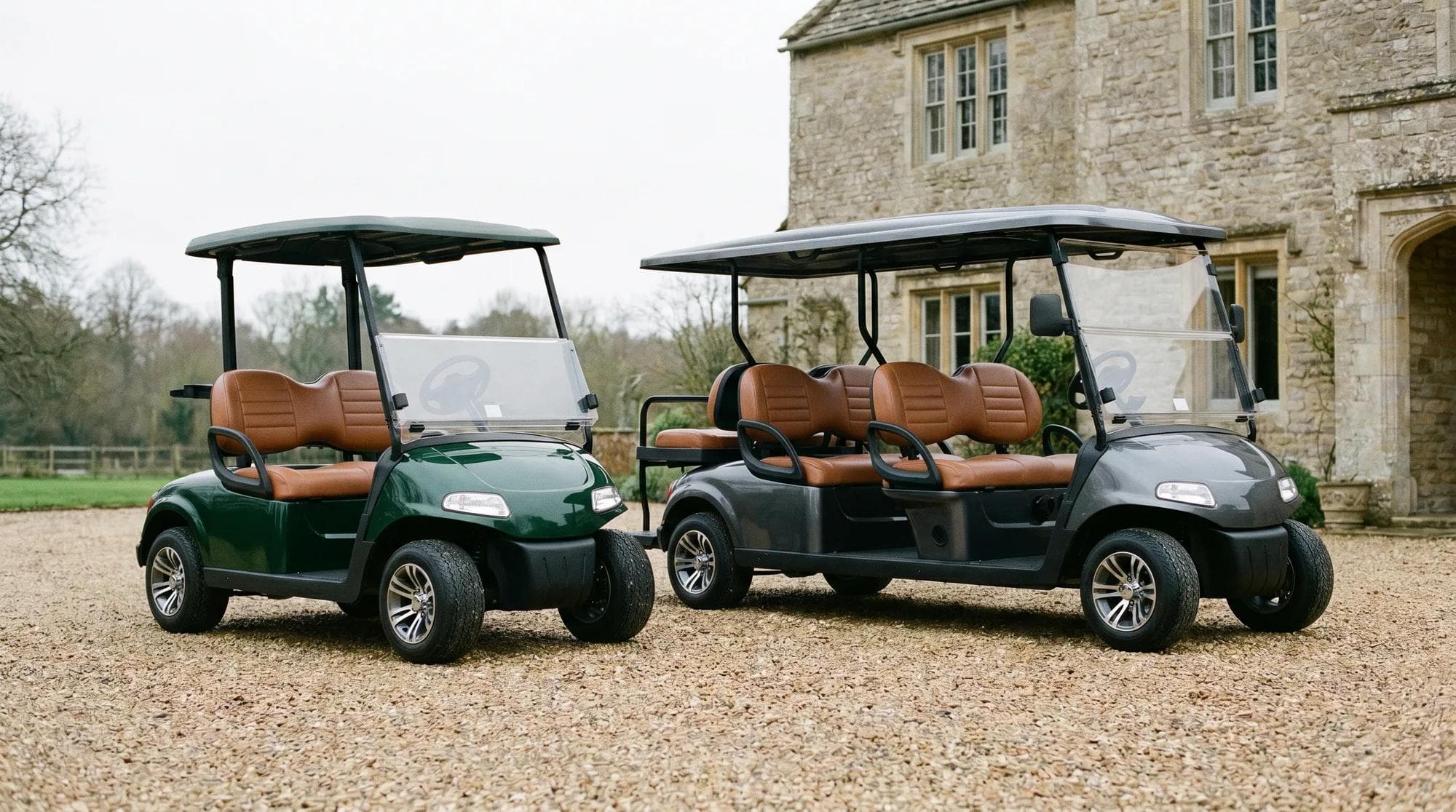
The £4,600 gap at starting prices, £18,900 against £23,500, is only the first difference. The eight-seater is a meaningfully longer vehicle: an extra seating row adds length that you will feel in every three-point turn, gateway, courtyard and storage bay. Turning circle grows with wheelbase, so paths that a six-seater sweeps around may force the eight-seater into shunts, and a shed that swallows one may not close its door on the other. Running costs move the same way: more mass means more battery per mile, and a bigger pack to replace at end of life. None of this is a criticism of the larger machine, it is simply the cost of the extra two seats, and it is only worth paying if those seats are filled. Measure your tightest gate and your storage before you order either.
- S6 six-seater
- From £18,900
- S8 eight-seater
- From £23,500
- S6 six-seater
- Four to six people
- S8 eight-seater
- Six to eight people
- S6 six-seater
- Shorter, tighter turning, fits more gates
- S8 eight-seater
- Longer, wider turns, needs wider routes
- S6 six-seater
- Fits most large sheds and containers
- S8 eight-seater
- Measure first, needs a longer bay
- S6 six-seater
- Estate tours, hotel guests, staff runs
- S8 eight-seater
- Shuttle loops, events, airport-style flows
- S6 six-seater
- Loads vary and routes are tight
- S8 eight-seater
- Loads are consistently large and routes are wide
| S6 six-seater | S8 eight-seater | |
|---|---|---|
| Starting price | From £18,900 | From £23,500 |
| Typical load | Four to six people | Six to eight people |
| Footprint and turning | Shorter, tighter turning, fits more gates | Longer, wider turns, needs wider routes |
| Storage | Fits most large sheds and containers | Measure first, needs a longer bay |
| Typical duties | Estate tours, hotel guests, staff runs | Shuttle loops, events, airport-style flows |
| Best when | Loads vary and routes are tight | Loads are consistently large and routes are wide |
Typical duties: where each machine earns its keep
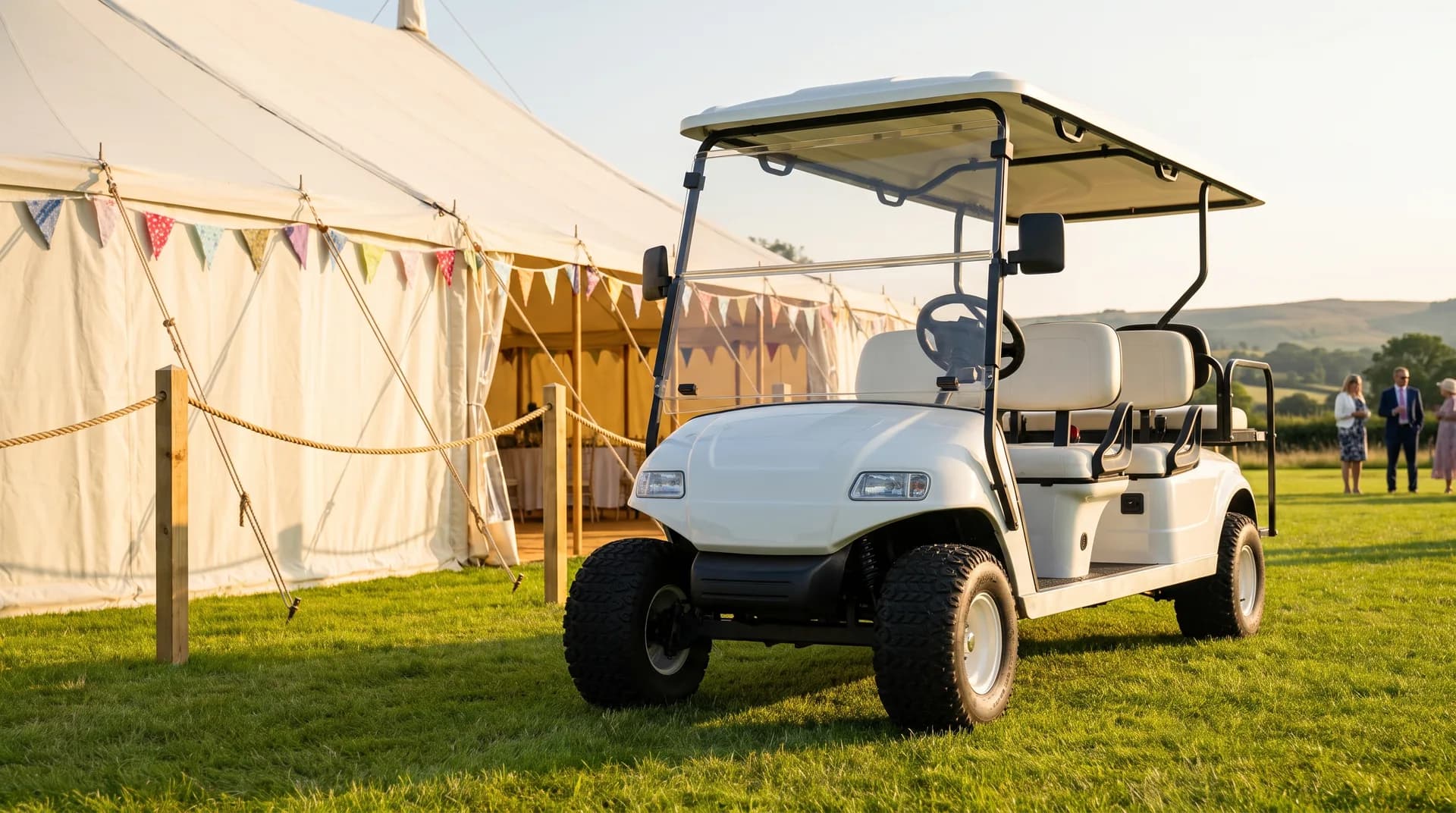
Six-seaters are the utility players. Hotels and wedding venues use them for guest arrivals, estates for tours and staff movement, golf clubs for greenkeeping teams, and they remain small enough for garden paths and courtyard turns. Eight-seaters are throughput machines: car park to entrance shuttles, festival and event loops, campus and resort runs, anywhere the job is moving the maximum number of people per driver per hour on a known, wide route. That is why the eight-seater shines at events, and why, if your need is a handful of event days rather than daily service, hiring one is usually smarter than buying, as our event hire guide explains. Browse the six-seater and eight-seater ranges to compare specifications side by side.
When two 4-seaters beat one 8-seater
Here is the option the head-to-head framing hides. Two four-seaters cost from £29,800 against the eight-seater's £23,500, so the single machine is cheaper to buy, but the pair gives you things no single buggy can: two independent vehicles running two routes at once, service in twos and threes without wasted seats, cover when one machine is charging or being serviced, and a fleet that fits through every gate on the site. If your demand arrives as couples and small groups rather than full parties, if your site has pinch points, or if a breakdown on your only people-mover would stop the operation, the pair is often the better buy despite the higher total. The honest test: watch how your people actually travel for a week, then buy the shape of that demand.
Making the call for your site
Decide in this order. First, typical load: the number you move on an ordinary day, not the August bank holiday peak. Second, route: walk the tightest gate, turn and slope the buggy must handle, with a tape measure. Third, storage and charging: where it sleeps and plugs in overnight. Fourth, failure tolerance: whether the operation stops if one machine does. If those four answers point the same way, the choice is made; if they conflict, the six-seater or a pair of smaller machines is usually the safer error than an eight-seater that does not fit. Pricing for both sizes is quote-based on specification, and our 6-seater price guide covers that machine's numbers in more depth.
Frequently asked questions
What is the price difference between a 6-seater and an 8-seater?+
At starting prices, around £4,600: our S6 begins at £18,900 and our S8 at £23,500. Specification, battery chemistry and fleet quantity move both figures, so the gap on a real quote depends on how each is built.
Is an 8-seater harder to drive and store?+
It is a longer vehicle with a wider turning circle, so tight gateways, courtyards and sheds that suit a six-seater may not suit it. It is no harder to drive on open routes, but walk your tightest path and measure your storage before ordering one.
Which size is better for a hotel or venue?+
For guest arrivals and varied daily duties, the six-seater's flexibility usually wins. For a fixed shuttle loop moving large parties, car park to entrance, gate to venue, the eight-seater's throughput per driver is the advantage.
When do two 4-seaters make more sense than one 8-seater?+
When demand arrives in small groups, when the site has tight pinch points, or when you cannot afford the operation to stop if a single machine is charging or in for service. The pair costs more, from £29,800 together, but covers more situations.
Should I buy or hire an 8-seater for events?+
If it would work fewer than roughly ten to fifteen days a year, hire. You pay only for the days used with delivery and support included, and carry no storage or battery burden between events. Daily or weekly duty is when buying pays.
Get a straight answer on size
Tell us your typical load, your tightest route and where the buggy sleeps, and we will recommend six seats, eight, or a pair of smaller machines, and price it honestly.
Related solutions
Ready to explore what we build?
See the vehicles and the setting this applies to, or get a tailored quote built around your site.
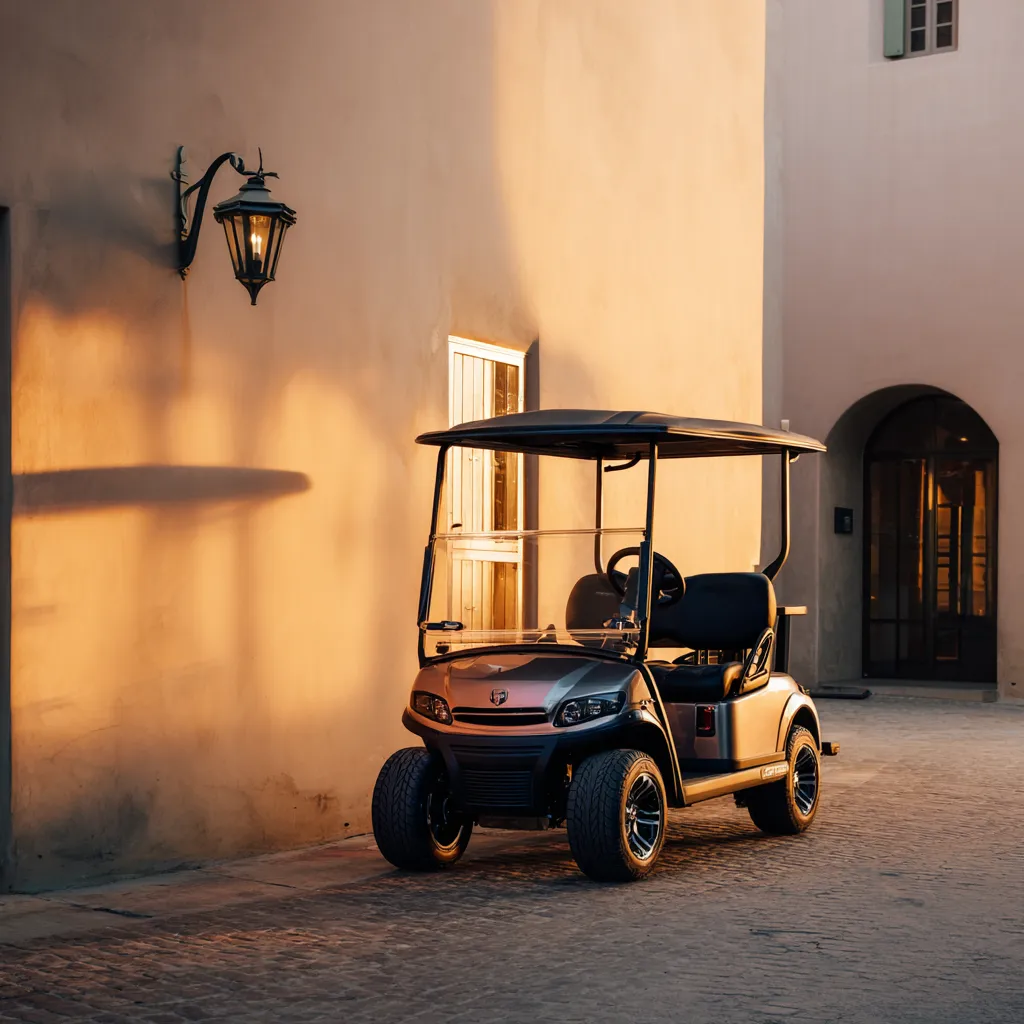
Ready to find the right buggy?
Tell us how and where it will work and we will specify a vehicle and a tailored quote built around you. Every build comes with a 3-year warranty and a 24-hour priority call-out.
Our guides are written and reviewed by the Hawke Electric Vehicles team, the people who specify, build, deliver and support the vehicles. We focus on honest, practical advice and flag where a figure depends on the build rather than guessing.
More guides by Hawke