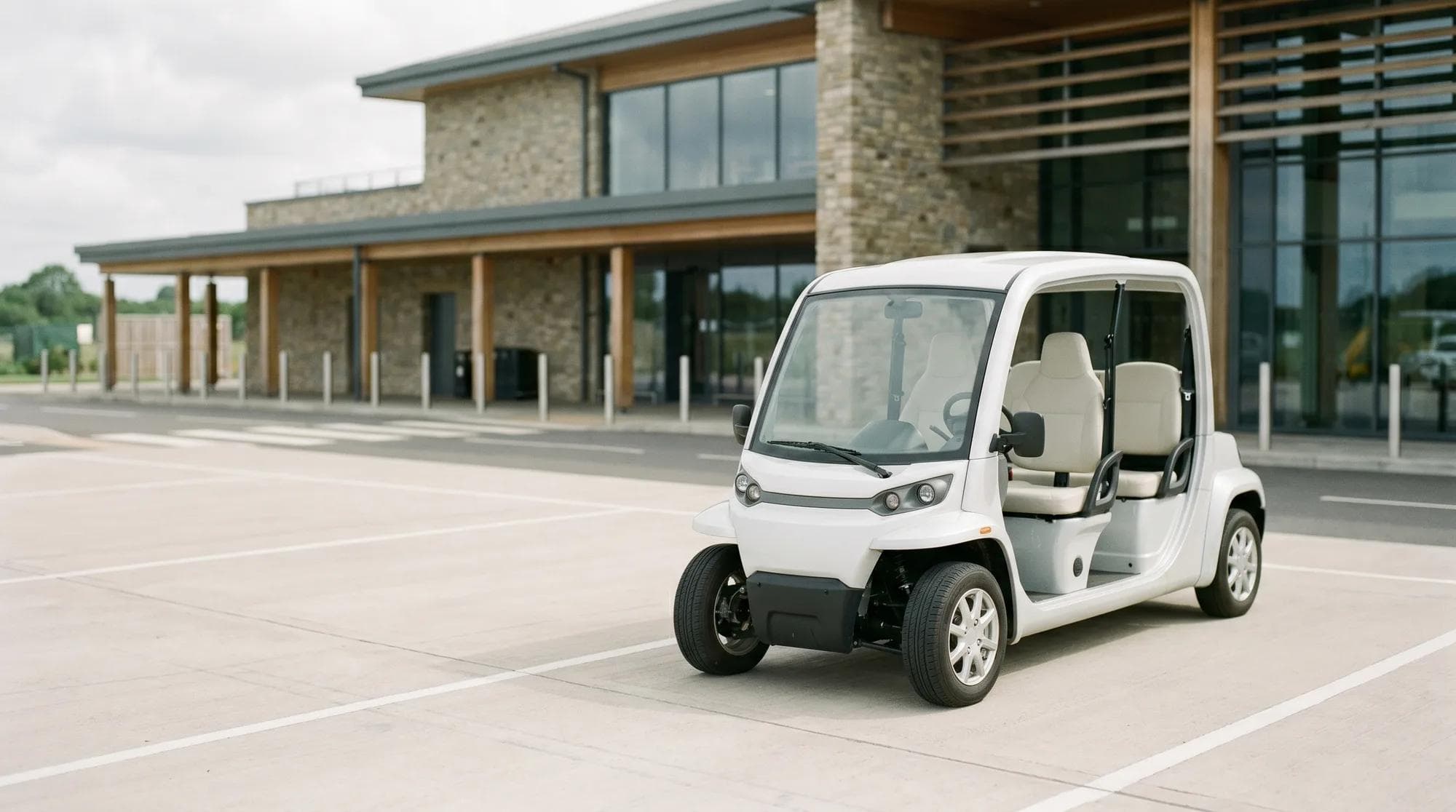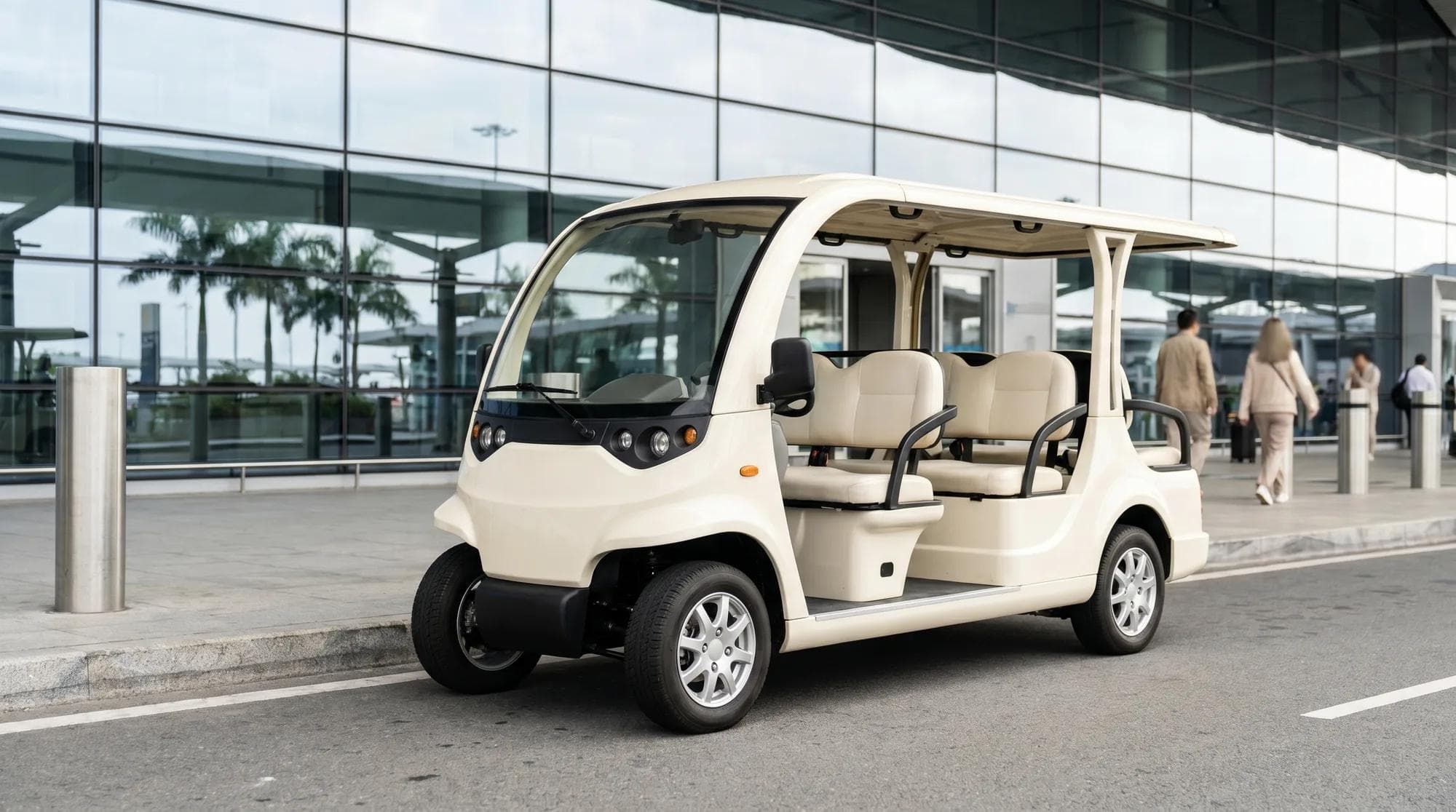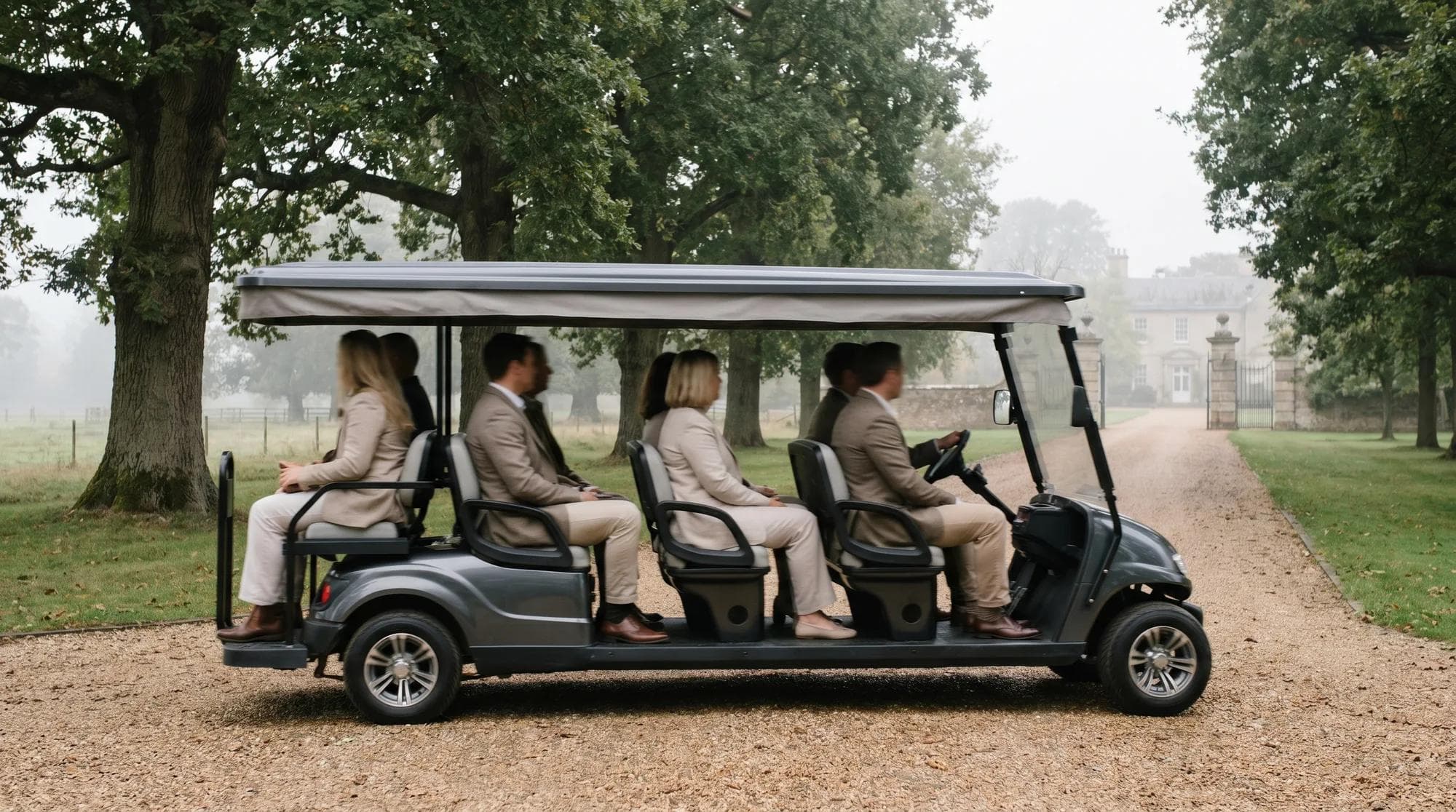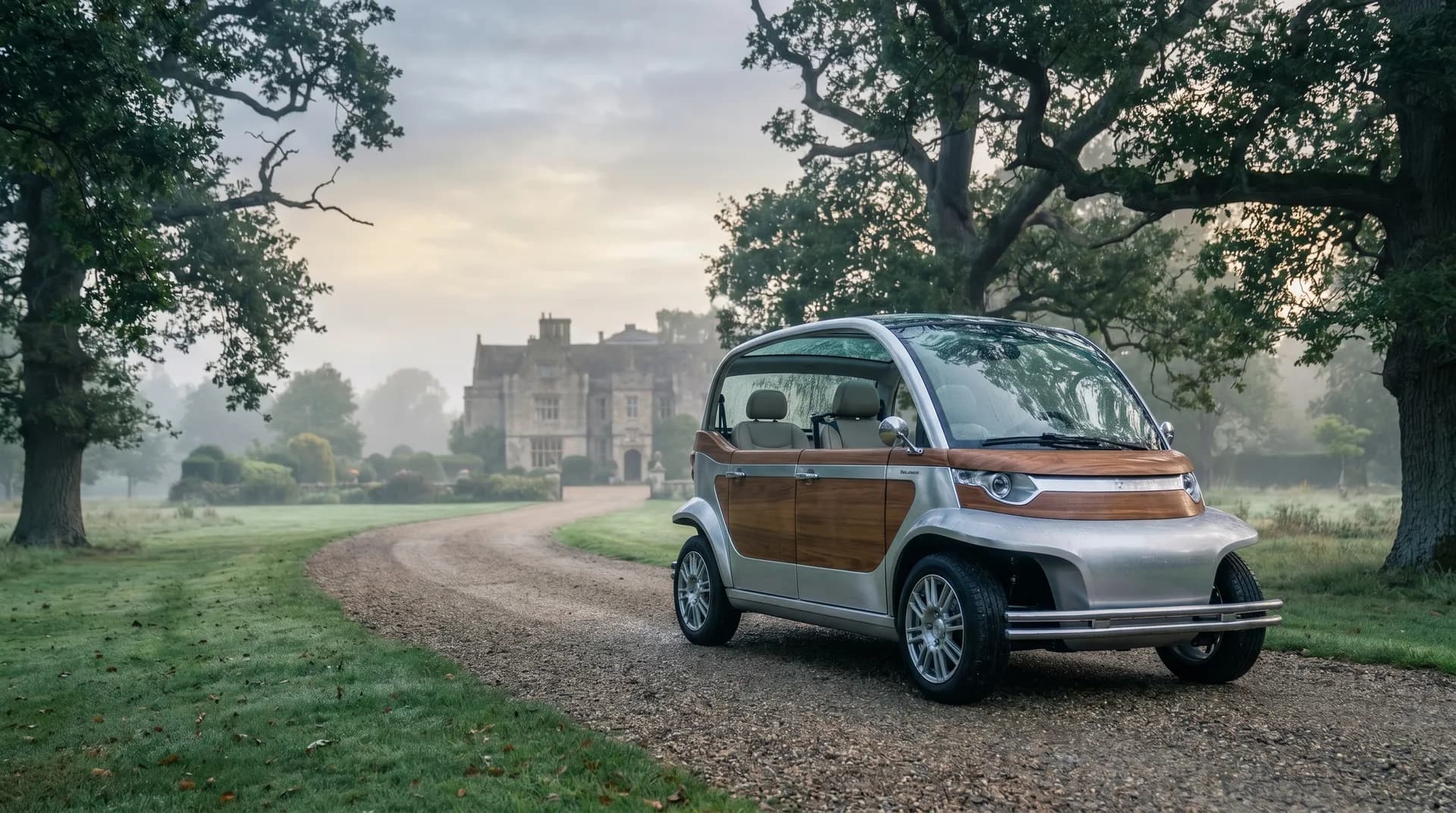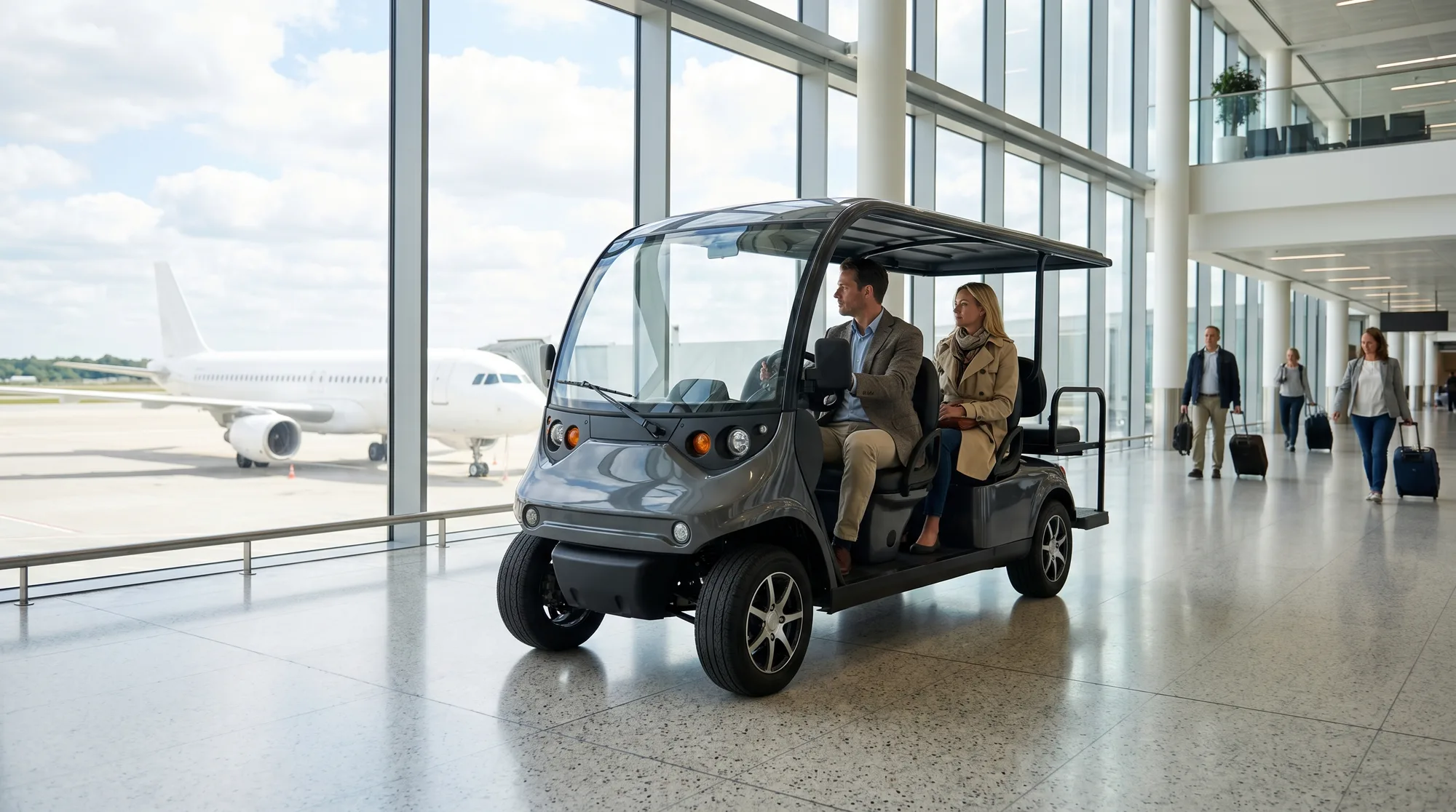
- A VIP airport transfer vehicle moves high-value passengers between the lounge, the gate and a waiting car without the walk, the wait or the crowds.
- For premium meet-and-greet and fast-track services, the vehicle is part of the product, so how it looks, sounds and rides matters as much as that it turns up.
- Electric suits the job: near-silent, no fumes inside terminals and piers, and a smooth ride that feels considered rather than functional.
- Done well, this is a paid service, sold alongside lounge access and fast-track, that can earn its keep rather than just cost money.
- Discretion is the whole point. The right vehicle moves someone quietly through a busy terminal without drawing a crowd.
There is a particular kind of airport passenger who is paying, directly or indirectly, not to queue. The first-class flyer, the connecting business traveller on a tight transfer, the public figure who would rather not be photographed in the security line. For them, the journey through the terminal is not a detail. It is part of what they have bought, and it is judged just as closely as the seat on the aircraft.
Moving those passengers is its own small service, and a surprising number of airports run it with whatever vehicle happens to be free. This guide is about doing it properly: what a good VIP airport transfer vehicle needs to be, why a quiet electric buggy fits the brief better than most alternatives, and how the whole thing can be sold as a service rather than absorbed as a cost.
What a VIP transfer actually involves
Strip away the language and the job is simple. Take someone from one point in the airport to another, quickly and comfortably, with as little friction as possible. In practice that might mean meeting a passenger at the kerb and carrying them past the main queues, running them from a private lounge to a distant gate, or moving a first-class arrival straight from the aircraft to a waiting car. The distances are often long, the time is usually short, and the passenger expects it to feel effortless.
It overlaps with ordinary passenger transport and with assistance work, but the brief is different. A standard transfer buggy clears a backlog of people. A VIP transfer carries one or two passengers and is judged on how the trip felt, not how many it shifted. We cover the broader picture in our guide to airport passenger transport buggies; this is the premium end of it.
Why discretion is the whole point
The passengers who use these services tend to value privacy. They are paying partly to avoid the crush, and partly to avoid being noticed in it. A vehicle that draws attention, by being loud, garish or awkward to board, works against the very thing it is meant to deliver. The ideal is almost the opposite of a showpiece: a buggy that moves someone smoothly through a terminal and is forgotten the moment they step off it.
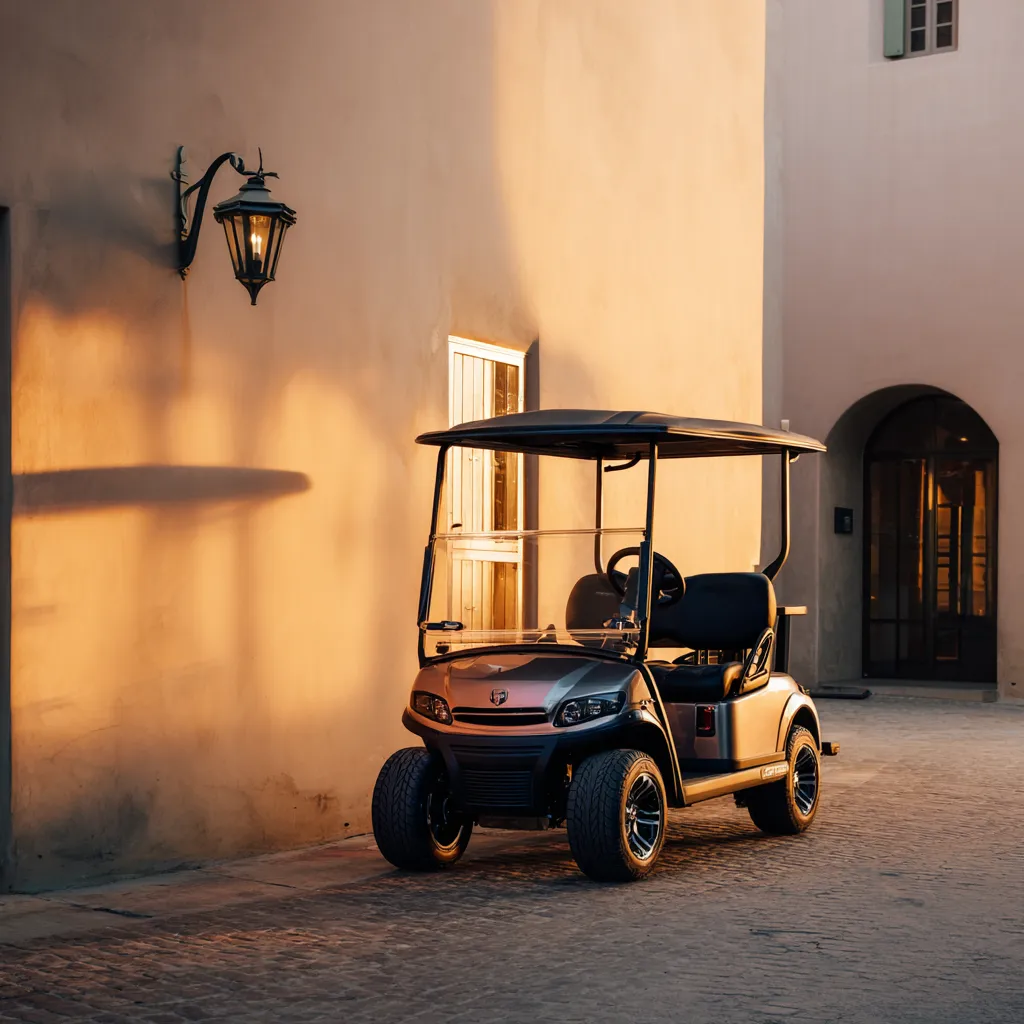
That shapes the spec in quiet ways. A near-silent drivetrain so the trip does not announce itself. Seating that is easy to get in and out of without a fuss. A finish that reads as calm and well-made rather than flashy. Lighting and trim that suit a terminal at any hour. None of it is loud, and that is the point.
Why electric fits the brief
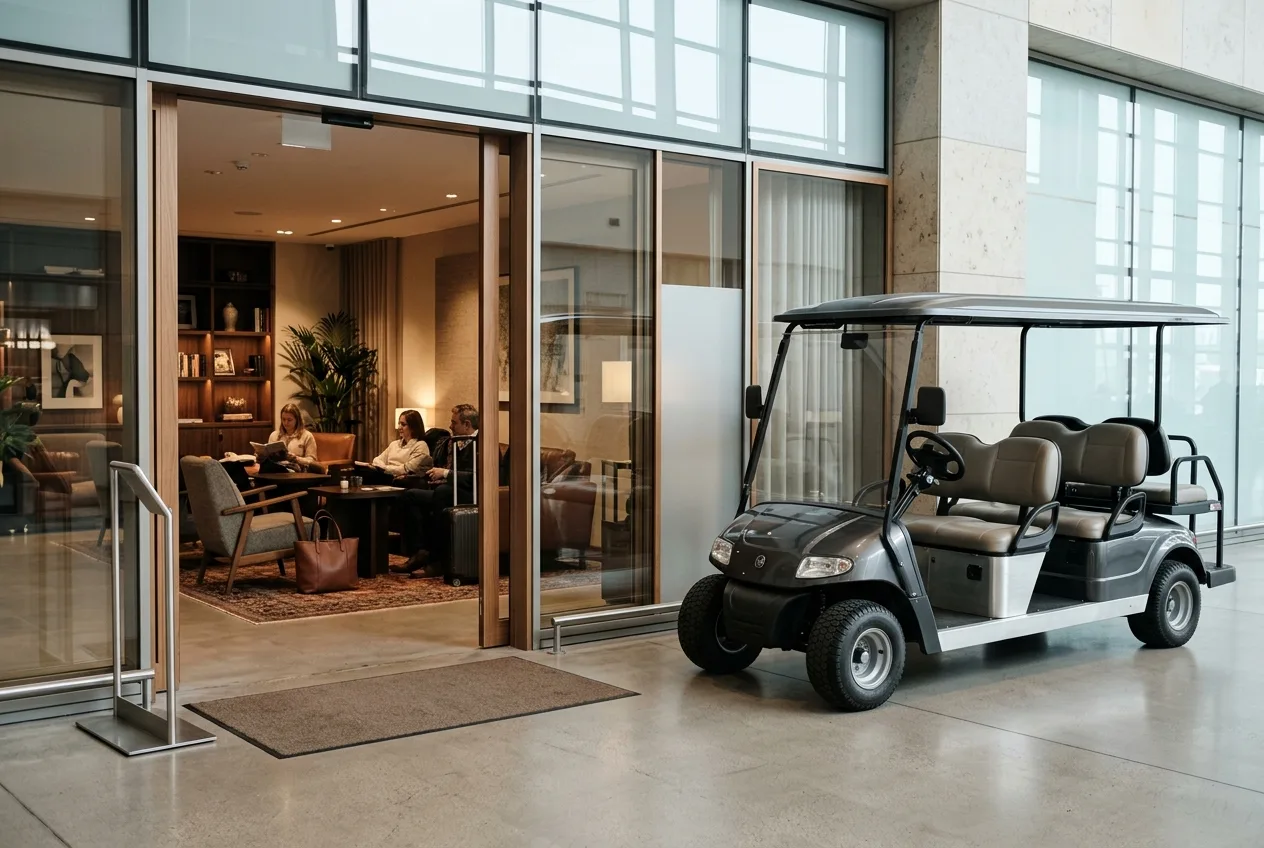
Almost everything a premium transfer needs lines up with what an electric buggy does well. The drivetrain is near-silent, so a passenger can hold a conversation or a call as they travel. There are no exhaust fumes, which matters inside terminals and along enclosed piers where the air is shared with thousands of people. And the ride is smooth and steady from a standstill, without the lurch of a combustion engine, which is exactly the unhurried feel a premium service is selling.
- Near-silent running, so the trip feels calm and a passenger can talk or take a call.
- No local emissions, which matters inside terminals, piers and enclosed arrivals halls.
- A smooth, steady pull from a standstill that suits an unhurried, premium ride.
- A clean, well-finished look that sits comfortably in a modern terminal.
There is a practical side too. These vehicles run short loops through the day with regular gaps between jobs, which is an ideal duty cycle for a battery. A vehicle can top up between transfers and an overnight charge covers a full operating day, so the service is never held up waiting for fuel or a recharge.
Built to order, finished to match the service
A premium service deserves a vehicle that looks like it belongs to it. Because every buggy we make is built to order, the finish is part of the specification rather than something you settle for. That matters more at the top of the market than anywhere else, where a passenger who has paid for a calm, considered experience will notice a tired or generic vehicle immediately.
- Bodywork colour matched to the airport's or the lounge operator's brand, so the vehicle reads as part of the service.
- Seat, canopy and trim finishes chosen for comfort and a quiet, premium feel.
- Subtle, tasteful logo placement rather than loud livery, in keeping with a discreet service.
- Practical details, easy boarding, somewhere for cabin bags, lighting that suits any hour, specified in from the start.
Vehicles for the premium end
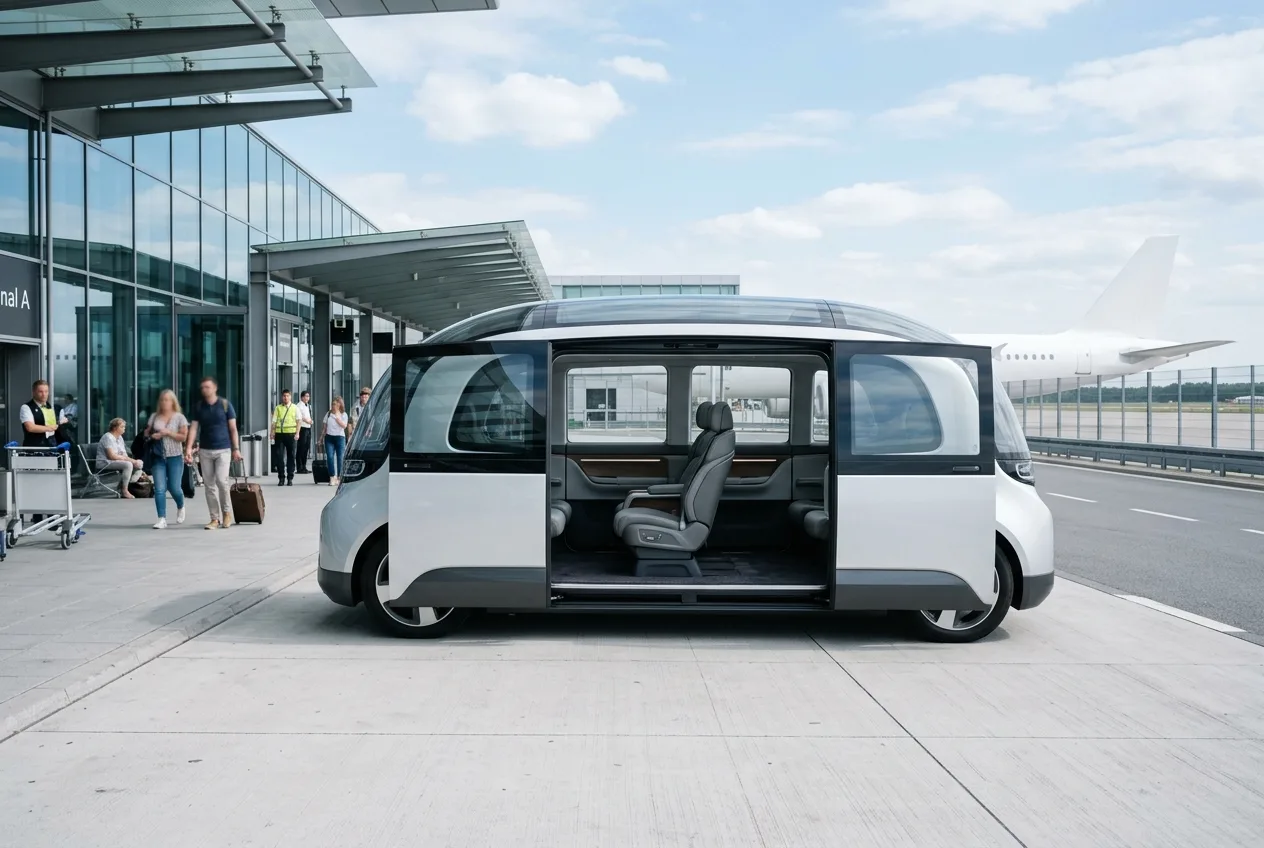
Quiet, well-finished electric buggies and people-movers, built to order, assembled and finished in the UK and finished to match your service, supported by a 24-hour call-out.
A service that can pay for itself
It is easy to see VIP transport as a cost, a courtesy you provide because the passengers expect it. It does not have to be. Premium meet-and-greet, fast-track and chauffeured transfer through the terminal are services that passengers and airlines will pay for, sold alongside lounge access and priority security. Run properly, the transfer vehicle is part of a revenue line rather than an overhead.
The economics are helped by the fact that electric vehicles are cheap to run. There is no fuel to buy or store, servicing is lighter, and the short, intermittent duty cycle is gentle on the vehicle. So the cost of providing the service is low, while the price a premium passenger will pay for a smooth, private passage through the airport is not.
- What the passenger gets
- A walk, or whatever buggy is free
- Where the value sits
- Inconsistent, and a weak link in a premium product
- What the passenger gets
- A lift, but shared and unbranded
- Where the value sits
- Functional, but it does not feel premium
- What the passenger gets
- A quiet, private, branded transfer
- Where the value sits
- A sellable service that supports the premium offer
| Service | What the passenger gets | Where the value sits |
|---|---|---|
| No dedicated vehicle | A walk, or whatever buggy is free | Inconsistent, and a weak link in a premium product |
| Shared transfer buggy | A lift, but shared and unbranded | Functional, but it does not feel premium |
| Dedicated VIP vehicle | A quiet, private, branded transfer | A sellable service that supports the premium offer |
Specifying it for your terminal
The right vehicle depends on your routes and the passengers you are moving. A buggy running short hops between a lounge and nearby gates has a different brief from one carrying arrivals the length of a pier to a waiting car. The sensible starting point is the journeys themselves: where the transfers begin and end, how far they run, and whether any part of the route is airside, which brings its own permit and visibility requirements.
- 01
Map the transfers
List the typical journeys: lounge to gate, kerb to security, aircraft to car, with the distances each covers.
- 02
Set the brief
Decide how many passengers a vehicle carries, the level of finish, and how discreet the livery should be.
- 03
Build it in
Colour, trim, boarding and any airside spec are specified into each made-to-order vehicle rather than added later.
- 04
Run and price it
Slot the vehicle into your lounge or fast-track offer and price the transfer as the service it is.
Whether you need one discreet vehicle for a single lounge or several across a terminal, the approach is the same. Take a look at the range to see the body styles, or request a quote and we will talk through what suits your terminal and your passengers.
Move your premium passengers properly
Tell us the transfers you run and the service they belong to, and we will spec a quiet, well-finished vehicle, branded and built for your terminal.
Frequently asked questions
What makes a buggy suitable for VIP transfers rather than general use?+
It is the finish and the feel as much as the vehicle. A VIP transfer vehicle is quiet, comfortable to board, well finished and discreet, because it carries one or two paying passengers and is judged on how the trip felt, not how many people it moved.
Can the vehicle be branded for our lounge or airline service?+
Yes. Because every vehicle is built to order, colour, trim and tasteful logo placement are specified in from the start, so it reads as part of your service rather than generic kit.
Can a VIP transfer service actually generate revenue?+
It can. Premium meet-and-greet, fast-track and chauffeured terminal transfers are services passengers and airlines pay for, often sold alongside lounge access. Electric running costs are low, so the margin can be healthy.
Can the same vehicle work airside if a transfer goes to the aircraft?+
Where the route requires it, yes, subject to your airport's permit rules. Tell us the journey and we will spec any airside visibility, lighting and permit requirements into the build.
Will an electric buggy last a full day of transfers?+
Comfortably, when sized to the duty cycle. These services run short, intermittent loops, so a vehicle tops up between jobs and an overnight charge covers a full operating day.
Related solutions
Ready to explore what we build?
See the vehicles and the setting this applies to, or get a tailored quote built around your site.
Ready to find the right buggy?
Tell us how and where it will work and we will specify a vehicle and a tailored quote built around you. Every build comes with a 3-year warranty and a 24-hour priority call-out.
Our guides are written and reviewed by the Hawke Electric Vehicles team, the people who specify, build, deliver and support the vehicles. We focus on honest, practical advice and flag where a figure depends on the build rather than guessing.
More guides by Hawke