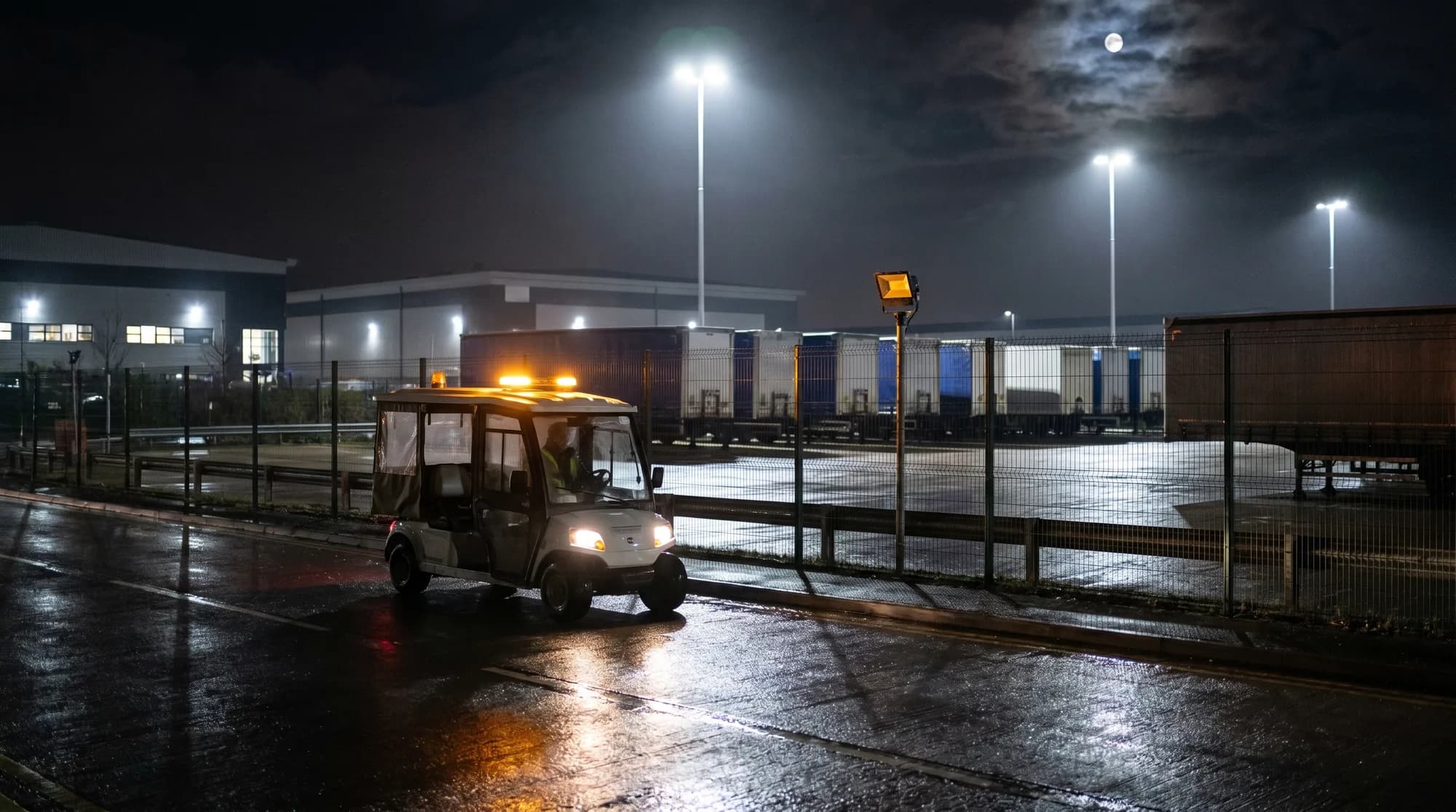
- A modern distribution site is too big to patrol properly on foot, and a diesel van is more vehicle than short perimeter loops need.
- A quiet electric buggy lets a guard cover the whole yard, check the fence line and respond fast, without the noise that announces their arrival.
- Silent running matters at night: a patrol that can approach without being heard catches more than one that can be tracked by engine noise.
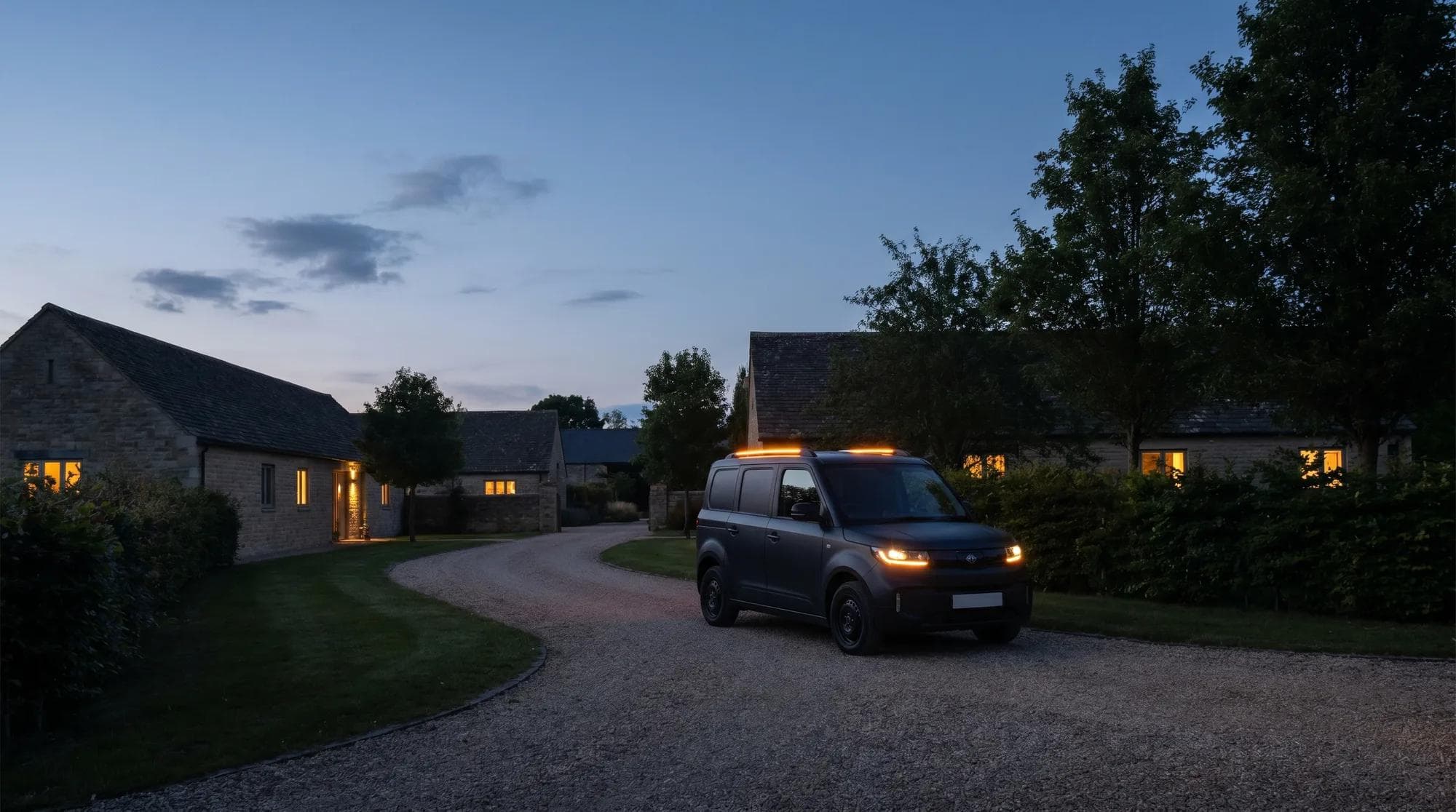
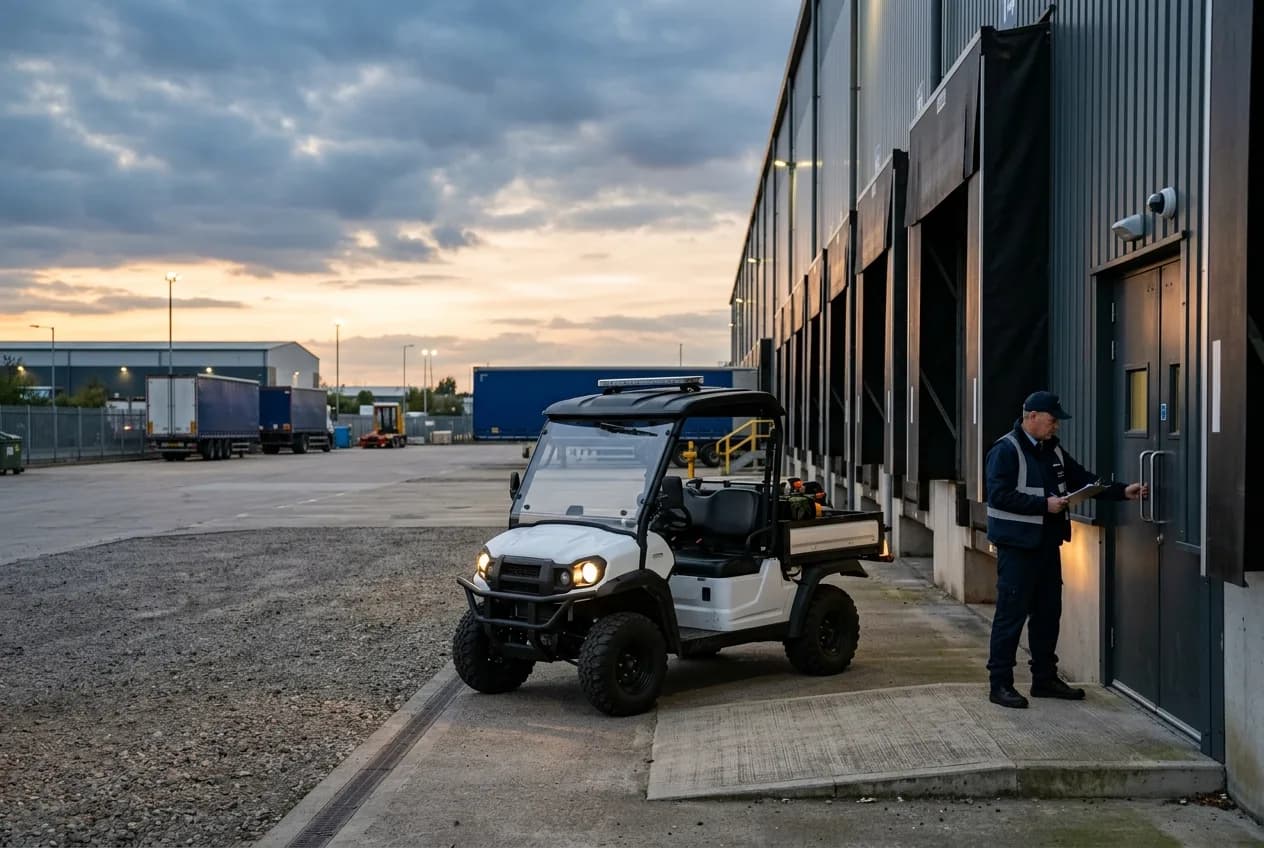
- Good work lighting turns the vehicle into a mobile light source, which helps with checks in dark corners and around loading bays.
- For repeated short loops, an electric buggy costs far less to run and maintain than a patrol van, with nothing idling between rounds.
Anyone who has run security on a large warehouse or logistics park knows the awkward middle ground. The site is too big to patrol properly on foot, with a perimeter that can run to a mile or more and yards full of trailers, but a full-size patrol van feels like the wrong tool for short, repeated loops around the fence and between the buildings. It is thirsty, it is noisy, and most of the time it is carrying one person at walking-pace tasks.
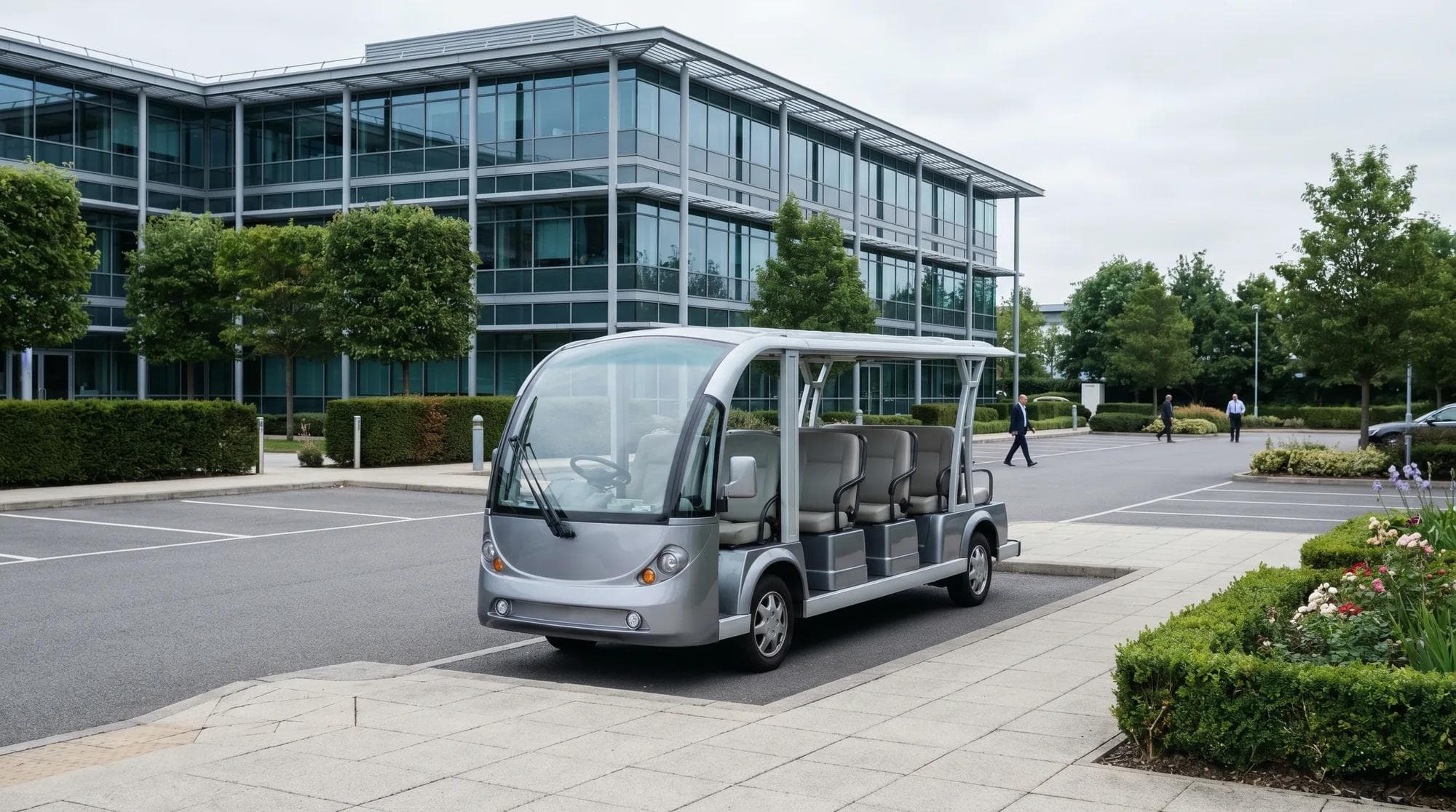
A quiet electric patrol buggy sits neatly in that gap. It moves a guard around the whole site quickly, carries the kit they need, and does it without the engine noise that gives a patrol away long before it arrives. For night rounds and perimeter checks at distribution centres and logistics parks, it is one of those changes that looks small and pays back every shift.
Why a warehouse security patrol vehicle needs to be electric
The case for going electric on a patrol buggy is partly about cost and partly about how the job is actually done. A petrol or diesel buggy announces itself. On a quiet night you can hear it coming across the yard, which is exactly what you do not want when the whole point of a patrol is to catch a problem in progress. An electric drivetrain is close to silent, so a guard can roll up to the fence line or a loading bay without telegraphing their approach.
There is a practical side too. A patrol that runs short loops all night spends a lot of time stopping, checking and moving on. A combustion engine either idles through that, burning fuel and making noise, or gets switched on and off repeatedly. An electric vehicle simply sits silent when stopped and moves off instantly when needed, which suits the rhythm of a patrol far better.
Covering a large yard without leaving gaps
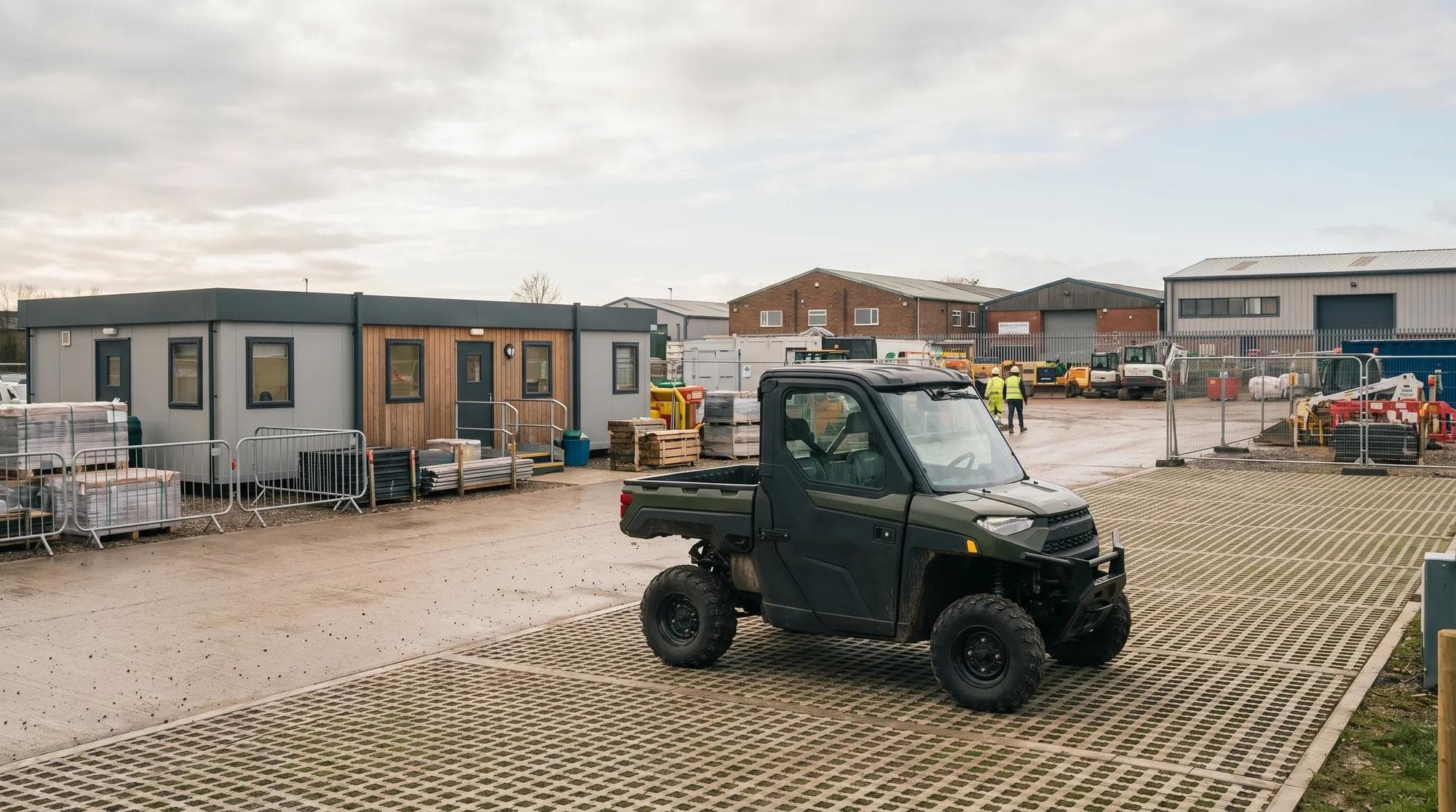
The honest weakness of foot patrols on a big site is coverage. A guard on foot can only check so much in a round, so either the loops get long and slow or parts of the site go unwatched between visits. Put the same guard on a buggy and the picture changes. They can take in the full perimeter, swing through the trailer park, check the rear of the units and still get back to the gatehouse inside a sensible window.
- The perimeter fence line and any vulnerable corners away from the buildings.
- The trailer and container yard, where theft and tampering tend to happen.
- Loading bays and goods doors after the day shift has gone home.
- Car parks, bin stores and the quiet edges of the site that foot patrols skip.
- Quick response to an alarm or a sensor trip at the far end of the estate.
Lighting, response and the kit a guard carries
A patrol buggy is more than transport. Fitted with proper work lighting it becomes a mobile light source, which is useful on a site where not every corner is lit. A guard can pull up to a dark loading bay or a shadowed section of fence and light the area for a proper look, rather than relying on a hand torch. We can specify roof-mounted work lamps and a beacon into the build so the vehicle suits night operation from the start.
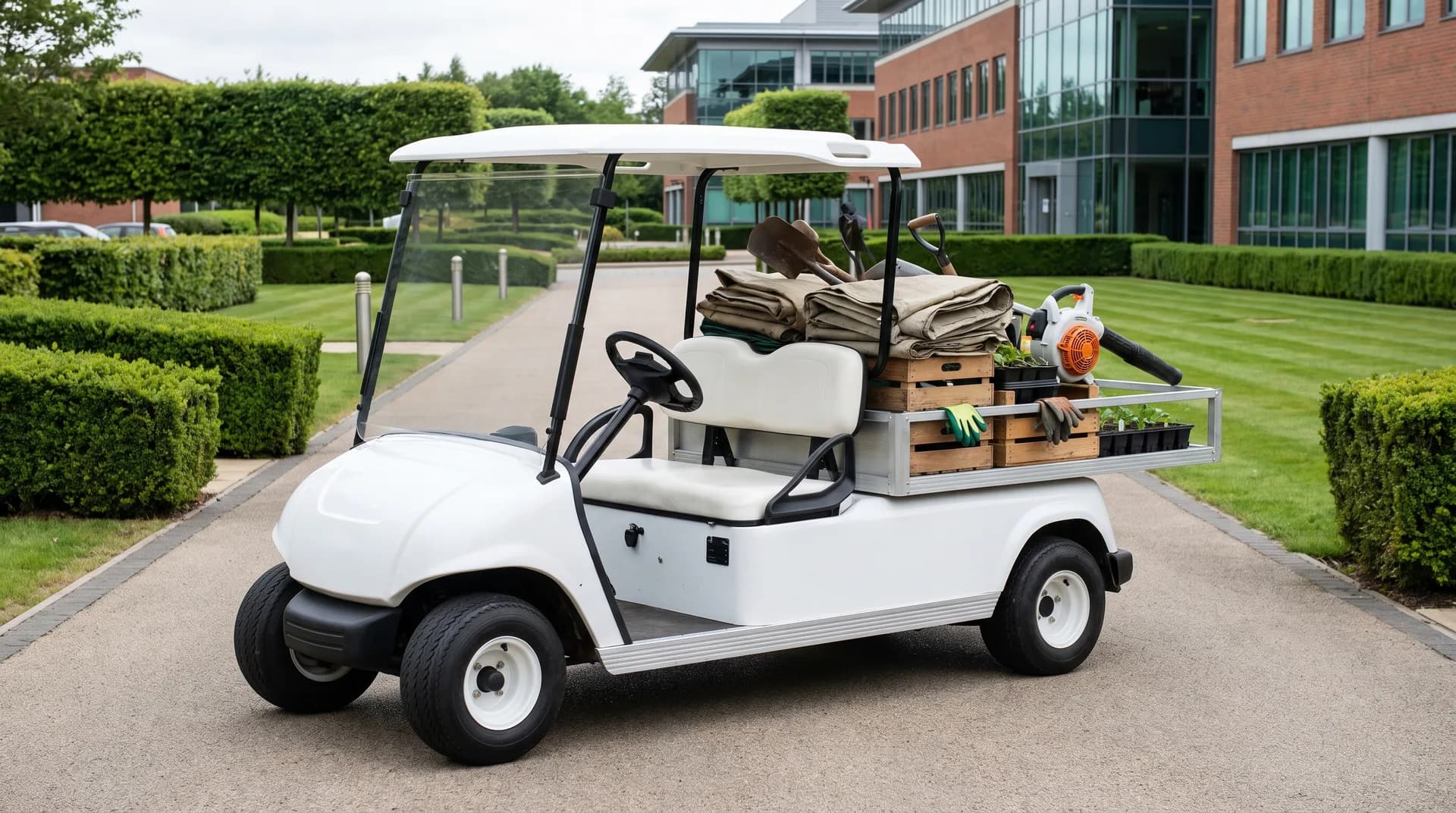
Speed of response matters as much as coverage. When an intruder alarm or a perimeter sensor goes off at the far side of a large estate, the difference between reaching it in thirty seconds and three minutes is often the difference between catching someone and finding an open gate. A buggy that is already out on patrol can be at the scene quickly, with the guard carrying radio, keys and whatever else the round needs on board.
The running-cost case against a patrol van
For short loops around a single site, a patrol van is an expensive habit. It burns fuel idling between checks, it needs servicing on a van schedule, and it depreciates like a van. An electric patrol buggy does the same short-loop job for a fraction of the running cost, charges overnight on a standard supply, and has far less to go wrong mechanically. None of this means a buggy replaces a van for every task, but for the repeated on-site patrol it is the cheaper and quieter choice.
- Patrol van
- Audible across the yard
- Electric patrol buggy
- Near-silent
- Patrol van
- High, with idling
- Electric patrol buggy
- Low, charged overnight
- Patrol van
- Exhaust at every door
- Electric patrol buggy
- None at point of use
- Patrol van
- Full van schedule
- Electric patrol buggy
- Minimal, few moving parts
- Patrol van
- Off-site and road work
- Electric patrol buggy
- On-site perimeter and yard patrol
| Factor | Patrol van | Electric patrol buggy |
|---|---|---|
| Approach noise | Audible across the yard | Near-silent |
| Running cost on short loops | High, with idling | Low, charged overnight |
| Local emissions | Exhaust at every door | None at point of use |
| Servicing | Full van schedule | Minimal, few moving parts |
| Suited to | Off-site and road work | On-site perimeter and yard patrol |
Explore the range
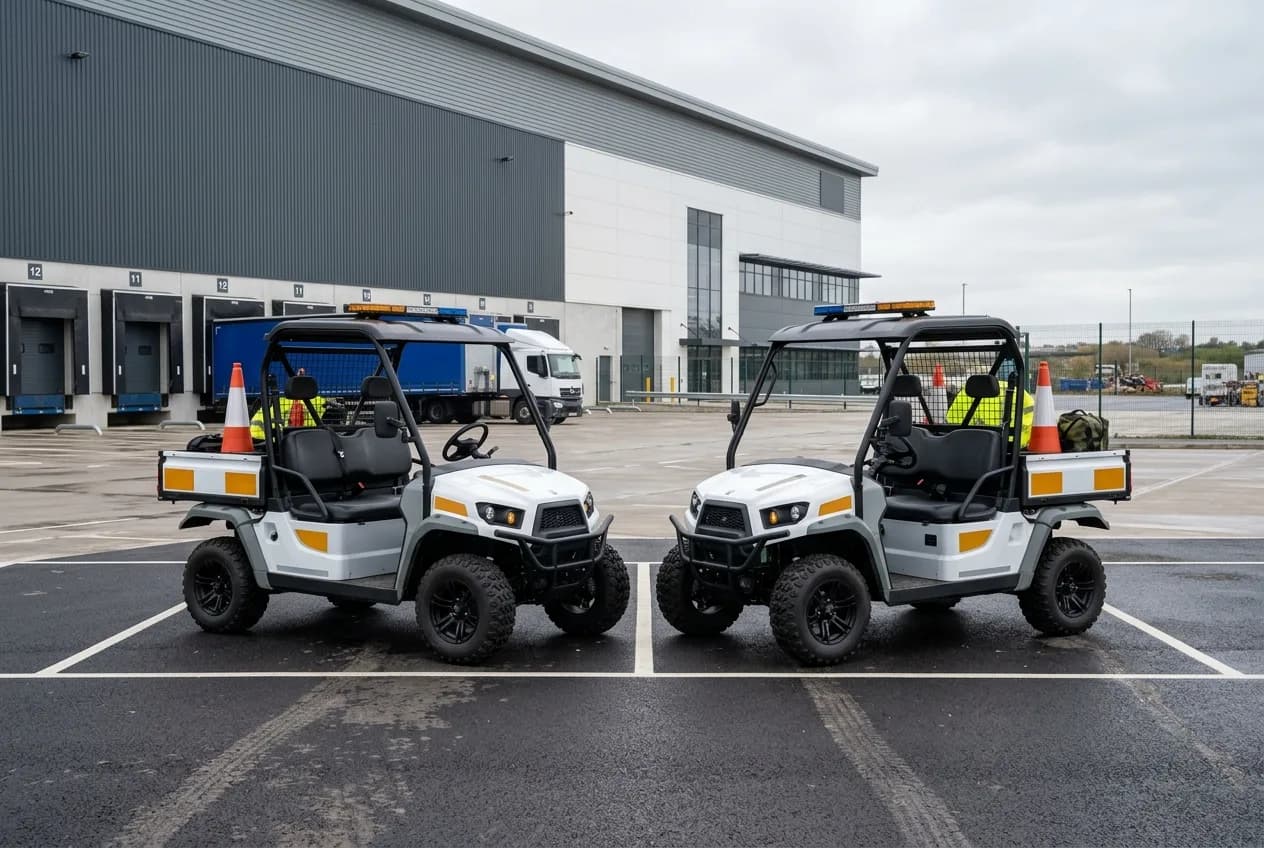
From two seats to eight, plus utility and bespoke builds, every vehicle is made to order, assembled and finished in the UK and branded as your own.
Specifying a patrol buggy for your site
Because every vehicle is built to order, a patrol buggy can be set up around how your site actually works rather than sold off the shelf. The things worth deciding early are the size of the loop, the lighting you need, the weather protection for year-round night shifts, and any branding so the vehicle reads clearly as site security. Our guide to electric buggies for security patrol covers the wider picture, and the guide to electric buggies for warehouses is worth a look if the same vehicle will double up on logistics tasks.
- 01
Map the loop
Measure the perimeter and the yard so we can size the battery to a full shift with margin to spare.
- 02
Set the lighting
Decide on work lamps, a beacon and any spotlight, so the buggy works as a mobile light source on dark sections.
- 03
Add weather protection
A cab or doors and a heater keep a guard comfortable through winter night shifts, which keeps patrols thorough.
- 04
Brand and equip
Site security livery, radio mounts and storage for kit, specified into the build rather than added after.
Patrolling a large warehouse or logistics park?
Tell us the size of your site, the loops your guards run and the hours they cover. We will recommend a patrol buggy and lighting setup that fits, built to order and branded as your own.
Frequently asked questions
Will an electric patrol buggy last a full night shift?+
Sized to your loop, yes. We match the battery to the distance a guard covers across a shift, with margin, so the buggy runs the night and charges back up during the day.
Is it quiet enough for night patrols?+
Yes. The electric drivetrain is near-silent, so a guard can approach the fence line or a loading bay without the engine noise that a petrol or diesel buggy gives off.
Can we fit work lights and a beacon?+
Yes. Roof work lamps, a beacon and spotlights are specified into the build, so the buggy doubles as a mobile light source on unlit parts of the site.
Does it replace our patrol van?+
Usually only for on-site loops. The buggy takes over the repeated perimeter and yard patrols cheaply and quietly; a van still makes sense for off-site or road work.
Can it be branded as site security?+
Yes. Every vehicle is built to order, so security livery, colours and signage are part of the build rather than a sticker added afterwards.
Related solutions
Ready to explore what we build?
See the vehicles and the setting this applies to, or get a tailored quote built around your site.

Ready to find the right buggy?
Tell us how and where it will work and we will specify a vehicle and a tailored quote built around you. Every build comes with a 3-year warranty and a 24-hour priority call-out.
Our guides are written and reviewed by the Hawke Electric Vehicles team, the people who specify, build, deliver and support the vehicles. We focus on honest, practical advice and flag where a figure depends on the build rather than guessing.
More guides by Hawke