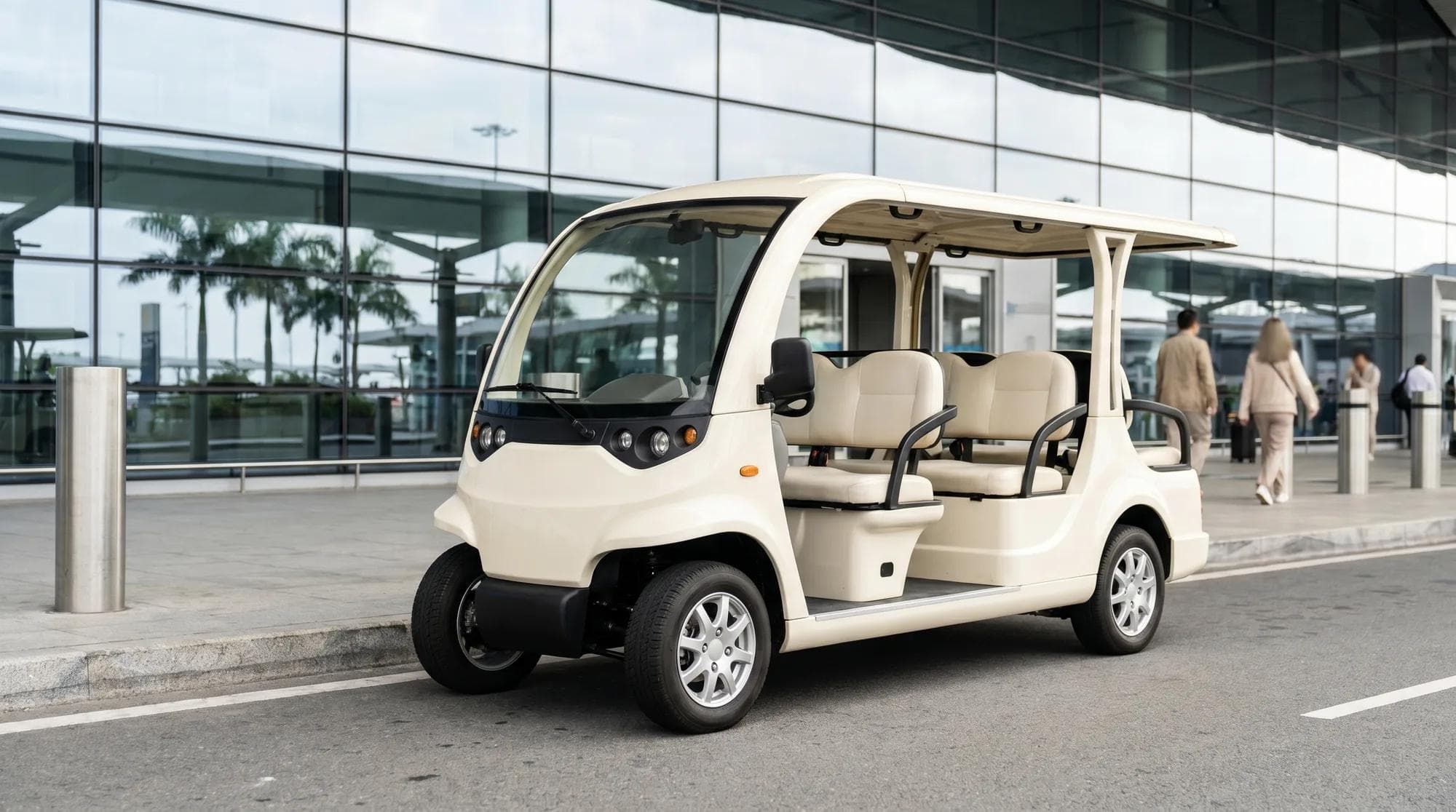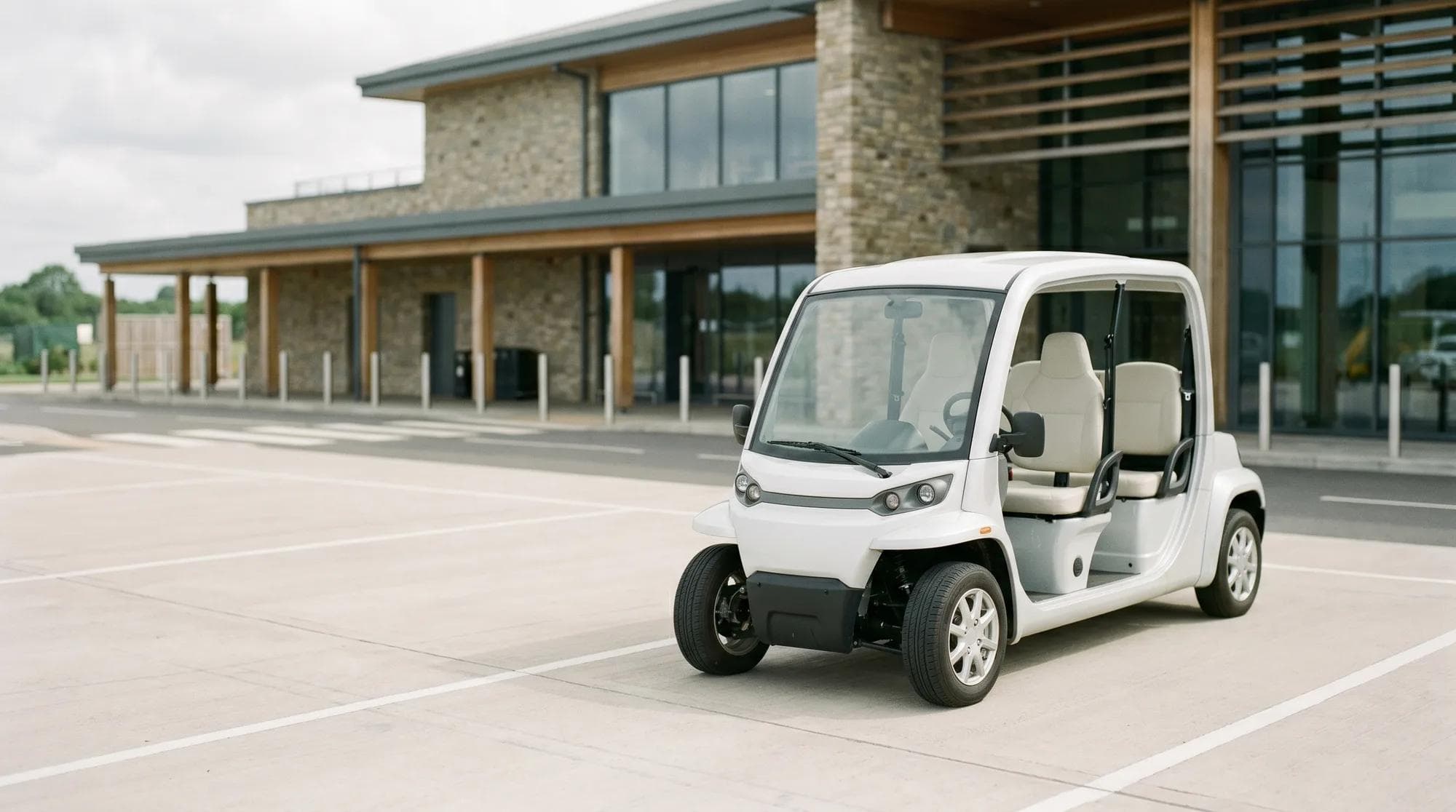
- PRM assistance vehicles move passengers with reduced mobility across an airport, and many of those passengers are not wheelchair users at all.
- Special assistance for persons with reduced mobility is free to the passenger and, in the UK and EU, a legal right; the airport's managing body is responsible for providing it.
- A large share of people who need help simply cannot walk the long distances between check-in, security and a far gate, even though they are otherwise mobile.
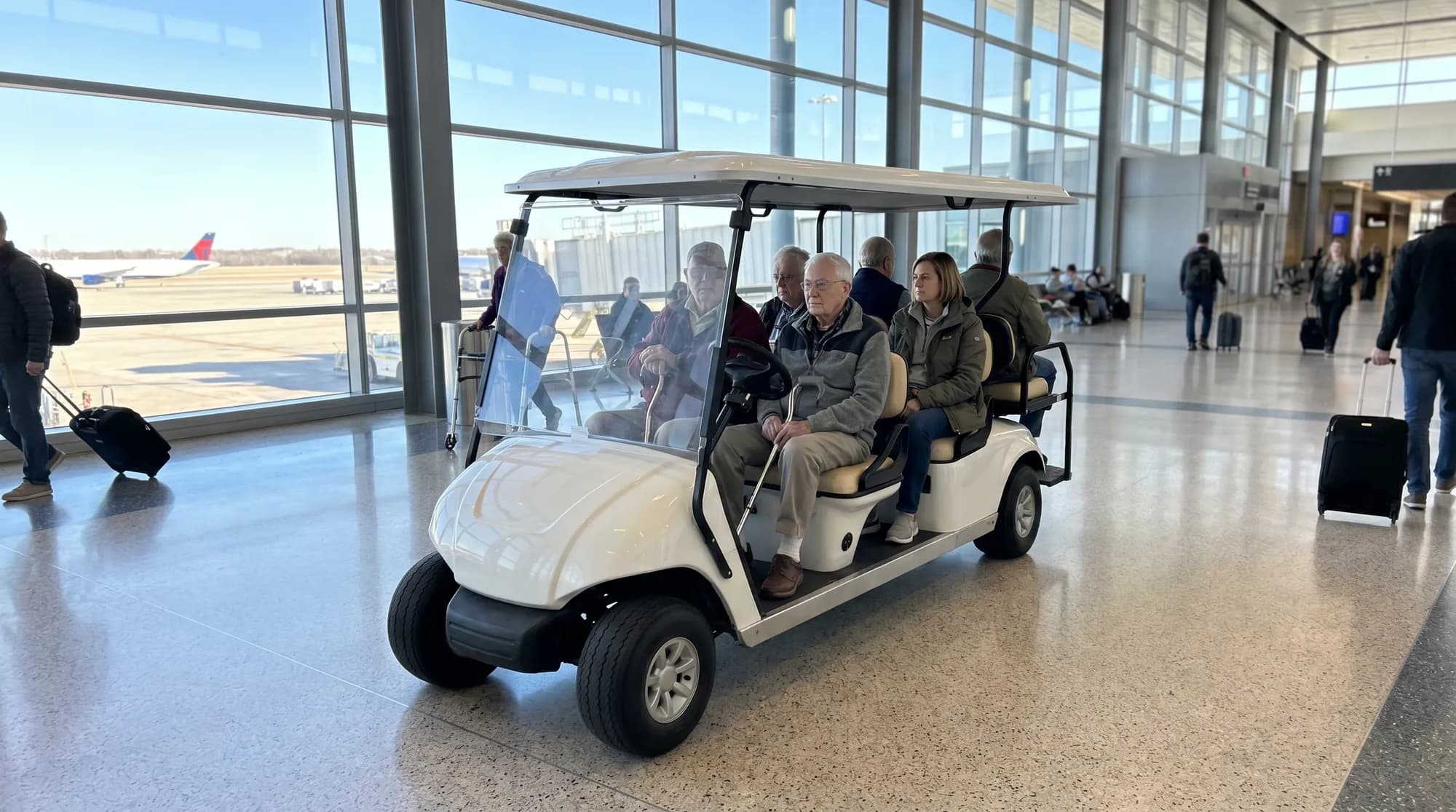
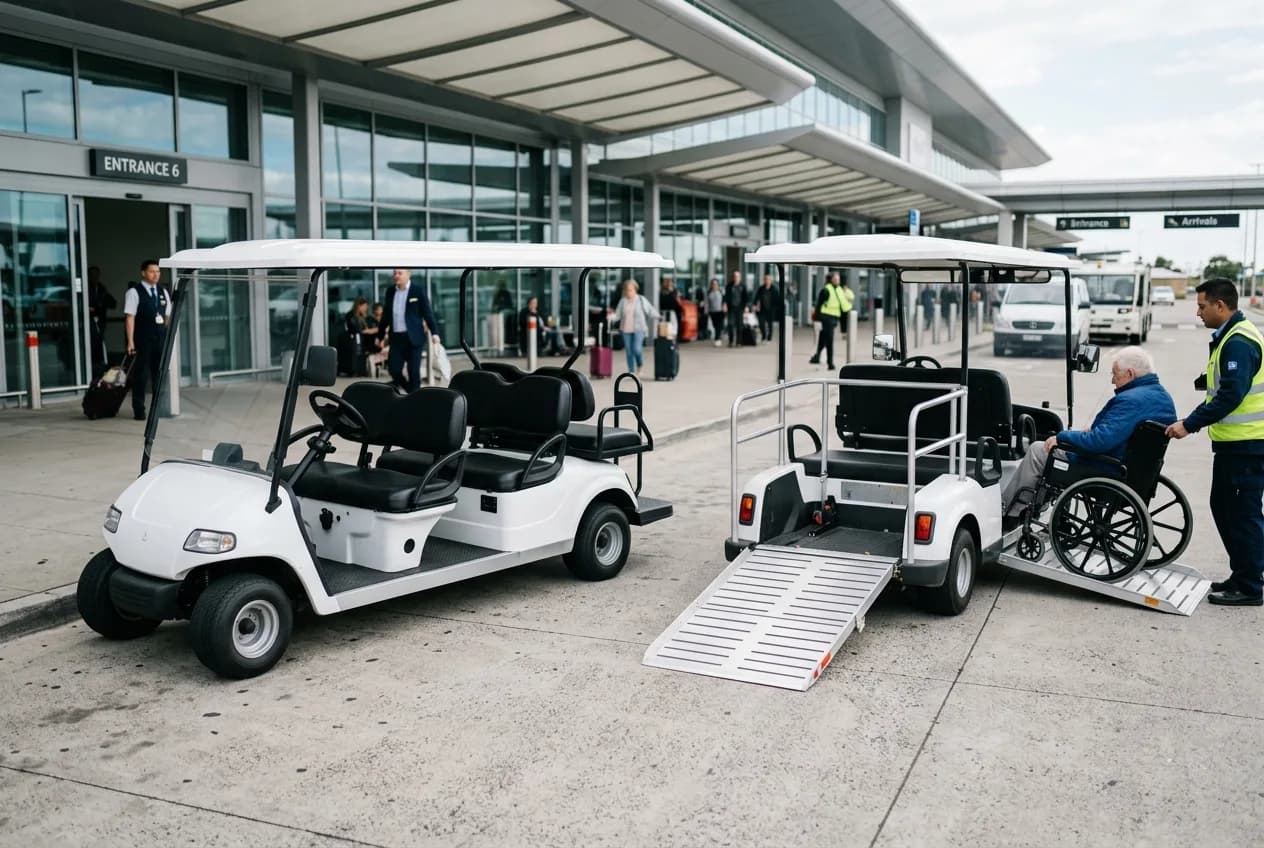
- Multi-seat assistance buggies carry several of those passengers, plus their companions, in one quiet electric vehicle, which clears waiting times faster than escorting people one at a time.
- Demand for assistance has been rising, and the UK Civil Aviation Authority reports on how airports perform, so the quality of the service is increasingly visible.
When most people hear special assistance at an airport, they picture a wheelchair. That covers part of the job, but it misses a large group of travellers. PRM assistance vehicles exist for the passengers in between: people with reduced mobility who can stand and walk a little, but cannot manage the long hike from check-in through security to a gate that might be the best part of a kilometre away. They do not need a wheelchair. They need a lift. This guide is about moving that group well, alongside wheelchair users, and why a multi-seat electric assistance buggy is often the right tool.
It matters because assistance is not optional. In the UK and across the EU, special assistance for persons with reduced mobility, the term the regulations use, is free to the passenger and a legal right. The airport's managing body is responsible for providing it and for the standard it is delivered to. So the question for an airport is not whether to move these passengers, but how to do it quickly and with dignity, at the volumes that turn up on a busy day.
Who actually needs assistance
PRM is a broad category by design. It covers anyone whose mobility is reduced when using transport, whether that is permanent or temporary. Some are wheelchair users. Many are not. The honest picture of who requests help looks more like this:
- Older passengers who walk fine at home but cannot manage long airport distances on tired legs.
- People recovering from surgery, an injury or illness, sometimes on crutches or with a temporary cast.
- Passengers with heart, lung or other conditions for whom a long walk is genuinely unsafe.
- Travellers with hidden disabilities who can walk but need to avoid crowds, queues or distance.
- Wheelchair and scooter users, who need step-free transport in their own chair.
The point is that a service built only around wheelchairs serves only part of the demand. A passenger who can walk to a seat but not across a terminal does not want a wheelchair, and pushing one is a slow, staff-heavy way to move them. A buggy they can step onto and ride is faster and more dignified for everyone.
The legal duty, in plain English
We are not lawyers, and the detail changes, so always confirm the current rules with the Civil Aviation Authority and your own airport. But the shape of it is settled. Under the rules that apply in the UK and the EU, an airport's managing body must provide assistance to passengers with reduced mobility, free of charge, from arrival at the airport through to the aircraft, and the reverse on landing. The airport sets and is judged on the service standards, including how long passengers wait. Airlines and ground handlers play their part, but the responsibility for the airport assistance sits with the airport.
Why a multi-seat assistance buggy beats one-at-a-time
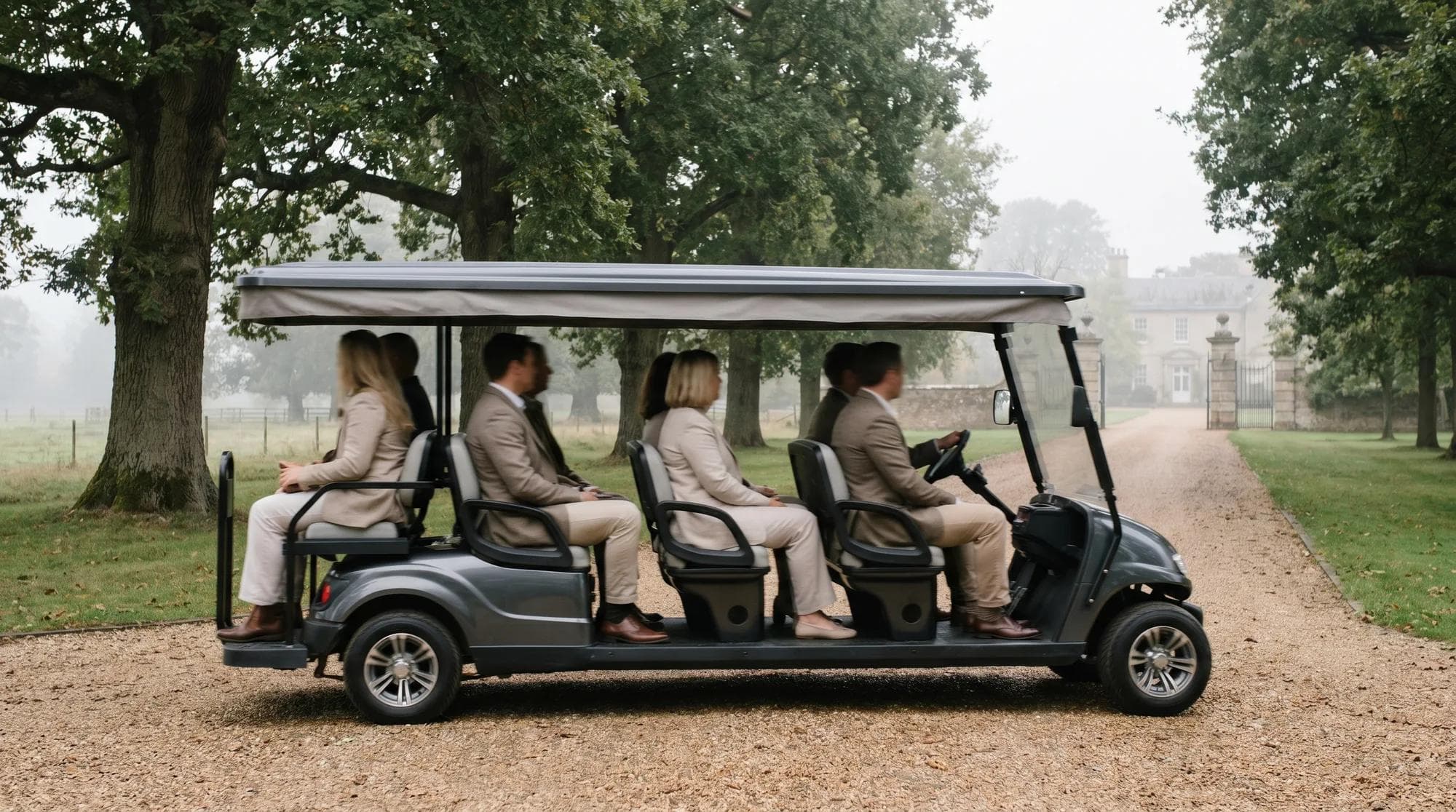
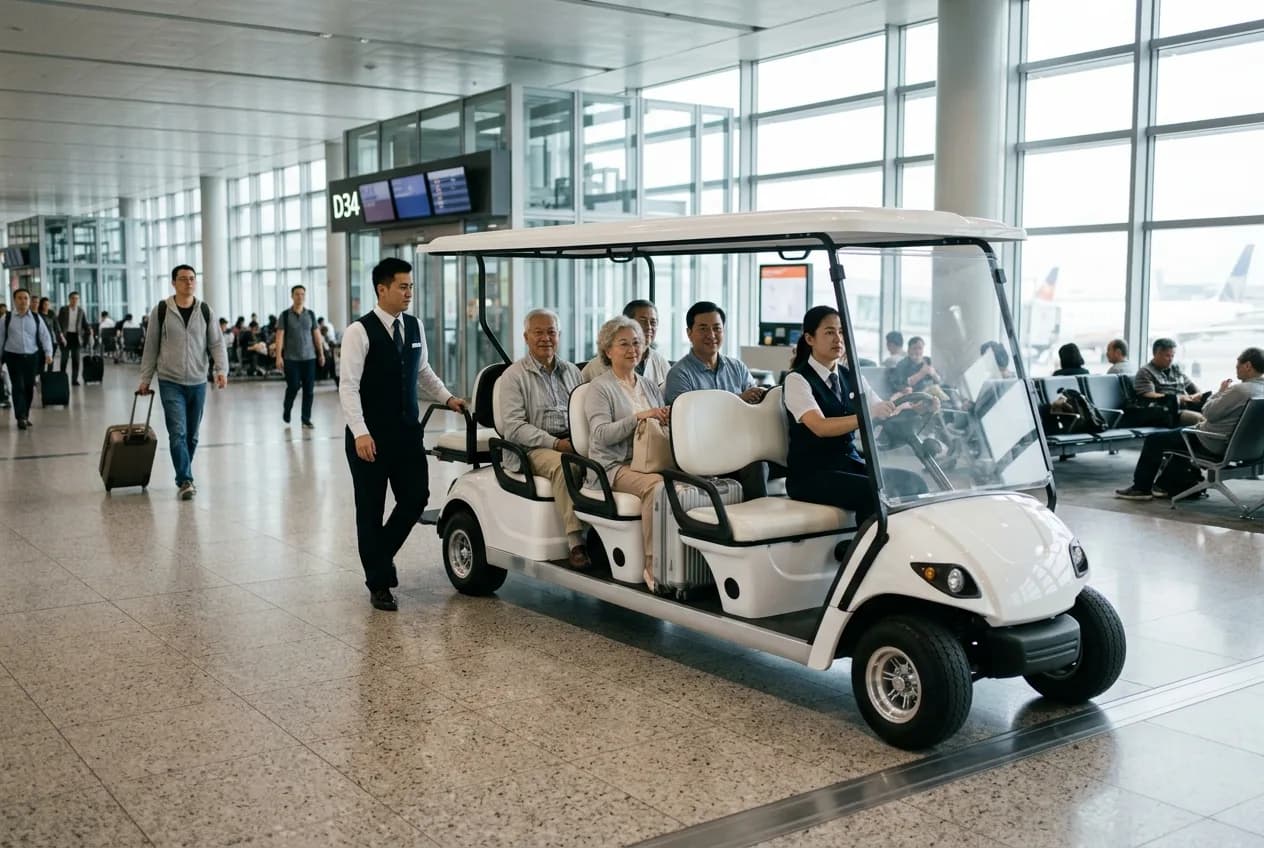
The slow way to provide assistance is to escort each passenger individually, on foot or in a single wheelchair, with a member of staff per passenger. On a quiet day that works. On a busy day it does not scale, and waiting times stretch. A multi-seat electric assistance buggy changes the maths. One driver moves several passengers at once along the same route, and crucially it carries their companions too, so families and couples are not split up. That clears a backlog far faster and frees assistance staff for the passengers who genuinely need hands-on help.
- Multi-seat assistance buggy
- One driver moves several passengers together
- Multi-seat assistance buggy
- Companions ride along, groups stay together
- Multi-seat assistance buggy
- Quiet electric ride covers the distance quickly
- Multi-seat assistance buggy
- Backlogs clear faster when flights bunch up
| One-at-a-time escort | Multi-seat assistance buggy |
|---|---|
| One member of staff per passenger | One driver moves several passengers together |
| Companions often left behind or following on foot | Companions ride along, groups stay together |
| Walking pace across long distances | Quiet electric ride covers the distance quickly |
| Waiting times build at peaks | Backlogs clear faster when flights bunch up |
Designing the vehicle around the passengers
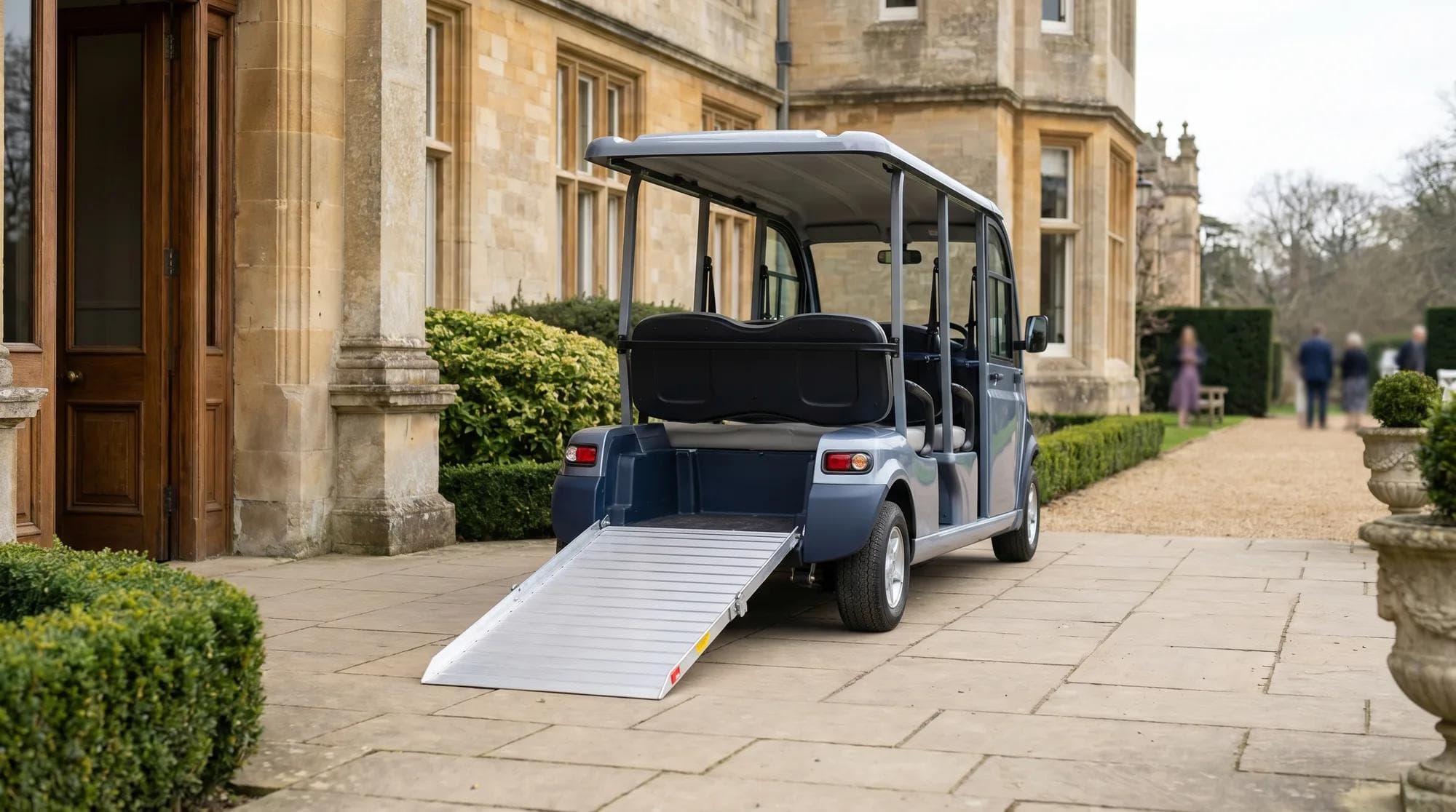
An assistance buggy has a particular job, so it should be specced for it rather than borrowed from another fleet. Boarding needs to be low and easy, because the whole point is that these passengers struggle with steps and distance. Seating should be comfortable and secure, with grab handles where people reach for them. It needs room for companions and for a folded walker or stick. And because terminals are crowded pedestrian spaces, it has to be quiet, manoeuvrable and slow enough to be safe around people on foot. Our guide to airport PRM transport and accessible vehicles covers the wheelchair-accessible side in more detail.
- Low, easy boarding with grab handles, for passengers who can walk a step or two but not far.
- Comfortable, secure seating with room for companions and a folded walker or stick.
- A quiet electric drivetrain and a steady, safe pace for crowded terminals.
- An accessible variant in the fleet so wheelchair users travel in their own chair.
- Clear, calm styling so the service feels dignified, not institutional.
Why this is getting more attention, not less
Demand for special assistance has been rising for years, helped along by an ageing population and by more travellers feeling able to ask for help they are entitled to. At the same time the service is more visible than it used to be. The Civil Aviation Authority publishes information on how airports perform on accessibility, which means a slow or undignified service is no longer a private matter between a passenger and a handler. For an airport, getting assistance right is both a legal duty and a reputational one, and the vehicles are a big part of whether it feels smooth or shambolic on the ground.
Sizing the assistance fleet
As with any airport transport, size the fleet from the peaks, not the average. Assistance requests bunch up when several flights land or depart close together, and that is when waiting times are tested against the airport's standards. Work out the busiest realistic period, the typical route length through the terminal, and how many passengers a buggy carries per trip. That gives you a sensible number of vehicles and drivers to keep the wait inside target when it counts. We are happy to work through that with your operations and assistance teams.
Assistance vehicles, built to order
Multi-seat buggies for ambulant passengers and step-free accessible vehicles for wheelchair users, finished and liveried for your airport and supported by a 24-hour call-out.
Improving special assistance at your airport?
Tell us your terminal layout, the routes and the peaks you handle. We will recommend the right mix of assistance and accessible vehicles, built to order and liveried for your airport.
Frequently asked questions
Do all passengers who need assistance use a wheelchair?+
No. A large share are ambulant: older travellers, people recovering from injury or surgery, and those with conditions that make a long walk unsafe. They can step onto a buggy but cannot walk the distance, which is exactly what a multi-seat assistance vehicle is for.
Is special assistance really free for passengers?+
Yes. In the UK and EU it is free to the passenger and a legal right, and the airport's managing body is responsible for providing it. Always confirm the current rules with the CAA and your airport.
Can companions travel with the passenger?+
Yes, and it matters. A multi-seat buggy carries companions alongside the passenger so families and couples are not separated, which is both kinder and quicker than escorting people one at a time.
Do we still need wheelchair-accessible vehicles as well?+
Usually yes. Plan both into the fleet: multi-seat buggies for ambulant passengers and step-free accessible vehicles for wheelchair and scooter users, so you cover the full spread of demand.
Can the vehicles help us meet waiting-time standards?+
They help by moving several passengers at once at peaks, which clears backlogs faster than one-to-one escorting. Sizing the fleet around your busiest periods is the key, and we will help work that out.
Related solutions
Ready to explore what we build?
See the vehicles and the setting this applies to, or get a tailored quote built around your site.
Ready to find the right buggy?
Tell us how and where it will work and we will specify a vehicle and a tailored quote built around you. Every build comes with a 3-year warranty and a 24-hour priority call-out.
Our guides are written and reviewed by the Hawke Electric Vehicles team, the people who specify, build, deliver and support the vehicles. We focus on honest, practical advice and flag where a figure depends on the build rather than guessing.
More guides by Hawke