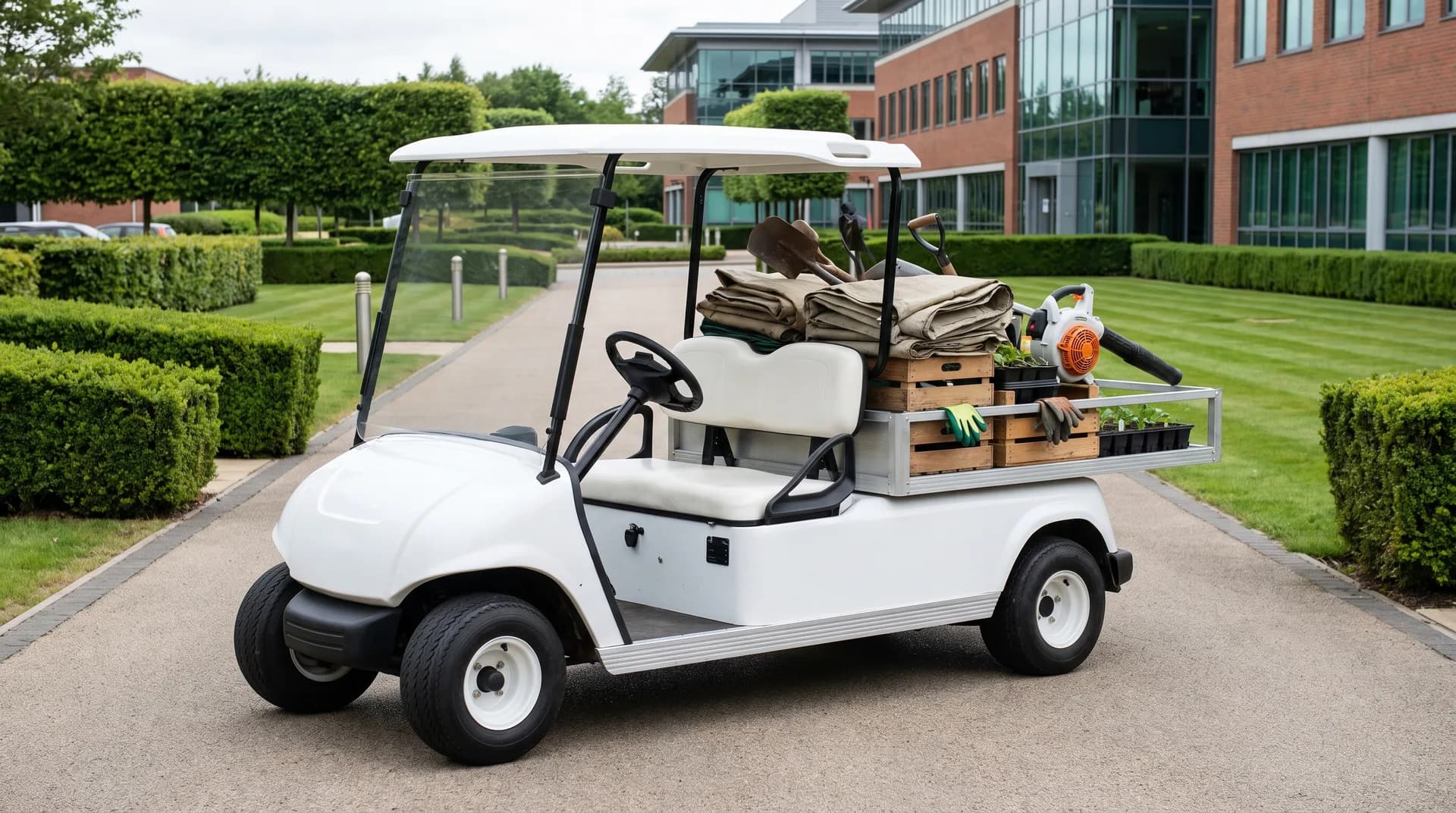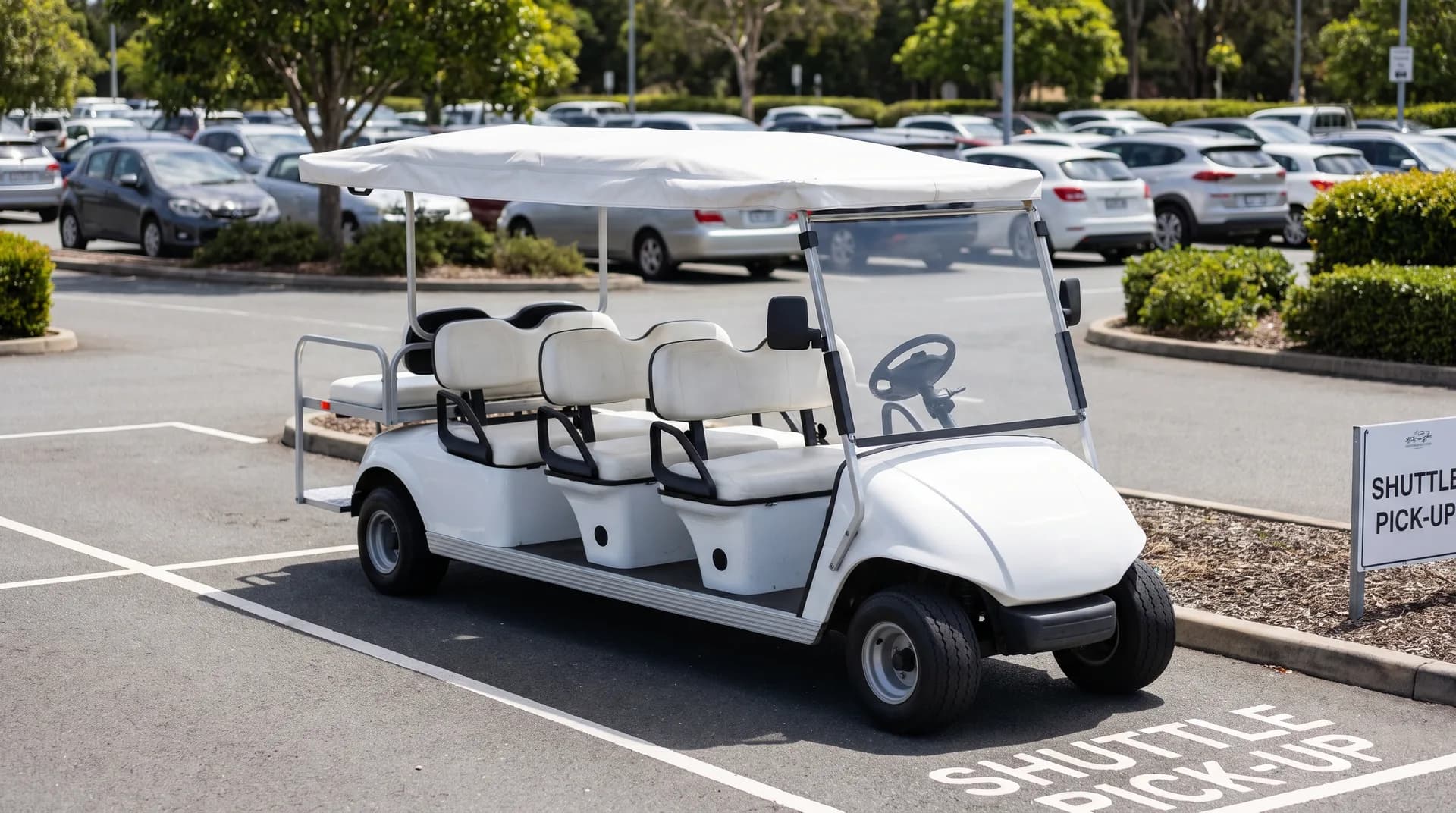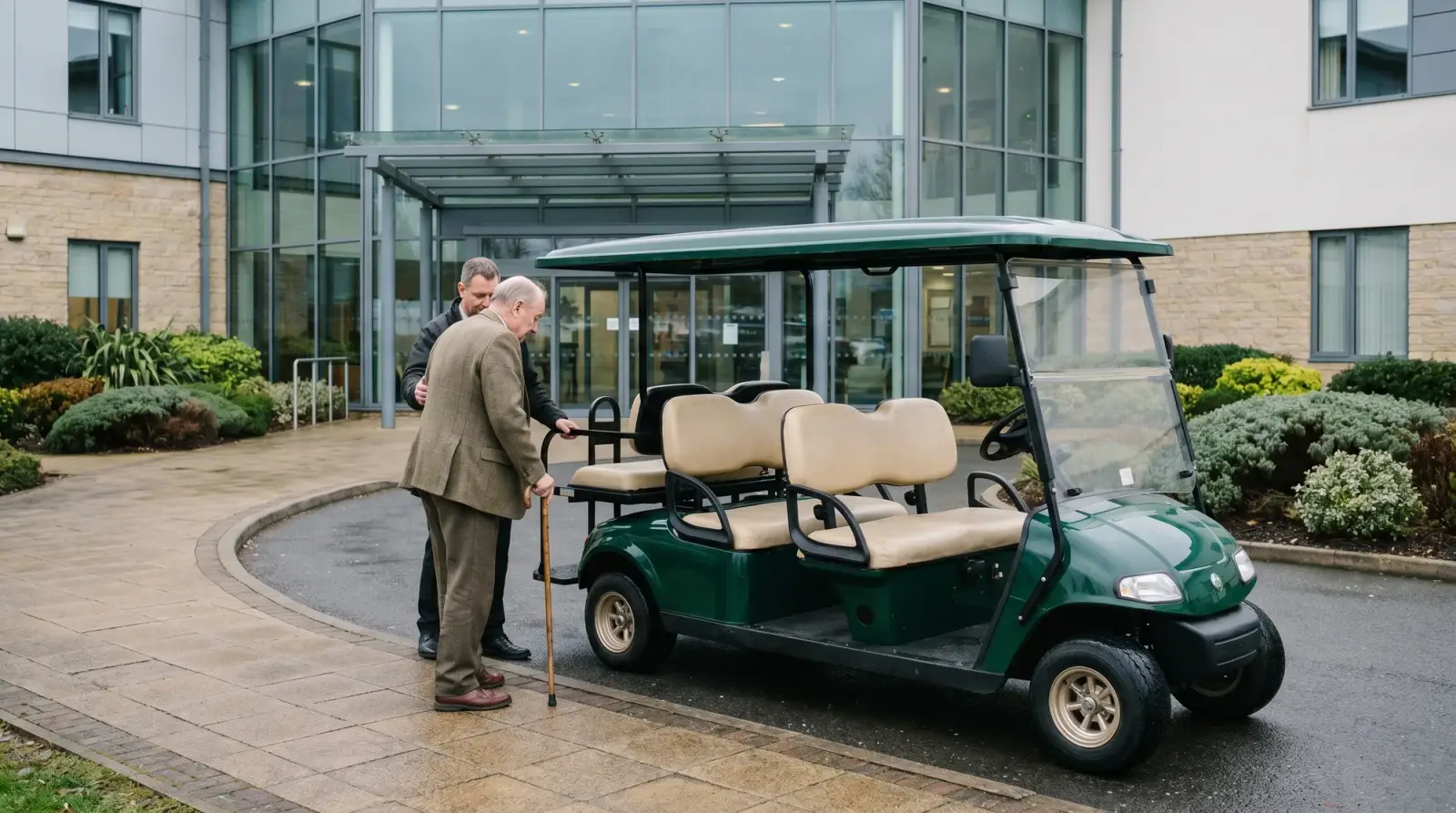
- The last few hundred metres from the car park or drop-off to the ward or clinic is where many patients and visitors struggle most.
- A patient transfer buggy at a hospital is a gentle, accessible electric shuttle for that final stretch, not clinical patient transport or an ambulance.
- It is built around dignity and accessibility: easy boarding, room for a wheelchair, and space for a companion to travel alongside.
- This is a separate thing from regulated non-emergency patient transport, which moves patients between sites and needs the right licensing and crews.
- A quiet electric buggy fits the NHS net-zero direction, removing fumes and noise right beside busy entrances.
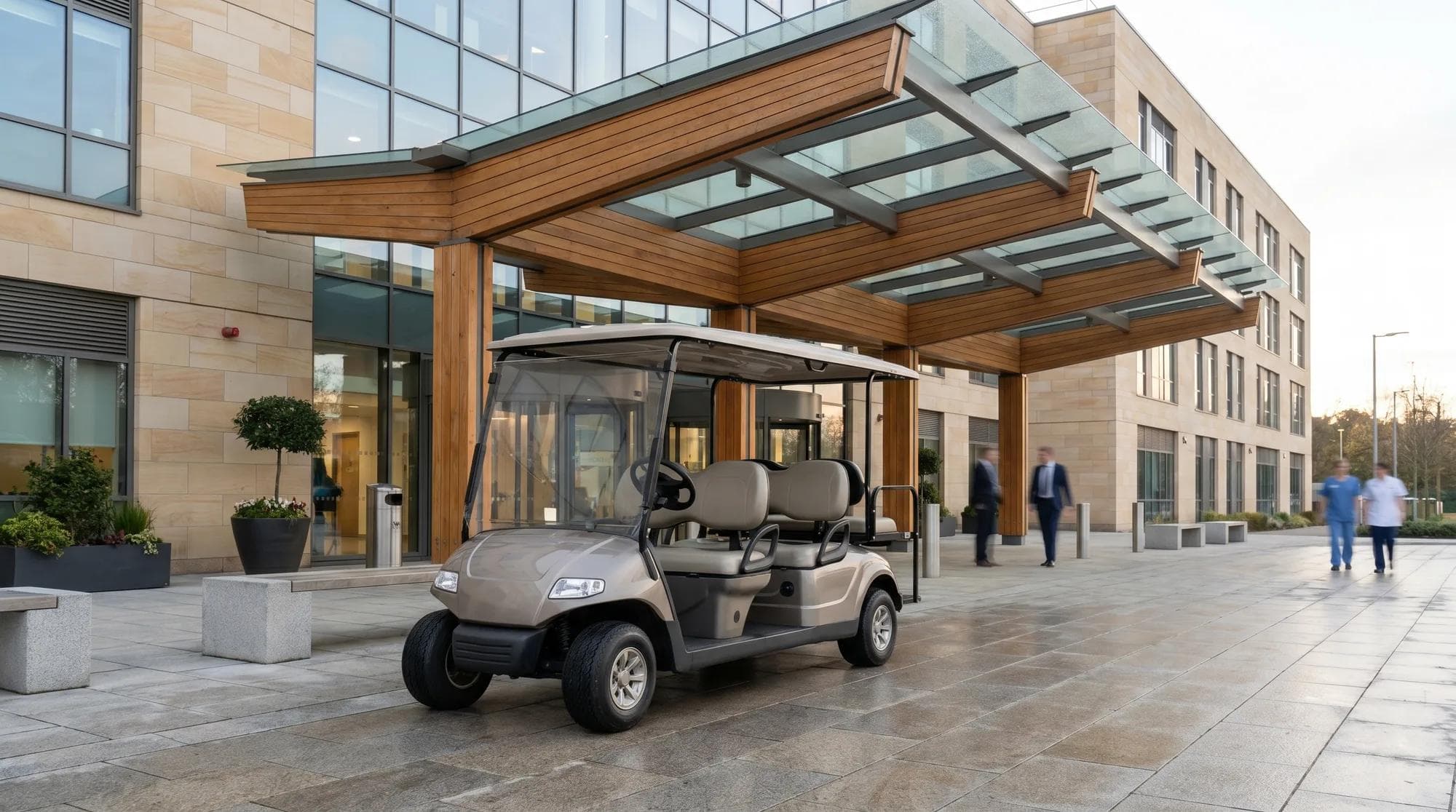
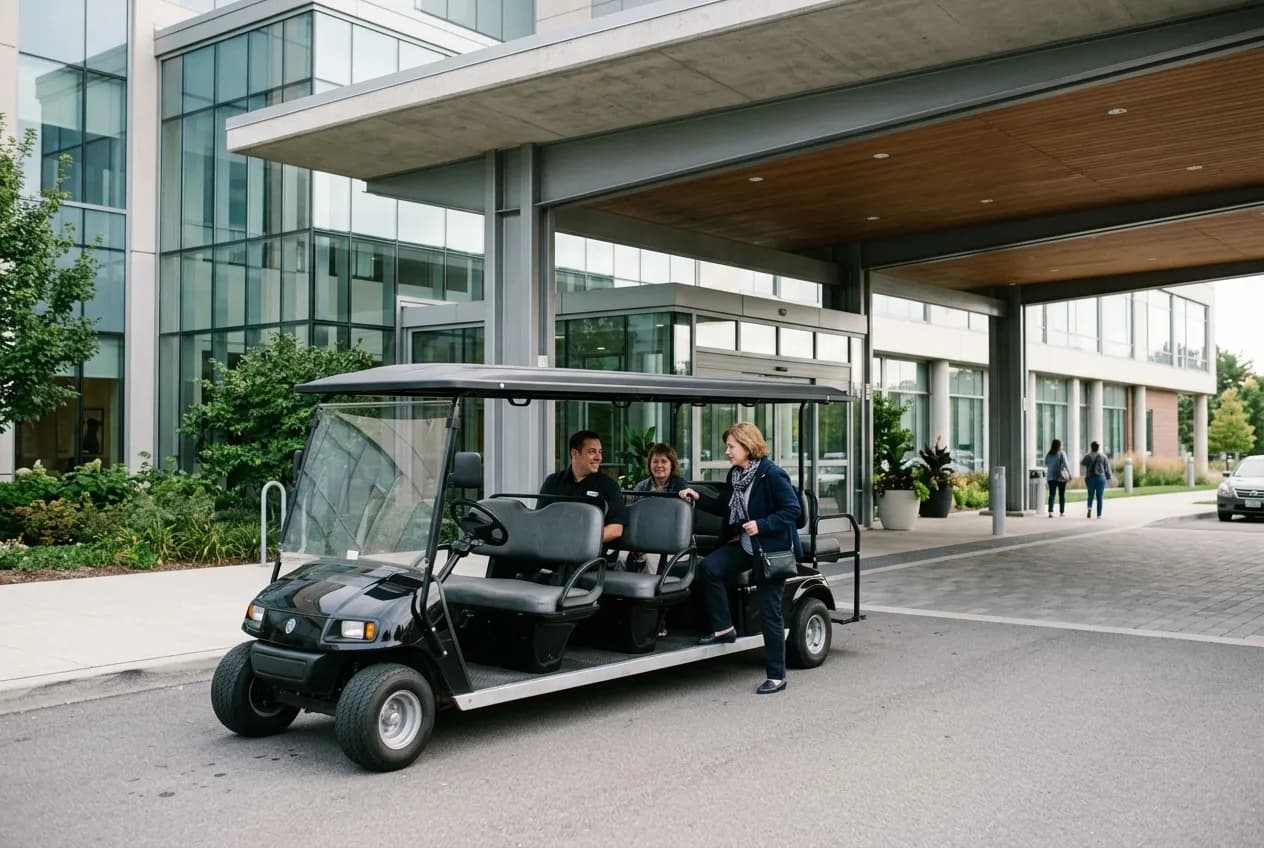
Most hospital sites have grown outwards over decades, and the result is the same everywhere: the car park is a long way from the front door, the clinic is further still, and the path between them is exactly the distance a frail or recovering person cannot manage. A patient arriving for an outpatient appointment, an elderly visitor coming to sit with a relative, someone discharged and waiting to be collected, all of them face that last few hundred metres on foot. A patient transfer buggy at a hospital closes that gap, carrying people gently from the car park or drop-off to the ward or clinic entrance.
It is worth being precise about what this is and is not. This is not clinical patient transport, and it is not an ambulance. It does not move patients between hospitals or carry anyone who needs medical care on the journey. It is a courteous, accessible shuttle for the short distance across the site, the bit of the journey that tires people out before they have even reached the door. Get that distinction clear and the rest of the planning is straightforward.
The car park to ward gap, and why it matters
The walk in is the part of a hospital visit that nobody designs and everybody endures. For a fit visitor it is a minor nuisance. For a patient who is in pain, short of breath, recovering from surgery or simply elderly, it can be the hardest part of the day. People arrive at their appointment already exhausted, or they cannot make the distance at all and miss it. Companions end up half-carrying relatives across a car park. A transfer buggy turns that walk into a couple of minutes seated, and it changes how the whole site feels to the people who use it. Our broader guide to electric buggies for hospitals and healthcare sets the wider picture.
What this service is, and what it is not
This matters enough to spell out plainly, because the wrong assumption causes real problems. A transfer buggy service is a site amenity, not a clinical one.
- Transfer buggy (this guide)
- Moves people across the site
- Non-emergency patient transport
- Moves patients between sites or home
- Transfer buggy (this guide)
- Patients and visitors who can sit safely
- Non-emergency patient transport
- Patients needing supervised transport
- Transfer buggy (this guide)
- The last few hundred metres on site
- Non-emergency patient transport
- Longer, often clinical journeys
- Transfer buggy (this guide)
- A trained driver, no clinical role
- Non-emergency patient transport
- Trained transport crew, often licensed
- Transfer buggy (this guide)
- A site shuttle, run by the Trust
- Non-emergency patient transport
- Regulated, commissioned service
| Transfer buggy (this guide) | Non-emergency patient transport | |
|---|---|---|
| What it does | Moves people across the site | Moves patients between sites or home |
| Who it carries | Patients and visitors who can sit safely | Patients needing supervised transport |
| Journey | The last few hundred metres on site | Longer, often clinical journeys |
| Crew | A trained driver, no clinical role | Trained transport crew, often licensed |
| Regulation | A site shuttle, run by the Trust | Regulated, commissioned service |
Built around dignity and accessibility
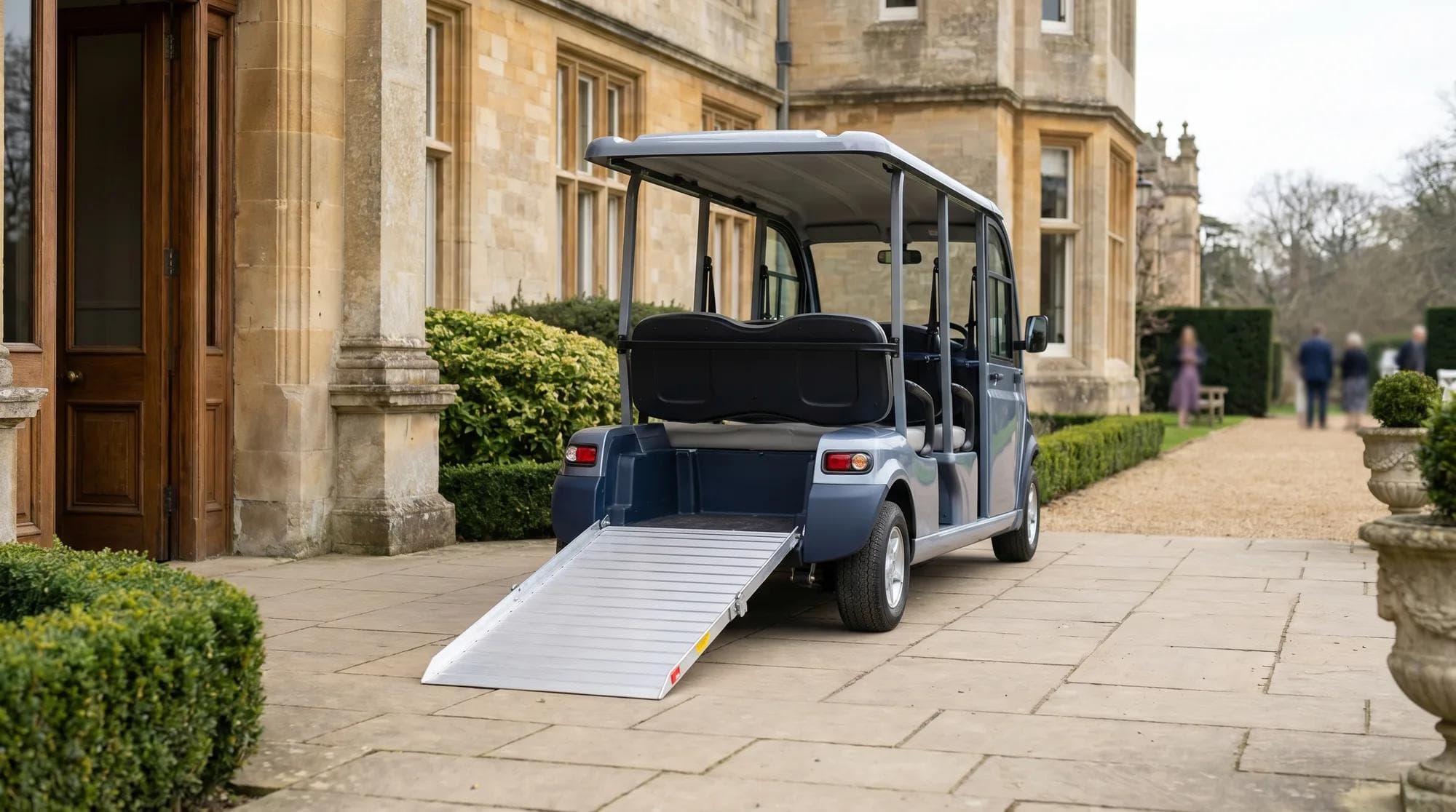
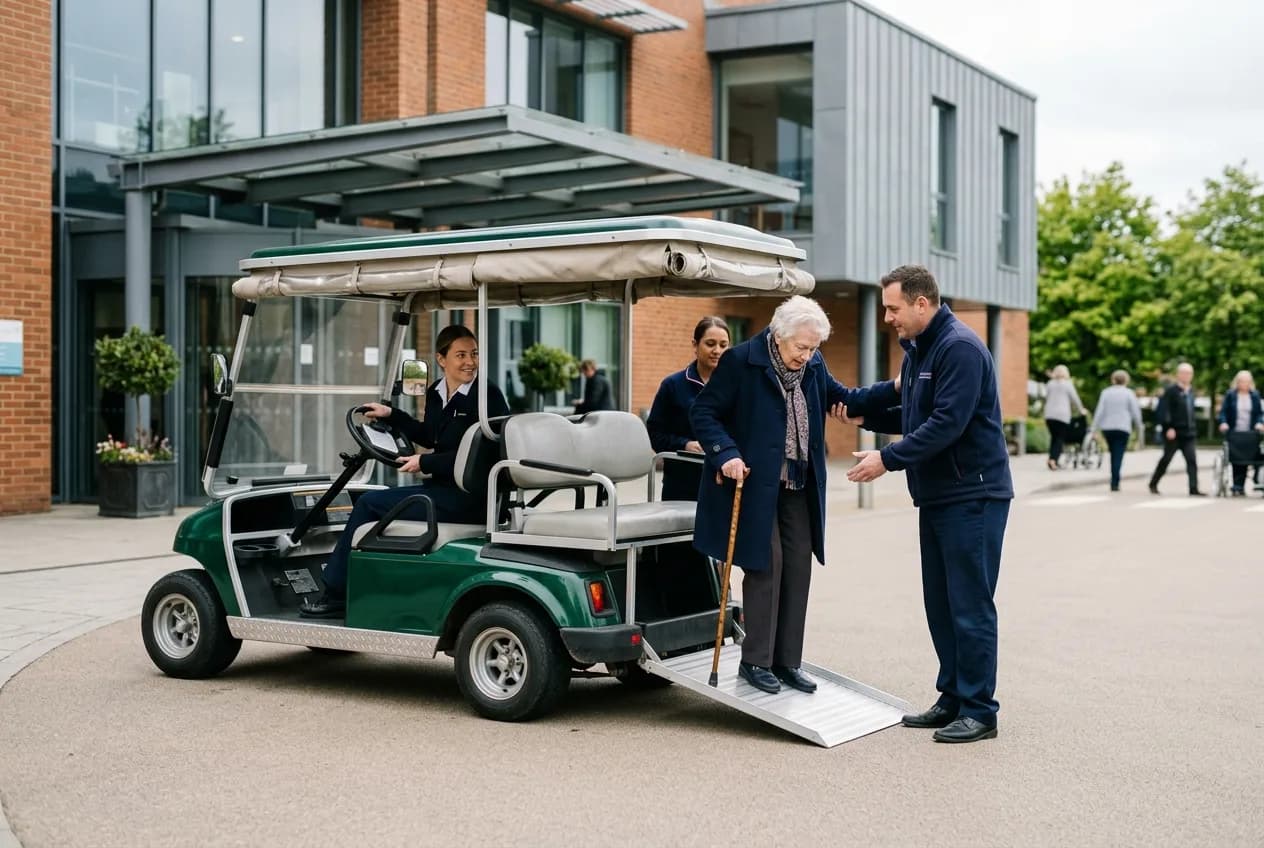
The point of a transfer buggy is to help the people who most need it, so accessibility cannot be an afterthought. The people using it are often the least able to walk far, which means the vehicle has to be genuinely easy to board, with a step-free or ramped option so a wheelchair user can get on without being lifted. It needs room for that wheelchair to travel safely, and a seat alongside so a companion or carer can ride too. None of that should feel medicalised; it should feel like a courtesy. We cover the build detail in our guide to accessible electric buggies.
- Step-free or ramped boarding, so frail and wheelchair-using passengers get on easily.
- Secure space for a wheelchair, with a companion seat alongside.
- A gentle, steady ride at low speed, comfortable for people in pain or recovering.
- Weather protection, so the service runs whatever the British weather does.
How a transfer service usually runs
Most sites do not need a complicated scheme. A transfer buggy works best as a simple, visible service on the routes that matter, with a driver who knows the site and a clear pick-up point people can find.
- 01
Map the hard routes
Find the genuine pinch points: the far car park to the main entrance, the drop-off to the outpatient clinic, the link to a park-and-ride. Those are where the buggy earns its place.
- 02
Set clear pick-up points
Pick a small number of obvious, signed waiting spots so patients and visitors know exactly where to find the buggy, rather than hoping to flag one down.
- 03
Match the vehicle to the people
Specify accessible boarding and a companion seat, because the passengers who most need the service are often the least mobile.
- 04
Brief the driver
A patient, helpful driver who knows the site and can assist boarding makes the whole thing work. Their job is courtesy and care, not clinical support.
Accessible people-movers, built for your Trust
Passenger and step-free accessible buggies, assembled and finished in the UK in your Trust's colours and supported by a 24-hour call-out.
Why electric, and how it fits NHS net zero
Running a transfer buggy outside hospital doors all day is exactly the kind of vehicle that should be electric. There are no exhaust fumes at the point of use, which matters right beside entrances where patients and visitors gather and where some are already unwell. It is quiet, which suits a setting where calm matters. Running costs are lower than petrol or diesel, and a battery sized to the daily route runs the operating day and charges overnight. It also moves the site in the right direction on carbon: the NHS has committed to a net-zero future, with owned and leased vehicles set to be zero-emission by the mid-2030s, and a clean transfer buggy is a visible, easily-measured step that way.
Thinking about a transfer service for your site?
Tell us the car parks, the entrances and the routes patients and visitors find hardest. We will recommend an accessible vehicle and a sensible service, finished in your Trust's colours.
Frequently asked questions
Is a patient transfer buggy the same as patient transport or an ambulance?+
No. A transfer buggy carries patients and visitors the last few hundred metres across the site, from car park or drop-off to the ward or clinic. It is not clinical patient transport between hospitals and it is not an ambulance, which are separate, regulated services.
Who can use a transfer buggy?+
Patients and visitors who can sit safely and just need help with the distance, particularly anyone who cannot walk far. Anyone needing medical supervision on the journey should use the appropriate clinical transport instead.
Can it carry a wheelchair user?+
Yes, if you specify an accessible vehicle. We build step-free and ramped options so a wheelchair user can board and travel safely, with a seat alongside for a companion or carer.
Does a transfer buggy need to be regulated like patient transport?+
It is a site shuttle run by the Trust, not a commissioned clinical transport service, so it sits in a different category. Regulated non-emergency patient transport, which moves patients between sites, has its own licensing and crewing requirements that a transfer buggy does not replace.
Does an electric transfer buggy support NHS net-zero targets?+
Yes. Replacing a fuelled vehicle outside the doors with an electric one removes a clear, measurable source of on-site emissions and supports the NHS commitment to a zero-emission owned fleet by the mid-2030s.
Related solutions
Ready to explore what we build?
See the vehicles and the setting this applies to, or get a tailored quote built around your site.

Ready to find the right buggy?
Tell us how and where it will work and we will specify a vehicle and a tailored quote built around you. Every build comes with a 3-year warranty and a 24-hour priority call-out.
Our guides are written and reviewed by the Hawke Electric Vehicles team, the people who specify, build, deliver and support the vehicles. We focus on honest, practical advice and flag where a figure depends on the build rather than guessing.
More guides by Hawke