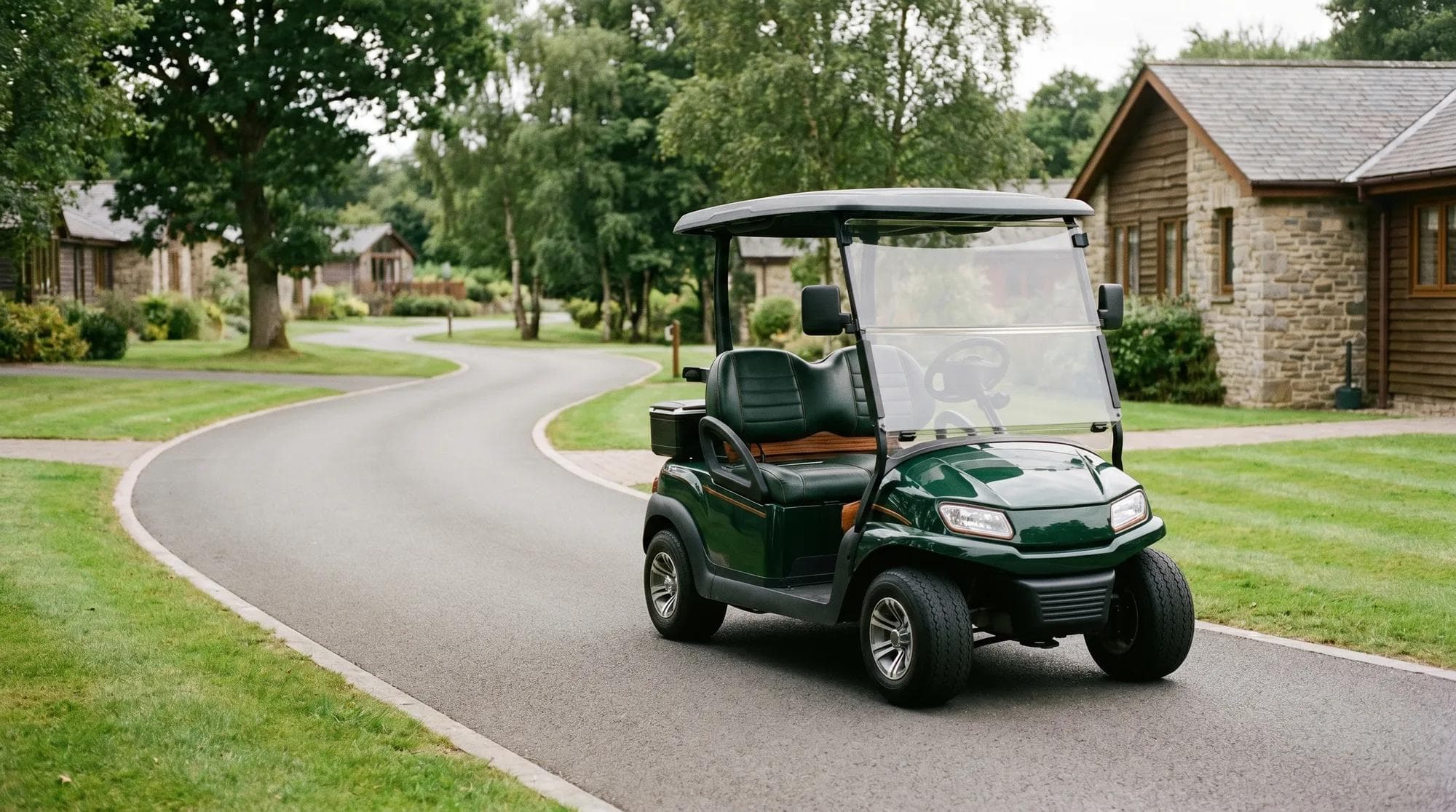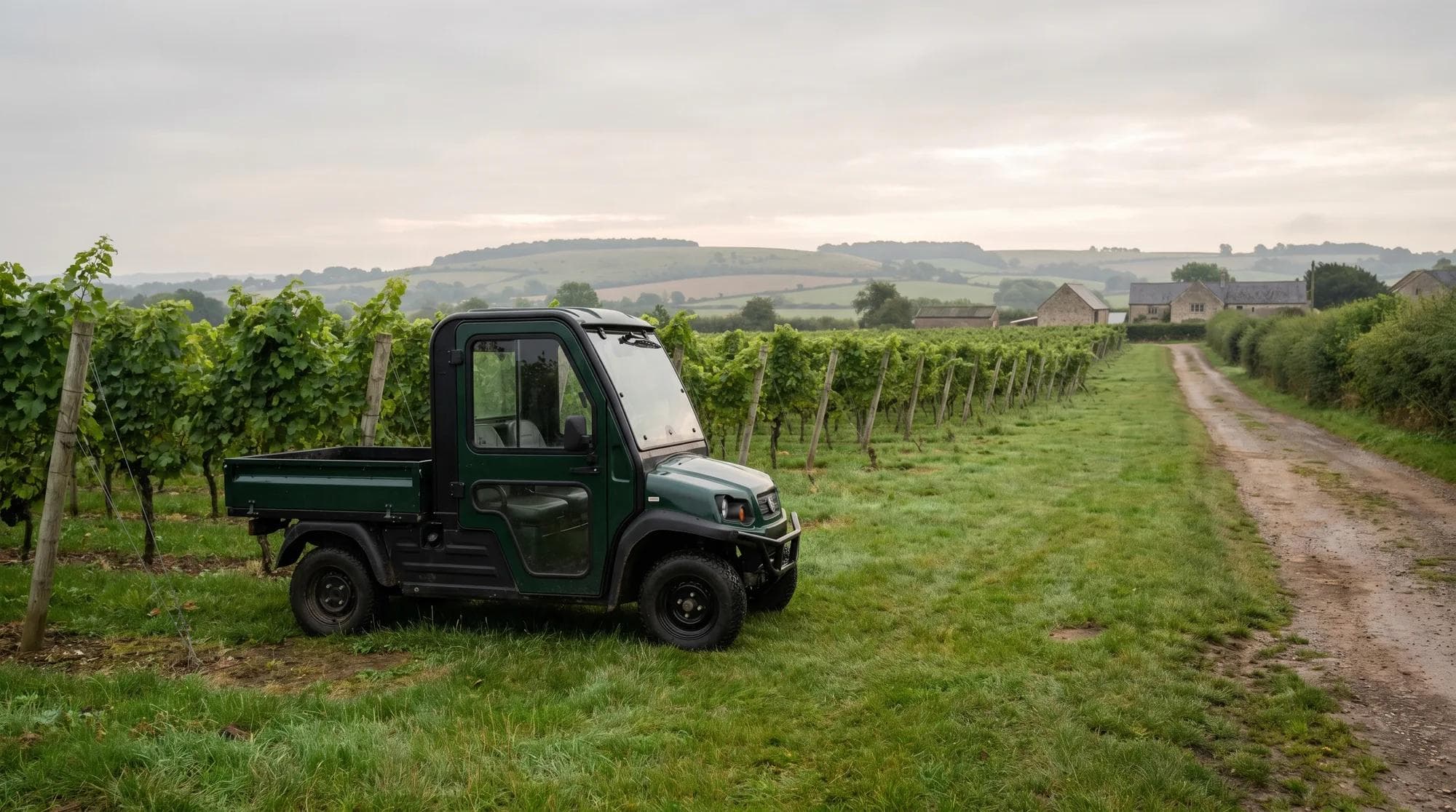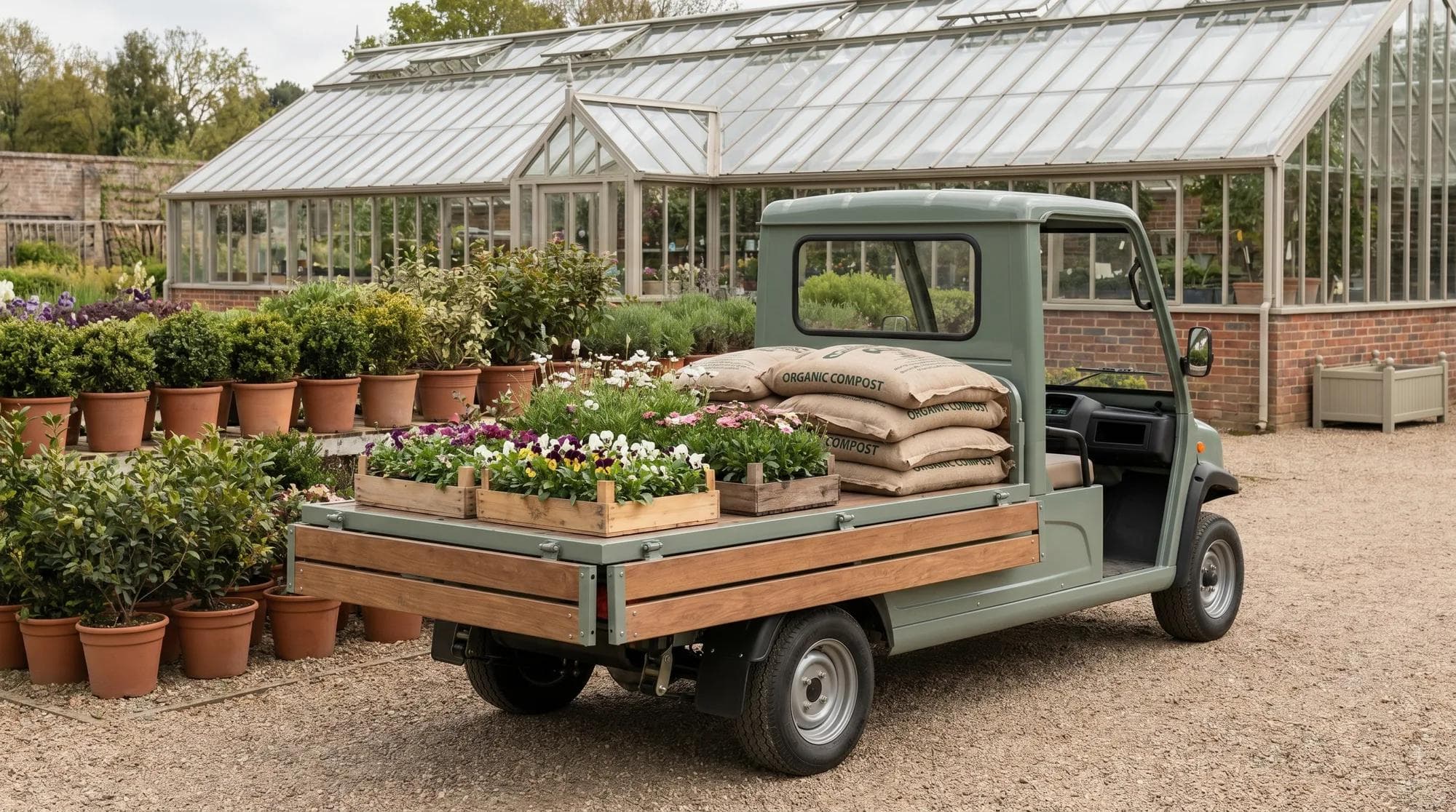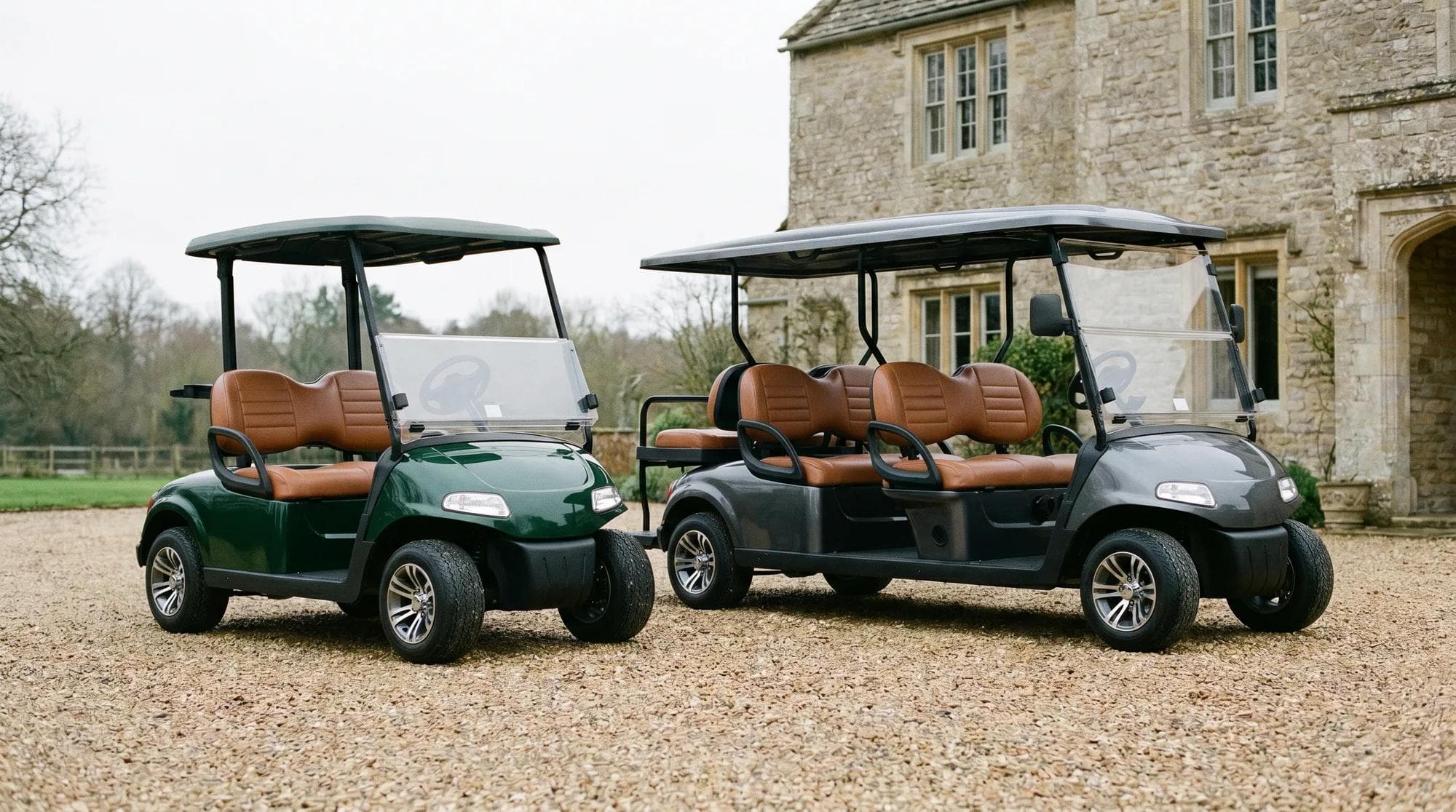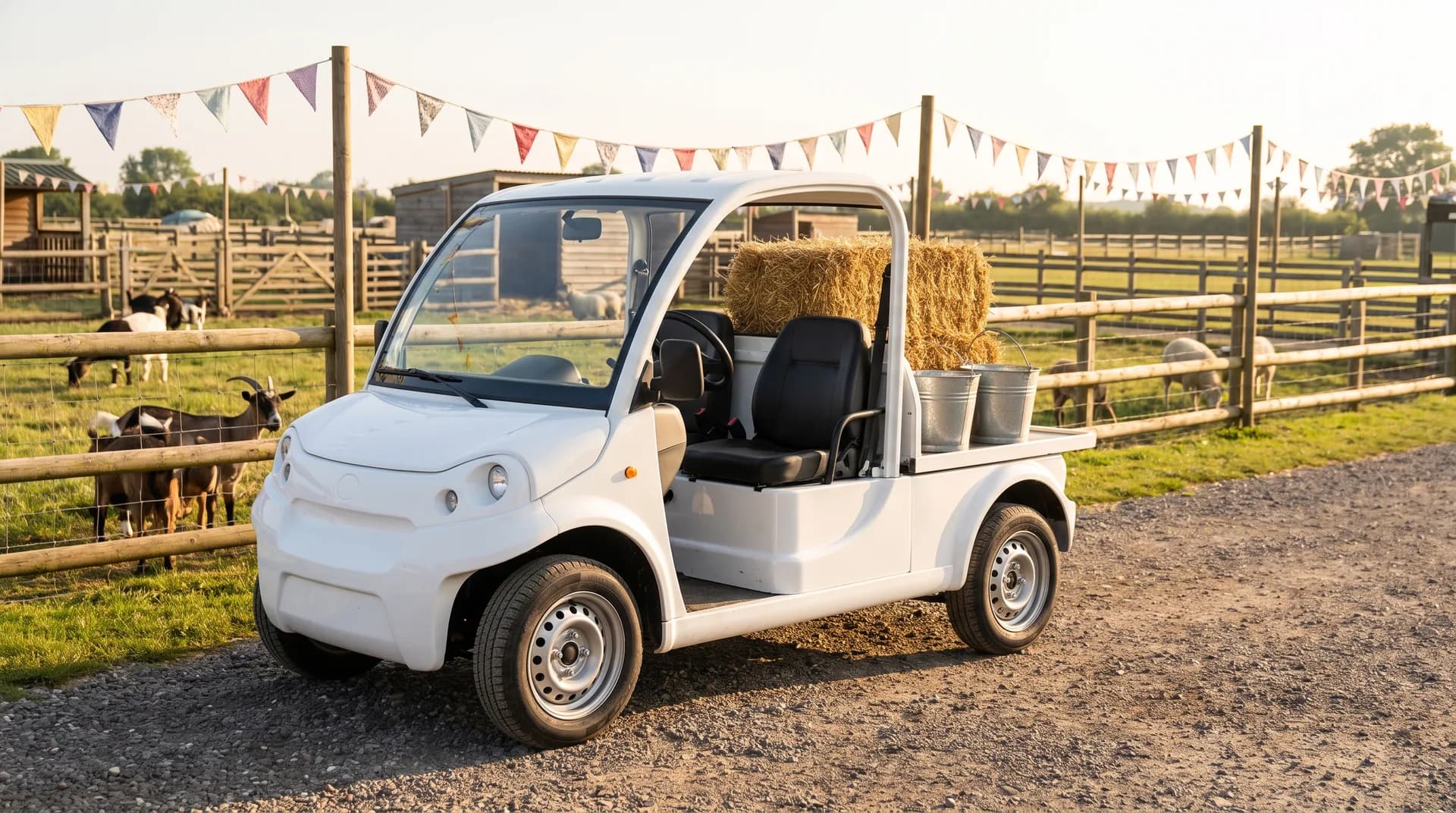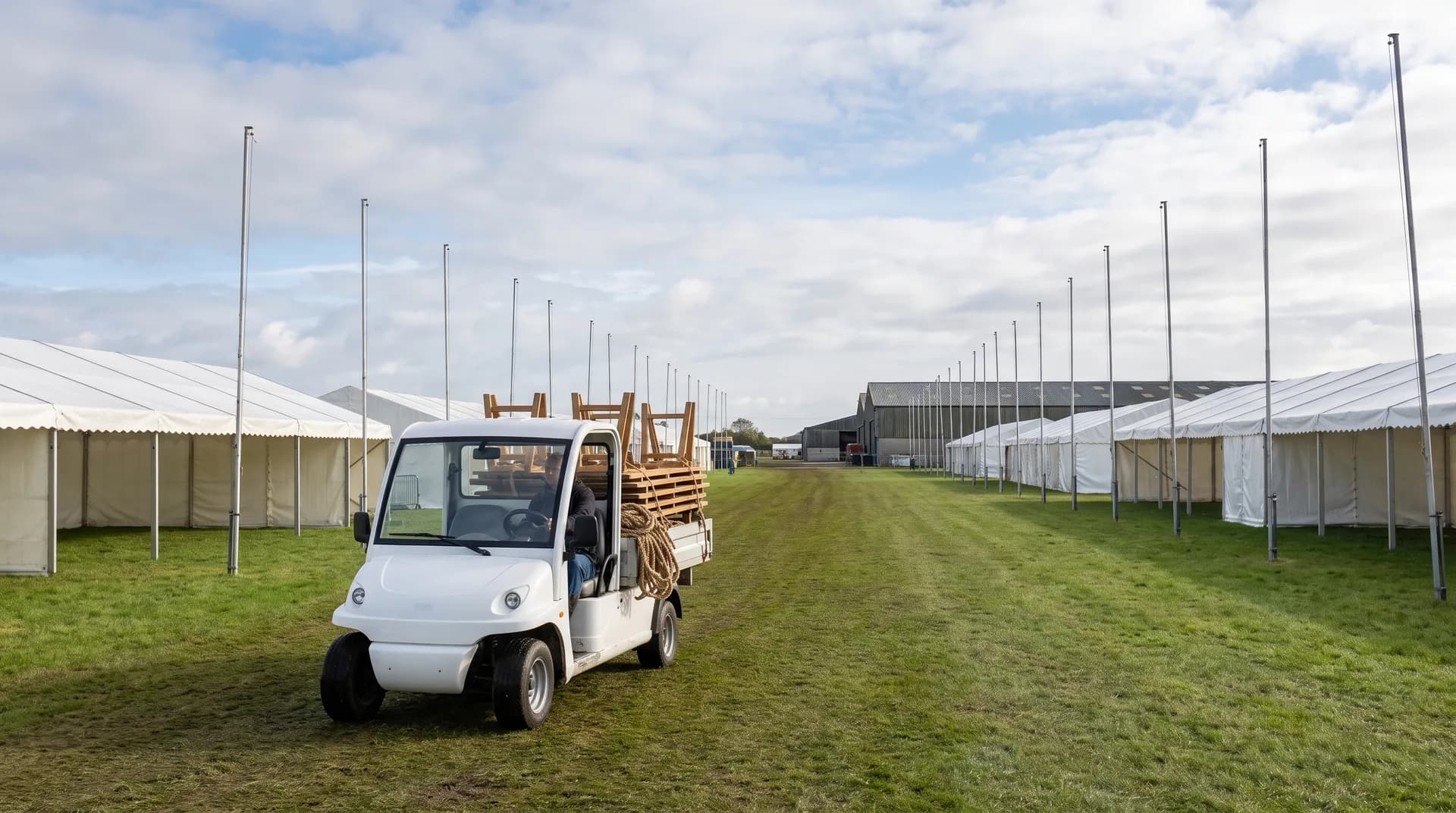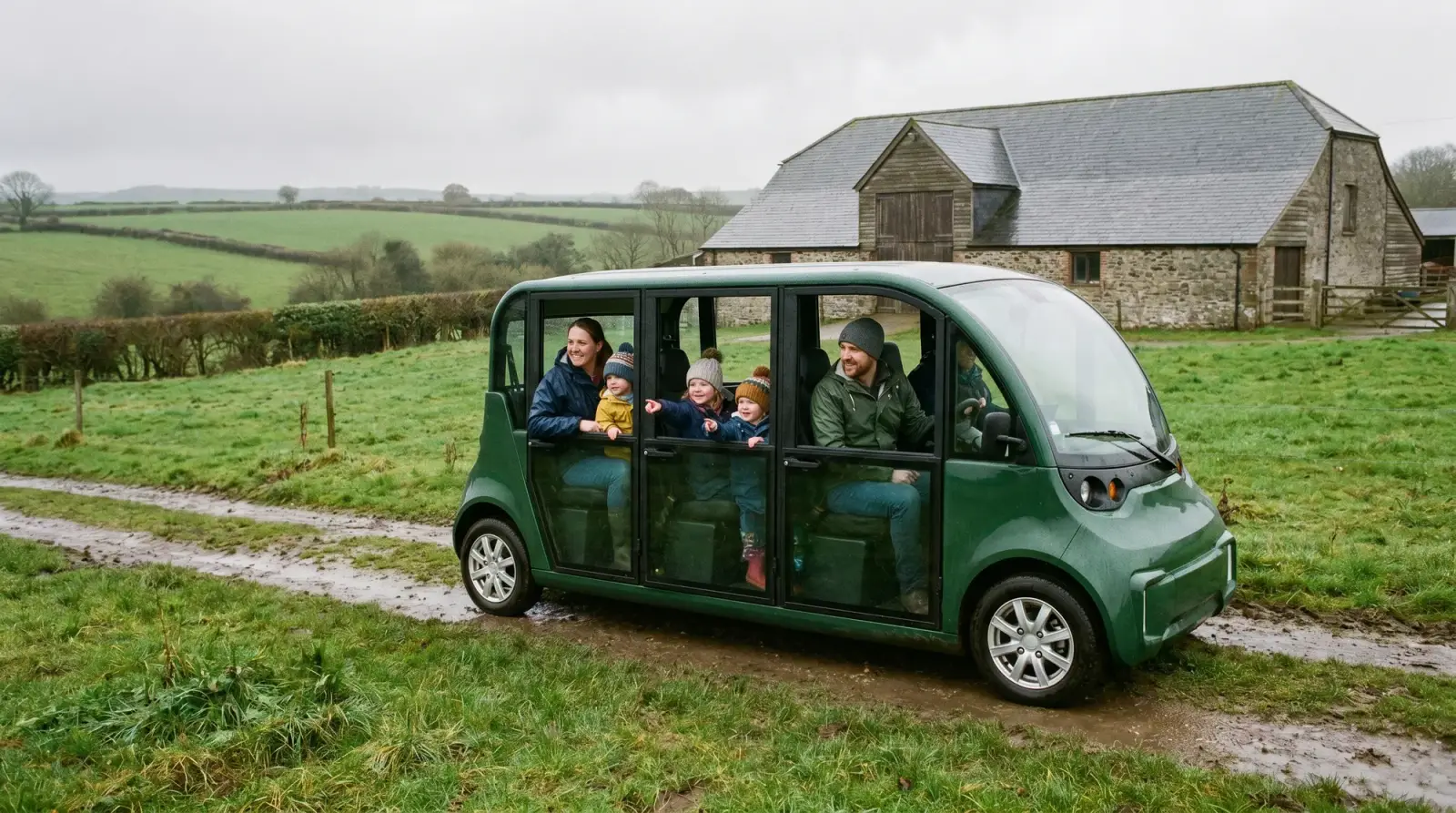
- A farm visitor transport buggy moves families, pushchairs and produce in comfort, where the old tractor and trailer was slow and weather-dependent.
- Electric runs quiet and clean, which suits animals, children and a food-led farm shop far better than a diesel exhaust.
- The ground is the deciding factor: spec for grass, mud and gradients, not a flat car park, and the vehicle copes year round.
- One vehicle can carry visitors at peak times and shift feed, stock or boxes when it is quiet, so it earns its keep all week.
- Hiring extra vehicles for the summer and half-term peaks avoids buying a fleet you only need for a few months.
For years the trailer ride was the farm tour. A tractor up front, straw bales for seats, and visitors hanging on as it bumped across the field. It has charm, but it is slow, noisy, hard work in the wet, and it ties up a tractor and a driver for the day. More farm attractions are now moving people on a clean, all-weather electric people-mover instead, and using it for the produce as well as the families.
If you run a farm park, a pick-your-own, a farm shop with land around it or a working farm that opens to visitors, a farm visitor transport buggy quietly solves a lot of small problems at once. This guide covers what the job really asks of a vehicle, how the ground shapes the spec, and how to size a fleet without overbuying for a short season.
What a farm people-mover actually has to do
The brief on a farm is broader than on a hotel driveway. In a single day a vehicle might carry a family with a pushchair to the animal barns, run a guided tour along a muddy track, then drop the seats and shift trays of fruit or sacks of feed once the gates close. It needs to be easy for grandparents and small children to climb into, gentle enough not to startle livestock, and tough enough to do it again tomorrow in the rain.
- Carry families, pushchairs and wheelchairs comfortably across uneven ground.
- Run guided tours and shuttle loops between car park, attractions and farm shop.
- Move produce, feed, stock and equipment when the site is closed to visitors.
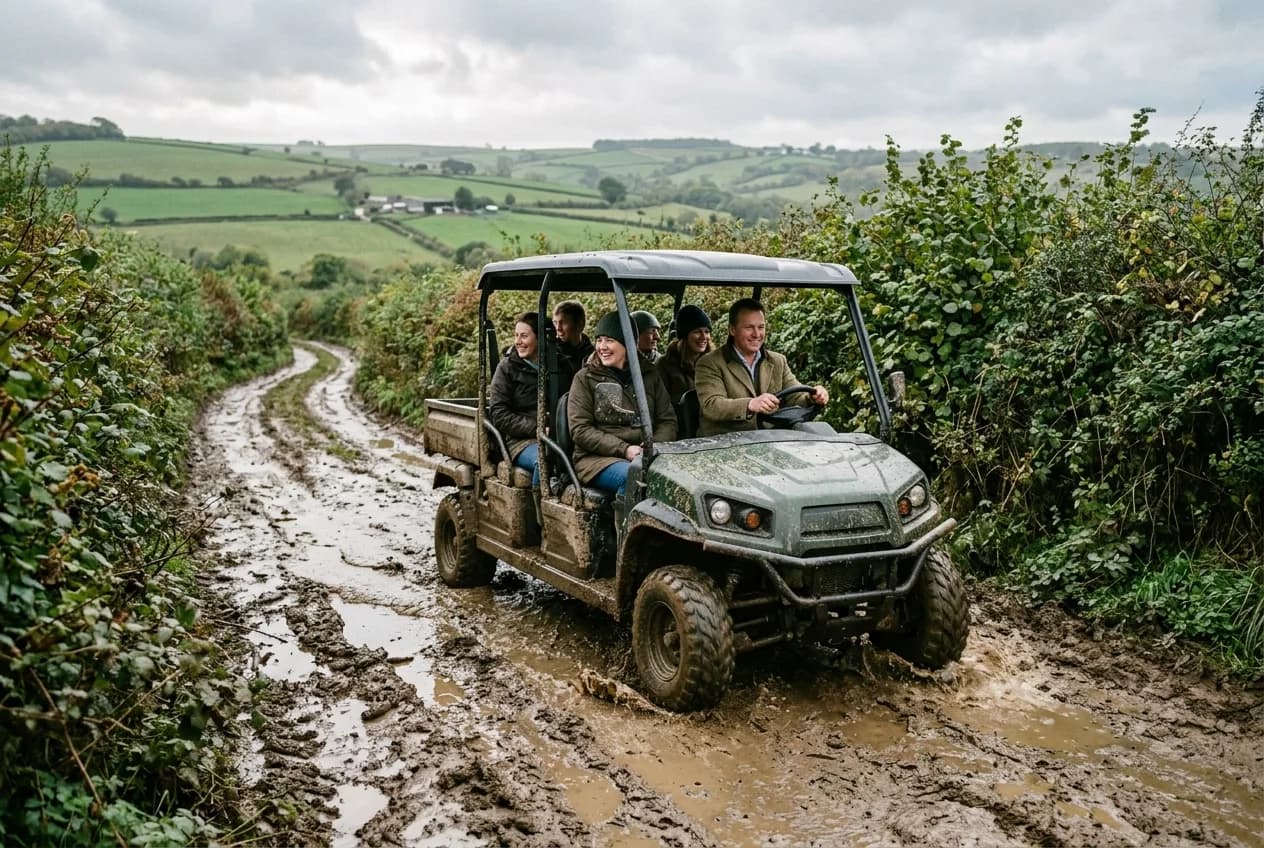
- Cope with grass, mud, gravel and slopes through a full British year.
- Start clean and quiet every morning, with no engine to warm up or fuel to fetch.
Why electric suits a farm better than diesel
A farm is a food and family environment, and that is where electric earns its place. There is no exhaust drifting across a pick-your-own field or a cafe terrace, and no diesel rattle to spook animals or wake a sleeping toddler in a pushchair. It starts on a cold morning without fuss, there is no fuel to store or carry to the far paddock, and the running costs are a fraction of a petrol or diesel equivalent. For a vehicle doing short loops all day, an overnight charge covers the work.
The ground decides the spec
This is the part that catches people out. A buggy built for a flat resort path will struggle on a wet field with a gradient, and a visitor stuck halfway up a muddy track is the opposite of a good day out. So we start with your worst ground, not your best. Wet grass, rutted tracks, a steep approach to the top field: tell us the hardest route the vehicle will run and we spec the tyres, ground clearance, motor and traction to suit. Get that right and the same vehicle that copes in August copes in February.
- Tractor and trailer
- Bales and a bumpy ride; hard for pushchairs
- Electric people-mover
- Proper seats, low step-in, room for a wheelchair
- Tractor and trailer
- Loud diesel, exhaust across the field
- Electric people-mover
- Near-silent, no local emissions
- Tractor and trailer
- Slow and uncomfortable, often cancelled
- Electric people-mover
- All-weather with the right cab and tyres
- Tractor and trailer
- Ties up a tractor and driver
- Electric people-mover
- Doubles as a load carrier for produce and feed
| Consideration | Tractor and trailer | Electric people-mover |
|---|---|---|
| Comfort and access | Bales and a bumpy ride; hard for pushchairs | Proper seats, low step-in, room for a wheelchair |
| Noise and fumes | Loud diesel, exhaust across the field | Near-silent, no local emissions |
| Wet-weather use | Slow and uncomfortable, often cancelled | All-weather with the right cab and tyres |
| Off-peak value | Ties up a tractor and driver | Doubles as a load carrier for produce and feed |
Moving families and produce on the same vehicle
The most useful farm vehicles do two jobs. During opening hours they carry visitors; out of hours they carry the harvest, the feed, the fencing or the boxes for the farm shop. A people-mover with a convertible rear, or a paired passenger and utility build, means you are not buying separate vehicles for separate jobs. That dual use is often what makes the numbers work, because the buggy is busy whether the gates are open or not.
Pick-your-own sites lean on this hardest. The same vehicle that runs visitors out to the strawberry field carries the full punnets back, and at the end of the day clears the rows. Our guides to vineyard transport and garden centres cover similar mixed-use thinking if your site overlaps.
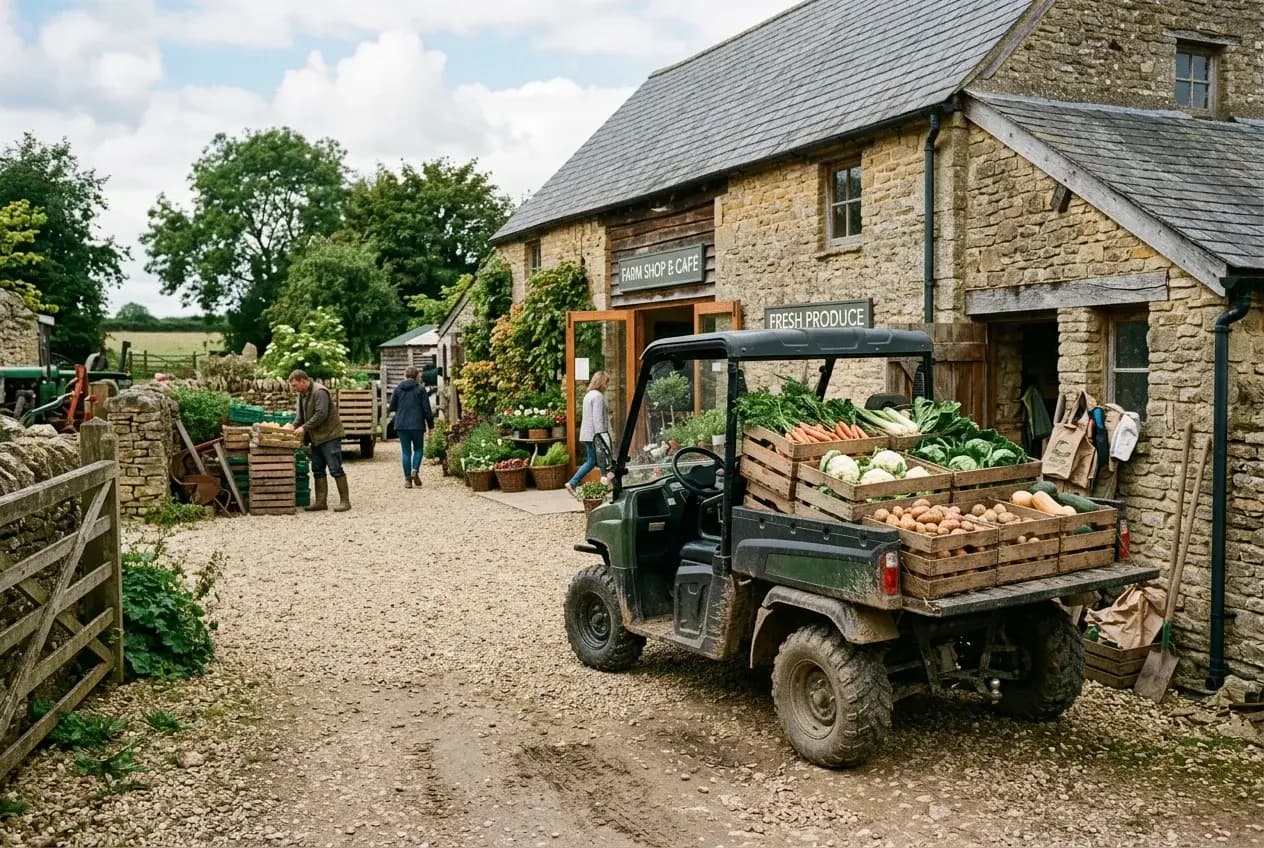
Built for the farm, branded as yours
Passenger people-movers and utility builds, made to order for grass, mud and gradients, and liveried in your farm's name.
Branding the experience
On a visitor attraction the vehicle is part of the day out, and part of the brand. Because every vehicle is built to order, you choose the colour, the finish and the livery so it reads as your farm rather than a generic hire cart. Children remember the ride, parents photograph it, and a smartly branded people-mover lifts the whole impression of the place. It is a small thing that quietly does a lot of work.
Size the fleet for the season, not the peak
Farm attractions are seasonal by nature. A pumpkin patch in October or a school-holiday rush is a world away from a quiet Wednesday in January. The trap is buying enough vehicles for your busiest fortnight and then watching most of them sit idle for the rest of the year. The sensible pattern is to own a small core fleet for everyday use and hire extra vehicles for the peaks. You pay for capacity when you actually need it.
Move your visitors and produce the easy way
Tell us your site, the ground it sits on and the people and produce you need to move. We will recommend the right farm visitor transport buggy, built and liveried for you, with no pressure to over-buy.
Frequently asked questions
Will an electric buggy cope with mud and slopes?+
Yes, if it is specified for your ground. We build for grass, mud, gravel and gradients with the right tyres, clearance and traction. Tell us the hardest route on the farm and we spec to that, not to a flat car park.
Can the same vehicle carry visitors and produce?+
Often, yes. A convertible rear or a paired passenger and utility build lets one vehicle move families during opening hours and feed, stock or boxes when you are closed. That dual use is usually what makes the numbers work.
Is it suitable around animals and young children?+
It suits them well. An electric drivetrain is near-silent and has no exhaust, so it does not startle livestock or fill a family attraction with fumes. Low step-in and proper seating make it easy for children and grandparents.
Do I need to buy a fleet for the busy season?+
No. Most farms own a small core fleet for everyday use and hire extra vehicles for the peaks, such as school holidays or the pumpkin season. You only pay for the extra capacity when you need it.
Can it be branded for our farm?+
Yes. Every vehicle is built to order, so the colour, finish and livery are chosen to match your farm. It becomes part of the day out and part of the brand rather than a generic cart.
Related solutions
Ready to explore what we build?
See the vehicles and the setting this applies to, or get a tailored quote built around your site.
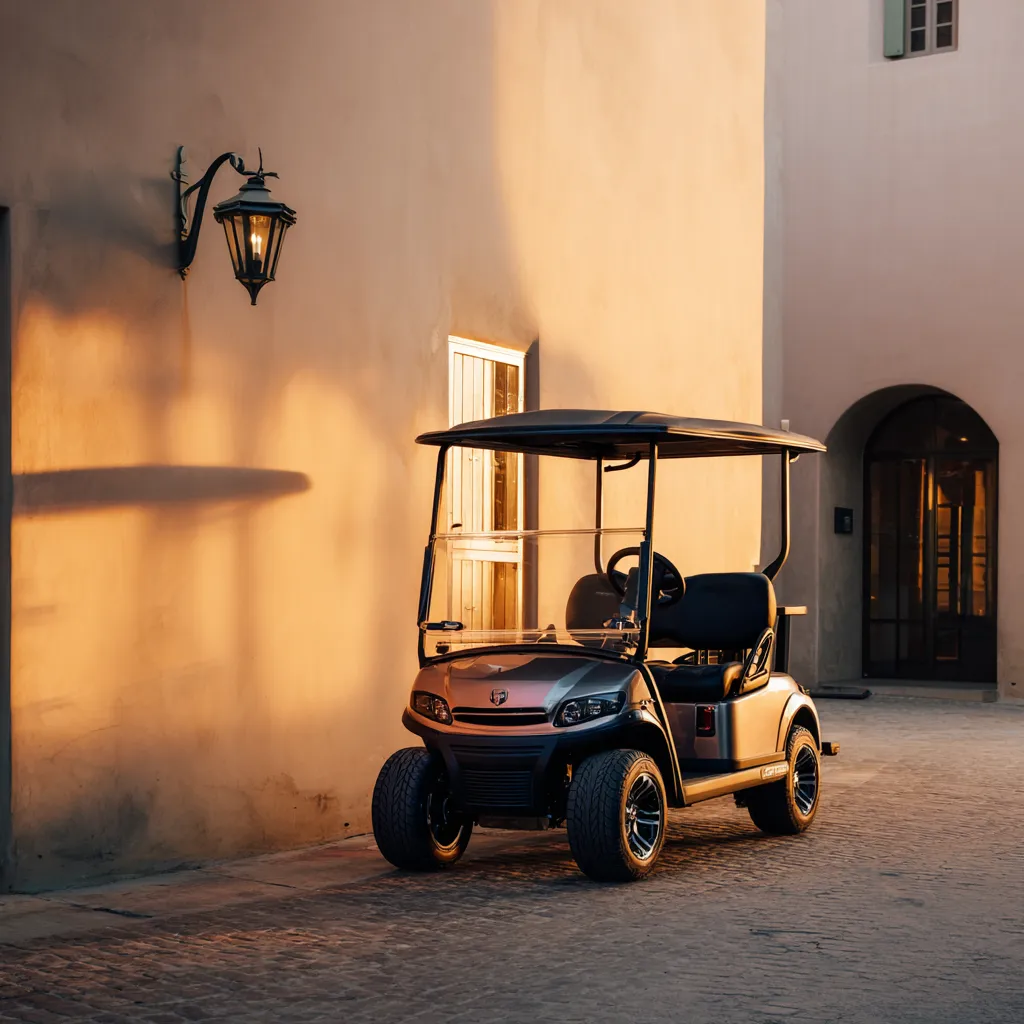
Ready to find the right buggy?
Tell us how and where it will work and we will specify a vehicle and a tailored quote built around you. Every build comes with a 3-year warranty and a 24-hour priority call-out.
Our guides are written and reviewed by the Hawke Electric Vehicles team, the people who specify, build, deliver and support the vehicles. We focus on honest, practical advice and flag where a figure depends on the build rather than guessing.
More guides by Hawke