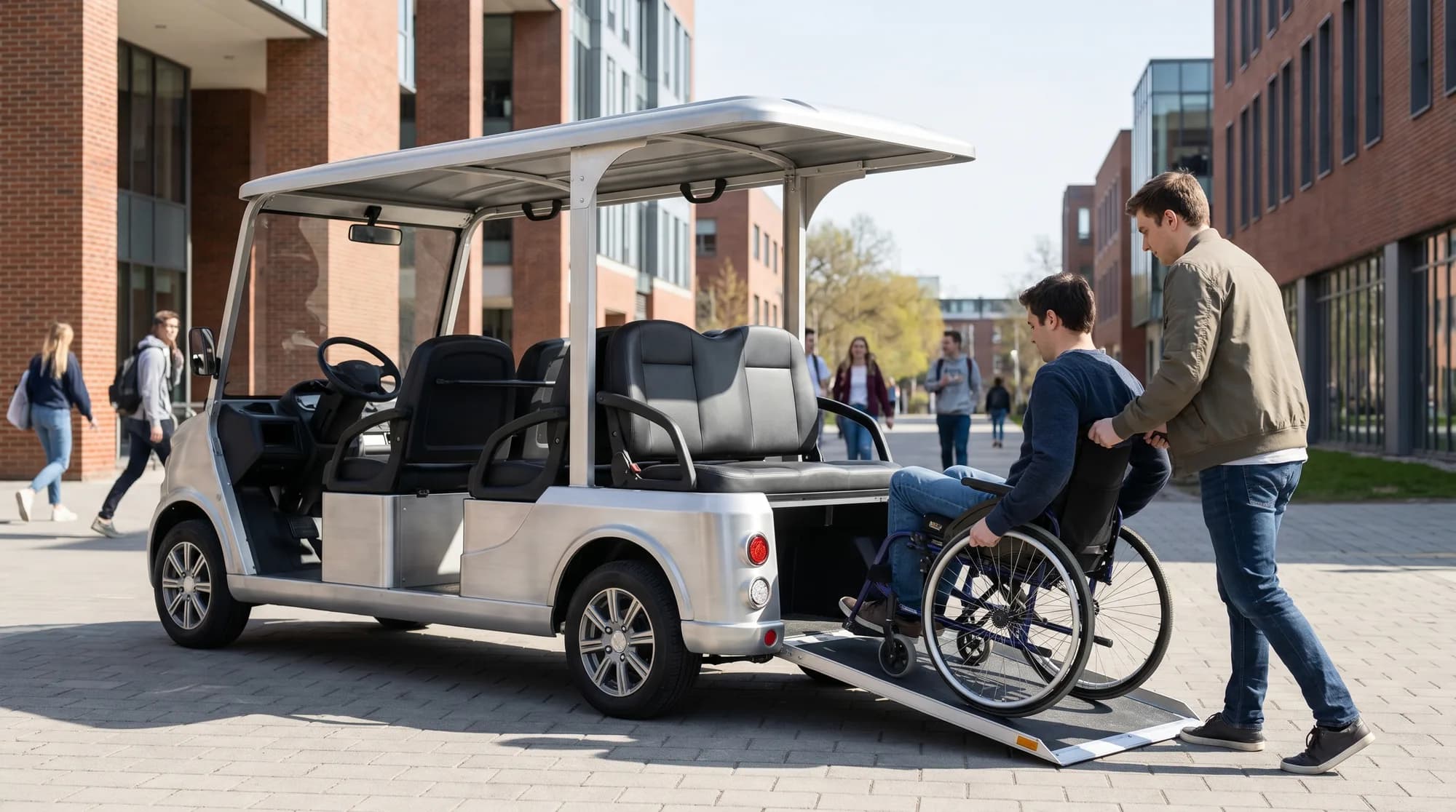
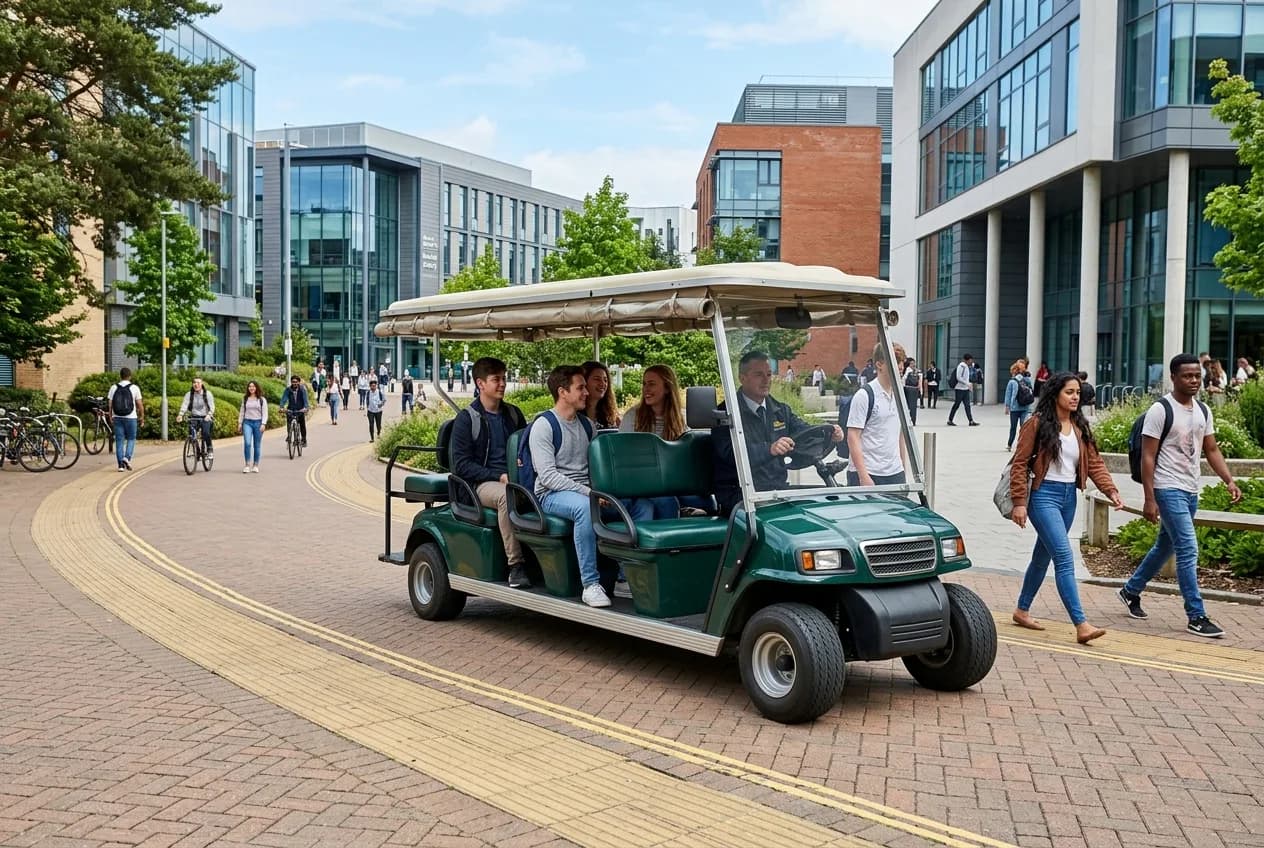
- An accessible campus shuttle electric vehicle gives disabled students and staff a step-free way to cross a large site, on the same service everyone else uses.
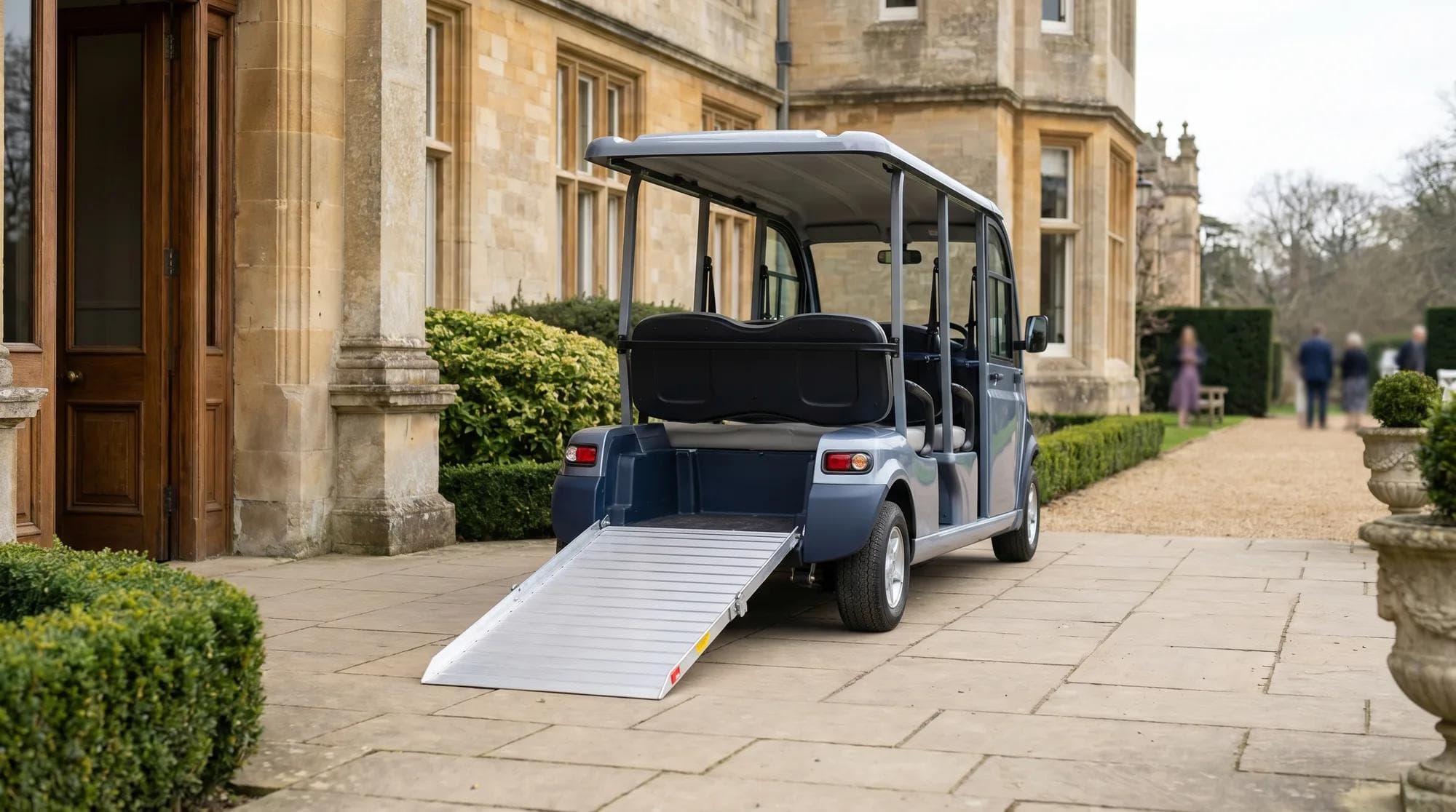
- Step-free or ramped boarding, secure wheelchair spaces and room for a companion are what turn an ordinary shuttle into an accessible one.
- Inclusive transport supports a university's duties under the Equality Act, by making the site reasonably navigable for people who cannot walk far.
- On-demand suits low, scattered demand; a fixed loop suits steady, predictable flows. Many campuses run a sensible mix.
- Specify accessibility into the build from the start. Adding it afterwards is harder and rarely as good.
A modern campus can be a small town. Lecture halls at one end, halls of residence at the other, the library, the sports centre and the medical practice spread between them. For most people that is a brisk walk. For a student who uses a wheelchair, has a long-term health condition or is recovering from an injury, the same distance can be the thing that decides whether a lecture is reachable at all. An accessible shuttle is one of the most direct ways a university can fix that.
The aim is simple: a step-free, ramped electric shuttle that moves disabled students and staff around a large site, so getting to a class or a meeting is not a daily ordeal. Done well, it is not a separate service set apart from everyone else, but part of the same campus transport, built so that anyone can use it. This guide covers what makes a shuttle genuinely accessible and how to plan one.
What makes a shuttle genuinely accessible
Accessible is a specific thing, not a label. A vehicle counts when someone who uses a wheelchair can board, travel safely and get off without help they would rather not need, and without being separated from the people they are with. In practice that comes down to a handful of features.
- Step-free boarding, with a ramp or low floor rather than a step up.
- A secure, properly anchored wheelchair space, not an afterthought in the gangway.
- Room for a companion or support worker to travel alongside, not behind.
- Grab rails, clear contrasts and a stable, gentle ride for passengers who are unsteady on their feet.
Our guide to accessible electric buggies goes through the ramp, anchoring and layout detail if you want the full picture.
The Equality Act, in plain terms
We are not lawyers, so take this as background rather than advice. Under the Equality Act, universities and colleges have duties towards disabled students and staff, including making reasonable adjustments. For students, that duty is anticipatory: institutions are expected to think ahead about access rather than react case by case. A large site that is effectively uncrossable for a wheelchair user is a real barrier. An accessible shuttle is one practical, visible way to reduce that barrier, alongside step-free routes and good signage. It also says something to prospective students about whether the campus is built with them in mind.
On-demand or a fixed loop?
There are two ways to run the service, and the right answer depends on the pattern of demand on your campus.
- On-demand
- Low, scattered, unpredictable demand
- Fixed loop
- Steady, predictable flows between key buildings
- On-demand
- Books or calls when needed
- Fixed loop
- Turns up at a stop on the timetable
- On-demand
- Varies with how busy the service is
- Fixed loop
- Predictable, set by the loop frequency
- On-demand
- Often fewer, sized to peak requests
- Fixed loop
- Enough to keep the loop frequent
| Factor | On-demand | Fixed loop |
|---|---|---|
| Best for | Low, scattered, unpredictable demand | Steady, predictable flows between key buildings |
| How a user gets a ride | Books or calls when needed | Turns up at a stop on the timetable |
| Wait | Varies with how busy the service is | Predictable, set by the loop frequency |
| Vehicles needed | Often fewer, sized to peak requests | Enough to keep the loop frequent |
Many campuses run a mix: a fixed loop on the busy spine between the main buildings, plus an on-demand option for the quieter edges and for people whose needs do not fit a timetable. There is no single right answer, only the one that fits how your students and staff actually move.
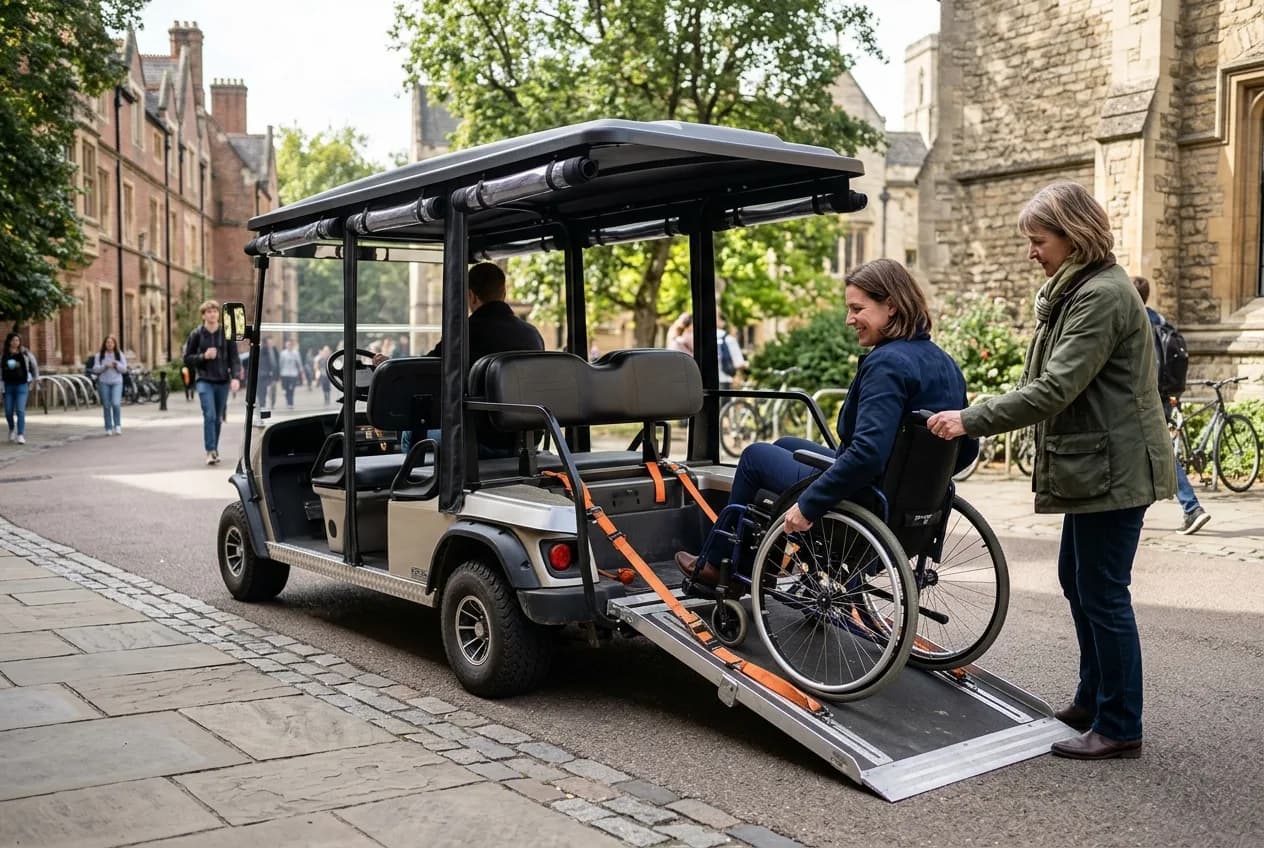
Keep companions together
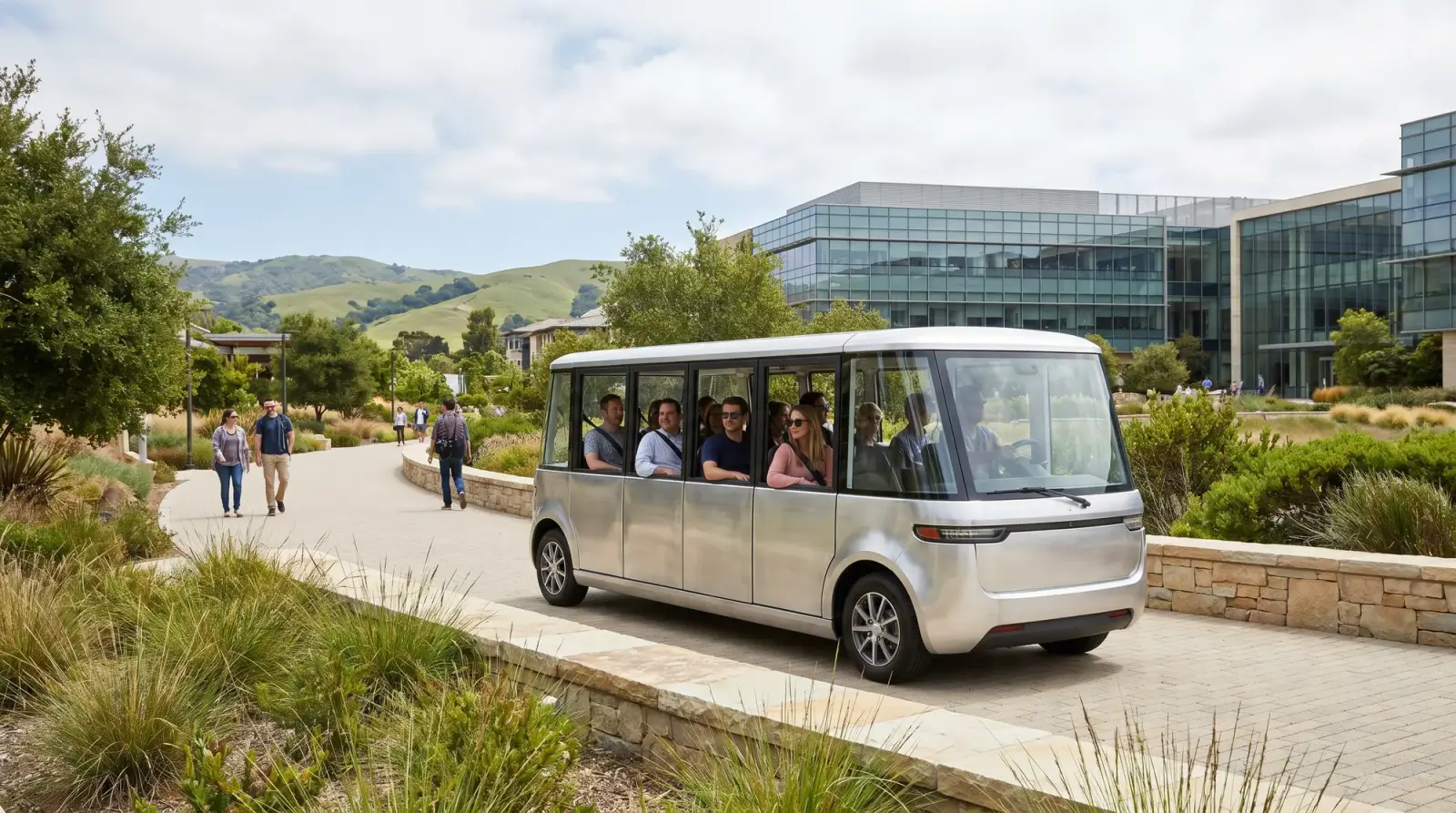
It sounds small, but it matters a great deal. A shuttle that takes the wheelchair but leaves the friend, partner or support worker to walk is not really inclusive. Travelling together is part of the point: people arrive at the same time, in the same frame of mind, without one being singled out. We design accessible layouts so a wheelchair user and at least one companion ride side by side, on the same vehicle as everyone else.
Explore the range
Passenger and accessible people-movers built to the same standard, made to order, assembled and finished in the UK and finished in your university's colours.
Plan the whole campus, not one vehicle
An accessible shuttle works best as part of a wider campus transport plan rather than a one-off. Think about where the genuine demand sits, how it connects to step-free routes and entrances, and where the shuttle hands over to the rest of the site. Our broader guide to electric buggies for university campuses covers fleet sizing and routing, and the same principles apply to corporate campuses with large, spread-out sites.
Once you know the routes and the demand, the vehicle choice is the easy part. We would rather help you get the plan right than sell you a buggy that sits idle, so request a quote with the detail and we will be honest about what you need.
Making your campus easier to cross?
Tell us the buildings, the routes and the demand, and whether you want on-demand, a fixed loop or both. We will recommend accessible vehicles and a sensible plan, finished in your colours.
Frequently asked questions
Is an accessible shuttle a separate service from the normal one?+
It does not have to be, and ideally it is not. We build accessible vehicles to the same standard as the rest, so a wheelchair user travels on the same loop as everyone else rather than on a service set apart.
Can a wheelchair user travel with a friend or support worker?+
Yes. We design the layout so a wheelchair user and at least one companion ride together, side by side, rather than the companion having to follow on foot.
Does running an accessible shuttle help with Equality Act duties?+
It can form part of how a university meets its duties to disabled students and staff, by making a large site reasonably navigable. We are not lawyers, so treat this as background and check the detail with your own advisers.
Should we run on-demand or a fixed loop?+
It depends on demand. Predictable flows between busy buildings suit a fixed loop; scattered, lower demand suits on-demand. Many campuses run a mix, and we are happy to help work out which fits yours.
Can the shuttle be branded for our university?+
Yes. Every vehicle is built to order, so your colours, livery and signage are specified into the build, accessible models included.
Related solutions
Ready to explore what we build?
See the vehicles and the setting this applies to, or get a tailored quote built around your site.

Ready to find the right buggy?
Tell us how and where it will work and we will specify a vehicle and a tailored quote built around you. Every build comes with a 3-year warranty and a 24-hour priority call-out.
Our guides are written and reviewed by the Hawke Electric Vehicles team, the people who specify, build, deliver and support the vehicles. We focus on honest, practical advice and flag where a figure depends on the build rather than guessing.
More guides by Hawke