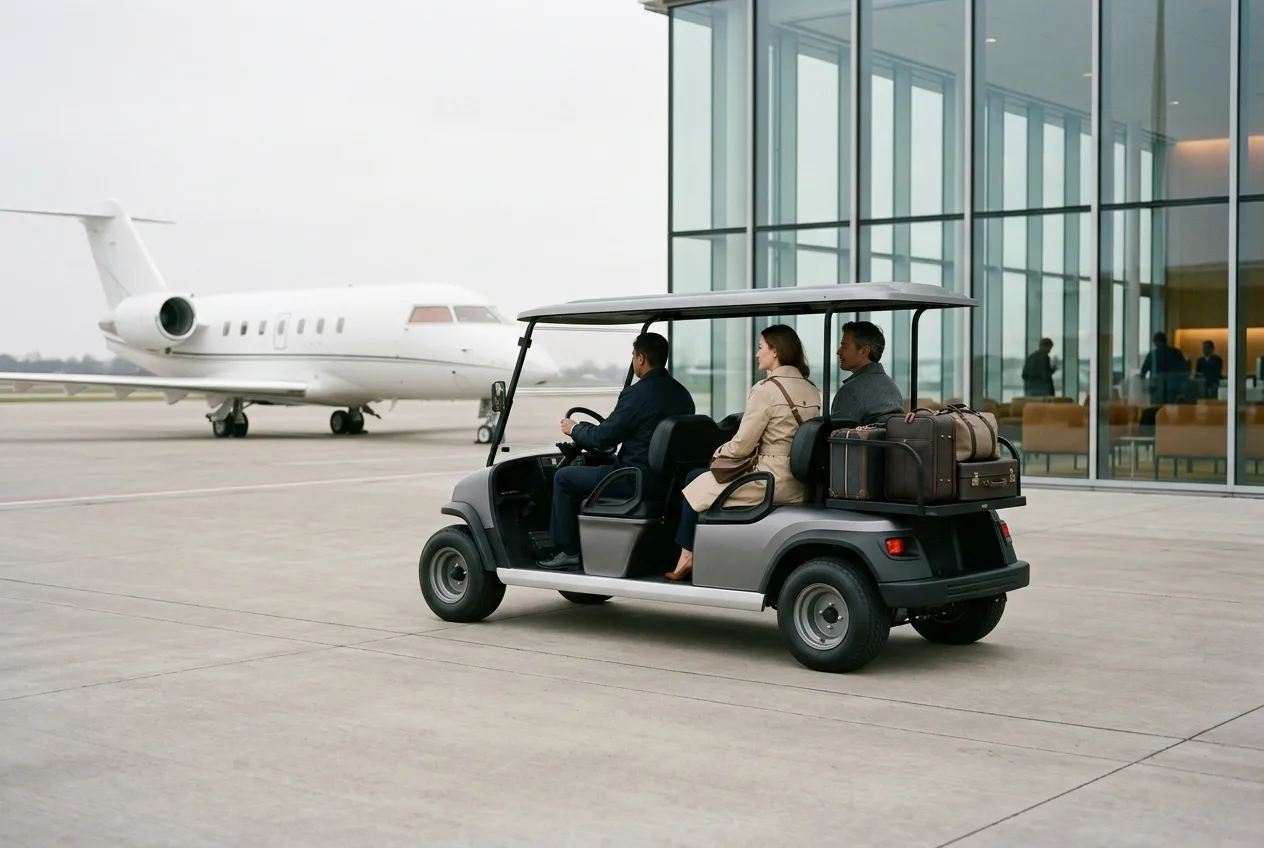
- At a private jet terminal, the move between the aircraft, the lounge and the car is short but it sets the tone for the whole arrival.
- FBO ground transport vehicles need to be quiet, comfortable and discreet, the opposite of a noisy diesel cart.
- Electric suits business aviation: near-silent, no fumes on the apron, and a finish that matches the surroundings.
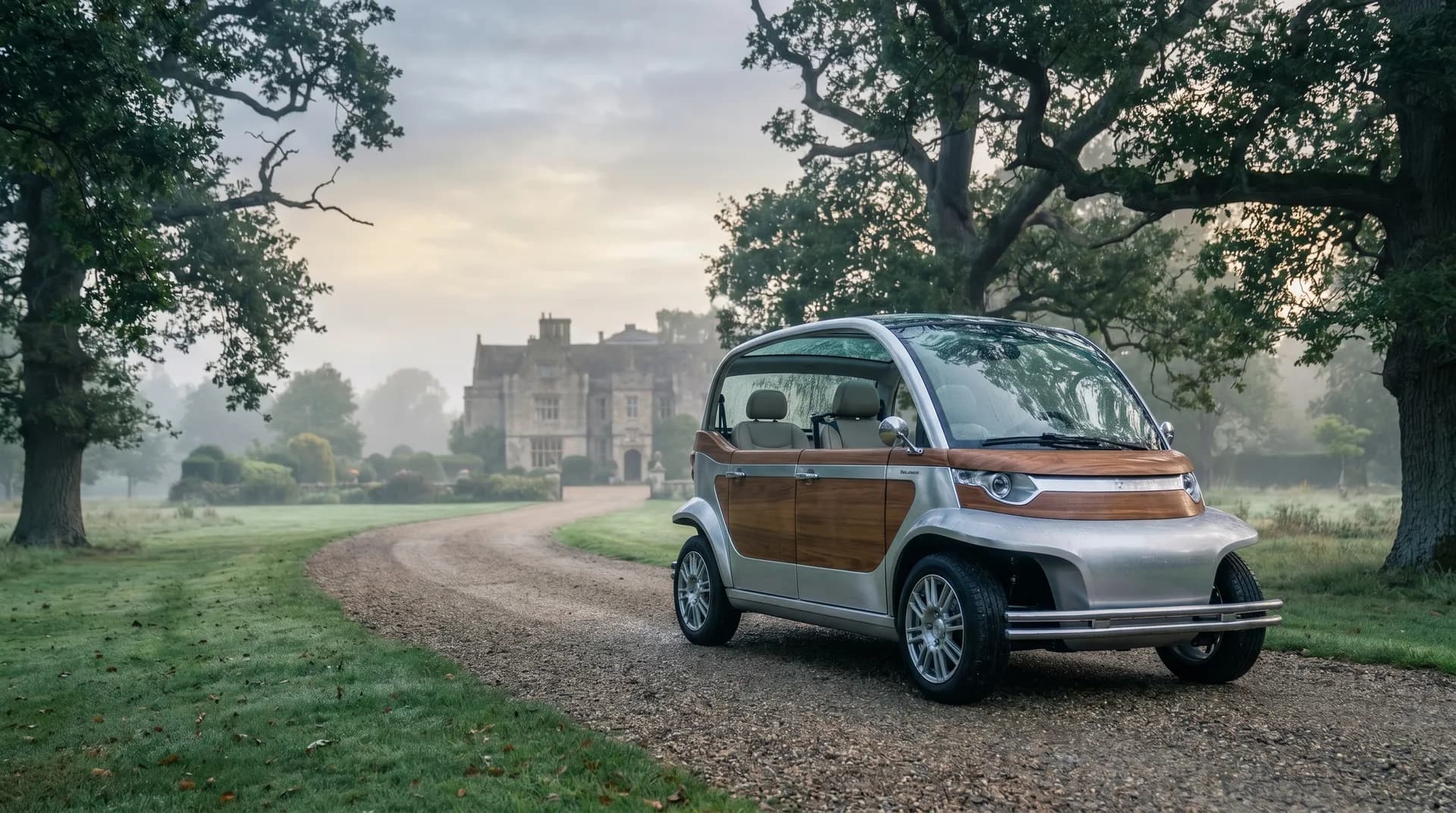
- Because they are built to order, the vehicles can be liveried to the FBO and trimmed to feel like part of the lounge.
- Spec around the real job: passenger transfers, crew movement, baggage, and airside permits where the apron route requires them.
A private jet terminal lives or dies on small details, and one of the smallest is also one of the most noticed: the journey between the aircraft and the car. It lasts a minute or two, but it is the first and last impression a passenger takes away. Get it right and the arrival feels effortless. Get it wrong, with a long walk or a clattering diesel cart, and the polish of everything else is undone. That short transfer is exactly what good FBO ground transport vehicles are for.
Fixed-base operators, the terminals that handle business aviation, are increasingly choosing premium electric buggies for that role. The reasons are practical as much as they are about prestige. A quiet, clean vehicle moves high-net-worth passengers and their crew between the jet, the lounge and the waiting car in comfort and privacy, without the noise or fumes that sit so badly next to a polished arrival.
Why the apron transfer matters more than it looks
Business aviation sells time and discretion. A passenger choosing to fly privately is paying, in part, to avoid the queues, the crowds and the waiting. The ground transport at the terminal has to honour that promise. A buggy that draws up quietly at the foot of the aircraft steps, carries the party a short distance in comfort, and pulls up beside their car has done its job perfectly when nobody really notices it at all.
That is the standard to aim for: present, capable and almost invisible. It is a different brief from the high-capacity people-movers that work a busy commercial terminal, where the priority is throughput. Here the priority is a calm, private, dignified few minutes. You can see how those briefs differ in our guide to airport passenger transport buggies.
What makes a good FBO ground transport vehicle
The brief is narrow but demanding. A private jet terminal buggy carries a small party and their bags a short distance, often several times an hour, and it has to feel as considered as the lounge it serves. That points to a few things in the spec:
- Quiet, smooth running, so conversation is never raised over the drivetrain.
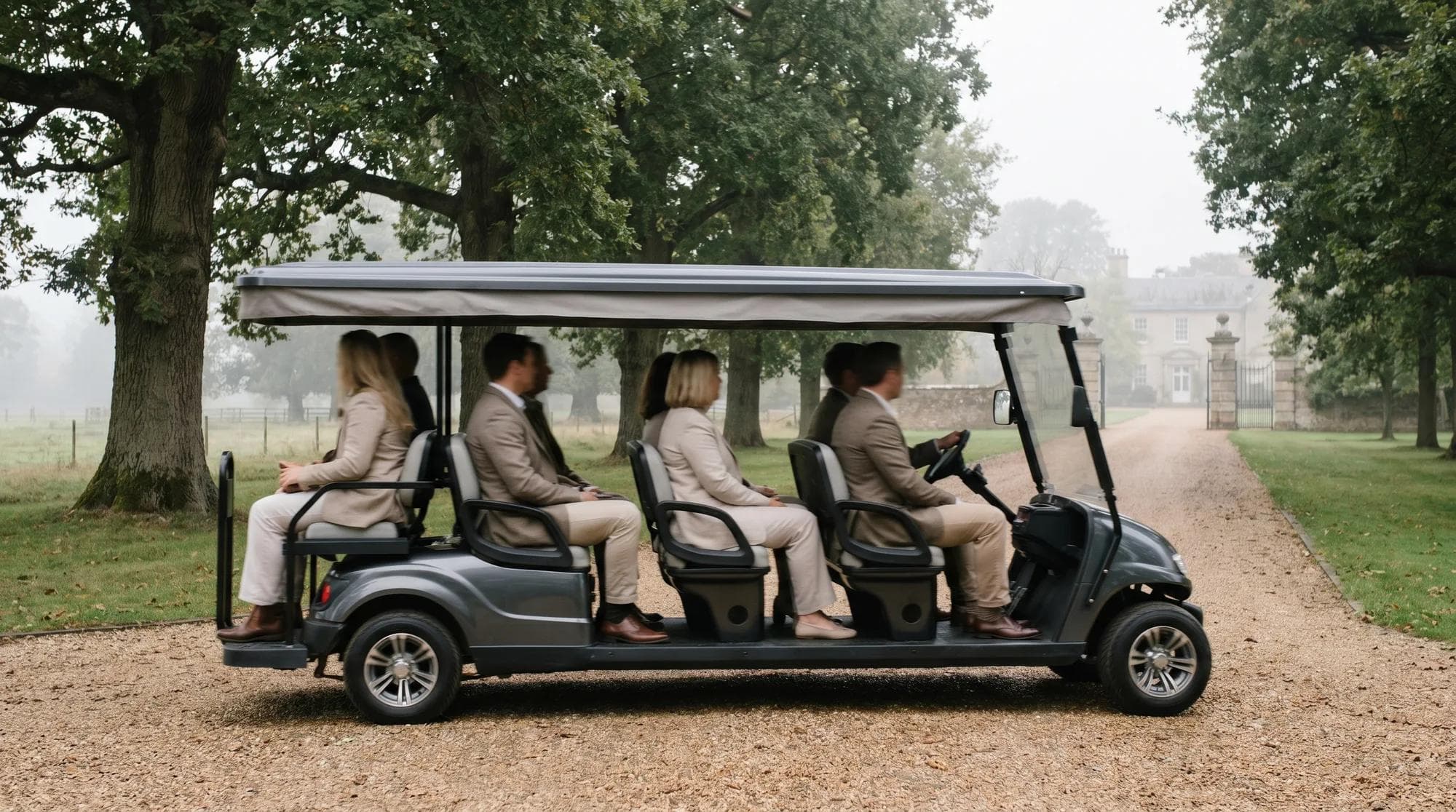
- Comfortable, generous seating for a small party, trimmed to feel premium rather than functional.
- Space for luggage, so a passenger and their bags travel together in one trip.
- A discreet, refined finish liveried to the FBO, not a generic hire look.
- The right airside spec where the route crosses the apron, which we come to below.
Why electric is the natural choice
Everything that makes business aviation appealing argues for an electric drivetrain on the ground. It is near-silent, which matters when a vehicle is drawing up next to people stepping off an aircraft. It produces no fumes at the point of use, which matters on an apron and near open aircraft doors. And it is clean and simple to run, with no fuel to store on a sensitive site and far less to service. For a terminal that trades on calm and quality, a petrol cart belongs to a different era.
Privacy, branding and the lounge feel
A private terminal is a controlled environment, and the transport should feel part of it rather than borrowed from somewhere else. Because every vehicle we build is made to order, the bodywork, colour, trim and any discreet branding can be specified so the buggy reads as an extension of the lounge. That consistency is what separates a considered operation from one that has simply bought a cart. The same approach works across executive campuses too, which we cover in our guide to corporate campus transport.
Crew, baggage and the jobs behind the scenes
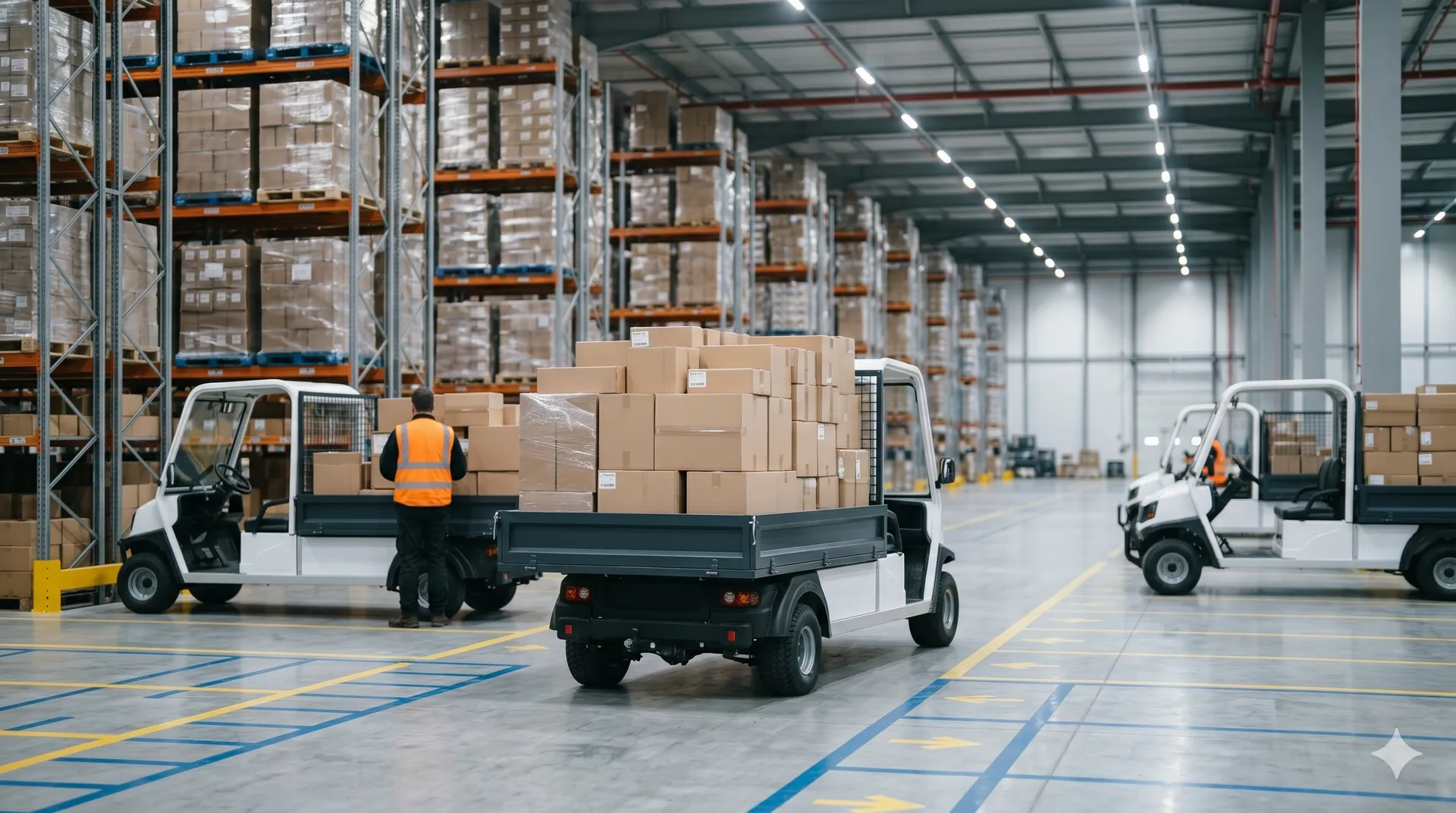
Passengers are the visible half of the job. Behind them sit crew movements, baggage handling and the quieter logistics of running a terminal. A flight crew arriving for a departure, bags moving from a car to the hold, catering and supplies crossing the apron: all of it benefits from the same quiet, clean vehicles. Many FBOs run a small mixed fleet, a refined passenger buggy out front and a utility version for bags and crew, liveried to match and charged together overnight.
Airside permits: confirm before you spec
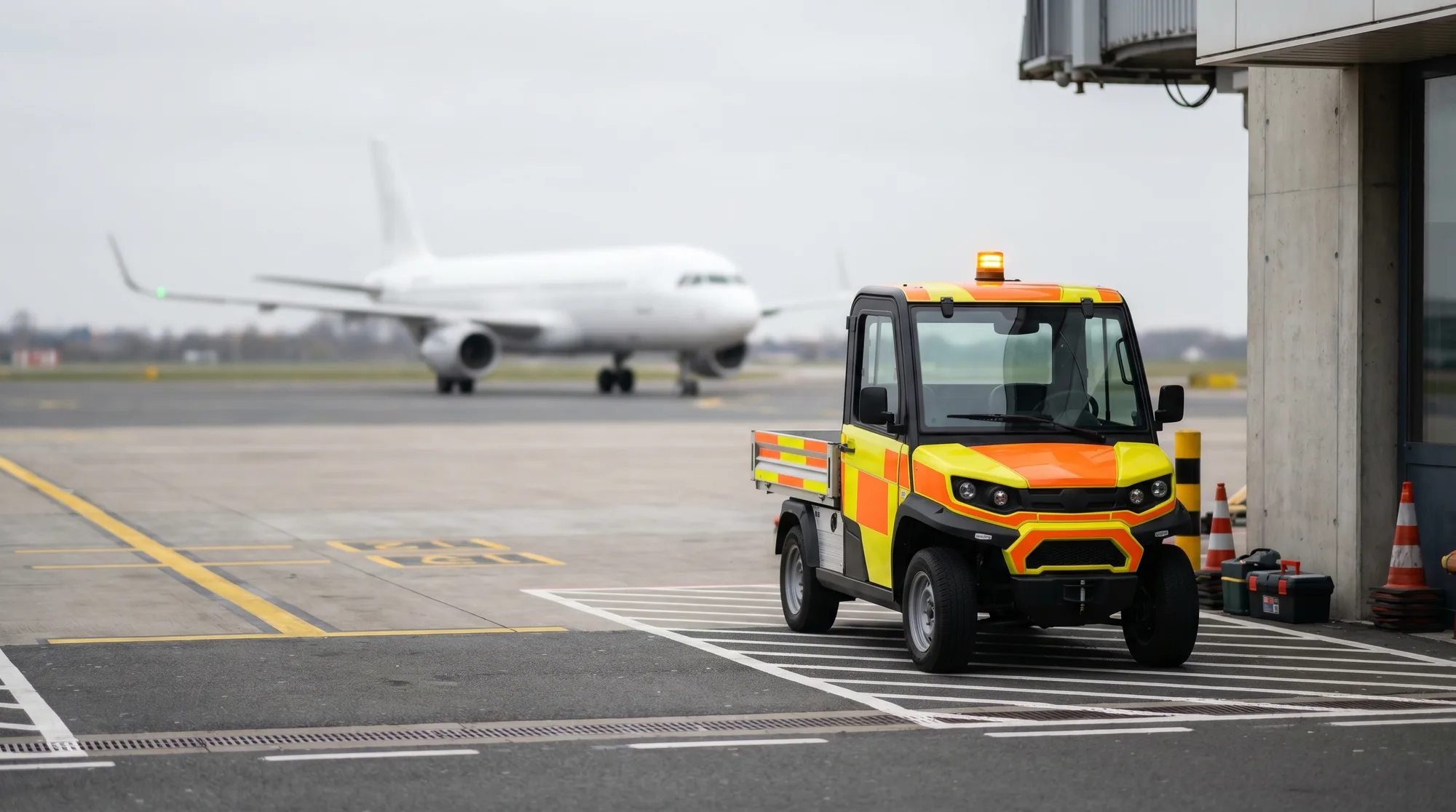
If a vehicle crosses the apron to reach the aircraft, it is operating airside, which is the secure area beyond security control. That usually brings requirements a landside vehicle never sees: an airside vehicle permit, high-visibility livery and beacons, and drivers holding airside driving permits. The detail varies by airport, so confirm it with your airside operations team before settling the spec. We explain the wider picture in our guide to electric airside vehicles for UK airports. Because we build to order, the conspicuity and lighting an airside route needs can be designed in without losing the premium look landside.
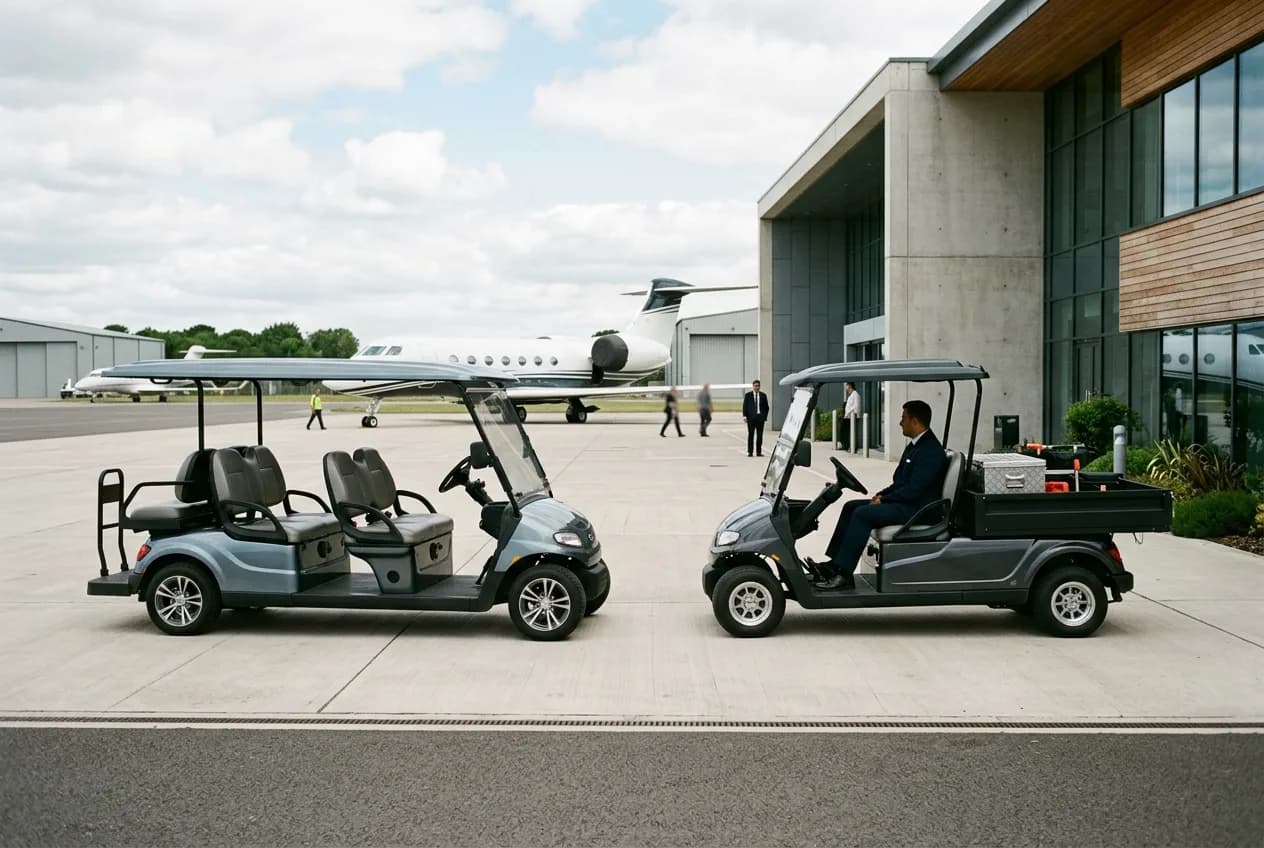
Built to order, finished to your terminal
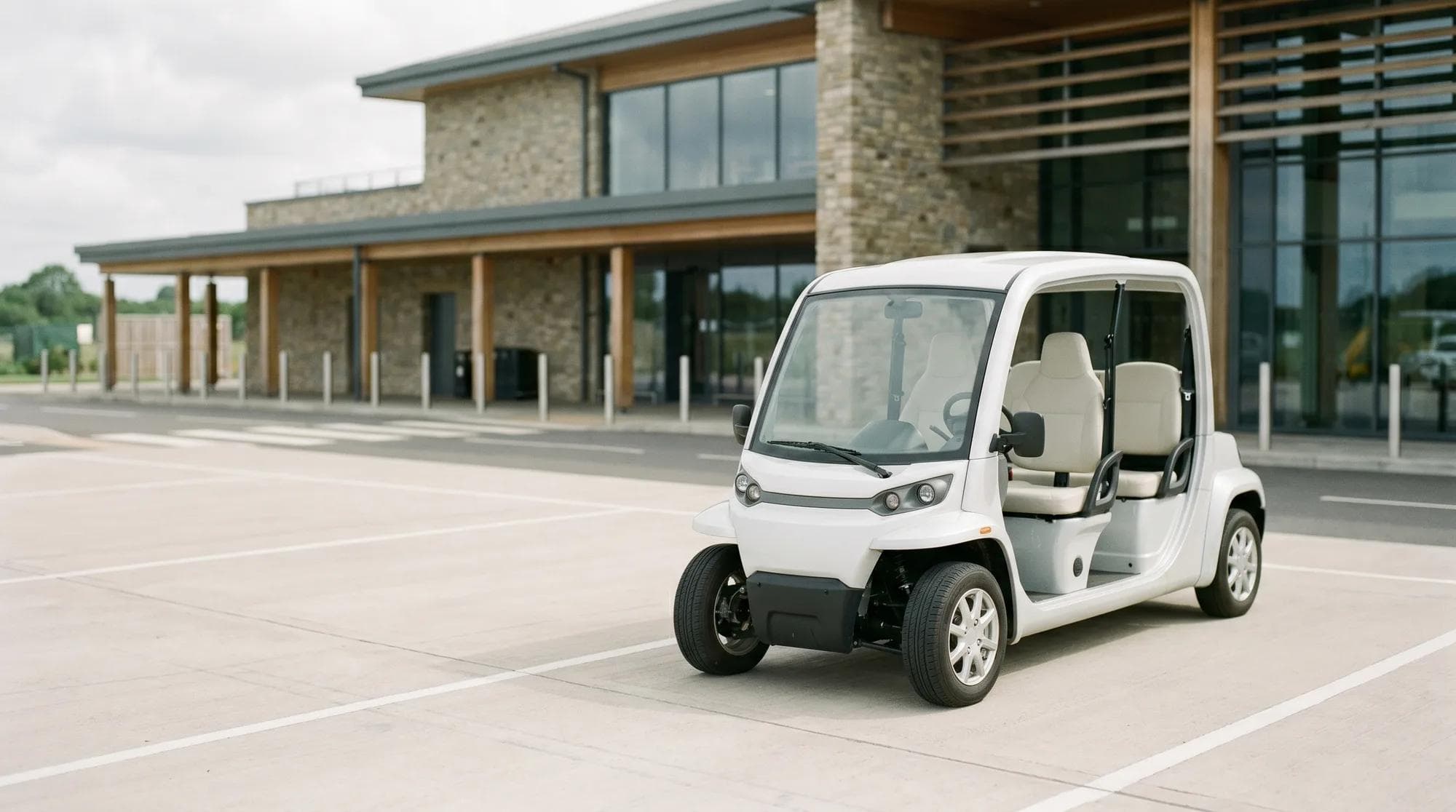
From a refined two or four-seat passenger buggy to a matching utility vehicle for crew and bags, every vehicle is made to order, assembled and finished in the UK and liveried as your own.
Planning ground transport for an FBO?
Tell us the terminal, the apron route and the look you want. We will spec a discreet, premium fleet, built to order and liveried to match, and advise on any airside requirements.
Frequently asked questions
What is an FBO ground transport vehicle?+
It is the buggy or small people-mover a private jet terminal uses to move passengers and crew between the aircraft, the lounge and the car. The emphasis is on quiet comfort and discretion rather than high capacity.
Why electric rather than petrol for a private terminal?+
Electric is near-silent and produces no fumes at the point of use, which suits a calm, premium environment next to aircraft and people. It is also cleaner and simpler to run, with no fuel to store on a sensitive site.
Can the vehicles be branded and trimmed to our FBO?+
Yes. Every vehicle is built to order, so colour, trim and discreet livery are specified into the build to match the look and feel of your terminal.
Do FBO buggies need airside permits?+
If the route crosses the apron, usually yes: an airside vehicle permit, conspicuity and a driver with an airside driving permit. Requirements vary, so confirm with your airport's airside operations team and we will spec accordingly.
Can you supply passenger and utility vehicles together?+
Yes. A refined passenger buggy for guests and a matching utility version for crew and baggage can come from one fleet, liveried consistently and supported together.
Related solutions
Ready to explore what we build?
See the vehicles and the setting this applies to, or get a tailored quote built around your site.
Ready to find the right buggy?
Tell us how and where it will work and we will specify a vehicle and a tailored quote built around you. Every build comes with a 3-year warranty and a 24-hour priority call-out.
Our guides are written and reviewed by the Hawke Electric Vehicles team, the people who specify, build, deliver and support the vehicles. We focus on honest, practical advice and flag where a figure depends on the build rather than guessing.
More guides by Hawke