- The Government has consulted on a 2040 target for zero-emission airport operations (Scope 1 and 2) at England's airports.
- Airside vehicles, the buggies, carts and utility vehicles that work the apron and terminals, are among the easiest wins on that journey.
- Electric makes practical sense airside: quiet, no local fumes near aircraft and people, and far cheaper to run than petrol or diesel.
- Spec matters: airside vehicles face permits, visibility and duty-cycle requirements that landside ones do not.
- Start with the routes and duty cycle, not the vehicle, and size the fleet and charging around real daily use.
If you run an airport, the direction of travel is clear. Alongside the wider Jet Zero ambition for net-zero aviation, the Government has consulted on a target for England's airports to reach zero-emission operations, for the emissions they directly control, by 2040. Aircraft are the hard part. The ground fleet is not, and it is where a lot of airports are starting.
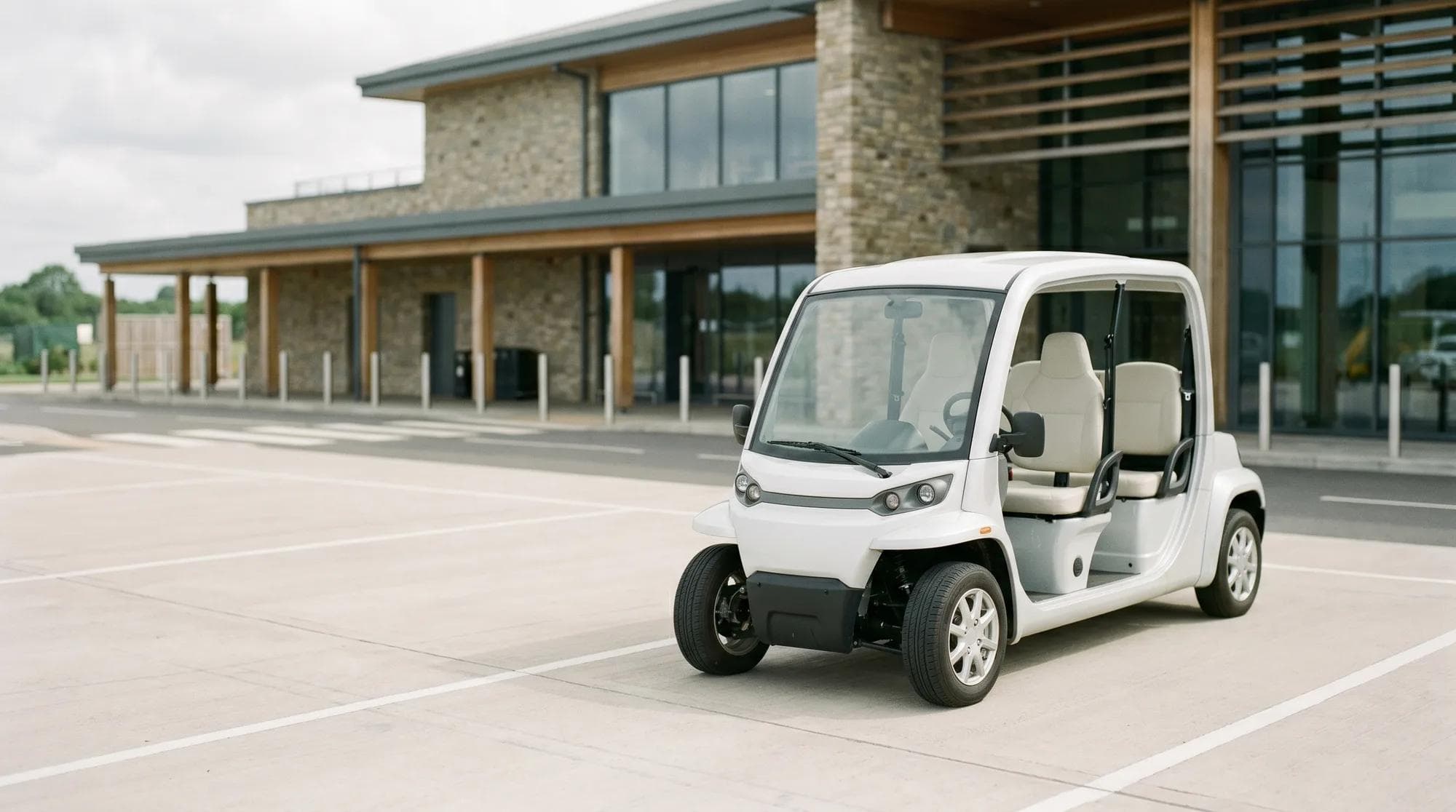
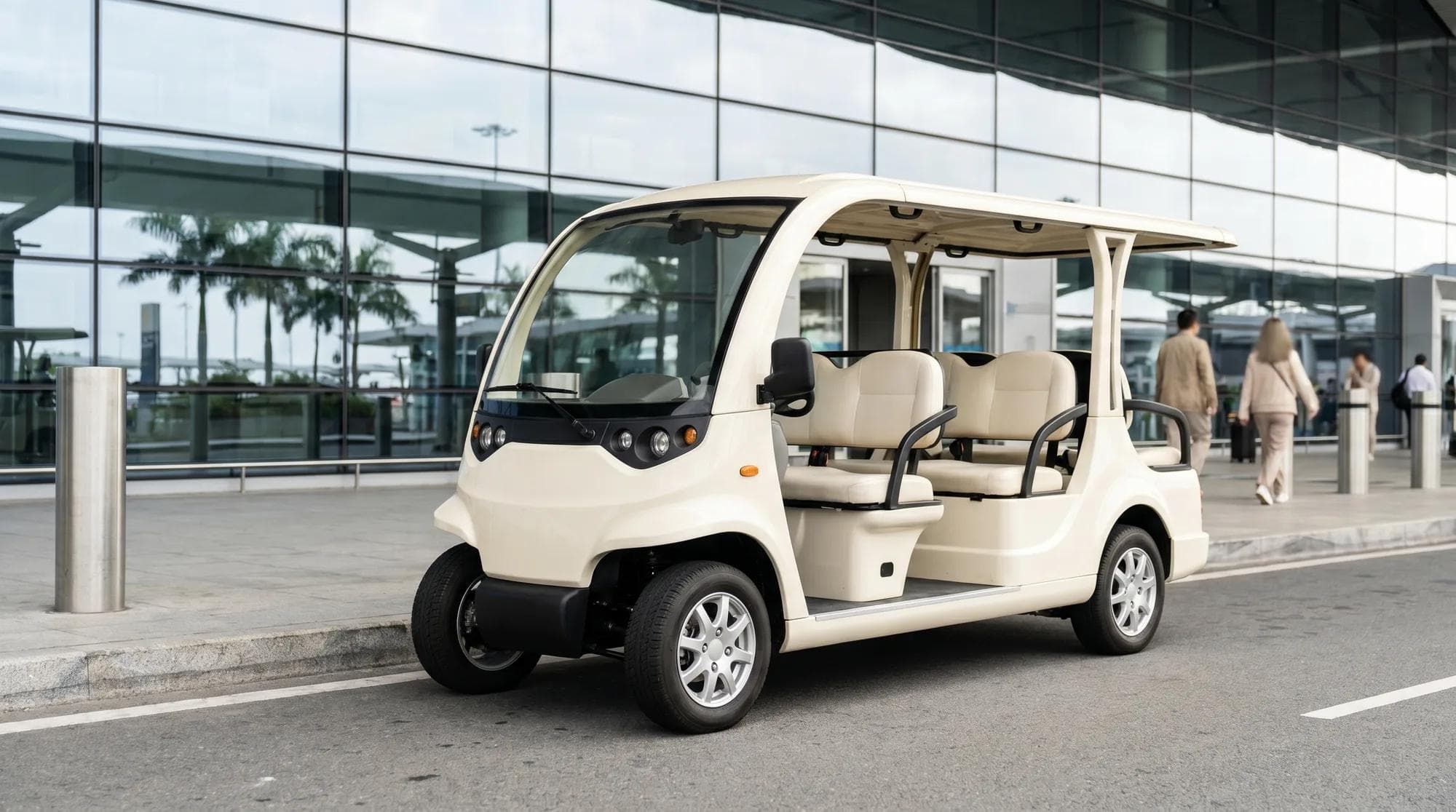
Airside vehicles, the passenger buggies, crew transport and utility carts that work the apron, the piers and the terminals, are an obvious early move. The technology is proven, the duty cycles suit a battery, and the running costs are lower. This guide walks through what actually matters when you electrify that part of the fleet.
Why airside is the easy win
Three things make airside vehicles a natural fit for electric. First, noise: an electric drivetrain is near-silent, which is a real benefit working close to aircraft, ground crews and passengers. Second, emissions: there are no exhaust fumes at the point of use, which matters in enclosed piers and busy apron areas. Third, cost: there is no fuel to store and dispense, and far less to service, so the total cost of ownership usually beats a petrol or diesel equivalent over a few years.
Airside is not landside: spec accordingly
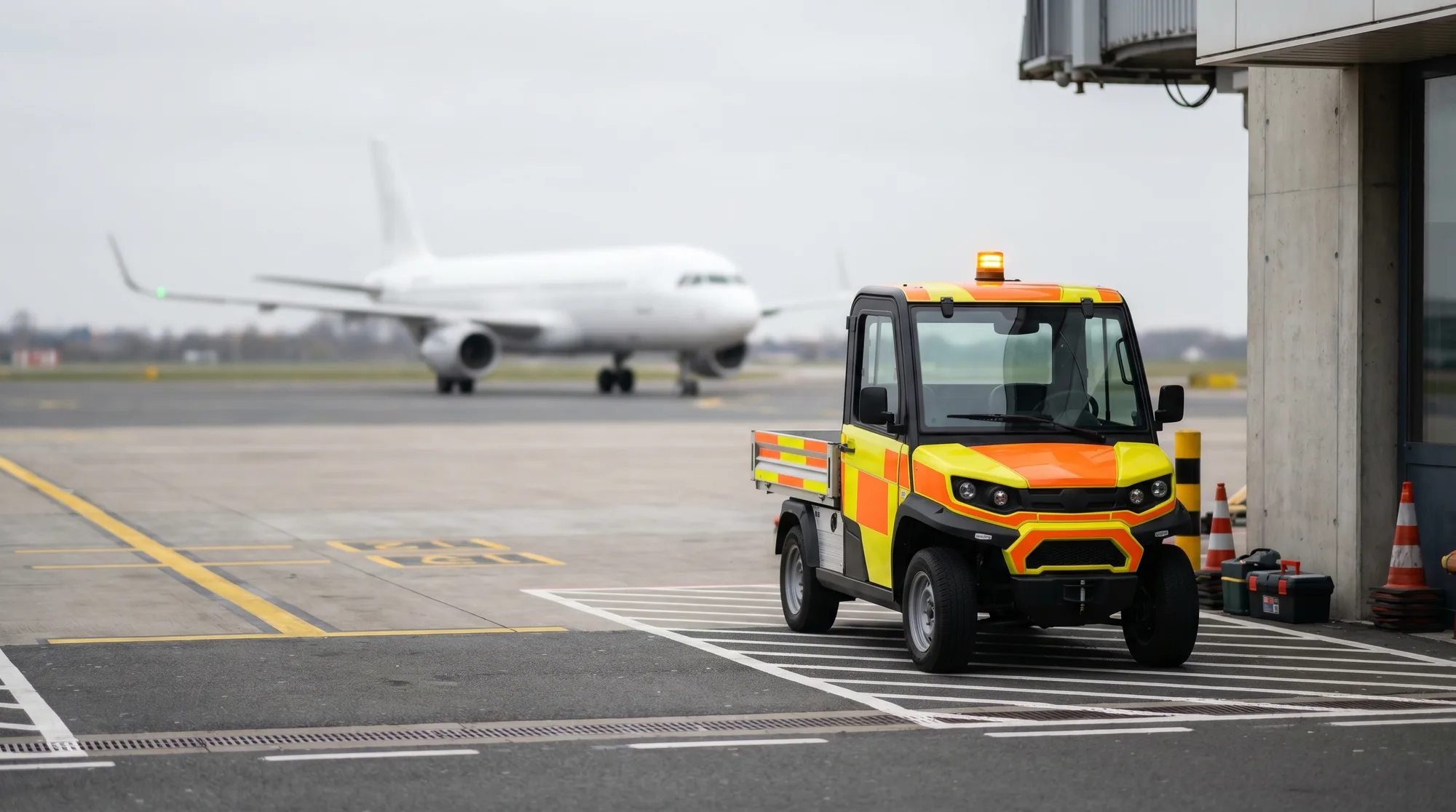
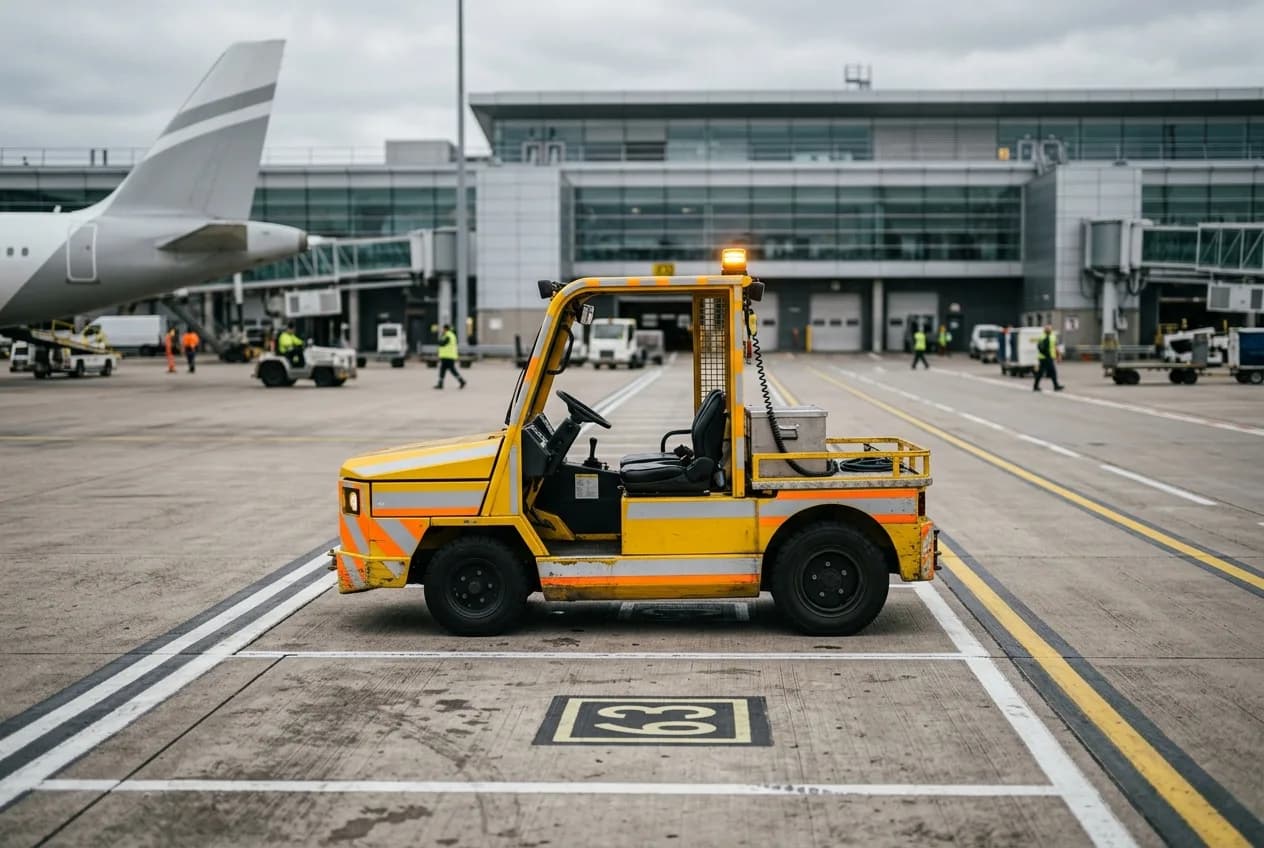
A vehicle that is fine in a long-stay car park may not be allowed, or safe, on the apron. Airside operation usually means an airside vehicle permit, high-visibility livery and lighting, and a build that can take a hard duty cycle across long shifts. Get those requirements from your airside operations team before you spec anything, because they shape the vehicle. We have a separate explainer on the airside versus landside split if that is useful.
Match the vehicle to the job
"Airside vehicle" covers a lot of jobs, and the right vehicle is different for each:
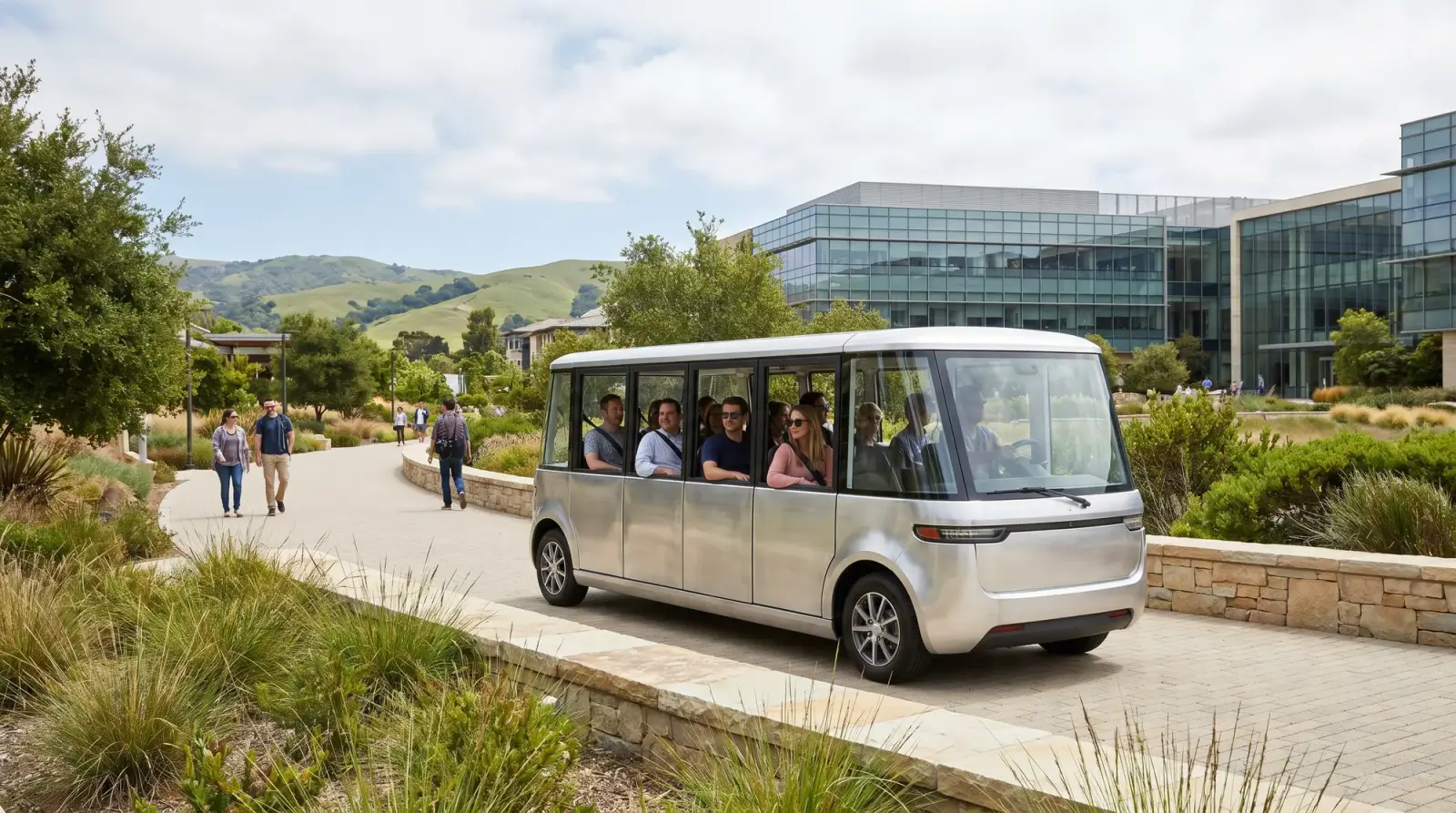
- Passenger transfers across the apron or between piers: multi-seat people-movers tuned for a smooth, steady ride.
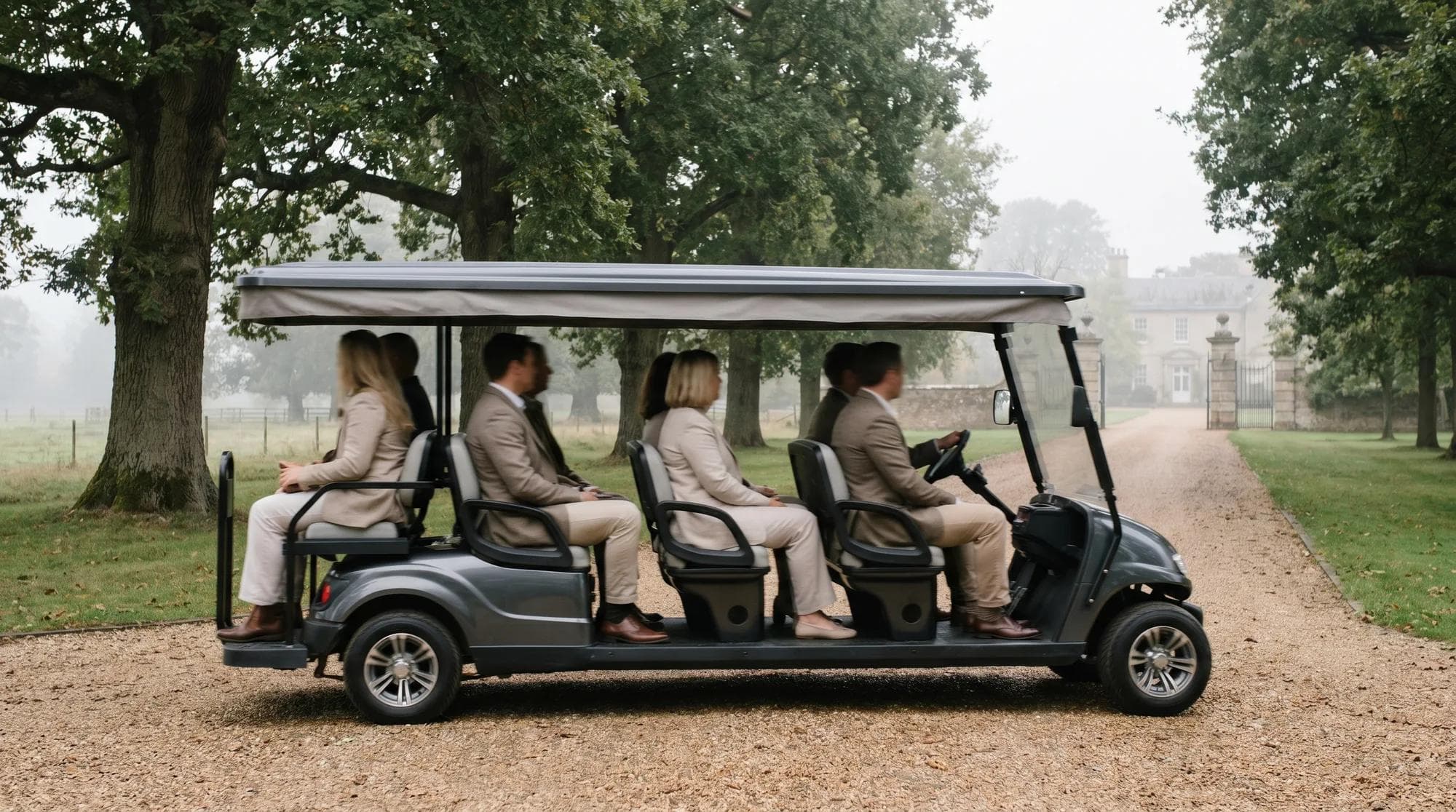
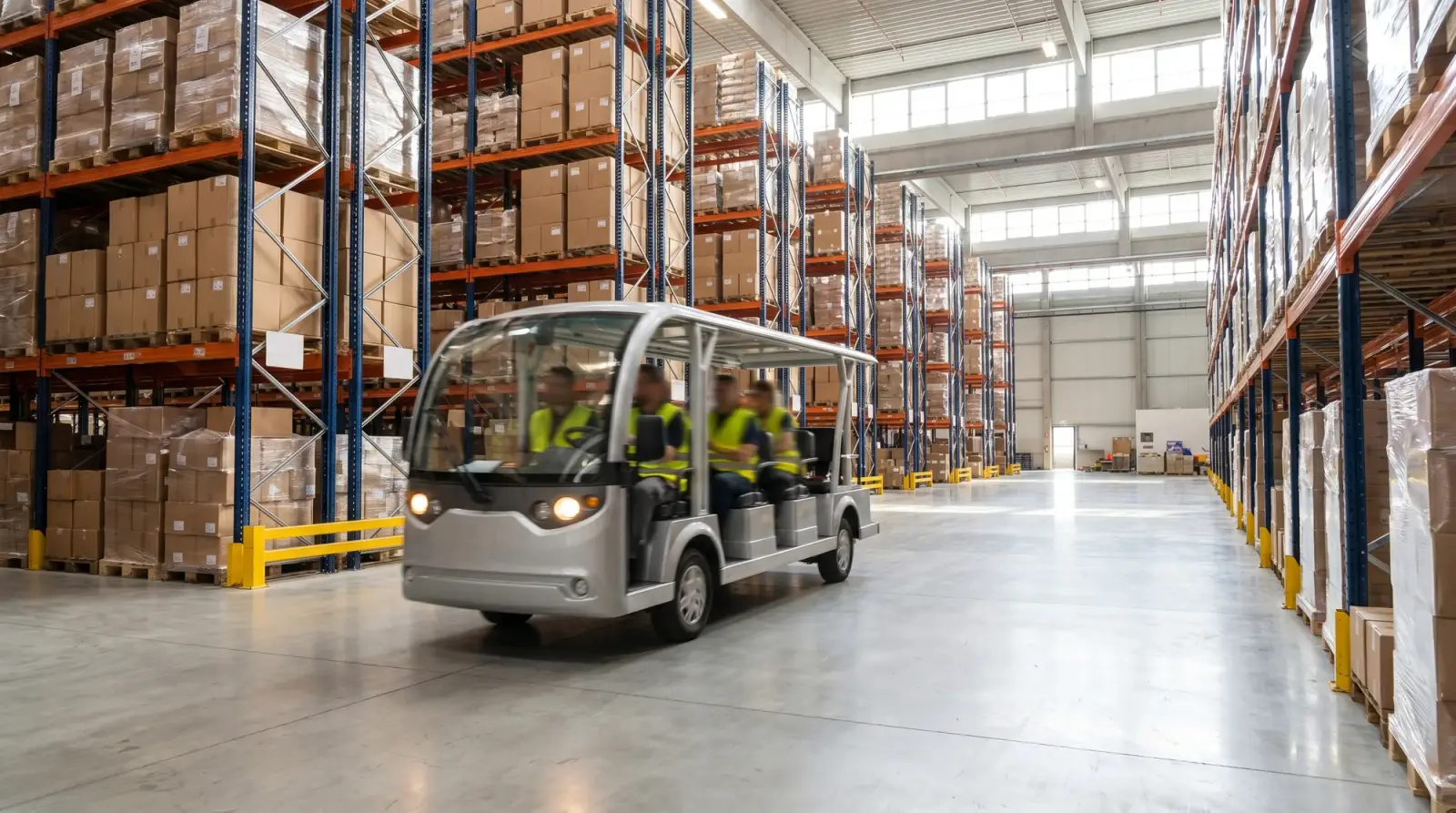
- Crew transport: getting rostered staff across a large site quickly between shifts and duties.
- Utility and service: a load bed for tools, parts and equipment, with real payload.
- Special assistance: accessible vehicles for reduced-mobility passengers, which we cover in our PRM transport guide.
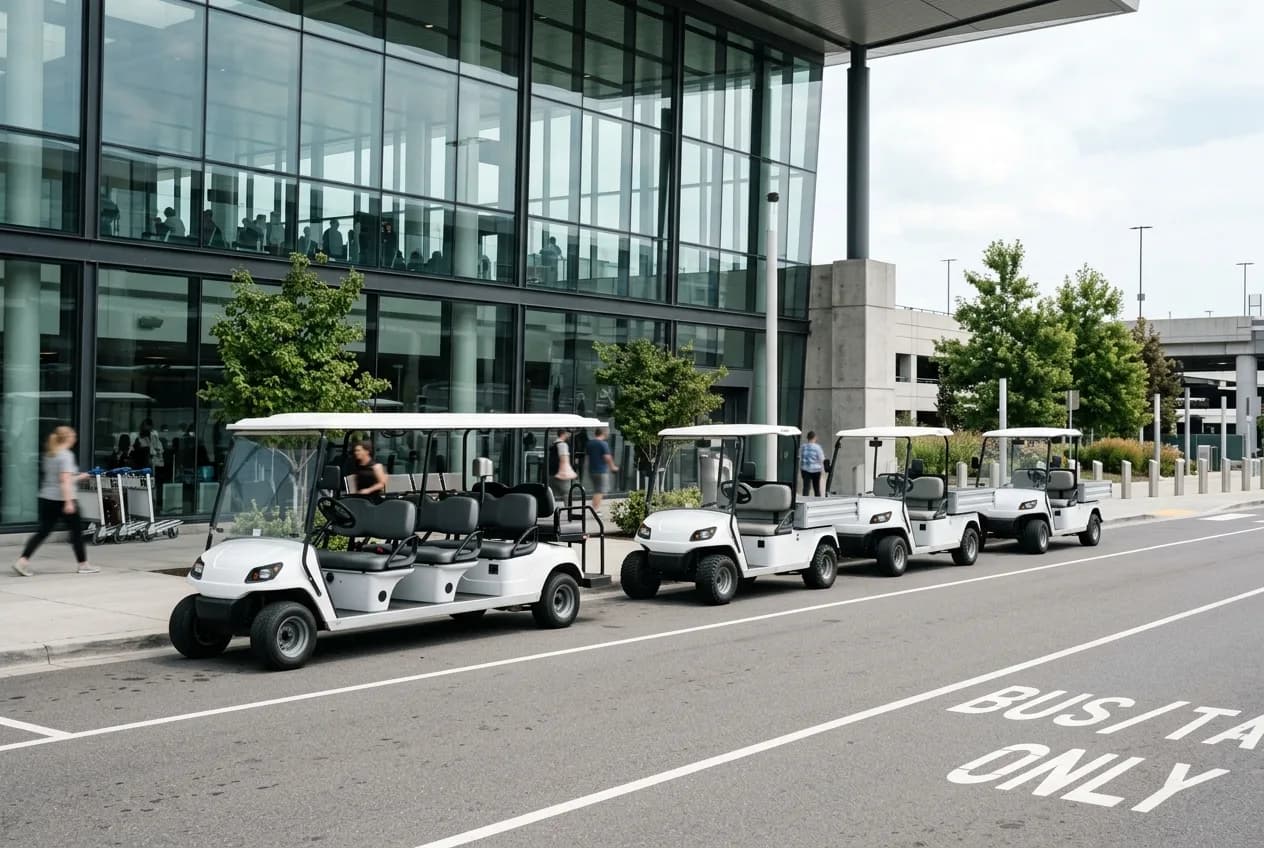
One supplier, the whole fleet
Passenger, crew and utility vehicles, built to order, liveried to your airport, and supported by a 24-hour call-out.
Charging and duty cycle: the part people underestimate
The most common planning mistake is to size the fleet on vehicle count alone and forget the charging. The right way round is to map the duty cycle: how many hours each vehicle works, the distance per shift, and when there is downtime to charge. From there you size the battery, the chargers and the number of vehicles together. Do that and a fleet runs all day comfortably; skip it and you end up with vehicles queueing for a charger at the worst moment.
Electrifying your airside fleet?
Tell us the routes, duty cycle and airside requirements. We will spec the right vehicles, liveried for your airport and built to handle the shift.
Frequently asked questions
Are electric vehicles powerful enough for airside work?+
Yes. Electric drivetrains deliver strong torque from a standstill, which suits stop-start apron work and towing light loads. The key is sizing the battery to the duty cycle so the vehicle lasts the shift.
Do electric airside vehicles need special charging?+
They charge from standard supplies, but a fleet should be planned so charging fits the shift pattern. We help map that out as part of the quote.
Can the vehicles meet airside permit and visibility rules?+
Yes. Because we build to order, high-visibility livery, lighting and the features your airside operations team requires can be specified into the build.
Is electric really cheaper over time?+
For most duty cycles, yes. There is no fuel to buy or store and far less servicing, so the total cost of ownership typically beats petrol or diesel within a few years.
Can you supply both passenger and utility vehicles?+
Yes. Passenger people-movers, crew transport, accessible vehicles and utility carts can all come from one fleet, liveried consistently and supported together.
Related solutions
Ready to explore what we build?
See the vehicles and the setting this applies to, or get a tailored quote built around your site.
Ready to find the right buggy?
Tell us how and where it will work and we will specify a vehicle and a tailored quote built around you. Every build comes with a 3-year warranty and a 24-hour priority call-out.
Our guides are written and reviewed by the Hawke Electric Vehicles team, the people who specify, build, deliver and support the vehicles. We focus on honest, practical advice and flag where a figure depends on the build rather than guessing.
More guides by Hawke