- Large distribution centres are engineered to move pallets efficiently, but moving the people who work them is often an afterthought.
- A modern fulfilment shed can run to several hundred metres end to end, so a single trip on foot eats real minutes out of every shift.
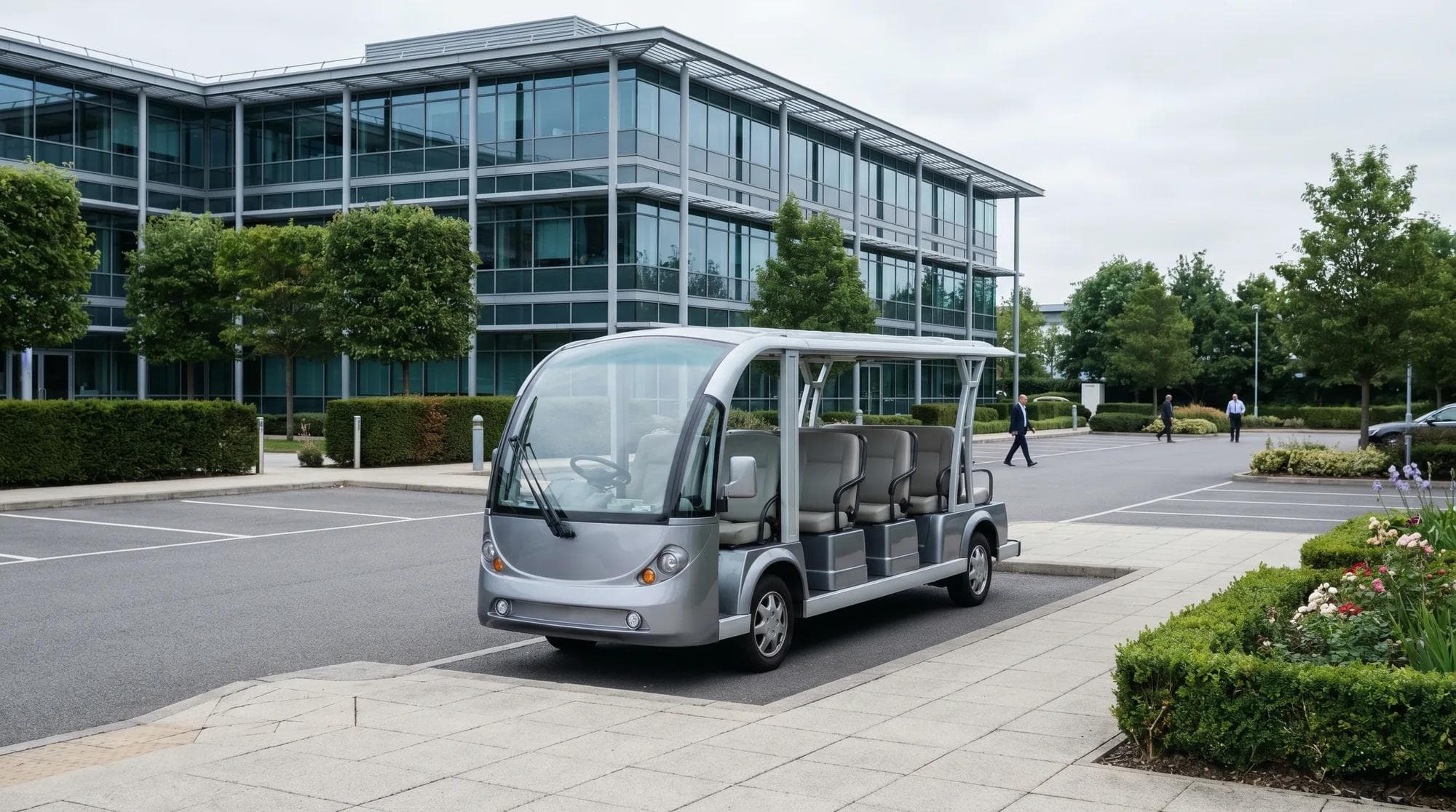
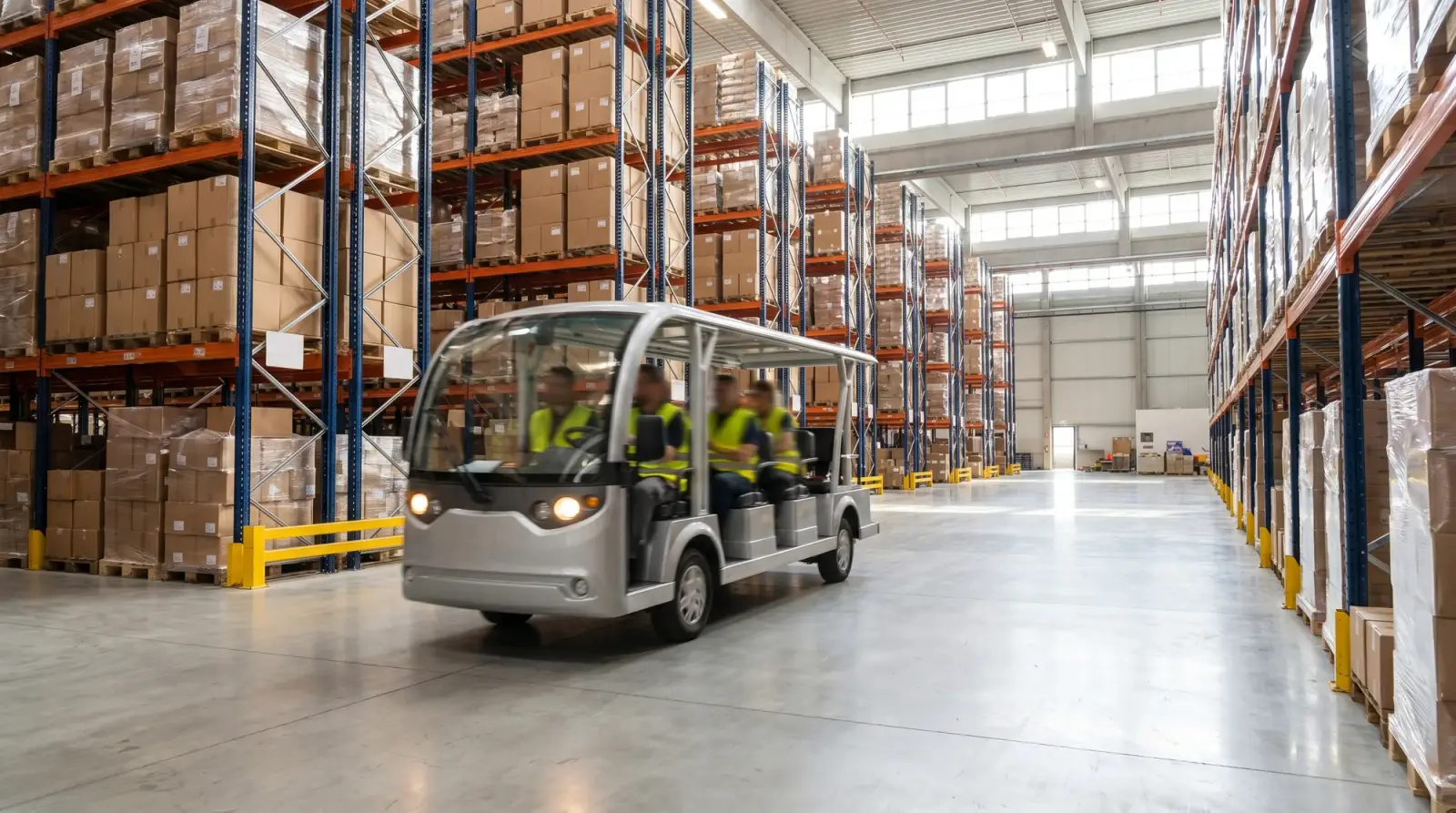
- Multi-seat electric personnel carriers move staff across the floor quickly, which speeds up shift changes and cuts unproductive walking.
- Indoor use rules out petrol and diesel, so a quiet electric carrier with no exhaust is the sensible choice on the warehouse floor.
- Size the fleet around the genuine pinch points: shift handovers, the walk from the gatehouse, and the trip to the far end of the building.
A modern distribution centre is a marvel of pallet handling. Racking, conveyors, sortation, mezzanines, dock doors by the dozen, all laid out to move goods from inbound to outbound with as little waste as possible. The one thing that rarely gets the same attention is the movement of the people. A site can be brilliant at shifting a pallet and surprisingly slow at shifting the person who needs to be at the other end of it.
A warehouse personnel carrier, an electric multi-seat vehicle built to move staff rather than stock, fills that gap. It is not a forklift and it is not a tow tractor. Its job is people, and on a big site that job is worth doing well. Get it right and shifts change faster, supervisors cover the floor without losing half a shift to walking, and the building feels smaller than it is.
The 'people, not pallets' gap
Materials handling has decades of engineering behind it. Every pallet movement is measured, every conveyor run is justified, every metre of travel for a fork truck is costed. The walk a picker, supervisor or maintenance technician makes to get to their work is almost never counted, even though on a large site it can be the longest journey anyone makes all day. That is the gap: the building is optimised for goods and left rough for people.
It shows up in small ways that add up. A team leader covering three zones spends a chunk of every hour walking between them. A new starter sent to the far dock takes ten minutes to get there and ten to get back. An engineer called to a fault at the opposite end of the building arrives later than anyone would like. None of it appears on a report, but all of it is paid for in time.
Where a personnel carrier earns its keep
A carrier is worth most at the genuine pinch points rather than running everywhere at once. On most large sites the same handful come up again and again:
- Shift changes, when a lot of people need to get on and off the floor at the same time.
- The walk from the gatehouse, turnstiles or staff car park to the work area.
- The trip to the far end of a long building, the back docks or an outlying mezzanine.
- Supervisors, trainers and engineers who cover the whole floor and walk far more than anyone else.
- Moving a visitor, auditor or contractor across the site safely without sending them through traffic on foot.
Why it has to be electric indoors
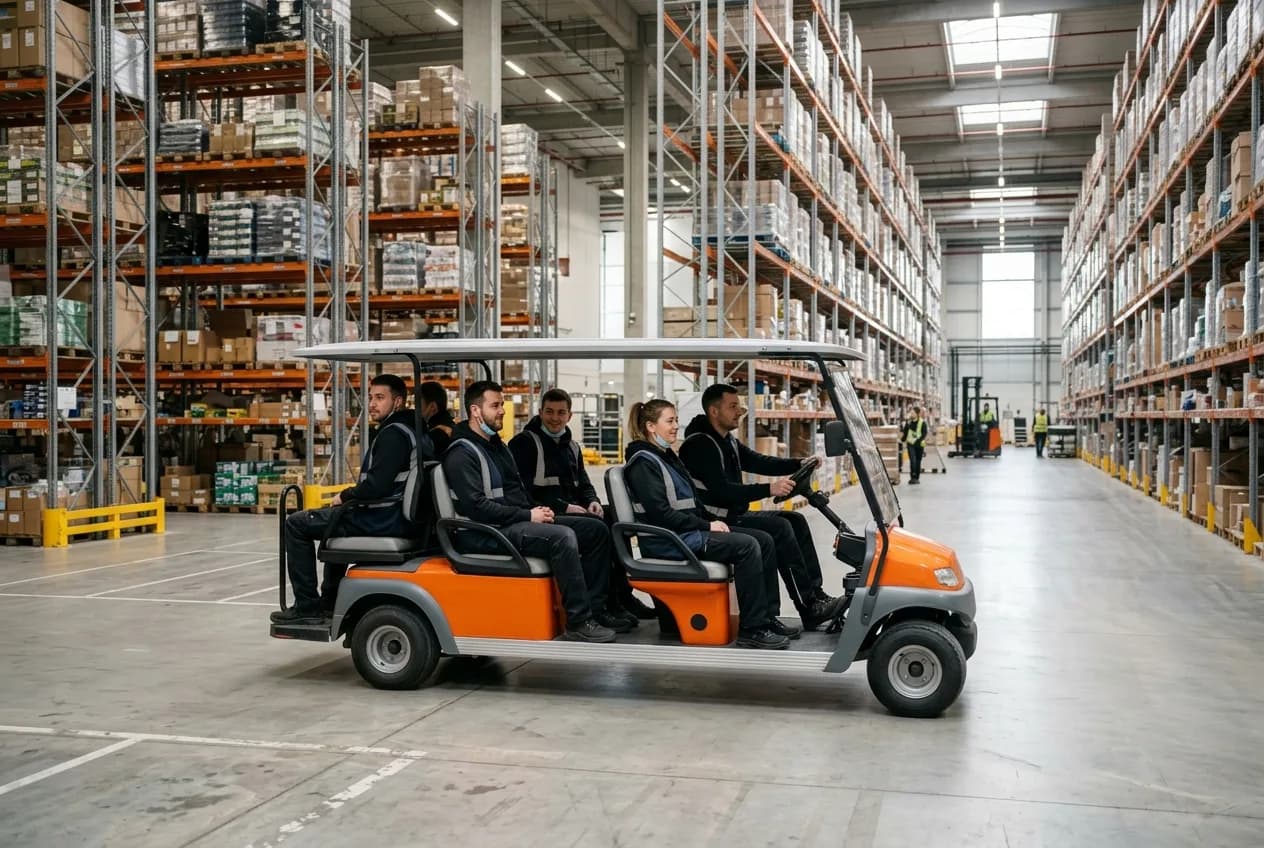
Indoors, the choice makes itself. A petrol or diesel vehicle running loops through a building puts exhaust into the air staff breathe all shift, which is a non-starter on health and safety grounds in an enclosed space. An electric carrier has no exhaust at the point of use, so it is safe to run inside, on the floor, past racking and people, for as long as the working day requires. It is also far quieter, which matters in a space where people are already managing conveyor and truck noise.
Personnel carrier or tow tractor?
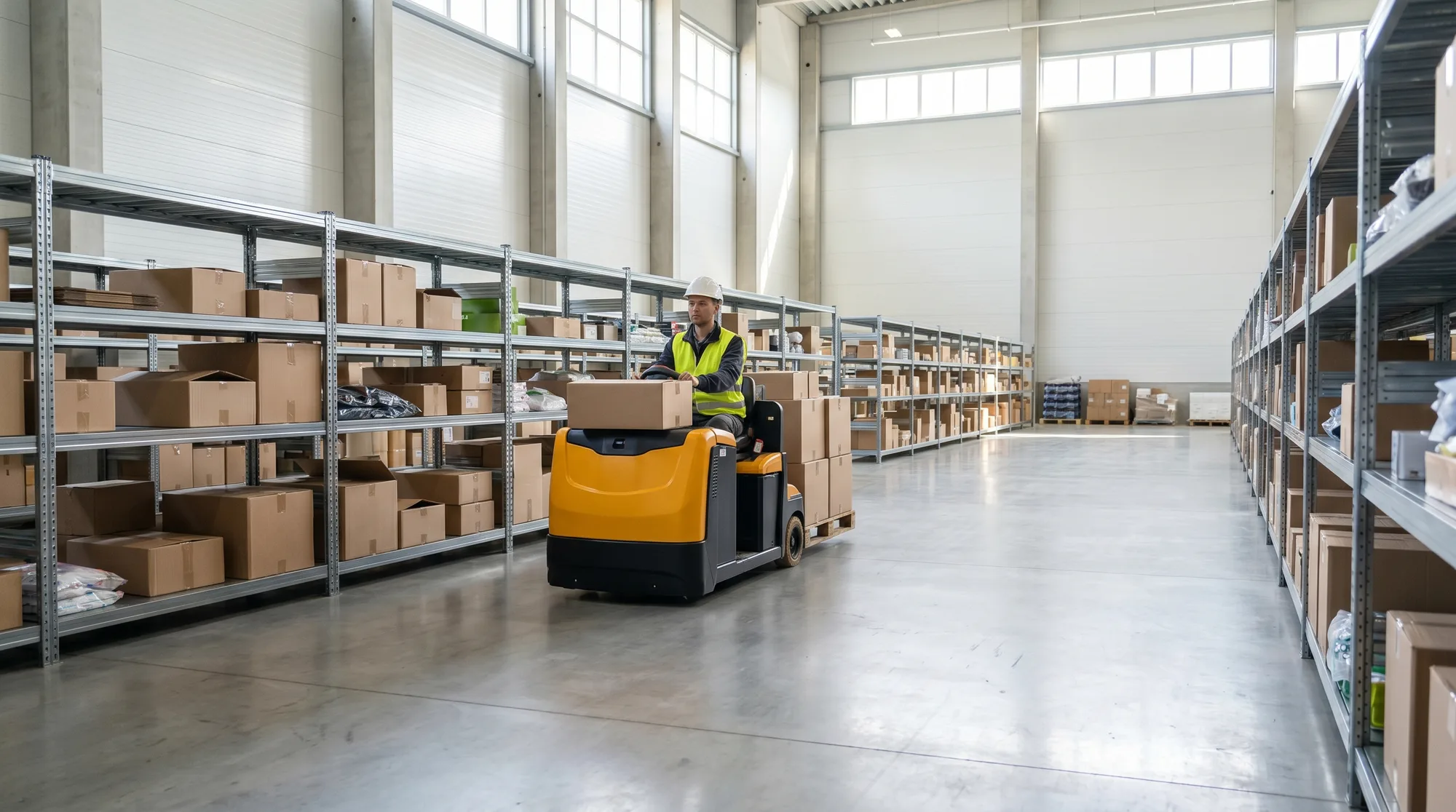
The other electric vehicle on a distribution-centre floor is the tow tractor or tugger, and the two are often confused. They solve different problems: one moves people, the other moves stock. Set side by side, the split is clear, and getting it wrong is an expensive mistake.
- Personnel buggy
- Moving people across the site
- Tow tractor / tugger
- Moving and towing goods
- Personnel buggy
- 2 to 8 people, plus light kit
- Tow tractor / tugger
- Pallets, trailers, heavy loads
- Personnel buggy
- Yards, roadways, mixed routes
- Tow tractor / tugger
- Inside the racking and on the dock
- Personnel buggy
- Buggy and people-mover makers
- Tow tractor / tugger
- The forklift majors
- Personnel buggy
- Won't shift your stock
- Tow tractor / tugger
- Overkill, and poor for people
| Personnel buggy | Tow tractor / tugger | |
|---|---|---|
| Main job | Moving people across the site | Moving and towing goods |
| Carries | 2 to 8 people, plus light kit | Pallets, trailers, heavy loads |
| Best on | Yards, roadways, mixed routes | Inside the racking and on the dock |
| Specialist supplier | Buggy and people-mover makers | The forklift majors |
| Get it wrong | Won't shift your stock | Overkill, and poor for people |
What to look for in the spec
A good warehouse carrier is built around the floor it works on, not bought off a shelf. The points that matter most are the seat count, the footprint and the duty cycle. Seat count should match the biggest group you move at once, usually a shift handover. Footprint and turning circle have to suit your aisle widths and the doors and ramps the vehicle passes through. And the battery has to be sized to the daily distance so the carrier runs the full operating day and charges overnight rather than tapping out mid-shift.
- 01
Map the journeys
List the trips that hurt: the gatehouse walk, the far dock, the shift-change rush. Note distances and the biggest group moving at once.
- 02
Set the seat count
Size the vehicle to clear the busiest movement comfortably, rather than running half-empty most of the day.
- 03
Check the footprint
Confirm the carrier fits your aisle widths, doorways and any ramps or level changes on the route.
- 04
Size the battery
Match the battery to the daily distance so the carrier covers the shift and charges overnight without queueing for a socket.
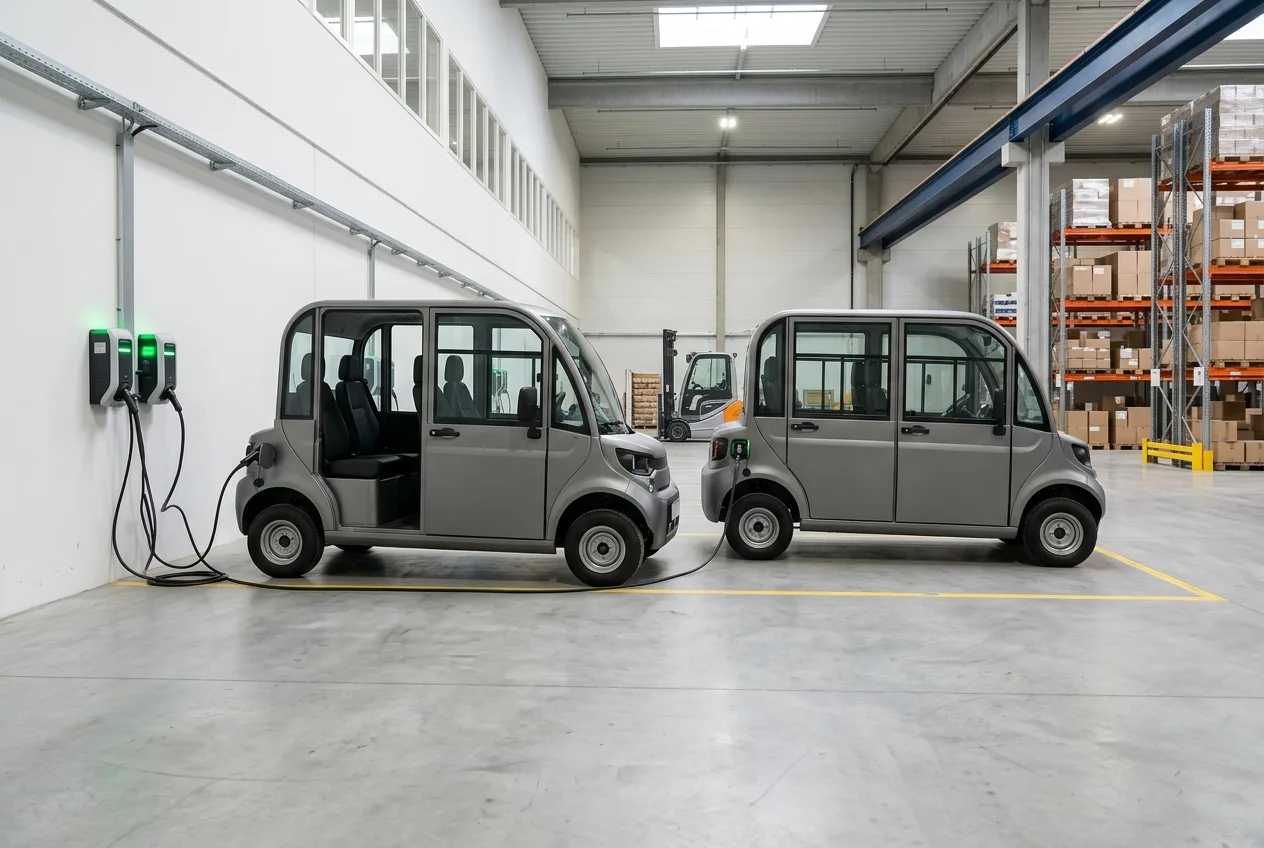
People-movers, built for your floor
Choose the seat count, footprint and finish, branded as your own and supported by a 24-hour call-out so the floor keeps moving.
How it pays for itself
The case for a personnel carrier is mostly recovered time. If a handful of supervisors each save fifteen minutes of walking a shift, and a shift change clears a few minutes faster because people are not strung out across the floor on foot, that adds up quickly across a year on a site running multiple shifts. It is not a dramatic single saving; it is a steady one that compounds. The honest way to size it is to count the journeys you actually make today, not to assume a headline figure.
There is a softer benefit too. People notice when a site is set up to make their day easier. A carrier that saves a long walk at the end of a shift, or gets a new starter to the right dock without a frustrating trek, is the sort of small thing that makes a large warehouse a better place to work. On sites where retention is a real cost, that is worth more than it looks. If you are reviewing wider on-site movement, our guide to electric buggies for warehouses sets out the full picture, and you can always request a quote to talk specifics.
Move your people as well as your pallets
Tell us your site layout, the journeys that hurt and your shift pattern. We will recommend the right personnel carrier, branded as your own and built to run indoors all day.
Frequently asked questions
Can these vehicles run indoors on the warehouse floor?+
Yes. They are electric, so there is no exhaust at the point of use, which makes them safe to run indoors past racking and people for the full working day, the same reason most lift trucks are electric.
How is a personnel carrier different from a tow tractor?+
A tow tractor is built to pull loads; a personnel carrier is built to move people. The carrier has proper seating, a comfortable ride and a footprint chosen to suit your aisles, rather than a towing hitch and a flat platform.
How many people can one carry?+
We build to order, so seat counts are matched to the biggest group you move at once, typically a shift handover. We size the vehicle around that rather than offering a fixed number.
Will the battery last a full shift?+
Sized correctly, yes. We match the battery to the daily distance the carrier covers so it runs the operating day and charges overnight rather than running flat mid-shift.
Can it be branded for our site?+
Yes. Every vehicle is built to order, so your colours, livery and signage are specified into the build.
Related solutions
Ready to explore what we build?
See the vehicles and the setting this applies to, or get a tailored quote built around your site.
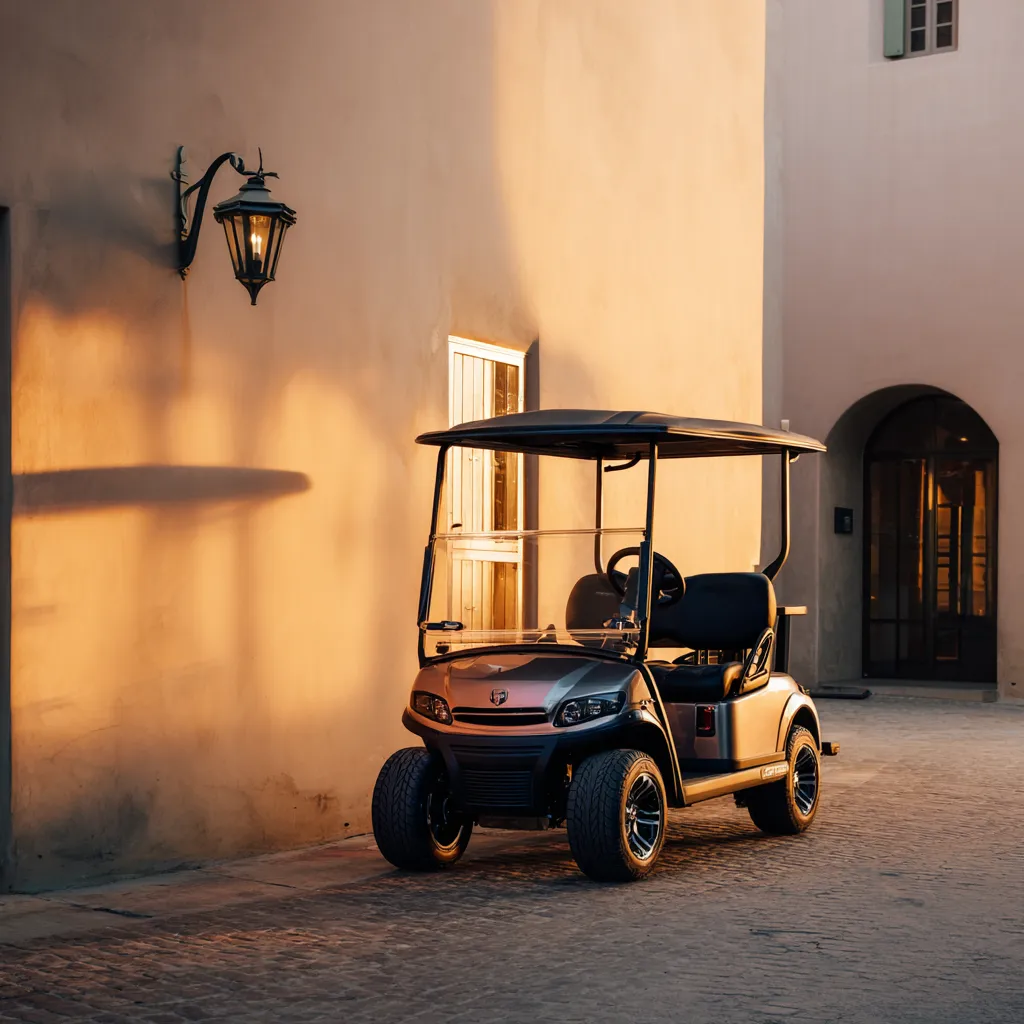
Ready to find the right buggy?
Tell us how and where it will work and we will specify a vehicle and a tailored quote built around you. Every build comes with a 3-year warranty and a 24-hour priority call-out.
Our guides are written and reviewed by the Hawke Electric Vehicles team, the people who specify, build, deliver and support the vehicles. We focus on honest, practical advice and flag where a figure depends on the build rather than guessing.
More guides by Hawke