Let's set expectations first, because it saves everyone time. A last mile electric vehicle in this guide isn't a delivery van and it isn't an HGV. It's an electric utility buggy with a cargo bed, and its job is the short hops: moving parcels and goods around your own yard, depot or campus rather than out onto the road. Used for the right job it's quick, clean and cheap to run. Used for the wrong one it'll let you down. Here's the honest version of where it fits.
What a last mile electric vehicle does (and doesn't do)
The phrase 'last mile' covers two very different things. One is the final road leg from a depot to a customer's door, which is van work. The other is the final hundred metres inside your own site: trailer to dock, dock to staging area, gatehouse to the far unit, stockroom to the pick-up point. That second job is where a buggy earns its keep, and it's the job a van does badly because it's too big, too slow to manoeuvre and a pain to park.
So we won't pretend a buggy replaces your fleet. It doesn't. What it does is take the short, repetitive internal runs off the people and vehicles that are wrong for them. On a busy site that's a lot of movement, and a lot of saved time.

Where a buggy fits on a delivery site
The pattern repeats across depots, distribution yards, large campuses and retail parks. Once goods have to travel further than a trolley but not as far as a road trip, a utility buggy is the right size of tool.
- Trailer to dock and dock to staging. Shifting parcels and totes between an unloading bay and where they're sorted or stored, again and again, all day.
- Internal deliveries across a campus. Post, supplies and small goods between buildings on a hospital, university or business-park site, where a van is overkill and walking is too slow.
- Click-and-collect and locker runs. Moving customer orders from a stockroom to a collection point or parcel locker on a retail park.
- Yard and gatehouse errands. Taking paperwork, kit or a single pallet's worth of light goods to the far end of the site without firing up a van.
If your bigger problem is moving people rather than parcels, our guide to electric people movers and passenger shuttles covers the larger seated platforms. And if the site in question is a warehouse, the sister piece on electric buggies for warehouses goes deeper on indoor and mixed-use running.
Buggy or van? An honest comparison
This is the question that matters, so here's the plain version. The two do different jobs and the wrong choice is an expensive mistake. The buggy is for short internal runs; the van and HGV are for the road and the real distance.
- Utility buggy
- Short hops inside your site
- Delivery van / HGV
- Road delivery and real distance
- Utility buggy
- Parcels, totes, light goods
- Delivery van / HGV
- Full loads, heavy freight
- Utility buggy
- Yards, docks, campus roads
- Delivery van / HGV
- Public roads and motorways
- Utility buggy
- No, private land only
- Delivery van / HGV
- Yes, taxed and registered
- Utility buggy
- Won't do your road runs
- Delivery van / HGV
- Slow, clumsy, costly in a yard
| Utility buggy | Delivery van / HGV | |
|---|---|---|
| Main job | Short hops inside your site | Road delivery and real distance |
| Carries | Parcels, totes, light goods | Full loads, heavy freight |
| Best on | Yards, docks, campus roads | Public roads and motorways |
| Road legal | No, private land only | Yes, taxed and registered |
| Get it wrong | Won't do your road runs | Slow, clumsy, costly in a yard |
Our view, said plainly: if the daily problem is getting goods to customers on the road, that's van and HGV work and a buggy won't touch it. If the daily problem is goods bottlenecking on the short internal legs, a buggy is the better and cheaper answer. Plenty of operations run both, because each is better at its own part of the journey.
The buggy doesn't replace the van. It takes the short internal runs the van is too big and slow to do well.
Load, cargo bed and what to specify
The cargo bed is the whole point of a utility layout, so it's worth getting right. A flat, open bed takes loose parcels and totes and tips for quick unloading. Add fixed sides or a mesh cage and you can stack higher without things sliding off over a speed bump. Think about how your goods actually move: small parcels suit a caged bed, longer or awkward items suit a flat deck with lashing points.
Be realistic about weight. A utility buggy carries a useful load for short site runs, but it isn't a forklift and it isn't a pallet truck. If you're moving heavy palletised stock through racking, that's materials handling and the forklift majors are who you want. Keep the buggy for the lighter, more frequent movements it's built for, and it'll run all day.
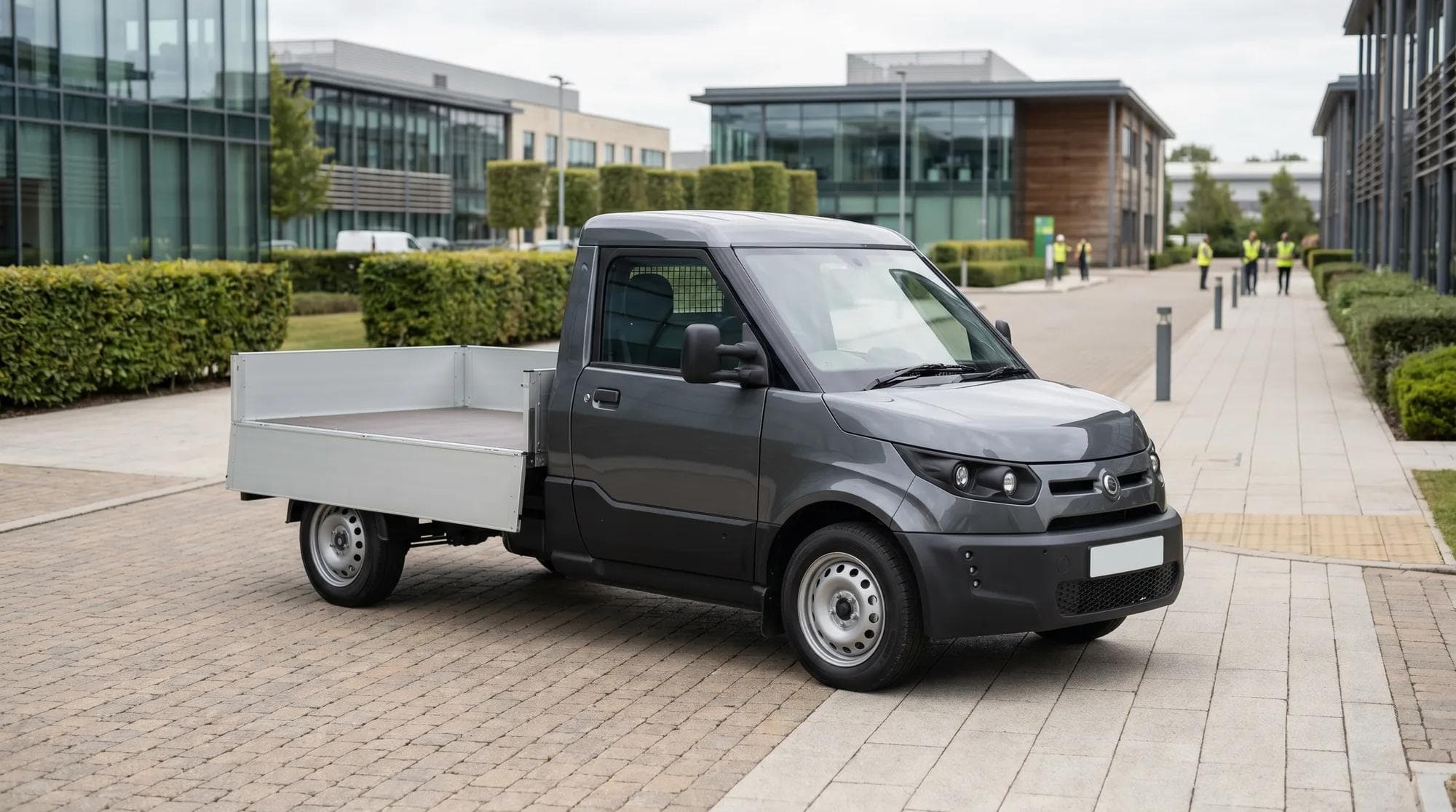
The utility-style Hawke S2 Pickup is the model built for this kind of work, with a cargo bed for parcels and light goods plus room for a driver and a mate. Every vehicle is built to order, so the bed, the sides and the load points are specified around what you actually carry.
Safety in a working yard
A logistics yard is a busy place: HGVs reversing, forklifts crossing, foot traffic and blind corners all sharing the same ground. A loaded buggy has to fit into that safely, not add to the risk. The basics are sensible and worth specifying from the start.
- Visibility. A flashing beacon, high-visibility livery and good lighting so the buggy is seen around lorries and corners.
- Sensible speed. These run at walking-to-jogging pace near people and loads, not at speed. Keep to your site limits.
- Secure the load. Sides, a cage or lashing points so parcels don't shed over ramps and bumps.
- Driver discipline. Trained, authorised drivers only, following the same yard traffic rules as everything else.
- Stick to the routes. Use marked vehicle lanes and keep clear of pedestrian-only zones wherever the site has them.
Charging and keeping it working
A yard vehicle is only useful when it's ready to go, so charging is worth thinking through before you buy. The simple version: park it on charge overnight and it's ready for the shift. For heavier use across long days, the battery you choose makes the difference.
Lead-acid is cheaper to buy but heavier, slower to charge and shorter-lived. Lithium costs more up front and gives you more range, faster top-ups and a service life of roughly eight to ten years. For a buggy running most of the day, lithium usually wins, mainly because you can splash in a partial charge over a quiet half-hour and keep it working rather than waiting. Our lithium versus lead-acid guide lays out the trade-off in full.
How to choose your yard delivery buggy
Work through these in order and the right buggy more or less picks itself.
- What do you move most, parcels, totes or light goods? That sets the bed and whether you want sides or a cage.
- How heavy are the typical loads? Light and frequent suits a buggy; heavy and palletised is forklift work.
- Indoors, outdoors or mixed? Mixed use means specifying a roof and weather protection for the driver.
- How many hours a day will it work? Heavy use leans firmly to lithium.
- One buggy or a branded fleet? Matched, branded vehicles look the part and are easy to spot in a busy yard.
If your wider need is moving goods and people across other kinds of large site, the same thinking carries over to our guides for electric buggies in warehouses and electric buggies on construction sites.
How to buy from us
Every buggy is built to order, so it starts with a conversation rather than a checkout. Tell us your site, what you move and how far, whether it's indoor, outdoor or both, and we'll specify the right cargo layout or fleet around you, confirm a tailored price and arrange delivery and commissioning, in the UK or worldwide. Every build comes with a 3-year warranty and a 24-hour VIP call-out, we offer custom fleet branding.
Specify a yard delivery buggy
Tell us what you move and how your site is laid out, and we'll specify the right cargo buggy or fleet and a tailored quote built around you.
Frequently asked questions
What is a last mile electric vehicle for a yard or depot?+
It's an electric utility buggy with a cargo bed that moves parcels and light goods short distances inside your own site: trailer to dock, dock to staging, building to building on a campus. It's for the internal hops, not for road delivery, and it doesn't replace a van or HGV.
Can an electric buggy replace a delivery van?+
No. Road delivery to customers is van and HGV work, and a buggy isn't road legal as supplied. A buggy handles the separate problem of goods bottlenecking on the short internal legs inside a yard or campus. Many operations run both, each on the job it does best.
How much can a utility buggy carry?+
Enough for short, frequent site runs: parcels, tote boxes and light goods on the cargo bed, plus a driver and a mate. It isn't a forklift or a pallet truck, so heavy palletised stock through racking is materials-handling work for a forklift, not a buggy.
Can you use a delivery buggy indoors as well as in the yard?+
Yes. An electric drivetrain is near silent and produces no fumes, so it suits indoor and mixed indoor-outdoor use where a petrol vehicle can't go. For mixed routes, specify a roof and weather protection so the same vehicle works outdoors year-round in UK weather.
How do you charge a yard delivery buggy?+
Park it on charge overnight and it's ready for the shift. For long days, lithium lets you top up partially over short breaks and keep it running. Site the charging point where the buggy naturally ends its day, near the gatehouse or main dock, so plugging in is easy and reliable.
Related solutions
Ready to explore what we build?
See the vehicles and the setting this applies to, or get a tailored quote built around your site.

Ready to find the right buggy?
Tell us how and where it will work and we will specify a vehicle and a tailored quote built around you. Every build comes with a 3-year warranty and a 24-hour priority call-out.
Our guides are written and reviewed by the Hawke Electric Vehicles team, the people who specify, build, deliver and support the vehicles. We focus on honest, practical advice and flag where a figure depends on the build rather than guessing.
More guides by Hawke