- A car park shuttle at a theme park is where the day starts, and where it most often goes wrong for guests who cannot walk far.
- Standard land trains move the crowd well but rarely carry a wheelchair or scooter, so those guests get pushed onto a slower separate service.
- The fix is to run accessible vehicles on the same loops as the standard trams, not a single bus parked at the entrance for emergencies.
- Plan the car-to-gate transfer around the longest realistic walk, the busiest hour, and the full range of guests, including pushchairs and tired feet.
- Quiet electric buggies and people-movers, standard and accessible, charged overnight, cover the whole job from one fleet.
A car park shuttle at a theme park is the first thing a guest meets and one of the last, and it sets the tone for the whole visit. For most people a standard land train does the job: it shortens a long, hot walk from a distant parking area to the gate and keeps families together. The problem is the guests it does not serve. A wheelchair user, a scooter rider, or someone who simply cannot manage the distance often finds the main shuttle is not for them, and ends up waiting for something slower and separate.
That gap is avoidable, and at the scale of the new attractions Britain is building it is worth closing properly. This guide looks at the difference between a standard car-park tram and an accessible shuttle, why the two so often get split apart, and how to design the car-to-gate transfer so every guest gets from their car to the gate without a long wait or an awkward detour.
Why the car-to-gate transfer matters more than people think
Ask anyone who runs a large attraction where the day is made or ruined and they will point at the car park. By the time a family reaches the entrance they have already driven, parked, unloaded and started walking, and they have not bought a thing or ridden anything yet. A smooth transfer turns that dead time into part of the welcome. A long walk in the sun, or a long wait for a lift that does not come, does the opposite.
At a big site the distances are real. A car park measured in hundreds of spaces can sit a long way from the gate, and at closing the same crowd wants to leave at once, often tired and often in the rain. That is why most large sites run a continuous shuttle loop between the parking areas and the entrance plaza. The question is not whether to run one, but whether it actually carries everyone.
What a standard car-park tram does well
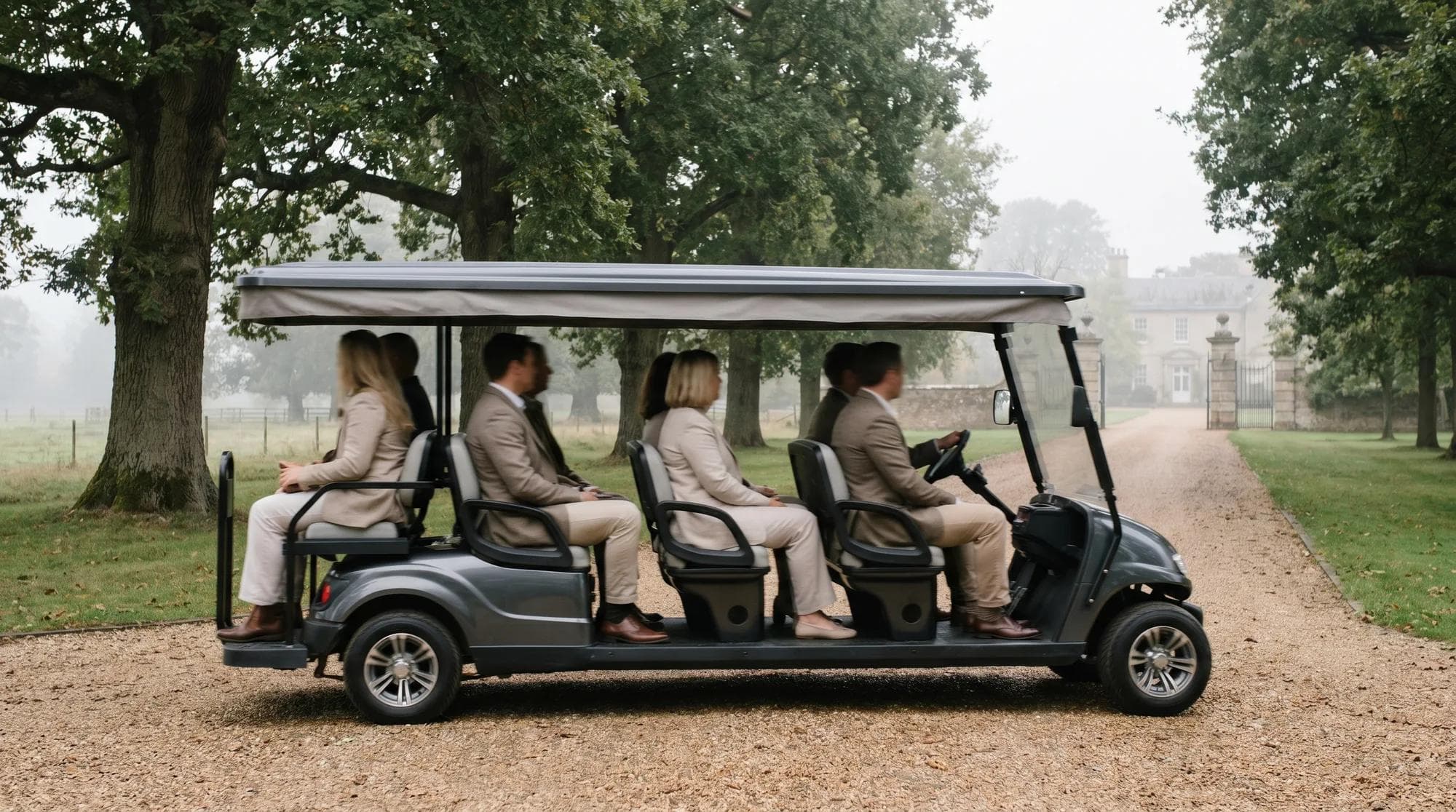
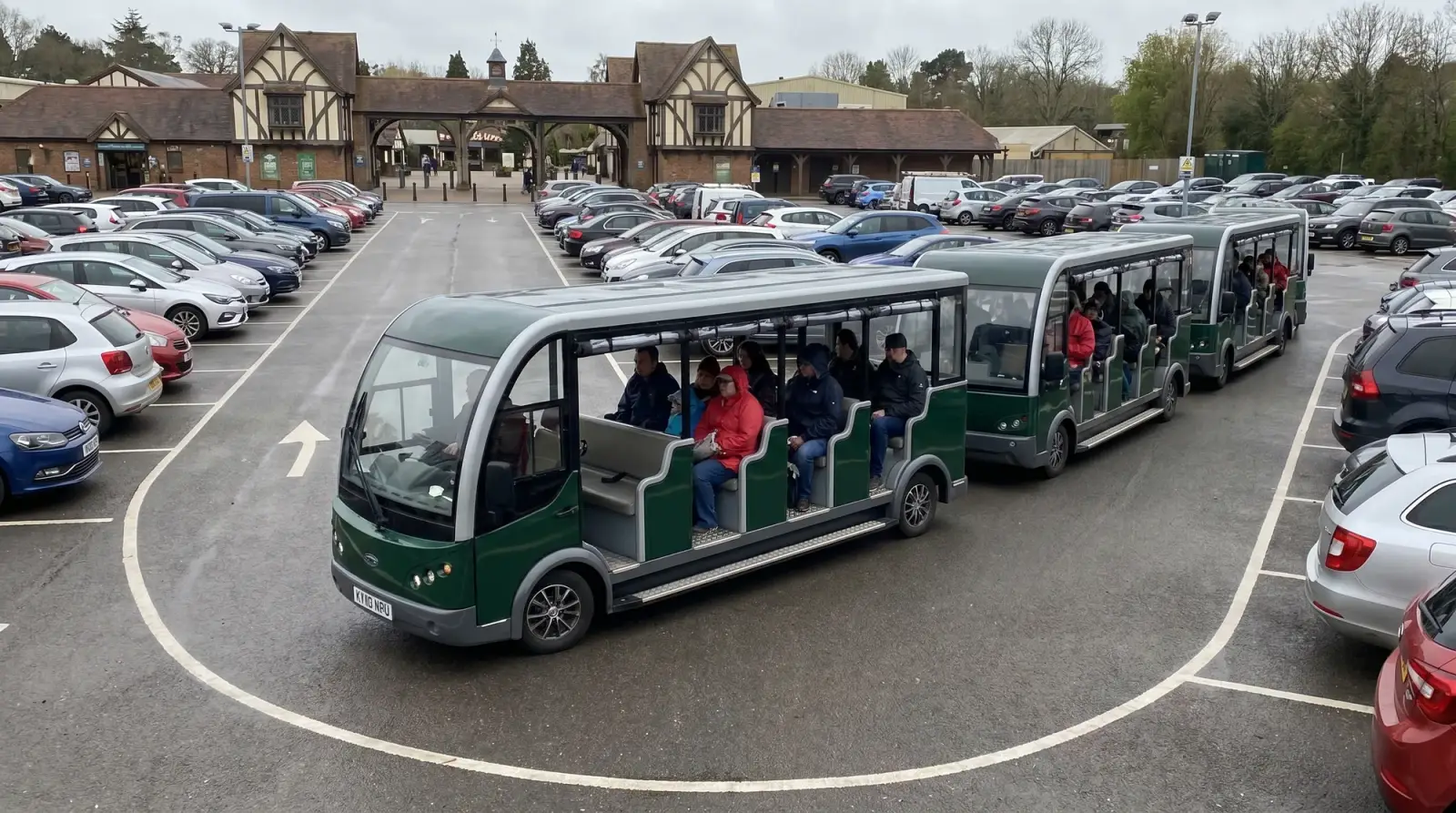
There is nothing wrong with a land train or road train for the bulk of the crowd. A string of linked, low-speed carriages can move a steady stream of guests on a fixed loop all day, and an electric one does it without noise or fumes, which matters when it runs past queues and food outlets. For the able-bodied majority it is the right tool, and it keeps the car park clear at peak by shifting people quickly.
- Moves large numbers on a continuous loop, so the wait stays short at peak.
- Keeps families and groups together in one vehicle.
- Shortens the perceived distance from a far car park to the gate.
- Runs quietly and cleanly when electric, close to pedestrians and dining.
- Clears the parking areas fast at opening and closing.
Where the standard tram leaves people behind
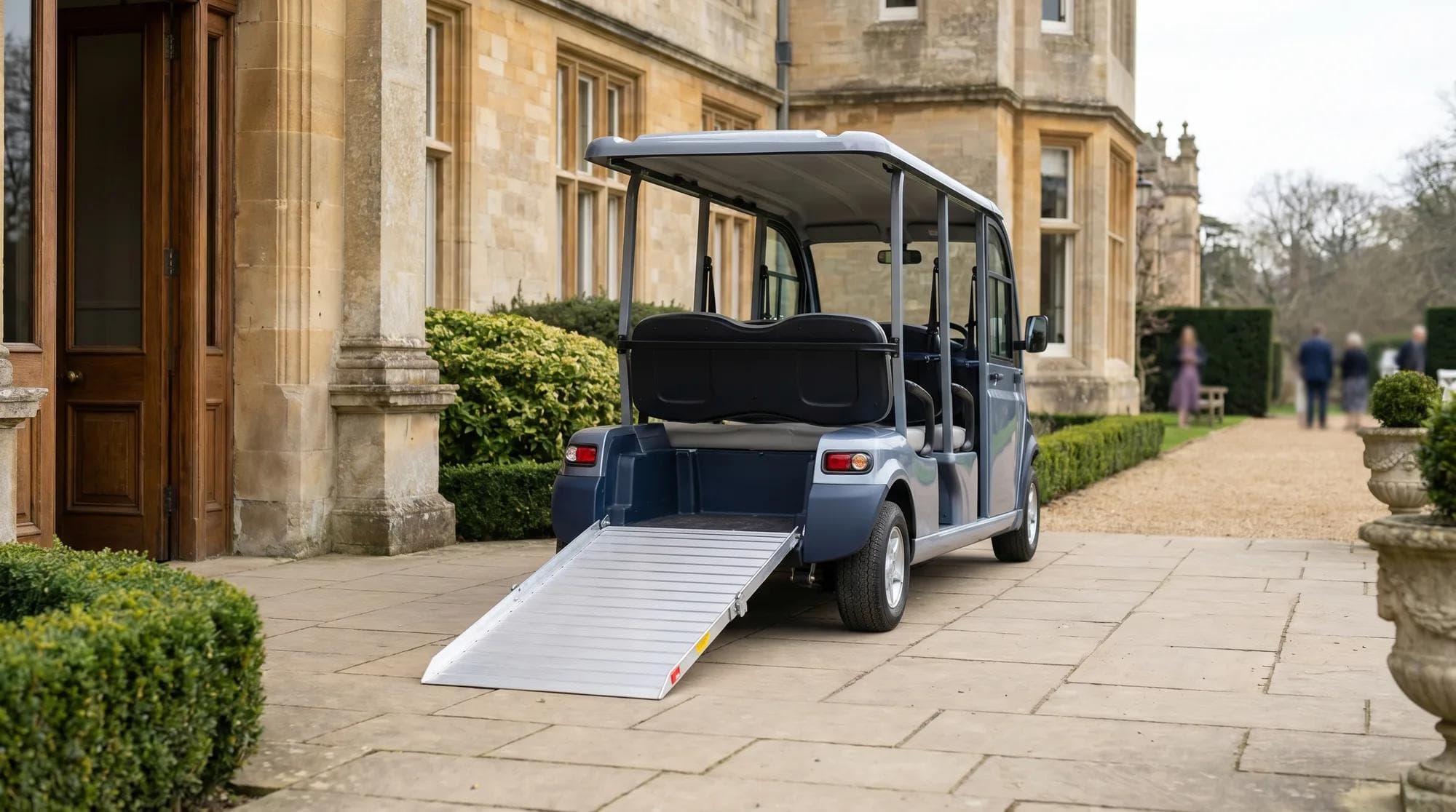
The trouble starts with boarding. A typical land train has a step up into each carriage and fixed bench seating, which is fine on two feet but no use to a wheelchair user or a scooter rider. So those guests get directed to a different service: a single accessible vehicle, often parked near the entrance, often shared across the whole site. The result is a long, visible wait while everyone else rolls past, and a group split up if the companion travels separately.
It is a poor experience, and increasingly it is one visitors talk about publicly. It is also a reasonable-adjustments question under the Equality Act: a site that moves able-bodied guests comfortably and leaves wheelchair users waiting is exactly the kind of disadvantage the law has in mind. The honest framing is simple. If an able-bodied guest waits two minutes for a shuttle, a wheelchair user should not wait twenty for theirs. Our guide to accessible electric buggies goes into the vehicle detail.
A better model: mix the fleet on the same loops
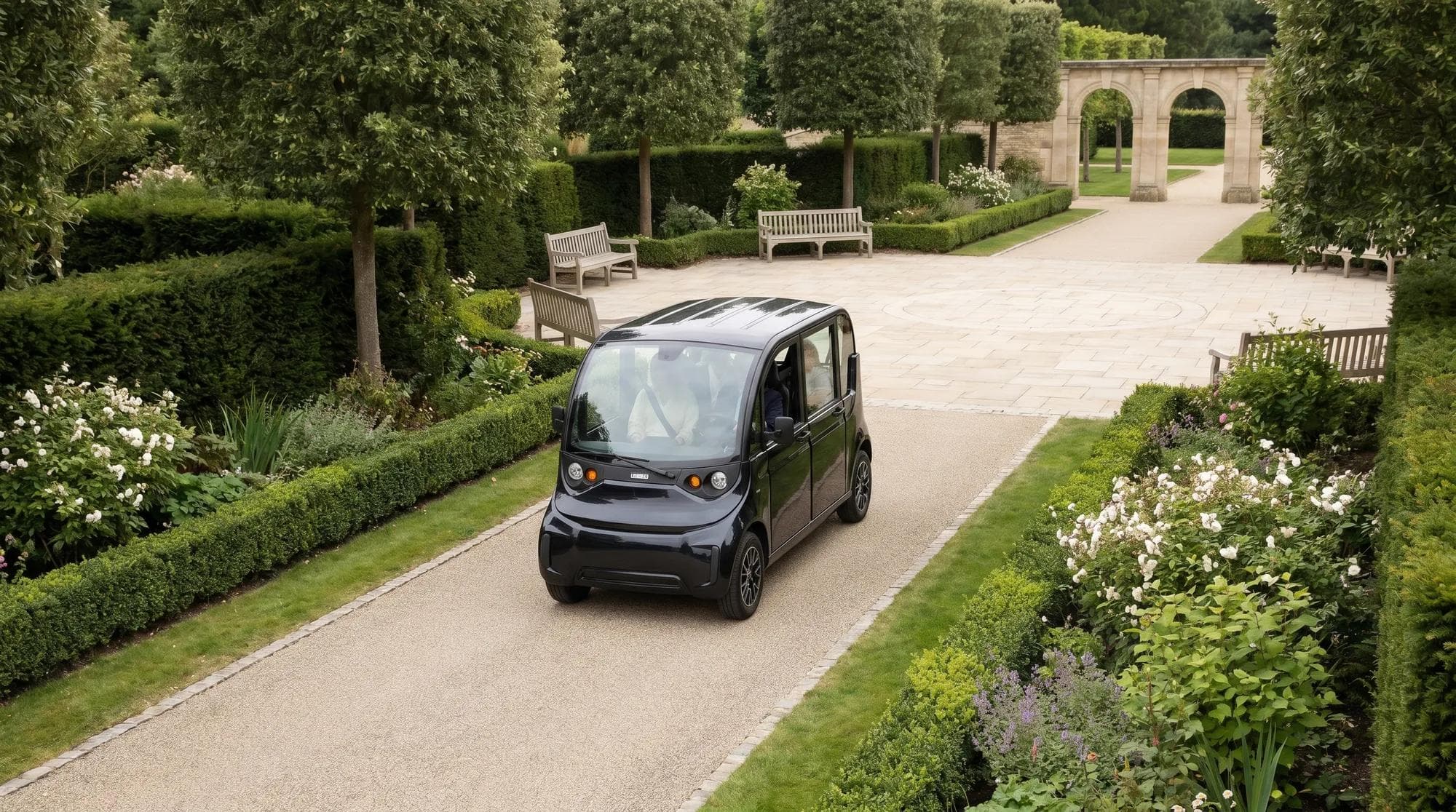
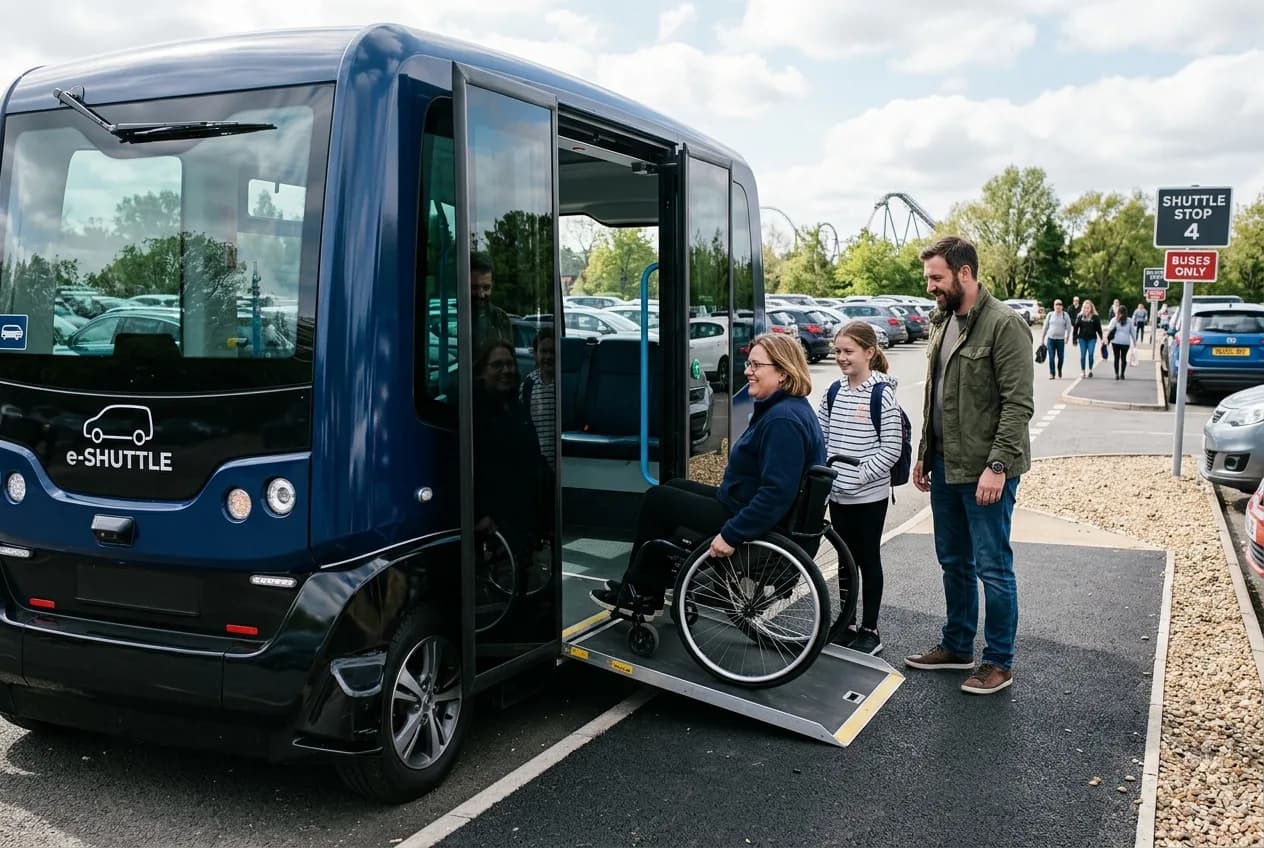
The fix is not one accessible bus at the gate. At scale that vehicle is always in the wrong place and the wait builds. The better approach is to run accessible shuttles on the same loops as the standard trams, spread through the timetable, so an accessible vehicle is never far away. Some sites do this with a fully accessible people-mover that anyone can use, standard and wheelchair-using guests together; others mix dedicated accessible vehicles into a fleet of land trains. Either way the principle is the same: one transfer system, not two.
- What it means
- High capacity for the crowd, but stepped boarding and fixed seating exclude wheelchair and scooter users.
- What it means
- Step-free or ramped, secures a chair, keeps the group together, and arrives as often as the standard tram.
- What it means
- Looks inclusive on paper, but one shared vehicle means long, visible waits at peak. The model to avoid.
| Option | What it means |
|---|---|
| Standard land train | High capacity for the crowd, but stepped boarding and fixed seating exclude wheelchair and scooter users. |
| Accessible shuttle on the same loop | Step-free or ramped, secures a chair, keeps the group together, and arrives as often as the standard tram. |
| Single accessible bus at the gate | Looks inclusive on paper, but one shared vehicle means long, visible waits at peak. The model to avoid. |
Because we build to order, you can specify exactly how many accessible vehicles you need and how they are equipped, then request a quote once you know the loop layout. They use the same bodywork and livery as the standard fleet, so they look like part of the operation rather than separate equipment.
Designing the transfer so it works at peak
The design work is mostly arithmetic. Take the longest realistic walk from the furthest car park to the gate, the busiest hour of arrivals, and how long a full round trip takes including loading and unloading. From there you can estimate how many standard vehicles keep the wait under a few minutes, and what proportion of the fleet needs to be accessible so those guests get a comparable wait. It is the same method whether you move 200 guests an hour or 2,000; only the numbers change.
- 01
Map the loops
distance from each car park to the gate, and the round-trip time including loading.
- 02
Find the peak
arrivals in the busiest hour at opening, and the surge at closing.
- 03
Size the standard fleet to keep the wait short across the whole crowd
- 04
Set the accessible proportion so a wheelchair user waits no longer than anyone else
- 05
Plan charging overnight so every vehicle runs the full operating day
Why electric suits the car park loop
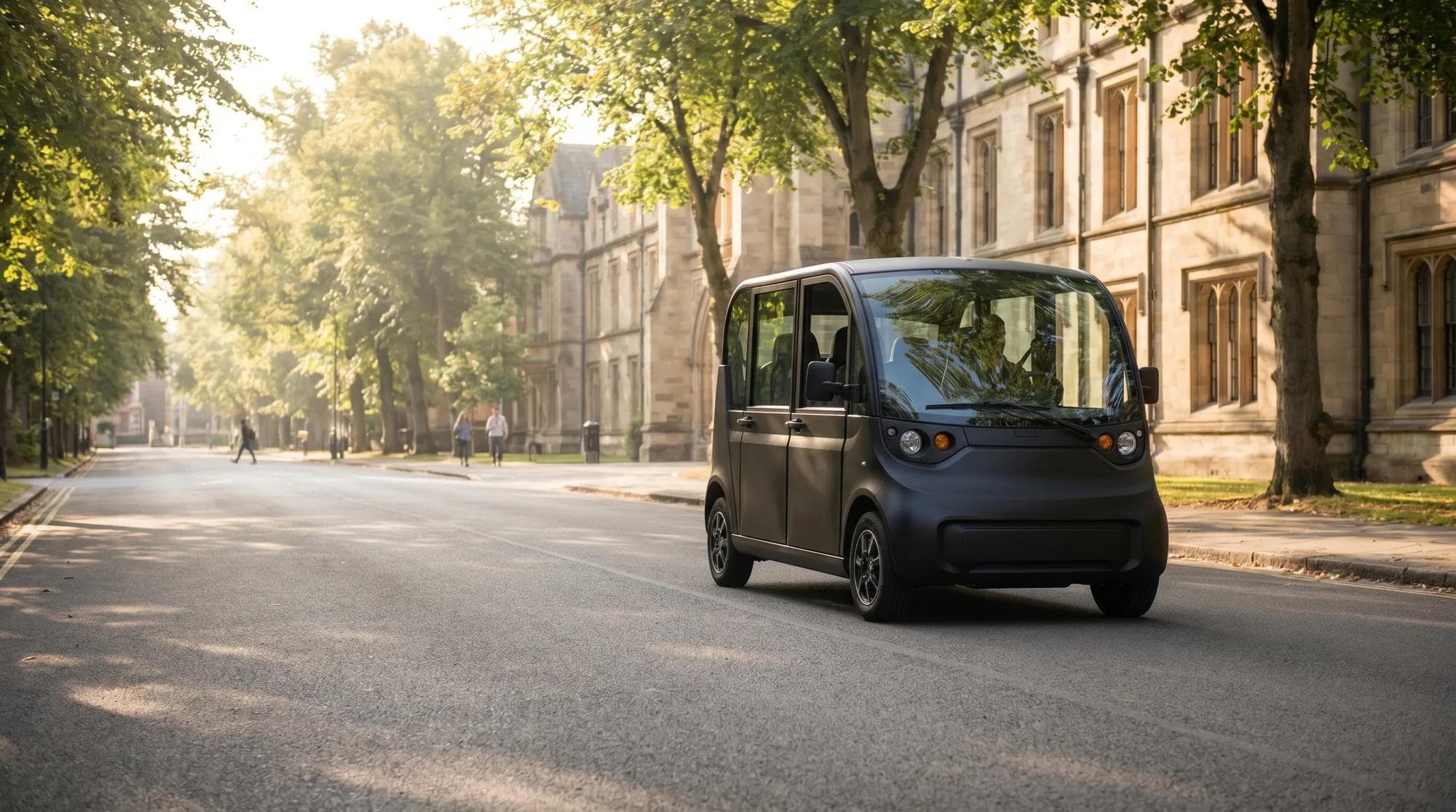
A car-to-gate shuttle runs the same loop, hour after hour, all day, which is exactly the duty cycle a battery handles well. An electric drivetrain is near-silent, so it can run close to queues and outdoor dining without intruding. It produces no local emissions, which matters in busy pedestrian areas where guests are walking and waiting. And it is cheaper and simpler to run, with no fuel to store and far less to service, covering a full operating day on a single overnight charge. New attractions are mostly specifying electric from the start for those reasons. Our people-movers and shuttles guide covers the vehicle types in more detail, and the full range shows the standard and accessible builds side by side.
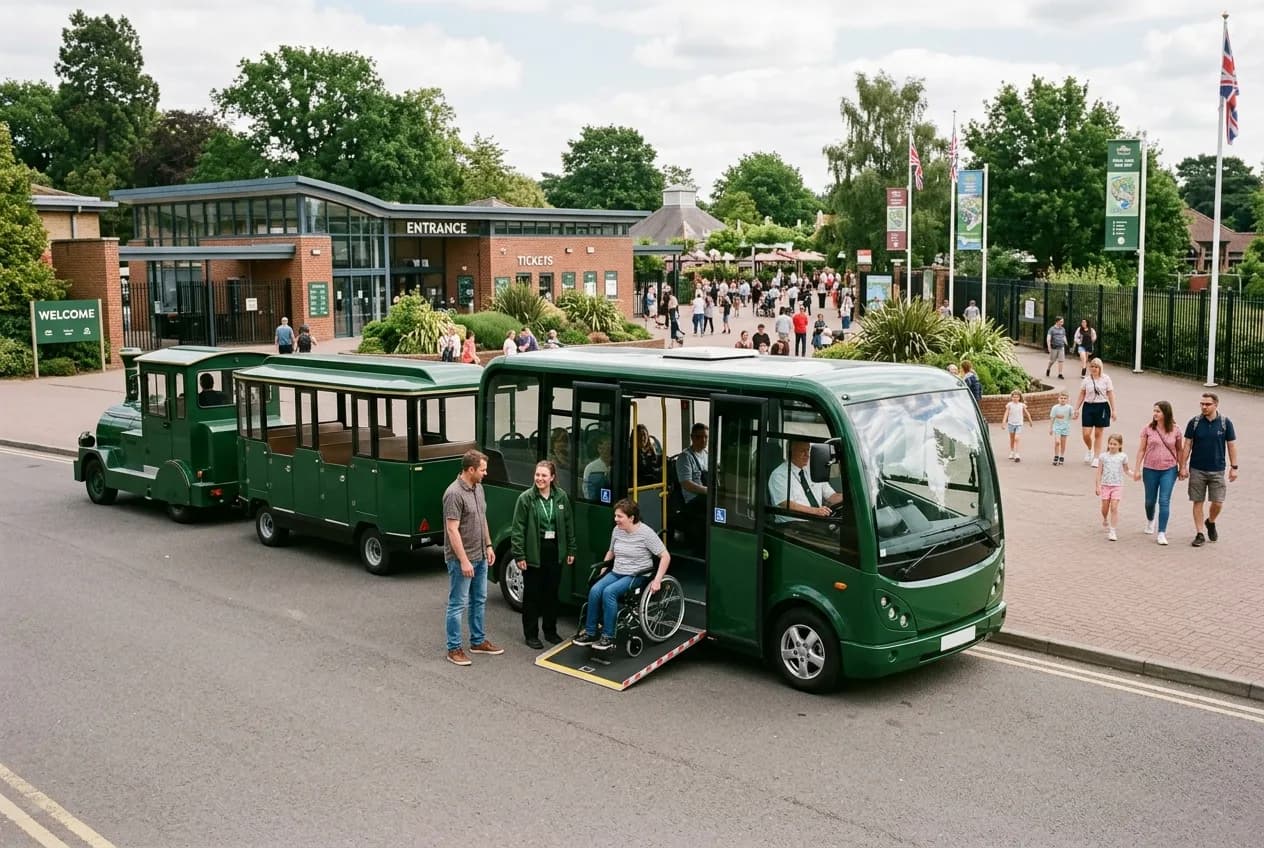
One fleet, every guest
Standard land trains and accessible shuttles, built to the same premium finish and liveried as your own, so the car-to-gate transfer works for everyone on the same loops.
Planning your car-to-gate transfer?
Tell us the car park distances, the crowds you expect and how your loops are laid out. We will recommend the right mix of standard and accessible vehicles, branded as your own and built to order, assembled and finished in the UK.
Frequently asked questions
What is the difference between a car park tram and an accessible shuttle?+
A car park tram, or land train, is a string of stepped carriages tuned to move large numbers of able-bodied guests on a loop. An accessible shuttle is step-free or ramped so a wheelchair or scooter user can board and travel secured in their own chair, with companions alongside. The aim is to run both on the same loops.
Can't one accessible vehicle at the entrance cover it?+
At a small site, maybe. At a large attraction a single shared vehicle is always in the wrong place and the wait builds quickly. It is better to spread accessible vehicles through the timetable so one is never far away.
Is there a land train alternative that carries everyone?+
Yes. A fully accessible people-mover can carry standard and wheelchair-using guests together, so there is no separate service at all. For higher capacity, mix accessible vehicles into a land train fleet on the same loop.
How many accessible vehicles does a car park loop need?+
It depends on visitor numbers and how the loops are laid out, but the goal is that a wheelchair user waits no longer than anyone else. We will help you work out a sensible proportion of the fleet.
Can the accessible vehicles match the rest of the fleet?+
Yes. They use the same bodywork, colours and livery, so they look like part of the operation rather than separate hire equipment. Every vehicle is built to order.
Related solutions
Ready to explore what we build?
See the vehicles and the setting this applies to, or get a tailored quote built around your site.

Ready to find the right buggy?
Tell us how and where it will work and we will specify a vehicle and a tailored quote built around you. Every build comes with a 3-year warranty and a 24-hour priority call-out.
Our guides are written and reviewed by the Hawke Electric Vehicles team, the people who specify, build, deliver and support the vehicles. We focus on honest, practical advice and flag where a figure depends on the build rather than guessing.
More guides by Hawke