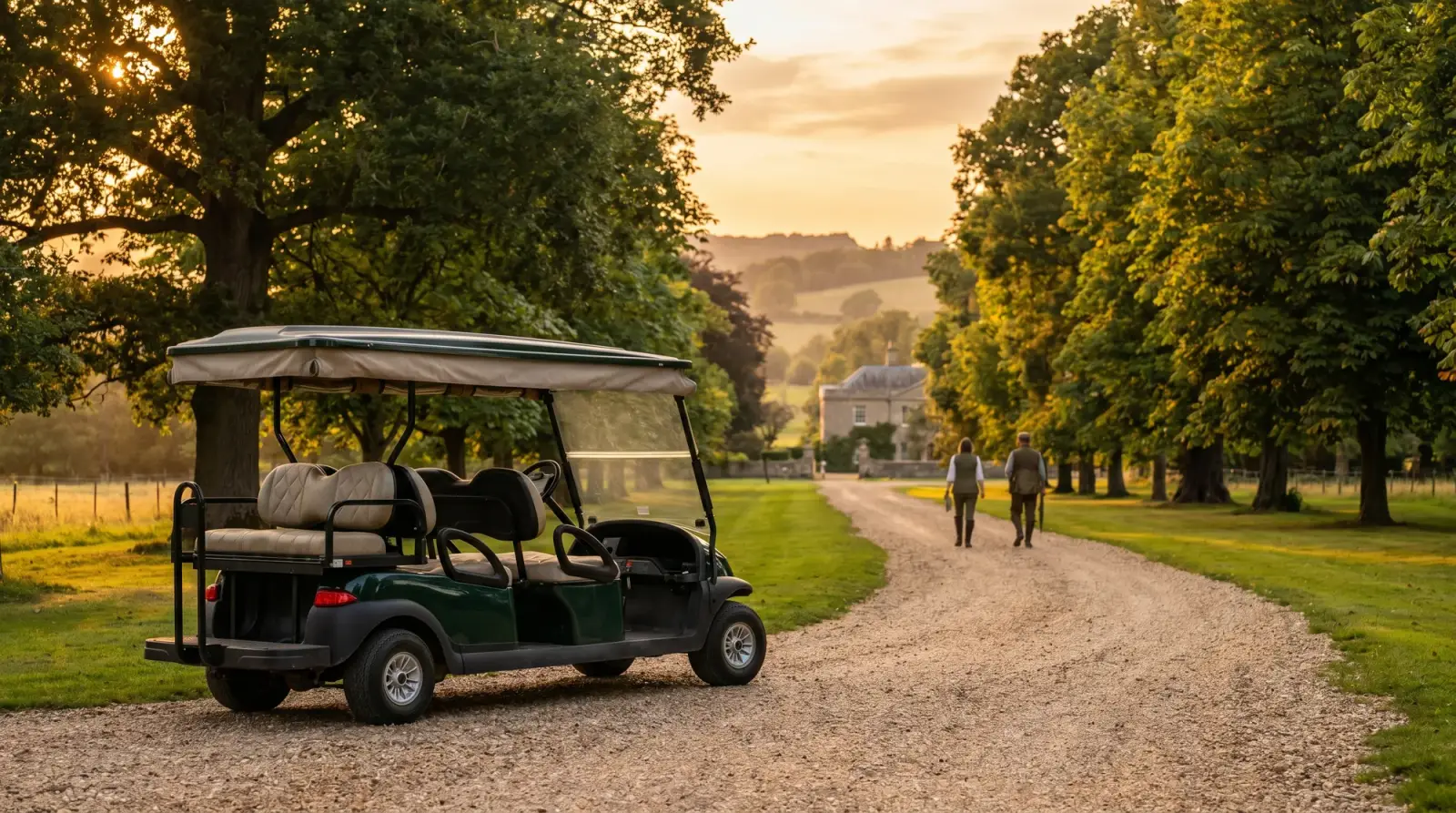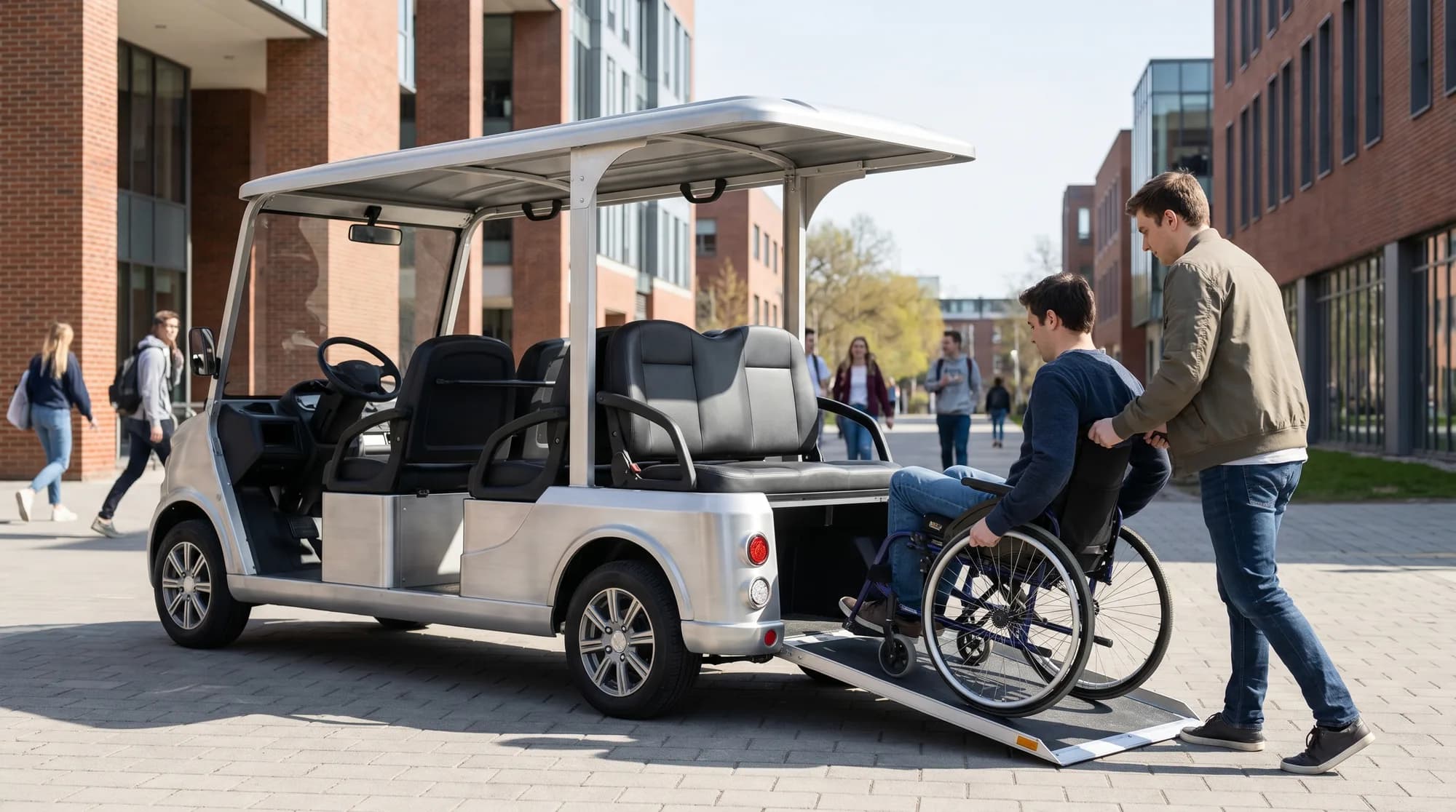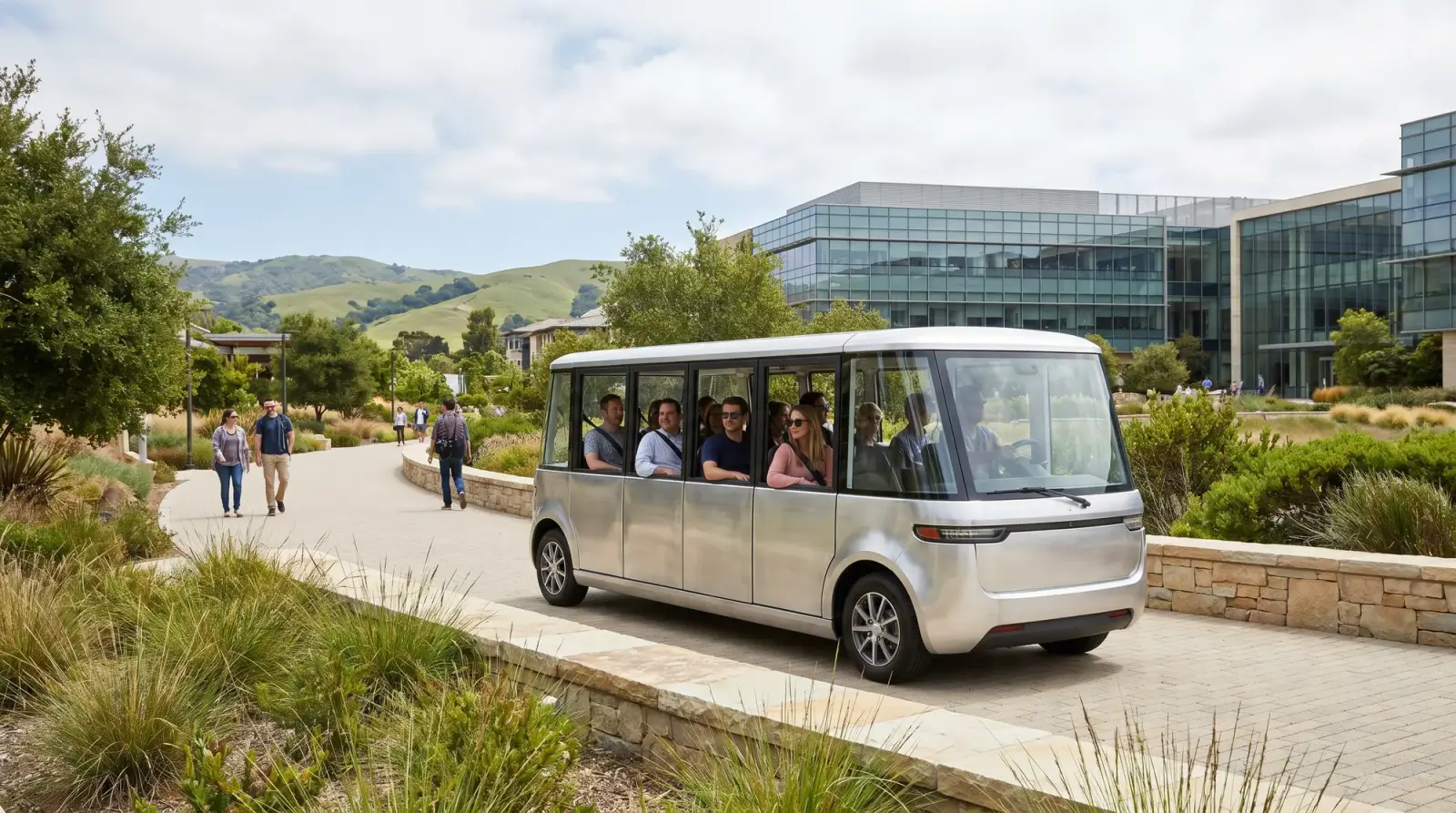
- New UK attractions are specifying electric site transport from day one rather than inheriting petrol or diesel buggies and replacing them later.
- The biggest practical reason is noise: an electric drivetrain is near-silent, so vehicles can run right next to guests, queues and outdoor dining without intruding.
- There are no local emissions at the point of use, which matters in busy pedestrian areas where people and vehicles share the same space.
- Running costs are lower, with no fuel to store and far less servicing, so an electric fleet usually works out cheaper over a few years.
- Net-zero expectations from visitors, planners and investors mean electric is increasingly the default for any large new site.
When an older theme park decides to go electric, it is usually a slow swap. The petrol buggies wear out, get replaced one or two at a time, and a fuel store sits half-empty for years during the changeover. New attractions do not carry that history. When a site is being designed from scratch, the transport is specified alongside everything else, and more and more of those new specifications are electric from the outset.
Britain is building some of its largest new attractions in a generation, including the major resort planned near Bedford, and the teams behind them are not weighing petrol against electric the way an operator did a decade ago. For a new site the decision has largely already gone electric, and the interesting question is why. This guide sets out the reasons, which are as practical as they are environmental, and what they mean for planning transport on a new attraction.
Near-silent, right next to guests
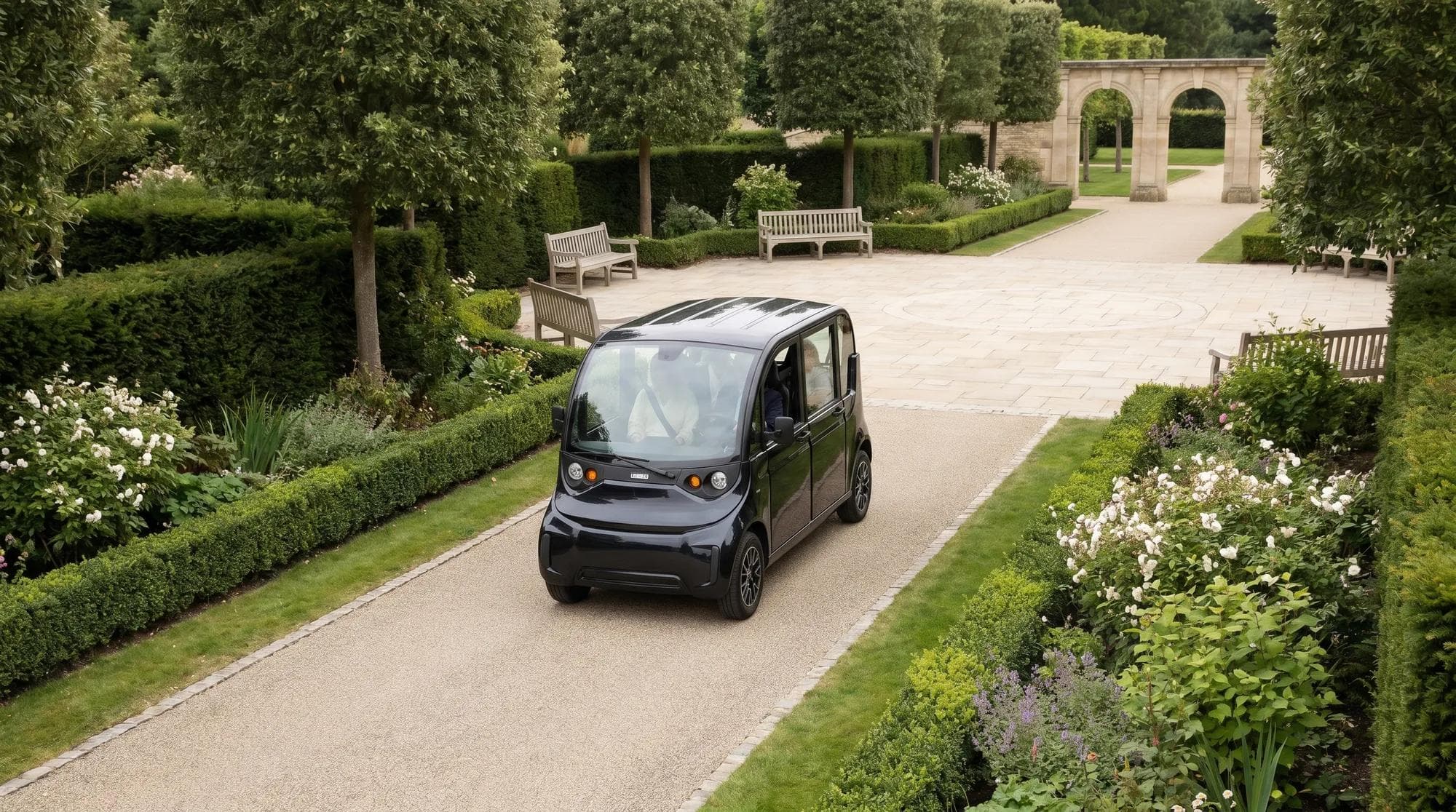
Walk around any attraction and notice how close the vehicles come to people. Buggies pass queues, thread between food outlets, and run along paths busy with families. A petrol engine doing that is a constant low drone, plus the occasional rev, right where guests are trying to relax. An electric vehicle makes almost no sound at the same speed, which means it can work in those spaces without anyone really registering it is there.
That quiet is not a luxury, it is what lets the transport disappear into the background, which is exactly what you want. A guest enjoying an outdoor meal should not have a diesel buggy idling beside them. On a new site designed around pedestrian spaces and outdoor dining, near-silent vehicles are close to a requirement rather than a nice-to-have.
No local emissions where people walk
The second reason follows from the first. Where vehicles and pedestrians share space, exhaust fumes are a problem. Petrol and diesel engines produce them at the point of use, right where guests are standing, queuing and eating. It is unpleasant, and in enclosed or partly enclosed areas it is worse than unpleasant. An electric vehicle produces no emissions at the point of use at all, which is a clean fit for busy pedestrian zones.
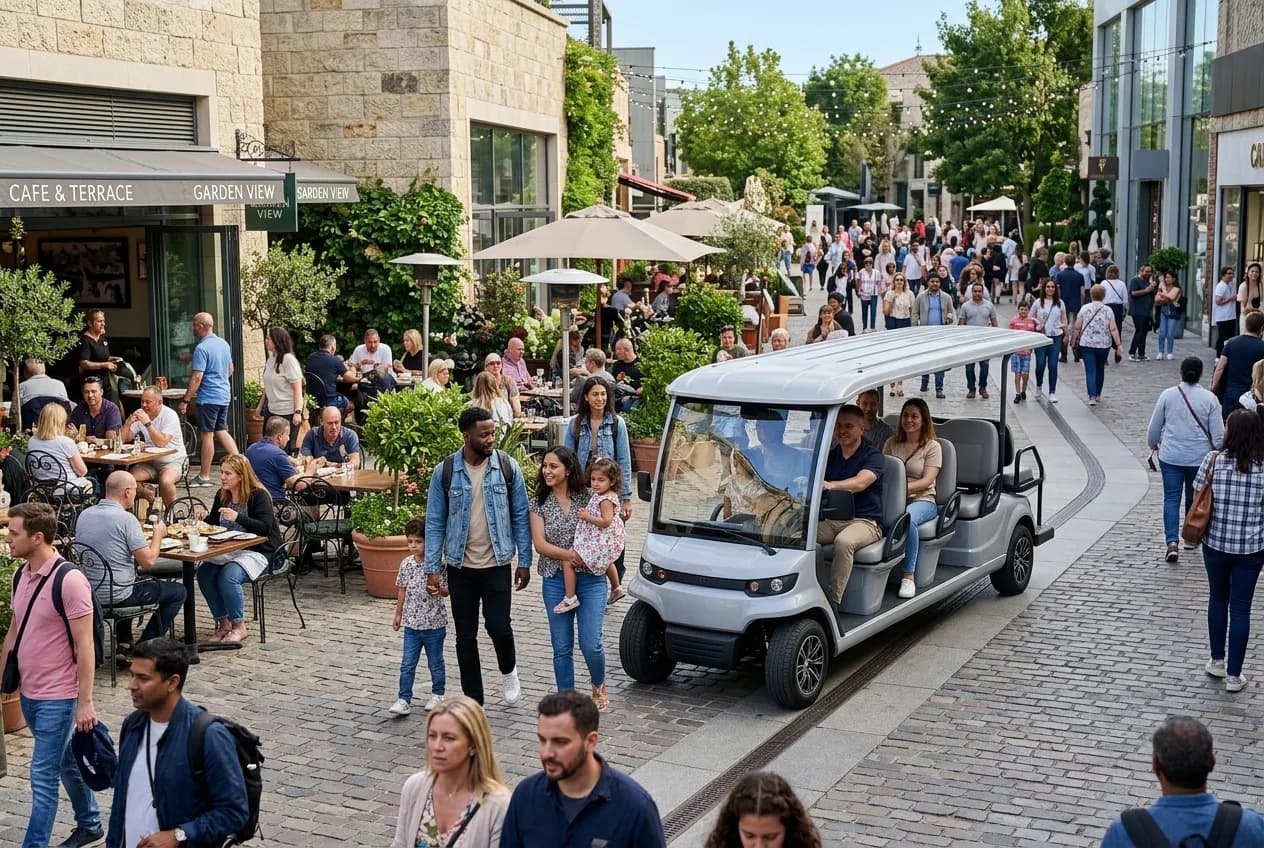
This is also why the emissions saving is so visible at an attraction. It is not an abstract figure on a sustainability report. It is the difference between a queue full of fumes and one that is clear. We cover the wider environmental picture in our guide to the environmental benefits of electric buggies.
Lower running costs over the life of the fleet
The environmental case tends to get the headlines, but operators are just as moved by the running costs. An electric fleet is cheaper to keep going than a petrol or diesel one, for reasons that stack up over time. There is no fuel to buy, store or dispense, which removes a whole logistical and safety job from the site. Electric drivetrains have far fewer moving parts, so there is much less to service and less to go wrong. And electricity, charged overnight, costs less per mile than petrol.
We will not pretend electric is free. The vehicles cost money up front and the charging needs planning. But across the life of a fleet, for the kind of daily, repeated loops an attraction runs, the total cost of ownership usually comes out lower. For a new site sizing its budget over years rather than months, that maths matters.
Net-zero expectations are now the baseline
There is a third pressure that did not exist a decade ago, and it is harder to ignore than the other two. Visitors increasingly expect large attractions to take sustainability seriously, and they notice when one does not. Planners and local authorities ask about emissions as part of approval. Investors and corporate partners have their own net-zero commitments to answer to. A fleet of petrol buggies sits awkwardly against all of that.
An electric fleet is one of the most visible and least controversial ways for a new attraction to show it is serious. It is on display all day, it is genuinely cleaner, and it does not force any compromise on the guest experience. For a site being planned now, with opening still years away, specifying anything other than electric would be planning for a standard that is already on the way out.
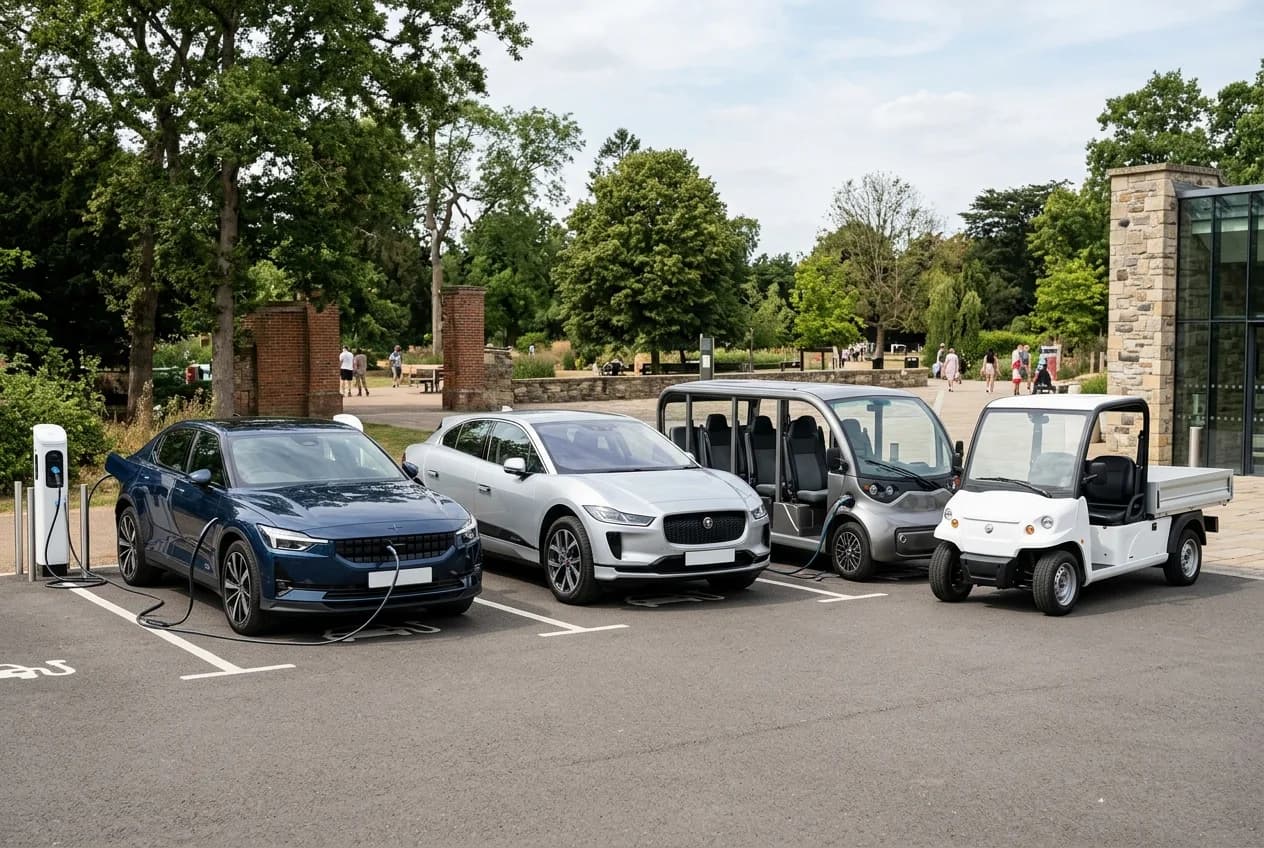
Electric, built to order, assembled and finished in the UK
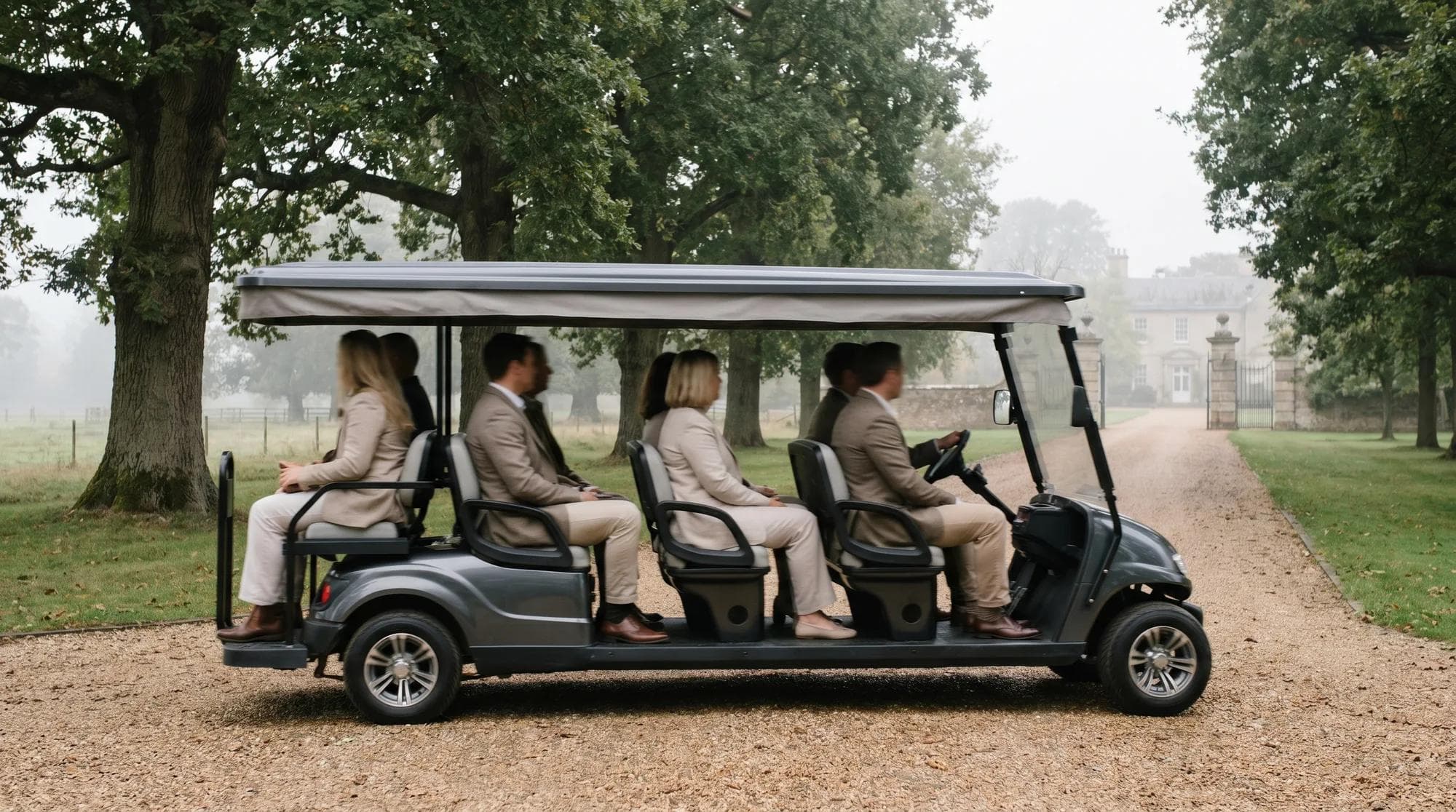
Passenger people-movers, shuttles and utility vehicles, all electric, all made to order and liveried as your own, from two seats to eight.
What going electric from day one looks like in practice
Choosing electric early is not just a procurement decision, it shapes the site. You plan charging into the back-of-house areas. You size the fleet and the batteries around the real duty cycle, so vehicles run the operating day and charge overnight. And you specify the whole fleet, passenger and utility, as one electric set rather than a mix. None of this is difficult, but it is much easier done at the planning stage than fixed afterwards.
- 01
Map the routes
Work out the loops the fleet will run, the distances and the busiest hour, before choosing any vehicle.
- 02
Size battery and charging together
Match battery capacity and charger numbers to the duty cycle so vehicles last the day and charge overnight.
- 03
Plan one electric fleet
Specify passenger and utility vehicles together as a single electric set, liveried consistently.
- 04
Build charging into the site
Locate charging in back-of-house areas as part of the layout, not as an afterthought once the paths are set.
If you are planning transport for a new or expanding attraction, that is exactly the conversation we are set up for. Take a look at the range to see the vehicles, or request a quote and we will help size an electric fleet around your site.
Planning electric transport for a new attraction?
Tell us the site, the routes and the crowds you expect, and we will recommend an electric fleet, built to order and liveried as your own, sized to run all day.
Frequently asked questions
Why do new attractions choose electric over petrol buggies?+
Mainly for three reasons: electric vehicles are near-silent so they can run close to guests, they produce no local emissions in pedestrian areas, and they cost less to run over time. New sites also face net-zero expectations that make electric the sensible default.
Are electric vehicles powerful enough to run a large attraction all day?+
Yes. Sized correctly, an electric fleet runs through opening hours and charges overnight. The key is matching battery capacity and charger numbers to the real daily distance, which we help work out as part of the quote.
Is electric actually cheaper, or just greener?+
Both, for most attractions. There is an upfront cost, but with no fuel to store, far less servicing and cheaper energy per mile, the total cost of ownership usually comes out lower across the life of the fleet.
Do we need special charging infrastructure?+
Vehicles charge from standard supplies, but a fleet should be planned so charging fits the operating pattern. It is far easier to build that into a new site's layout than to retrofit it later.
Can one electric fleet cover both guests and back-of-house work?+
Yes. Passenger people-movers, shuttles and utility vehicles can all be electric and come from one fleet, liveried consistently and charged together overnight.
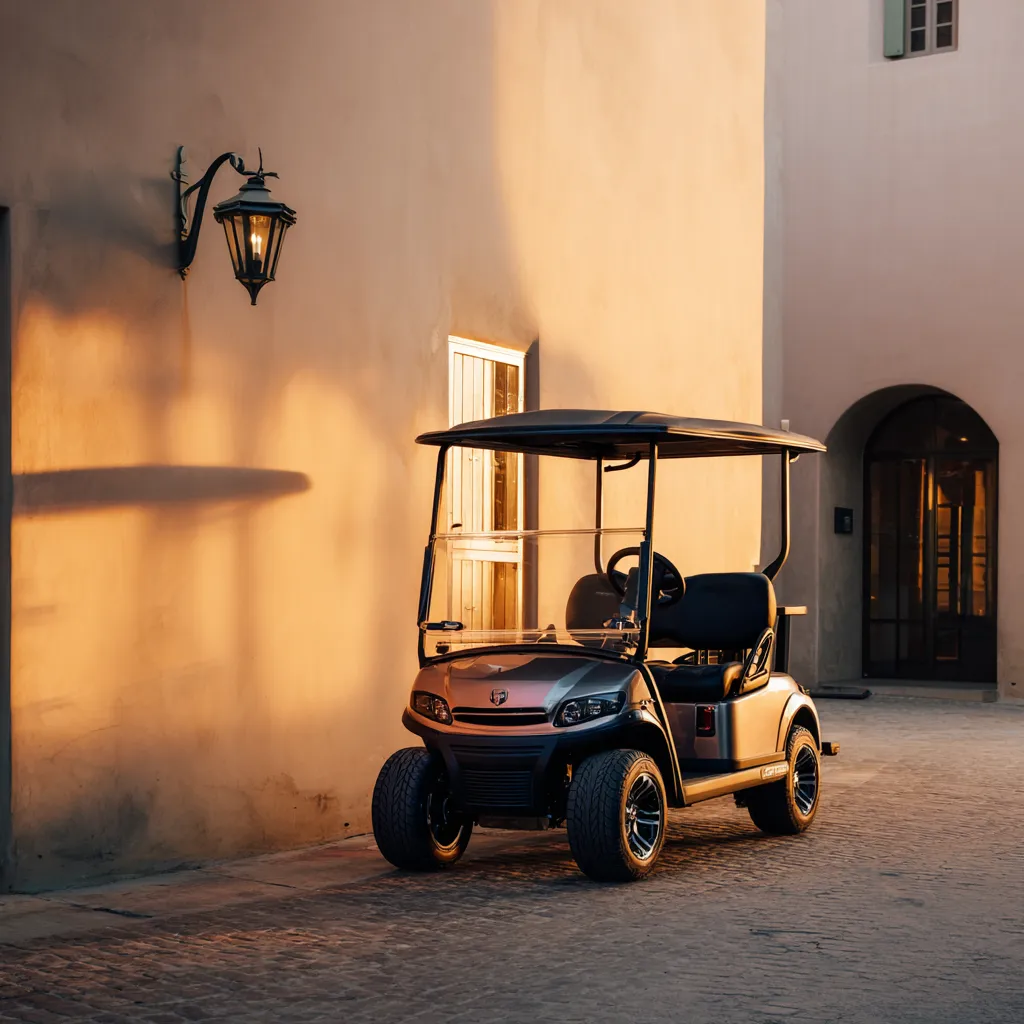
Ready to find the right buggy?
Tell us how and where it will work and we will specify a vehicle and a tailored quote built around you. Every build comes with a 3-year warranty and a 24-hour priority call-out.
Our guides are written and reviewed by the Hawke Electric Vehicles team, the people who specify, build, deliver and support the vehicles. We focus on honest, practical advice and flag where a figure depends on the build rather than guessing.
More guides by Hawke