How to store a golf buggy for winter
Written by the Hawke Electric Vehicles Service Team
Quick answer
Storing a golf buggy well over winter means fully charging the batteries and keeping them topped up, protecting the tyres from flat spots, treating or draining petrol fuel, and keeping the buggy clean, dry and ventilated. It takes an hour or two to set up and saves a flat pack, corroded terminals and a buggy that will not start in spring. The single most important step is battery care.
Tools needed
- Battery charger or maintainer
- Multimeter
- Tyre pump and gauge
- Cleaning kit
- Breathable cover
Parts needed
- Distilled water for battery top-up
- Fuel stabiliser for petrol buggies
- Terminal protector or grease
What this prevents
A winter of neglect is what leaves owners with a flat, sulphated battery pack, corroded terminals, flat-spotted tyres, stale petrol that will not start the engine, and damp that corrodes connectors. This procedure heads all of that off, so the buggy comes out of storage ready to use rather than needing repairs. It applies to both electric and petrol buggies, with the fuel steps for petrol only.
Tools and parts
Parts
- Battery charger or, ideally, an automatic maintainer for the pack
- Distilled water to top up lead-acid cells
- Fuel stabiliser (petrol buggies only)
- Terminal protector or grease
- Breathable cover, not a sealed plastic sheet
You will also want a multimeter to check pack voltage, a tyre pump and gauge, and basic cleaning kit. This is a low-difficulty job that takes an hour or two to set up, plus a quick check once a month through the winter.
How to do it
1Clean and dry the buggy
Wash off grass, mud and salt, then dry the buggy thoroughly, paying attention to the underside and around the battery tray where damp lingers.
ExpectedA clean, dry buggy; trapped damp and road salt are what start corrosion over a still winter
2Check and top up the batteries
On lead-acid packs, check the electrolyte covers the plates in every cell and top up with distilled water where needed, following the battery watering procedure.
ExpectedEvery cell covered; low cells topped to the correct level before charging, never after
3Fully charge the pack
Give the batteries a full charge so they go into storage at their peak, because a lead-acid battery left partly discharged sulphates and loses capacity over time.
ExpectedA full, rested pack reads about 38.2 V on a 36 V system or about 50.9 V on a 48 V system
4Keep the batteries topped up over winter
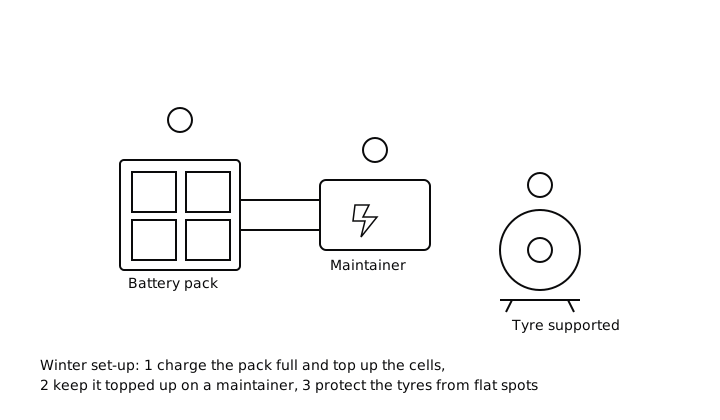
Either connect an automatic maintainer suited to your pack, or plan to recharge the pack roughly once a month. Clean the terminals and apply terminal protector before storage.
ExpectedThe pack stays near full through the winter rather than slowly draining flat
5Treat or drain the fuel on petrol buggies
For a petrol buggy, either add fuel stabiliser and run the engine briefly to circulate it, or drain the fuel system, so the petrol does not go stale and gum the carburettor.
ExpectedStabilised or drained fuel; this is the step that most often decides whether a petrol buggy starts in spring
6Protect the tyres
Inflate the tyres to the pressure on the sidewall or in the handbook, and if the buggy will stand for months, move it occasionally or support it so the tyres are not loaded in one spot.
ExpectedCorrectly inflated tyres that are not left bearing full weight in the same position for the whole winter
7Cover and ventilate
Set the parking brake off to avoid the shoes sticking, or follow the handbook, then cover the buggy with a breathable cover in a dry, ventilated space, not sealed plastic that traps moisture.
ExpectedA dry, covered buggy with air able to circulate around it
Check it came through winter
8Recommission in spring
Before first use, measure the pack, refit anything you disconnected, check the tyre pressures, and on a petrol buggy check the fuel is fresh, then take a gentle first drive.
ExpectedA healthy pack voltage, correct pressures and normal running; anything off is easier to sort now than mid-season
When to book an engineer
Book an engineer if the pack will not come back to full after storage, if a battery has been damaged by a hard frost while flat, or if a petrol buggy will not start on fresh fuel after a winter laid up. A pack stored flat can be beyond saving, so if you are unsure about maintainer choice or the batteries are already tired, it is worth a check before the cold sets in rather than after.
Common questions
Should I leave a golf buggy on charge all winter?
Use an automatic maintainer designed to hold the pack at full and switch itself down, rather than a plain charger left running, which can overcharge. If you do not have a maintainer, recharge the pack roughly once a month instead. The aim is to keep the batteries near full, because a lead-acid pack stored flat sulphates and loses capacity.
Do I need to disconnect the batteries for winter?
It helps to reduce the slow drain from onboard electronics, but it is not a substitute for keeping the pack charged. Whether you disconnect or not, the priority is a full pack that is topped up over the winter, with clean, protected terminals.
Can cold weather damage the batteries?
A fully charged lead-acid battery tolerates cold well, but a flat or partly discharged one can be damaged by a hard frost because its electrolyte is more prone to freezing. That is another reason to store the pack fully charged and keep it topped up rather than letting it run down.
What about the tyres over a long winter?
Inflate them to the correct pressure and, if the buggy will stand for months in one spot, move it occasionally or support it so the tyres are not loaded in the same place the whole time. This reduces the chance of a flat spot that you feel as a thump when you first drive in spring.
Did this fix it?
Every guide is written from manufacturer service documentation and workshop practice, then reviewed before publication. Read how we write and review our repair guides.