Golf buggy vibration at speed: causes and fixes
Written by the Hawke Electric Vehicles Service Team
Quick answer
A golf buggy that vibrates or shakes at speed most often has loose wheel nuts, an out-of-balance or flat-spotted tyre, or a worn wheel bearing. Because a loose wheel is both the most common cause and the most dangerous, check and torque the wheel nuts first, then look at the tyres and bearings. A vibration that gets worse as speed rises should be taken seriously.
Tools needed
- Torque wrench
- Tyre pressure gauge
- Trolley jack and axle stands
- Wheel chocks
- Safety glasses
Parts needed
- Wheel nuts if damaged
- Tyre if flat-spotted or worn
- Wheel bearing if worn
Confirm the symptom
This guide covers a vibration, shake or wobble that appears or worsens as the buggy speeds up, felt through the floor, the seat or the steering wheel. Note where you feel it most and whether it is steady or comes and goes, because that helps point to the wheel involved.
If instead the buggy wanders or pulls to one side rather than vibrating, read the steering wander guide. If the noise is a grinding or bearing rumble more than a vibration, see the guide on unusual noises. A vibration you feel mainly through the steering points to a front wheel, while one through the seat or floor points to a rear wheel.
What causes it
| Cause | How common | How to confirm | Fix |
|---|---|---|---|
| Loose or unevenly torqued wheel nuts | very common | Check every wheel nut and torque to the correct figure | |
| Out-of-balance wheel or tyre | common | Vibration is smooth and rises with speed; check balance | |
| Flat-spotted tyre after storage | common | A rhythmic thump that may ease as the tyres warm | |
| Worn wheel bearing | common | Rock and spin the raised wheel for play and roughness | How to check and replace a golf buggy wheel bearing |
| Uneven tyre wear or a damaged tyre | occasional | Inspect the tyres for cupping, bulges or damage | |
| Bent wheel or debris packed in the rim | occasional | Spin the raised wheel and watch for wobble or buildup |
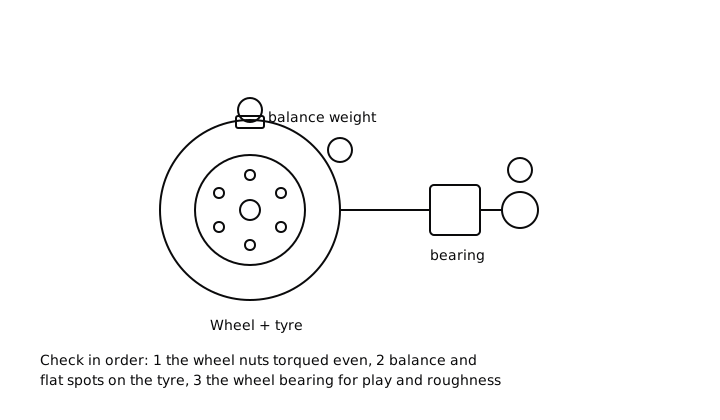
Loose or unevenly torqued wheel nuts
Loose wheel nuts are the first thing to check, both because they are the most common cause of a vibration and because a wheel coming loose is genuinely dangerous. Nuts can loosen after a wheel has been off, or work loose over time, and even one that is not fully tight lets the wheel move.
1Check and torque every wheel nut
With the buggy safely supported, check each wheel nut and tighten them evenly in a criss-cross pattern to the figure in your handbook.
ExpectedAll nuts tight and even at the correct torque; if a vibration disappears after tightening, loose nuts were the cause. Do not overtighten, which can damage the studs
If a nut was loose, also check the stud and the wheel for damage, because a wheel that has run loose can wear its mounting holes.
An out-of-balance wheel or tyre
A wheel and tyre that are not balanced create a smooth vibration that grows with speed, because the heavy spot spins faster and throws the wheel harder. Balance can be off from new, after a tyre change, or if a balance weight has come off.
2Judge whether it is a balance vibration
Note whether the vibration is smooth and rises steadily with speed rather than a rhythmic thump, and whether it fades at lower speed.
ExpectedA smooth vibration that increases with speed points to balance; having the wheels balanced usually cures it
A flat-spotted tyre
A buggy left standing in one spot for a long time, especially over winter, can develop a flat spot where each tyre sat, giving a rhythmic thump as the flat area comes round. Unlike a balance vibration, this is a distinct bump once per wheel revolution.
3Check for flat-spotting after storage
Set the tyres to the correct pressure, then drive gently and note whether a rhythmic thump eases as the tyres warm and flex.
ExpectedA thump that eases as the tyres warm suggests flat-spotting, which often settles; a thump that stays needs the tyre inspected
A worn wheel bearing
A worn wheel bearing lets the wheel wobble slightly and rumble, which can be felt as a vibration that often comes with noise and may change as you turn. The wheel bearing guide covers checking and replacing it in detail.
4Rock and spin the raised wheel
With the wheel raised, rock it at the top and bottom to feel for play, then spin it and listen and feel for roughness.
ExpectedNo play and smooth, quiet rotation; play or a rough, rumbling spin points to a worn bearing that should be replaced
Tyre wear, damage or a bent wheel
Finally, inspect the tyres and wheels themselves. Uneven or cupped wear, a bulge or damage in a tyre, or a bent rim will all cause a vibration, as will mud or debris packed into a wheel unevenly. Spin each raised wheel and watch the tyre and rim for wobble or a buildup.
5Inspect the tyres and spin the wheels
Look over each tyre for uneven wear, bulges and damage, then spin each raised wheel and watch for a side-to-side or up-and-down wobble.
ExpectedEven tyre wear and a wheel that spins true; a bulge, cupping, a visible wobble or packed debris identifies the cause
When to book an engineer
Book an engineer if the wheel nuts were loose and you are unsure whether the wheel or studs are damaged, if a bearing is worn, if a tyre needs balancing or replacing, or if a wheel is bent. A vibration at speed can point to a loose or failing wheel, so it is worth getting to the bottom of promptly rather than driving on it.
Common questions
Why does my golf buggy shake at higher speed?
The most common cause is loose or unevenly tightened wheel nuts, which is also the most important to rule out because a wheel coming loose is dangerous. Beyond that, a smooth vibration that rises with speed usually means an out-of-balance tyre, while a rhythmic thump often means a flat-spotted tyre or a worn bearing.
Is it dangerous to drive with a vibration?
It can be, because a vibration at speed sometimes means a loose wheel or a failing bearing. Check the wheel nuts first, and if any were loose or a wheel feels like it has play, stop and have it inspected before driving further. A steady balance vibration is less urgent but still worth fixing.
Can standing over winter cause a vibration?
Yes. A buggy parked in one spot for months can develop flat spots on the tyres where they sat, giving a rhythmic thump when you first drive in spring. Setting the tyres to the correct pressure and driving gently often lets the flat spots settle as the tyres warm and flex.
Do golf buggy tyres need balancing?
They can benefit from it. A wheel and tyre that are out of balance produce a smooth vibration that grows with speed, and having them balanced cures it, just as on a car. If your vibration is smooth and rises steadily with speed rather than a once-per-revolution thump, balance is a likely cause.
Guided check
Diagnose it step by step
Answer a few questions and we will point you at the most likely cause.
Question 1 of 4
Does it drift or pull to one side on a flat path?
Did this fix it?
Every guide is written from manufacturer service documentation and workshop practice, then reviewed before publication. Read how we write and review our repair guides.