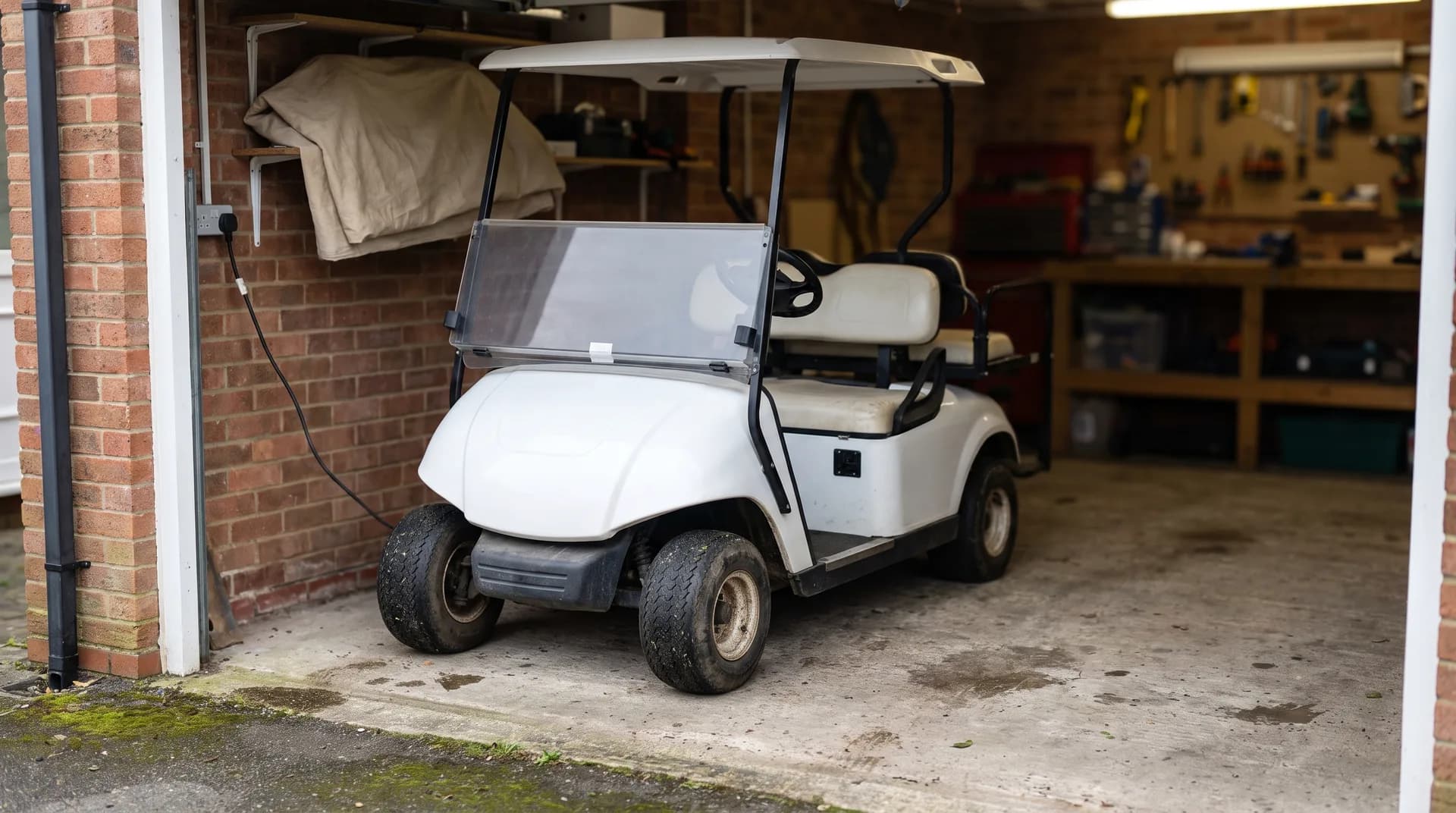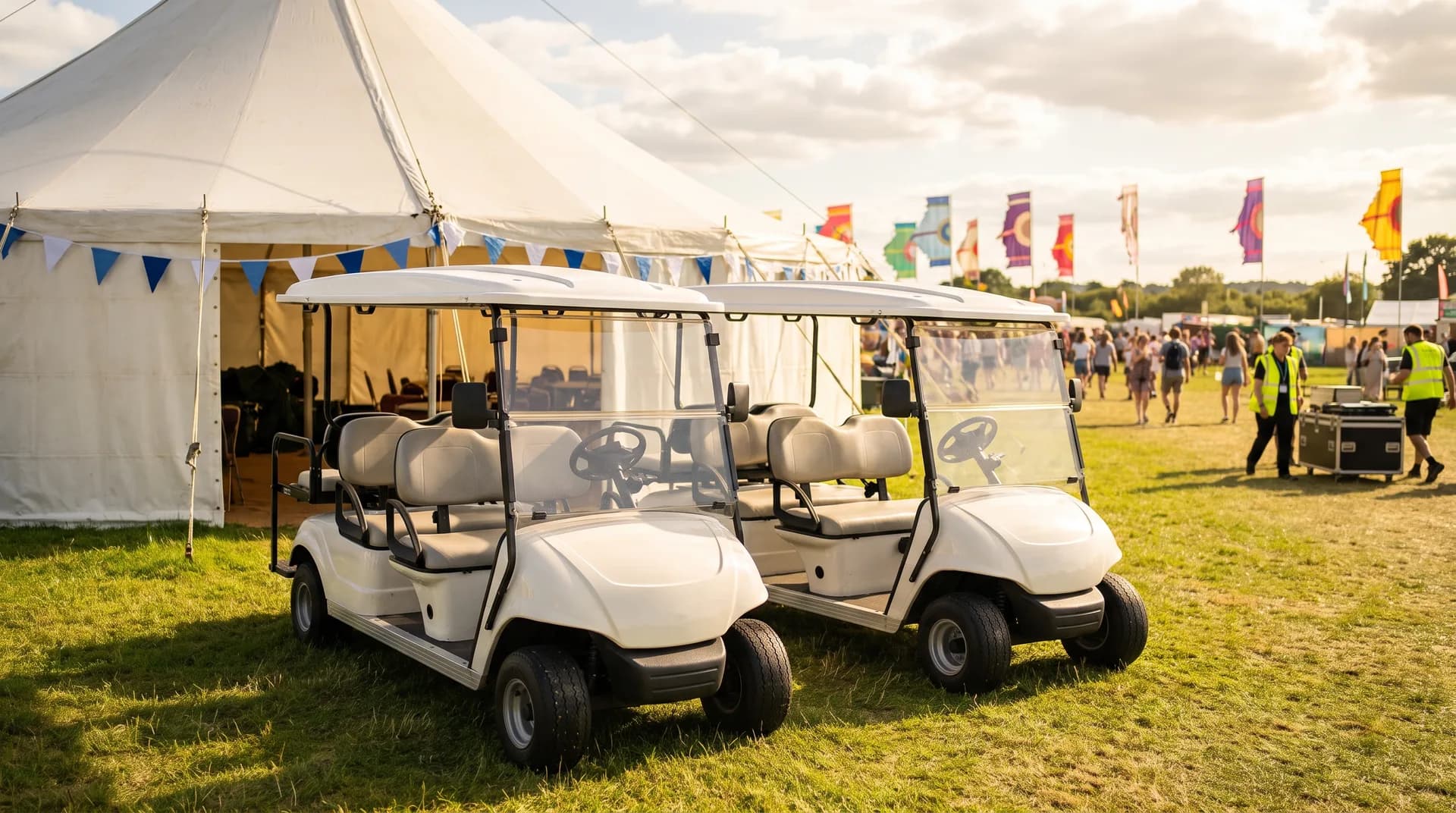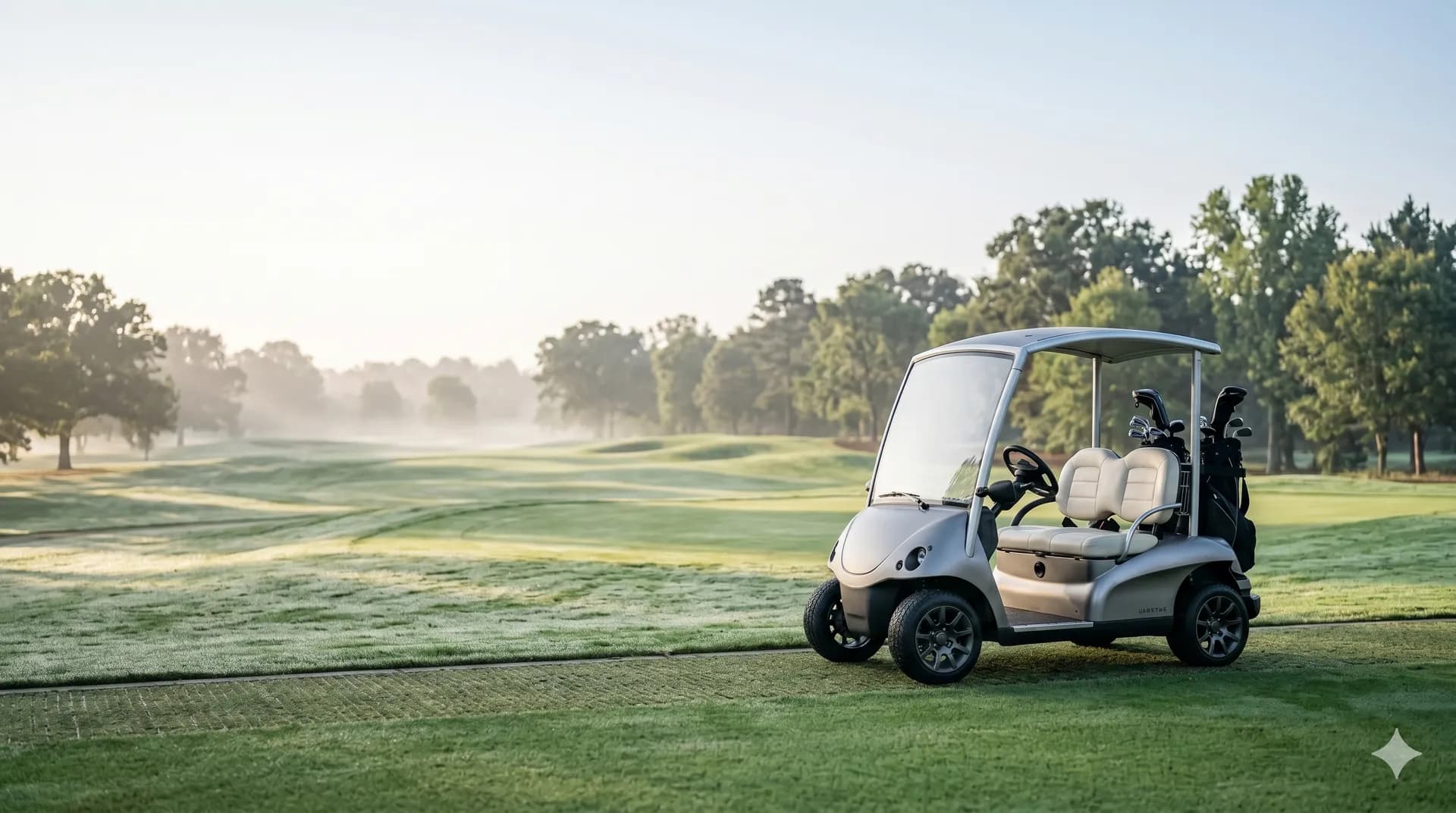
Yamaha has built golf buggies for decades, from the classic G-series through to the Drive and Drive2, and its wider engineering reputation does real work in the used market: buyers arrive expecting a Yamaha to be reliable, and that expectation supports the price. What a Yamaha is actually worth in the UK still comes down to the same fundamentals as any buggy, led by battery age on electric models, and this guide walks through them. For a number, our free golf buggy valuation tool gives you a researched UK range in under a minute.
- Yamaha's reliability reputation supports used prices, but only condition and history cash it in.
- On electric Yamahas, battery age is the dominant factor, ahead of the model year.
- Yamaha is unusually strong in petrol buggies, which are valued on engine condition and service history instead of batteries.
- The age curve is steep early, gentle in the middle and nearly flat late on, when battery and condition take over.
What holds a Yamaha's value
Three things. First, the badge: Yamaha's name for engineering carries over from its motorcycles and outboards, and used buggy buyers pay for that confidence. Second, support: the G-series, Drive and Drive2 are well understood by UK dealers and engineers, and parts supply is good, so nobody fears being stranded with an unfixable machine. Third, and unusually among the premium brands, Yamaha has a strong petrol line. A petrol Yamaha is valued like a small engine-driven machine: compression, starting behaviour and service history set the price, and a well-serviced petrol example can hold value stubbornly because it has no battery clock ticking against it.
On electric models, the battery rules
For an electric Yamaha the familiar hierarchy applies: the battery set is the most expensive consumable on the vehicle, and its age moves the price more than anything else, including the year of manufacture. An original lead-acid set that has never been changed is a bill the buyer will subtract from your asking price almost to the pound. A documented recent replacement restores confidence and value, and a lithium pack, factory or professionally converted, adds a genuine premium because it hands the buyer years of battery life and faster charging. Whatever you have, evidence is the multiplier: receipts and dates turn a claim into a price.
The age curve, in words
Yamaha values follow the same curve as the wider UK market, which our depreciation and resale guide sets out fully. Expect the sharpest drop in the first year or two, then a gentle slope through the middle of the vehicle's life. From roughly eight years on, the curve flattens and the calendar loses its grip: the market prices the battery set or engine, the bodywork and the history rather than the age. Yamaha's build reputation shows most at this late stage, where a cared-for older Drive on fresh batteries, or a sweet-running petrol G-series, remains a properly saleable machine long after cheaper imports have become spares donors.
Turning the estimate into money
Run yours through the valuation tool first for an honest range from researched UK market data. Then choose your route: a private sale for the top figure and the most effort, the trade for speed at trade money, or part-exchange against a new Hawke for the cleanest handover, one figure and no viewings. Send photos, the battery or engine history and any receipts through our quote form and we will reply with a firm part-exchange or outright purchase figure. No obligation.
What is yours worth?
Get a typical UK value range in under a minute, then send the details for a firm part-exchange or purchase figure. No obligation.
Frequently asked questions
Do Yamaha golf buggies hold their value in the UK?+
Yes. The brand's engineering reputation and good UK parts support keep buyer confidence high, so tidy examples sell at proper premium-badge money. Battery age on electric models, and engine history on petrol ones, decide where in the range yours lands.
Is a petrol Yamaha valued differently to an electric one?+
Yes. A petrol buggy has no battery clock, so it is priced on engine condition, starting behaviour and service history. Electric models are priced first on the age and type of the battery set.
What is the quickest way to raise my Yamaha's value before selling?+
Deal with the battery story. On an electric buggy a documented recent battery replacement removes the buyer's biggest deduction; failing that, gather every receipt and service record you have, because evidence itself adds value.
Can I part-exchange my Yamaha against a new buggy?+
Yes. Send the details, photos and history through the quote form and we will give you a firm part-exchange figure against any new Hawke, or a straight purchase price if you would rather sell outright.
Related solutions
Ready to explore what we build?
See the vehicles and the setting this applies to, or get a tailored quote built around your site.
Ready to find the right buggy?
Tell us how and where it will work and we will specify a vehicle and a tailored quote built around you. Every build comes with a 3-year warranty and a 24-hour priority call-out.
Our guides are written and reviewed by the Hawke Electric Vehicles team, the people who specify, build, deliver and support the vehicles. We focus on honest, practical advice and flag where a figure depends on the build rather than guessing.
More guides by Hawke