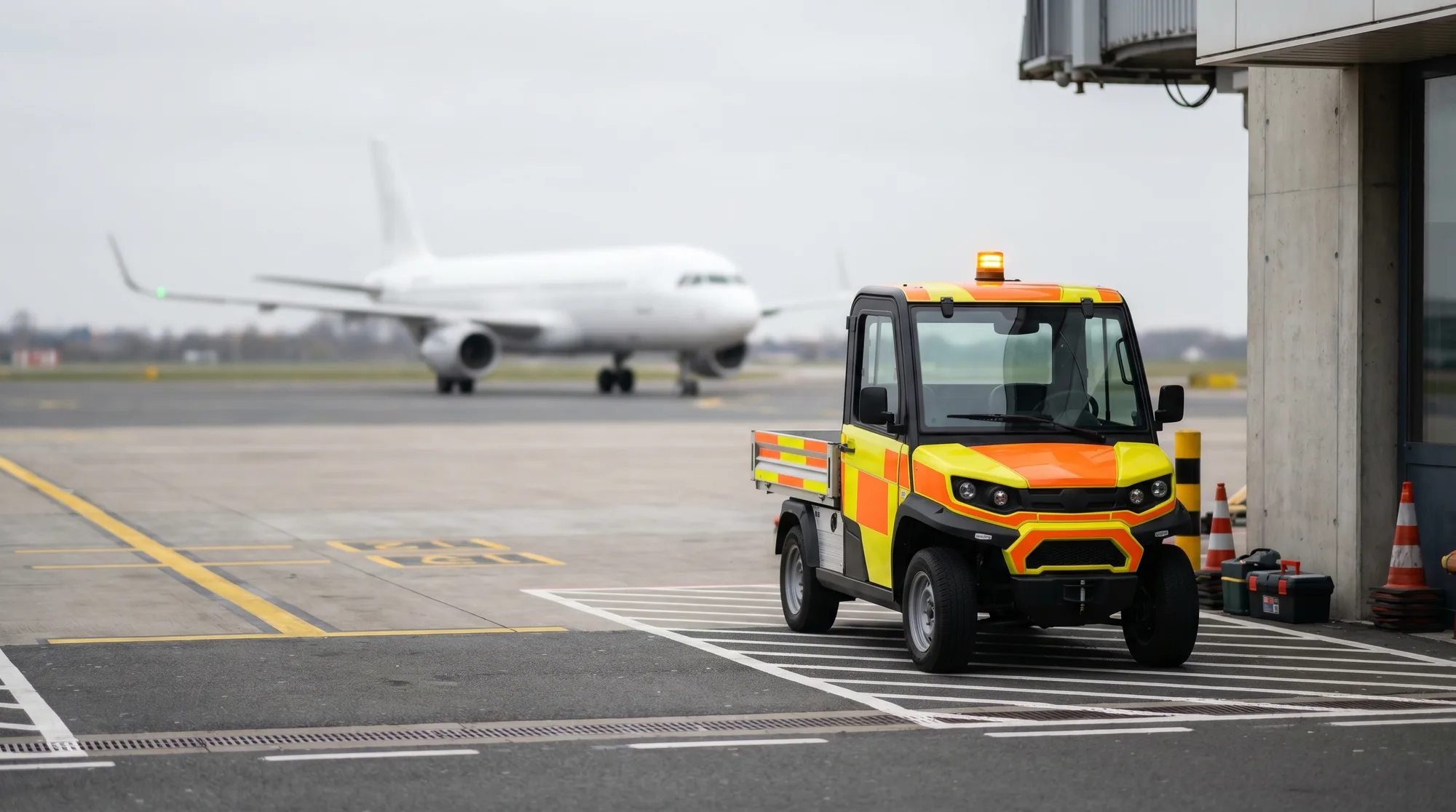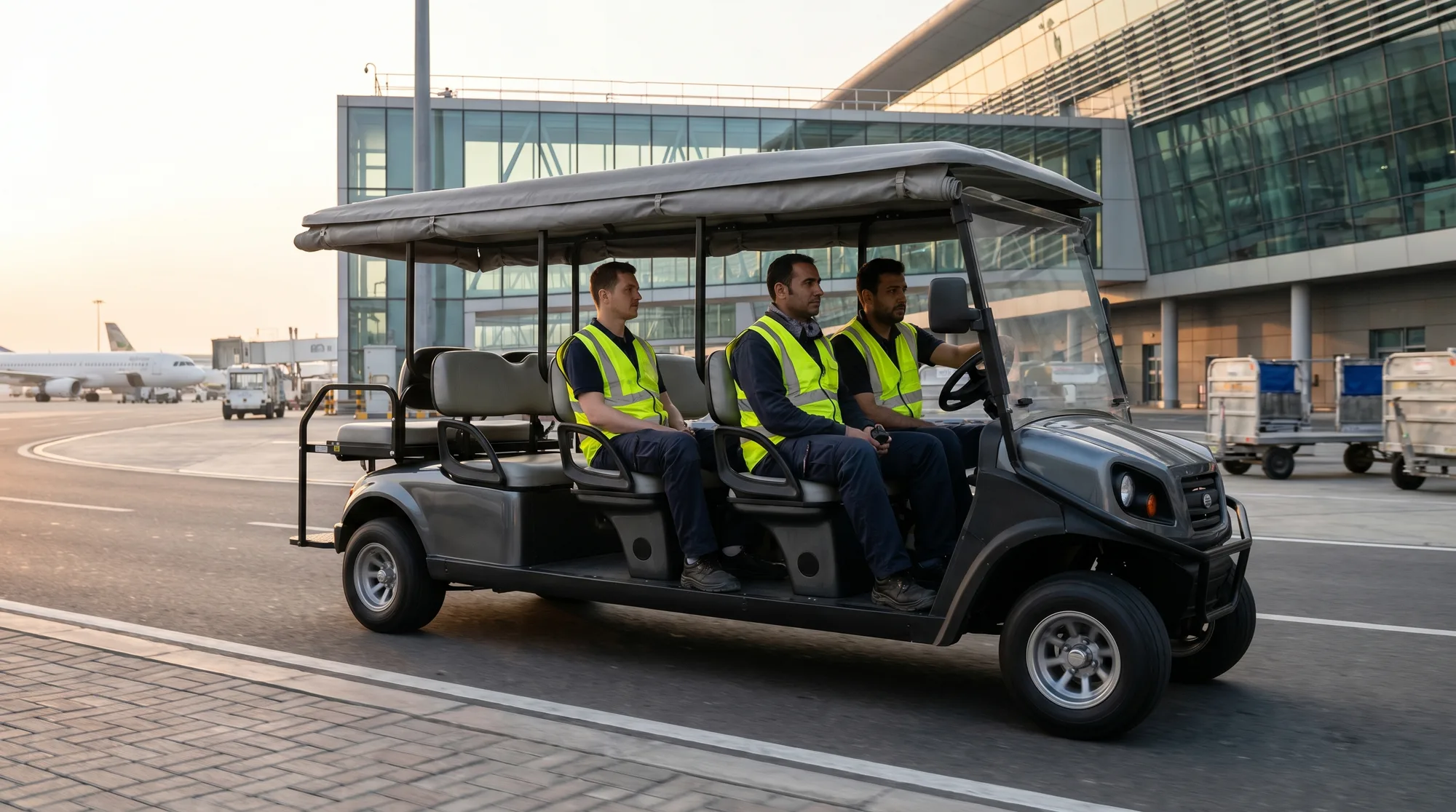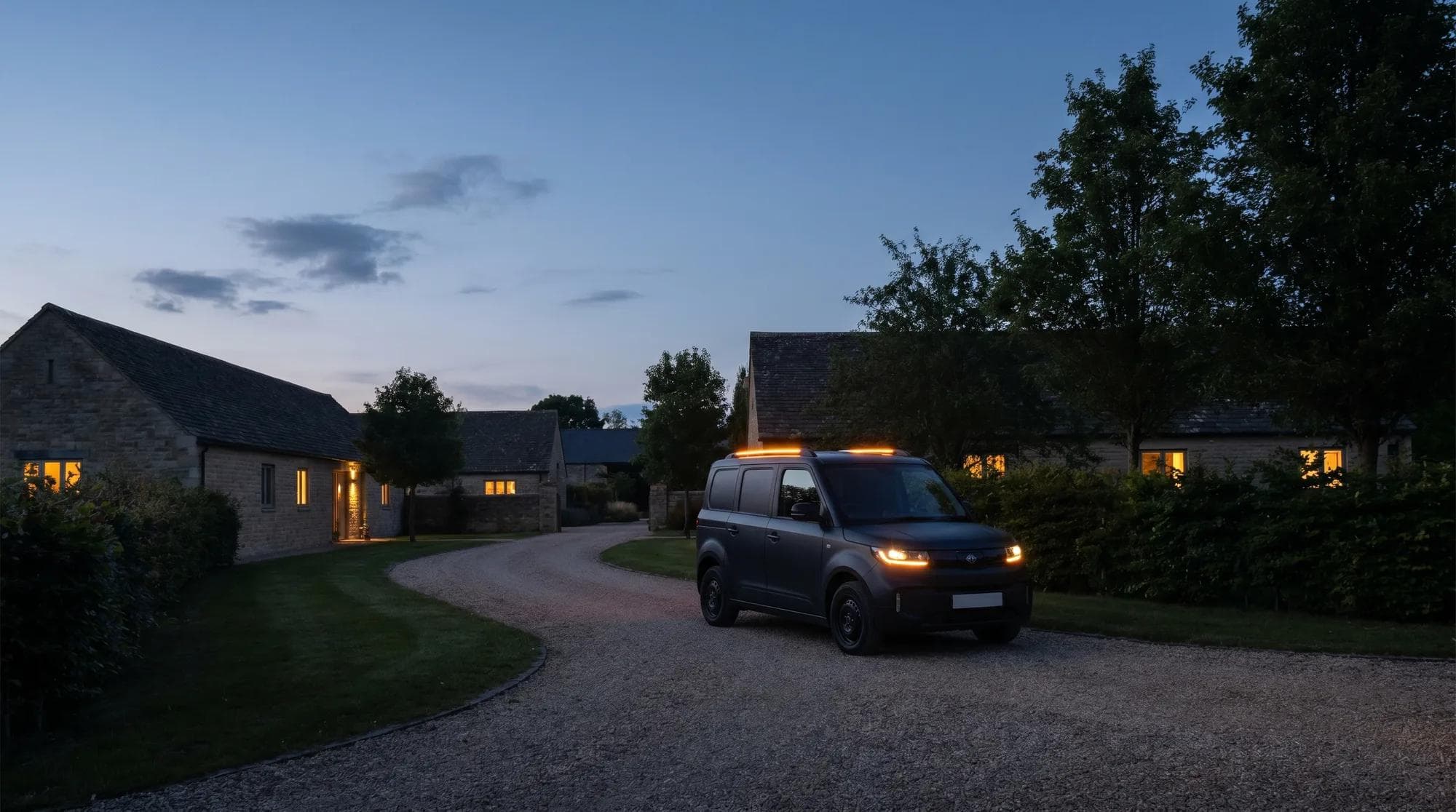
A large site is hard to patrol on foot. A campus, an estate, a park, a business park or an event ground: by the time an officer has walked the perimeter once, anything could have happened at the other end. A security patrol vehicle changes the maths. An electric buggy lets one officer cover ground that would take three on foot, carry the kit they need, and do it quietly enough to arrive before anyone hears them coming. It's patrol transport built around how security teams actually work a shift.
Why a buggy suits a security patrol vehicle
Patrolling is about presence and response. You want to be seen on the routes that matter, and you want to get to an incident fast when one happens. A buggy does both. It covers a perimeter or a campus loop in a fraction of the walking time, so an officer can run more circuits, check more points, and still respond quickly when the radio goes.
It also carries what a foot patrol can't: a first aid kit, a torch and spare batteries, signage, a fire extinguisher, lost property, keys, and whatever else your site needs to hand. On a wet night across a big estate, that matters. The officer stays drier, stays fresher, and keeps more of the site in view.
- Perimeter and boundary checks. Run the fence line, gates and access points on a regular loop rather than a slow walk.
- Campus and estate patrols. Cover buildings, car parks, paths and quiet corners across a spread-out site in one circuit.
- Incident response. Get to an alarm, a report or a gathering quickly, with kit already on board.
- Event and crowd cover. Move officers along a festival or business-park ground, between posts and back to control.
- Escort and assist runs. Walk a lone worker to their car after dark, or help with a breakdown or a lockout.
If your need is more about moving groups of people between fixed points than patrolling, that's shuttle work, and our guide to electric people movers and shuttles covers sizing and routes in more depth.

Quiet enough to approach unheard
This is the part a petrol vehicle can't match. An electric buggy is near silent at patrol speed. There's no engine to announce you, so an officer can roll up on a quiet car park, a loading bay or a dark corner without warning. For deterrence and for catching a problem in progress, that quiet approach is a real edge.
It cuts both ways, mind. Silence means pedestrians, residents and staff won't hear you either, especially at night or around blind corners. So the fit-out matters: a horn, good lighting and clear sightlines keep the vehicle safe to drive around people. You get the stealth when you want it and visibility when you need it.
No engine to announce you. The officer arrives before anyone hears them coming.
Visibility, lighting and fit-out
A patrol vehicle has to be seen when you want it seen, and useful in the dark. Because every buggy is built to order, we fit it out for the job rather than handing you a standard cart. The two things that matter most are lighting and livery.
On lighting, think about what the shift actually needs. Good headlights and running lights for driving after dark. A work or scene light for checking a doorway or a vehicle. A beacon if your site wants the patrol clearly marked, or wants a visible response when something kicks off. On livery, clear site security buggy branding does two jobs at once: it tells people who you are, which reassures the public and deters trouble, and it makes the vehicle unmistakably part of your operation.
- Lighting. Headlights and running lights, a scene or work light, and an optional beacon for marked patrols.
- Livery. Your security colours, name and markings, applied as a proper finish, not a sticker job.
- Storage. Lockable boxes for kit, a rack or bed for cones and signage, and somewhere dry for paperwork and a radio.
- Weather protection. A roof, screen and doors so the officer patrols through UK winters in comfort.
- Comms and tech. Mounts for a radio, a phone or a tablet, plus a USB or 12V supply to keep them charged.
Want the livery to match the rest of your fleet or your uniform? Our guide to custom fleet branding walks through how we finish vehicles in your colours so the patrol buggy looks like part of the team.
All-shift duty and charging
Security runs long shifts, often overnight, sometimes round the clock. The honest answer on running time is that it depends on the model, the battery and how hard the vehicle works, so we'll size it to your shift pattern rather than quote a single figure. The pattern of use suits electric well, though. Patrolling is lots of short, slow runs with pauses in between, not flat-out driving, and that's exactly where a buggy is efficient.
For most single-shift sites, you charge overnight and start each day full, the same as a phone. For 24-hour cover, there are two sensible routes: a larger battery sized to last the duty, or a second vehicle or battery so one is always ready while the other charges. Lithium batteries help here because they take opportunity charges in spare moments without harm, so a quick top-up during a quiet hour keeps the patrol going.
Which model fits a patrol?
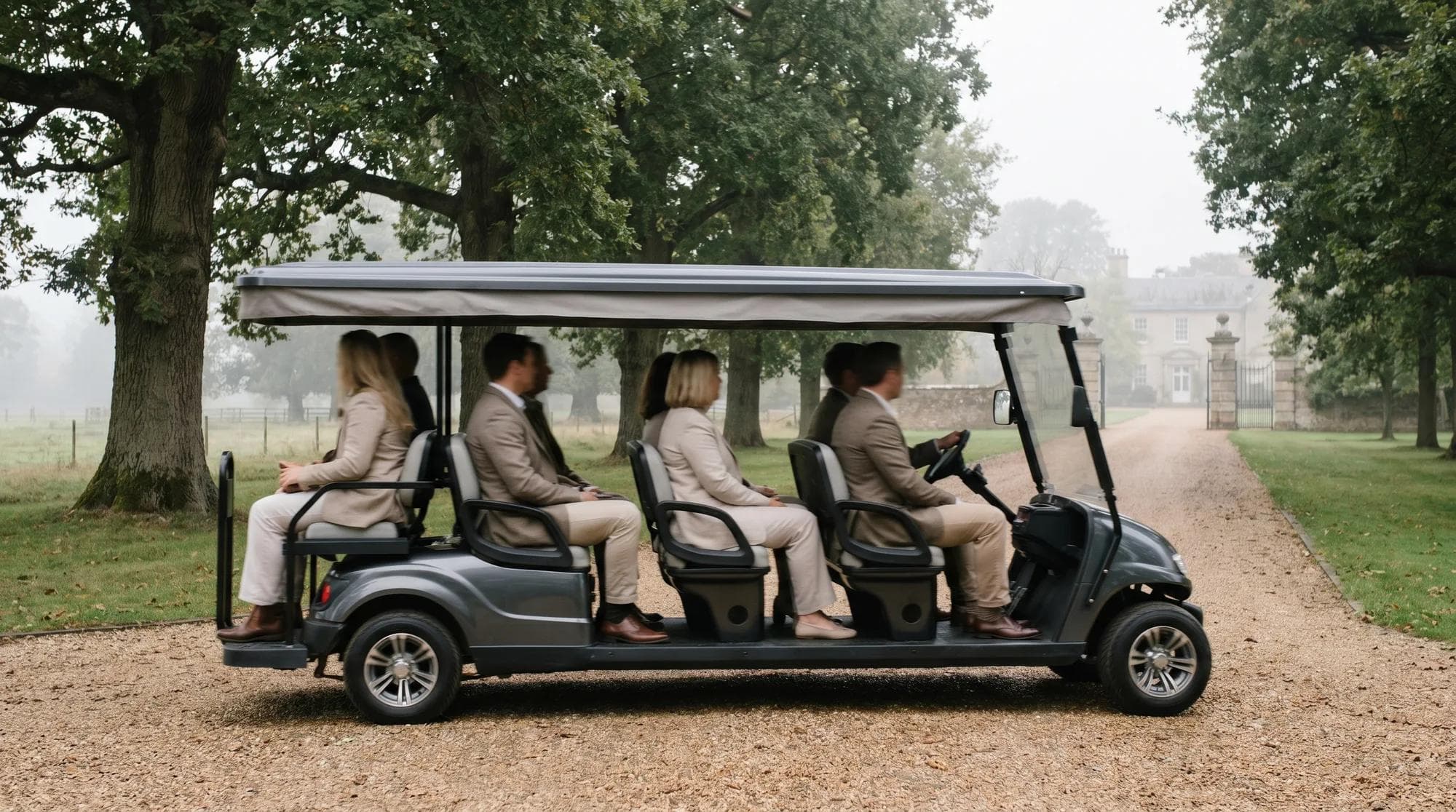
Most patrol work needs one or two officers plus kit, on mixed ground that runs from car parks and paths to grass verges and the odd rough track. For that, the utility model is usually the right call. The Hawke S2 Pickup carries an officer and equipment, copes with year-round use and rougher going, and gives you a bed or rack for signage and cones. If the patrol regularly carries a partner or moves a small team, a four seater steps up; for moving officers around a large event, six or eight seats make sense.
- Best for
- The default patrol vehicle: one or two officers, kit, mixed ground, all-shift use
- Best for
- Two-officer patrols and carrying an extra crew member or detainee escort
- Best for
- Moving a small security team around a large event or campus
- Best for
- Shuttling officers and stewards across a big event ground
- Best for
- A vehicle specified around your exact site, kit and shift pattern
| Best for | |
|---|---|
| Utility (the Hawke S2 Pickup) | The default patrol vehicle: one or two officers, kit, mixed ground, all-shift use |
| Four seater (the Hawke S4) | Two-officer patrols and carrying an extra crew member or detainee escort |
| Six seater (the Hawke S6) | Moving a small security team around a large event or campus |
| Eight seater (the Hawke S8) | Shuttling officers and stewards across a big event ground |
| Bespoke | A vehicle specified around your exact site, kit and shift pattern |
Not sure which way to lean? The utility model page sets out what the Hawke S2 Pickup is built for, and you can always tell us the patrol and let us recommend the size.
Where a buggy fits, and where it doesn't
An honest dealer tells you the limits. A patrol buggy is built for private land: campuses, estates, parks, business parks and event grounds you control. It is not road legal as supplied, so it isn't a pursuit vehicle and it shouldn't be used on public roads, including crossing one to reach another part of the site. If your patrol genuinely needs to use a public road, that's a separate conversation about type approval and registration, and our guide to making a buggy road legal explains what's involved.
Within those limits it's hard to beat. Quiet, clean, low to run, and sized to patrol a large private site all shift. Use it for what it's good at and it earns its place; ask it to chase cars down the high street and it won't.
Why electric for a security team
Beyond the quiet approach, electric simply suits patrol economics. There's no fuel to buy, no fumes near buildings or crowds, and far less to service than a petrol engine. For a vehicle doing slow, repeated runs across a shift, charging overnight costs a fraction of fuel, and the lack of noise is kinder on residents, guests and night-time neighbours. On a site where the patrol is part of the experience, a clean, quiet, well-branded vehicle also looks the part.
How to get the right vehicle
Tell us about the site and the shift. How big it is, what the ground is like, how many officers, what kit they carry, whether it's single-shift or 24-hour cover, and the lighting and livery you want. From that we'll recommend the model, the battery and charging setup, and the fit-out, then confirm a tailored price. Every build comes with a 3-year warranty and a 24-hour VIP call-out.
Patrol your site quietly, all shift
Tell us about the site, the shift pattern and the kit your officers carry, and we'll recommend the right model, battery and fit-out, with a tailored quote built around the patrol.
Frequently asked questions
Can you use an electric buggy for security patrols?+
Yes. An electric buggy is well suited to patrolling large private sites like campuses, estates, parks and event grounds. It covers far more ground than a foot patrol, carries an officer's kit, and is quiet enough to approach unheard. It is built for private land, not public roads.
Is a security patrol buggy quiet?+
Very. At patrol speed an electric buggy is near silent, so an officer can approach a car park or a quiet corner without an engine announcing them. The trade-off is that pedestrians can't hear it either, so fit a horn and good lighting to keep it safe around people, especially at night.
Can a patrol buggy run a full shift?+
It can, when it's sized to the duty. Patrolling is lots of short, slow runs, which suits electric well. For single-shift sites you charge overnight; for 24-hour cover, a larger battery or a second vehicle or battery keeps the patrol going. Lithium batteries also take quick opportunity top-ups.
Can you fit security lighting and livery to a buggy?+
Yes. Every vehicle is built to order, so we fit headlights, running lights, a scene light and an optional beacon, plus lockable storage and weather protection. We finish it in your security colours and markings so it's clearly part of your operation. Tell us the spec and we'll build it in.
Is a security patrol buggy road legal in the UK?+
Not as supplied. Standard buggies are built for private land and are not road legal, so they shouldn't be used on public roads, including crossing one. Road use needs the correct type approval, registration, lighting, insurance and licence. If your patrol needs the road, ask us and we'll explain the options.
Related solutions
Ready to explore what we build?
See the vehicles and the setting this applies to, or get a tailored quote built around your site.
Ready to find the right buggy?
Tell us how and where it will work and we will specify a vehicle and a tailored quote built around you. Every build comes with a 3-year warranty and a 24-hour priority call-out.
Our guides are written and reviewed by the Hawke Electric Vehicles team, the people who specify, build, deliver and support the vehicles. We focus on honest, practical advice and flag where a figure depends on the build rather than guessing.
More guides by Hawke