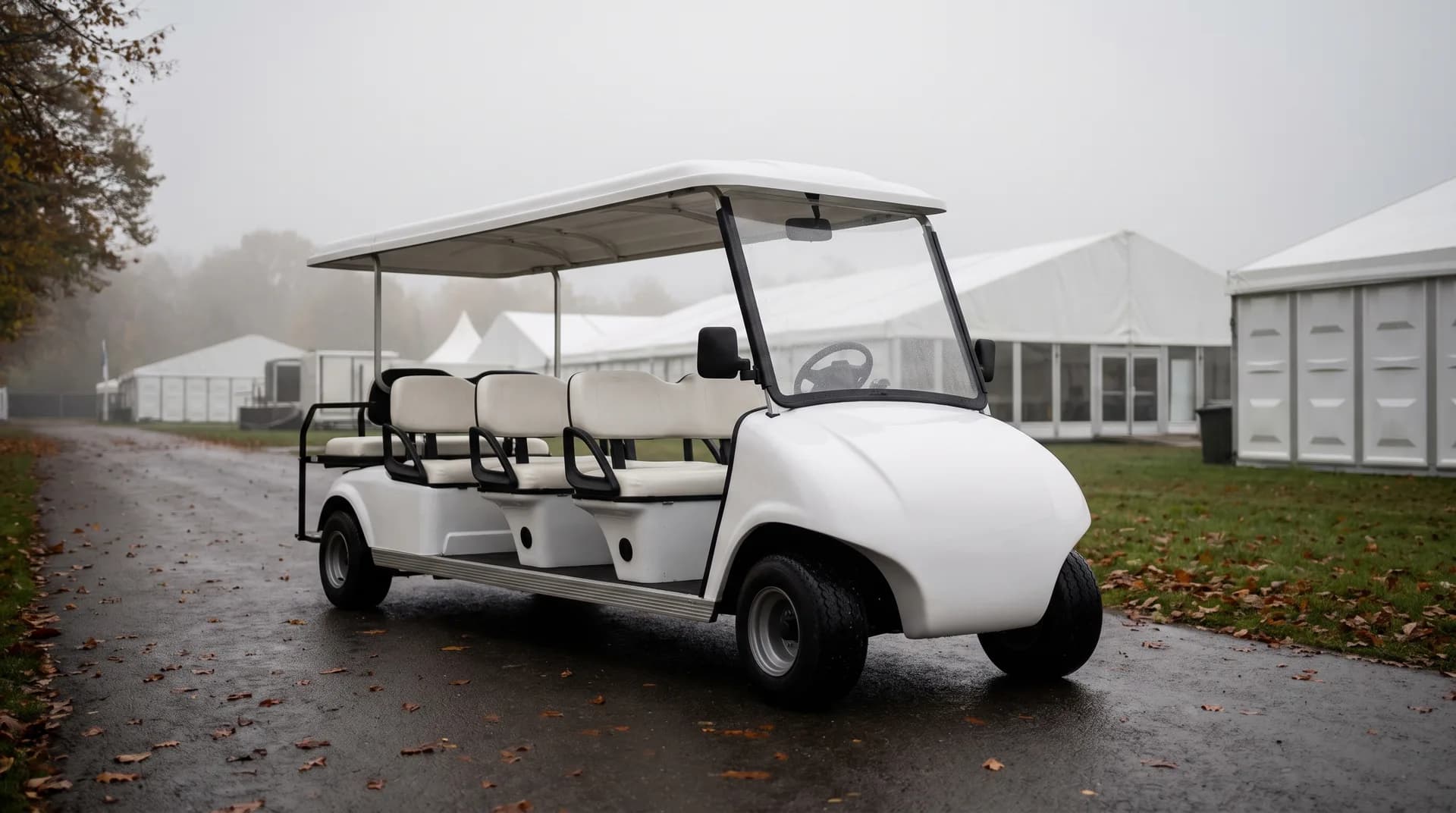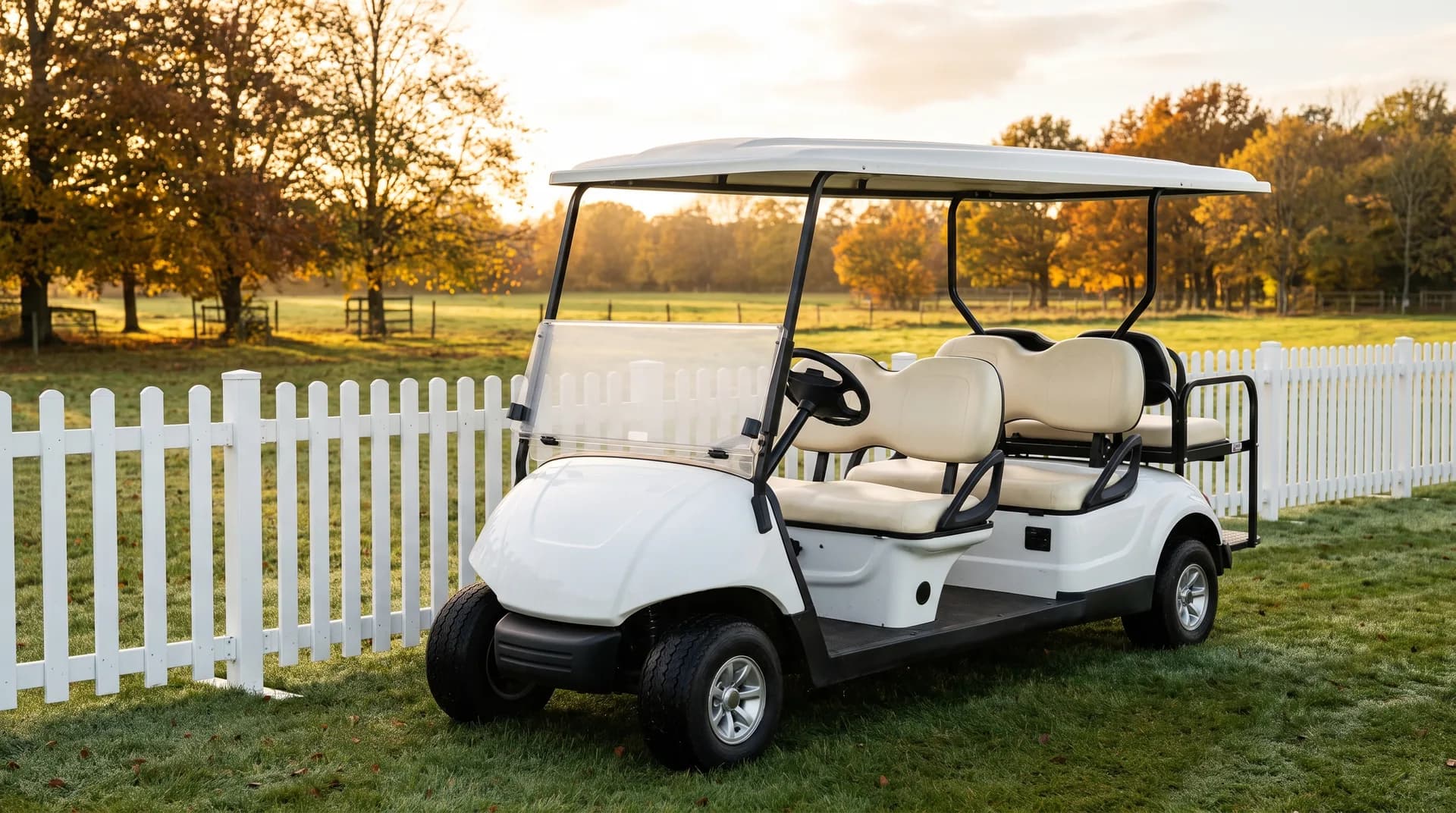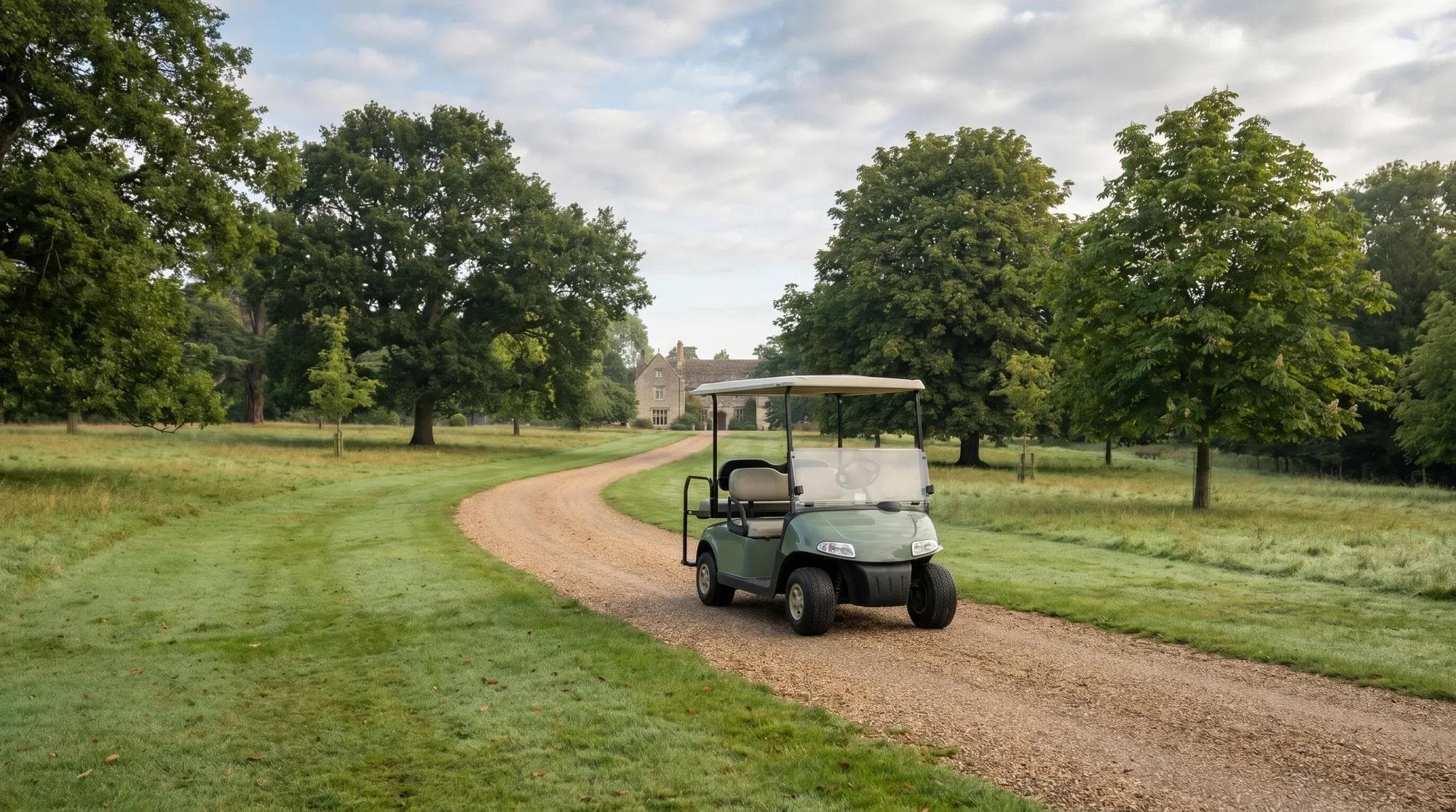
Going electric is one of those choices that's easy to oversell and easy to undersell. So let's be straight about it. An electric golf buggy doesn't burn fuel, which means no exhaust fumes drifting across a fairway, a courtyard or a car park, and almost no noise. Those two facts do most of the work. The harder question is what they're actually worth to an organisation with a sustainability target or a reputation to protect, and that's what this guide is really about.
The electric golf buggy environmental case in plain terms
Two things, mainly, and they're the two people notice first. There are no tailpipe emissions, because there's no tailpipe. Wherever the buggy works, the air around it stays clean: no carbon monoxide, no unburnt fuel smell, no haze near the building. And it's quiet. A petrol buggy announces itself from across a site; an electric one is little more than tyres on gravel. For somewhere selling calm, space or fresh air, that difference is the product.
It's worth being honest about the rest of the picture too. The electricity to charge a buggy has to come from somewhere, and a battery has a footprint to build. The electric golf buggy environmental case isn't that the vehicle is magic. It's that you move the emissions off your site entirely and, as the grid keeps getting cleaner, the running footprint keeps falling with it. A petrol buggy can only ever get dirtier with age.

Electric vs petrol on the things that matter
If you only compare two numbers, compare what each vehicle does to the air and the quiet of your site. Here's how they line up on the points that show up in an environmental review.
- Electric
- None where it's driven
- Petrol
- Carbon monoxide and other tailpipe emissions
- Electric
- Near silent
- Petrol
- Loud, especially under load and at start-up
- Electric
- No fumes around guests or staff
- Petrol
- Fumes and smell, worst at idle and indoors
- Electric
- No petrol stored or spilled
- Petrol
- Petrol storage, fumes and spill risk
- Electric
- Falls as the grid gets cleaner
- Petrol
- Fixed at best, worse as the engine ages
| Electric | Petrol | |
|---|---|---|
| Exhaust emissions on site | None where it's driven | Carbon monoxide and other tailpipe emissions |
| Noise | Near silent | Loud, especially under load and at start-up |
| Air quality near people | No fumes around guests or staff | Fumes and smell, worst at idle and indoors |
| Fuel handling on site | No petrol stored or spilled | Petrol storage, fumes and spill risk |
| Footprint over time | Falls as the grid gets cleaner | Fixed at best, worse as the engine ages |
For a side-by-side on cost and performance rather than just the environment, our electric vs petrol golf buggies comparison covers the full picture, and the running cost guide puts numbers on what each one costs to keep on the road over a year.
Why cleaner air on site is a real benefit
Exhaust fumes are most noticeable exactly where you least want them: near a clubhouse door, in a courtyard, by a hotel entrance, inside a maintenance shed. A petrol buggy idling outside reception puts fumes right where guests arrive. An electric one doesn't. For estates, resorts and grounds teams, that's the difference between a service vehicle that intrudes and one nobody notices, which is rather the point of premium hospitality.
There's a staff angle too. People working alongside a vehicle all day are the ones most exposed to its fumes and noise. Take both away and you've improved the working day for groundkeepers, porters and event crew without anyone having to think about it. That's the kind of quiet, everyday improvement that genuinely earns its keep.
Why quiet is part of the experience
Noise is the benefit people underrate until they live with it. A fleet of petrol buggies turns a calm site into a busy one. Swap to electric and the soundtrack goes back to birdsong, conversation and the wind in the trees. On a golf course that means play isn't interrupted by an engine three holes away. At a wedding venue or a country estate it means the service vehicles stay invisible. Quiet isn't a nice-to-have here. It's most of what guests are paying for.
On a site that sells calm and clean air, a quiet, fume-free buggy isn't a compromise. It's the product.
The ESG and net-zero case for organisations
More clubs, resorts, estates and councils now have a published sustainability or net-zero commitment, and most of them need credible, visible actions to back it up. Replacing petrol buggies with electric ones is exactly that kind of action. It's measurable, it's easy to explain, and it removes a clear source of on-site emissions and noise. For a council green or a local-authority estate, it also helps with air-quality and nuisance obligations that petrol engines work against.
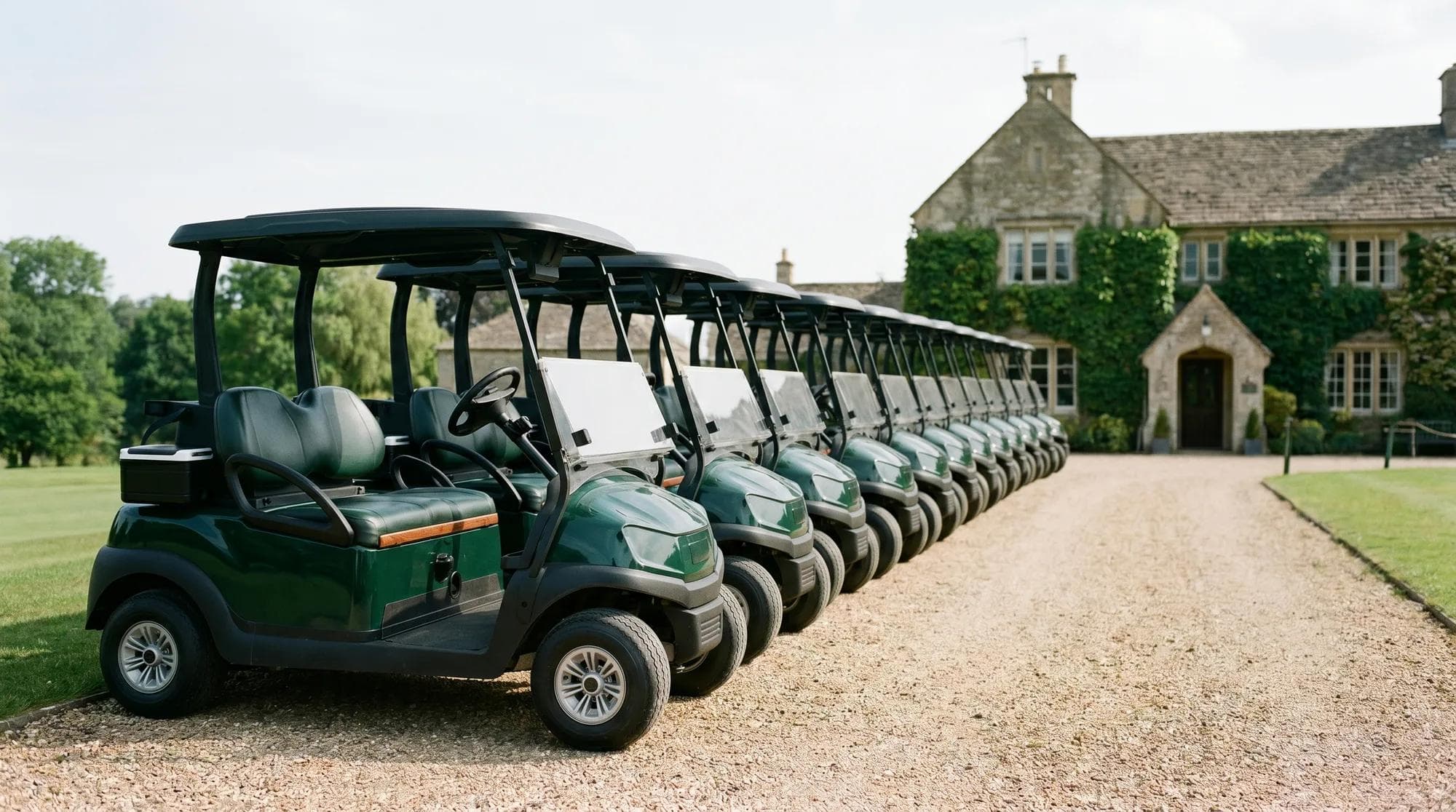
The reason it lands well in an ESG report is that it's defensible. You're not claiming a number you can't stand behind; you're pointing to a tangible change anyone can see and hear. A matched, branded electric fleet says the commitment is real, which is why fleet electrification works as a digital-PR and reputation story as much as an operational one. If branding matters to you, custom fleet branding is part of the same conversation.
Making the claim without greenwashing
If you're going to talk about going electric, do it carefully, because vague green claims invite a backlash. The safe ground is also the true ground. Say what's verifiable: no exhaust emissions where the buggy operates, far less noise, cleaner air around guests and staff, no petrol stored or spilled on site. Avoid headline carbon figures you can't evidence. "We've cut fumes and noise across the estate and moved our fleet off petrol" is honest, specific and stands up to scrutiny. A made-up percentage doesn't.
How to put an electric fleet to work
The sustainability benefits land hardest across a whole fleet rather than a single vehicle, so this is usually an organisation-level decision. Every vehicle we build is made to order, which means we can specify the right seat count, battery and finish for your site and your usage, then deliver a matched fleet in your colours. For a golf club operation, or anything specified from scratch, our bespoke service builds the fleet around how your site actually works, with a 3-year warranty and a 24-hour VIP call-out behind it.
Build a cleaner, quieter fleet
Tell us about your site and your sustainability goals and we'll specify an electric fleet built around you, with a tailored quote and matched branding. Every vehicle is built to order.
Frequently asked questions
Are electric golf buggies better for the environment than petrol?+
On the things you can see and measure on site, yes. An electric buggy produces no exhaust emissions where it's driven and runs almost silently, so it improves air quality and cuts noise. Its full lifecycle footprint depends on how your electricity is generated, but it gets cleaner as the grid does, while a petrol engine can only get dirtier with age.
Do electric golf buggies produce any emissions?+
Not where they operate. There's no engine and no tailpipe, so no exhaust fumes around your guests, staff or buildings. Any emissions sit upstream, in generating the electricity to charge them, which is why it's accurate to describe them as having no local emissions rather than zero impact overall.
How does an electric buggy help with a net-zero or sustainability goal?+
It removes a clear, visible source of on-site emissions and noise, which is exactly the kind of tangible, defensible action a net-zero commitment needs. It's easy to explain in an ESG report and easy for guests and members to notice, especially as a matched, branded fleet.
Are electric golf buggies quieter than petrol ones?+
Considerably. A petrol buggy is audible across a site, particularly under load and at start-up, while an electric one is close to silent. For courses, estates, hotels and event venues where calm is part of the experience, that quiet is one of the biggest practical benefits.
Can we claim environmental benefits without greenwashing?+
Yes, if you stick to what's provable. Claim no exhaust emissions where the buggy operates, lower noise, cleaner air for guests and staff, and no petrol stored on site. Avoid publishing precise carbon figures you haven't measured for your own site and electricity supply.
Related solutions
Ready to explore what we build?
See the vehicles and the setting this applies to, or get a tailored quote built around your site.
Ready to find the right buggy?
Tell us how and where it will work and we will specify a vehicle and a tailored quote built around you. Every build comes with a 3-year warranty and a 24-hour priority call-out.
Our guides are written and reviewed by the Hawke Electric Vehicles team, the people who specify, build, deliver and support the vehicles. We focus on honest, practical advice and flag where a figure depends on the build rather than guessing.
More guides by Hawke