- Running a large estate is daily, physical work: perimeter checks, grounds, gamekeeping and moving kit across rough ground in all weathers.
- A private estate management buggy is built for that working routine, not for ferrying guests, so the priorities are grip, payload, range and weatherproofing.
- An electric drivetrain runs quiet, which suits patrol work and keeps wildlife and game undisturbed where that matters.
- Specify around the real terrain and the longest day, so the vehicle covers the ground and the distance without running flat.
- Built to order means weatherproofing, load space, lighting and a discreet finish are designed in for the work the estate actually does.
A large private estate does not run itself. Someone is out every day checking the boundary, clearing a fallen branch off a track, carrying feed or fencing tools to the far field, and keeping an eye on quiet corners that a visitor would never see. It is steady, physical work, often a long way from a hard road and rarely in fair weather. The vehicle that does it needs to be a working tool, not a runabout.
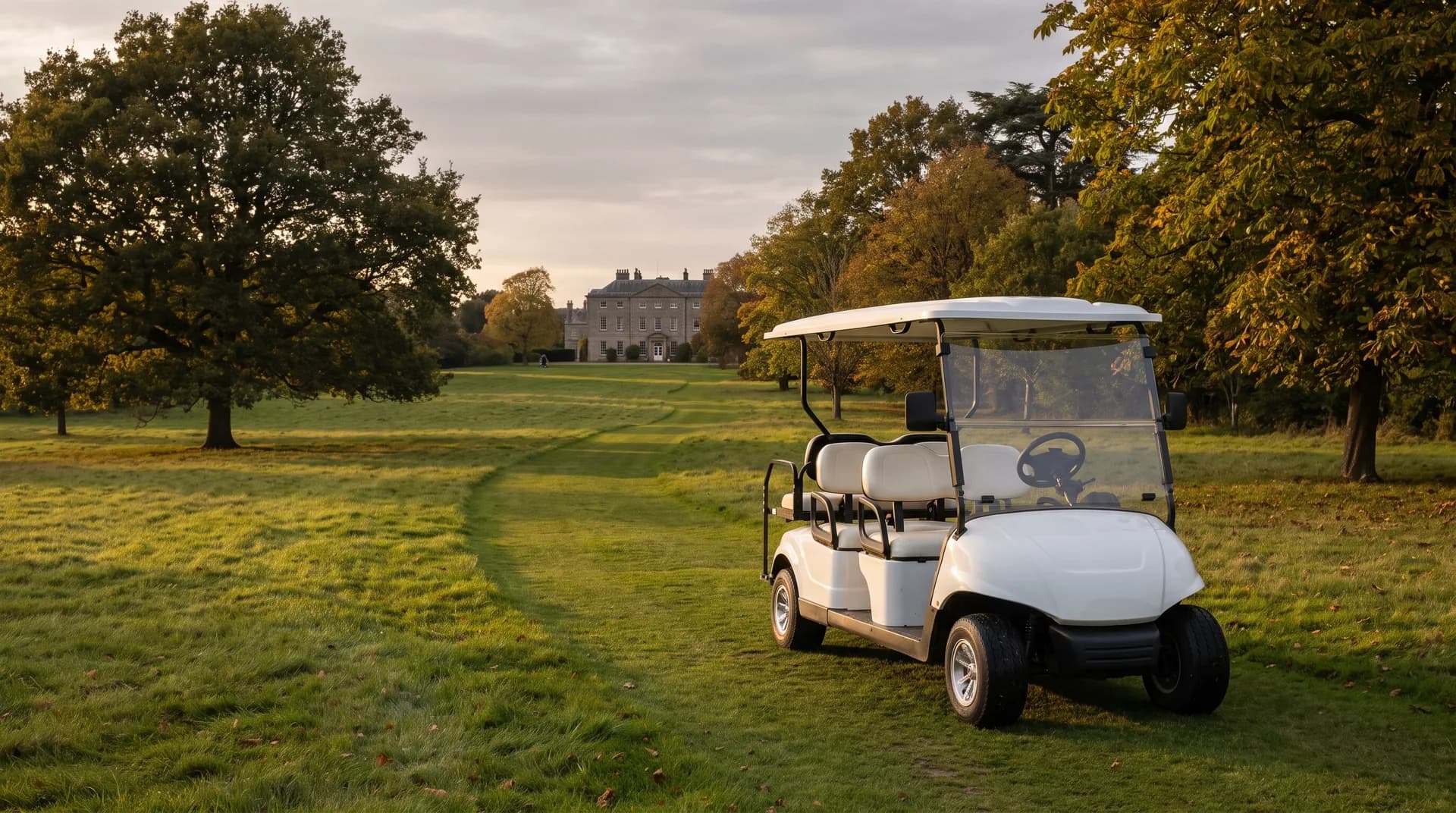
This is a different brief from the buggy that meets guests at the door. A private estate management buggy is bought for the perimeter and the grounds, for the keeper and the groundsman rather than the visitor. It needs grip on wet ground, payload for kit, range for a full circuit, and a build that shrugs off rain and mud. This guide sets out what matters for that working role, and how it differs from a general estate vehicle. For the broader picture, our guide to electric buggies for private estates covers estate use overall.
The working day this vehicle is built for
Estate management is a rhythm of jobs rather than one task. A buggy spec'd for it has to do the lot without complaint. The typical working day looks something like this:
- A perimeter circuit: checking fences, gates, walls and the quiet boundary where trouble starts.
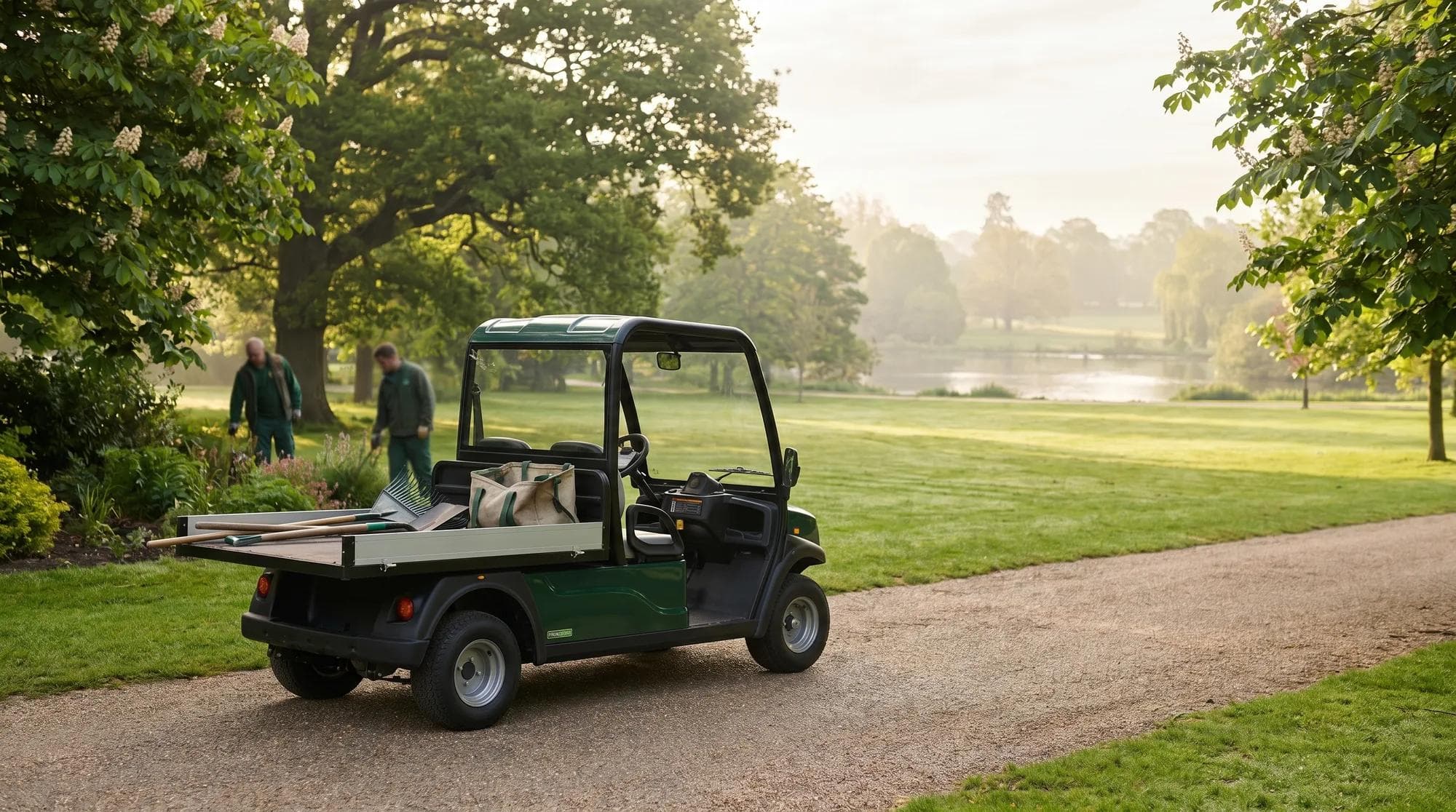
- Grounds work: clearing debris, moving tools, getting to a job that is too far to walk and too small for a tractor.
- Gamekeeping and land management: carrying feed, kit and equipment across fields and through woodland.
- Reacting to the unexpected: a fallen tree, a broken gate, a contractor who needs leading to the right corner of the estate.
Quiet, and why it matters out here
A petrol utility vehicle announces itself across the whole estate. An electric one does not. For perimeter and patrol work that quiet is a real advantage: you can move around the boundary without broadcasting where you are, and you disturb less as you go. On a shoot or where game and wildlife are managed, a near-silent vehicle lets a keeper move through the ground without scattering everything ahead of them. There are no fumes either, which matters in a yard, a barn or near the house.
Built for weather and rough ground
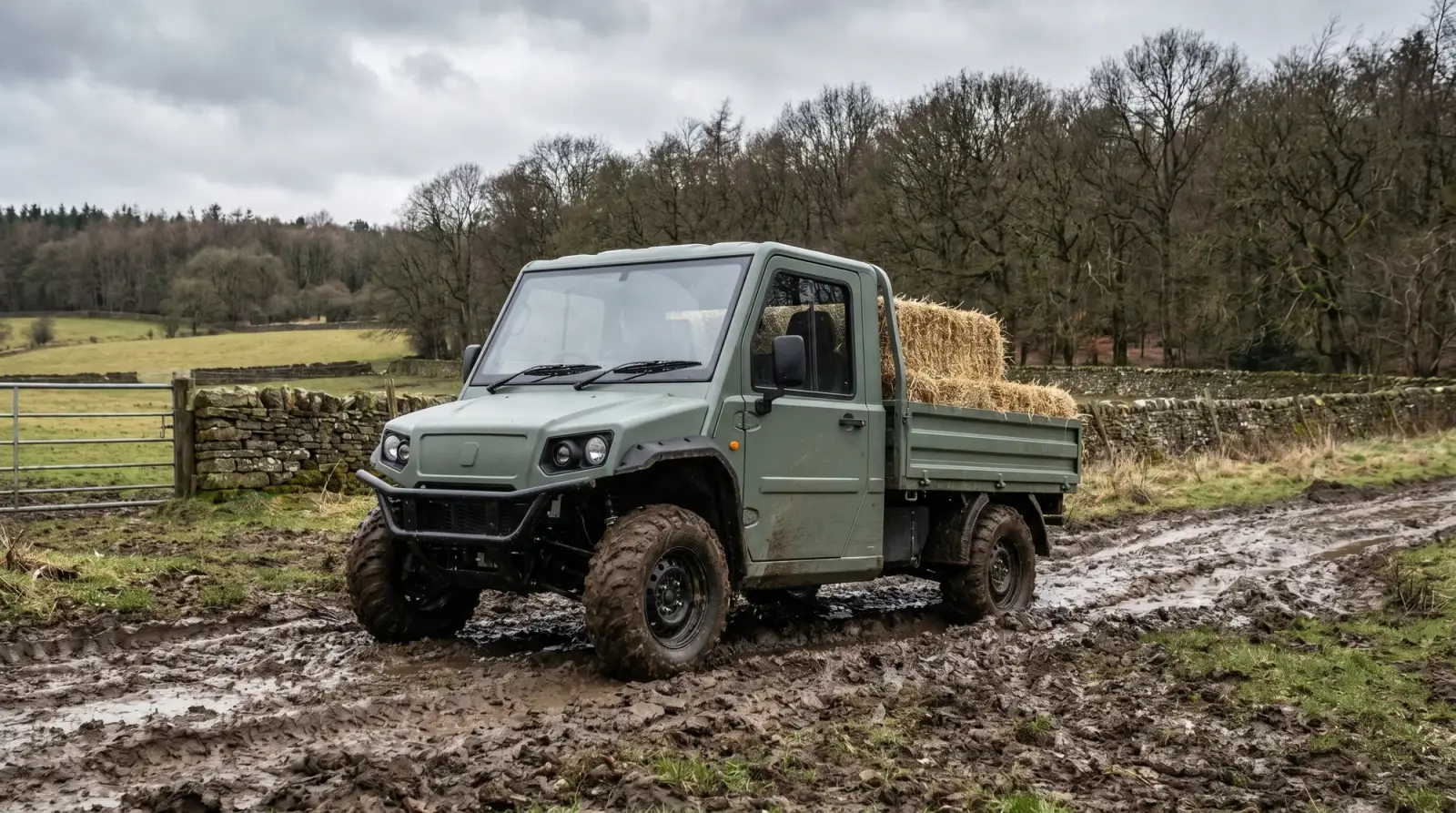
An estate vehicle lives outdoors and works in the wet. That has to be designed in. Weather protection for the driver and any controls, a body and finish that take mud and rain, tyres and drive suited to grass, gravel and slope, and lighting for early starts and winter afternoons. None of this is an extra bolted on at the end. Because the vehicle is built to order, the working features are part of the build from the start, matched to the terrain you actually cross.
Payload, towing and carrying kit
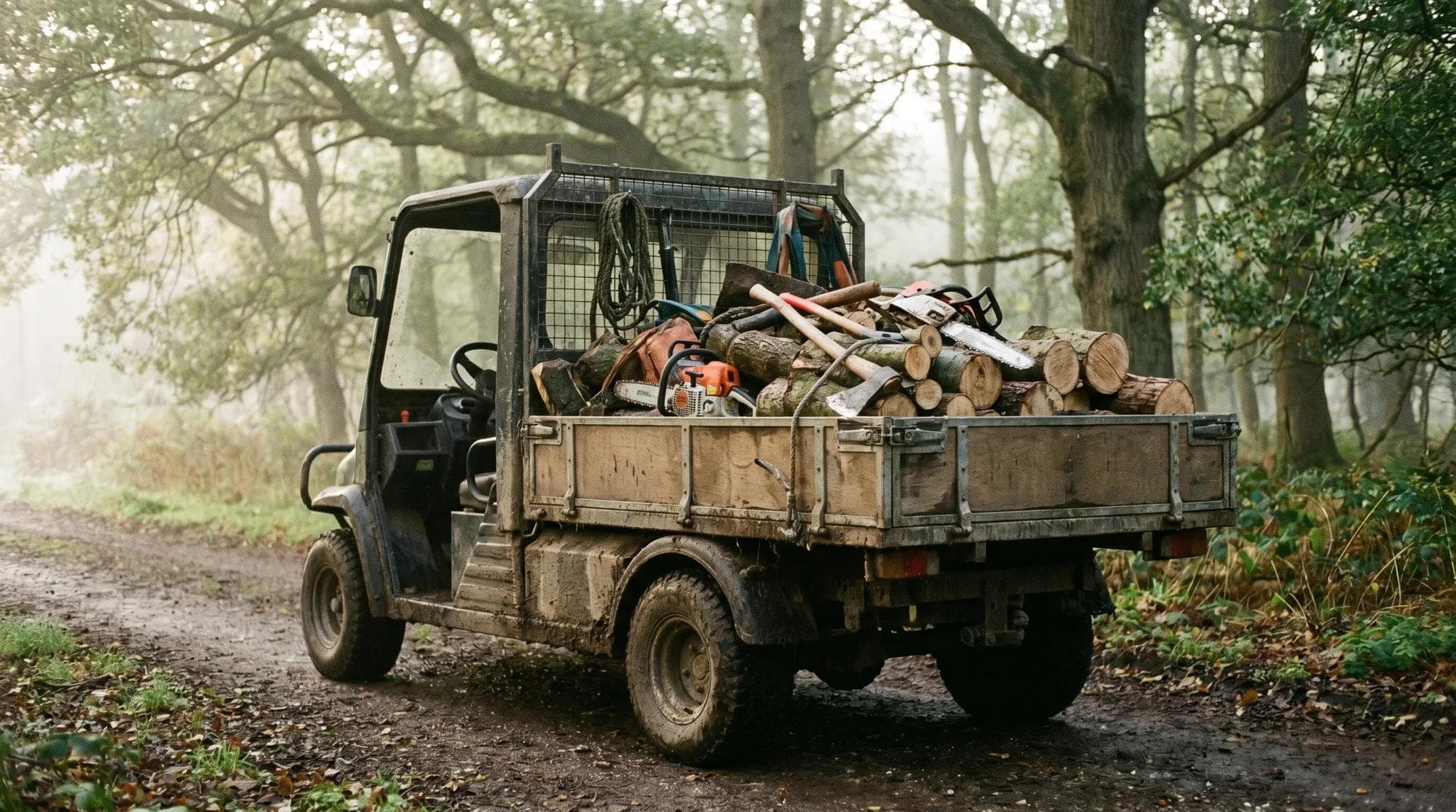
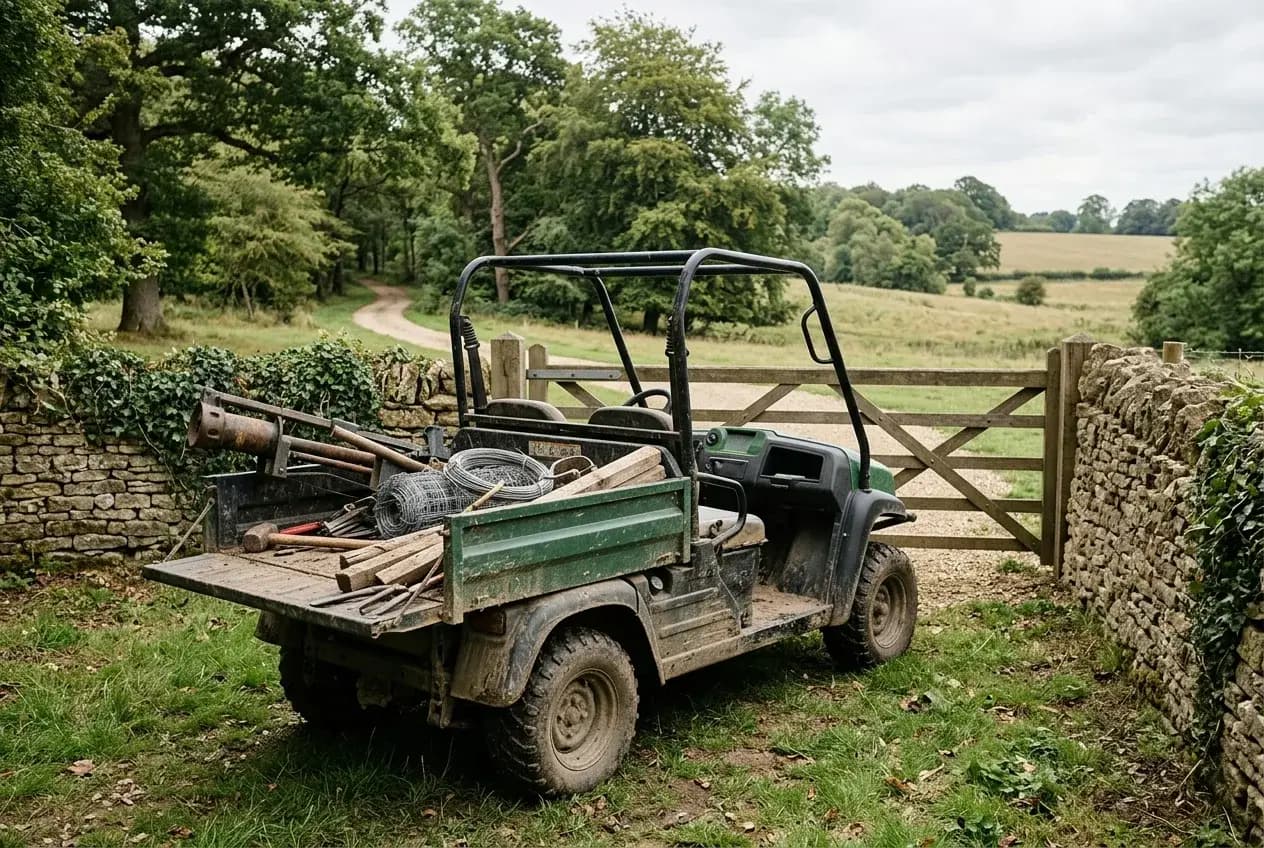
Half of estate work is moving things. Feed, fencing, tools, logs, a chainsaw, a contractor's gear. So payload and a proper load bed matter as much as the ride. Think about the heaviest regular load and whether you need to tow a small trailer or a topper. Get the load capacity right and one buggy does the work of several trips on foot or by the wrong vehicle. Our guide to the electric utility vehicle on a country estate goes deeper on load and utility builds.
Discreet by design
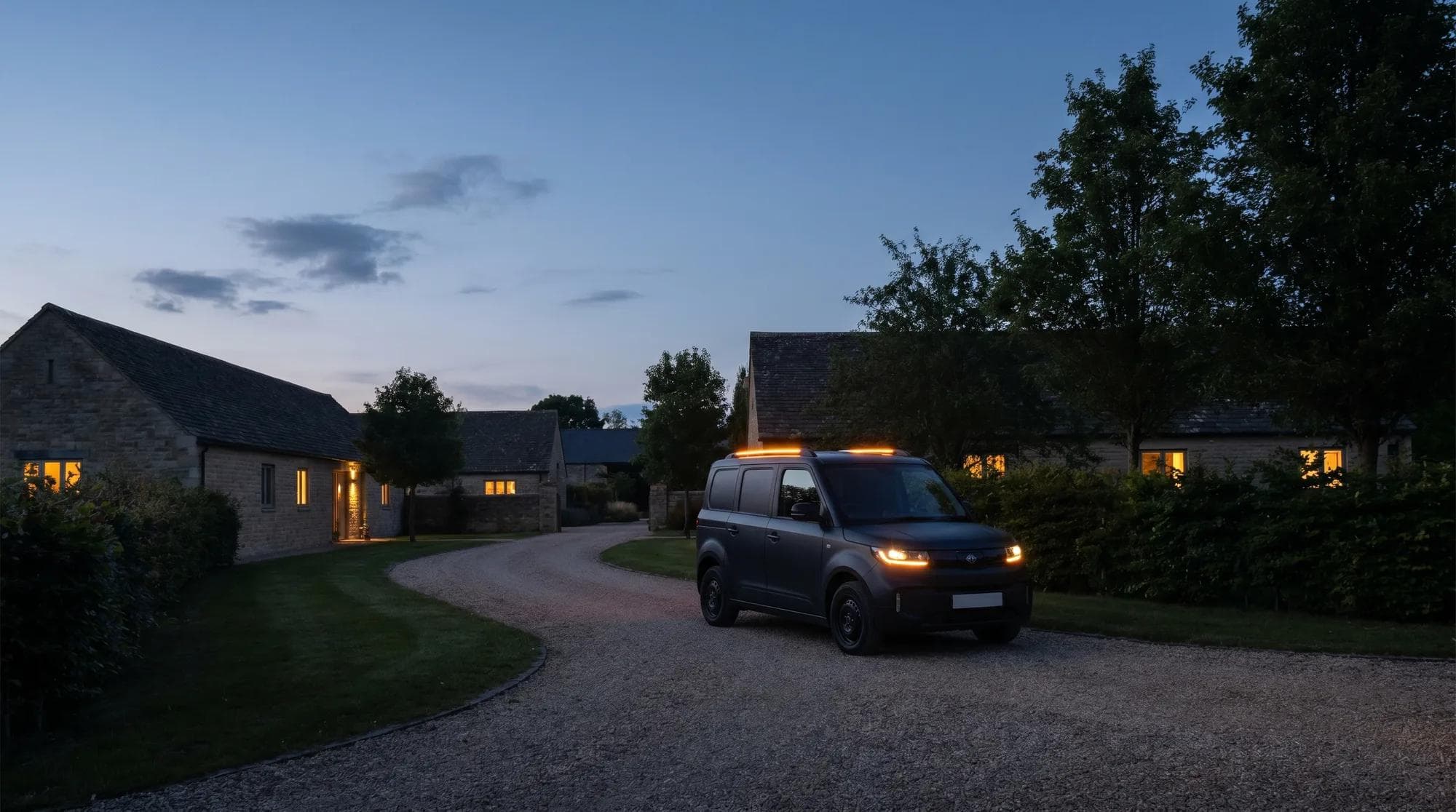
On a private estate the working vehicles should fade into the background, not stand out. A finish in muted estate colours rather than bright livery, no loud branding, a shape that looks at home against the land. The point of the patrol and grounds buggy is to do its job quietly and without drawing the eye, which suits both the look of the place and the discretion that security and patrol work calls for. If patrol is a real part of the role, our security patrol buggy guide is worth a read alongside this.
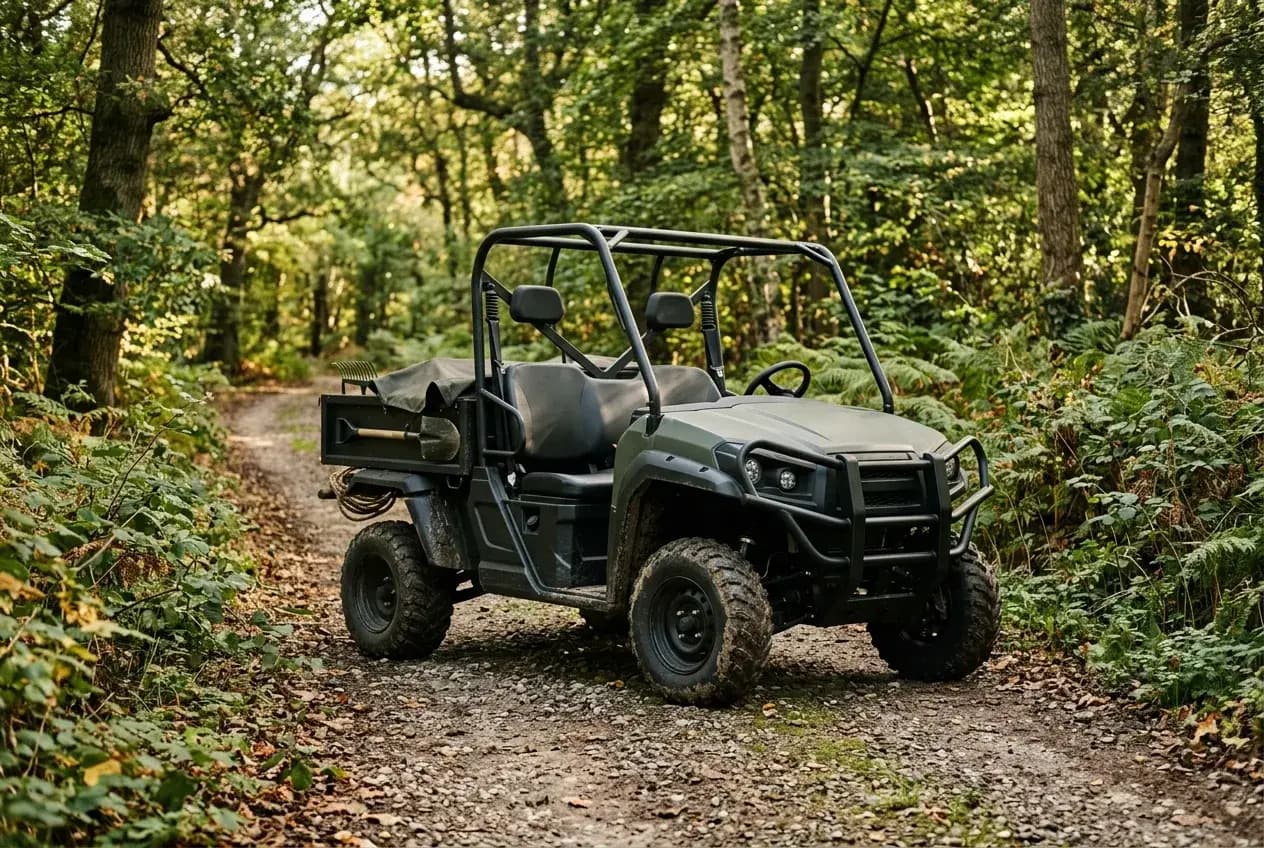
Working buggies, built to order
Utility and patrol vehicles specified to your terrain, weatherproofed for daily use and finished discreetly to suit the estate.
Specifying yours
The right vehicle comes from the work, so start there. Walk us through the estate: the terrain, the perimeter circuit, the heaviest loads, whether you tow, and the longest day the buggy has to last. From that we size the battery and drive, choose the body and weatherproofing, and finish it to sit quietly against the land. The result is one rugged, quiet vehicle that earns its keep every day, rather than a compromise that does several jobs badly. See the range for the formats, then tell us what your estate needs.
Need a working buggy for your estate?
Tell us the terrain, the perimeter circuit and the loads you move, and we will spec a rugged, quiet electric buggy built for the daily work, finished to suit the place.
Frequently asked questions
How is an estate management buggy different from a guest buggy?+
A guest buggy is built for a comfortable ride on made paths. An estate management buggy is a working tool, built for grip on rough wet ground, payload for kit, range for a full circuit and weatherproofing for daily outdoor use. The priorities are completely different.
Is electric powerful enough for rough estate ground?+
Yes. Electric drive delivers strong torque from a standstill, which suits low-speed work, slopes and pulling a load. The key is sizing the battery and drive to your terrain and the longest day, which we do as part of the spec.
Will it cope with British weather and mud?+
Built to order, yes. Weather protection, a hard-wearing body and finish, suitable tyres and lighting are all designed in from the start, matched to the ground you cross rather than added as an afterthought.
Can it carry kit and tow a trailer?+
Yes. Tell us the heaviest regular load and whether you tow, and we will build in the load bed, payload and towing capacity to suit, so one vehicle replaces several trips.
Can it be finished discreetly?+
Yes. Muted estate colours and a quiet, unbranded finish are specified into the build, so the vehicle sits naturally against the land and suits patrol and security work.
Related solutions
Ready to explore what we build?
See the vehicles and the setting this applies to, or get a tailored quote built around your site.
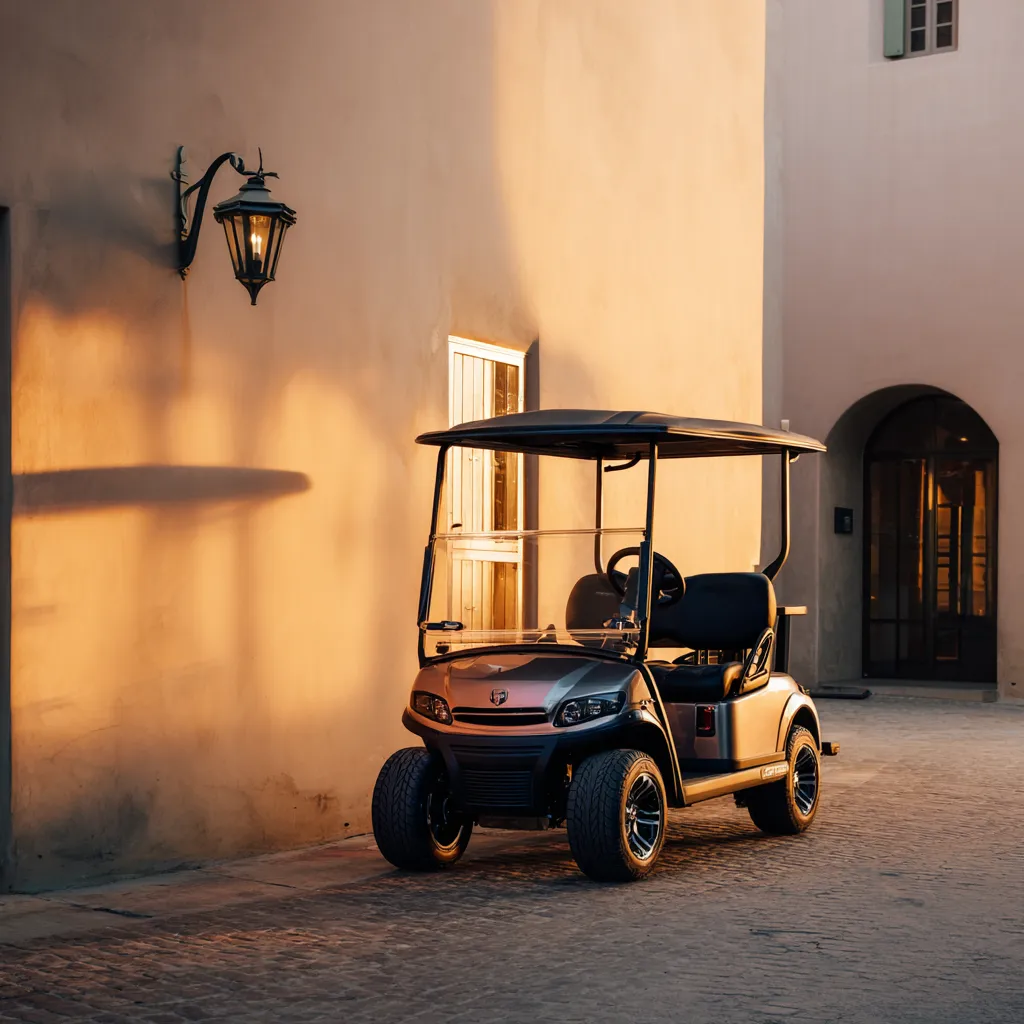
Ready to find the right buggy?
Tell us how and where it will work and we will specify a vehicle and a tailored quote built around you. Every build comes with a 3-year warranty and a 24-hour priority call-out.
Our guides are written and reviewed by the Hawke Electric Vehicles team, the people who specify, build, deliver and support the vehicles. We focus on honest, practical advice and flag where a figure depends on the build rather than guessing.
More guides by Hawke