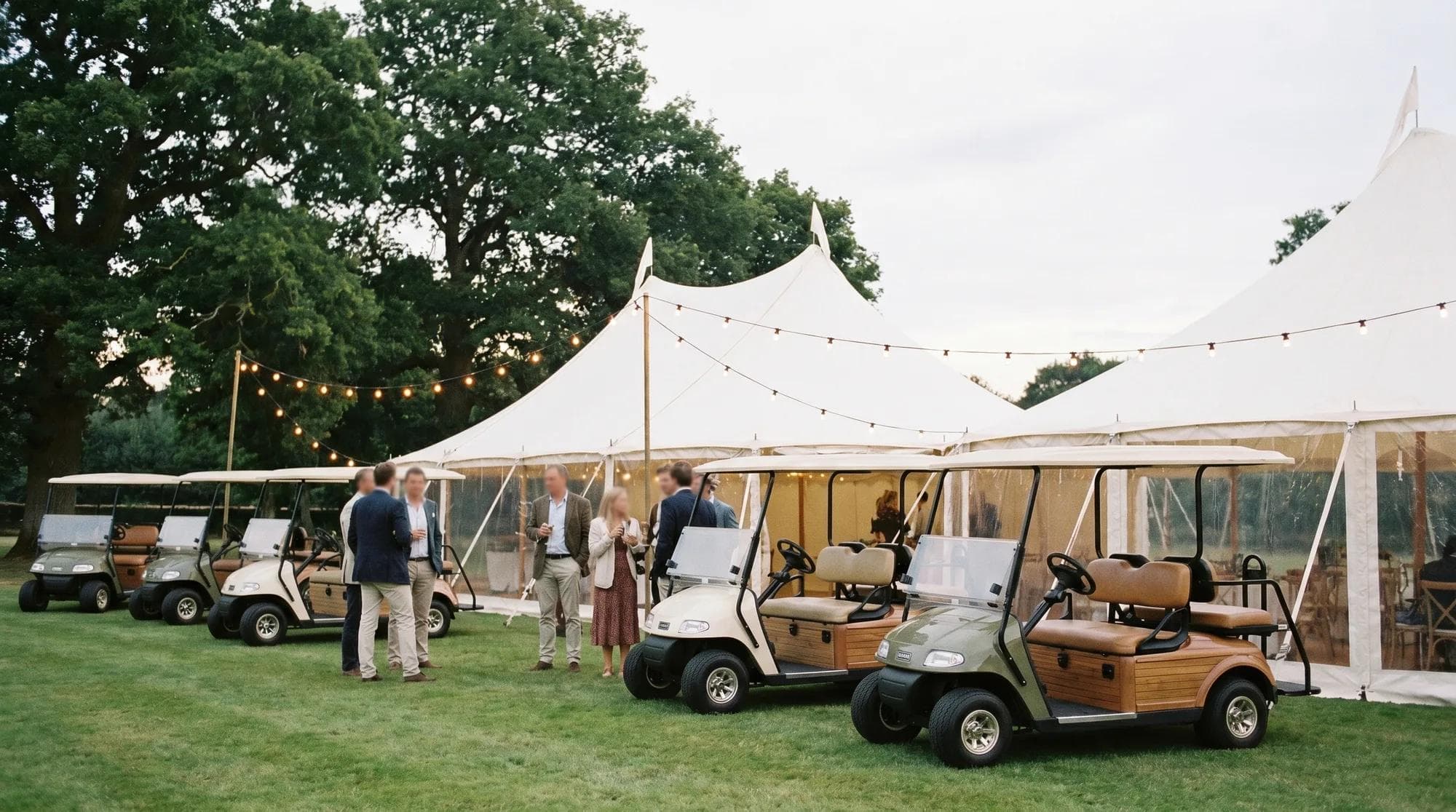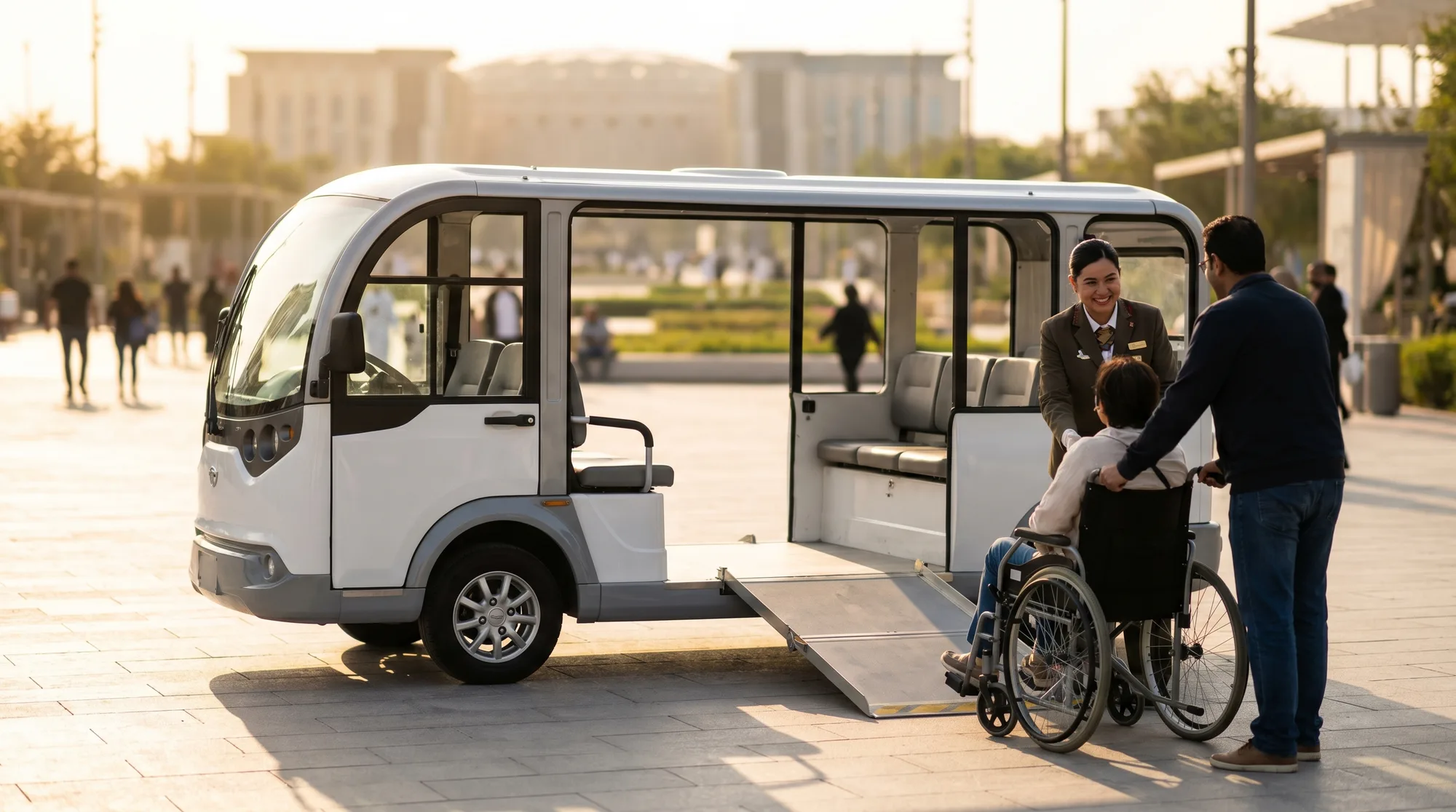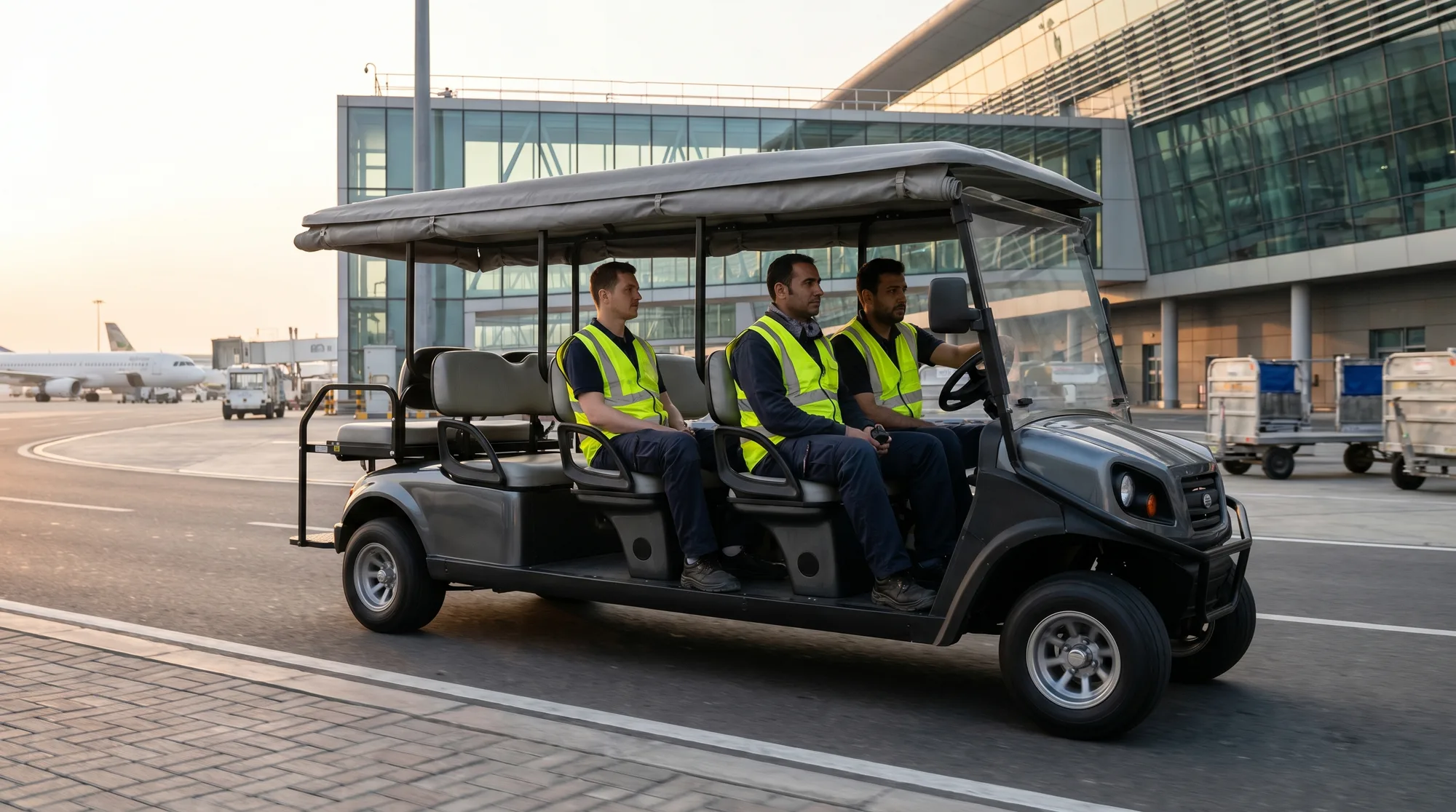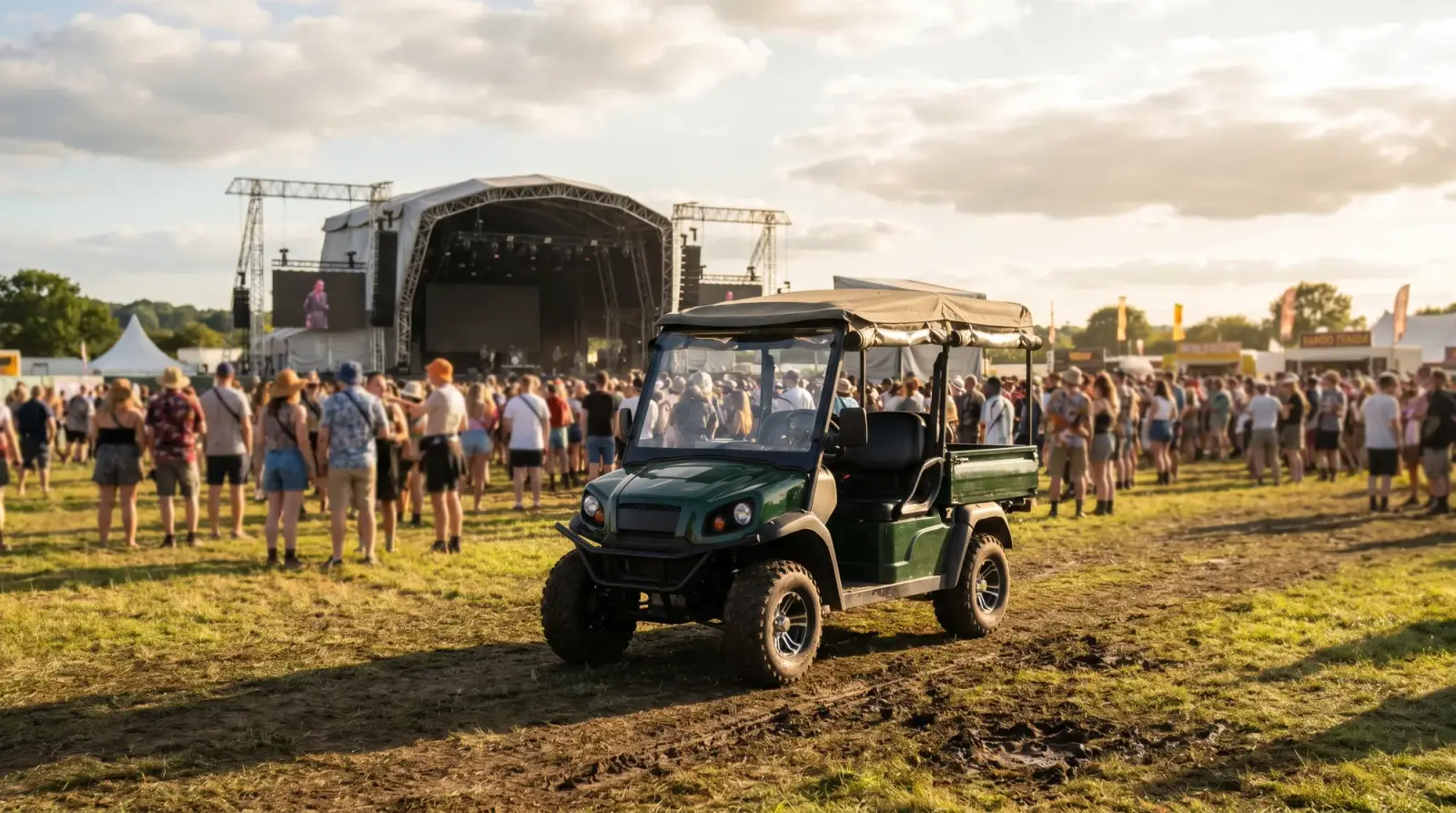
- Festival buggy hire covers three jobs at once: moving VIPs and guests, getting artists to the stage on time, and shuttling crew and kit across a big, busy site.
- Electric is the right fit for a festival: near-silent so it works backstage and at night, with no fumes around crowds, performers and catering.
- Site conditions are the real test; mud, slopes and dense crowds mean you spec for traction, ground clearance and a build that takes a hard few days.
- Plan separate flows so VIP, artist and crew movements do not collide at the worst moment, with clear pickup points and radio-linked drivers.
- Hire for the run of the event, or for the season if you run several, so you carry no fleet between festivals.
A festival is thousands of small journeys happening at once. A headline act needs to reach the stage from a portacabin half a mile away with minutes to spare. A sponsor's guests want moving from the VIP car park to hospitality without trudging through mud. The production crew are hauling cases, cable and staging from compound to stage and back, all day and into the night. Festival buggy hire exists to keep all of that moving, and to keep it calm.
Electric buggies have become the default for this because they suit the place. They are quiet enough to run behind a stage during a set, clean enough to weave through a packed crowd without choking anyone, and nimble enough to get an artist to the wings on time. This guide covers the three jobs they do at a festival, how to spec them for a field rather than a forecourt, and how to plan the flows so nothing collides.
Three jobs, one fleet
It helps to think of festival transport as three distinct jobs that often share a fleet. Each has its own rhythm, and getting the mix right is half the battle.
- VIP and guest transfers: moving sponsors, hospitality guests and accredited visitors from car parks and gates to the areas they have paid to reach, comfortably and without the mud.
- Artist transport: the time-critical one, getting performers and their close team from dressing rooms and compounds to the stage and away again, often to a tight schedule.
- Crew and kit: the unglamorous, constant work of shuttling production staff, tools, cases and supplies across the site from build day to breakdown.
A small mix of seat sizes usually covers all three: a couple of nimble four-seaters for quick artist and VIP runs, and a larger people-mover or a utility build with a load bed for crew and kit. Our guide to hiring electric buggies for events goes into how to match vehicles to a temporary site.
Why quiet and clean matters here
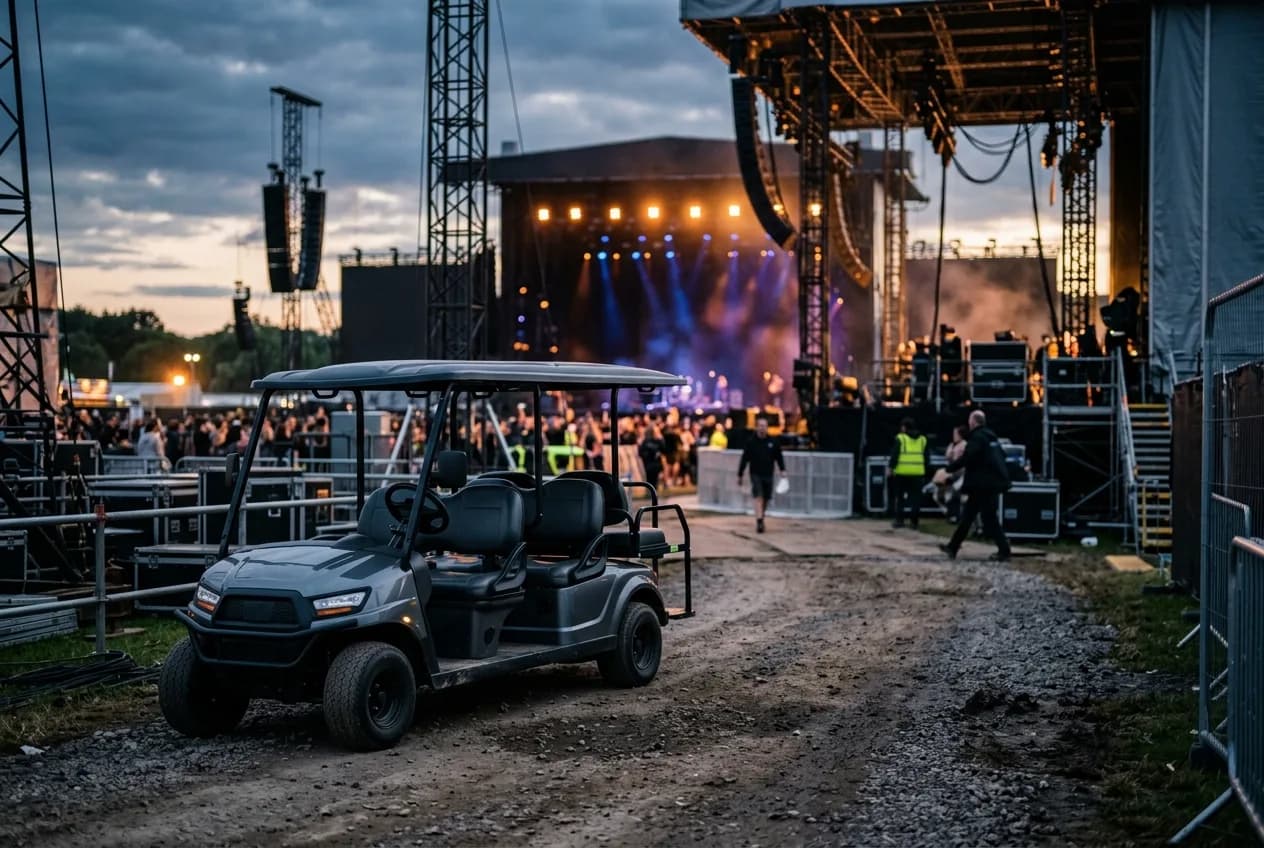
On a festival site the case for electric is not abstract. A petrol buggy idling behind a stage bleeds engine noise into a live set and an open mic. It puts fumes into a dressing-room area, a catering village, a crowd packed shoulder to shoulder. An electric buggy does none of that. It runs near-silent, so it can move during a performance and through the small hours without waking a campsite, and it has no exhaust at the point of use, which matters everywhere people gather closely.
Spec for the field, not the forecourt
The thing that catches people out is the ground. A festival is a field, and by day two it is often a muddy one. Slopes, ruts, standing water and dense crowds put very different demands on a vehicle than a hotel driveway. Spec accordingly: enough traction and ground clearance for soft going, a build that shrugs off a long weekend of hard use, lights for night running, and the manoeuvrability to ease through a crowd at walking pace when needed. Get the vehicle right for the conditions and it keeps going when a road-spec buggy would be stuck.
Plan the flows so nothing collides
The vehicles are the easy part; the choreography is where festivals are won or lost. The worst moment is when a VIP transfer, an artist run and a crew load all converge on the same muddy track as the gates open. Avoid it by planning each flow separately, with its own pickup points and priorities, and a clear rule that the artist-to-stage run takes precedence when the clock is tight.
- 01
Separate the routes
Give VIP, artist and crew movements their own primary routes and pickup points so they cross as little as possible.
- 02
Protect the artist run
Keep at least one vehicle and driver dedicated to time-critical stage runs, free of other tasks during a changeover.
- 03
Link the drivers
Put drivers on radio with the event control and stage management so a delayed act or a blocked track is handled in seconds.
- 04
Plan the charge
Schedule charging into quiet windows so vehicles are topped up for the evening peak and the late-night breakdown.
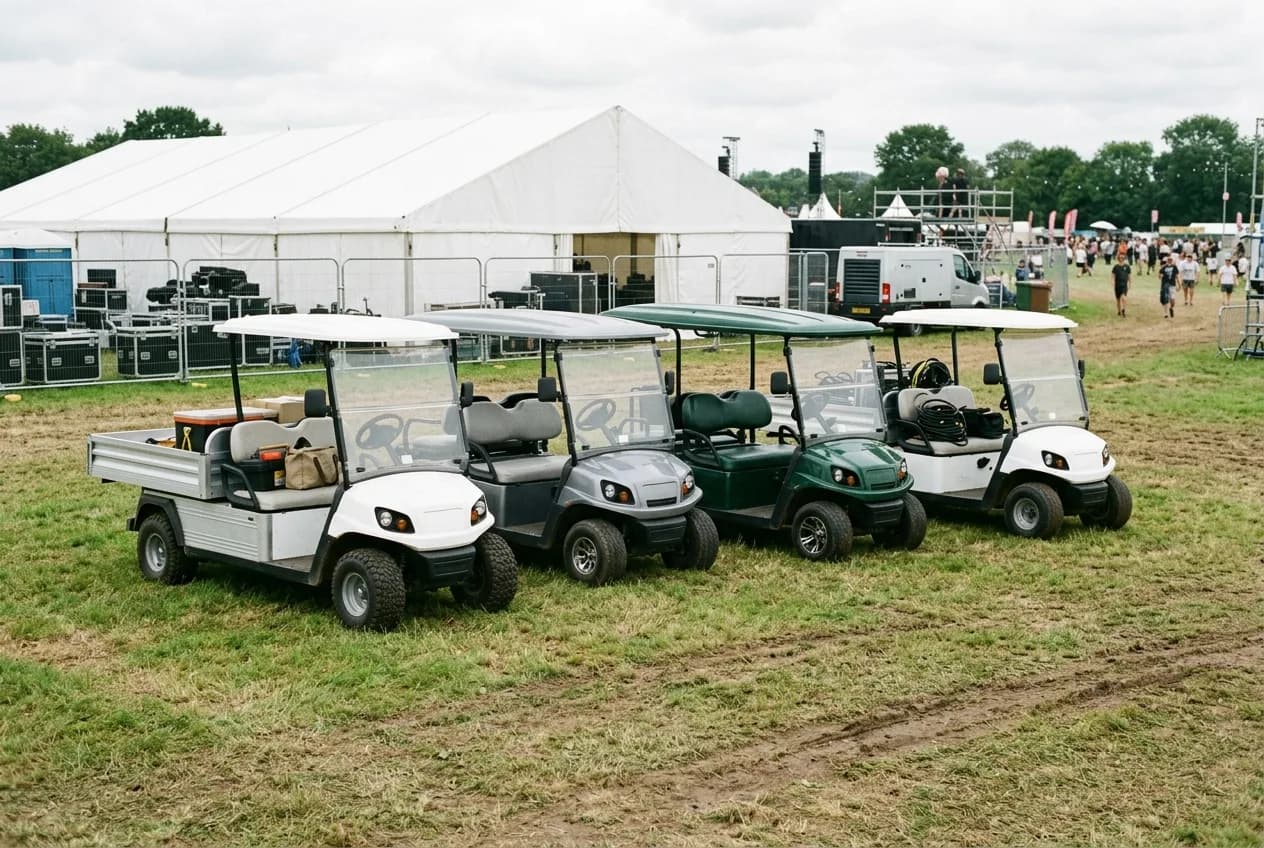
A fleet built for the field
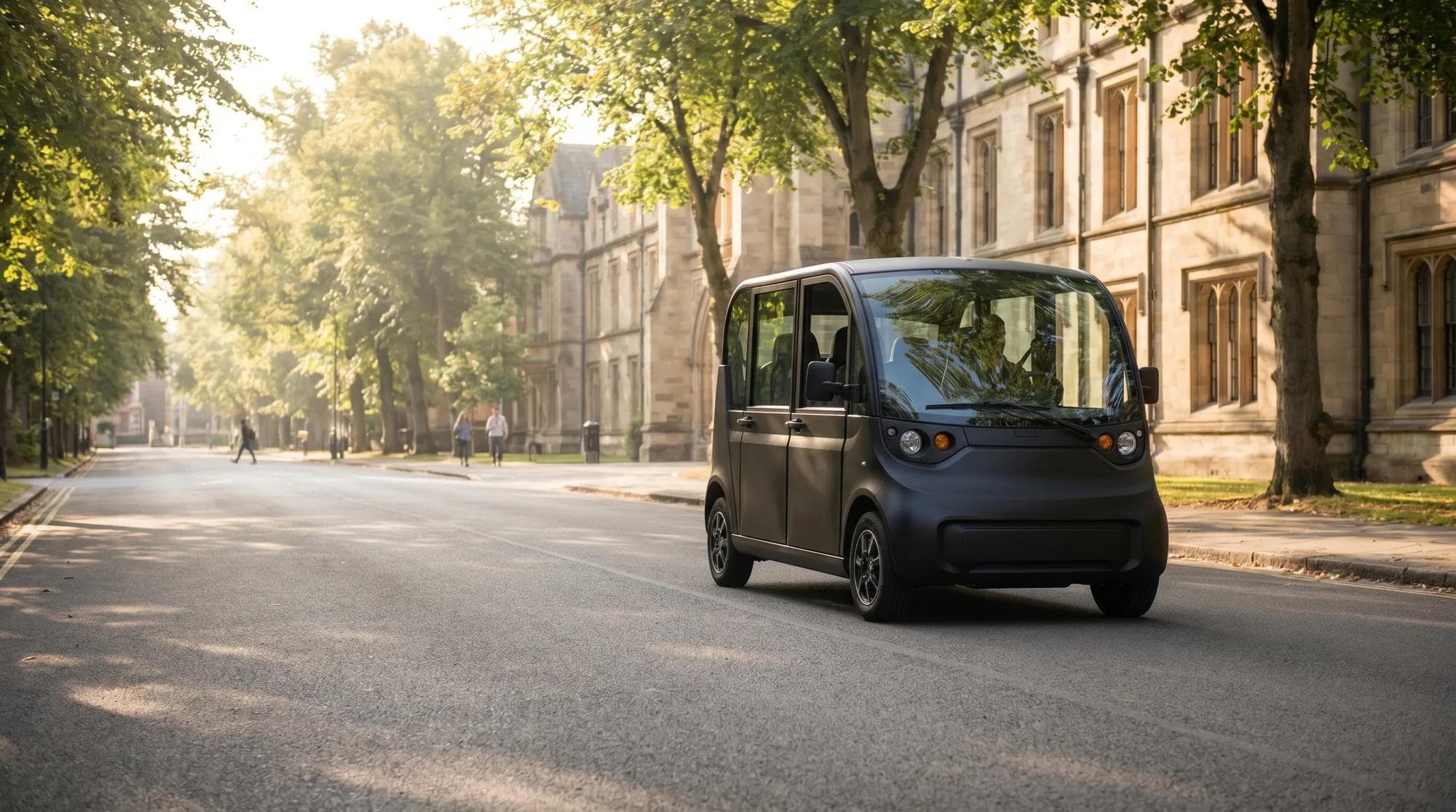
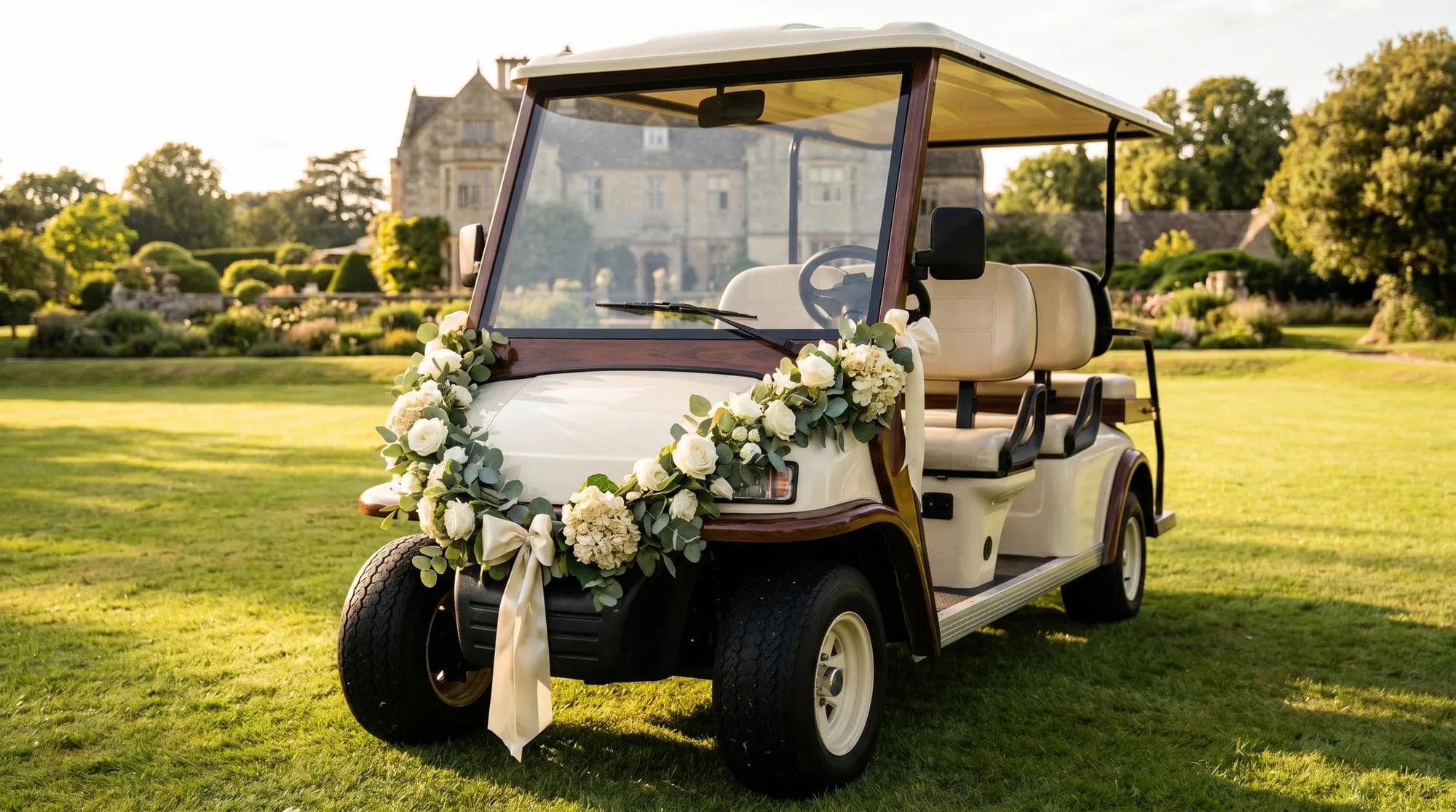
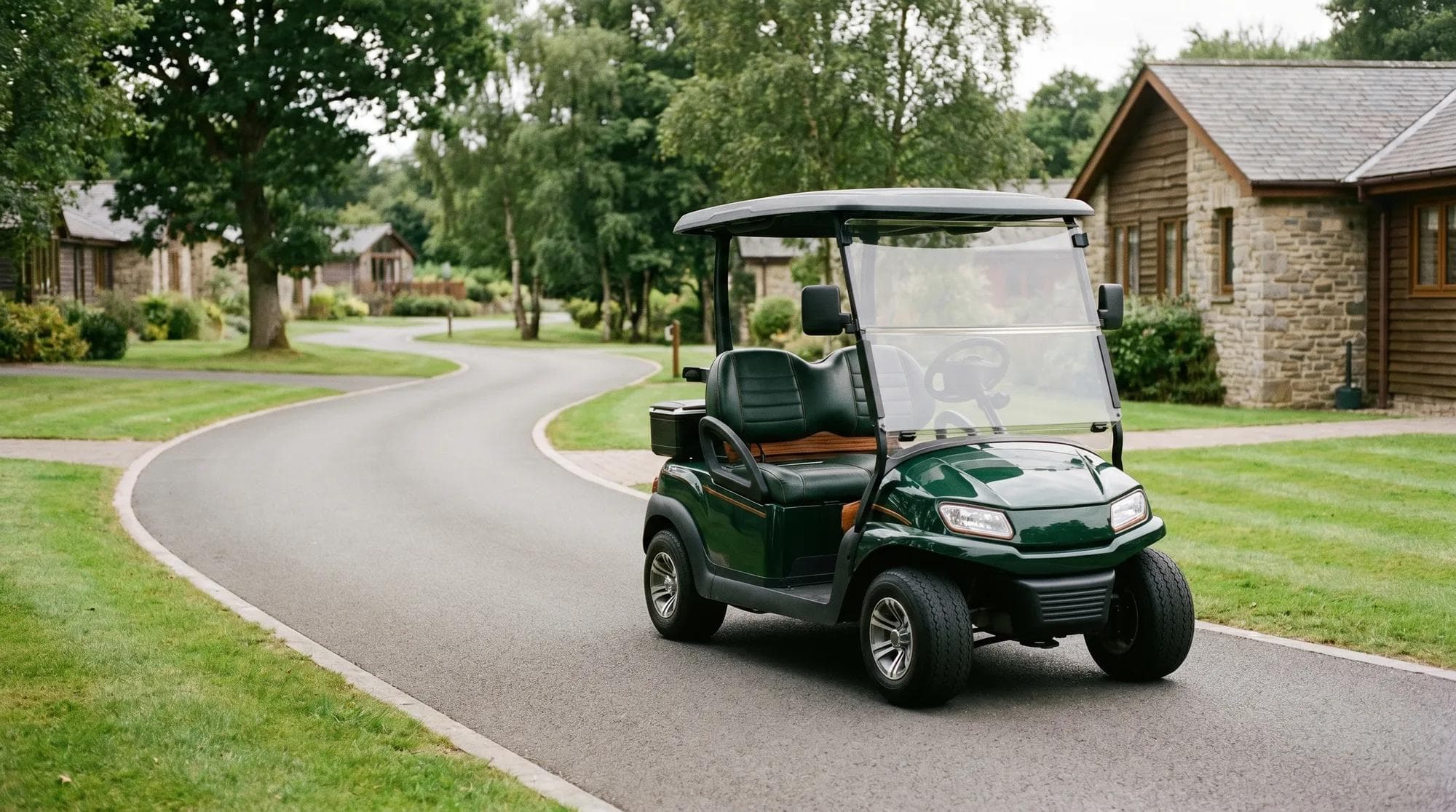
Nimble four-seaters for artist and VIP runs, people-movers for guests, and utility builds with a load bed for crew and kit, all hired for the run of your event and liveried if you wish.
Hire for the event, or the season
Almost no festival owns its buggies, and rightly so; a fleet that works for a long weekend would sit idle for the rest of the year. Hiring for the run of the event means you pay only for the days you need and hand the upkeep back afterwards. If you run several festivals across a summer, a seasonal arrangement can cover the lot, with vehicles delivered to each site in turn. Either way the kit arrives ready and you carry nothing between events. You can see the options across the range or request a quote with your dates.
Planning transport for a festival?
Tell us the site, the dates and what you need to move, VIPs, artists, crew and kit, and we will recommend the right vehicles, specced for the ground and hired for the run of your event.
Frequently asked questions
Can electric buggies cope with a muddy festival site?+
Yes, when they are specced for it. We build for traction and ground clearance to suit soft going and slopes, so the right vehicle keeps moving through a wet weekend where a road-spec buggy would struggle.
Are they quiet enough to use backstage during a performance?+
Yes. Electric buggies run near-silent, so they can move behind a stage during a set and across the site at night without disturbing performances or a sleeping campsite.
Will a buggy last a full festival run on one charge?+
Sized correctly for the site, a buggy covers a full event day and charges overnight. We plan the charging around your schedule so vehicles are ready for the evening peak and the breakdown.
Can the buggies be branded for sponsors?+
Yes. Hire vehicles can carry your livery or a sponsor's branding, specced before the event so they look the part in the VIP and hospitality areas.
Do you only hire for single events?+
No. We hire for a single festival or for a season of them, delivering vehicles to each site in turn, so you carry no fleet between events.
Related solutions
Ready to explore what we build?
See the vehicles and the setting this applies to, or get a tailored quote built around your site.
Ready to find the right buggy?
Tell us how and where it will work and we will specify a vehicle and a tailored quote built around you. Every build comes with a 3-year warranty and a 24-hour priority call-out.
Our guides are written and reviewed by the Hawke Electric Vehicles team, the people who specify, build, deliver and support the vehicles. We focus on honest, practical advice and flag where a figure depends on the build rather than guessing.
More guides by Hawke