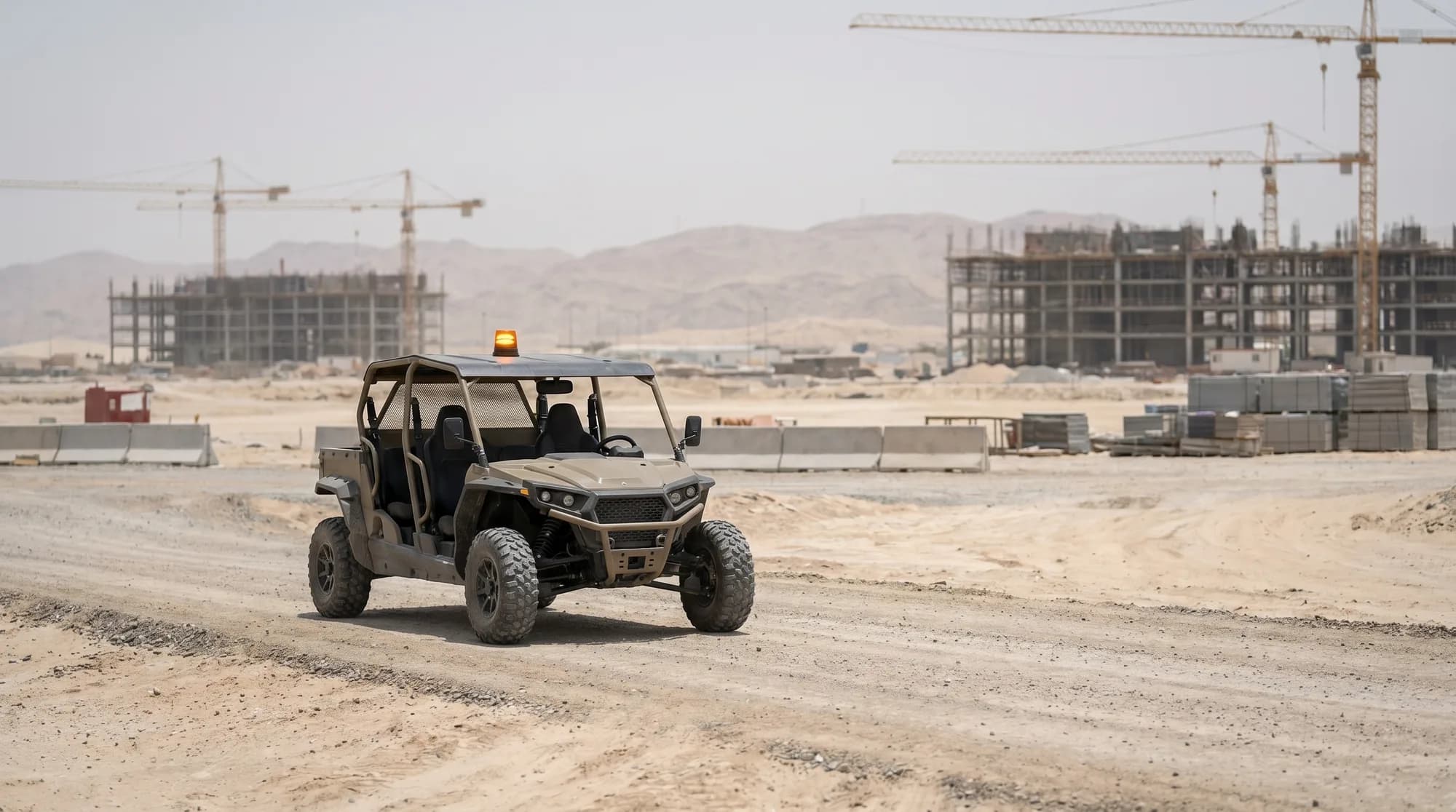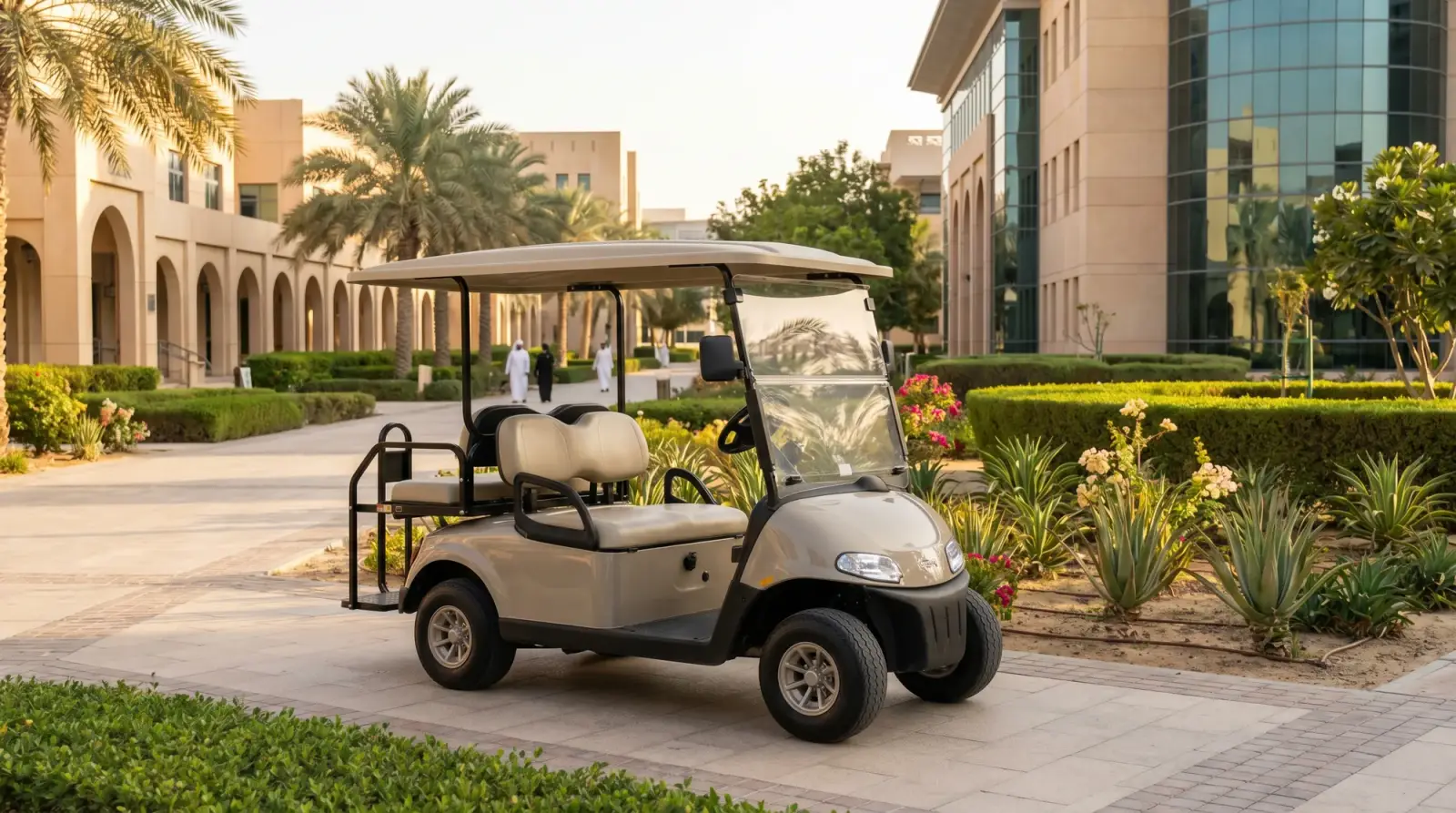
A UAE school or university campus is a small town, and like any town it needs to move people and things across distances that are unpleasant to walk in the heat. A golf buggy carries a maintenance team to a fault, a nurse to an injured student, deliveries to a faculty, a visitor on a tour, and a student with restricted mobility to a far building. On a busy campus that role is genuinely important, and it comes with a responsibility no leisure buyer faces: the vehicle operates around children and young people.
That single fact reshapes everything. Specification, fleet rules, driver discipline and speed all have to put safety first, because a buggy that is perfectly fine at a quiet resort is a different proposition weaving through a crowded campus at the end of a lesson. This guide is for the operations, estates and security teams who run campus transport, and it treats child safety as the starting point, not an add-on.
- On a campus the overriding priority is safety around children and young people; specification and rules follow from that.
- Specify safety features: seatbelts, full lighting, audible reversing warnings, good visibility and sensible speed limiting.
- Operate to clear rules: trained, authorised drivers, defined routes, low speeds in busy areas and no driving at peak crowd times where avoidable.
- Accessibility is a real campus use case: buggies help students and staff with restricted mobility cross large sites.
- Plan charging logistics and judge on total cost; lithium and durability suit heavy, all-day campus use in the heat.
What a buggy does on a campus
Campus buggies do a surprising amount of work. They carry estates and maintenance staff and their tools, move post and deliveries, support security patrols, ferry visitors and prospective families on tours, and provide accessibility transport for students and staff who cannot easily cross a large site, especially in summer. On a sprawling university or an international school with extensive grounds, the buggy is often the difference between a responsive operation and a slow one.
Because the use cases are varied, the fleet usually is too: a mix of passenger buggies and utility buggies with cargo space. The unifying requirement, whatever the buggy does, is that it shares space with young people and must be specified and driven accordingly.
Safety comes first
A campus buggy operates in the one environment where the consequences of carelessness are least acceptable. Children move unpredictably, crowds form at the end of lessons, and a quiet electric buggy is exactly the kind of vehicle a child does not hear. The specification and the operating rules both have to reflect that, and the best campuses treat buggy safety with the same seriousness as any other aspect of student welfare.
- Seatbelts for every seat, used every time, with no standing passengers.
- Full lighting, indicators and brake lights, plus an audible reversing warning.
- Good all-round visibility and limited blind spots, because children are short and unpredictable.
- Sensible speed limiting suited to a pedestrian-heavy environment.
- Clearly marked, visible buggies so students and staff see them coming.
- Trained, authorised drivers only, with no informal use by students.
Operating rules that work
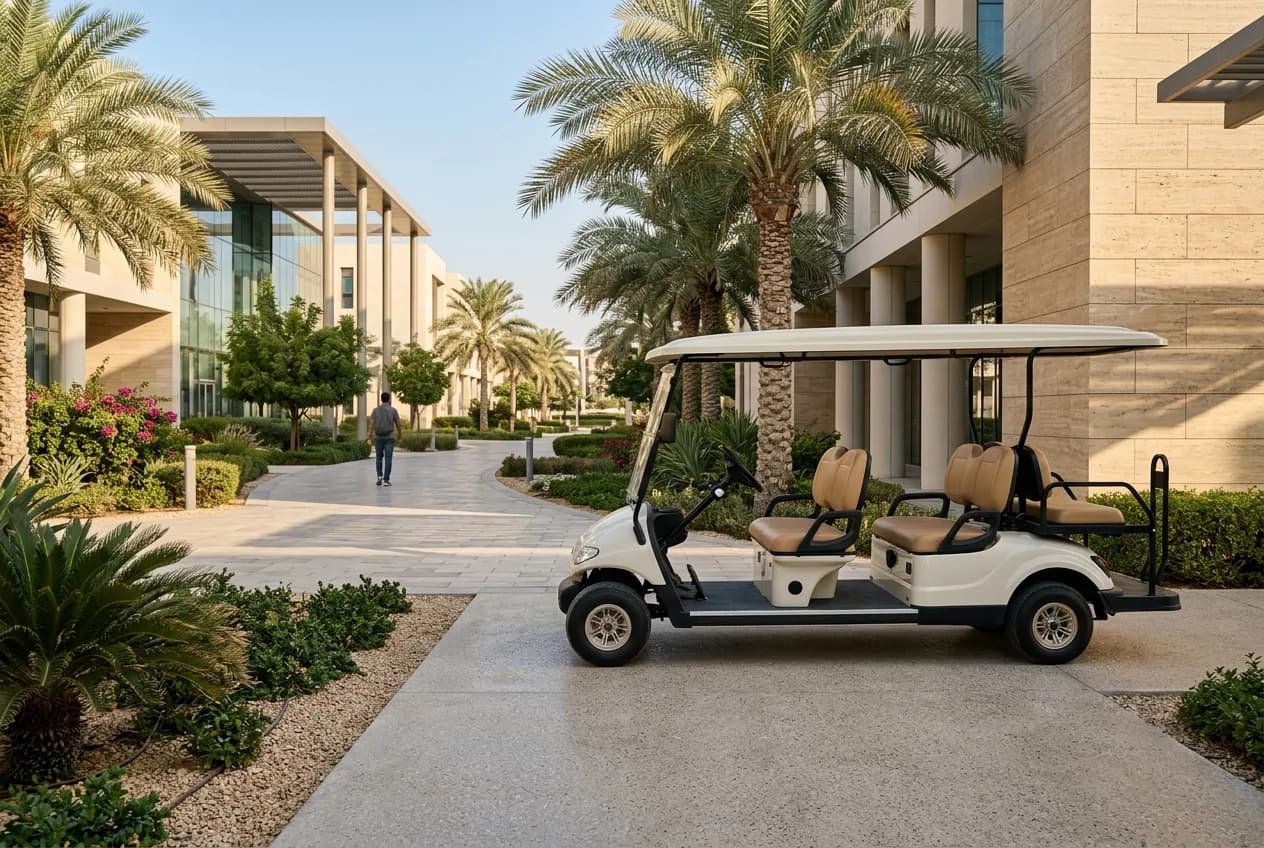
Good campus buggy operations run on clear, written rules rather than habit. The vehicles are quiet and easy to drive, which makes it tempting to be casual, and casual is exactly what you cannot afford around young people. The rules do not need to be complicated; they need to be understood and enforced.
- 01
Authorise and train drivers
Only named, trained staff drive campus buggies. Cover smooth driving, speed, reversing, blind spots and behaviour around students.
- 02
Define routes and no-go times
Set sensible routes and identify the busy windows, such as lesson changeovers, when buggies stay off the crowded paths.
- 03
Set and enforce speed limits
Walking pace in busy areas, modest speeds elsewhere. Speed limiting on the buggy helps make the rule real.
- 04
Belt up and no extra riders
Seatbelts every time, no standing, no carrying students informally and no overloading.
- 05
Maintain to the calendar
Schedule servicing so brakes, lights and warnings always work; a campus cannot run a buggy with a faulty brake.
Accessibility as a core use case
It is easy to think of campus buggies as maintenance vehicles, but one of their most valuable roles is accessibility. A large UAE campus can be a real barrier for a student or staff member with restricted mobility, an injury or a temporary condition, particularly when the heat makes long distances exhausting. A buggy that can collect someone from the gate and take them to a far building is an inclusion tool, and specifying easy step-in access and comfortable seating makes that role work properly.
Treating accessibility as a deliberate part of the fleet, rather than an occasional favour, signals something good about the institution and meets a genuine need that grows with the size of the campus.
Sizing the fleet and planning charging
Like any operator, a campus should size its fleet to peak demand, not to the quiet average, and account for buggies always on charge or in service. The peaks here are predictable: term starts, open days, exams, events. Charging is a logistics question at fleet scale, needing enough points on adequate circuits where buggies park, with an overnight schedule, and in the Gulf, charging in shade and cooler hours to protect the packs. Our guide for facilities management fleets goes deeper on sizing and charging logic that applies equally to campuses.
- Buggy type
- Utility with cargo bed
- Key features
- Durable trim, tow or load capacity, full lighting
- Buggy type
- Passenger, easy step-in
- Key features
- Comfortable seats, canopy, smooth ride, seatbelts
- Buggy type
- Passenger, presentable
- Key features
- Clean finish, multiple seats, shade and comfort
- Buggy type
- Passenger or utility
- Key features
- Good visibility, lighting, reliable all-day battery
| Buggy type | Key features | |
|---|---|---|
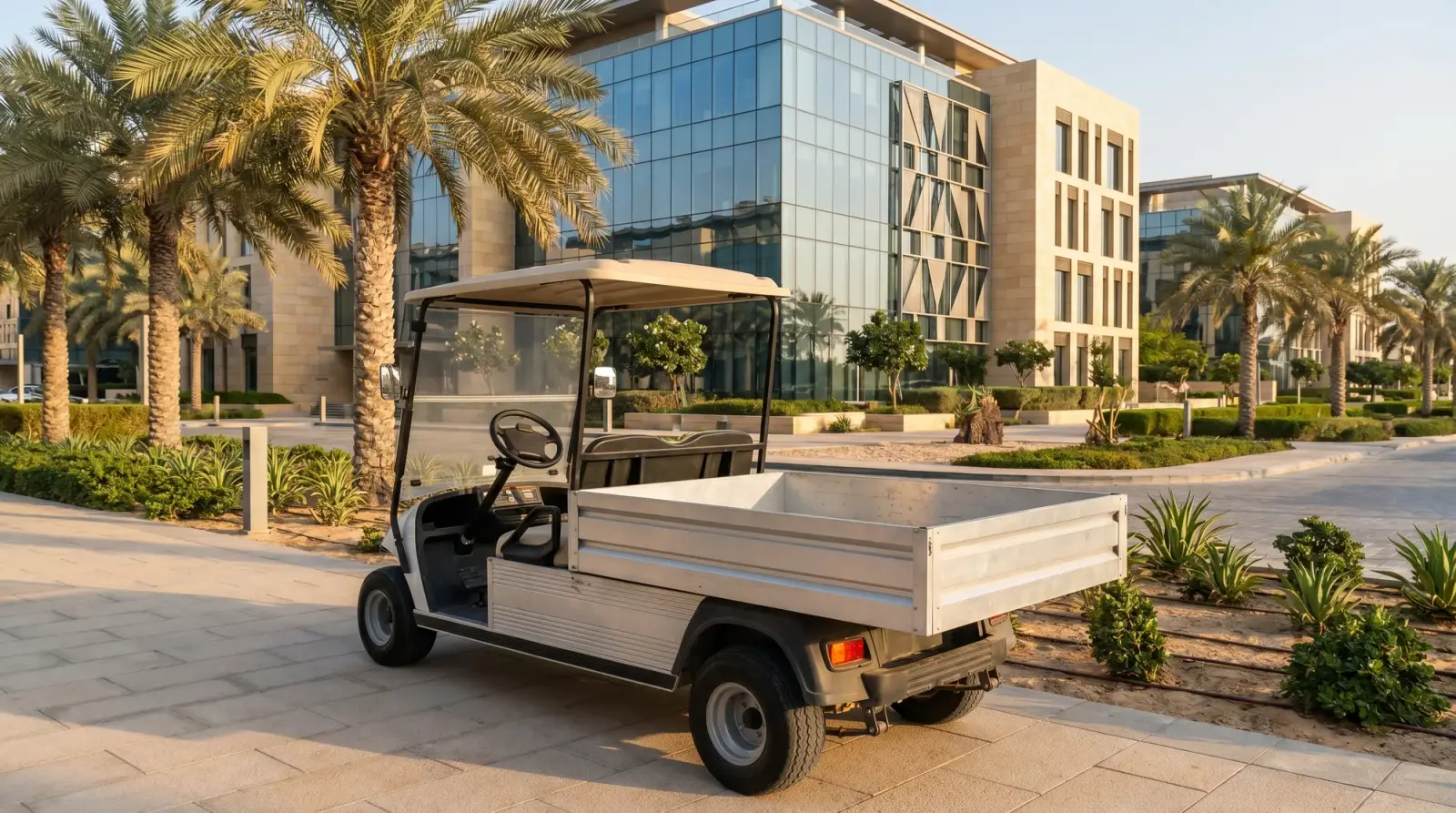
| Estates and maintenance | Utility with cargo bed | Durable trim, tow or load capacity, full lighting |
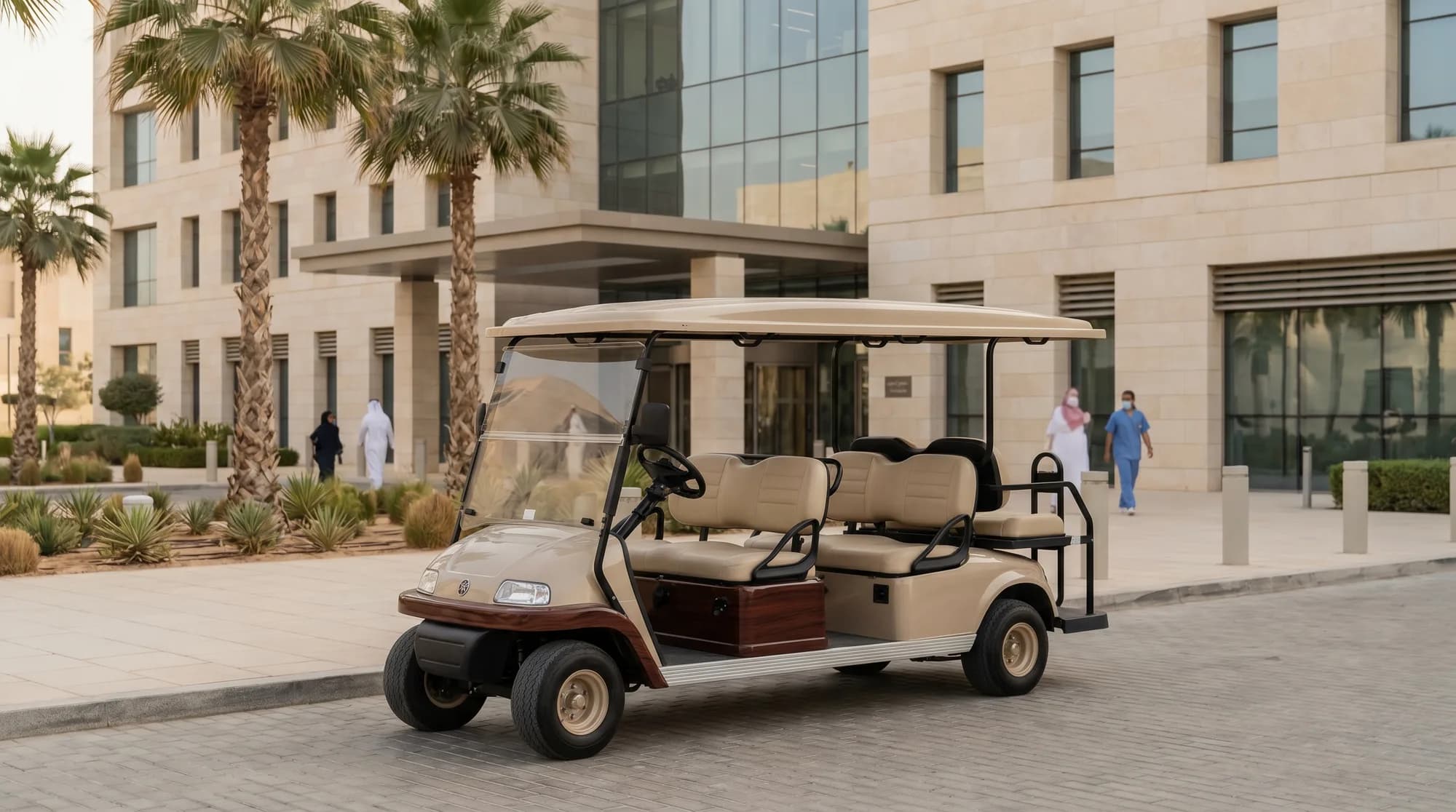
| Accessibility transport | Passenger, easy step-in | Comfortable seats, canopy, smooth ride, seatbelts |
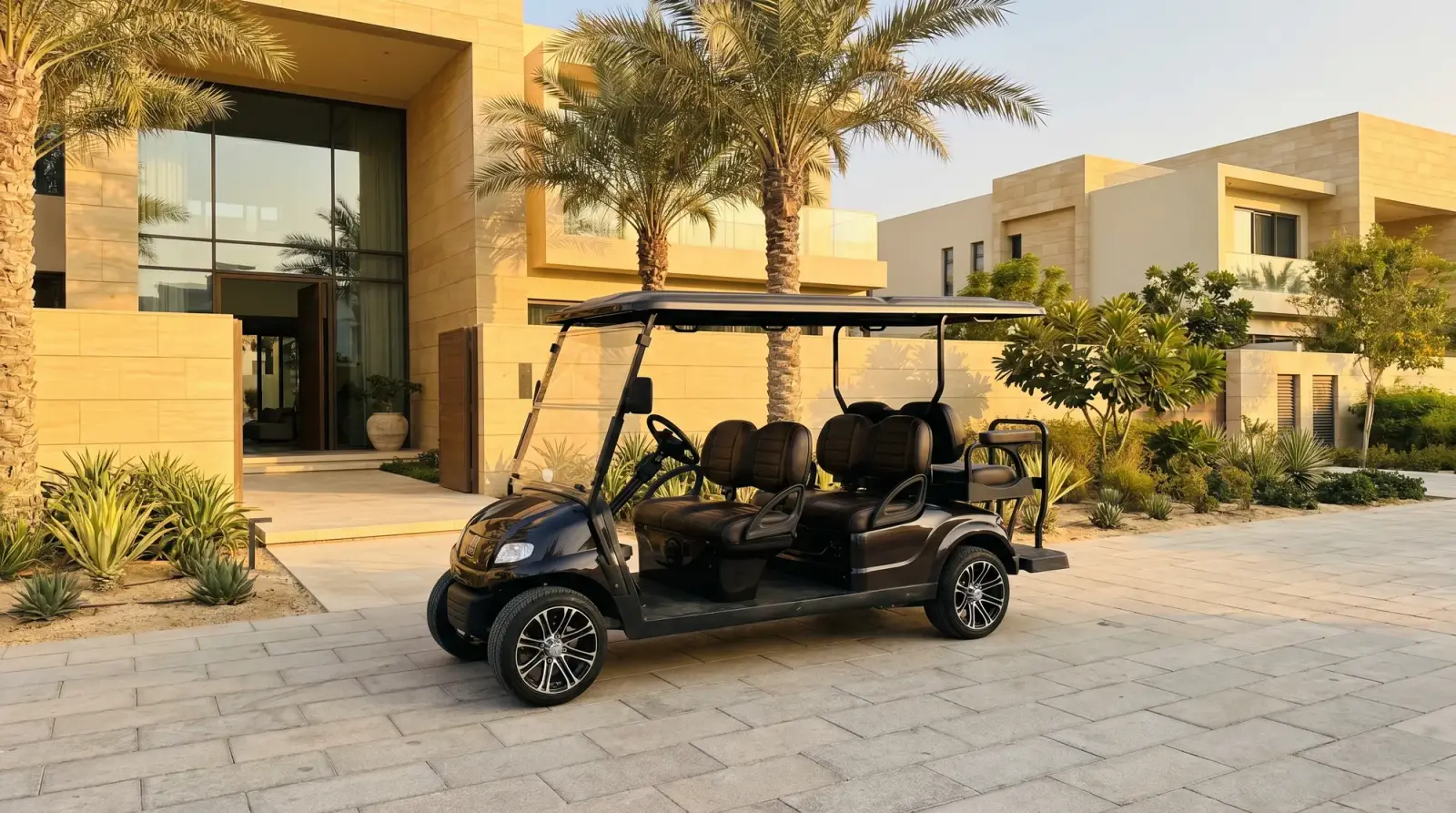
| Visitor and tours | Passenger, presentable | Clean finish, multiple seats, shade and comfort |
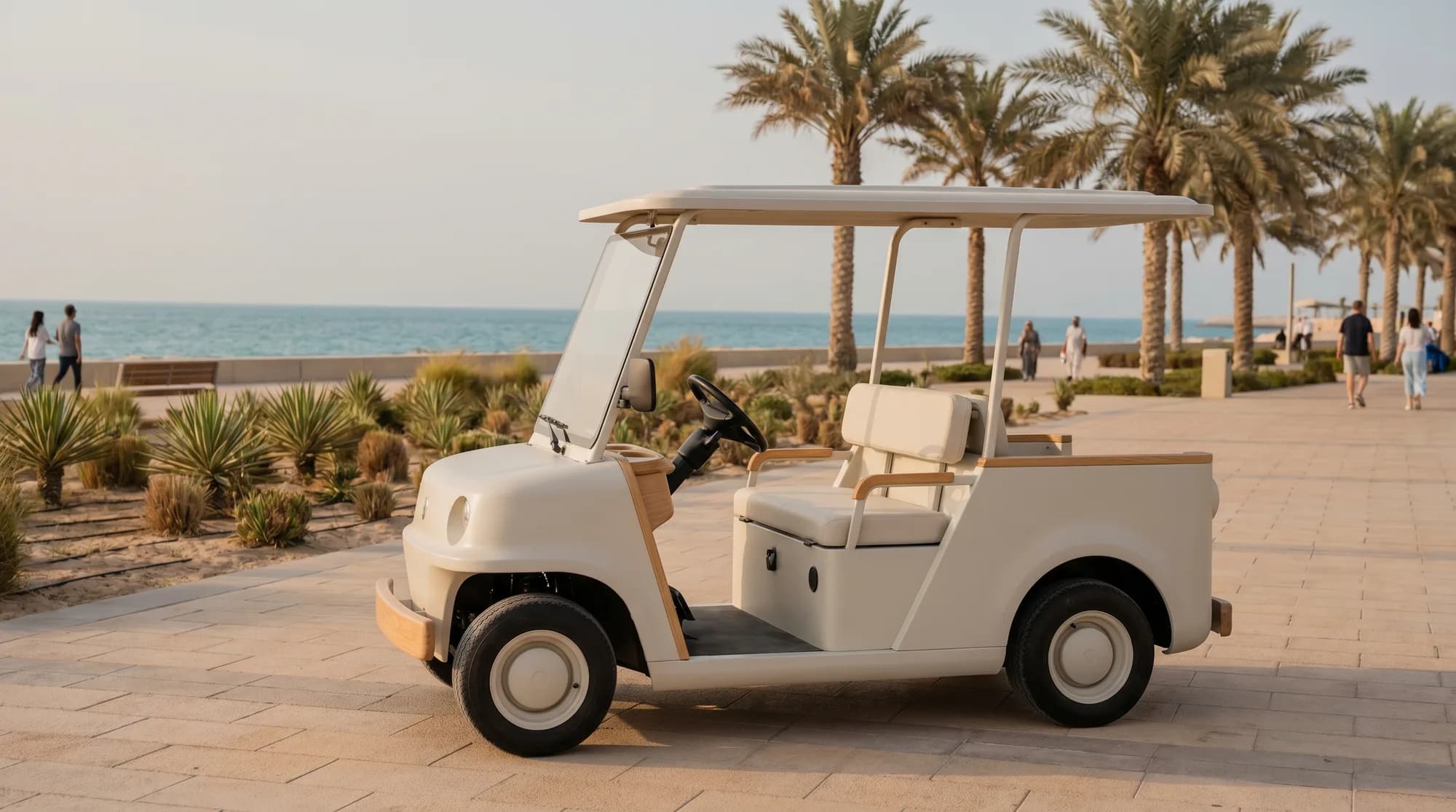
| Security patrol | Passenger or utility | Good visibility, lighting, reliable all-day battery |
On a campus the buggy that matters is not the fastest one. It is the one that every driver treats as a serious vehicle around children, every single time.
Total cost and where to start
Campus buggies work long days in the heat, so durability and a maintenance plan matter as much as purchase price. Lithium batteries suit heavy all-day use, and a serviced fleet keeps the safety-critical systems, brakes, lights and warnings, always working. Treat any figure as indicative and in AED only, and judge on total cost of ownership. Tell us your campus, its peaks, your accessibility needs and your safety requirements, and we will scope a compliant, child-safe fleet. For pricing context see how much a golf cart costs in the UAE.
Scope a safe, accessible campus fleet
Tell us your campus, your peaks and your safety and accessibility needs, and we will scope a child-safe fleet, charging plan and maintenance with current pricing.
Frequently asked questions
Are golf buggies safe to use on a school or university campus?+
Yes, when specified and operated properly. That means seatbelts, full lighting, audible reversing warnings, sensible speed limiting, trained authorised drivers and clear rules that keep buggies off the busiest paths at peak crowd times.
Who is allowed to drive a campus golf buggy?+
Only named, trained and authorised staff. Students should never drive campus buggies informally. Driver training should cover smooth driving, speed control, reversing, blind spots and behaviour around children and crowds.
Can golf buggies help with accessibility on campus?+
Very much so. A buggy can collect a student or staff member with restricted mobility from the gate and take them across a large, hot site to a far building. Easy step-in access and comfortable seating make this role work well.
How should a campus charge its buggy fleet?+
Plan charging as logistics: enough points on adequate circuits where buggies park, with an overnight schedule sized to the fleet. In the Gulf, charge in shade and cooler hours to protect the batteries and chargers.
Are golf buggies road-legal around a UAE campus?+
No. Under RTA rules they are not road-legal and are for use on the private campus roads and paths only, not public highways. Always confirm any specific requirements with your institution.
Related solutions
Ready to explore what we build?
See the vehicles and the setting this applies to, or get a tailored quote built around your site.

Ready to find the right buggy?
Tell us how and where it will work and we will specify a vehicle and a tailored quote built around you. Every build comes with a 3-year warranty and a 24-hour priority call-out.
Our guides are written and reviewed by the Hawke Electric Vehicles team, the people who specify, build, deliver and support the vehicles. We focus on honest, practical advice and flag where a figure depends on the build rather than guessing.
More guides by Hawke