British winters are tough on batteries, and a golf buggy left in a cold shed is exactly the kind of thing that suffers. The cold itself trims range while you're driving, and a poorly stored pack can lose months or years of life by spring. None of it is hard to avoid. Get the charging and storage right, and your battery comes through the winter no worse for it. This guide covers what cold does, how to charge over the off-season, where to keep the buggy, and the one mistake that costs people the most.
Why does cold weather hit a golf buggy battery so hard?
Cold slows the chemistry inside any battery. That shows up in two ways. First, range drops on a frosty morning, sometimes noticeably, because the pack simply can't deliver as much in the cold as it does in mild weather. That's temporary and recovers as things warm up. Second, and more serious, is what happens in storage. A battery left sitting through a cold winter, especially if it's low on charge, ages faster and can suffer lasting damage. Lead-acid is the most vulnerable. A flat lead-acid pack in a freezing shed can be permanently harmed, and in hard frost it can even freeze.
Lithium vs lead-acid in the cold
The chemistry you're running changes how much winter matters. Lead-acid is cheaper but far more sensitive to cold and to being left discharged. Lithium handles low temperatures better and copes happily with partial charges, though very cold conditions still reduce range and most lithium packs shouldn't be charged below freezing. If you're weighing the two for the longer term, our lithium vs lead-acid guide sets out the full picture on range, life and cost. For winter specifically, here's how they compare.
- Lead-acid
- Poor; sensitive to frost
- Lithium
- Better, but range still drops in the cold
- Lead-acid
- High; can be permanently damaged or freeze
- Lithium
- Lower, but still avoid leaving it empty
- Lead-acid
- Kept full and topped up
- Lithium
- Part charge, around half to two-thirds
- Lead-acid
- Charge in a sheltered, above-freezing spot
- Lithium
- Usually shouldn't charge below 0°C
- Lead-acid
- Check regularly; use a maintenance charger
- Lithium
- More forgiving; still check now and then
| Lead-acid | Lithium | |
|---|---|---|
| Cold tolerance | Poor; sensitive to frost | Better, but range still drops in the cold |
| Risk if left flat | High; can be permanently damaged or freeze | Lower, but still avoid leaving it empty |
| Best storage charge | Kept full and topped up | Part charge, around half to two-thirds |
| Charging in the cold | Charge in a sheltered, above-freezing spot | Usually shouldn't charge below 0°C |
| Over a long lay-up | Check regularly; use a maintenance charger | More forgiving; still check now and then |
The headline: lithium is the easier battery to live with over winter, but neither likes being abandoned flat in the cold. Whichever you have, the habits below keep it healthy.

How to charge a golf buggy battery over winter
Charging is where most owners either protect their battery or quietly wear it out. If the buggy is still in use through the colder months, charge it as normal after each run, ideally somewhere sheltered and above freezing rather than out in the frost. The mistake to avoid is charging a frozen pack: let it warm up first, particularly with lithium, which usually shouldn't be charged below 0°C. For the full step-by-step on both chemistries, see how to charge an electric golf buggy.
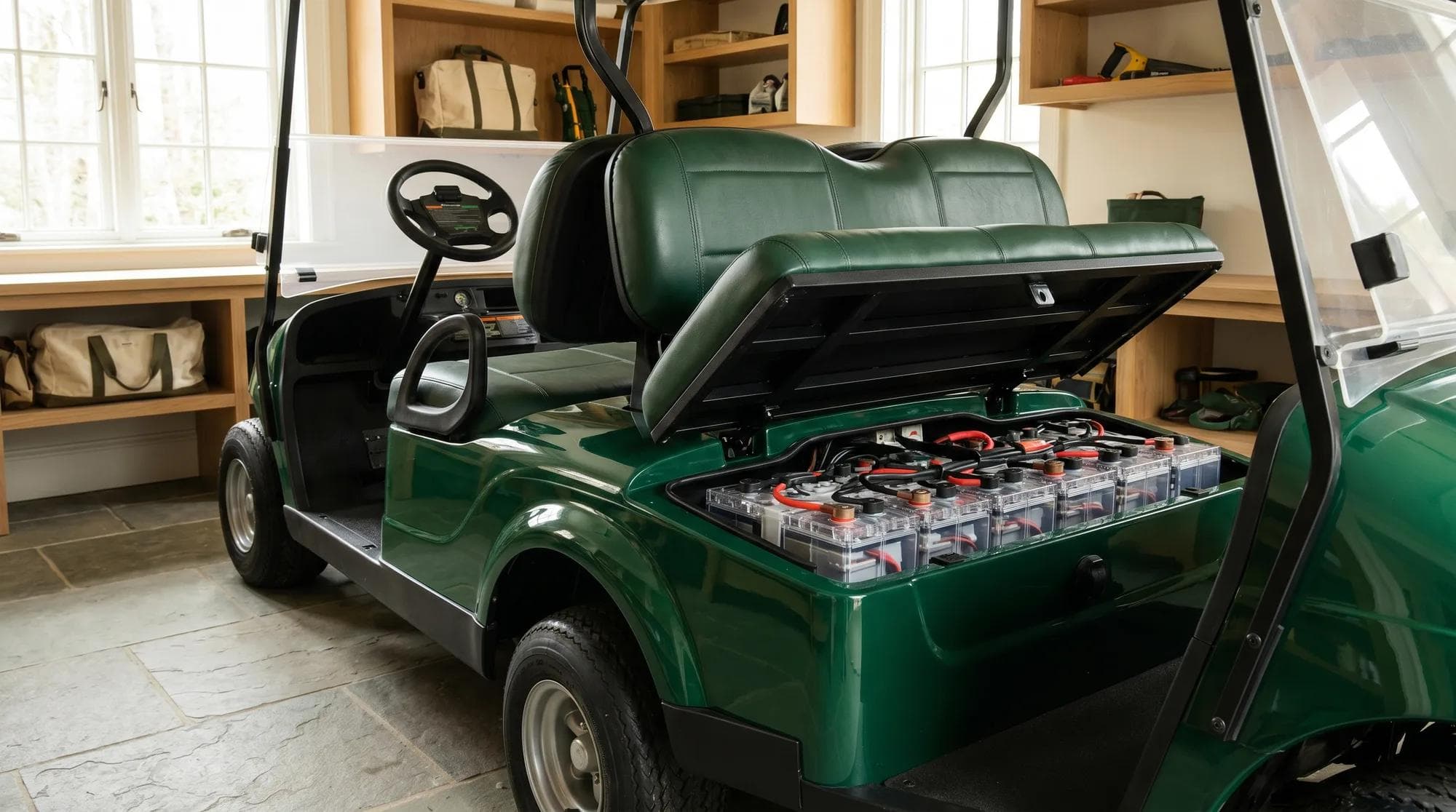
If the buggy is going into storage for the season, the routine differs by chemistry. Charge a lead-acid pack fully before you put it away, then keep it topped up through the winter, because lead-acid loses charge as it sits and hates being left low. A smart or maintenance charger that holds the pack at the right level does this for you and is well worth having. Lithium is more relaxed: leave it at a part charge, somewhere around half to two-thirds, rather than full or empty, and check on it now and again.
Where should you store the buggy?
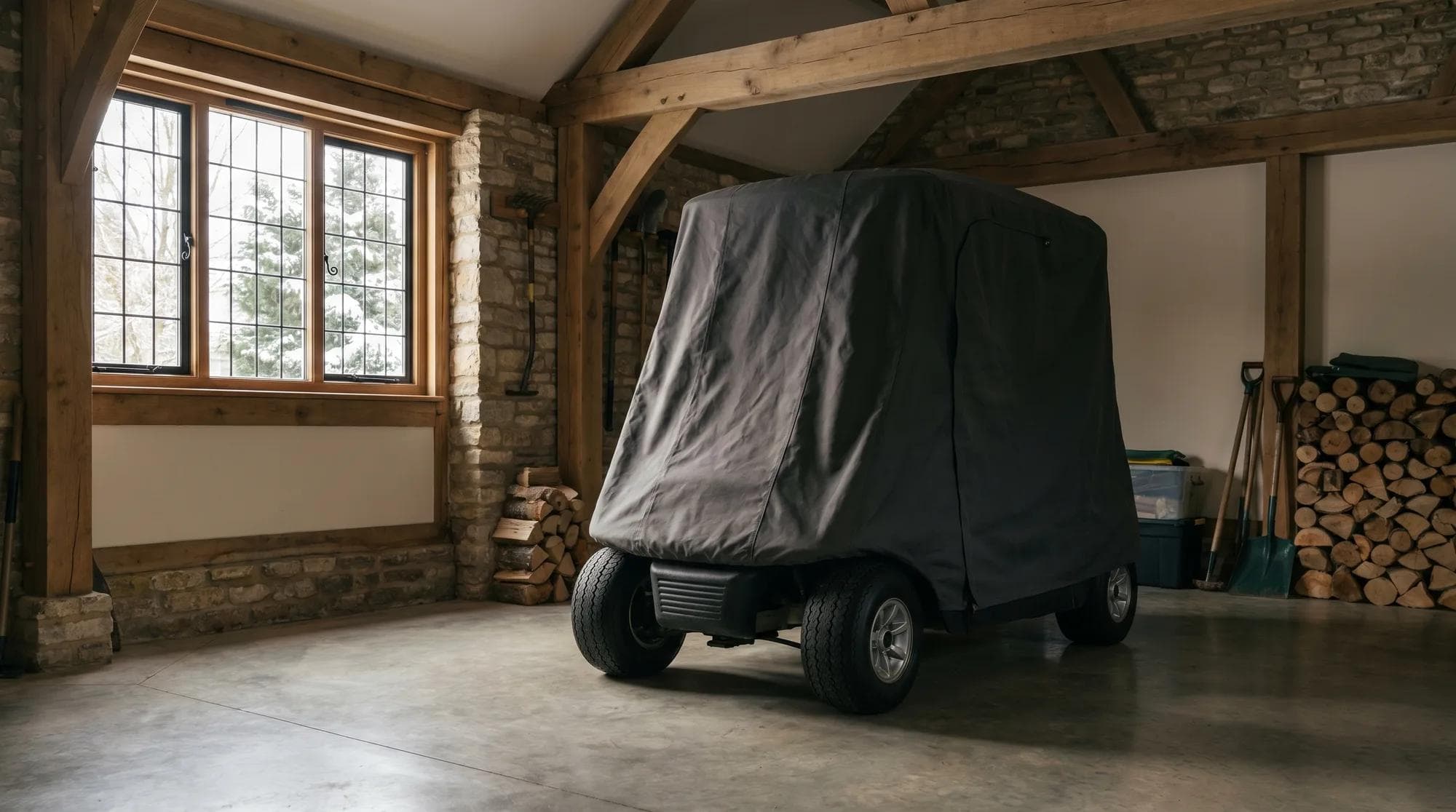
Temperature matters more than people expect. A dry, frost-free space is far kinder to a battery than an exposed or unheated one, and it's the difference between a pack that shrugs off winter and one that comes out tired. A garage or insulated outbuilding is ideal. An open lean-to or a shed that drops below freezing is the worst case, especially for lead-acid. You don't need heat, just shelter from hard frost and damp. While the buggy is parked up, keep it on a battery, and if you're putting it away properly there's more to think about than the pack alone, which we cover in how to store a golf buggy over winter.
A frost-free corner and a charger left plugged in will do more for your battery than any amount of expensive kit.
Winter battery do's and don'ts
If you remember nothing else, remember these. They're simple, free, and they're what separates a battery that lasts its full life from one that fails early.
- Do charge the battery fully before storing lead-acid, and top it up through the winter.
- Do store the buggy somewhere dry and frost-free, a garage or insulated shed rather than an exposed spot.
- Do use a smart or maintenance charger for long lay-ups so the pack is held at the right level.
- Don't leave a battery sitting flat over winter; a discharged lead-acid pack in the cold can be permanently damaged.
- Don't charge a frozen pack; let it warm up first, especially with lithium below freezing.
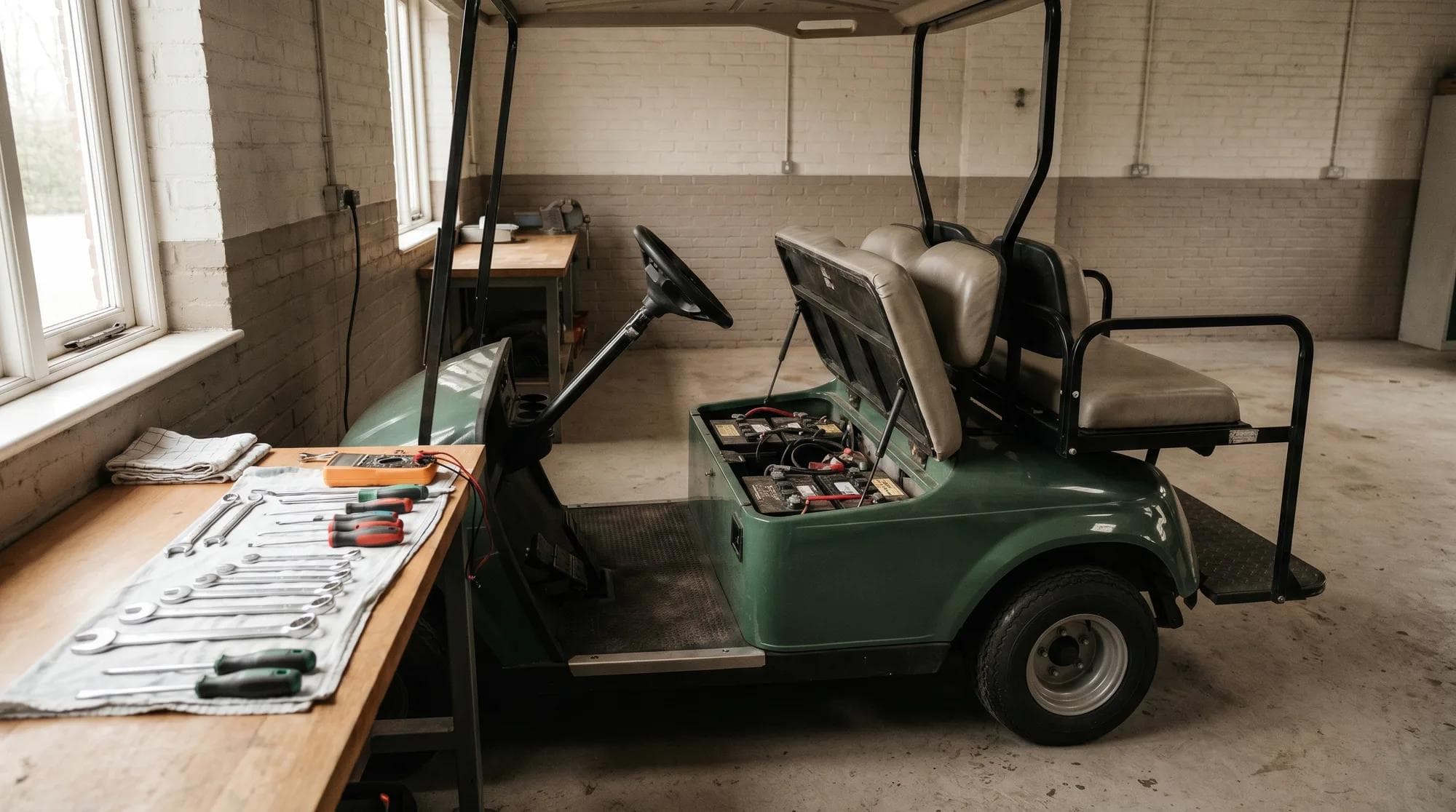
- Don't forget non-sealed lead-acid water levels; check them before the lay-up if your pack isn't sealed.
Does winter care really change battery life?
It changes it a lot, particularly on lead-acid. The battery is the most expensive single part of an electric buggy, and a few bad winters can be the difference between a pack that lasts three years and one that lasts five. Charging habits and storage matter as much as the chemistry itself, which is why winter care is worth getting right. If you'd like the wider view on how long a pack should last and what wears it out, our guide to how long golf buggy batteries last is a useful companion, and our ownership page covers care and support across the year.
Planning ahead for the colder months?
Tell us how and where your buggy works and we'll specify the right battery and charging setup for a UK winter, then confirm it on a tailored quote.
Frequently asked questions
How do I look after a golf buggy battery in winter?+
Charge it before you store it, keep lead-acid topped up through the season, and store the buggy somewhere dry and frost-free. Use a smart or maintenance charger for long lay-ups, leave lithium at a part charge, and never leave a battery sitting flat in the cold.
Should I leave my golf buggy on charge over winter?+
For lead-acid, yes, ideally on a smart or maintenance charger that holds the pack at the right level without overcharging, because it loses charge as it sits. Lithium is happier left at a part charge rather than constantly on, but should still be checked now and again.
Does cold weather affect golf buggy battery range?+
Yes. Cold slows the chemistry inside the battery, so range drops on frosty days, sometimes noticeably. That loss is temporary and recovers as the weather warms. The more serious risk is storage damage from leaving a pack low or flat through a cold winter.
Can you charge a golf buggy battery in freezing temperatures?+
It's best not to charge a frozen pack. Let it warm up to above freezing first. This matters most for lithium, which usually shouldn't be charged below 0°C. Charging in a sheltered, above-freezing space is kinder than charging out in hard frost.
Is lithium or lead-acid better for cold weather?+
Lithium copes with winter better and tolerates partial charges, though range still drops in the cold and most lithium packs shouldn't be charged below freezing. Lead-acid is more sensitive and can be permanently damaged if left flat in the cold. Either way, store it charged and frost-free.
Related solutions
Ready to explore what we build?
See the vehicles and the setting this applies to, or get a tailored quote built around your site.

Ready to find the right buggy?
Tell us how and where it will work and we will specify a vehicle and a tailored quote built around you. Every build comes with a 3-year warranty and a 24-hour priority call-out.
Our guides are written and reviewed by the Hawke Electric Vehicles team, the people who specify, build, deliver and support the vehicles. We focus on honest, practical advice and flag where a figure depends on the build rather than guessing.
More guides by Hawke