A buggy that has lost its top speed is one of the most common complaints we see, and one of the most varied in cause. Sometimes it is the battery quietly ageing. Sometimes it is a brake dragging, a tyre down on pressure, or a motor wearing. And sometimes the buggy was never faster: many ex-fleet machines are deliberately limited, and the 'fault' is a setting doing its job. The right approach is a process of elimination, cheapest and most likely first, and an honest word about the derestriction advice you will find elsewhere online.
- Battery health explains most gradual speed loss: test it before replacing anything else.
- Check tyre pressures and whether the buggy rolls freely; a binding brake steals speed and range.
- Many fleet and hire buggies are deliberately speed-limited by their controller settings.
- Speed settings should only be adjusted within the manufacturer's specification, by an engineer.
- A sudden speed drop is diagnostic gold: note exactly when it happened.
Battery first, always
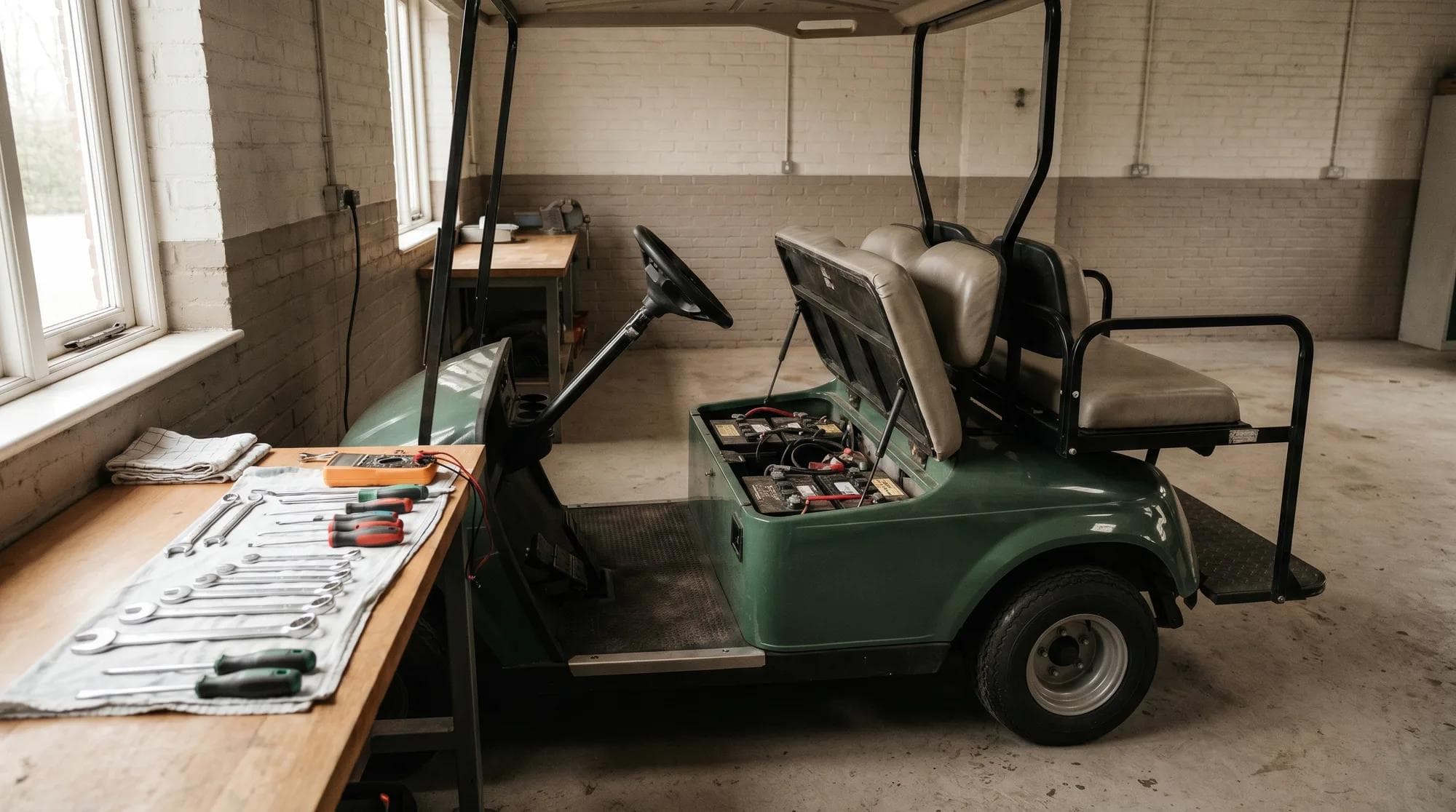
Speed costs power, and power comes from the battery, so battery health is where every slow-buggy diagnosis starts. Charge to full and test on flat ground: a pack that is old or has a weak cell will sag under load, and the controller responds to the sag by delivering less, which you feel as a lower top speed. Gradual decline over months points strongly to the pack, especially on lead-acid sets a few years old. A battery health check is quick and settles the question, and our guide on the signs a battery needs replacing covers what to look for.
The mechanical thieves: brakes and tyres
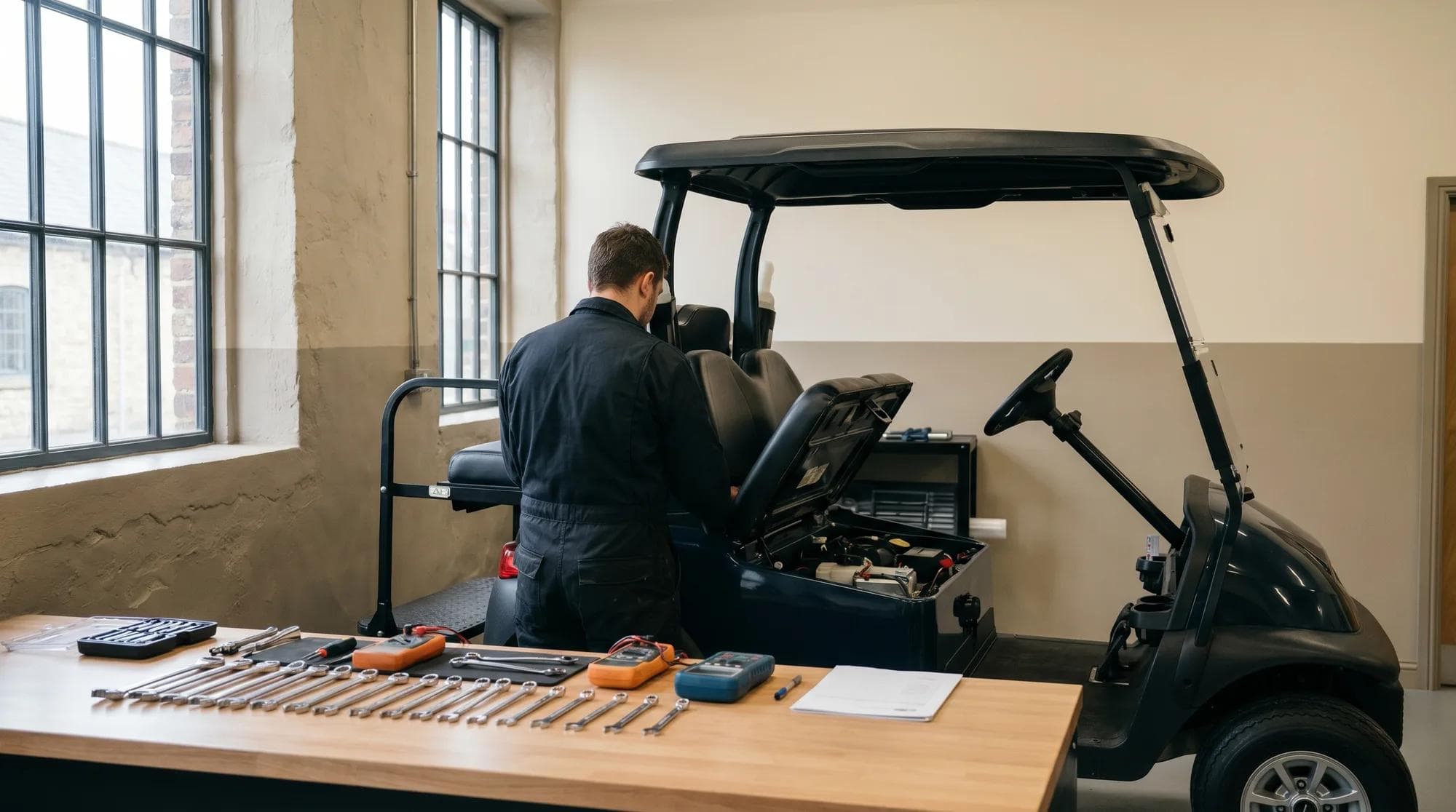
Two mechanical faults quietly steal speed. The first is a binding brake: a brake that is not fully releasing drags all the time, costing speed and range together. With the buggy switched off on flat ground, see whether it pushes freely; a buggy that is hard to roll, or a wheel that is noticeably warm after a gentle drive, suggests a brake dragging, and that is an immediate engineer booking, never a DIY adjustment, because brakes are safety-critical. The second is tyre pressure: soft tyres add rolling resistance everywhere and shave the top end. Setting pressures to the figure on the tyre wall is the easiest free speed you will ever get. Worn motor brushes or bearings on older machines also sap performance, usually with a change in sound as a clue.
Speed limiters and the honest word on derestriction
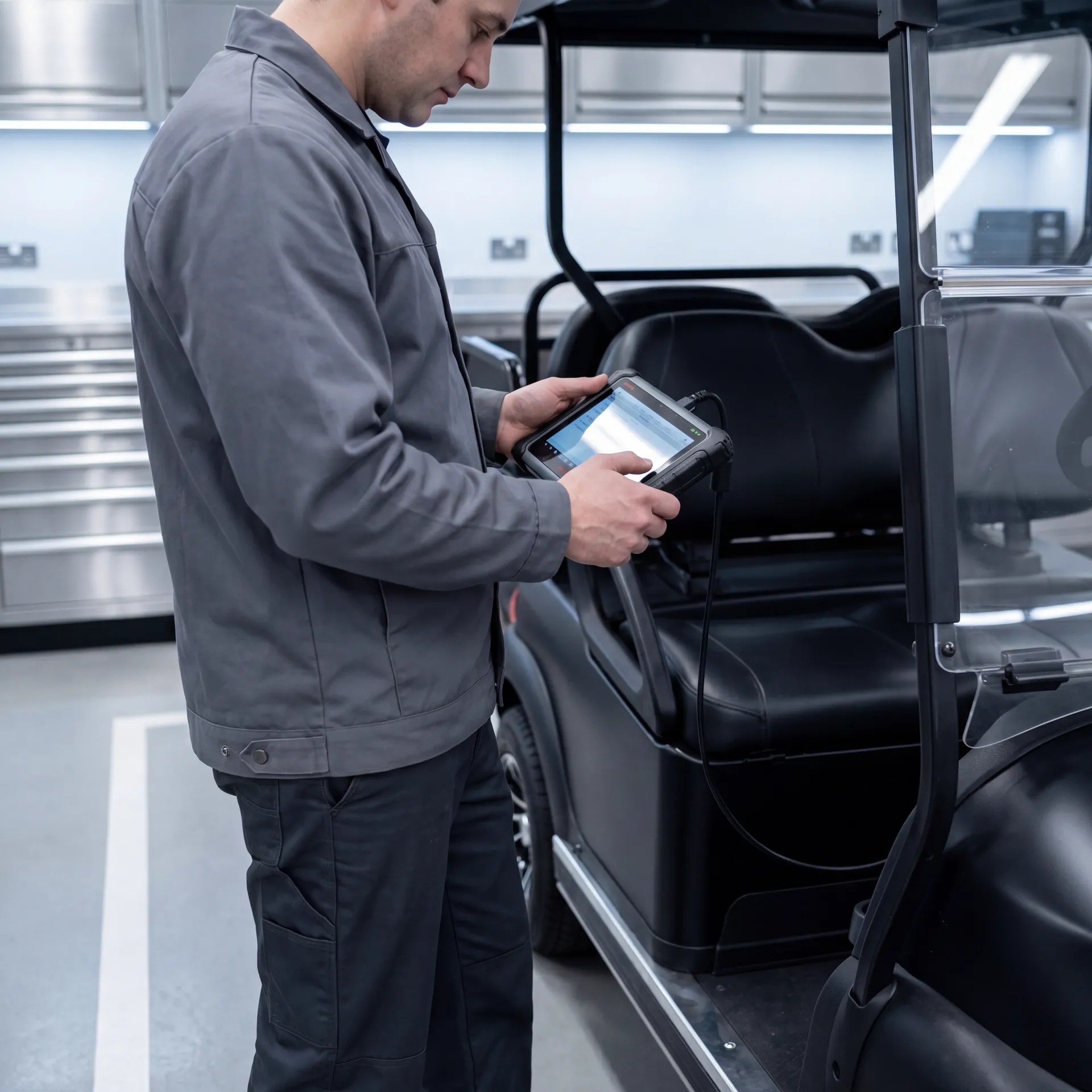
Many buggies, particularly ex-golf-course and ex-hire machines, are deliberately limited by their controller settings, because a mixed fleet on a busy site needs predictable, matched speeds. If your buggy has always had the same modest top speed, it may simply be set that way rather than faulty. Here is our honest position on the 'derestriction' guides you will find online: we do not publish how-to instructions for raising a buggy's speed, and we advise against following anyone else's. Speed settings interact with braking distances, tyre ratings and stability, and a buggy pushed beyond its design speed stops and corners worse than its brakes and chassis were specified for. Where a buggy is legitimately set below its manufacturer's specification, a competent engineer can adjust it back within that specification, test it, and document it. That is the only version of 'making it faster' we will do.
Frequently asked questions
Why has my golf buggy lost its top speed?+
Gradual loss usually means battery ageing; test its health first. Also check tyre pressures and whether the buggy rolls freely, since a binding brake drags speed down. Sudden loss, or a buggy that has always been slow, may be a specific fault or a deliberate speed limit in the controller.
Can my golf buggy be derestricted to go faster?+
We advise against derestriction, and we do not provide instructions for it. Speed settings are tied to the buggy's brakes, tyres and stability. If your buggy is set below the manufacturer's specification, an engineer can legitimately adjust it back within that spec, and no further.
How do I tell if a brake is binding?+
On flat ground with the buggy off, see if it pushes freely. Difficulty rolling, a wheel warm after gentle driving, or a faint drag or smell all point to a binding brake. Stop using the buggy and book an engineer: brake work should never be DIY.
Do all buggies slow down as batteries age?+
To a degree, yes. As a pack ages its voltage sags more under load, and the controller delivers less power, which shows as reduced speed and hill performance before the buggy stops working altogether. A health check tells you how much life is left.
Get the speed checked properly
We test battery health, brakes and settings, and put the buggy back to its correct specification. Join a service plan or call us to book an engineer.
Related solutions
Ready to explore what we build?
See the vehicles and the setting this applies to, or get a tailored quote built around your site.

Ready to find the right buggy?
Tell us how and where it will work and we will specify a vehicle and a tailored quote built around you. Every build comes with a 3-year warranty and a 24-hour priority call-out.
Our guides are written and reviewed by the Hawke Electric Vehicles team, the people who specify, build, deliver and support the vehicles. We focus on honest, practical advice and flag where a figure depends on the build rather than guessing.
More guides by Hawke