A battery rarely dies overnight. It warns you first, usually for weeks or months before it leaves you stranded. The trick is knowing which signs to take seriously and which are just a flat charge or a cold morning. This guide runs through the warning signs that a golf buggy battery replacement is coming, what differs between lead-acid and lithium, and the honest UK cost picture, so you can plan ahead rather than react in a hurry.
What does a failing golf buggy battery look like?
Range is the honest tell. If your buggy used to manage a full day's work and now runs short by mid-afternoon, the pack is ageing. That single change tells you more than any meter on the dash. The rest of the signs back it up: the buggy feels sluggish on hills or under load, the charge drains faster than it used to, and charging itself takes longer or doesn't quite reach full. None of these is dramatic on its own. Together they're a pattern, and the pattern points one way.
- Shorter range. The big one. A full charge no longer does what it did six months ago.
- Slow or incomplete charging. It takes longer to charge, or never seems to top right up.
- Sluggish on hills and under load. The buggy struggles where it used to pull cleanly.
- Fast self-drain. It loses charge sitting idle, not just in use.
- Swelling, leaks or corrosion (lead-acid). Bulging cases, white crust on the terminals or any leak are clear physical warnings.
- Age. A lead-acid pack past three to five years, or a lithium pack near eight to ten, is on borrowed time even if it still runs.

How range tells you the most
Of all the signs, falling range is the one to trust. A battery's job is to store energy, and as it wears it simply stores less. So the distance a full charge covers is the cleanest measure of its health. Watch for a steady decline rather than a one-off bad day, since cold weather and a heavy load both cut range temporarily without meaning the pack is finished. If you're not sure what your buggy should manage in the first place, our guide to electric golf buggy range in the UK sets out what's normal, and our piece on how long golf buggy batteries last explains the lifespans behind the decline.
When a full charge no longer does the day it used to, the battery is ageing, whatever the dash meter says.
Lead-acid and lithium fail differently
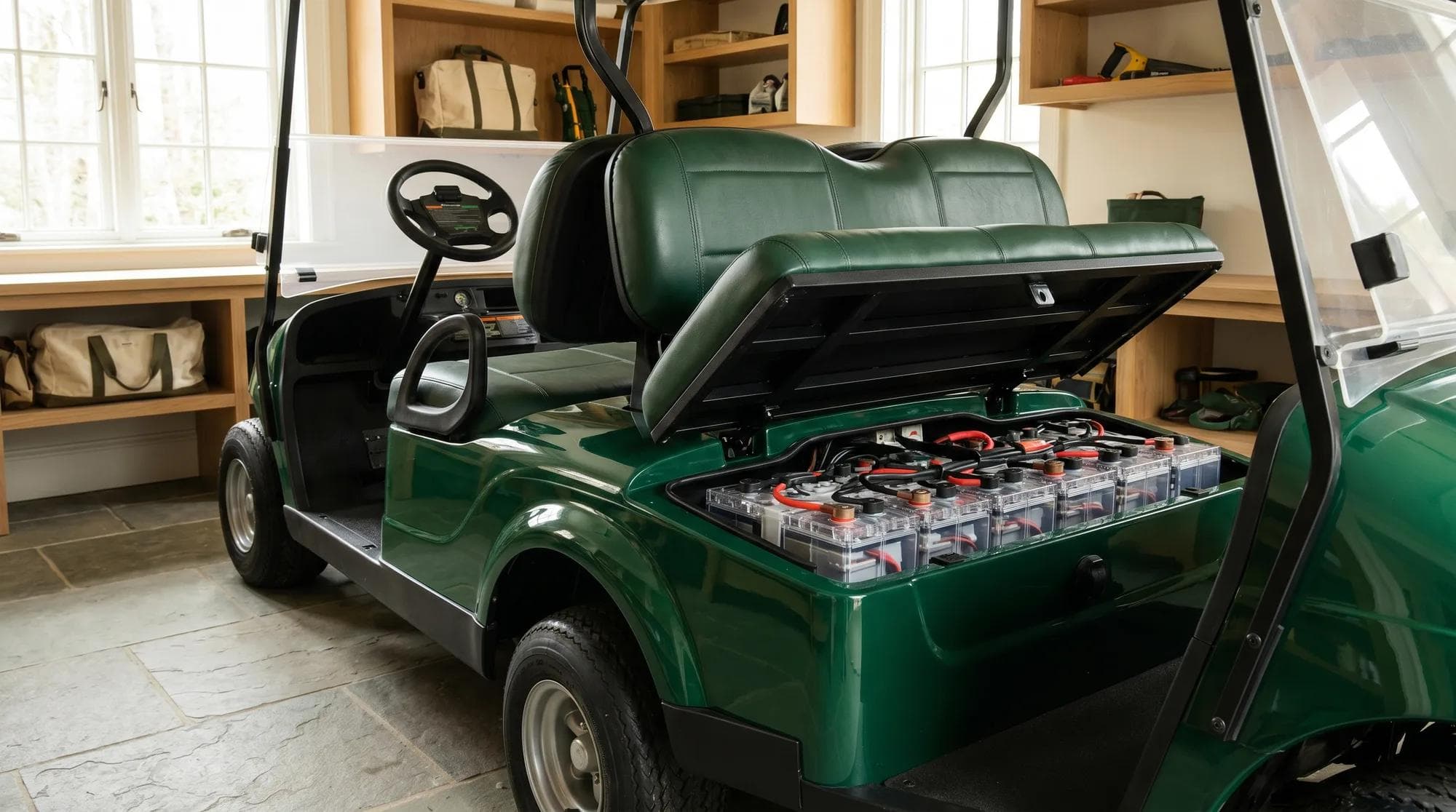
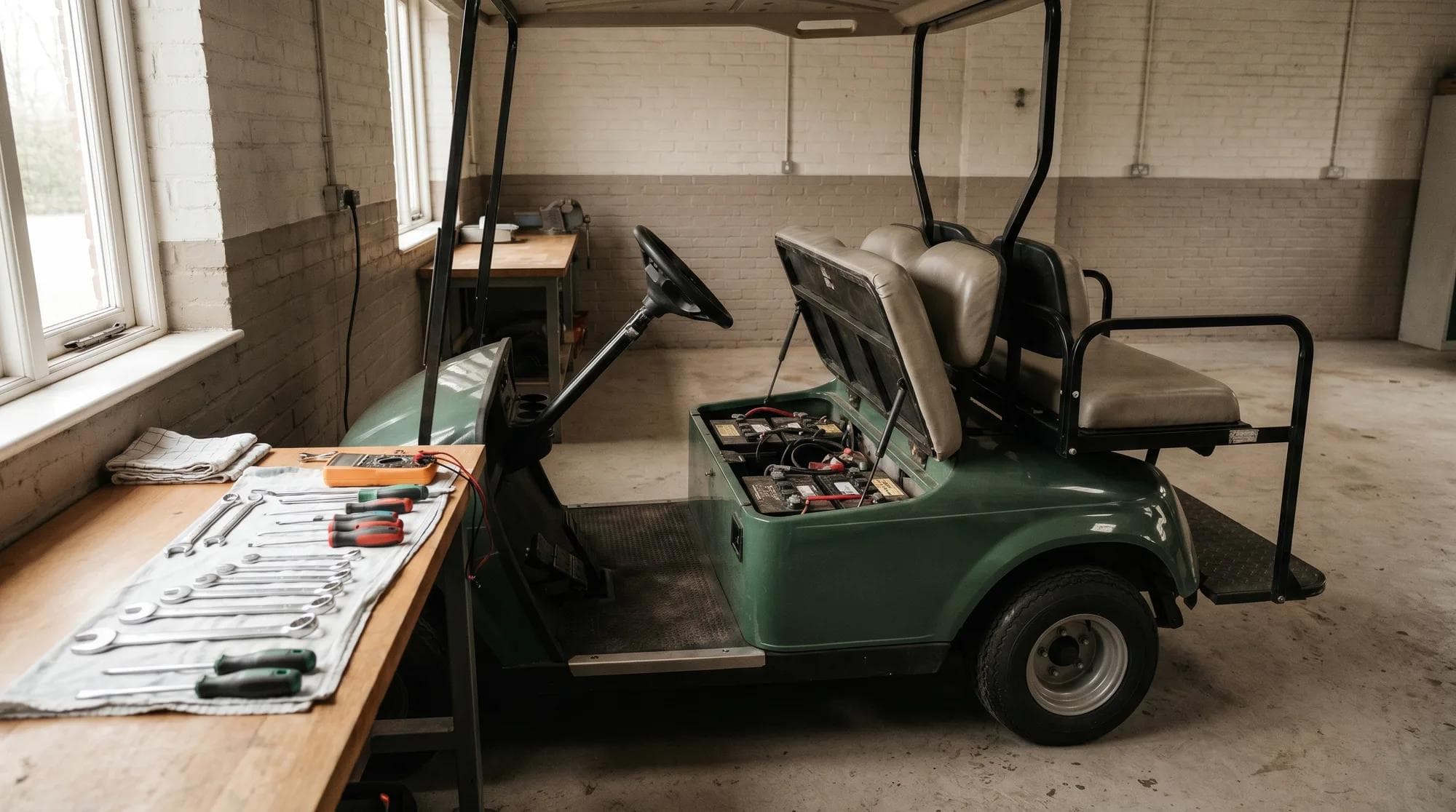
The chemistry changes how the warning signs show up, so it's worth knowing which pack you're running. Lead-acid tends to decline gradually over a season, with range tailing off and charging slowing, and it gives you visible physical clues: swelling, corrosion on the terminals, leaks, or low water on non-sealed packs. Lithium behaves differently. It holds its range well for years, then tails off nearer the end of its life, with far fewer physical signs to spot. That means a lithium pack can feel fine right up until it doesn't, so age and a sudden range drop matter more there.
- Lead-acid
- A few years, around 3 to 5
- Lithium
- Far longer, roughly 8 to 10 years
- Lead-acid
- Gradual range drop, slow charging, sluggish on hills
- Lithium
- Holds range, then tails off near the end
- Lead-acid
- Swelling, corrosion, leaks, low water
- Lithium
- Few visible signs; watch age and range
- Lead-acid
- Lower per pack, but replaced more often
- Lithium
- Higher up front, replaced far less often
- Lead-acid
- Several replacements likely
- Lithium
- Often one pack for the life of the buggy
| Lead-acid | Lithium | |
|---|---|---|
| Typical service life | A few years, around 3 to 5 | Far longer, roughly 8 to 10 years |
| How it warns you | Gradual range drop, slow charging, sluggish on hills | Holds range, then tails off near the end |
| Physical signs | Swelling, corrosion, leaks, low water | Few visible signs; watch age and range |
| Replacement cost | Lower per pack, but replaced more often | Higher up front, replaced far less often |
| Ten-year picture | Several replacements likely | Often one pack for the life of the buggy |
If you're weighing a like-for-like lead-acid replacement against switching to lithium, that's a real decision worth taking seriously. Lithium costs more to fit but usually saves money across the years you'd otherwise spend replacing lead-acid packs. Our lithium versus lead-acid guide lays the two side by side on range, life and cost so you can judge it for your use.
What does a golf buggy battery replacement cost?
Here's the honest part: the battery is the most expensive single component on an electric buggy, and a full replacement can run into four figures. We won't quote you a precise number here, because the real figure depends on the buggy, the pack size, the chemistry you choose and whether you stick with lead-acid or move to lithium. A small lead-acid swap and a large lithium upgrade sit a long way apart. The point to take away is simply this: it's a meaningful spend, so it's worth planning for rather than being caught out by. We confirm the actual cost on a quote once we know your vehicle.
Replace the battery or the buggy?
Sometimes a fresh pack is the obvious call, and sometimes it's a prompt to think bigger. If the buggy is sound, well looked after and suits your use, a new battery gives it years more life for a fraction of a new vehicle. But if the buggy is old, tired in other ways, or no longer the right size for what you're doing, a four-figure battery spend on top of that is worth a second look. This is the same maths that catches people out when buying used: a cheap buggy plus a battery you'll soon replace can land near the price of something better. Our guides to buying a used electric golf buggy and the wider electric golf buggy range help you weigh it up.
How we can help
If you've spotted the signs, the next step is a proper check rather than a guess. Tell us your buggy and what it's doing, and we'll advise whether a replacement is due, which chemistry makes sense for your use, and what it'll cost, confirmed on a quote. A planned service plan keeps batteries charging correctly and catches decline early, which is the cheapest way to get the most from any pack. And if the sums point to a new vehicle instead, we'll specify one around you, built to order with a 3-year warranty and a 24-hour VIP call-out.
Think your battery's on its way out?
Tell us your buggy and how you use it, and we'll advise whether a replacement is due, which battery suits you, and confirm the cost on a tailored quote.
Frequently asked questions
How do I know if my golf buggy battery needs replacing?+
Range is the clearest sign: if a full charge no longer lasts as long as it used to, the pack is ageing. Slow or incomplete charging, sluggishness on hills, and a faster-draining charge are other tells. On lead-acid, swelling, corrosion or leaks are clear physical warnings. Age matters too: lead-acid past three to five years, or lithium near eight to ten.
How much does it cost to replace a golf buggy battery?+
It's the most expensive single part on the buggy and a replacement can run into four figures. The exact cost depends on the vehicle, the pack size and whether you stay on lead-acid or switch to lithium, so we confirm it on a quote rather than give a headline number that won't match your buggy.
Can you replace a lead-acid battery with lithium?+
In many cases yes, and it's worth considering. Lithium costs more to fit but lasts far longer, charges faster, weighs less and needs almost no maintenance, so it usually lowers cost across the years you'd otherwise spend replacing lead-acid. Tell us your buggy and we'll confirm whether a lithium conversion suits it.
Why won't my golf buggy battery hold a charge?+
A pack that no longer holds charge is usually worn out, especially if it's a lead-acid battery past a few years old or one that's been deep-discharged or left flat over winter. Slow charging and fast self-drain point the same way. Have it checked before it strands you, since once range has clearly dropped a replacement is normally due.
Is it worth replacing a golf buggy battery or buying a new buggy?+
If the buggy is sound and suits your use, a fresh battery gives it years more life for far less than a new vehicle. If it's old, tired elsewhere, or no longer the right size, a four-figure battery spend on top is worth a second look. We're happy to help you weigh a replacement against a new, specified build.
Related solutions
Ready to explore what we build?
See the vehicles and the setting this applies to, or get a tailored quote built around your site.

Ready to find the right buggy?
Tell us how and where it will work and we will specify a vehicle and a tailored quote built around you. Every build comes with a 3-year warranty and a 24-hour priority call-out.
Our guides are written and reviewed by the Hawke Electric Vehicles team, the people who specify, build, deliver and support the vehicles. We focus on honest, practical advice and flag where a figure depends on the build rather than guessing.
More guides by Hawke