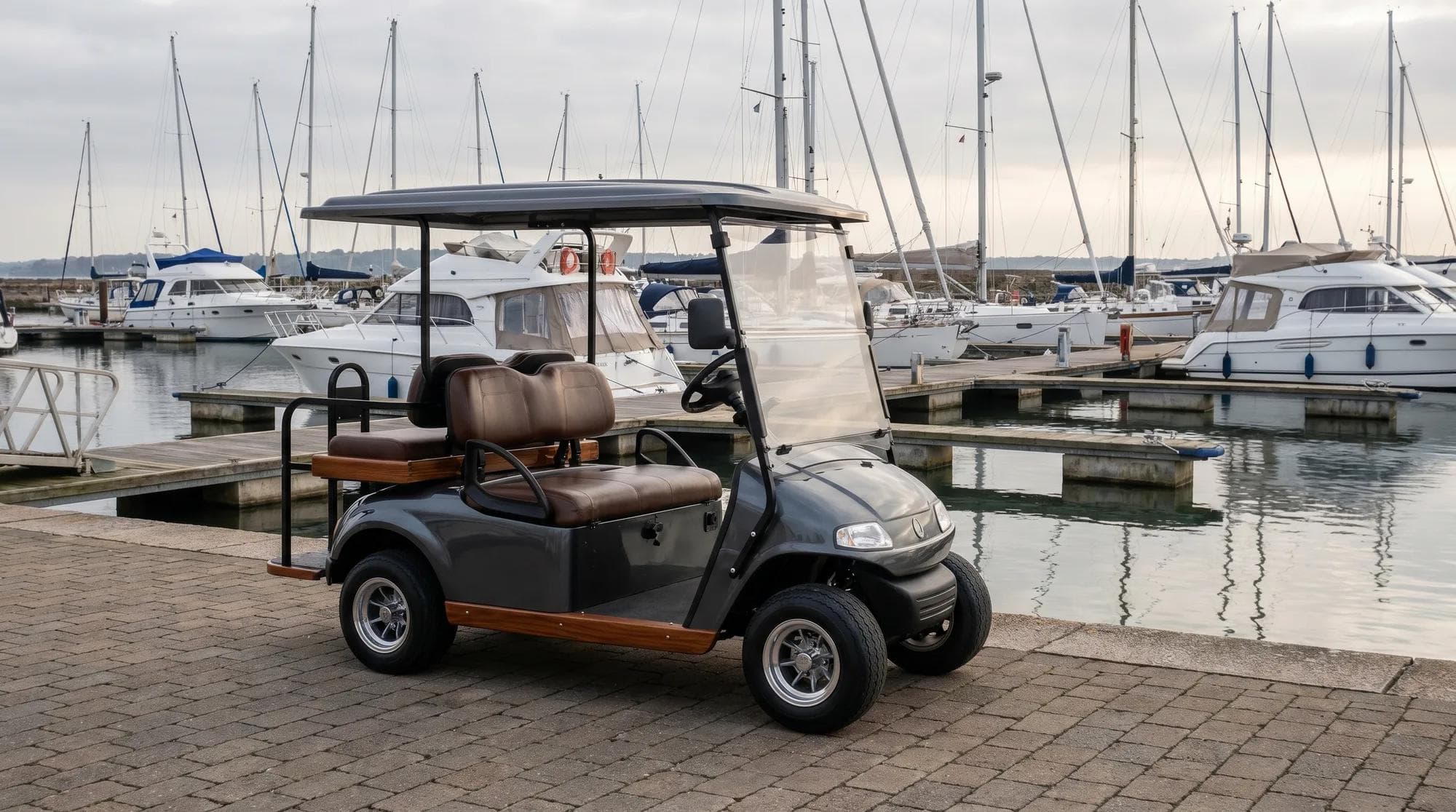
A marina sells a feeling as much as a berth. Owners pay for somewhere calm and well-kept to leave a boat they care about, and guests notice the polish from the moment they arrive. That's the case for a marina buggy in a sentence: it does the heavy lifting along long pontoons and quaysides quietly, cleanly, and without spoiling the waterfront calm people came for. This guide covers how marinas and ports actually use them, from moving owners and kit to handling salt air, accessibility and branding.
Why a marina buggy makes sense on the waterfront
Marinas are long and thin by nature. A berth can sit hundreds of metres from the car park or the office, and an owner arriving for a weekend often has bags, food, fuel cans, sails or a cooler box to get aboard. Walking it takes several trips. A buggy turns that into one easy run along the quay, and an electric one does it without engine noise carrying across the water or fumes drifting over people on deck, which on a waterfront matters more than it might almost anywhere else.
On a waterfront where calm is the product, a near-silent buggy isn't a luxury. It's part of the experience you're selling.
There's a practical side too. No petrol to store near boats and fuel pontoons, less to service, and lower running costs across a long season. For a working fleet that's out most days through the summer, those savings add up quietly.
Moving owners, guests and kit along the pontoons
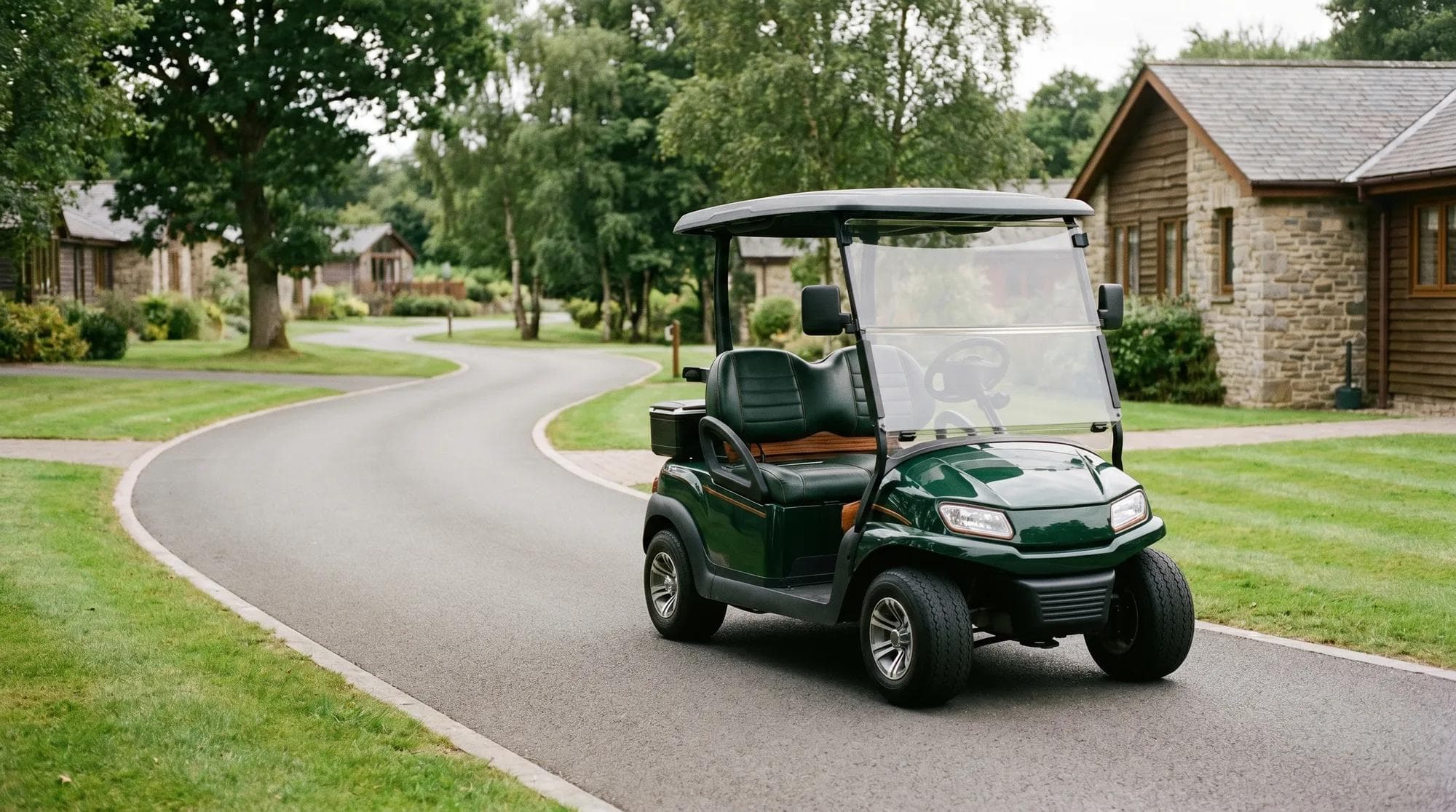
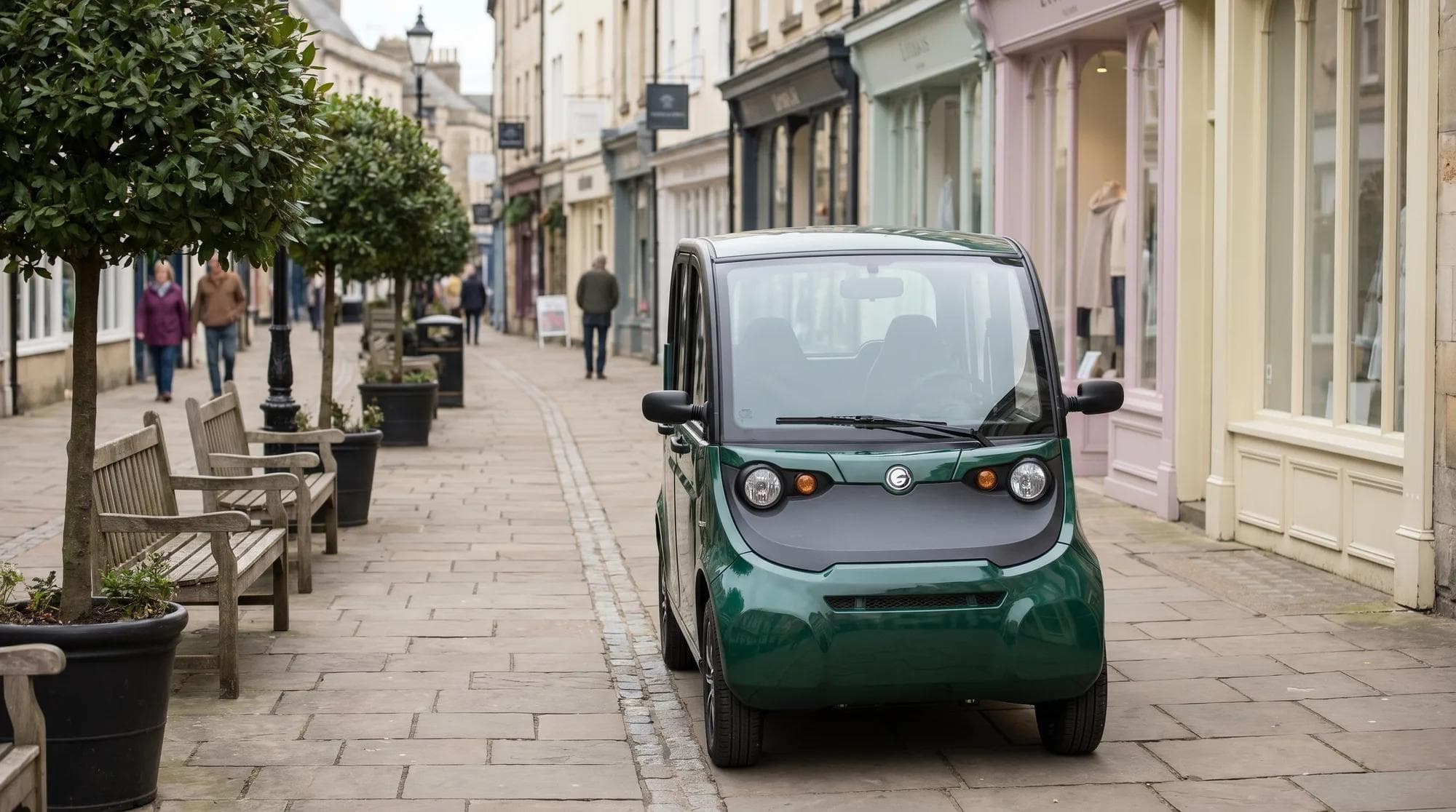
Most marinas run two jobs from the same fleet: looking after berth holders and keeping the site working. Owner runs are about an effortless arrival, the lift from the car park to the berth with a weekend's worth of kit aboard, the help carrying provisions or a heavy outboard down the quay. Staff runs are the backbone: dock crew moving tools and lines, the office ferrying parcels, contractors getting gear to a boat for a refit. A four seater (the Hawke S4) covers most owner and guest work, while a utility model (the Hawke S2 Pickup) earns its keep carrying kit and towing trolleys along the quayside.

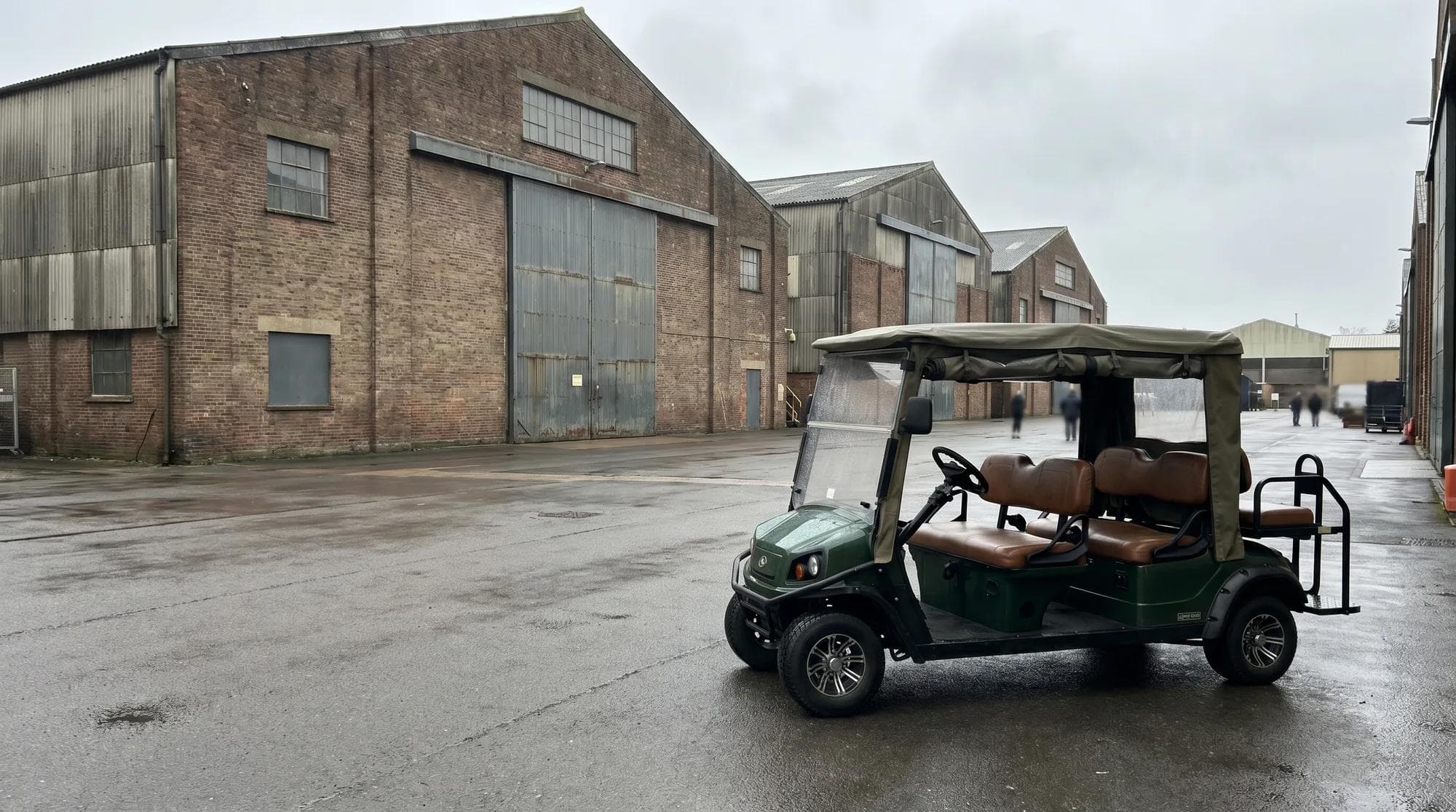
If you're moving larger groups, running a regular loop to the far berths, or shuttling crews on a busy regatta day, a six or eight seater works more like a small shuttle. We cover that use in our electric people movers and shuttles guide, worth a read if owner and guest transport is the main driver for your fleet.
A build that copes with salt air
Salt is the obvious consideration on the water, and it's a fair one. Spray and damp coastal air are harder on any vehicle than a sheltered inland site, so corrosion resistance is something to specify rather than hope for. Because every buggy is built to order, this is a bespoke conversation: protected fittings, suitable finishes and components chosen with the marine setting in mind. Tell us how exposed the quay is and we'll build it to suit.
Accessibility along a long quay
This is one of the quieter wins. A long pontoon is a real barrier for anyone who can't manage the walk, whether that's an older berth holder, a guest with limited mobility, or simply someone with an awkward load. A buggy that collects them from the gate and runs them to the boat changes the whole visit, and it's the kind of small kindness that keeps a berth holder renewing year after year.
Because the vehicle is built to order, the seating can be specified for the job. Seat layout, grab handles, step height and easy-access entry can all be designed in rather than worked around later, which makes a real difference for less-mobile owners and guests.
A branded fleet that looks the part
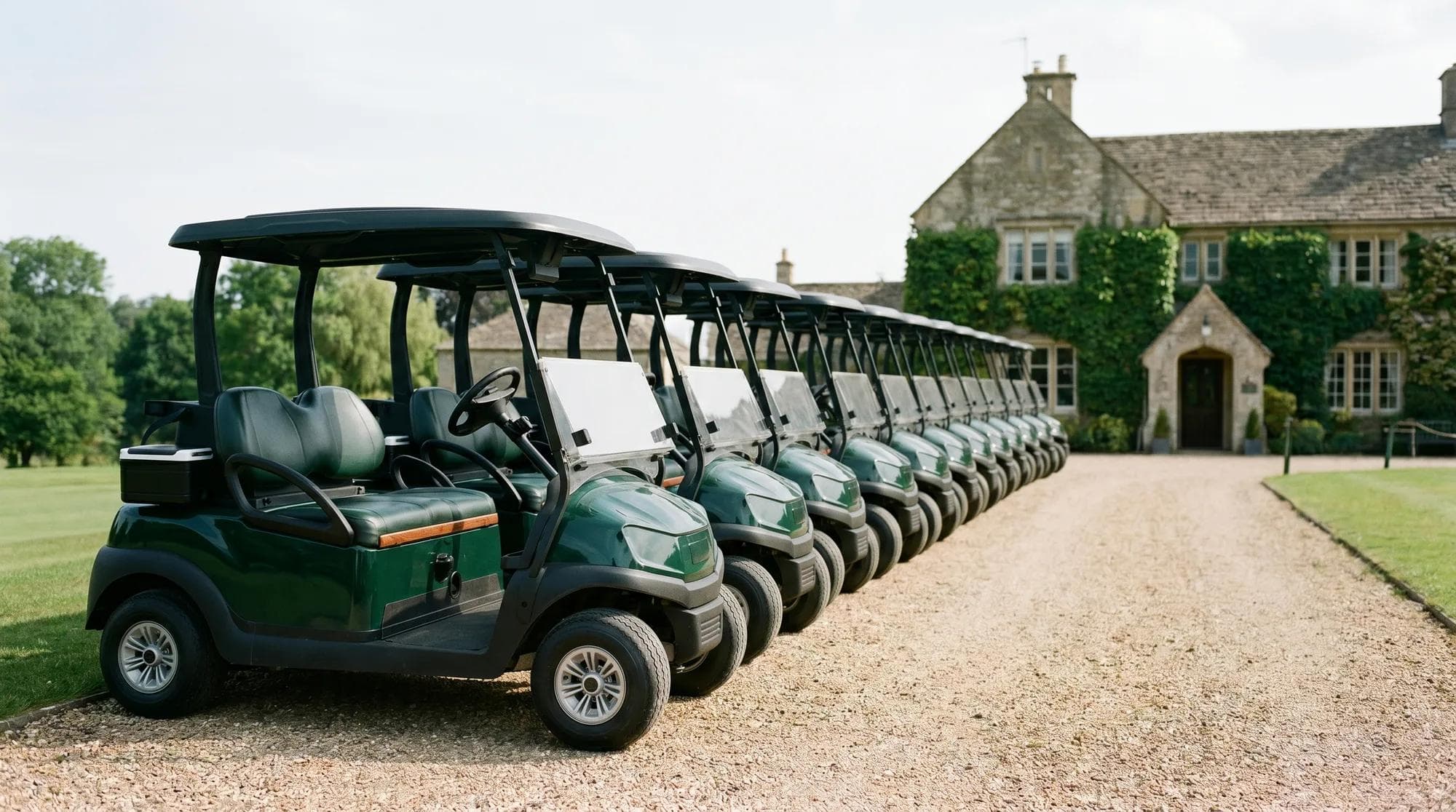
A buggy is one of the most visible things on a waterfront. It's out on the quay all day, it passes every berth, and visitors clock it without thinking. So it may as well work for the marina. Custom fleet branding puts your colours, logo and livery on every vehicle, which looks smart and quietly reassures owners that the crew running past actually work there. A matched fleet lifts the whole premium feel of a marina.
Because every vehicle is built to order, branding is specified from the start rather than stickered on later. Our guide to custom fleet branding walks through what's possible, from a simple logo to a fully wrapped, on-brand fleet that matches the rest of your waterfront.
What a marina fleet costs
Pricing depends on the size and number of vehicles, plus battery, weather protection and any corrosion-resistant or bespoke work. As a starting point, here's how the range lines up for waterfront use.
- Best for on a marina
- A single dock hand, quick quay runs
- Best for on a marina
- The all-rounder for owners and guests
- Best for on a marina
- Kit, provisions, outboards and towing
- Best for on a marina
- Group runs and busy regatta days
- Best for on a marina
- A waterfront shuttle loop
- Best for on a marina
- Marine-spec and anything you can specify
| Best for on a marina | |
|---|---|
| Two seater (the Hawke S2) | A single dock hand, quick quay runs |
| Four seater (the Hawke S4) | The all-rounder for owners and guests |
| Utility (the Hawke S2 Pickup) | Kit, provisions, outboards and towing |
| Six seater (the Hawke S6) | Group runs and busy regatta days |
| Eight seater (the Hawke S8) | A waterfront shuttle loop |
| Bespoke | Marine-spec and anything you can specify |
Most marinas run a mix rather than one type: a couple of four seaters for owners and guests, a utility for the dock crew, and a larger shuttle if the site's long enough to need it. You can compare every model on our range page.
Charging an electric fleet on the waterfront
Charging is simpler than most operators expect. A buggy plugs into a standard supply and charges overnight, so the fleet is ready each morning, just without the fuel. The practical step is deciding where they sleep: a dry store, a back-of-house bay or a secure compound away from the spray, with enough sockets for the fleet. Set that up once and daily charging becomes a habit nobody thinks about.
Servicing, warranty and staying on the quay
An electric buggy has little to service, no oil, no filters, no spark plugs, no exhaust, which is part of why it suits a marina that can't spare downtime in high season. When something does need attention, every build comes with a 3-year warranty and a 24-hour VIP call-out, so a vehicle needed on a busy summer Saturday isn't stuck waiting days for help. The fewer parts there are to fail, the more dependable a guest-facing fleet is. It's worth pairing that with a sensible cleaning routine on the water: a rinse-down after spray, kept up across the season, helps any marine-spec build last.
How to set up a fleet for your marina
Start with how the site runs in a busy week: how many owners and guests you'll move, what the dock crew carries, the length of your pontoons, how exposed they are to salt air, and whether accessibility or a shuttle loop is part of the picture. Tell us that and we'll specify the right mix of vehicles, branded in your colours and built for the marine setting, with the batteries and weather protection to match a full season. Every buggy is built to order, delivered and commissioned, in the UK or worldwide. To see how this compares with our work for hospitality, the resorts and hotels sector page covers similar guest-facing fleets.
Plan a buggy fleet for your marina
Tell us how your waterfront runs, how many owners and guests you move and what you carry, and we'll specify a branded, marine-ready fleet with a tailored quote built around your marina.
Frequently asked questions
Why use an electric buggy at a marina?+
It moves owners, guests, staff and kit along long pontoons and quaysides without the noise, fumes or petrol storage that suit a waterfront badly. It's quiet enough for early starts, clean enough for guest-facing work, and reliable through a busy season. On a marina where calm is part of the appeal, that quiet matters.
Can a marina buggy handle salt air and spray?+
Yes, but it should be specified for it. Because every buggy is built to order, corrosion-resistant fittings, suitable finishes and marine-minded components can be designed in from the start. Tell us how exposed your pontoons and quaysides are at enquiry and we'll build the vehicle to suit, then a regular rinse-down helps it last.
Can a marina buggy help less-mobile owners and guests?+
Yes, and it's one of the most appreciated uses. A long pontoon is a real barrier for anyone who can't manage the walk, so a buggy that collects them from the gate and runs them to the boat changes the whole visit. Seat layout, grab handles and easy entry can be specified on a build-to-order vehicle.
Can I have the buggies in my marina's branding?+
Yes. Because every vehicle is built to order, custom fleet branding is specified from the start: your colours, logo and livery on a matched fleet. A buggy is one of the most visible things on a waterfront, so on-brand vehicles look professional and reassure owners that the crew using them work there.
How many buggies does a marina need?+
It depends on the length of the site and how you use them. Many marinas run a mix: a couple of four seaters for owners and guests, a utility for the dock crew, and a larger shuttle if the site is long enough. Tell us how your marina runs and we'll specify the right fleet.
How do you charge a fleet of marina buggies?+
Each buggy plugs into a standard supply and charges overnight, so the fleet is ready every morning. The main step is setting up a dry store or back-of-house bay away from the spray, with enough sockets for the fleet. For vehicles out most days, lithium batteries charge faster and last longer, which suits a busy waterfront.

Ready to find the right buggy?
Tell us how and where it will work and we will specify a vehicle and a tailored quote built around you. Every build comes with a 3-year warranty and a 24-hour priority call-out.
Our guides are written and reviewed by the Hawke Electric Vehicles team, the people who specify, build, deliver and support the vehicles. We focus on honest, practical advice and flag where a figure depends on the build rather than guessing.
More guides by Hawke