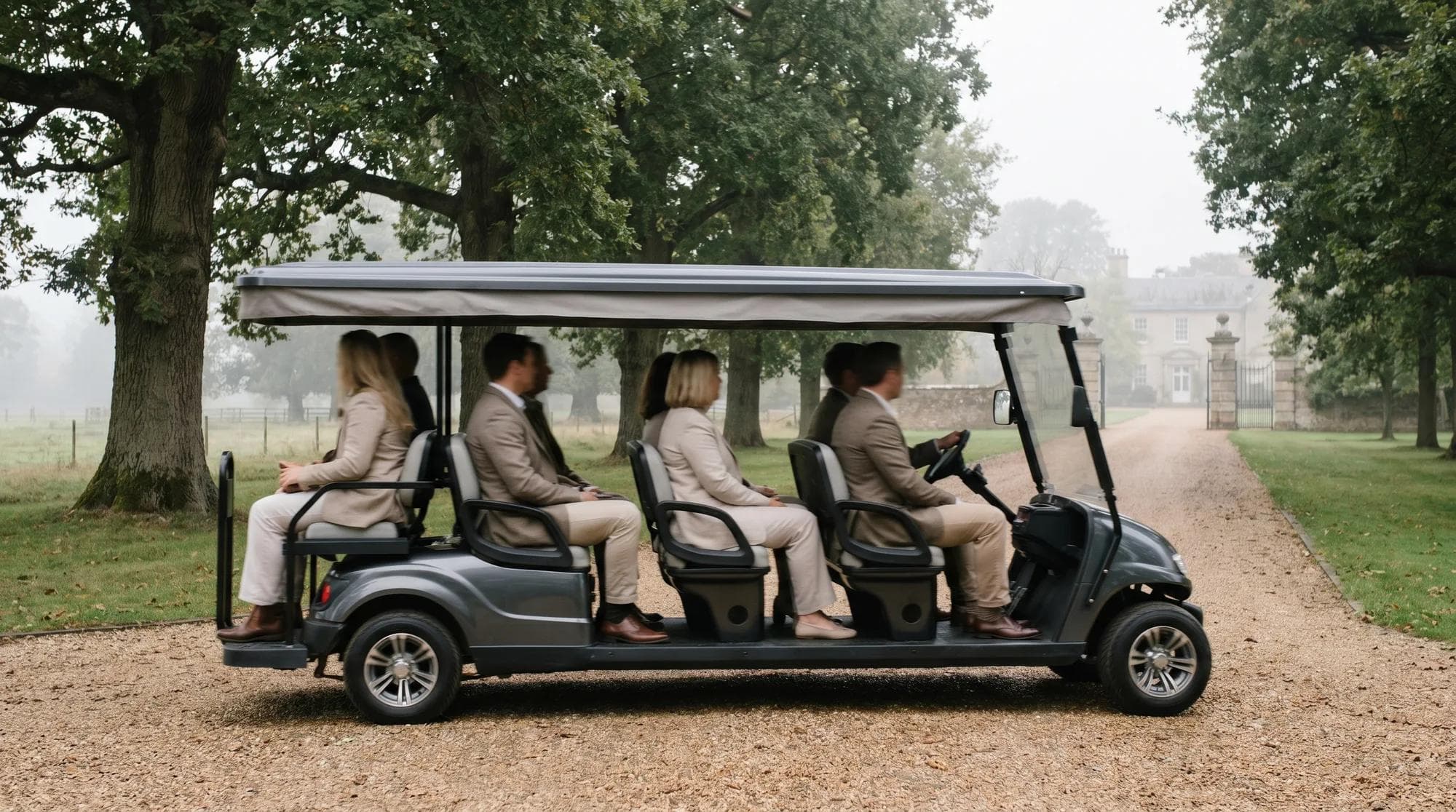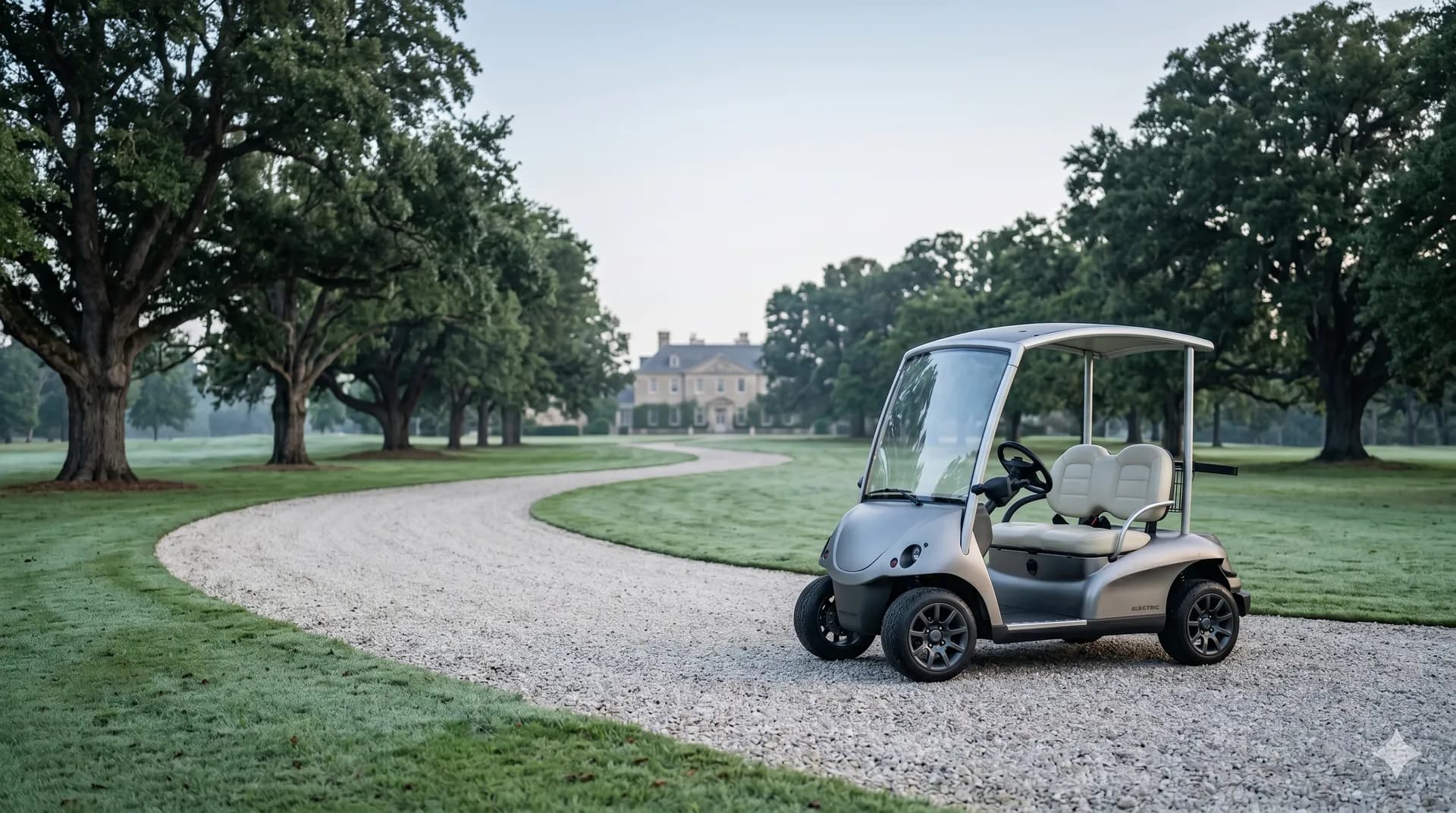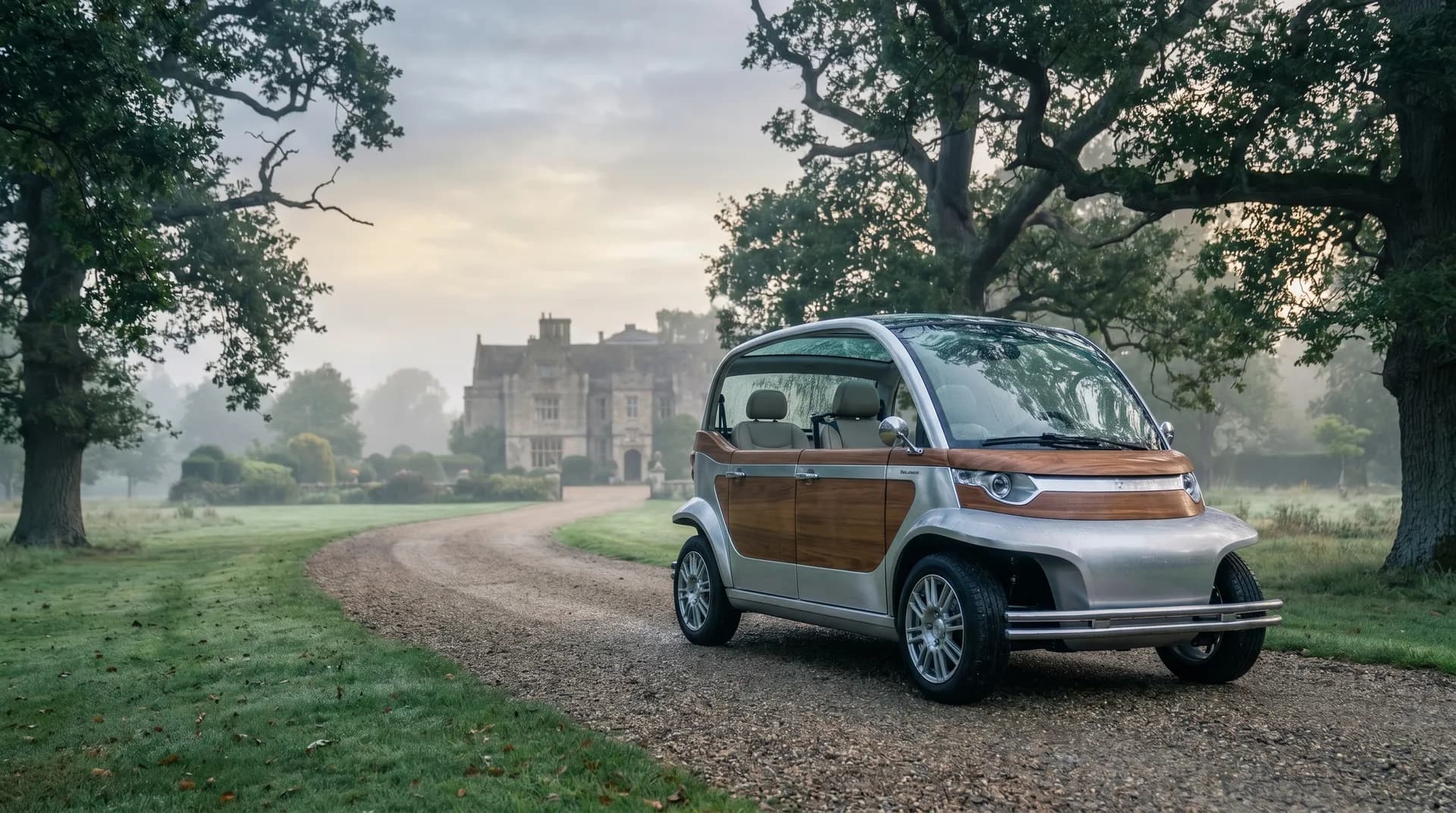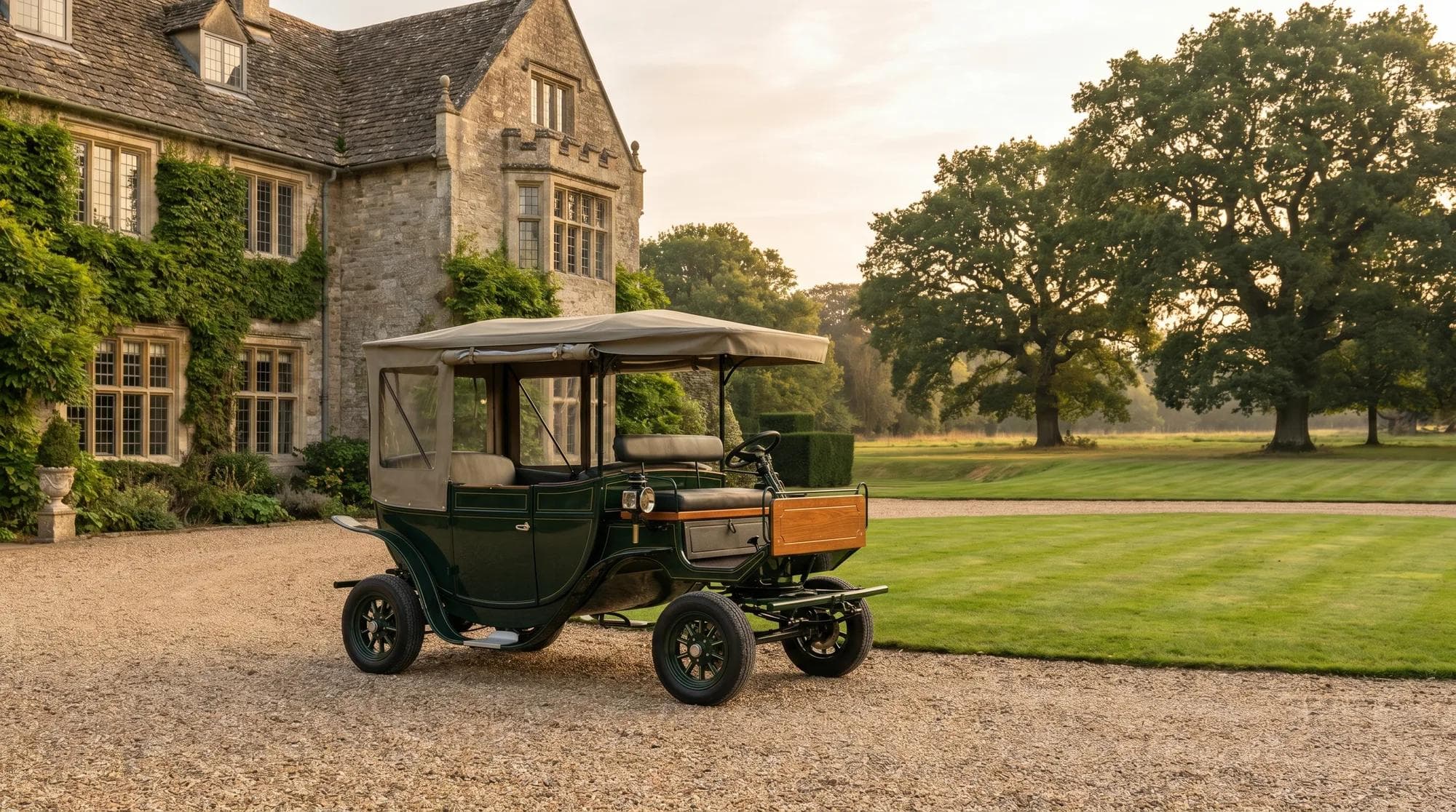
Historic houses, museums and heritage estates share an awkward truth: the grounds that make them special are often too big to cross on foot. A walled garden, a lake, a folly at the end of a long avenue, all of it sits a fair walk from the car park and the ticket office. A heritage site buggy closes that gap. It carries visitors and the less-mobile across the grounds quietly, without fumes and without intruding on the setting. This guide covers visitor and accessibility transport, how to run one sympathetically in a sensitive place, the practical side of grounds and logistics, and how it fits the sustainability commitments most trusts now hold.
Why a heritage site needs visitor transport at all
The case is simple once you watch how people actually move around a large site. Families with young children, older visitors and anyone with a mobility issue reach a point where the distance defeats them. They cut the visit short, skip the far gardens, or don't come back. A buggy that shuttles people from the entrance to the house, or out to the parts of the grounds they'd otherwise miss, turns a tiring day into an easy one. It lifts dwell time, it lifts spend in the cafe and shop at the far end, and it quietly opens the whole site to people who were effectively shut out of half of it.
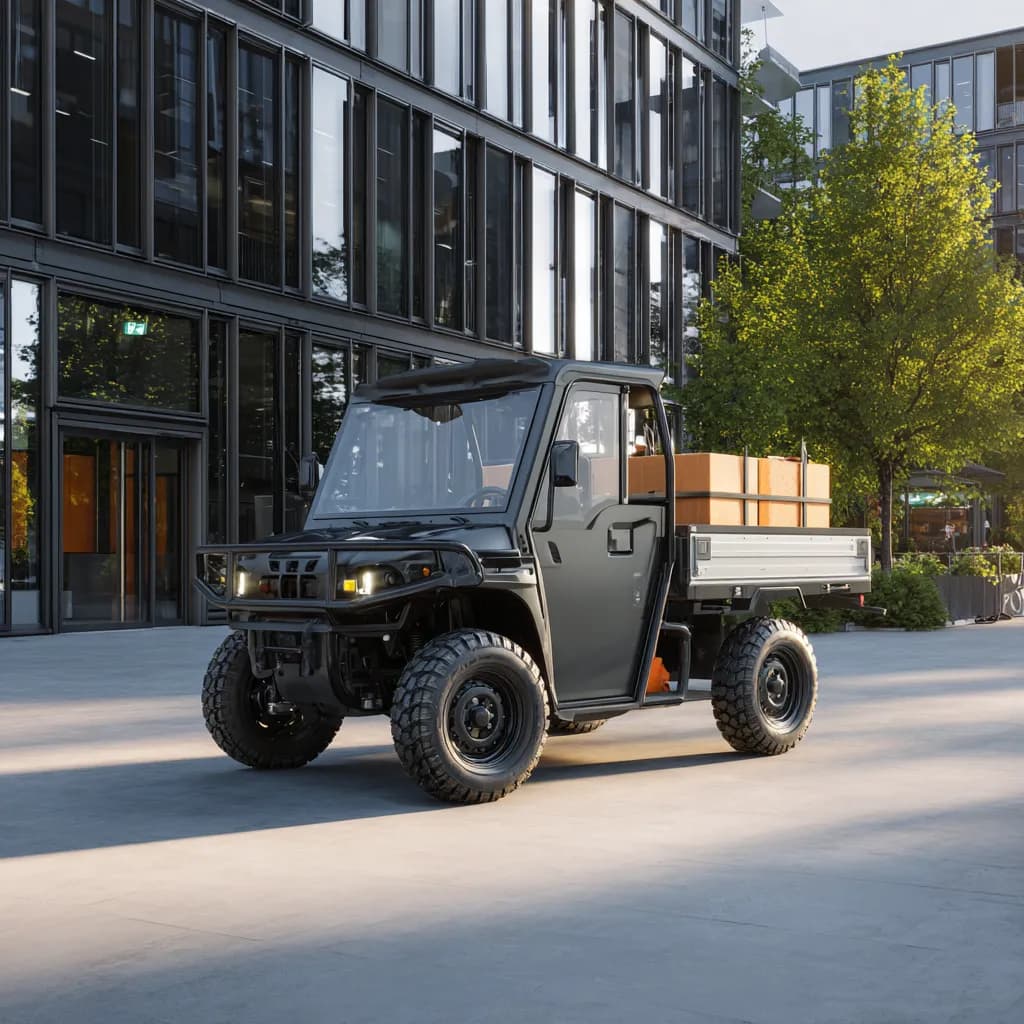
There's a staff side too. Wardens, gardeners and event crews cover real ground in a working day, and a quiet electric vehicle gets them to the far corner of the estate without the racket and exhaust of a quad near visitors and planting. One well-specified vehicle can run a visitor shuttle on busy afternoons and carry staff and light kit the rest of the time.
Accessibility: opening the whole site, not just the entrance
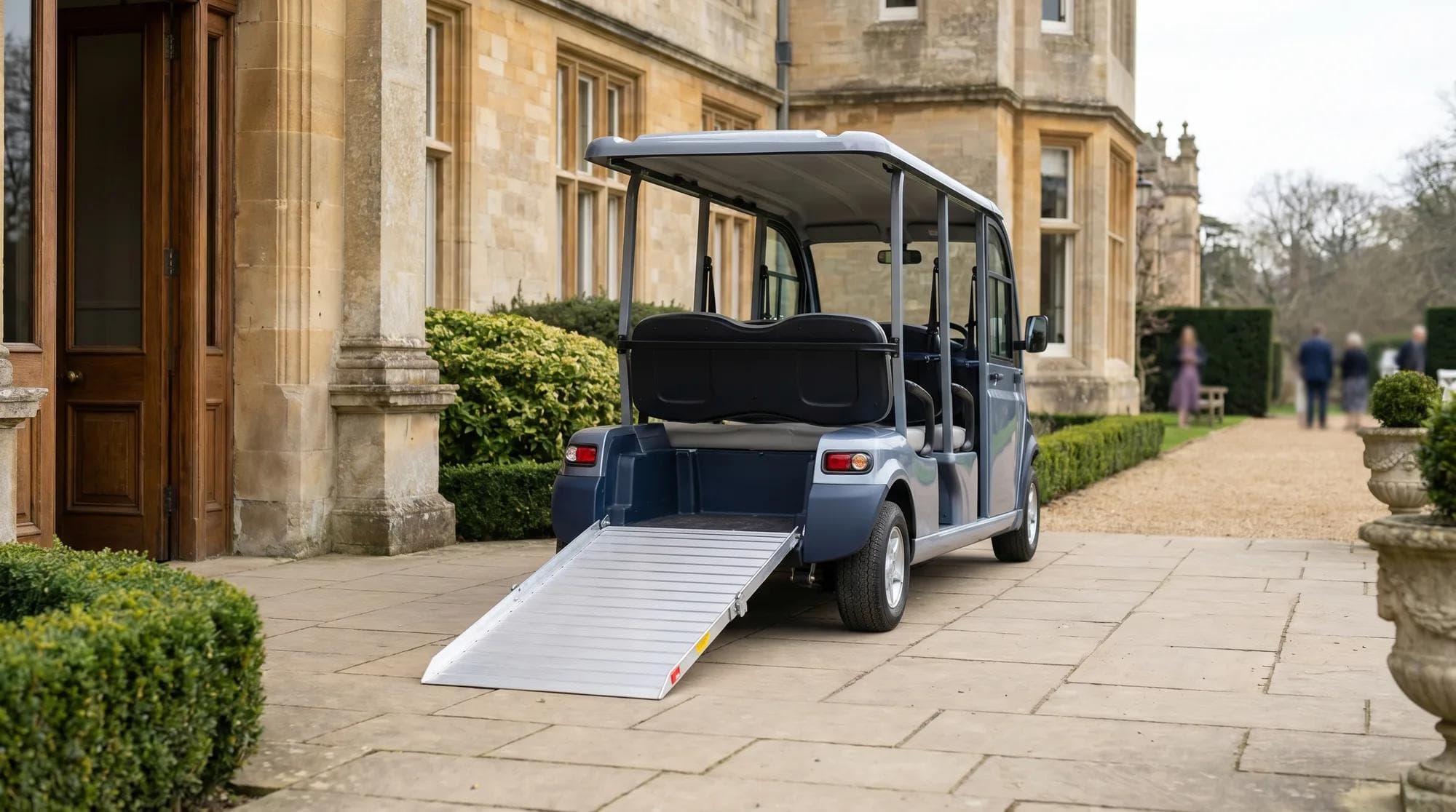
Access is where a heritage buggy earns its place fastest. Gravel paths, slopes and long distances are exactly the things that make a historic site hard for wheelchair users, people with limited stamina and visitors with hidden conditions. You usually can't pave or re-grade the routes without spoiling them, so the sensible answer is to bring transport to the visitor rather than rebuild the grounds. A buggy specified for accessible use, with easy step-in seating or a proper wheelchair-accessible layout, lets you offer a ride to anyone who needs one.
If you're weighing how to carry wheelchair users specifically, our accessible and wheelchair buggy guide sets out the ramp, restraint and layout options worth considering, and our people-mover and shuttle guide covers seat counts and how to run a regular service. Both transfer directly to a heritage setting.

Quiet, clean operation in a sensitive setting
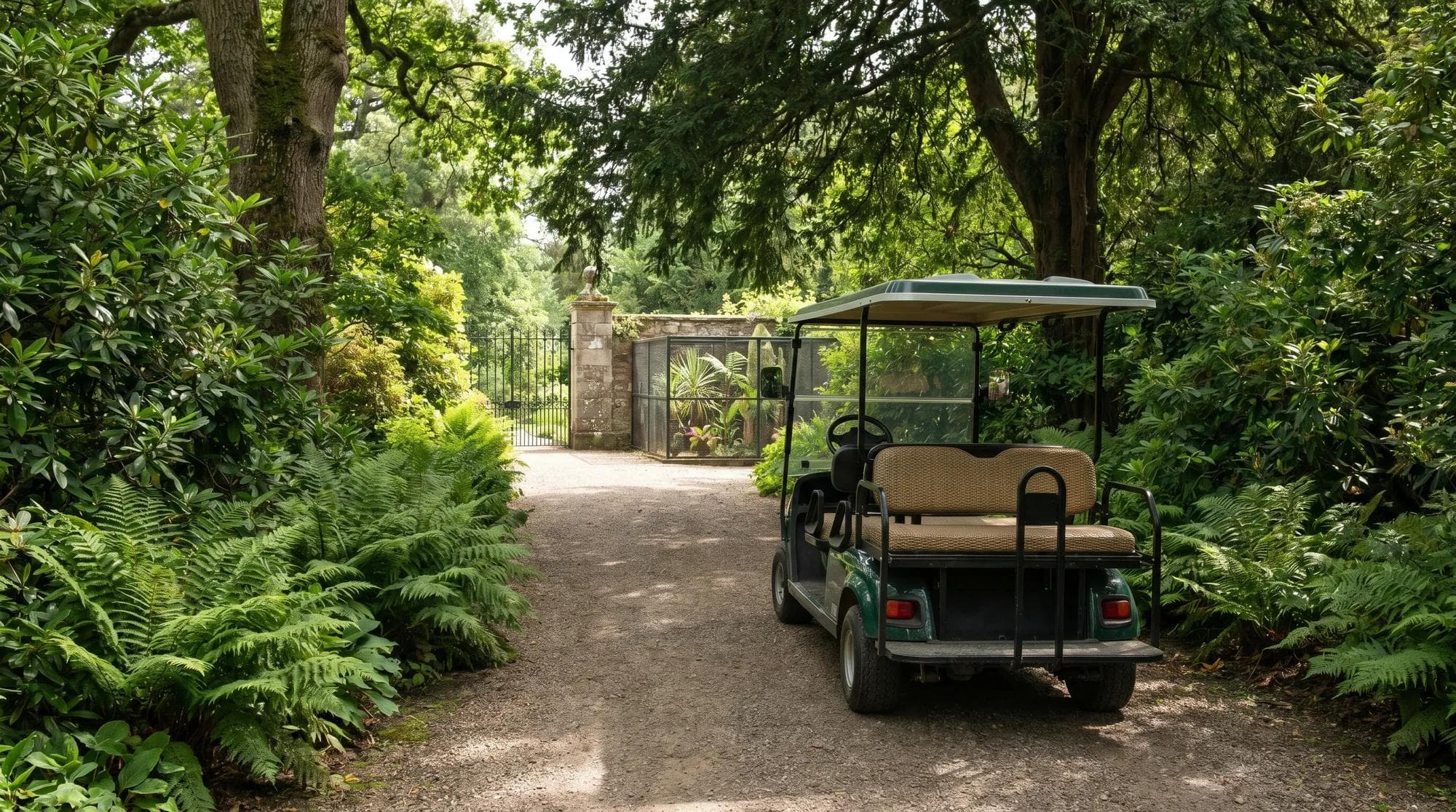
This is the point that matters most in a heritage context, and it's where electric wins outright. A historic garden is a place people come to for calm. A petrol or diesel vehicle wrecks that the moment it starts: the noise carries across a quiet lawn, the fumes hang in still air near borders and brickwork, and the whole thing jars against the setting you've worked to protect. An electric buggy runs near-silent and emits nothing where it's driven, so it slips through the grounds without announcing itself.
There's a conservation angle as well. Exhaust soot and vibration aren't friends of old stonework, statuary or sensitive planting, and keeping combustion engines away from them is a small but real act of care for the fabric. For a place whose entire purpose is preservation, a vehicle that does its work without leaving a trace is the right kind of vehicle.
A historic garden is a place people come to for calm. The vehicle that serves it should leave that calm untouched.
Specifying a heritage site buggy that suits the place
Looks matter here. A buggy that spends its days in front of a Georgian house should sit comfortably in that setting: a restrained finish, tasteful trim, nothing garish. Custom branding can be done with a light touch, the estate's name and a discreet livery rather than loud graphics, so the vehicle reads as part of the visitor offer rather than a piece of plant that wandered into shot.
Then match the vehicle to the run. A four seater suits a small shuttle or a warden's rounds. Larger groups and a regular service point towards a six or eight seater. Here's how the range lines up, with from-prices, so you can see roughly where a heritage spec lands before you enquire.
- Best for
- A small shuttle, warden rounds, accessible runs
- From price
- £14,900
- Best for
- Grounds work plus the occasional visitor lift
- From price
- £15,900
- Best for
- Regular group shuttles across the grounds
- From price
- £18,900
- Best for
- A busy entrance-to-house shuttle service
- From price
- £23,500
- Best for
- A specific accessible or heritage layout
- From price
- On request
| Best for | From price | |
|---|---|---|
| Four seater (the Hawke S4) | A small shuttle, warden rounds, accessible runs | £14,900 |
| Utility (the Hawke S2 Pickup) | Grounds work plus the occasional visitor lift | £15,900 |
| Six seater (the Hawke S6) | Regular group shuttles across the grounds | £18,900 |
| Eight seater (the Hawke S8) | A busy entrance-to-house shuttle service | £23,500 |
| Bespoke | A specific accessible or heritage layout | On request |
Grounds, routes and the practical side
Before you settle a spec, walk the route the buggy will actually drive. Heritage grounds throw up gravel, grass, cobbles and slopes, sometimes all on one loop, so be honest about the hardest stretch and spec for that rather than the easy bits. Width matters too: some historic paths and gateways are narrow, and a vehicle that won't fit through the arch to the walled garden isn't much use. Lithium batteries make the day-to-day simpler here, since they take partial top-ups between runs and hold up better over a long open season than older lead-acid packs.
Charging is the bit people leave too late. A buggy that can't recharge between shifts isn't a service you can promise visitors, so plan where it parks and plugs in from the start, ideally somewhere discreet and out of the sightlines. If your grounds sit alongside other public greenspace, our parks and public spaces work covers how we specify and brand vehicles for that kind of mixed visitor and grounds use.
The sustainability case for a trust or museum
Most heritage organisations now hold a published environmental or net-zero commitment, and visitors increasingly expect the place to live up to it. A diesel grounds vehicle parked by the tea room sits awkwardly against that message. Swapping it for electric removes a visible source of on-site emissions and noise, and it's an easy, honest thing to point to in a sustainability report or on the interpretation boards. It's the kind of practical step that backs up the words rather than contradicting them.
Running cost helps the argument along. Electricity to charge a buggy costs far less than the equivalent fuel, there's nothing to store or secure, and servicing is lighter because there's no engine, oil or filters to tend. The up-front cost is higher than a basic petrol equivalent, but for a vehicle that works through a long visitor season, the running and maintenance savings usually recover that over its life.
How we'd approach a heritage build
Every vehicle is configured to your specification, which suits heritage work well, because no two sites are the same. Tell us how your visitors move around the grounds, where the access pinch-points are, the surfaces and gradients the buggy will face, and the look you want it to have, and we'll specify a vehicle around all of it. We can finish and brand it sympathetically to your setting, build in proper accessible seating where you need it, and back the whole thing with a 3-year warranty and a 24-hour priority call-out so a breakdown never strands a visitor mid-tour. You can see the full line-up on our range page and carry your thinking straight into a quote.
Specify a buggy that suits your site
Tell us how visitors move around your grounds, where the access pinch-points are and the look you want, and we'll build a tailored quote for a vehicle finished sympathetically to your setting. Every build comes with a 3-year warranty and a 24-hour priority call-out.
Frequently asked questions
What is a heritage site buggy used for?+
Two main jobs. Carrying visitors and the less-mobile across large grounds, from the entrance to the house or out to gardens and features they'd otherwise miss, and moving wardens, gardeners and event crews quietly around the estate. One well-specified electric vehicle can run a visitor shuttle on busy days and handle staff and light kit the rest of the time.
Are electric buggies suitable for historic gardens and sensitive settings?+
Yes, more so than petrol or diesel. An electric buggy runs near-silent and emits nothing where it's driven, so it doesn't disturb the calm of a historic garden or leave fumes and soot near old stonework and planting. It can also be finished and branded with a light touch so it sits comfortably in front of a historic house.
How does a buggy improve accessibility at a heritage site?+
Historic grounds are often hard to navigate because of gravel, slopes and long distances, and you usually can't re-surface them without spoiling the setting. A buggy specified for accessible use, with easy step-in seating or a wheelchair-accessible layout, brings transport to the visitor instead, opening the whole site to wheelchair users and anyone with limited stamina.
How much does a heritage visitor buggy cost?+
UK from-prices typically start from around £14,900 for a four seater, £18,900 for a six seater and £23,500 for an eight seater, with bespoke accessible or heritage layouts on request. Finish, accessible seating, branding and battery choice move the figure from there, and we confirm a tailored price against your site when you enquire.
Are electric buggies better for a heritage site's sustainability goals?+
They support them directly. Going electric removes a visible source of on-site emissions and noise that sits awkwardly against a net-zero commitment, and it's an honest thing to point to in a sustainability report. Running and maintenance costs are also lower than a petrol equivalent over a long visitor season.
Ready to find the right buggy?
Tell us how and where it will work and we will specify a vehicle and a tailored quote built around you. Every build comes with a 3-year warranty and a 24-hour priority call-out.
Our guides are written and reviewed by the Hawke Electric Vehicles team, the people who specify, build, deliver and support the vehicles. We focus on honest, practical advice and flag where a figure depends on the build rather than guessing.
More guides by Hawke