Somewhere between a wheelbarrow and a tractor sit three machine classes that all promise to move stuff for you: the power barrow, the towed garden or estate cart, and the electric utility buggy. They overlap enough to confuse buyers and differ enough that buying the wrong one wastes real money. The honest way to choose is by what the machine fundamentally is: a barrow you walk with, a trailer for something you already own, or a vehicle you ride. This guide sets out what each is for, where the crossover points fall, and who should not buy a buggy at all.
- A power barrow is for short, heavy shifts: muck, spoil, aggregate, over small distances, at walking pace.
- A garden or estate cart is a trailer; it is only as useful as the machine that tows it.
- A utility buggy moves a person plus a load across real distance, which neither of the others does.
- Crossover points are distance and frequency: the further and more often you haul, the more the buggy earns.
- Small gardens, single-task sites and all-day heavy haulage should not buy a buggy, and we say so.
What each machine class is for
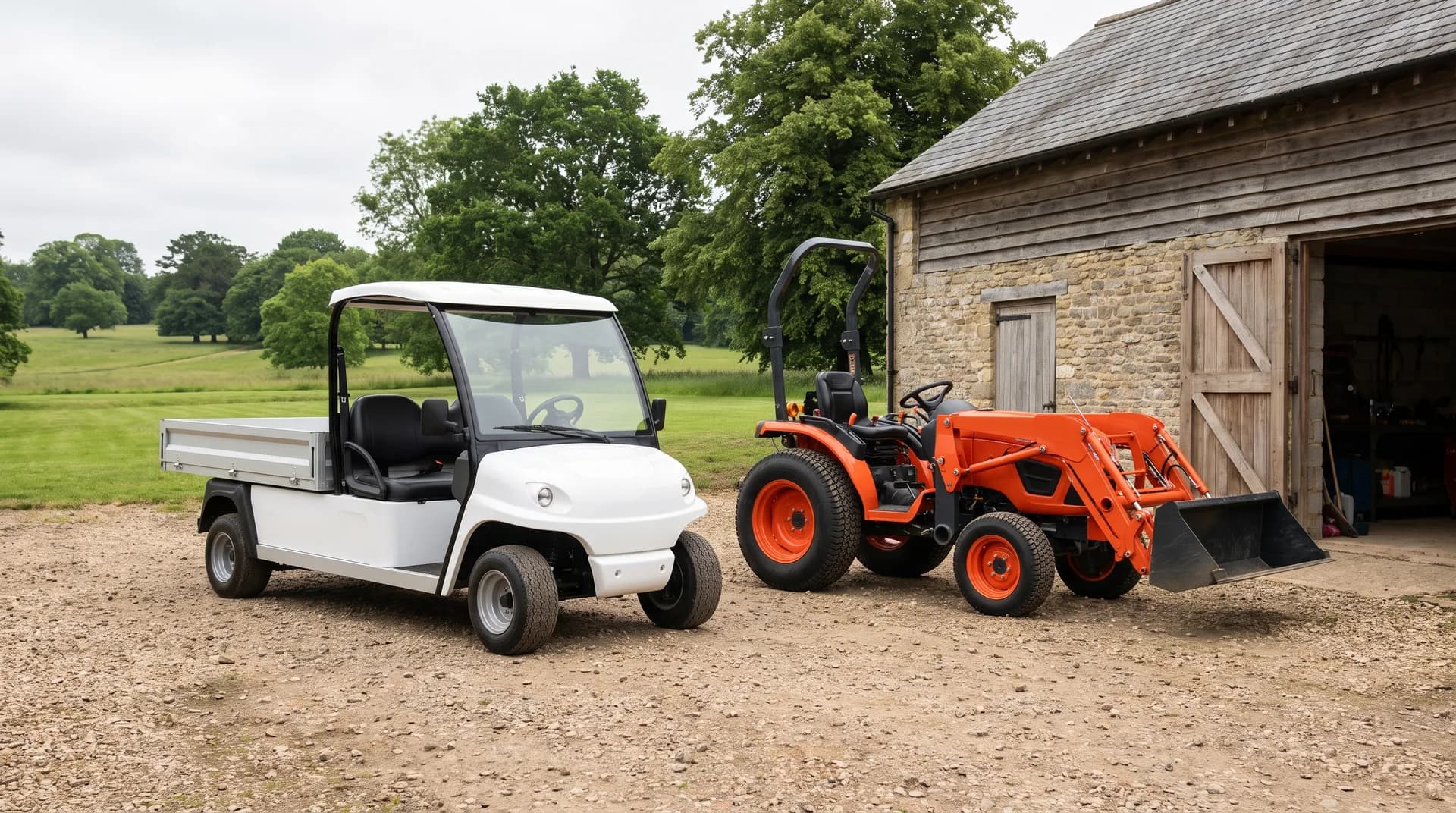
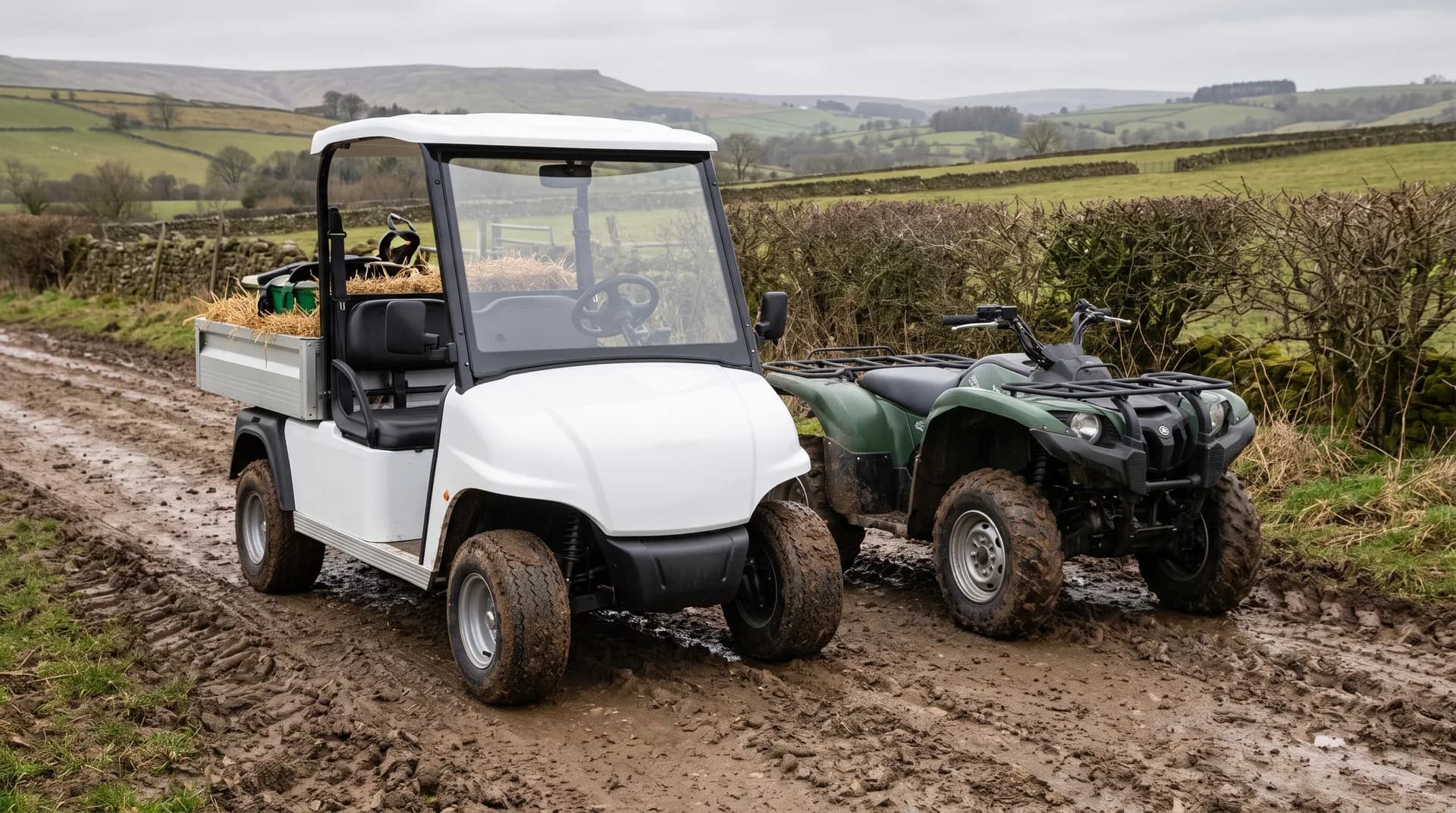
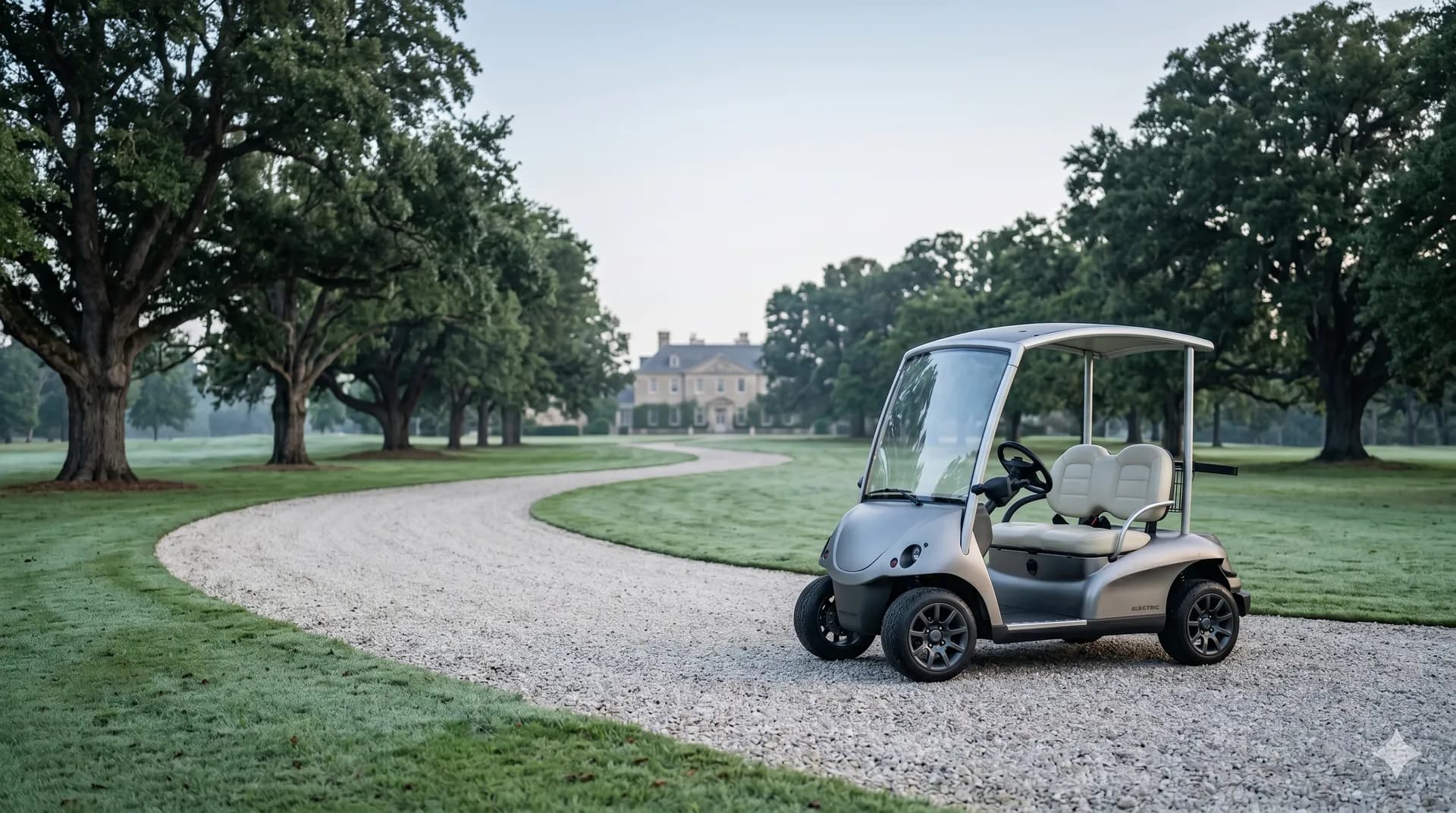
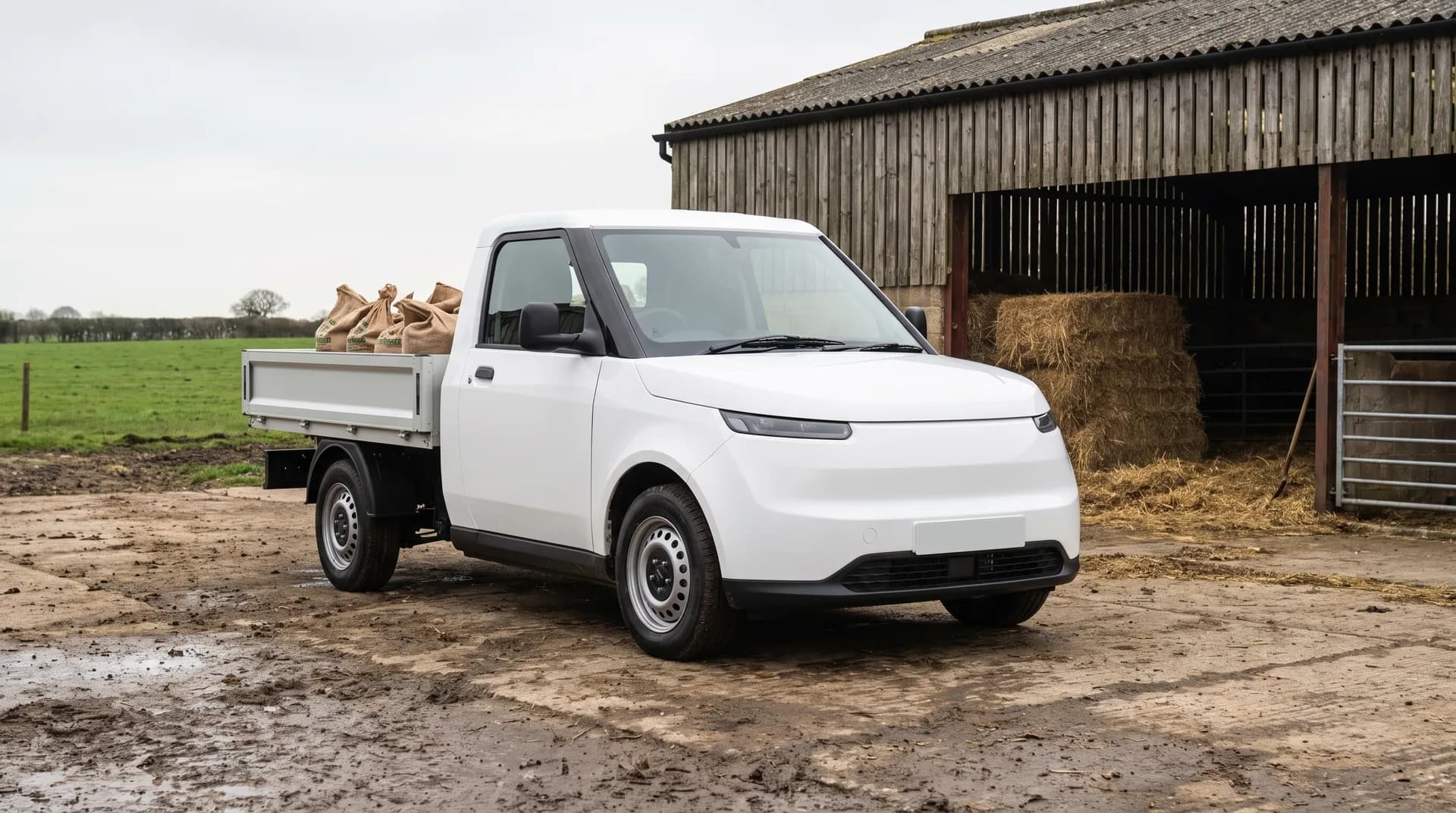
The power barrow, a motorised skip on wheels or tracks, exists for short heavy shifts: muck out to the heap, spoil from a dig, aggregate up a slope a wheelbarrow cannot manage. You walk with it, so it saves your back, not your time over distance. The towed garden or estate cart is simpler still: it is a trailer, and its usefulness is entirely borrowed from whatever pulls it, a garden tractor, a quad or a buggy. The electric utility buggy is the only one of the three that is a vehicle: it carries a person, a passenger and a rated load in its own bed across real distance, quietly and quickly, and tows a cart when you need both. Our farms guide shows that class of machine at work.
The crossover points
Distance and frequency decide it. Under an acre or two, with the muck heap fifty metres away, a power barrow or an honest wheelbarrow is the right money and a buggy is overkill. Once the runs stretch to a few hundred metres, happen several times a day, or involve carrying yourself and your kit as well as the load, walking pace becomes the cost, and the buggy starts paying for itself in time. If you already run a ride-on machine with capacity to spare, a towed cart is the cheap upgrade; if the towing machine is the thing you are missing, buy the vehicle, not the trailer. And at the top end, all-day continuous heavy haulage belongs to tractors and diesel machines, as our UTV versus compact tractor guide sets out.
- Power barrow
- On foot beside it
- Garden/estate cart
- On the towing machine
- Utility buggy
- Seated in the vehicle
- Power barrow
- Tens of metres
- Garden/estate cart
- Wherever the tow vehicle goes
- Utility buggy
- Hundreds of metres to whole-site
- Power barrow
- Muck, spoil, aggregate
- Garden/estate cart
- Anything that fits, within the tow rating
- Utility buggy
- People plus a rated bed, plus towing
- Power barrow
- Walking pace
- Garden/estate cart
- Towing machine's pace
- Utility buggy
- Brisk site speeds
- Power barrow
- Shed corner
- Garden/estate cart
- Against a wall
- Utility buggy
- A parking bay under cover
| Power barrow | Garden/estate cart | Utility buggy | |
|---|---|---|---|
| You travel | On foot beside it | On the towing machine | Seated in the vehicle |
| Best distance | Tens of metres | Wherever the tow vehicle goes | Hundreds of metres to whole-site |
| Typical loads | Muck, spoil, aggregate | Anything that fits, within the tow rating | People plus a rated bed, plus towing |
| Speed | Walking pace | Towing machine's pace | Brisk site speeds |
| Storage | Shed corner | Against a wall | A parking bay under cover |
Running costs and storage
None of the three is expensive to run, but they differ in kind. A petrol barrow wants fuel and small-engine servicing; electric barrows and buggies charge from an ordinary socket for pennies, and an electric buggy has few of the service items an engine brings. A cart costs nothing to run but transfers wear to whatever tows it. Storage is the quieter difference: a barrow tucks into a shed corner and a cart stands against a wall, while a buggy needs a dry parking bay and a socket, which most yards have and some gardens genuinely do not. Count the storage before the money.
Who should not buy a buggy
Honestly: small gardens where every job is within barrow distance; sites with one repeating heavy shift and no people-moving, where a power barrow is simply the better tool; anyone whose real need is towing behind a capable machine they already own; and operations whose day is continuous heavy haulage, which needs diesel horsepower, not a battery. If any of those is you, we would rather say so than sell you a vehicle that spends its life parked. Everyone in between, moving people and loads across real ground every day, is who the U1, U2, S2 Pickup and S2 Tipper are built for, with capability figures confirmed at quotation.
- Measure your longest regular run and count how often you make it each day.
- List the loads honestly: weight, bulk, and whether a person and kit travel with them.
- Note slopes, mud and wet ground; they change tyres, drive and battery specification.
- Check what you could tow with machines you already own before buying new.
- Confirm dry storage and a charging socket where the machine will live.
- Decide who will drive it: one trained user, or family, staff and helpers.
- Ask for payload, towing and range figures for your specification at quotation, not from a brochure.
Frequently asked questions
What is a power barrow best for?+
Short, heavy, repeated shifts over small distances: muck to the heap, spoil from a dig, aggregate up slopes. You walk with it, so it saves effort rather than time over distance.
When does a utility buggy beat a power barrow?+
When the runs are long, frequent, or involve moving yourself and your kit as well as the load. A buggy covers hundreds of metres in moments, carries people and cargo together, and tows a cart when needed.
Is a towed garden cart worth buying?+
If you already own a capable towing machine with spare capacity, yes, it is the cheapest upgrade of the three. If you do not, buy the vehicle first; a cart without a tower is a wall ornament.
Who should not buy a utility buggy?+
Small gardens within barrow distance, single-task heavy-shift sites, people who only need a trailer, and operations doing continuous all-day heavy haulage, which belongs to diesel machines. We say this before we quote, not after.
What loads can your buggies actually carry and tow?+
It varies by model and build, so we confirm payload, towing and range for your specification at quotation. The U1 and U2 are 1-tonne-class machines, and the S2 Pickup and S2 Tipper offer proper working beds.
Choose the right class first
Describe your runs, loads and ground and we will tell you straight whether a buggy is your machine, and if it is, build the quote for the right one.
Related solutions
Ready to explore what we build?
See the vehicles and the setting this applies to, or get a tailored quote built around your site.

Ready to find the right buggy?
Tell us how and where it will work and we will specify a vehicle and a tailored quote built around you. Every build comes with a 3-year warranty and a 24-hour priority call-out.
Our guides are written and reviewed by the Hawke Electric Vehicles team, the people who specify, build, deliver and support the vehicles. We focus on honest, practical advice and flag where a figure depends on the build rather than guessing.
More guides by Hawke