A garden centre is a deceptively large site to run. Stock is heavy, bulky and constantly moving, the polytunnels and outdoor beds sit a long way from the till, and customers regularly buy more than they can carry. A garden centre buggy ties all of that together: it hauls trays, bags and trees across the site, gets staff where they're needed, and helps a customer get a loaded trolley to their boot. This guide covers what one actually does for you, how to think about load and cargo, why quiet matters in a retail setting, and how to spec the right vehicle.
What a garden centre buggy does day to day
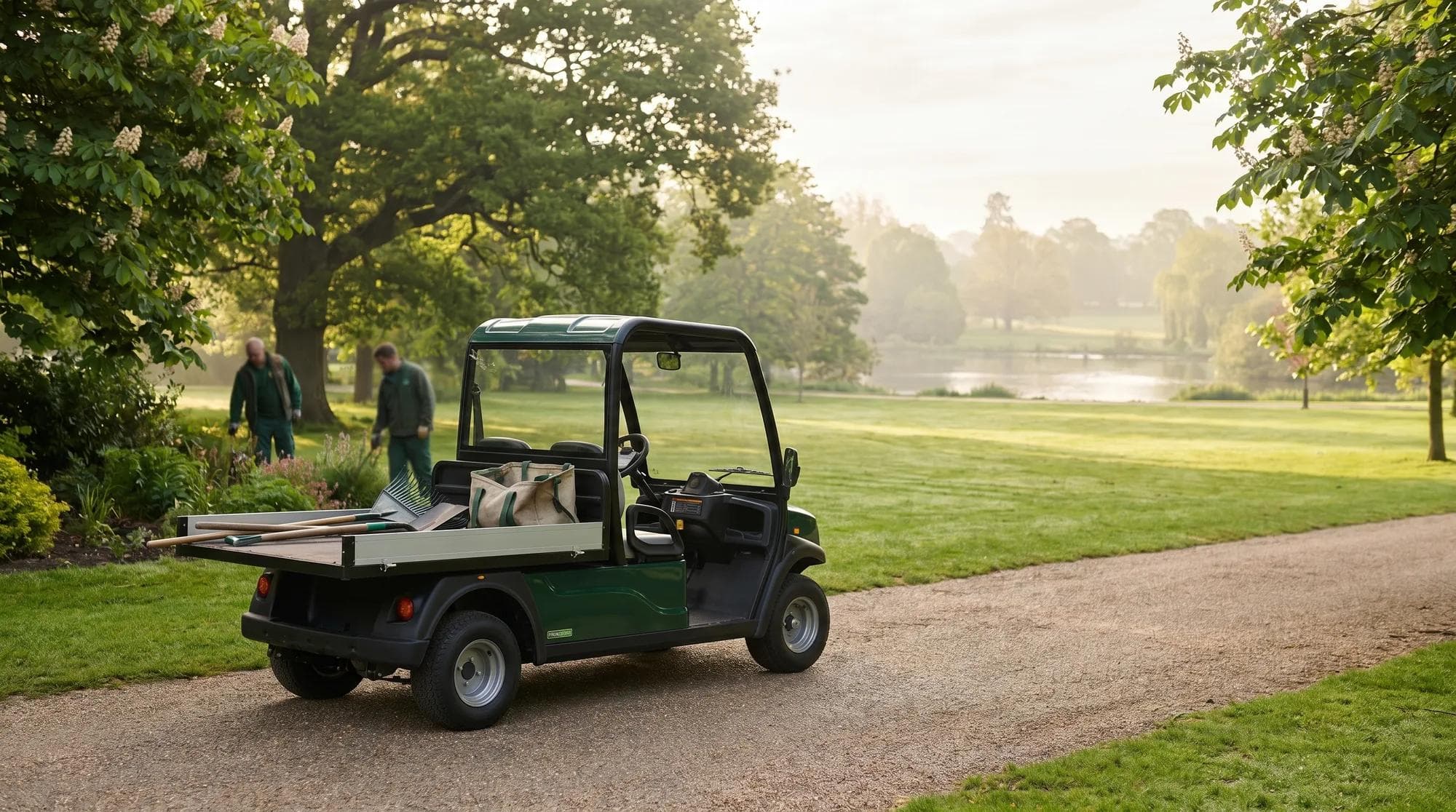
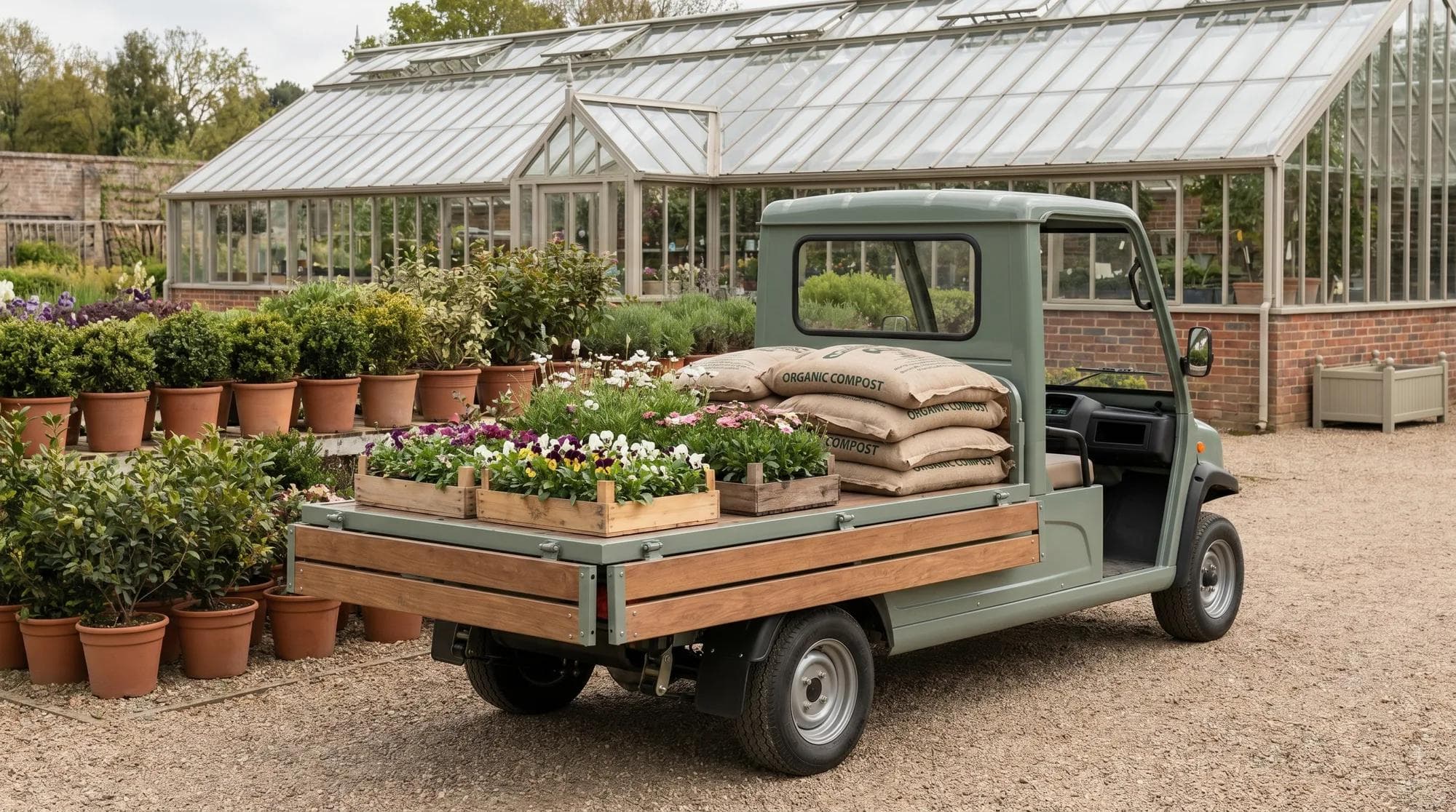
Most centres ask the same few jobs of a utility vehicle. The first is stock movement: shifting bagged compost, paving, pots, bedding plants and trees from the delivery yard to the shop floor and the outdoor displays. The second is staff transport, getting people and tools out to the far growing areas without a ten-minute walk each way. The third, and the one that's easy to overlook, is customer assistance. A nursery utility vehicle that can carry a pallet of compost or a semi-mature tree to the car park turns a sale you might have lost into one that completes.
The point is that one vehicle covers all three. A flat or tipping bed handles the stock and the deliveries on a weekday morning. Add a seat or two and it runs staff out to the tunnels. Specify it with an open, low cargo bed and the same vehicle helps a customer move a boot-load of plants. You're not buying three machines. You're buying one that's been thought about properly.

Why quiet, clean running matters in retail
A garden centre is a place people come to relax. A diesel or petrol utility vehicle works directly against that. It leaves fumes hanging by the cafe and the houseplant section, it drowns out the calm, and it's unpleasant for the staff driving it all day. An electric buggy removes all of that. It runs near-silent, so it slips through busy aisles without making customers flinch, and it produces nothing at the tailpipe because there isn't one.
That clean running has a practical edge too. Plenty of garden centres have covered retail areas, glasshouses and indoor plant halls where you simply can't run a combustion engine safely. An electric vehicle moves stock straight from the yard, through the doors and onto the shop floor in one go, with no fume problem and no need to break the load. For a site that flows between inside and out all day, that's the difference between a vehicle that helps and one that's stuck outside.
Stock moves from the yard, through the doors and onto the floor in one go, with no fumes to worry about.
Load, cargo and getting the bed right
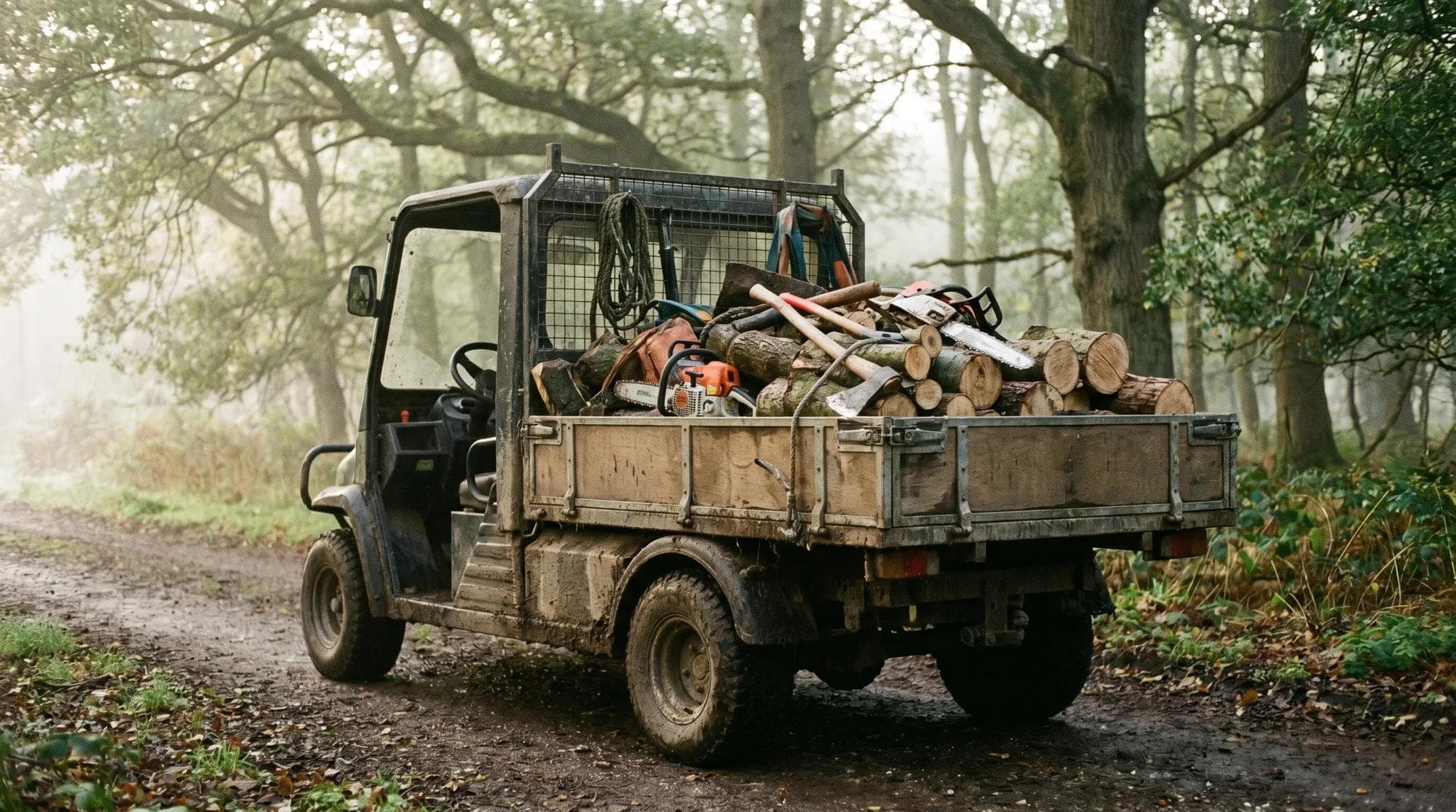
Cargo is where a garden centre vehicle is won or lost, so spec it around your heaviest, most awkward regular load rather than the average one. If you routinely move bagged aggregates and compost, you want a strong, flat bed and a payload that doesn't flinch at a stacked load. A tipping body is worth considering if you handle loose bark, soil or green waste, because it saves the back-breaking job of unloading by hand.
Loading height matters more than people expect. A low, open bed means staff and customers can slide a heavy bag or a tray of plants on without lifting it to shoulder height, which is both faster and far kinder on backs. Think about whether you want drop-down sides, a removable bed for customer-assist runs, or a cage for tall stock. Get the bed shape matched to what you actually carry and the vehicle earns its place from week one.
- Flat bed
- Trays, pots, bagged goods, trees
- Tipping bed
- Loose bark, soil, green waste
- Flat bed
- Slide or stack on
- Tipping bed
- Slide on, tip off
- Flat bed
- By hand
- Tipping bed
- Tip to empty
- Flat bed
- Easy with low sides
- Tipping bed
- Less suited
- Flat bed
- Most versatile
- Tipping bed
- Specialist
| Flat bed | Tipping bed | |
|---|---|---|
| Best for | Trays, pots, bagged goods, trees | Loose bark, soil, green waste |
| Loading | Slide or stack on | Slide on, tip off |
| Unloading | By hand | Tip to empty |
| Customer-assist runs | Easy with low sides | Less suited |
| Mixed daily use | Most versatile | Specialist |
Helping customers and keeping the site accessible
Customer assistance is where a buggy quietly pays for itself. A shopper who's bought three bags of compost, a couple of shrubs and a planter can't get that to the car park on their own, and a member of staff carrying it by hand can only manage one trip. A buggy turns that into a single, easy run, which means a better experience, a faster turnaround and, honestly, a bigger basket because people buy more when they know they won't have to lug it.
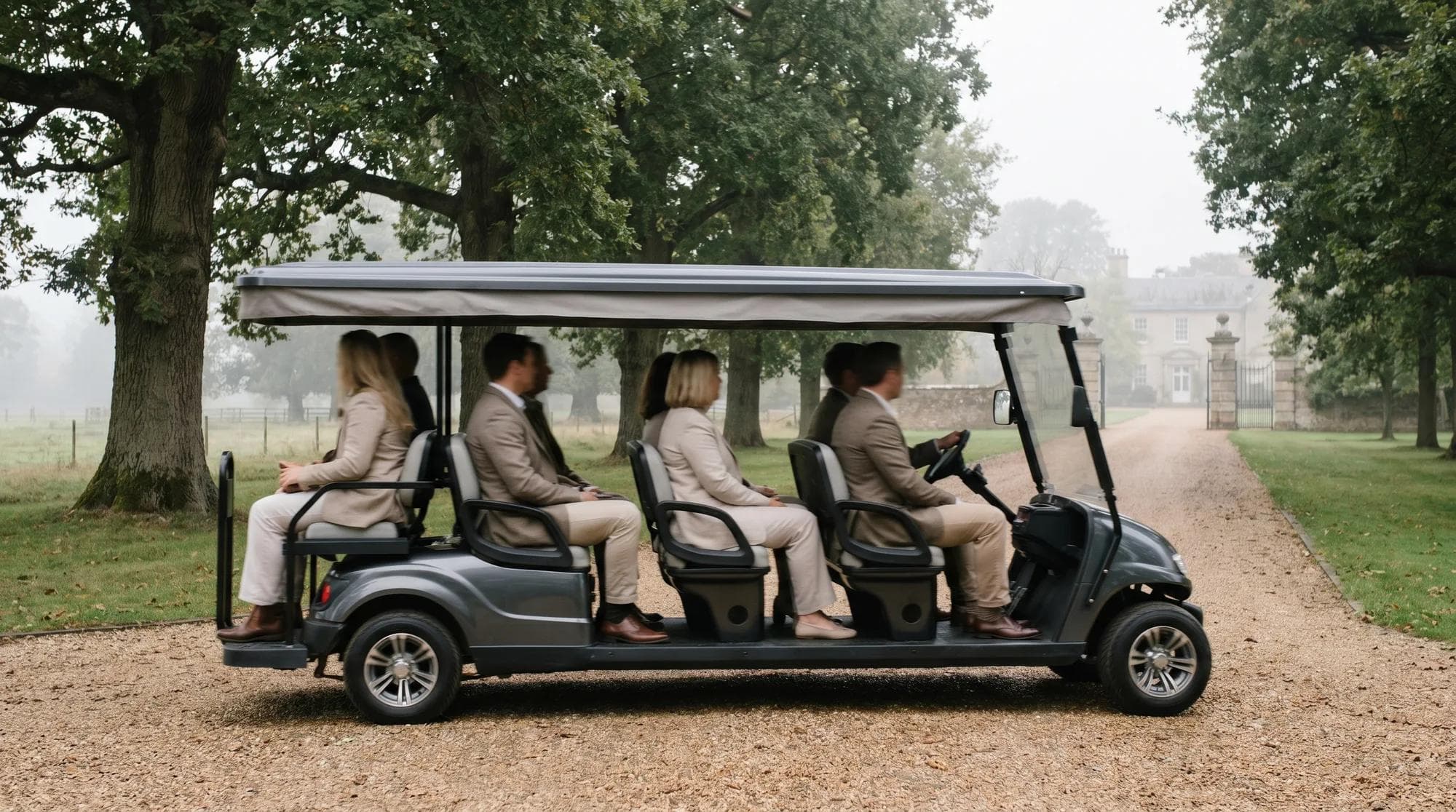
There's an accessibility side to this as well. A large garden centre is a long way round for an older or less mobile customer, and the distance can put people off visiting at all. A people-carrying buggy makes the far growing areas reachable for everyone, which is both the right thing to do and good for trade. If you're weighing up seated transport alongside cargo work, our electric people-mover and shuttle guide covers seat counts and how to run a passenger service sensibly.
What it costs to run, and how it compares
The purchase price is rarely the figure that decides a fleet vehicle. Running cost over its working life is, and that's where electric pulls ahead. Charging from the mains costs far less than the equivalent petrol or diesel, there's no fuel to store or secure on a public-facing site, and servicing is lighter because there's no engine, no oil, no filters and far fewer parts to fail. The trade-off is a higher up-front cost and the need to plan charging, so the case is strongest where the vehicle works most days, which on a garden centre it will.
Our purpose-built Hawke S2 Pickup utility vehicle is the natural starting point for a garden centre or nursery, because it's a cargo-first platform that can be specified for stock, staff and customer-assist work on one chassis. The same thinking applies to other large mixed-use sites: if you also manage grounds or open green space, our guide to electric buggies for public parks and councils sets out how the same kind of vehicle handles groundscare and visitor transport, and the spec lessons carry straight across.
How to spec the right vehicle for your centre
Start with the hardest task the vehicle has to do, not the average one. If it must climb a wet slope from the yard with a full load of compost, spec for that. Match the body to the work: a low flat bed for trays and bagged goods, a tipping body if you shift loose material, seating if staff runs are part of the day. Plan charging now rather than later, because a vehicle that can't recharge over lunch or overnight isn't one you can rely on through a busy spring. Every vehicle we build is made to order, so it's specified to how your centre actually works rather than forced to fit a stock model.
Specify a garden centre buggy built around your site
Tell us how your stock, staff and customer-assist work actually runs and we'll build a detailed quote, with the right bed, payload and seating, plus your branding. Every vehicle is built to order, with a 3-year warranty and a 24-hour VIP call-out.
Frequently asked questions
What is a garden centre buggy used for?+
Three jobs, mainly. Moving stock such as compost, pots, bedding plants and trees from the yard to the shop floor and outdoor displays; transporting staff and tools out to the far growing areas; and helping customers move heavy plants and goods to the car park. A well-specified utility vehicle covers all three on one chassis.
Can a buggy be used indoors in a glasshouse or plant hall?+
An electric one can, yes. Because it produces no exhaust fumes and runs near-silent, it can move stock straight from the yard, through the doors and onto a covered shop floor or glasshouse without the fume and noise problems of a petrol or diesel vehicle. That's a key reason garden centres choose electric over combustion.
What payload do I need for moving compost and aggregates?+
Spec around your heaviest regular load rather than the average. Bagged compost and aggregates are dense, so you want a strong flat bed and a payload that handles a stacked load without strain. Tell us what you move and how often, and we'll size the vehicle and bed to suit it.
Can the same vehicle carry both cargo and passengers?+
Yes. A utility platform can be specified with a low, open cargo bed and one or two seats so it runs stock and deliveries on weekday mornings and helps customers or carries staff when needed. For a centre watching the budget, one vehicle doing both is usually better value than two single-purpose ones.
Is an electric buggy cheaper to run than petrol or diesel?+
Over its working life, usually yes. The purchase price is higher, but charging from the mains costs far less than fuel, there's nothing to store on a public-facing site, and servicing is lighter because there are far fewer moving parts. For a vehicle that works most days through the season, the whole-life cost typically lands lower.

Ready to find the right buggy?
Tell us how and where it will work and we will specify a vehicle and a tailored quote built around you. Every build comes with a 3-year warranty and a 24-hour priority call-out.
Our guides are written and reviewed by the Hawke Electric Vehicles team, the people who specify, build, deliver and support the vehicles. We focus on honest, practical advice and flag where a figure depends on the build rather than guessing.
More guides by Hawke