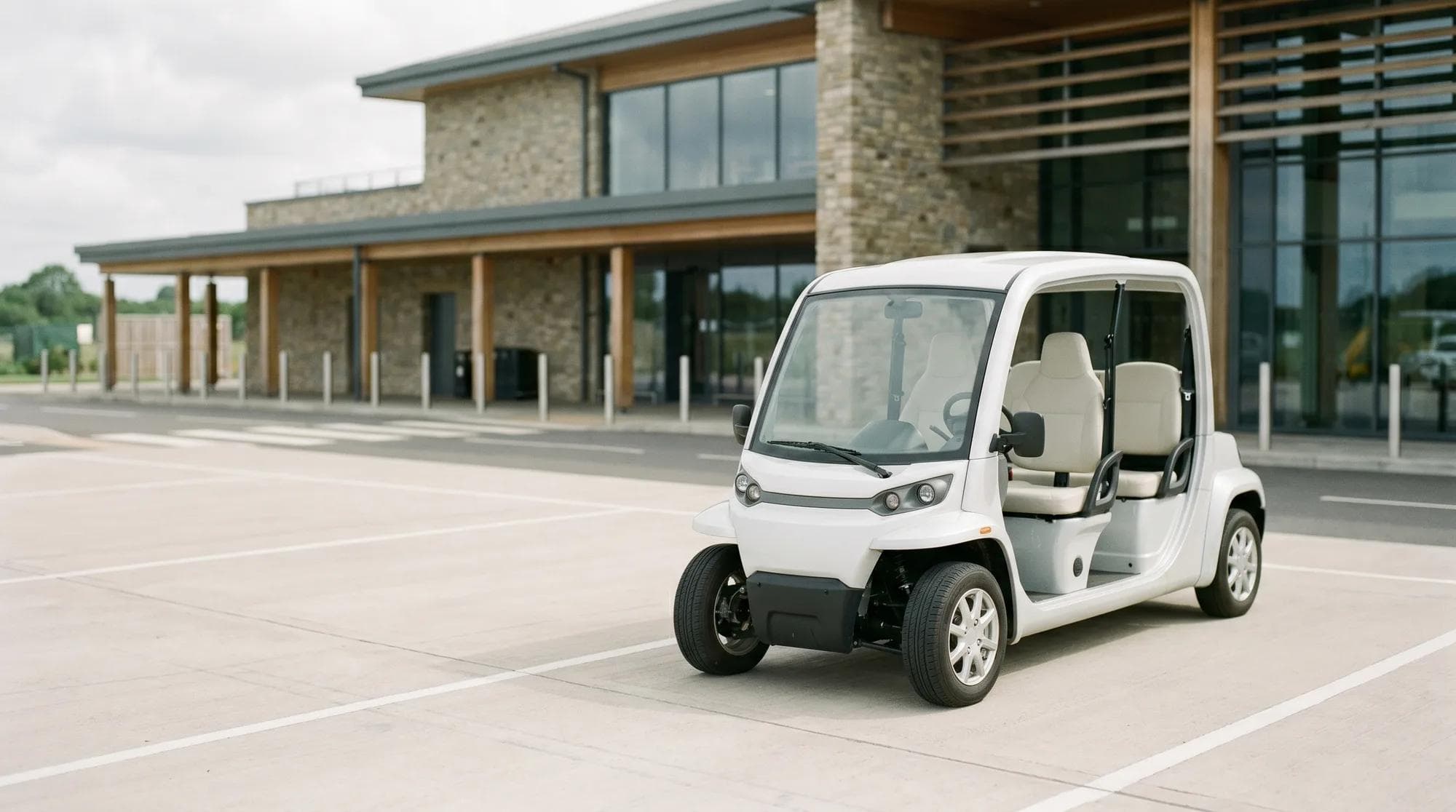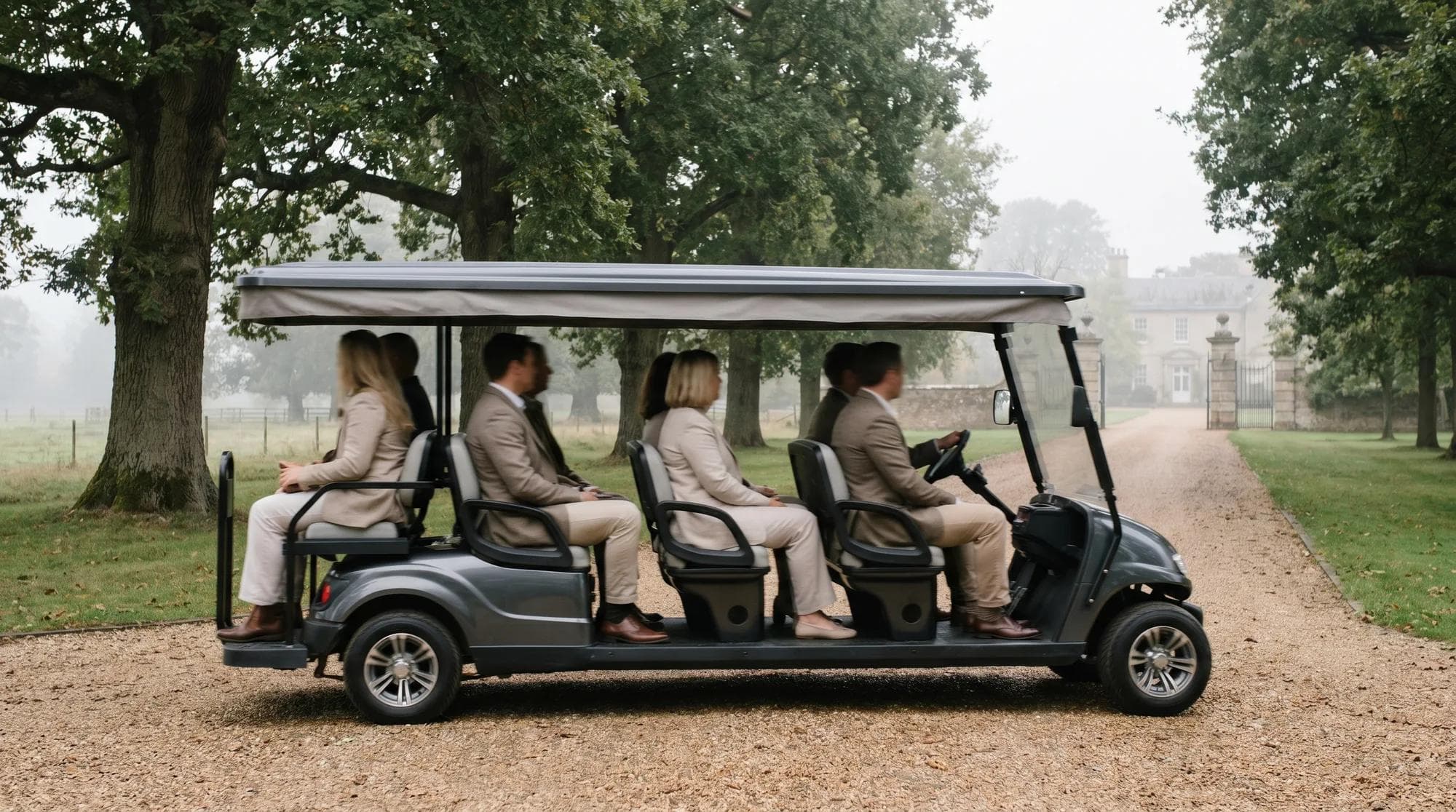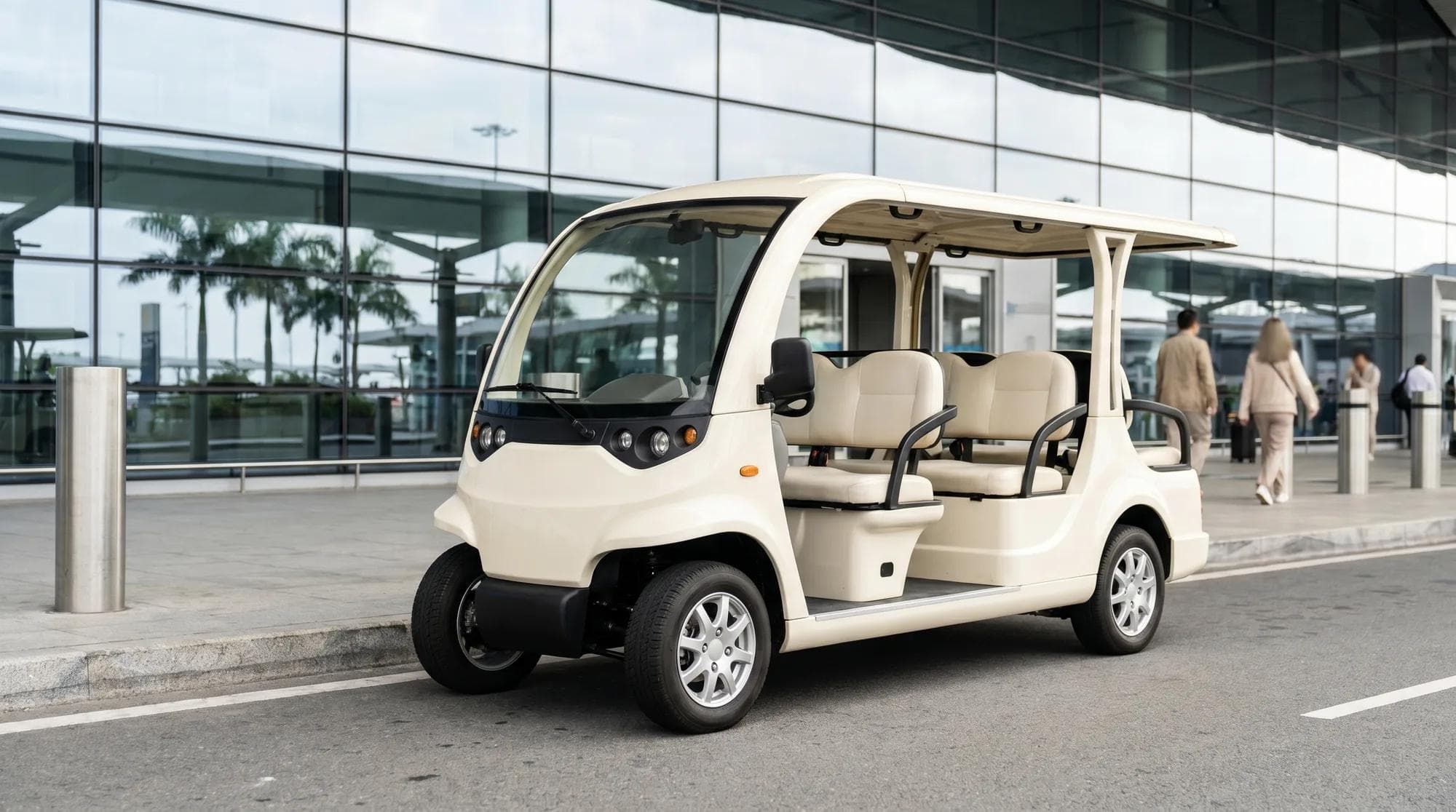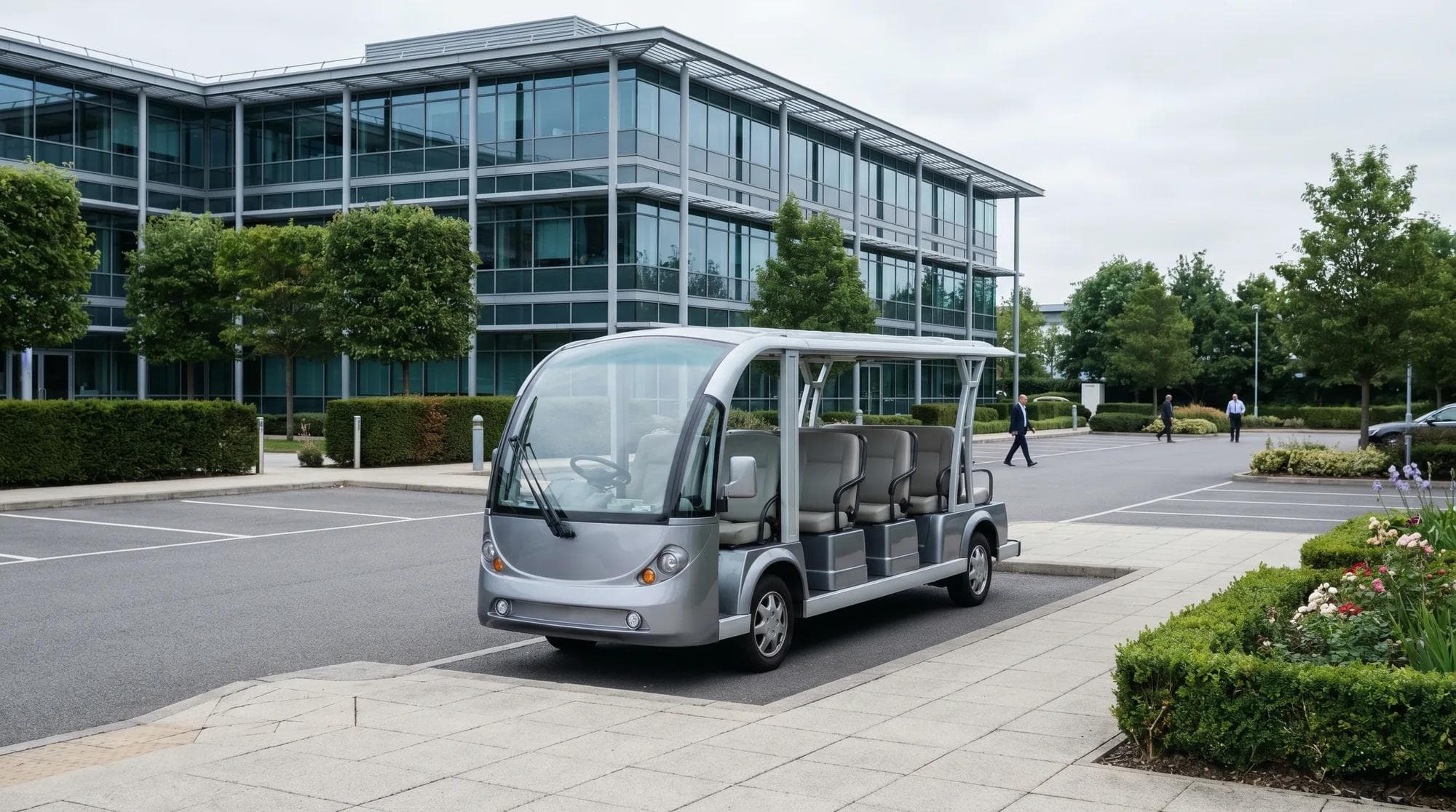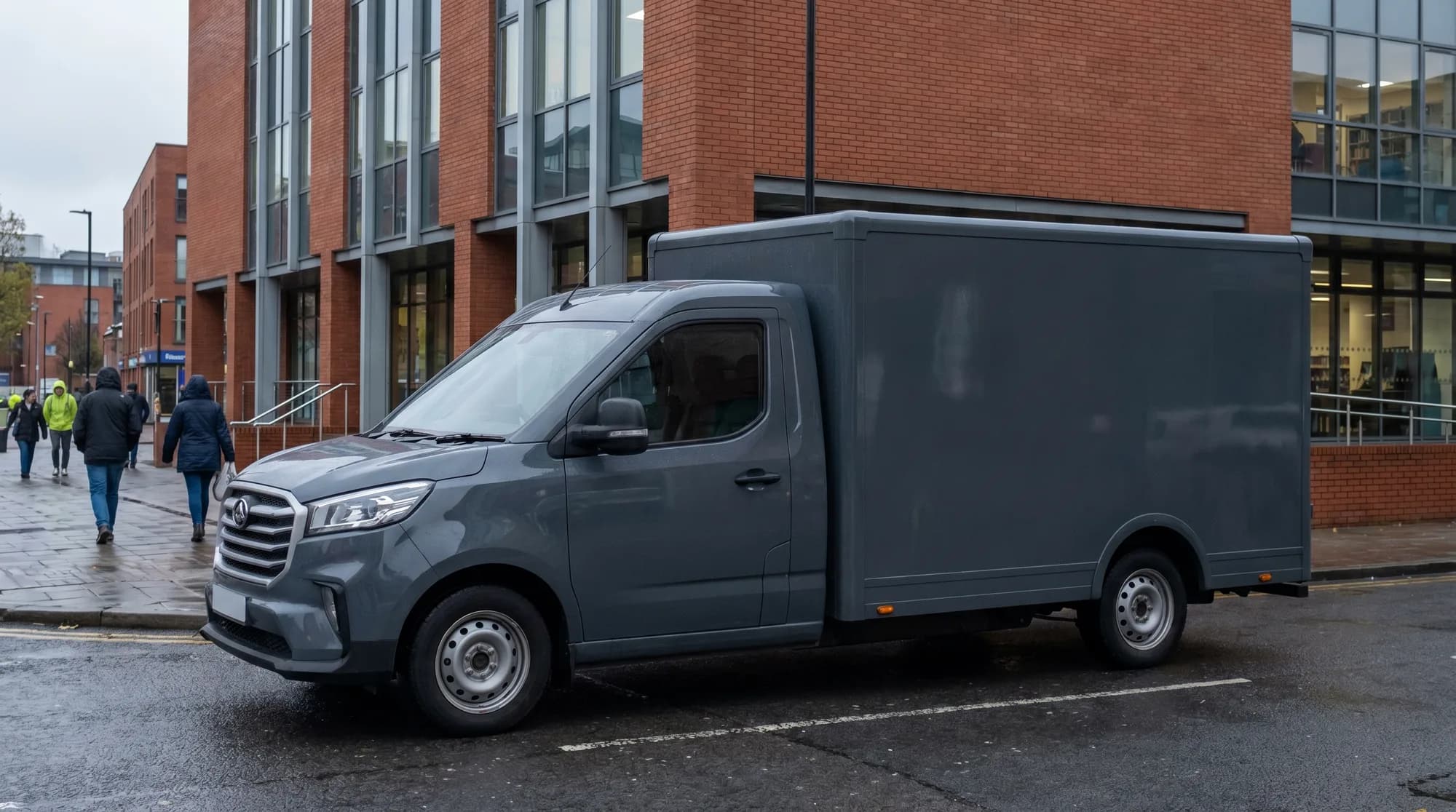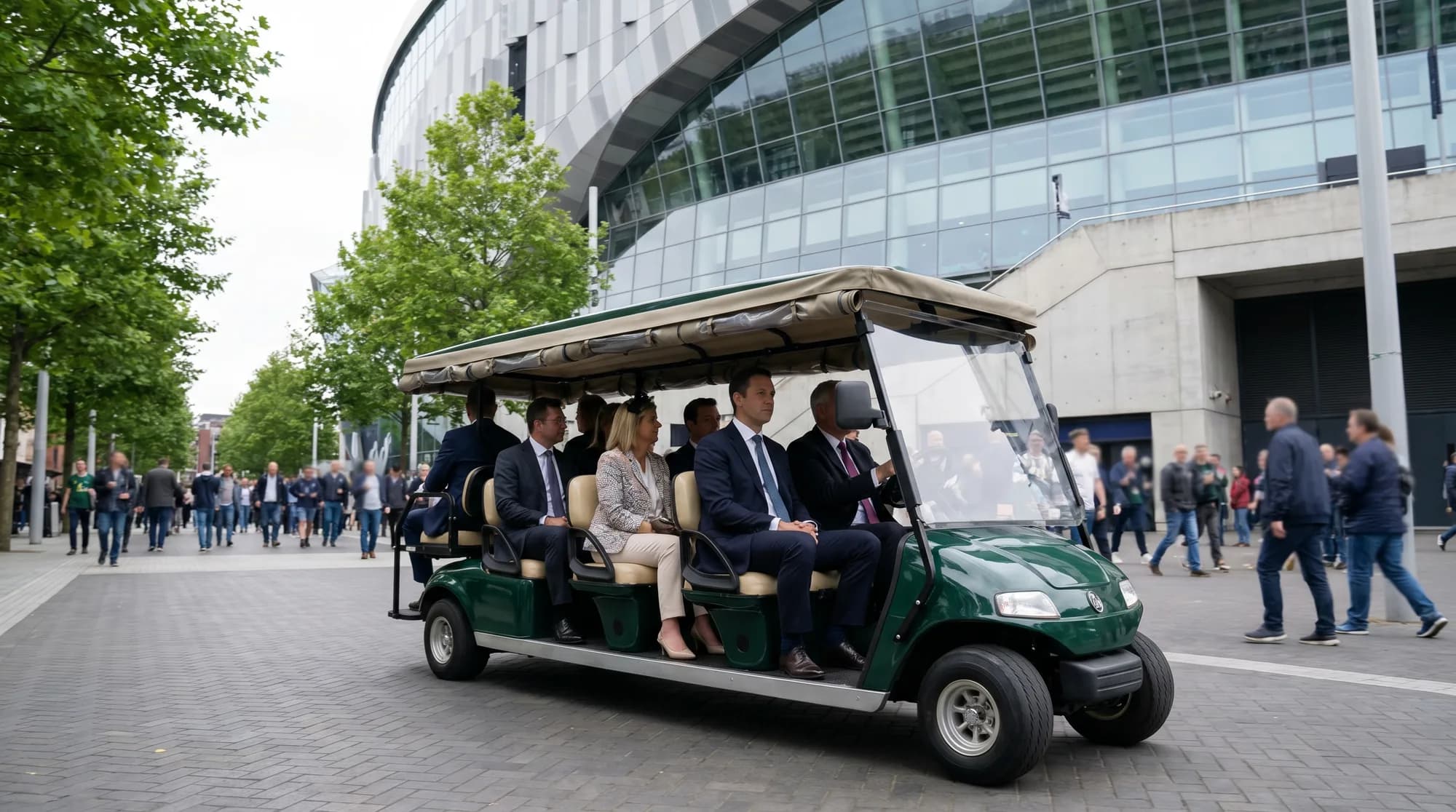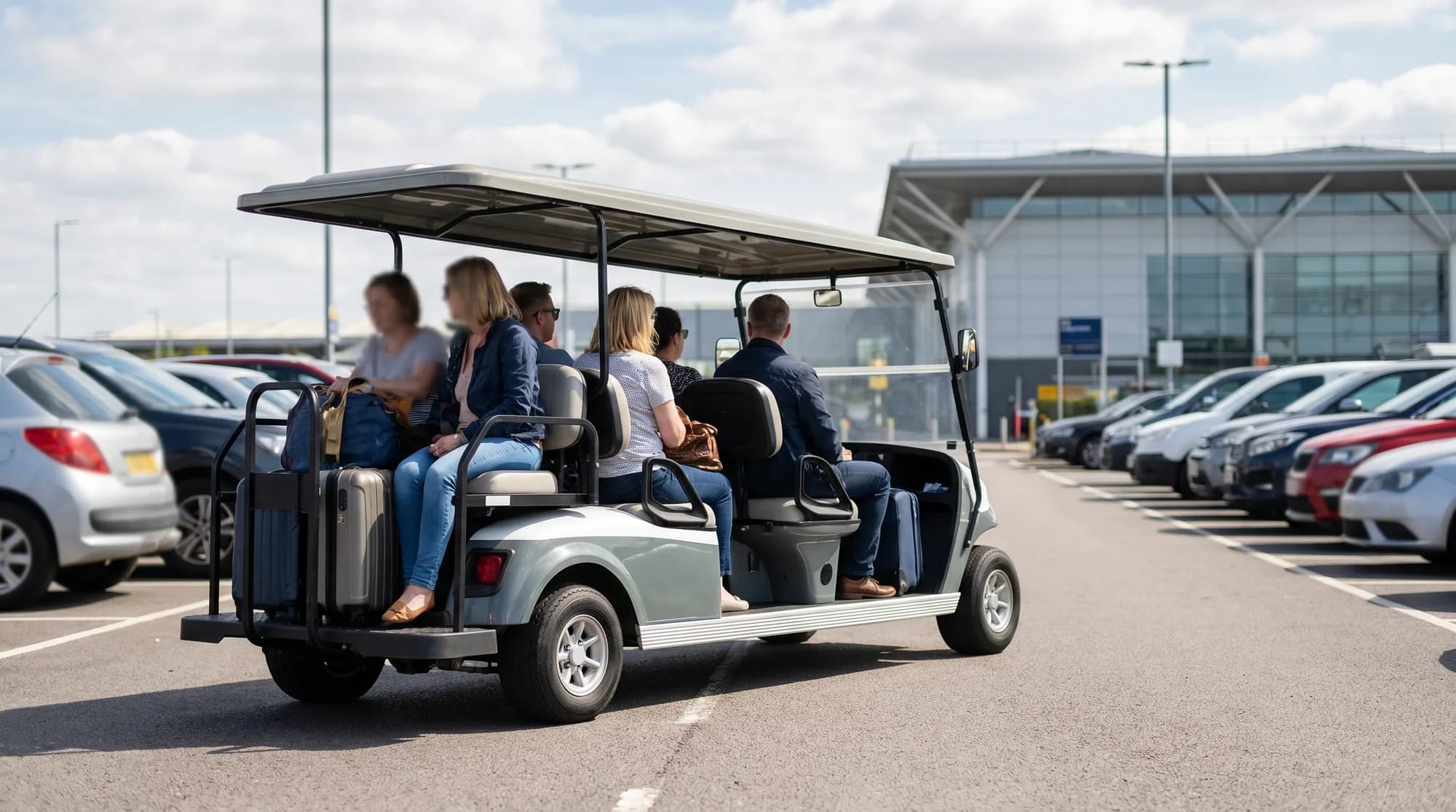
- Airport car park shuttle vehicles run a short, fixed loop between long-stay parking and the terminals, often from before dawn until late at night.
- That predictable duty cycle, the same distance over and over with regular gaps, is close to ideal for an electric drivetrain.
- Swapping a diesel courtesy bus for an electric people-mover cuts fuel and servicing costs and removes the fumes passengers breathe at the kerbside.
- Quiet, smooth shuttles are the first and last thing a traveller experiences, so they shape the impression of the whole trip.
- Get the fleet size from the peak, not the average: size around the busiest arrivals and departures and the rest of the day looks after itself.
Airport car park shuttle vehicles do one of the least glamorous and most important jobs on site. They carry travellers between the long-stay car park and the terminal, on a fixed loop, all day and often half the night. For most passengers it is the first thing they board on the way out and the last thing they board on the way home, frequently with luggage, often tired, sometimes in the dark and the wet. Get it smooth and quiet and the trip starts and ends well. Get it rattling and late and that is the bit people remember.
For decades that loop has been worked by diesel courtesy buses. They do the job, but they are noisy at the kerbside, they idle while passengers load, and they cost a steady stream of fuel and maintenance. The interesting thing is that the very pattern that defines a parking shuttle, the same short circuit repeated again and again with predictable downtime, is exactly the pattern an electric vehicle handles best. This guide looks at why that is, and what to weigh up before you make the switch.
Why a fixed parking loop suits electric so well
The thing that worries people about electric vehicles, range, is barely a factor here. A long-stay shuttle is not driving across the country. It runs a loop that might be a few hundred metres to a couple of kilometres, back and forth, with the route known to the metre. You can work out the daily distance almost exactly, which means you can size the battery with confidence rather than guesswork. Add in the regular quiet spells between waves of arrivals and there is usually plenty of opportunity to top up.
- The route is fixed, so daily distance is predictable and the battery can be sized precisely.
- Speeds are low and steady, which is gentle on the drivetrain and on the battery.
- Stop-start kerbside work suits electric torque and recovers energy on braking.
- There are natural gaps between flights to charge, so a vehicle is rarely caught short.
The running-cost case, honestly
We will not pretend an electric people-mover is free to run, but on a fixed parking loop the sums tend to work. A diesel courtesy bus burns fuel every hour it operates, including while it idles at the kerb, and a combustion engine doing constant stop-start work needs regular servicing. An electric drivetrain has far fewer moving parts, no fuel to buy or store on site, and electricity costs less per mile than diesel for this kind of duty. Spread across a vehicle that works sixteen hours a day, the difference adds up over a few years.
Quiet and clean where it matters most
The kerbside outside a terminal is one of the busiest pedestrian areas an airport has. People are crossing, loading bags, standing in queues, often with children. A diesel shuttle idling there pushes fumes and noise into exactly that space. An electric people-mover is near-silent and produces nothing at the tailpipe, because there is no tailpipe. For passengers it means a calmer board and a quieter ride. For the airport it removes a local source of emissions from a spot where people are standing close. As more airports work towards cleaner ground operations, the range of electric shuttles is an easy early move, and it is one passengers actually notice.
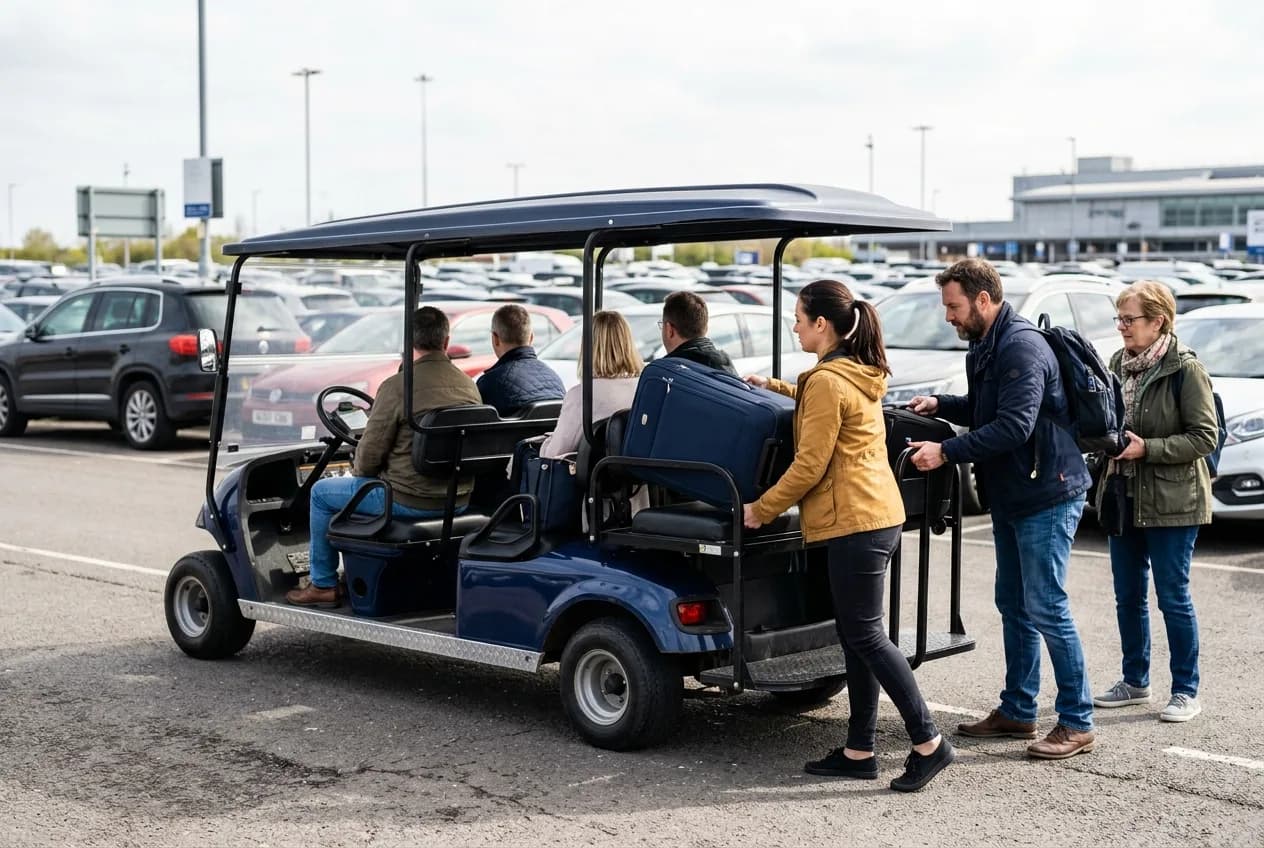
What makes a good long-stay shuttle vehicle
A parking shuttle has a specific brief. It needs to seat a good number of passengers, give them somewhere sensible to put bags, and let people board and step off quickly so the loop keeps moving. The ride should be smooth and the floor easy to step onto, because not everyone using it is sure-footed or travelling light. And it needs to be reliable, because a shuttle that breaks down strands people at the worst possible moment. Our wider guide to electric people-movers and shuttles goes deeper on seat counts and layouts.
- Enough seats and standing-friendly layout to clear a wave of arrivals.
- Space for luggage so the cabin does not jam up with cases.
- Low, easy boarding for older passengers and families.
- Reliability and the range to run the full operating day on an overnight charge.
- An accessible option in the fleet for passengers who cannot manage steps.
Sizing the fleet around the peak
The mistake to avoid is sizing the shuttle fleet on a quiet Tuesday afternoon. A car park empties hard when a wave of flights lands and fills hard before the early departures, and that is when passengers judge the service. Work out the busiest realistic half hour: how many people need moving, how long a full loop takes including loading, and how many seats each vehicle carries. That tells you how many shuttles keep the wait short when it matters. Off-peak you simply run fewer. We are happy to run those numbers with your operations team so the fleet fits the real flight pattern rather than an average.
- 01
Take the busiest half-hour of arrivals or departures from the long-stay car park
- 02
Time a full loop, including the minutes lost loading and unloading bags
- 03
Divide the peak passengers by the seats per vehicle to get trips needed
- 04
Multiply by the loop time to find how many vehicles keep the wait short, then add a spare for cover
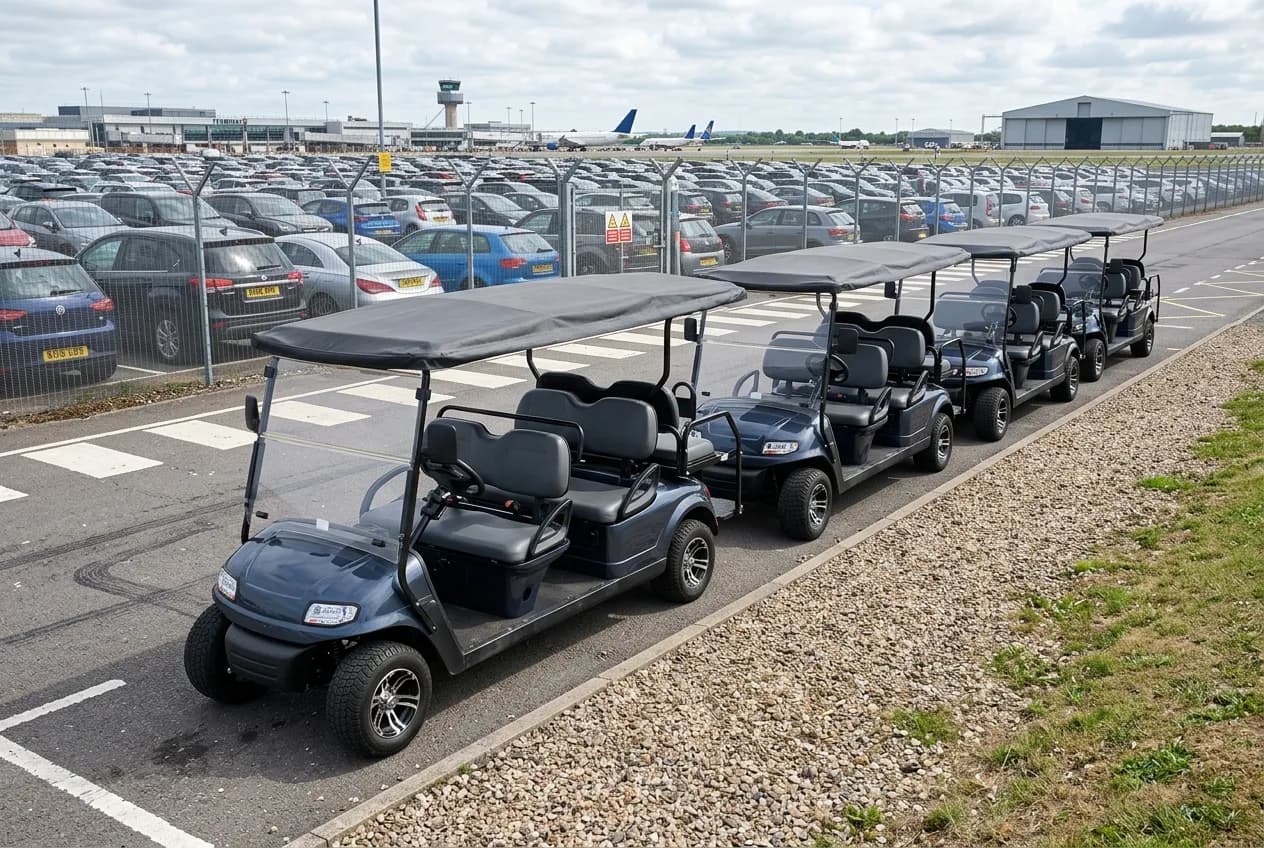
People-movers, built for the loop
Choose the seat count, luggage layout and an accessible option, liveried to your airport and supported by a 24-hour call-out so the loop keeps moving.
Charging that fits the timetable
Because a parking loop is so predictable, charging is more straightforward than people fear. The right approach is to map the duty cycle first: the hours worked, the distance per shift and the natural gaps in the day. From that you size the battery and decide whether the fleet charges overnight, tops up in quiet spells, or both. Done properly a shuttle runs the full operating day and is ready again the next morning, and you are never left with a vehicle queueing for a charger just as the next flight lands.
Thinking about replacing your courtesy buses?
Tell us your long-stay loop, the operating hours and the peaks you handle. We will spec the right electric shuttles, liveried for your airport and built to run the timetable.
Frequently asked questions
Will an electric shuttle last a full day on a long-stay loop?+
Sized correctly, yes. Because the loop distance is fixed and predictable, the battery can be matched to the daily mileage, so vehicles run the operating day and charge in the gaps or overnight.
Is electric really cheaper than a diesel courtesy bus?+
For this kind of fixed, stop-start duty it usually is. There is no fuel to buy or store and far less servicing, so the total cost of ownership tends to beat diesel within a few years. We will run the figures on your actual loop.
Can the shuttles carry luggage?+
Yes. We build to order, so the layout can include luggage space and a low, easy boarding step suited to travellers with cases and families.
What about wheelchair and reduced-mobility passengers?+
Plan an accessible vehicle into the fleet so those passengers ride the same loop. We cover this in our guide to airport PRM transport and accessible vehicles.
Can the shuttles be branded for our airport?+
Yes. Every vehicle is made to order, so colour, livery and a logo are specified into the build to match your airport rather than looking like generic hire equipment.
Related solutions
Ready to explore what we build?
See the vehicles and the setting this applies to, or get a tailored quote built around your site.

Ready to find the right buggy?
Tell us how and where it will work and we will specify a vehicle and a tailored quote built around you. Every build comes with a 3-year warranty and a 24-hour priority call-out.
Our guides are written and reviewed by the Hawke Electric Vehicles team, the people who specify, build, deliver and support the vehicles. We focus on honest, practical advice and flag where a figure depends on the build rather than guessing.
More guides by Hawke