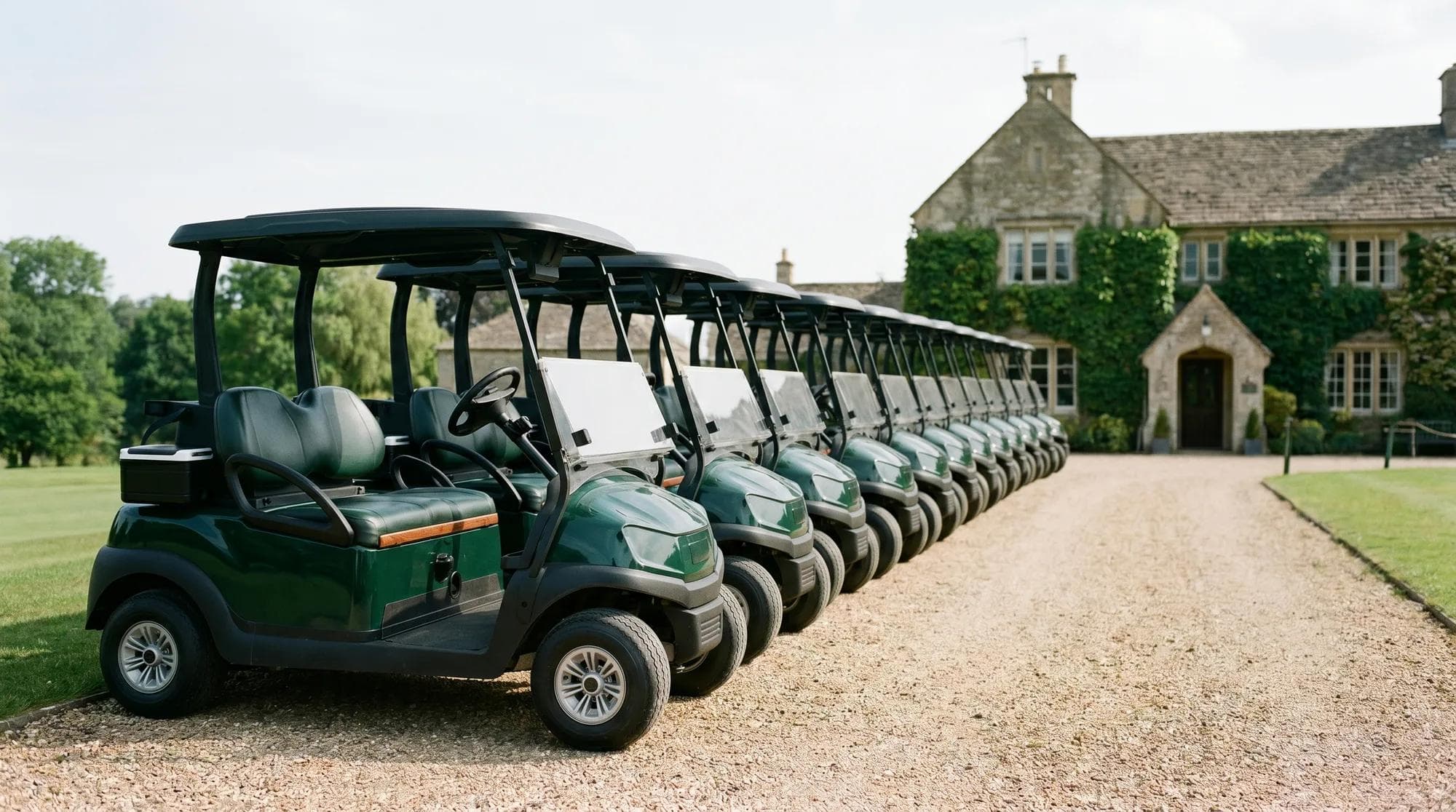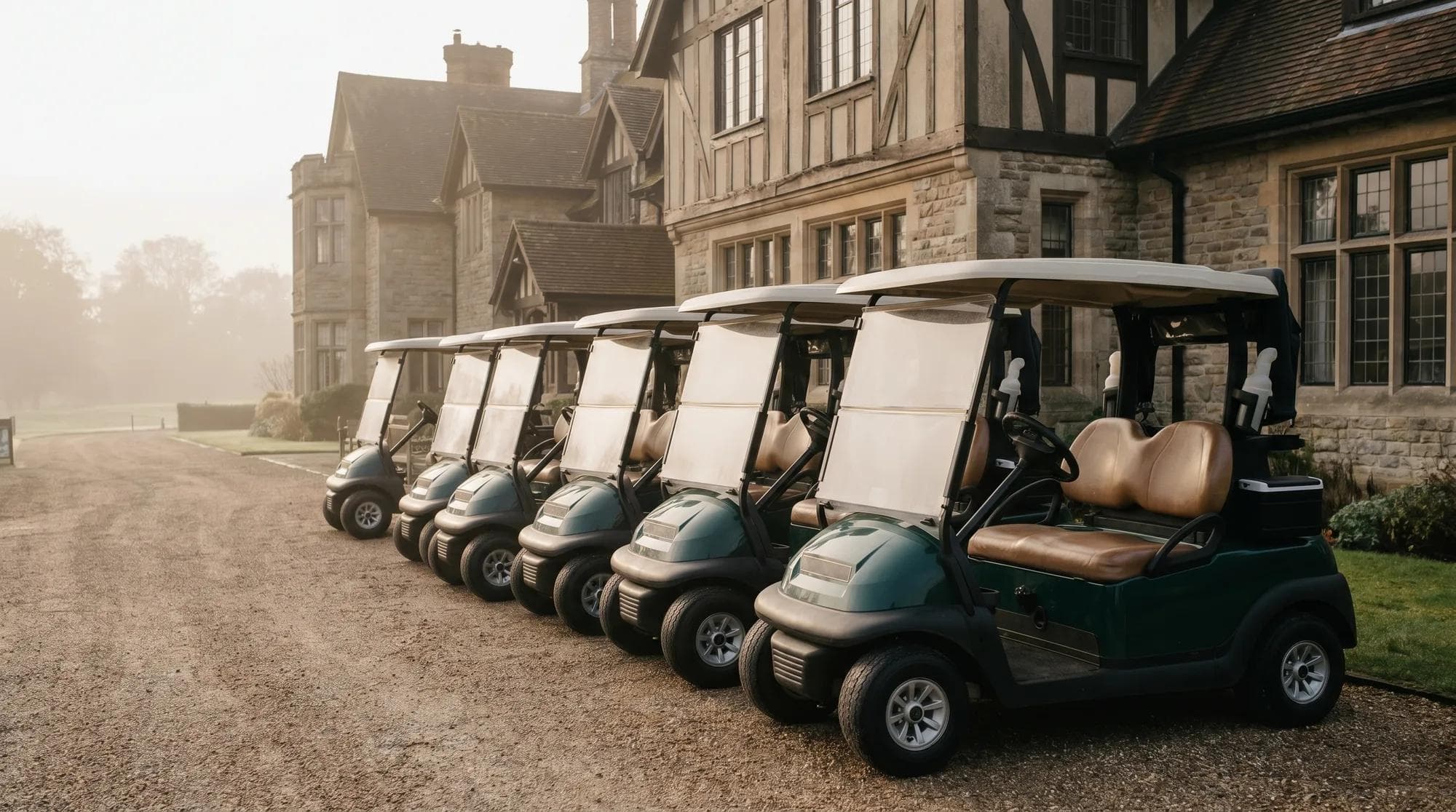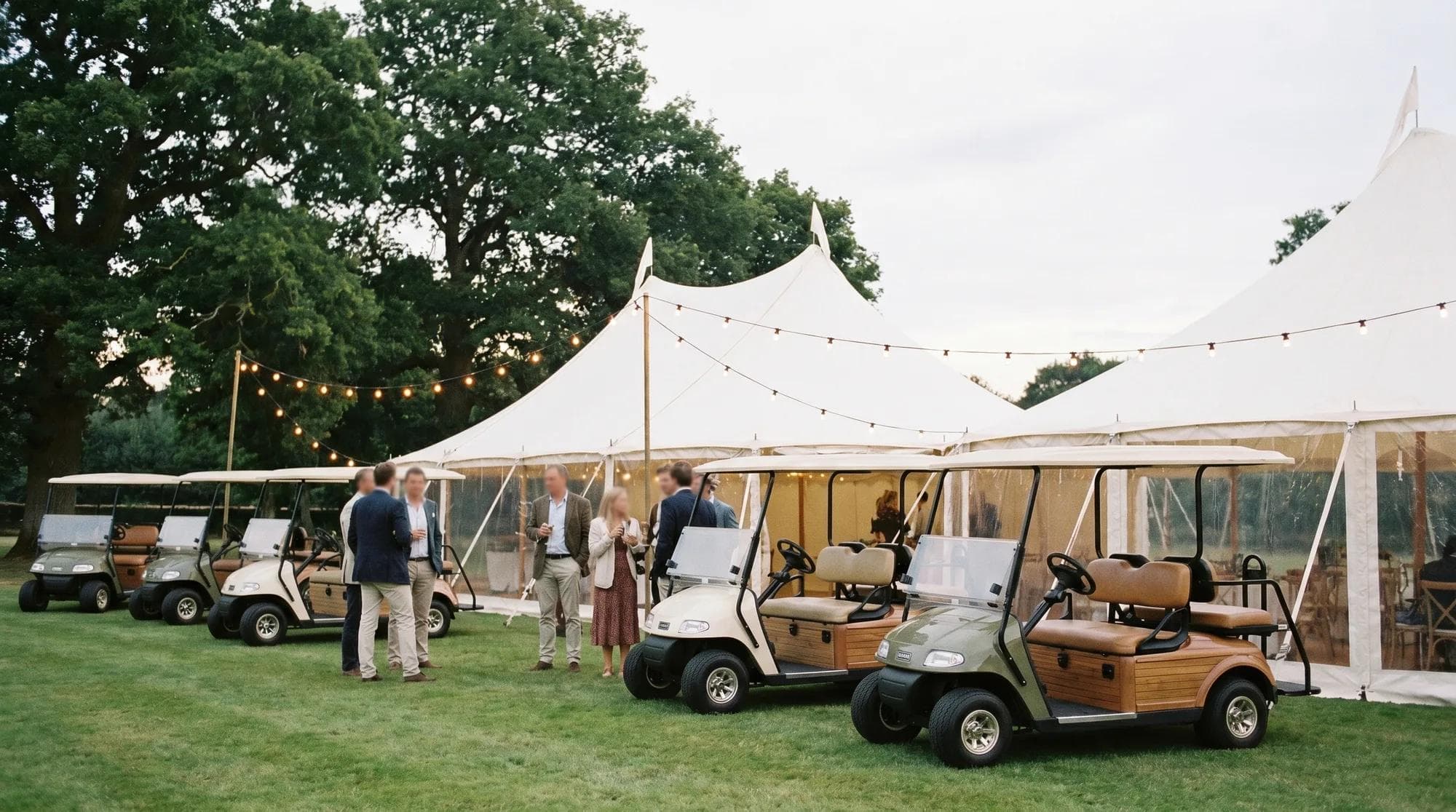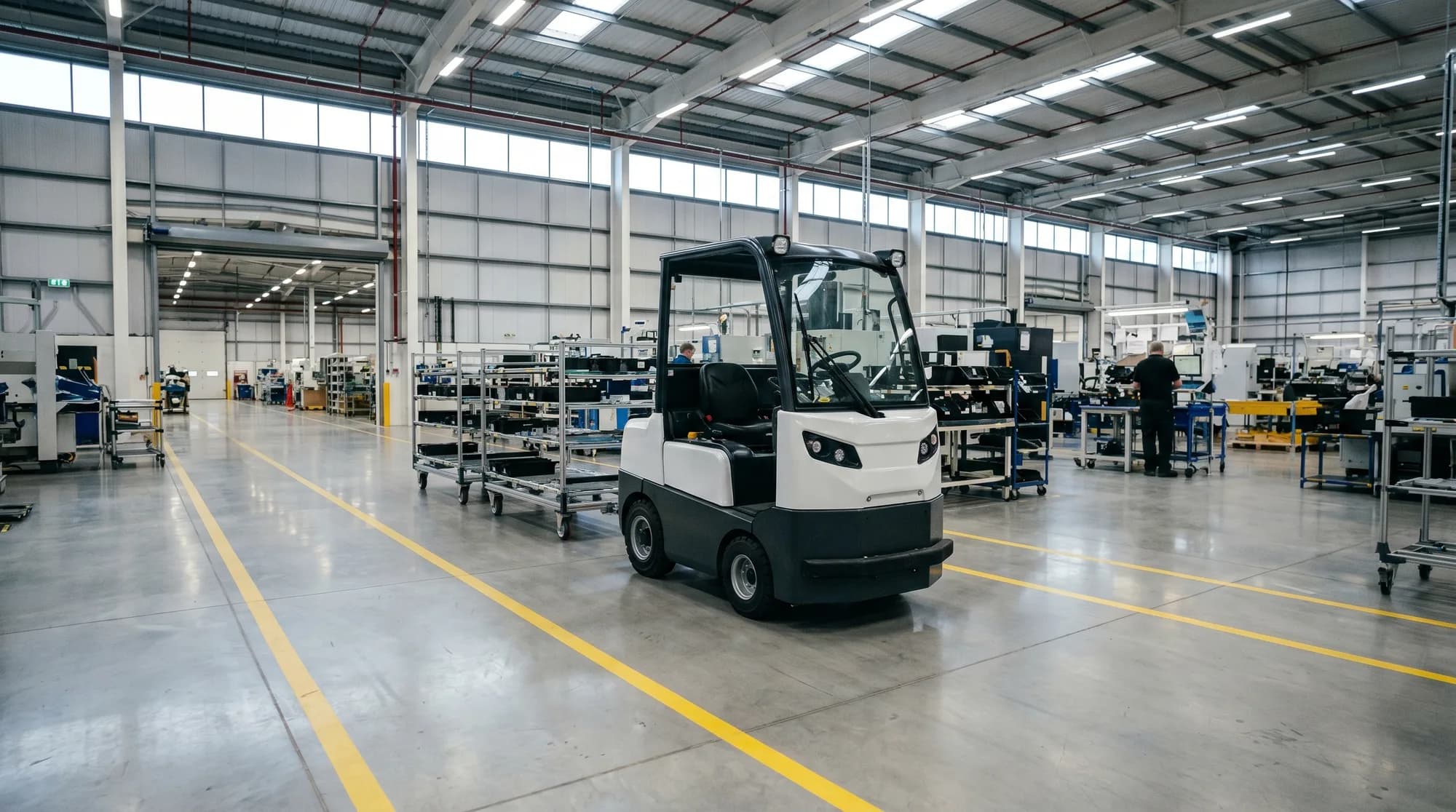
- A buggy fleet is a set of moving panels that crosses a venue all day in front of everyone there, which makes the bodywork genuinely valuable brand space.
- Those panels work twice: for your own brand, and as sponsor space you can sell or include in a partnership package.
- A golf buggy branding wrap is the flexible route for changing sponsors; a built-in painted livery is the cleaner, more durable route for your own permanent brand.
- Tasteful is what keeps the value high. A fleet that looks cluttered or cheap drags a sponsor's name down with it, which defeats the point.
- Plan the panels from the start. Deciding what carries your brand and what is sponsor space before you build avoids an awkward retrofit later.
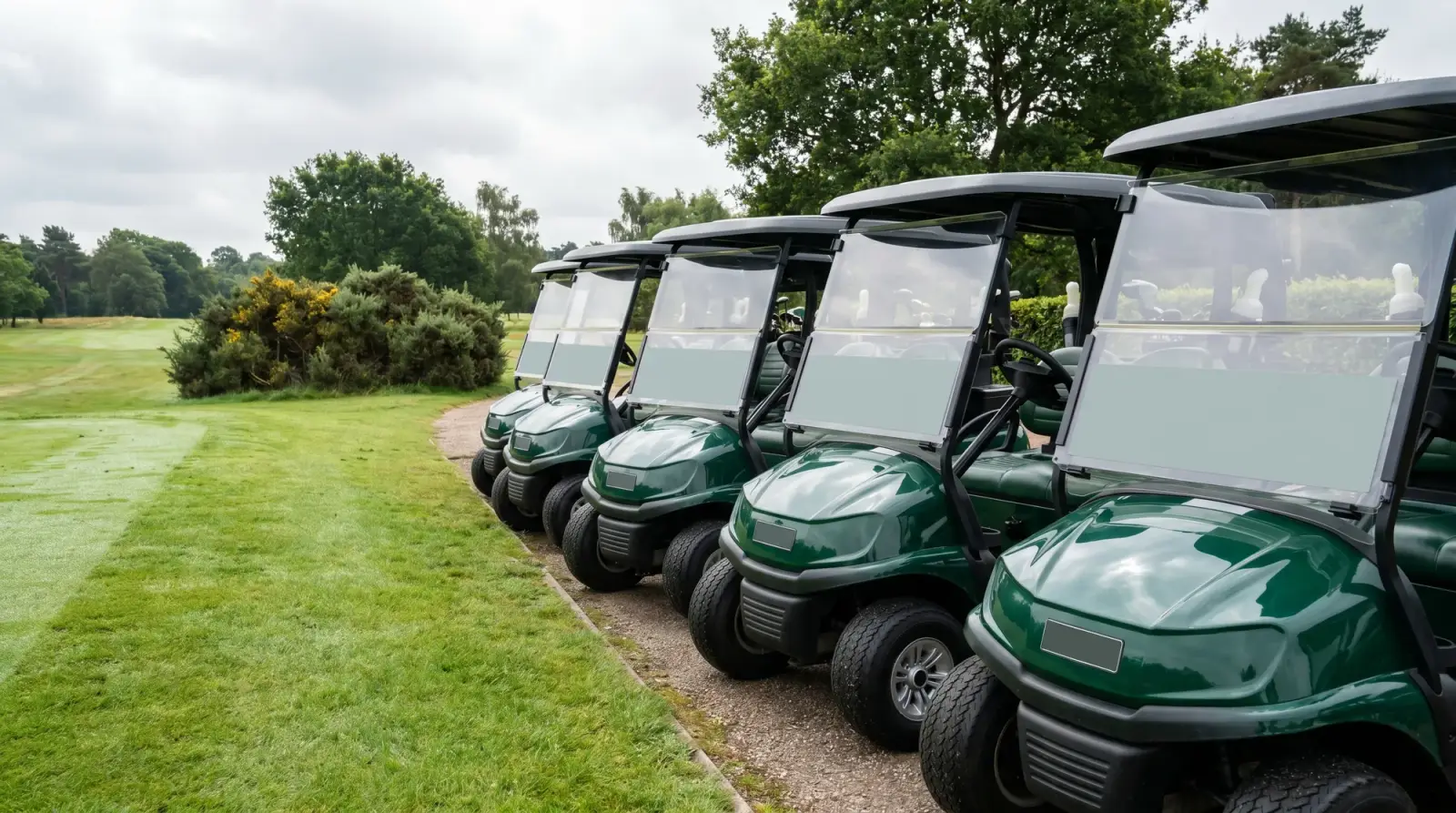
Stand at the edge of a golf course, a festival site or a country estate hosting an event, and watch the buggies. They are never still. All day they criss-cross the site carrying members, guests, players and crew, passing in front of nearly everyone who is there. Most venues think of that fleet as transport and nothing more. It is also, if you look at it differently, a fleet of moving advertising boards going past your most valuable audience for hours on end.
That is the idea behind treating a buggy fleet as brand real-estate. The panels carry a message, whether you put one there deliberately or leave them blank. This guide is about using that space well: for your own brand, and as sponsorship you can sell. We will look at how livery and wraps actually work, how to keep it tasteful, and why it is worth deciding all this before the vehicles are built rather than after.
Why a buggy fleet is valuable brand space
Most advertising at a venue is static. A banner sits where you hang it and the only people who see it are the ones who walk past that spot. A buggy is different. It moves, which means the same panel is seen by different people all over the site through the day, on the fairways, at the clubhouse, in the car park, by the stage. It also reaches people at close range and at a relaxed moment, when they are being driven somewhere and have nothing else to look at.
There is a quality effect too. A buggy is a considered, premium object, not a printed sheet cable-tied to a fence. A name on the side of a smart vehicle borrows some of that quality. For your own brand that reinforces how the venue feels; for a sponsor it is a more flattering setting than a banner. We go into the wider thinking on house branding in our guide to custom fleet branding.
Two jobs the panels do
It helps to be clear about what the livery is for, because a buggy fleet can do two things at once and they pull in slightly different directions. The first job is your own brand: the colour, name and look that make the fleet read as part of your venue. The second is sponsorship: space you sell or include in a partnership, carrying someone else's name in front of your audience.
The two can sit happily on the same vehicle if you plan it. The trick is to decide which panels are permanently yours and which are available to a sponsor, so the fleet always reads as your venue first, with a sponsor present but not shouting over you. Get that balance wrong and the buggies look like someone else's advert that happens to be driving round your site.
Wraps versus built-in livery
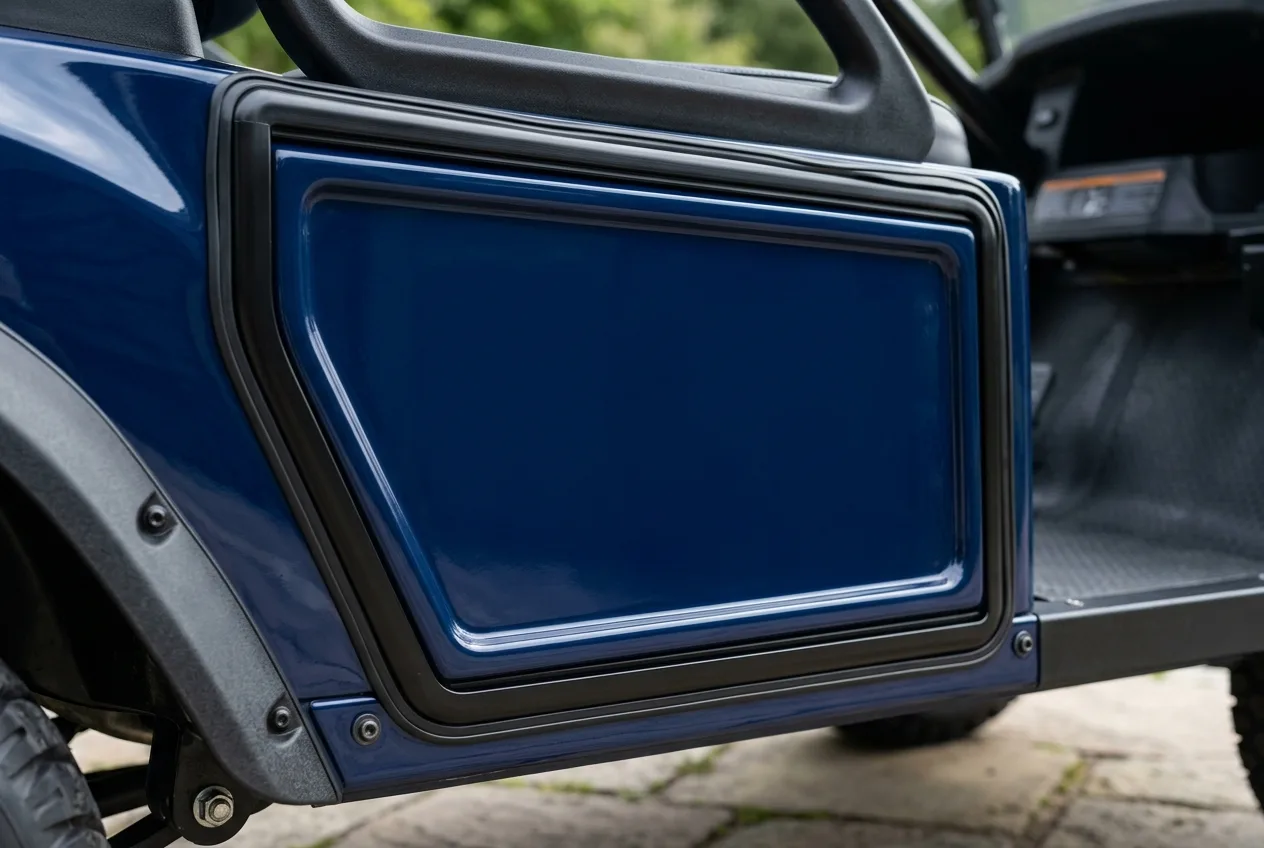
There are two ways to get a message onto a buggy, and they suit different jobs. A wrap is a printed vinyl skin applied over the bodywork. It is the natural choice for sponsorship, because it can be changed when the sponsor changes, so this season's partner comes off and next season's goes on without touching the vehicle underneath. A built-in livery, where the bodywork is painted in your colour and your branding is part of the build, is the cleaner and more durable choice for the elements that never change, which usually means your own brand.
- Best for
- Your permanent house brand and colour
- Trade-off
- Fixed, but the cleanest finish and longest lasting
- Best for
- Sponsors and seasonal or event branding
- Trade-off
- Changeable, but shows wear sooner than paint
- Best for
- A house-branded fleet with swappable sponsor panels
- Trade-off
- Needs planning, but gives you the best of each
| Approach | Best for | Trade-off |
|---|---|---|
| Built-in painted livery | Your permanent house brand and colour | Fixed, but the cleanest finish and longest lasting |
| Vinyl wrap | Sponsors and seasonal or event branding | Changeable, but shows wear sooner than paint |
| Both together | A house-branded fleet with swappable sponsor panels | Needs planning, but gives you the best of each |
Most venues end up using both. The bodywork is painted in the house colour so the fleet is unmistakably yours and stays sharp for years, and a defined area is left for a wrapped sponsor panel that can be refreshed each season or for each event. That way the permanent brand is durable and the sponsorship stays flexible.
Doing it tastefully
This is where fleet sponsorship is won or lost. The value of the space depends entirely on the fleet looking good. A buggy plastered edge to edge with logos looks cheap, and cheap rubs off on every name it carries, including yours. A sponsor paying to appear on a smart, restrained vehicle is getting something worth having; a sponsor lost in a clutter of competing logos is not, and they will notice.
- Give a sponsor one clear, well-placed panel rather than scattering a logo over every surface.
- Keep your house colour and identity dominant so the fleet always reads as your venue.
- Limit how many sponsors share a vehicle, so none of them is fighting for attention.
- Choose finishes and placements that survive washing, weather and daily use, so it never looks tatty.
Built to order, or wrapped later
You can brand a buggy fleet two ways round. You can buy plain vehicles and wrap them afterwards, which works but adds cost and rarely looks as crisp, especially where a wrap has to follow curves and panel gaps. Or you can have the branding designed into the vehicle from the build, which is the route we take for the permanent elements. Every buggy we make is built to order, so your house colour and brand are part of the specification, with sponsor areas planned in as clean panels ready to wrap.
Deciding this before the vehicles are made saves an awkward retrofit. If you know from the start that a buggy will carry your brand permanently and a sponsor seasonally, the build can allow for both: the right base colour, a sensible flat area for a sponsor wrap, and trim that frames it all neatly. Done the other way round, you end up compromising on a vehicle that was never planned for the job.
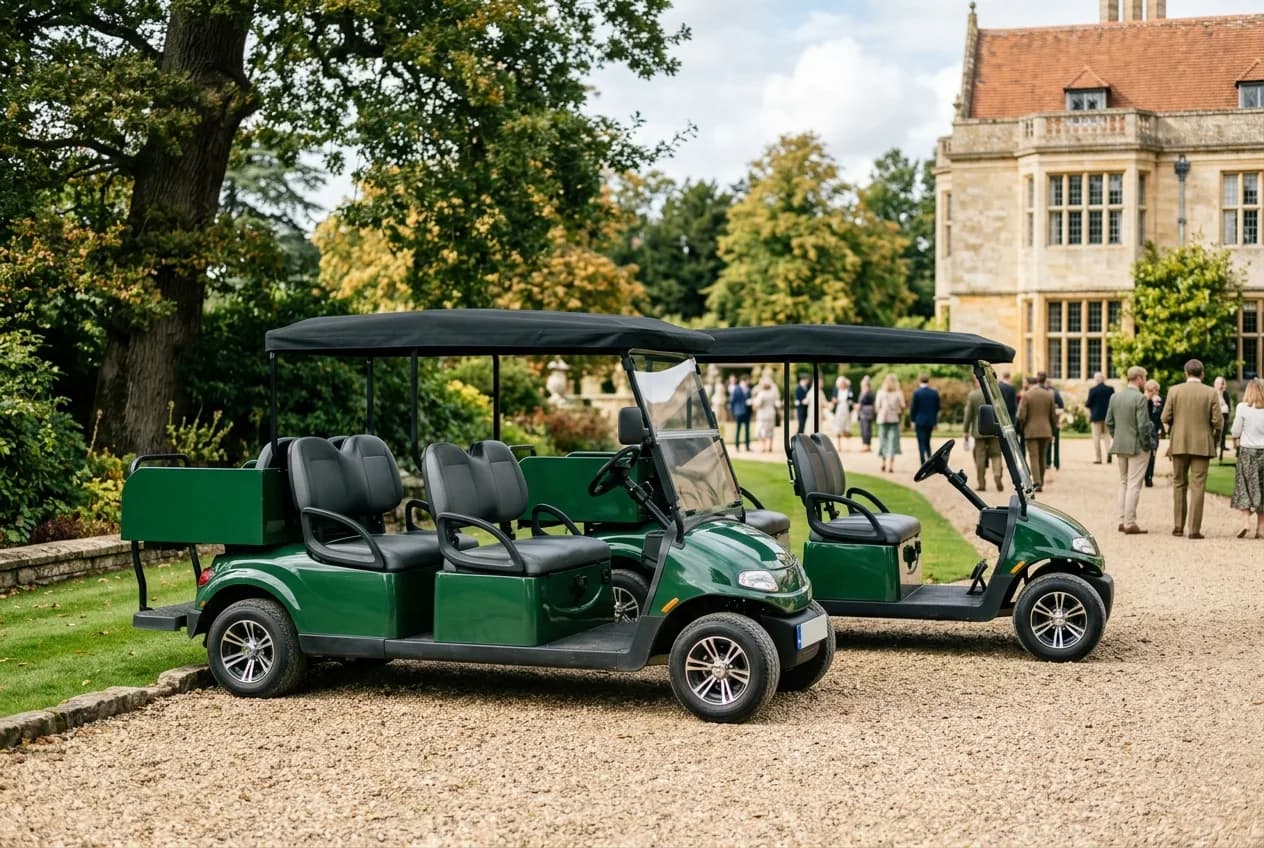
A fleet planned for your brand
Electric buggies and people-movers built to order, assembled and finished in the UK, painted in your colour with sponsor panels planned in, ready to carry your brand and theirs.
Sponsorship at events and venues
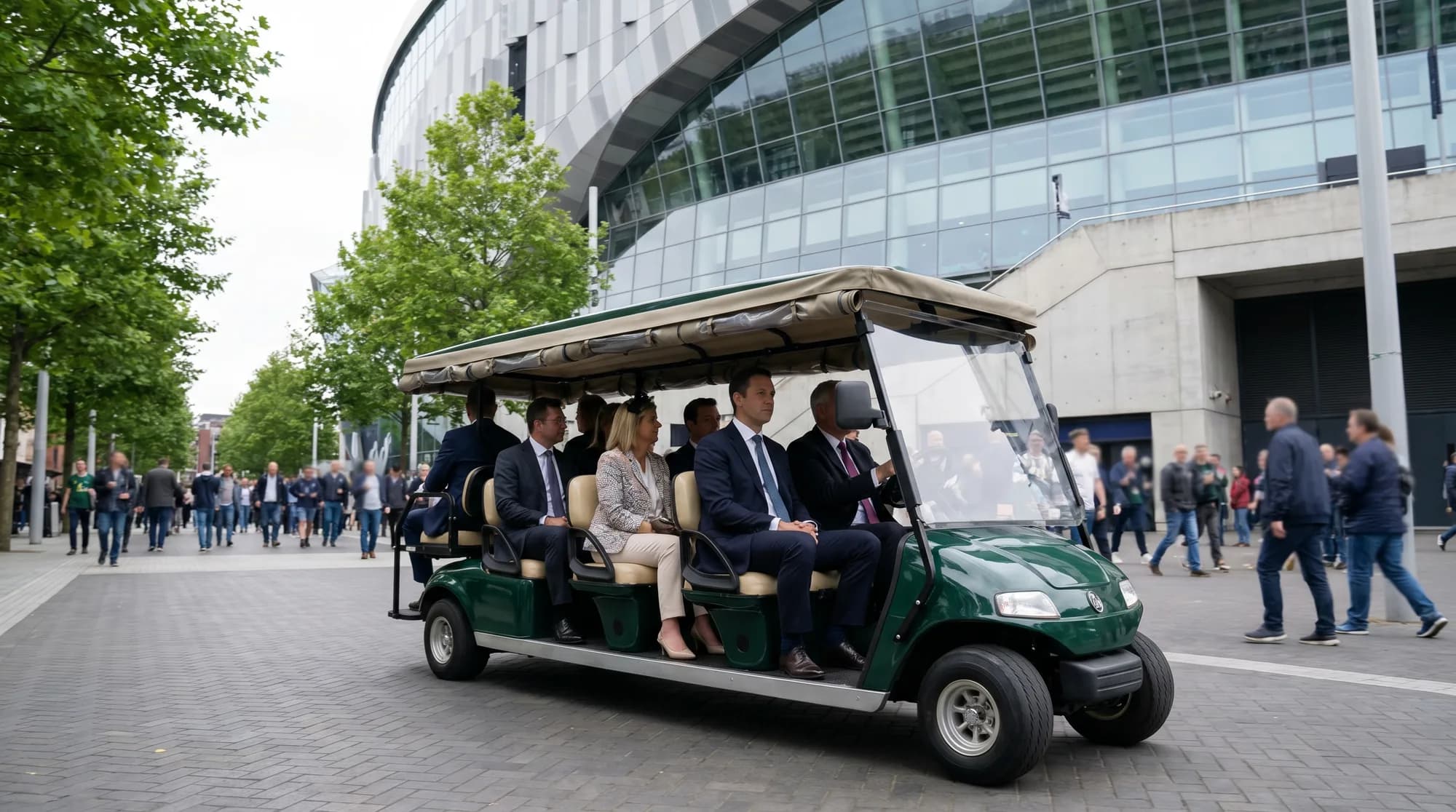
At an event, the value of a moving fleet is sharper still. A buggy carrying players, artists or VIPs is photographed, filmed and seen by a crowd that came for a single occasion. A sponsor's name on those vehicles travels into the coverage and the photographs in a way a fixed banner cannot. Many event organisers fold the buggy fleet straight into a sponsorship package, where the partner who funds the transport gets the panels. If you hire vehicles for occasions, our guide to hiring electric buggies for events covers how that fits together.
For a permanent venue, the logic is slower but steadier. A golf club or estate fleet runs every day of the season in front of members and guests, so a sponsor panel earns its place quietly over months rather than in one weekend. Either way, the principle is the same: the panels are an asset, and a tidy, well-planned fleet is what makes them worth something.
Planning your panels from scratch
If you are specifying a new fleet, this is the easy moment to get branding and sponsorship right, and the awkward thing to fix later. Bring your brand and your sponsorship plans to the table at the same time as the vehicle brief, so colour, livery and sponsor space are decided alongside seat counts and fleet size.
- 01
Map the panels
Decide which areas of each vehicle carry your permanent brand and which are available as sponsor space.
- 02
Set your house livery
Choose the base colour and your own branding, painted into the build so the fleet stays unmistakably yours.
- 03
Plan the sponsor space
Leave clean, sensible panels for wrapped sponsor branding that can be changed each season or event.
- 04
Build and brand
The fleet arrives in your colours with sponsor areas ready to wrap, so it earns from day one.
Whether you run four buggies or forty, the thinking is the same. Take a look at the range to see the body styles and the panels you have to work with, or request a quote and we will talk through how your brand and a sponsor's can share the fleet.
Make every panel earn its keep
Tell us your brand, your fleet and whether sponsorship is part of the plan, and we will build vehicles with your livery and sponsor space designed in from the start.
Frequently asked questions
Is a wrap or a painted livery better for a buggy fleet?+
It depends on the job. A painted, built-in livery is cleaner and lasts longest, which suits your permanent house brand. A vinyl wrap is changeable, which suits sponsors and seasonal branding. Most venues use both on the same fleet.
Can the same buggy carry our brand and a sponsor's?+
Yes, and it works best when planned. We keep your house colour and identity dominant and leave a defined, well-placed panel for a sponsor, so the fleet reads as your venue first.
Will a golf buggy branding wrap survive being used every day?+
If specified sensibly, yes. We choose flat, sensible panel areas and durable materials so a wrap copes with washing, weather and daily use rather than peeling or looking tatty within a season.
Should we plan sponsorship before buying the vehicles?+
Ideally, yes. Deciding which panels are yours and which are sponsor space before the build means the vehicles arrive ready, with the right colour, flat areas and trim, rather than needing an awkward retrofit later.
Can you re-brand vehicles we already own?+
We can advise on wrapping existing vehicles, but the cleanest and most durable result comes from building your livery in from the start and planning sponsor panels around it. Tell us what you have and we will be honest about the best route.
Related solutions
Ready to explore what we build?
See the vehicles and the setting this applies to, or get a tailored quote built around your site.
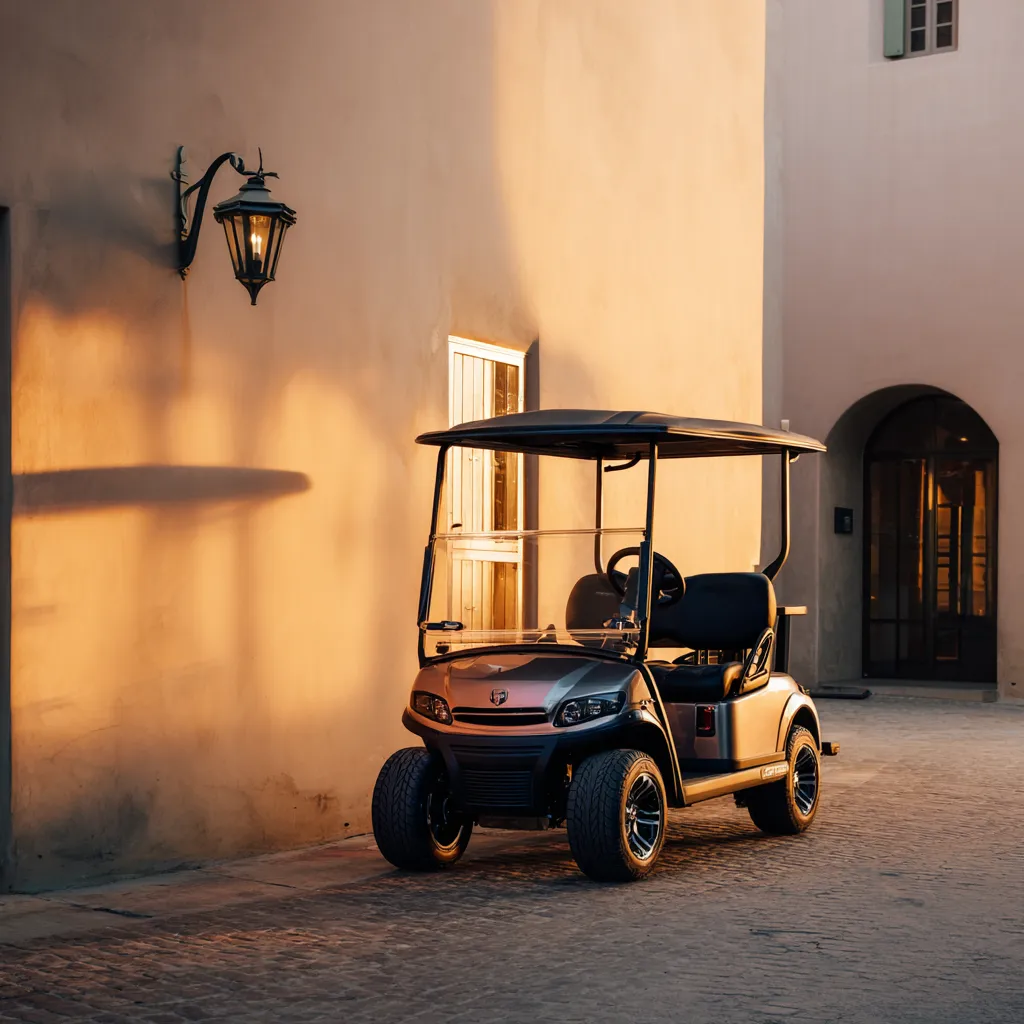
Ready to find the right buggy?
Tell us how and where it will work and we will specify a vehicle and a tailored quote built around you. Every build comes with a 3-year warranty and a 24-hour priority call-out.
Our guides are written and reviewed by the Hawke Electric Vehicles team, the people who specify, build, deliver and support the vehicles. We focus on honest, practical advice and flag where a figure depends on the build rather than guessing.
More guides by Hawke