On any campus, estate, school or care site, the winter morning starts before the site opens: someone has to grit the paths, steps and car parks while the rest of the world is still asleep. It is cold, repetitive, deadline work, and it is exactly the kind of round an electric utility vehicle transforms: grit bags in the load bed, a towed spreader behind where the rating allows, and a quiet 6am route that wakes nobody. This guide covers how gritting rounds actually work on a utility vehicle, honestly, these are not purpose-built highway gritters, and they do not need to be.
- Grit bags ride in the load bed; a hopper or towed spreader does the spreading.
- Tow-behind salt spreaders are made for exactly this, used within the vehicle's rating.
- A quiet electric round works at 6am beside accommodation and wards.
- Plan the route: priority paths first, refill points, and a repeat pass in freeze-thaw.
- This is site gritting, not highway gritting, and your winter plan remains your own.
The honest setup
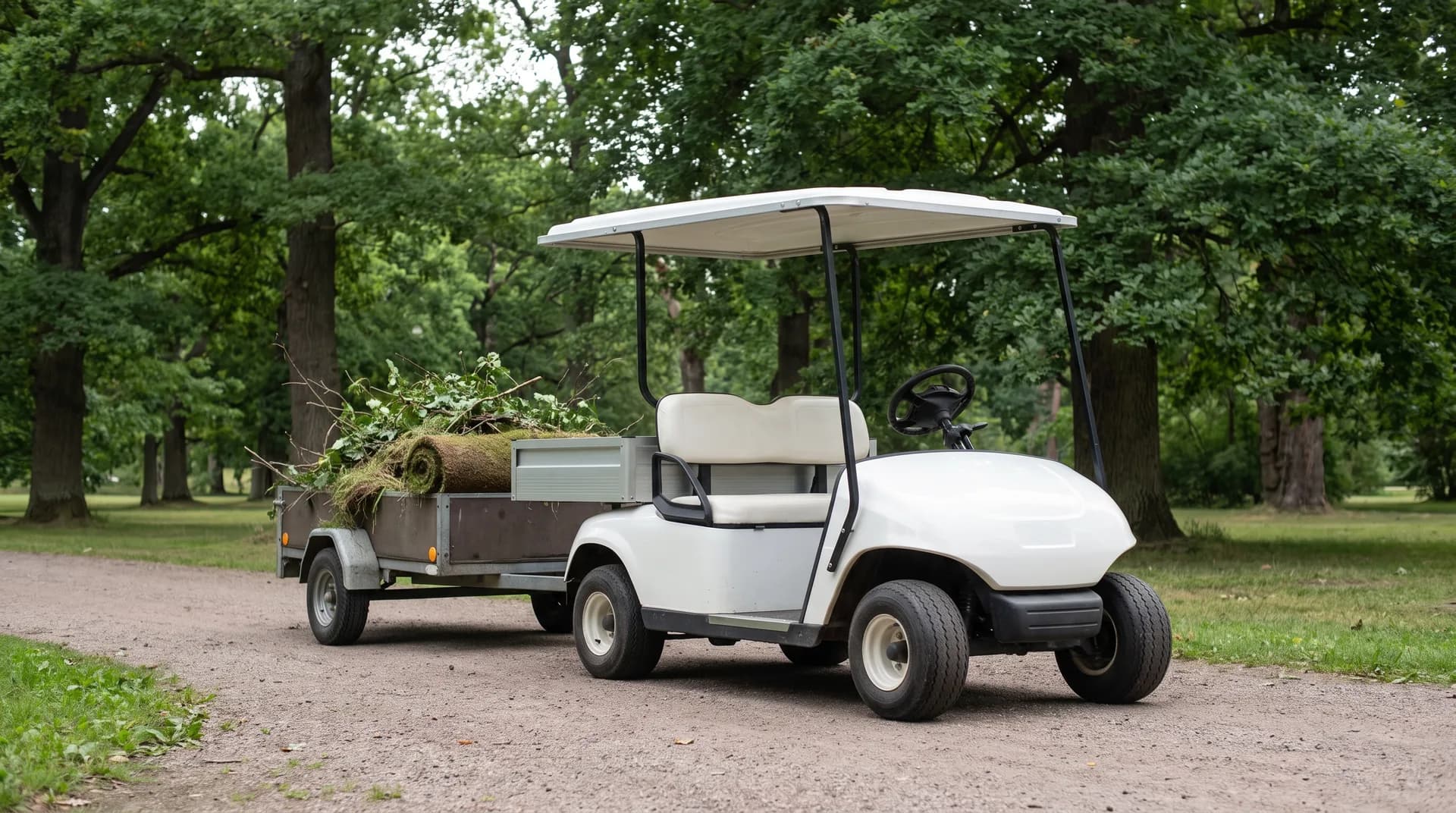
Let us be precise about the machinery, because honesty here is easy: an electric utility vehicle is not a purpose-built gritter, and a site round does not need one. The standard setup the grounds industry actually uses is a UTV carrying grit bags and a walk-behind spreader in the bed, or towing a small trailed salt spreader, equipment made specifically to run behind utility vehicles, hitched within the vehicle's rated towing capacity, the same rating discipline as our towing guide. We quote the real tow rating for any model so you can match a spreader to it on facts.
Why electric suits the 6am round
Gritting happens when sites are at their quietest and coldest, which plays to electric strengths. The round runs beside student accommodation, patient windows and hotel rooms without an engine waking anyone; it starts first time in the cold with no choke, no warm-up and no cans of fuel in a frozen shed; and its short, stop-start route across paths and yards is precisely the duty cycle covered in our site and estate maintenance work. Cold does trim battery range, so the vehicle's own winter care matters, but a gritting circuit is short work for a pack sized to the site.
Running a round that works
A good gritting round is planned like a postal walk: priority routes first, entrances, steps, accessibility ramps, then the wider paths and car parks, with grit refill points staged so the vehicle is never running empty back to the yard. Freeze-thaw days need a repeat pass, and a simple log of what was gritted and when is the record a well-run site keeps, the same habit as our daily checks guide. To be clear on the boundary: we advise on the vehicle and its honest capabilities; your site's winter plan, spreading rates and any duties you owe under it are yours, with spreader makers and your own policies the guide.
Frequently asked questions
Can an electric utility vehicle grit paths?+
Yes, the way the grounds industry actually does it: grit bags and a walk-behind spreader carried in the load bed, or a small trailed salt spreader towed within the vehicle's rated capacity. It is not a purpose-built highway gritter and a site round does not need one.
Can a UTV tow a salt spreader?+
Trailed salt spreaders are made specifically to run behind utility vehicles, and the rule is the same as any towing: stay within the vehicle's rated capacity, which we quote per model so you can match the spreader on facts.
Does cold weather hurt the vehicle on winter rounds?+
Cold trims battery range, but a gritting circuit is short, stop-start work well within a properly sized pack. Sensible winter care, covered in our winter guide, keeps the vehicle happy through the season.
Why not just grit by hand?+
Small sites can. On a campus, estate or large school, hand-gritting the priority routes before opening is hours of freezing barrow work that a vehicle round does in a fraction of the time, repeatably, with the grit riding alongside.
Does using a vehicle change our winter obligations?+
Your winter plan, priorities and any duties under it remain your own; we advise on the vehicle and its honest capabilities. For spreading rates and de-icing practice, the spreader manufacturer's guidance and your own policies are the reference.
Winter-proof your site rounds
Tell us your site, your priority routes and your spreader plans, and we will specify a vehicle with the honest ratings to run them, and cost it honestly.
Related solutions
Ready to explore what we build?
See the vehicles and the setting this applies to, or get a tailored quote built around your site.

Ready to find the right buggy?
Tell us how and where it will work and we will specify a vehicle and a tailored quote built around you. Every build comes with a 3-year warranty and a 24-hour priority call-out.
Our guides are written and reviewed by the Hawke Electric Vehicles team, the people who specify, build, deliver and support the vehicles. We focus on honest, practical advice and flag where a figure depends on the build rather than guessing.
More guides by Hawke