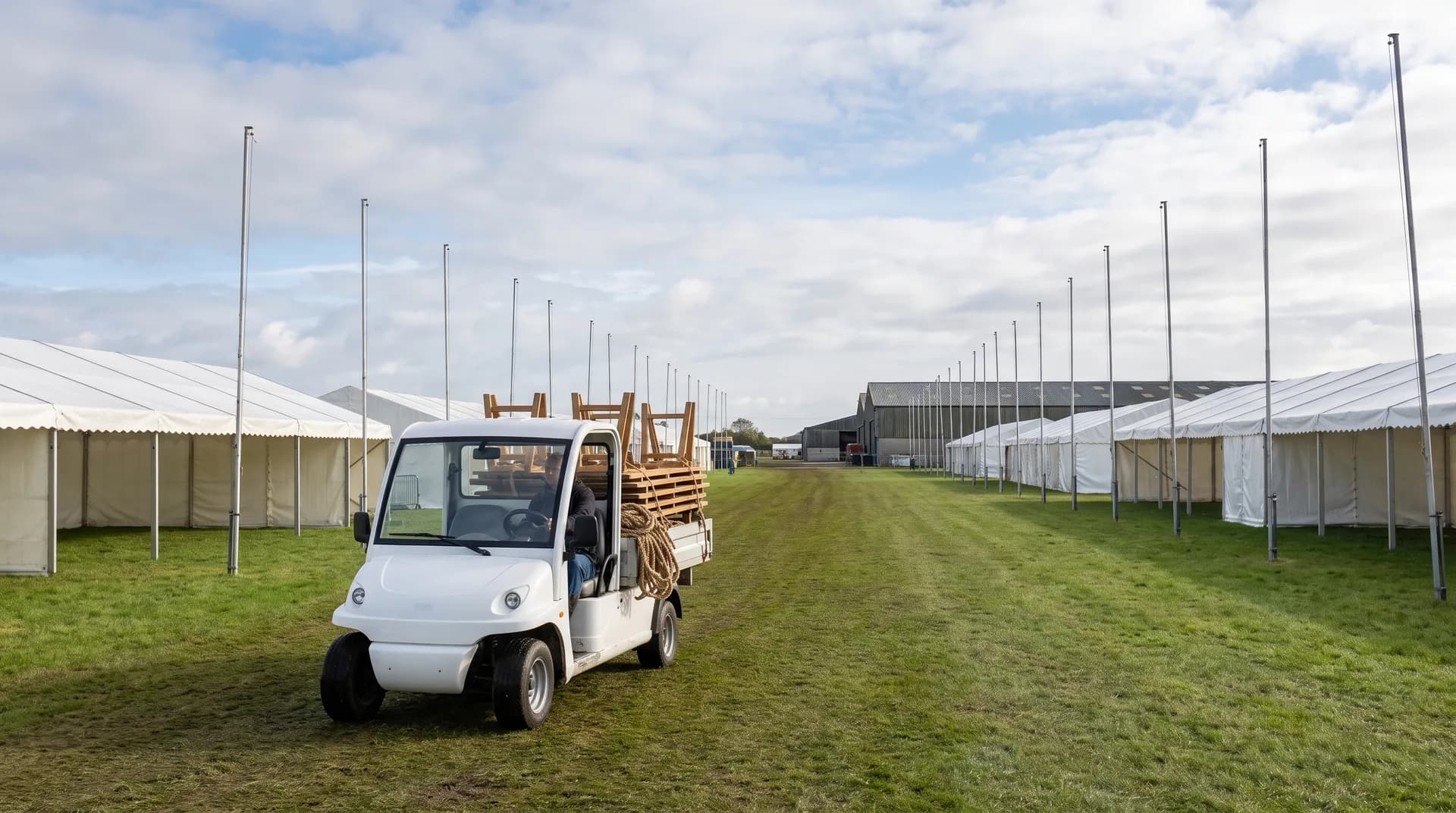
A burden carrier is a compact electric work vehicle that carries loads on its own flat load bed, moving goods, tools and materials from point to point across a site. The name is telling: it carries the burden itself rather than pulling it behind. That single distinction sets it apart from a tow tractor, and it is the reason burden carriers have quietly become the workhorse of so many warehouses, factories and campuses.
- A burden carrier carries a load on its own bed and drives it from A to B.
- It differs from a tow tractor, which pulls trailers rather than carrying goods on board.
- It is not a forklift: it moves loads horizontally, it does not lift and stack them.
- Most are electric, quiet and clean enough for indoor use, and capable outdoors too.
- Choosing one is a balance of payload, bed size and how tight the aisles are.
- Hawke's U1 (800 kg) and U2 (1-tonne) trucks cover the common burden-carrier duties.
Burden carrier meaning: a plain definition
Picture a small, low-slung electric truck with a driver's seat at the front and a flat load area behind. You load it by hand, by pallet truck or from a bench, drive it down a corridor or a service road, and unload at the far end. That is a burden carrier. It exists to solve one problem well: moving a meaningful load over a meaningful distance, repeatedly, without a person carrying it or a diesel engine fouling the air.
The term is common in industrial and facilities circles, and you will also hear the same vehicle described as an electric load carrier, a platform truck or, more loosely, a utility vehicle. The defining feature is always the on-board load bed. If the load rides on the vehicle, you are looking at a burden carrier.
Burden carrier vs tow tractor: carries versus pulls
This is the distinction that trips people up, so it is worth being precise. A burden carrier carries the load on itself. A tow tractor (also called a tug or tow tug) carries nothing of its own worth mentioning; instead it hitches to one or more wheeled trailers and pulls them in a train behind it.
- Burden carrier
- Carrying it on an on-board bed
- Tow tractor
- Pulling trailers behind it
- Burden carrier
- One load at a time, frequent stops, tight spaces
- Tow tractor
- High volume, long runs, many trolleys at once
- Burden carrier
- Loaded and unloaded from the bed
- Tow tractor
- Trailers coupled and uncoupled
- Burden carrier
- Self-contained and compact
- Tow tractor
- Short tug plus a train that needs room to turn
| Burden carrier | Tow tractor | |
|---|---|---|
| Handles the load by | Carrying it on an on-board bed | Pulling trailers behind it |
| Best when | One load at a time, frequent stops, tight spaces | High volume, long runs, many trolleys at once |
| Load changes | Loaded and unloaded from the bed | Trailers coupled and uncoupled |
| Footprint | Self-contained and compact | Short tug plus a train that needs room to turn |
In practice the choice comes down to how your goods move. If work arrives as discrete loads that need dropping at different points, a burden carrier suits it. If you are shuttling large volumes between two fixed points, a tow tractor towing several trailers usually moves more per trip. Many larger sites run both.
How a burden carrier differs from a pickup, tipper and forklift
A burden carrier sits in a family of load-moving vehicles, and it helps to know its neighbours.
- Pickup: essentially a burden carrier with sides on the bed, so loose or bulky loads stay contained. Good when goods are not neatly palletised.
- Tipper: a burden carrier whose bed hydraulically tips to discharge the load. Ideal for aggregates, waste, soil and anything you pour rather than lift off.
- Forklift: a lifting machine, not a carrier. It raises and stacks loads vertically and travels short distances. A burden carrier moves loads horizontally over distance but does not stack.
- Utility vehicle: the broad category that burden carriers, pickups and tippers all belong to. The bed configuration is what gives each its job.
The clearest way to think about it: a forklift lifts, a burden carrier transports. On a busy site you often want a forklift to load the truck and a burden carrier to drive the load away, each doing what it does best.
Payload, bed size and access: the three-way trade-off
Specifying a burden carrier is an exercise in balancing three things that pull against each other.
- 01
Payload
How much weight you need to carry in one trip. Under-specify and you make extra journeys; over-specify and you pay for capacity that sits idle. Hawke's U1 carries up to 800 kg and the U2 up to a full tonne, which covers most day-to-day duties.
- 02
Bed size
A load can be heavy, bulky or both. A dense pallet needs payload; light but awkward goods need surface area. Measure your typical and your worst-case load, not just the average.
- 03
Access
The bigger the bed and payload, the larger the vehicle, and the harder it is to thread through narrow aisles, doorways and lifts. Map your tightest pinch point first, because it caps how big you can sensibly go.
Indoor, outdoor and mixed logistics
Because they are electric, burden carriers are clean and quiet enough to run indoors where a diesel or petrol machine would be unwelcome. That makes them a natural fit for warehouse floors, production halls and clean indoor environments. Many sites, though, are not purely indoor or outdoor: goods start in a building, cross a yard and finish in another unit.
For that mixed duty, pay attention to the things that indoor-only buyers overlook: tyres and ground clearance for rougher yard surfaces, weather protection for the driver and the load, and lighting for service roads. A truck configured only for smooth indoor floors can struggle the moment it meets a kerb, a ramp or a wet yard.
Lead-acid or lithium: matching the battery to the shift
Battery choice shapes how a burden carrier fits your working day. Hawke offers both lead-acid and lithium, and the right answer depends on how hard and how long the vehicle runs.
- Lead-acid
- Single shifts with time to recharge
- Lithium
- Long shifts, multi-shift and intensive use
- Lead-acid
- Full charge between shifts
- Lithium
- Tolerates opportunity top-ups through the day
- Lead-acid
- Lower to buy
- Lithium
- Higher to buy, offset over its working life
- Lead-acid
- More routine attention
- Lithium
- Lower maintenance in service
| Lead-acid | Lithium | |
|---|---|---|
| Suits | Single shifts with time to recharge | Long shifts, multi-shift and intensive use |
| Charging | Full charge between shifts | Tolerates opportunity top-ups through the day |
| Upfront cost | Lower to buy | Higher to buy, offset over its working life |
| Upkeep | More routine attention | Lower maintenance in service |
The practical rule: if the truck sits idle overnight and does a normal day, lead-acid is a sensible, economical choice. If it works long or back-to-back shifts and cannot afford to stop for a full recharge, lithium and its opportunity charging keep it moving. A short conversation about your actual hours will point clearly to one or the other.
Where burden carriers earn their keep
Anywhere goods move across a site on repeat, a burden carrier tends to appear:
- Warehousing and distribution: shuttling picks, returns and consolidated loads between zones.
- Manufacturing: feeding lines with components and clearing finished goods and waste.
- Facilities and estates management: moving tools, spares and equipment around large buildings and grounds.
- Campuses, hospitals and large sites: linen, catering, post, stores and maintenance kit between blocks.
- Airports, ports and depots: the constant point-to-point movement of goods and equipment airside and around yards.
The common thread is distance plus repetition. If people are carrying loads by hand over the same routes many times a day, a burden carrier almost always pays back the effort of introducing it.
Looking at an electric burden carrier?
Hawke's U1 (800 kg) and U2 (1-tonne) trucks are configured, branded and specified to your site, with lithium or lead-acid options and UK-wide servicing behind them. Tell us your loads and routes and we will match the right machine.
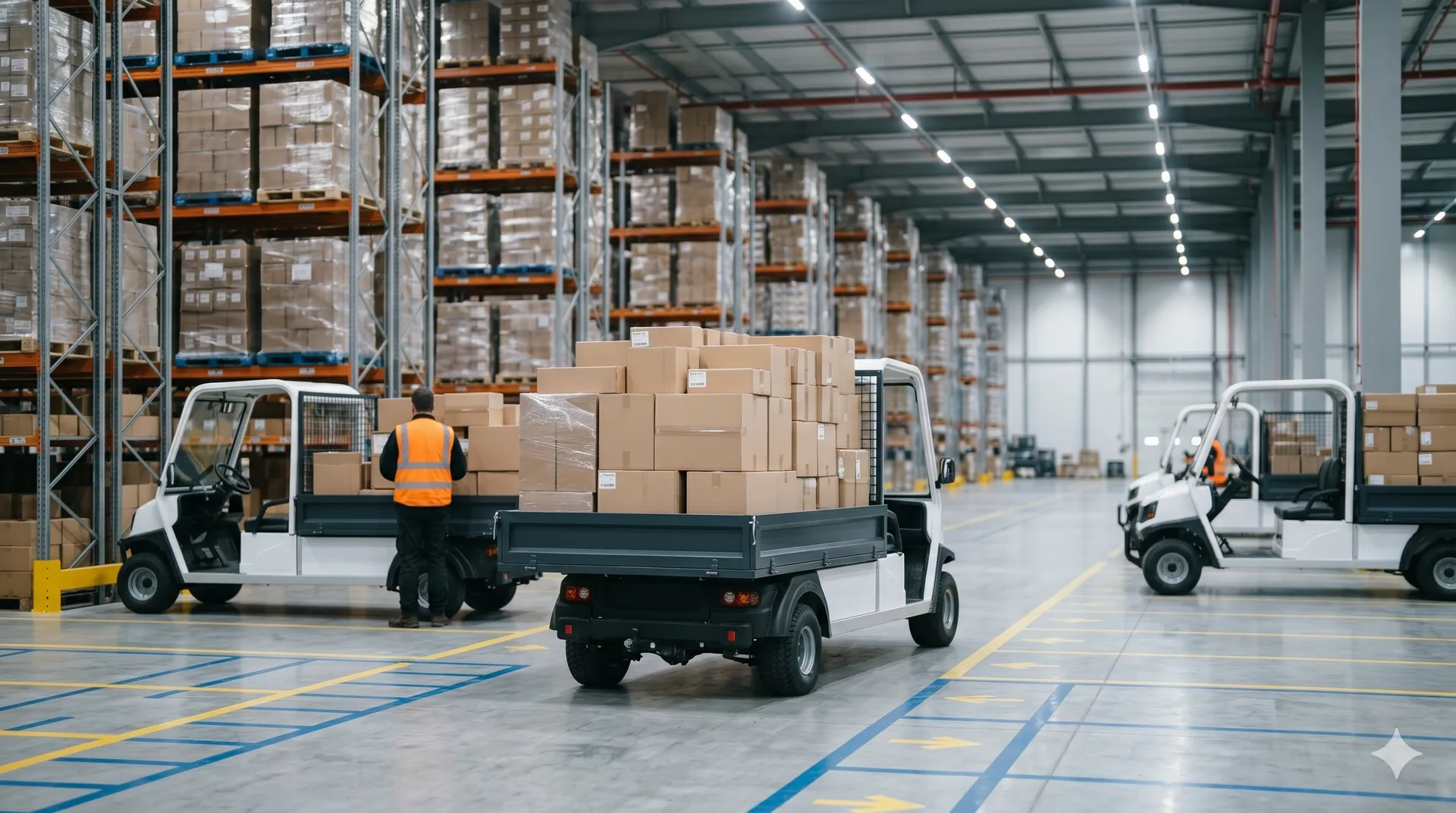
Need to move trailers rather than a single bed load?
If your goods travel as a train of trolleys, an electric tow tractor may move more per trip. See how the sibling vehicle compares.
Frequently asked questions
What is a burden carrier used for?+
It is used to carry loads on its own flat bed from one point to another across a site, replacing hand-carrying and short repetitive trips. Typical duties include moving stock, components, tools, waste and equipment around warehouses, factories, campuses and depots.
What is the difference between a burden carrier and a tow tractor?+
A burden carrier carries the load on itself. A tow tractor pulls one or more wheeled trailers behind it and carries little of its own. Choose a carrier for single loads and frequent stops, and a tow tractor for high-volume runs with several trailers.
Is a burden carrier the same as a forklift?+
No. A forklift lifts and stacks loads vertically over short distances. A burden carrier transports loads horizontally over distance but does not lift or stack. On many sites a forklift loads the truck and the burden carrier drives the load away.
Should I choose lead-acid or lithium?+
Lead-acid suits single shifts with time to recharge fully and costs less to buy. Lithium suits long or multi-shift use, tolerates opportunity charging through the day and needs less upkeep. Match the battery to your real working hours.
Can a burden carrier be used both indoors and outdoors?+
Yes. Being electric, it is clean and quiet enough for indoor use, and it can be specified with the tyres, clearance and weather protection needed for yards and service roads. For mixed sites, size the vehicle around its rougher outdoor duty as well as the indoor route.
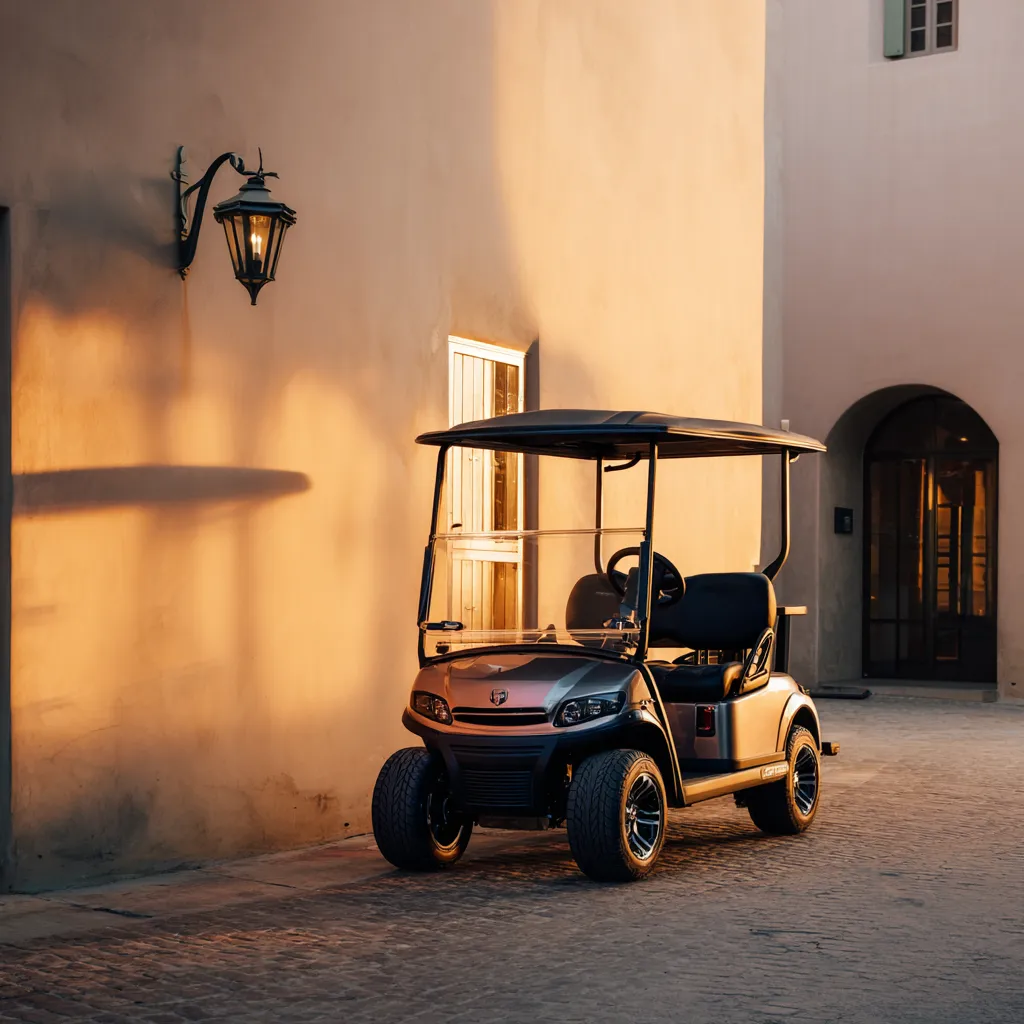
Ready to find the right buggy?
Tell us how and where it will work and we will specify a vehicle and a tailored quote built around you. Every build comes with a 3-year warranty and a 24-hour priority call-out.
Our guides are written and reviewed by the Hawke Electric Vehicles team, the people who specify, build, deliver and support the vehicles. We focus on honest, practical advice and flag where a figure depends on the build rather than guessing.
More guides by Hawke