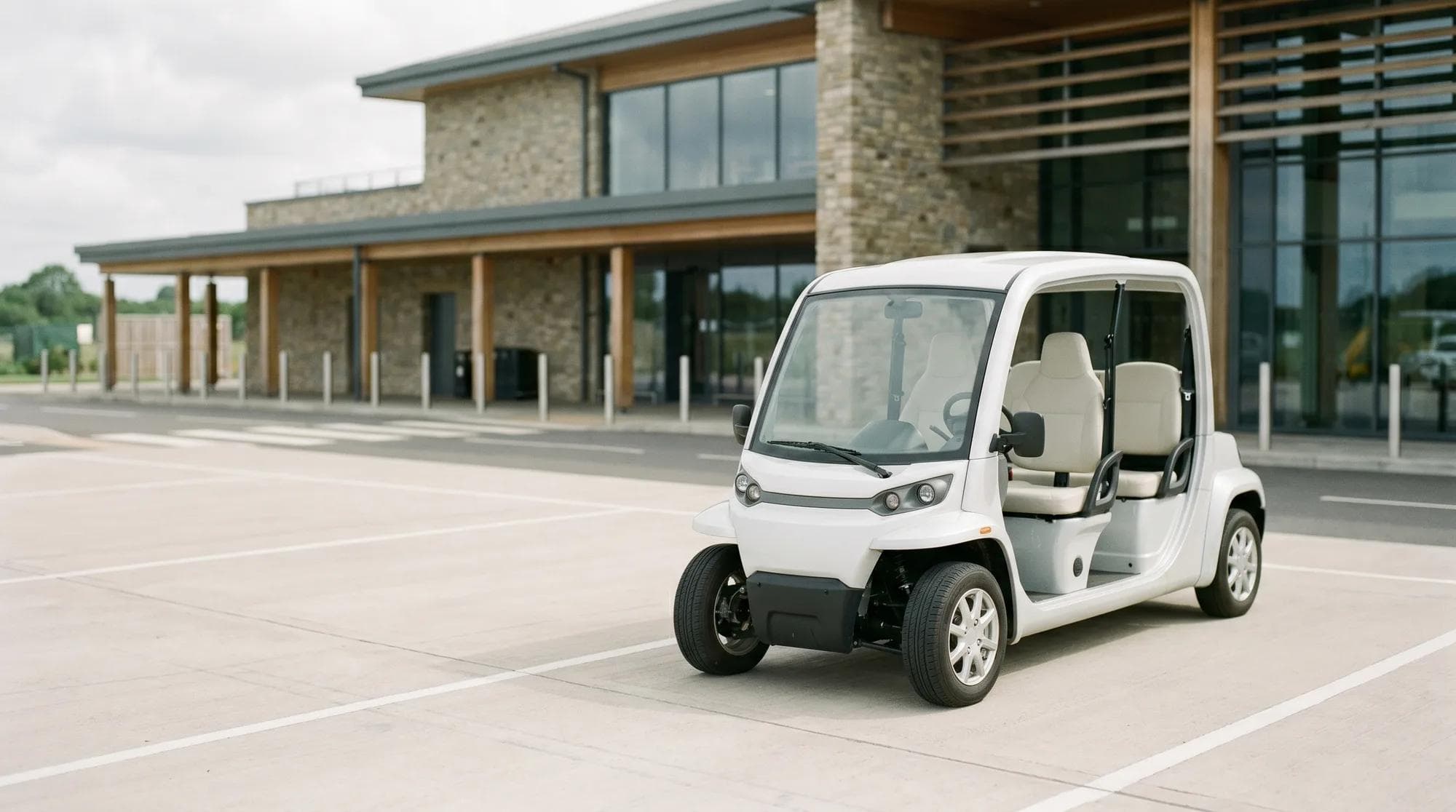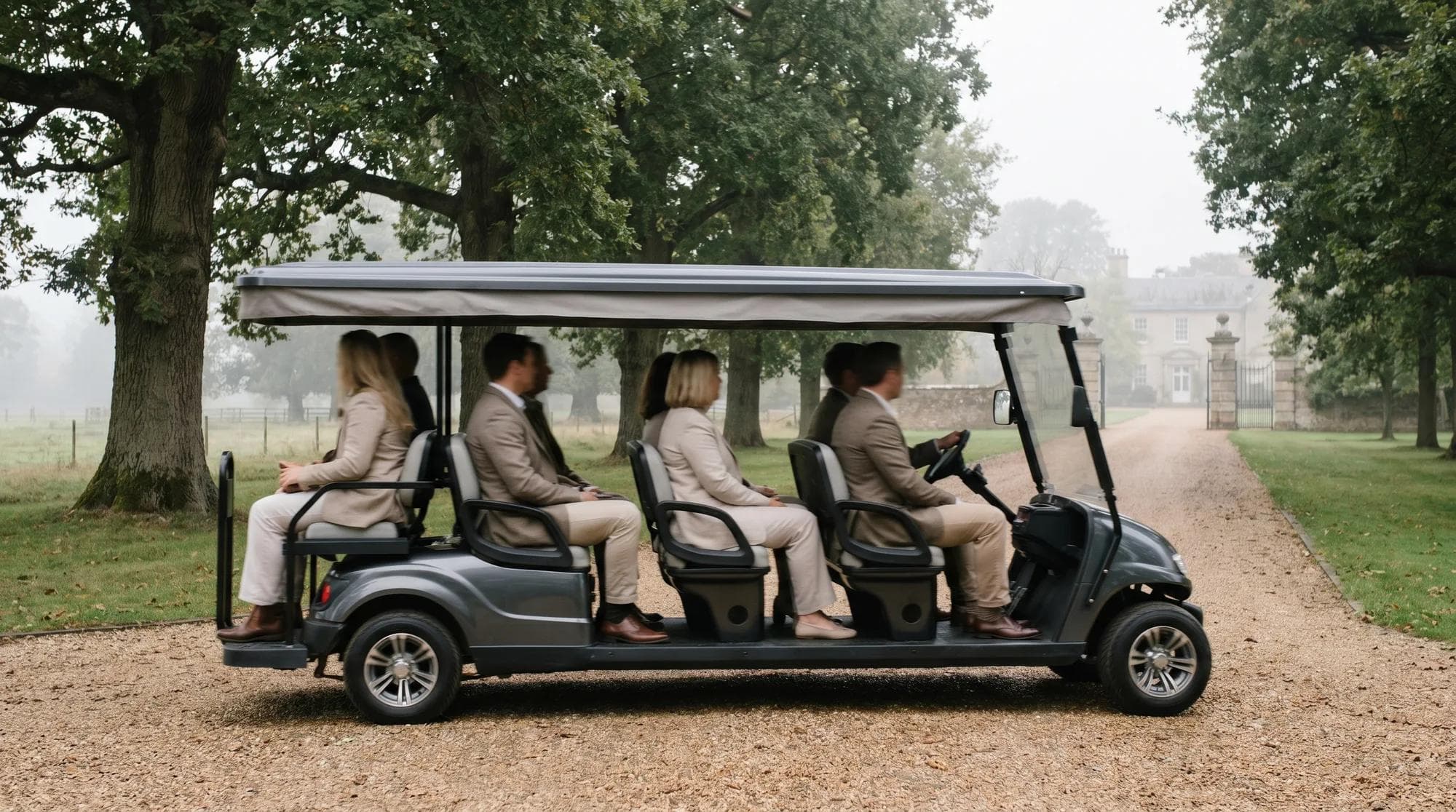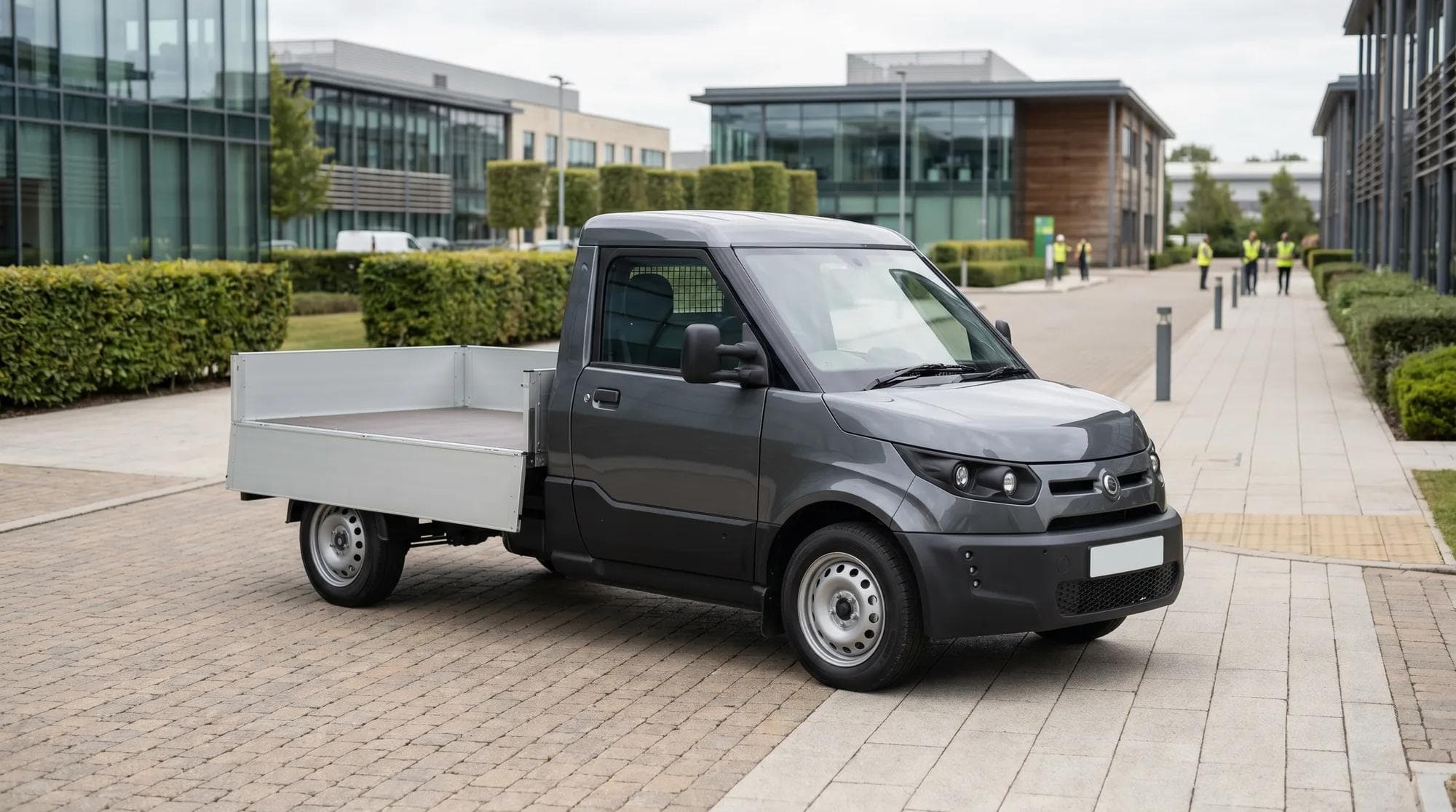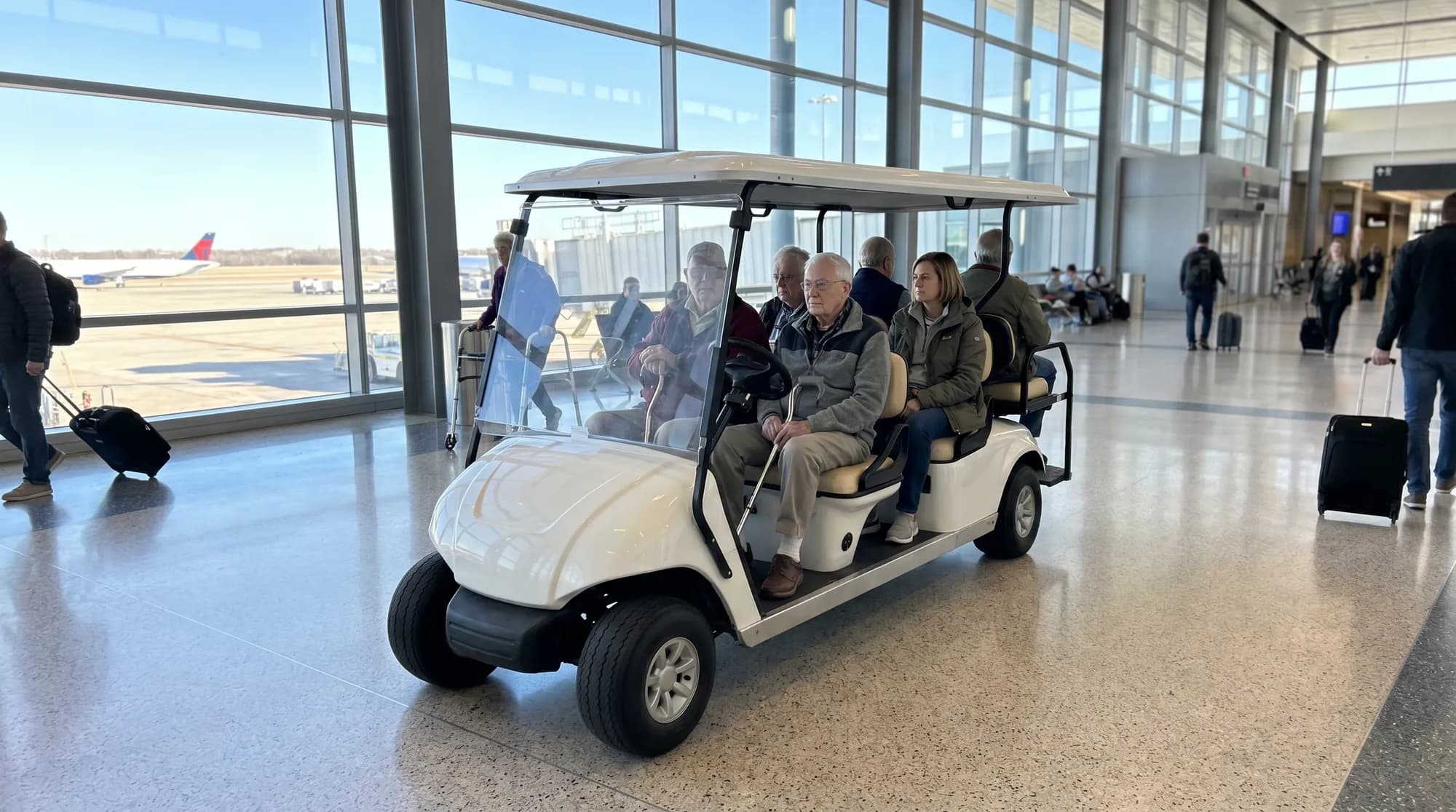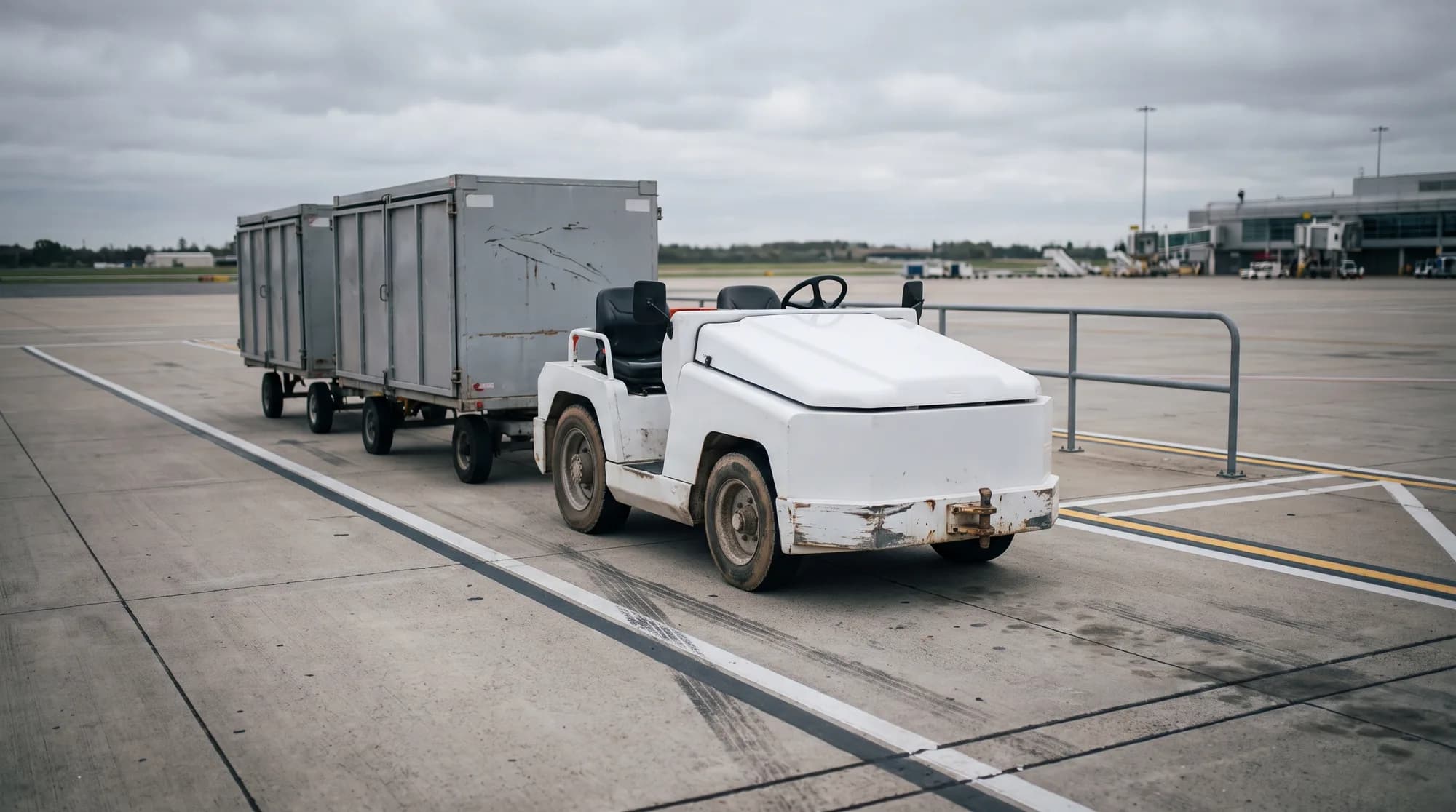
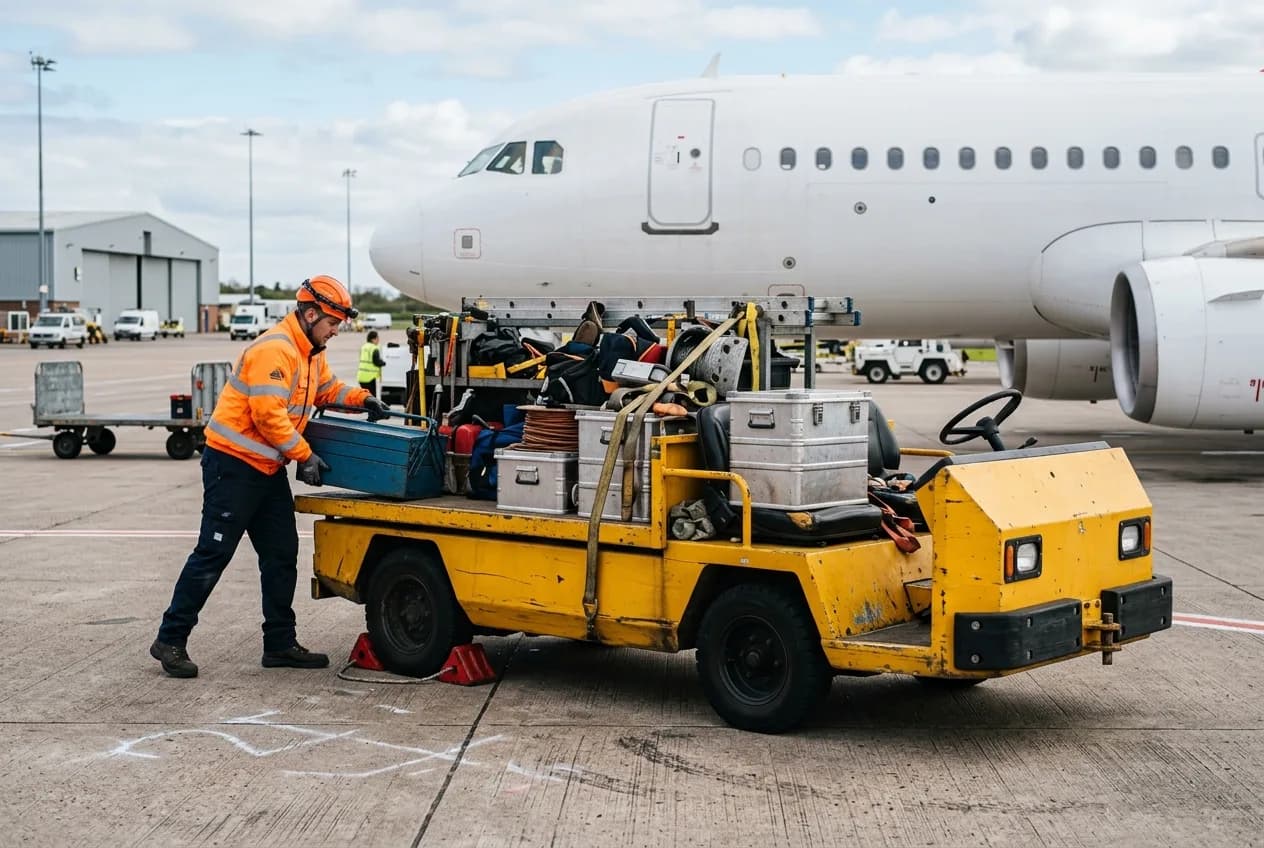
- Ground handling is hard duty: towing baggage and cargo trains, carrying tools and parts, and working long shifts on the apron in all weather.
- Electric ground handling vehicles suit that work well, with strong low-speed torque for towing and no fumes or noise airside.
- Spec around the real job: the load you tow, the payload you carry and the hours per shift, then size the battery and charging to match.
- Quiet, emission-free operation is a genuine benefit close to aircraft, crews and enclosed cargo areas.
- This suits ground handlers and cargo operators looking to cut running costs and meet airside emission goals without losing capability.
The ramp is one of the hardest working places at any airport. Between an aircraft arriving and leaving, a ground handling team has minutes to unload and load baggage, move cargo, ferry equipment and reset the stand. The vehicles that do that work, the tugs that tow baggage trains, the utility units that carry tools and parts, the tractors that shift dollies and containers, never really stop. They run shift after shift, in the cold and the wet, doing short hard bursts of towing and carrying all day.
That is exactly the kind of duty cycle people assume an electric vehicle cannot handle. In practice it is the opposite. An electric drivetrain delivers its full pulling power from a standstill, which is what towing a loaded train actually needs, and it does it without fumes or engine noise on a busy apron. This guide looks at what electric ground handling vehicles do well, where the spec has to be right, and how to plan a fleet that copes with real ramp work.
What ground handling actually asks of a vehicle
Ground handling is not one task, it is several, and each puts a different demand on the vehicle. Towing is about pulling power and traction: a baggage tug has to start a heavy, multi-cart train moving and keep it under control. Utility and service work is about payload and access: carrying tools, spares and equipment to where they are needed, often with a load bed and somewhere to stow gear. And almost all of it is about endurance, because the work runs across long shifts with little downtime.
- Towing: enough torque and traction to start and move loaded baggage or cargo trains smoothly.
- Payload: a real load bed for tools, parts and equipment, rated for the weight you carry.
- Duty cycle: the ability to run long, busy shifts without flagging.
- Airside readiness: permits, high-visibility livery and lighting to operate near aircraft and crews.
- Weather and wear: a build that copes with rain, cold and constant stop-start use.
Why electric fits the ramp
The case for electric on the ramp comes down to three things, and they line up neatly with what the work needs. The first is torque. An electric motor produces maximum pulling power immediately, with no need to build up revs, which is precisely what you want when starting a heavy baggage train from rest. The second is the environment: no exhaust means no fumes around aircraft, crews and the enclosed areas where cargo is handled, and a near-silent drive cuts the noise on an already loud apron. The third is cost, because a vehicle that runs all day every day racks up fuel and servicing bills that electric largely removes.
The hard duty cycle, and how to plan for it
The thing that decides whether an electric ground handling fleet works is the duty cycle, and it is the part most often skipped. Ramp work is bursty: a tug is flat out around a turnaround, then idle until the next aircraft. What matters is the total work over a shift and where the gaps fall, because those gaps are where charging happens. Plan it properly and a fleet runs the operating day comfortably. Size on vehicle count alone and you end up with tugs queueing for a charger just as the next bank of flights arrives.
- 01
Define the loads
Pin down the heaviest train you tow and the worst-case payload you carry, because those set the torque and load rating, not the average.
- 02
Measure the shift
Work out the active hours and distance per shift, and find the quiet windows between turnarounds where vehicles can charge.
- 03
Size battery and chargers together
Match battery capacity and charger numbers to that pattern so vehicles top up in the gaps rather than waiting in a queue.
- 04
Build in headroom
Allow for the busiest day and the coldest weather, both of which draw more from the battery, so the fleet copes when it is stretched.
One fleet for ground handlers and cargo operators
Ground handlers and cargo operators rarely need a single vehicle type. A handling contract might want baggage tugs, utility units for the service teams and a tractor or two for dollies and containers, all working the same stands. There is a real advantage in taking them from one supplier: a consistent build standard, livery that matches across the fleet, and one support arrangement behind all of it. We make the same point about mixed fleets in our guide to electric people-movers and shuttles, and the towing and payload thinking carries across to last-mile delivery work too.
- Diesel or petrol
- Builds with revs
- Electric
- Full from standstill
- Diesel or petrol
- Exhaust emissions
- Electric
- None at point of use
- Diesel or petrol
- Loud engine
- Electric
- Near-silent drive
- Diesel or petrol
- Fuel plus heavy servicing
- Electric
- Lower fuel and service cost
- Diesel or petrol
- Fast refuel anytime
- Electric
- Charge in shift gaps, plan needed
| Consideration | Diesel or petrol | Electric |
|---|---|---|
| Torque for towing | Builds with revs | Full from standstill |
| Fumes near aircraft | Exhaust emissions | None at point of use |
| Noise on the apron | Loud engine | Near-silent drive |
| Running cost over time | Fuel plus heavy servicing | Lower fuel and service cost |
| Refuel or recharge | Fast refuel anytime | Charge in shift gaps, plan needed |
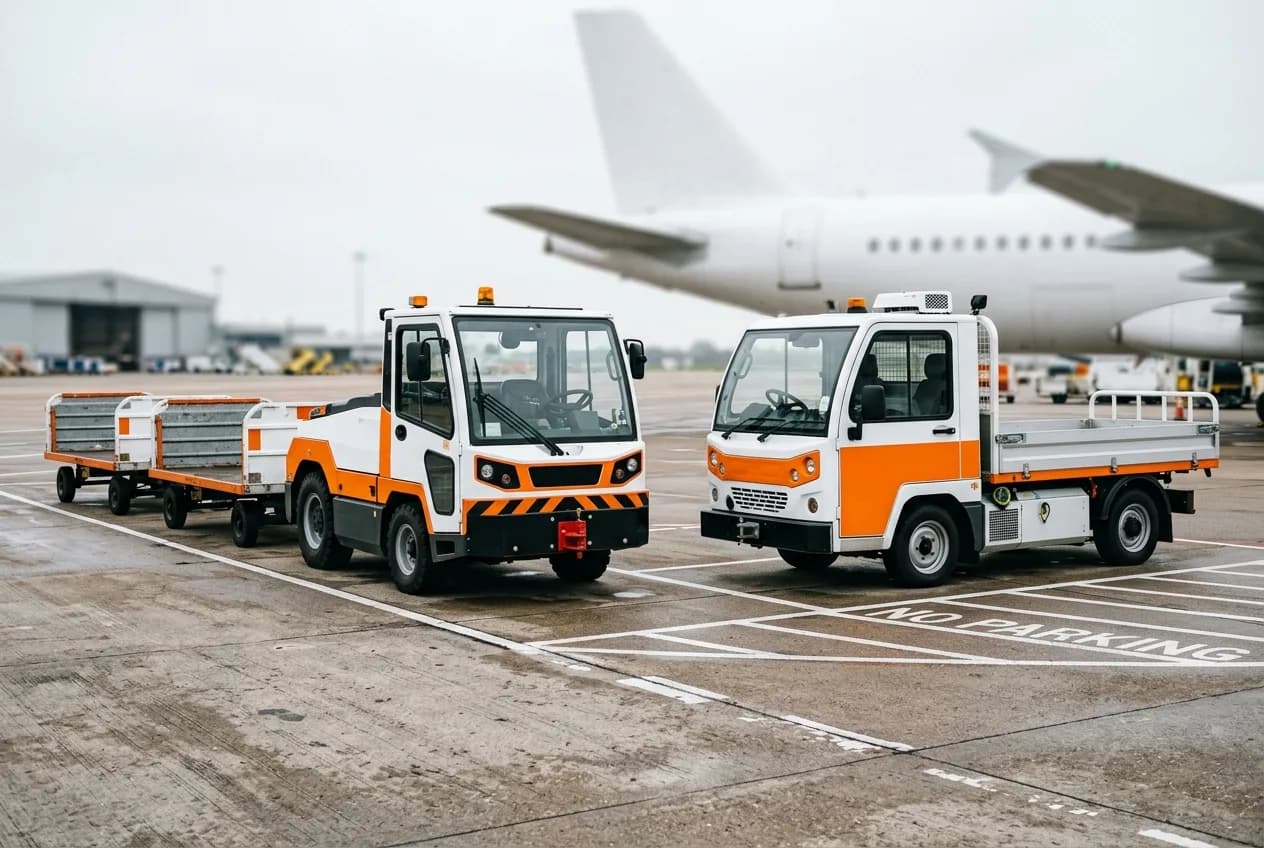
Utility and tow vehicles, built to order
Tugs and utility units specced for your loads and shifts, liveried airside-ready, and backed by a 24-hour call-out so the ramp keeps moving.
Getting the spec right airside
An apron vehicle has to satisfy your airside operations team before it does anything else. That usually means an airside vehicle permit, high-visibility livery and lighting, and a build that is up to long shifts in all weathers. Those requirements shape the vehicle, so it is worth getting them from operations early rather than retrofitting afterwards. Because we build to order, that spec, from livery and lighting to load rating and towing capacity, is set into the build rather than bolted on later.
Electrify your ground handling fleet
Tell us the loads you tow, the payload you carry, the shift pattern and your airside requirements, and we will spec the right tugs and utility vehicles, liveried and built for the ramp.
Frequently asked questions
Can an electric tug really tow a loaded baggage train?+
Yes. Electric motors deliver full torque from a standstill, which is exactly what starting and moving a heavy train needs. The key is matching the vehicle to the heaviest load you tow rather than the average.
Will the battery last a full shift on the ramp?+
Sized to the duty cycle, yes. Ramp work is bursty, so we plan charging into the quiet windows between turnarounds and build in headroom for busy days and cold weather.
Are electric ground handling vehicles cheaper to run?+
For most operations, yes. A vehicle that works all day racks up fuel and servicing costs, and electric removes much of both, so the total cost of ownership usually beats diesel over a few years.
Can the vehicles meet airside permit and visibility rules?+
Yes. Because we build to order, the airside permit features, high-visibility livery and lighting your operations team requires are specified into the build.
Can you supply tugs and utility vehicles together?+
Yes. Baggage tugs, utility units and tractors can come from one fleet, built to a consistent standard, liveried to match and supported under a single arrangement.
Related solutions
Ready to explore what we build?
See the vehicles and the setting this applies to, or get a tailored quote built around your site.
Ready to find the right buggy?
Tell us how and where it will work and we will specify a vehicle and a tailored quote built around you. Every build comes with a 3-year warranty and a 24-hour priority call-out.
Our guides are written and reviewed by the Hawke Electric Vehicles team, the people who specify, build, deliver and support the vehicles. We focus on honest, practical advice and flag where a figure depends on the build rather than guessing.
More guides by Hawke