- There is no magic number, but there is a simple method: peak demand, round-trip time and seats per vehicle.
- Size for your busy hour, not your average one, then keep a little spare for breakdowns and servicing.
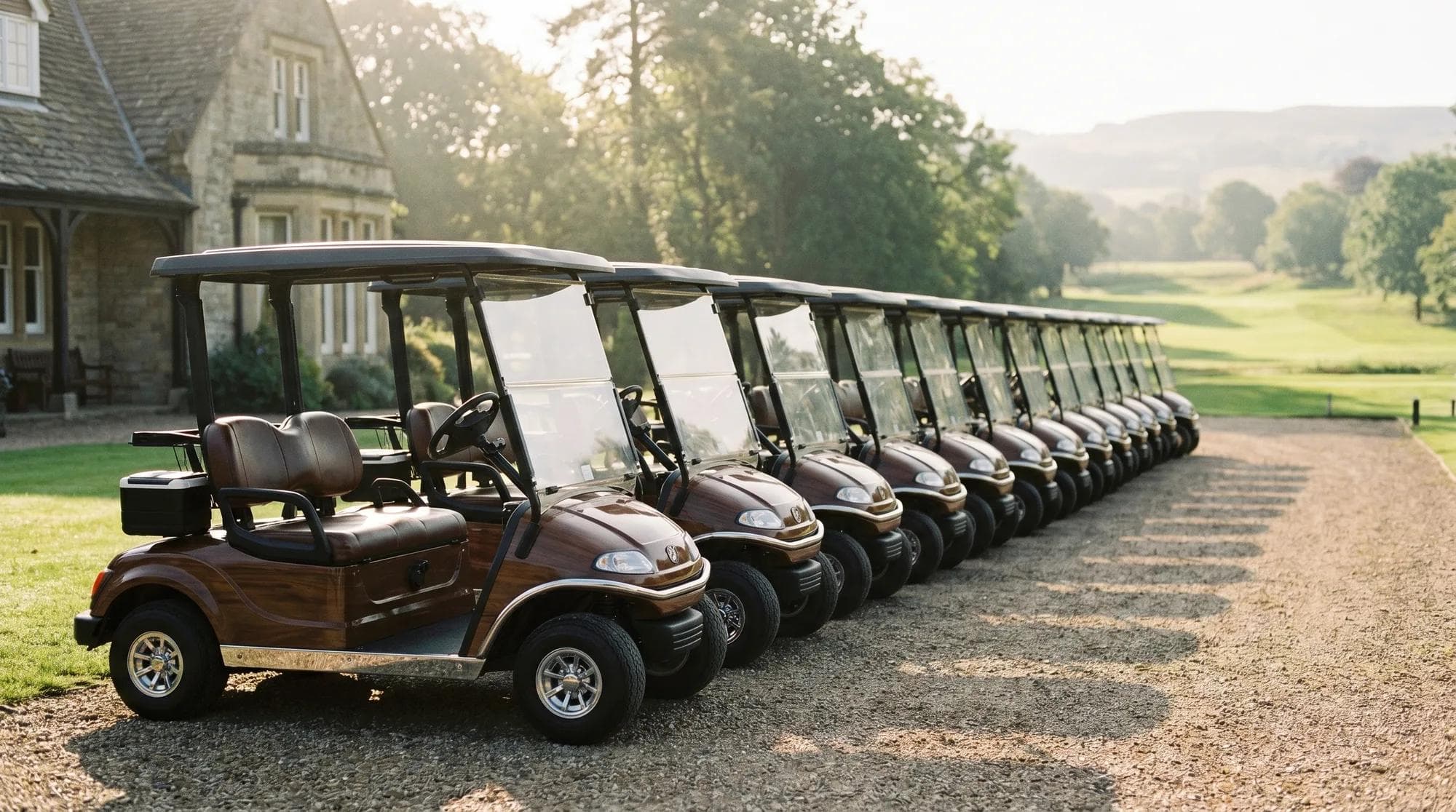
- Route length and loading time matter more than total acreage; a compact busy site can need more vehicles than a large quiet one.
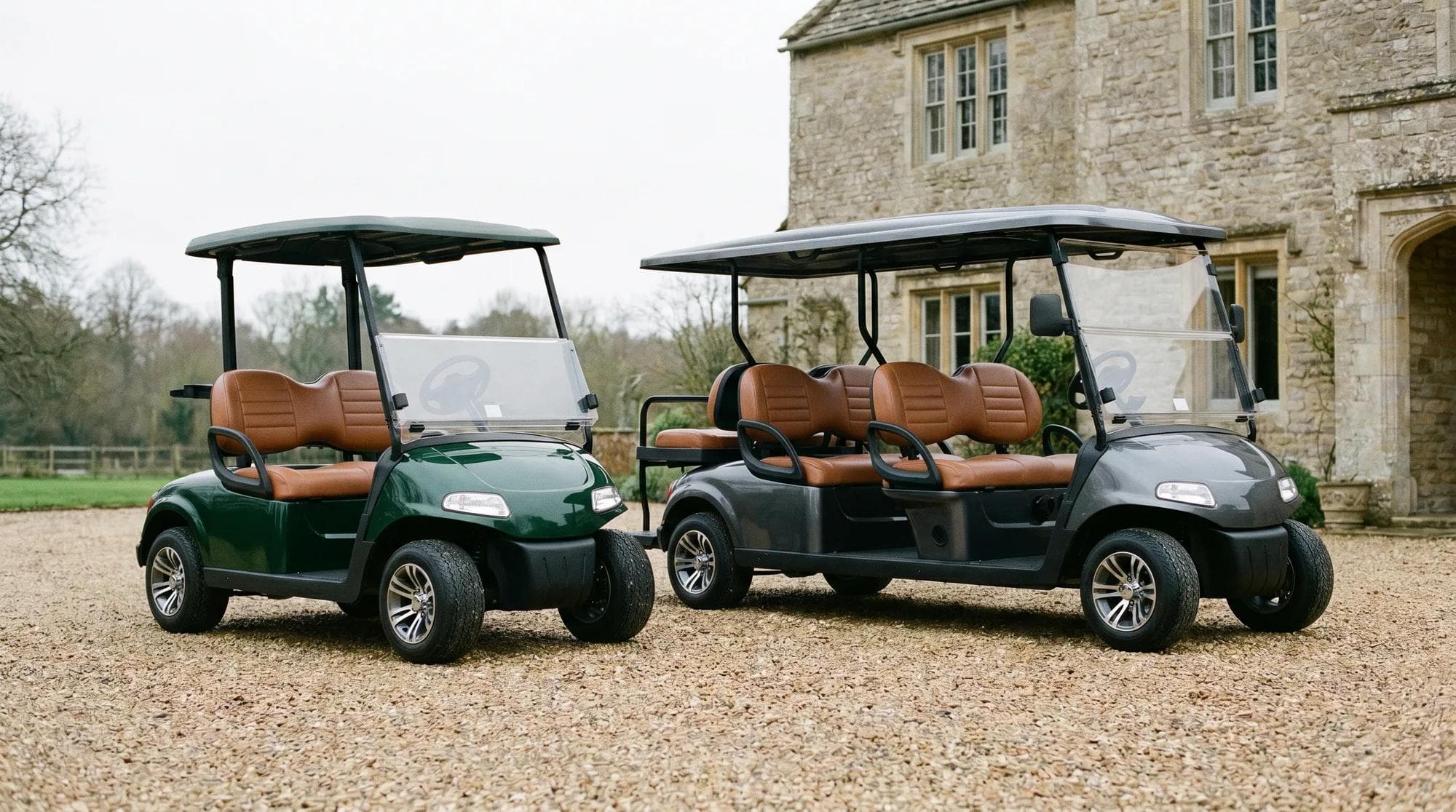
- Mixing seat sizes (say four- and six-seaters) usually beats a single size.
- Hire can cover seasonal peaks so you are not buying for two weeks a year.
It is the question we are asked more than any other: how many buggies do we actually need? It is a fair question, and the honest answer is that it depends, but not on guesswork. With three numbers you can get to a sensible figure, and then refine it. This guide shows the method we use so you can sanity-check any quote, including ours.
Start with the busy hour, not the average
The classic mistake is to size a fleet around a typical day. Your guests do not arrive evenly; they bunch at check-in, at meal times, at the start and end of an event. If the fleet only copes on a quiet Tuesday, it will fall apart on a busy Saturday, which is exactly when it matters. So the first number is your peak: how many people need moving in the busiest hour.
The simple sizing method
- 01
Find your peak demand
Estimate the most people you need to move in one hour at your busiest realistic time, for example check-in on a changeover day or the rush before an event.
- 02
Measure a round trip
Time a full loop: pick-up, the drive, drop-off and the return, including the minutes spent loading and unloading. Loading is slower than people expect.
- 03
Work out trips per vehicle per hour
Divide 60 by your round-trip time in minutes. A 15-minute loop means four trips an hour per vehicle.
- 04
Multiply by seats
Trips per hour multiplied by seats per vehicle gives the people one vehicle moves per hour. Divide your peak demand by that to get the number of vehicles.
- 05
Add a margin
Add roughly 10 to 20 per cent so the fleet copes when one vehicle is being serviced or charged.
Why route length beats acreage
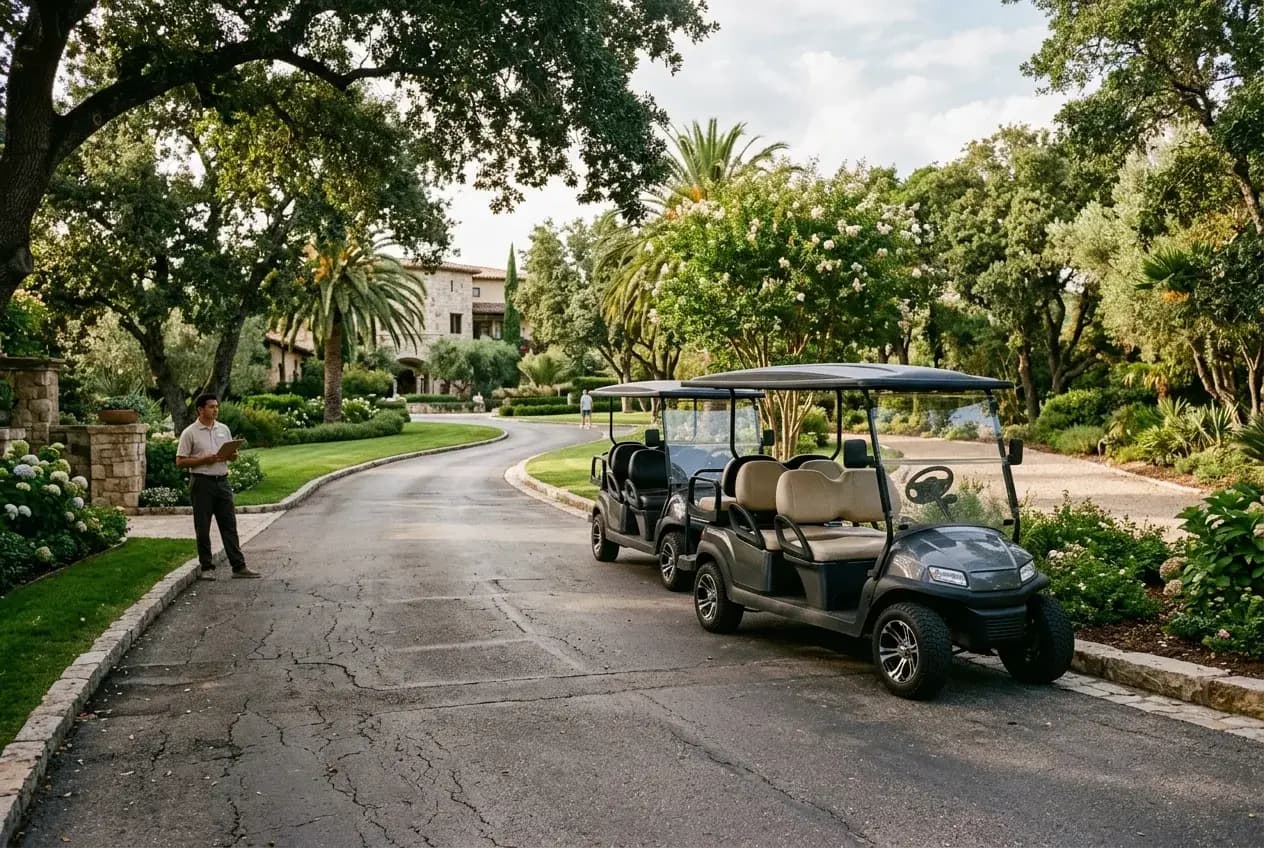
People assume a bigger site needs more buggies, but it is the loop, not the acreage, that drives the number. A compact resort with constant short transfers and lots of loading stops can tie up more vehicles than a sprawling estate where each trip is a single long run. Always size on the actual routes you will run, not the size of the grounds.
Mix your seat sizes
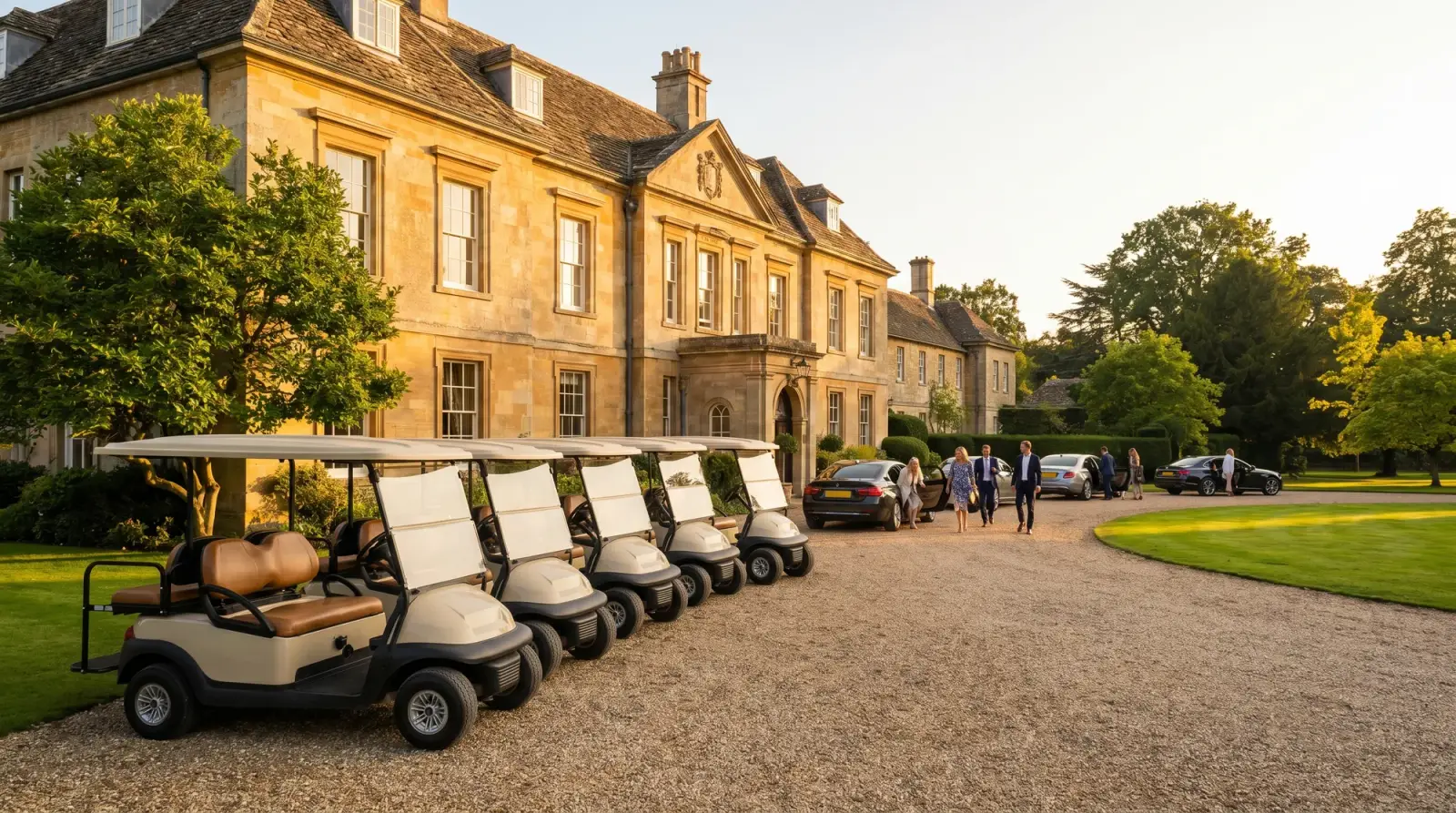
One size rarely fits. A pair of four-seaters is nimble for quick individual transfers; a six- or eight-seater clears a crowd after an event. Most resorts end up with a mix, and that flexibility is worth more than a uniform fleet. Our guide to choosing 2, 4, 6 or 8 seats goes into the trade-offs.
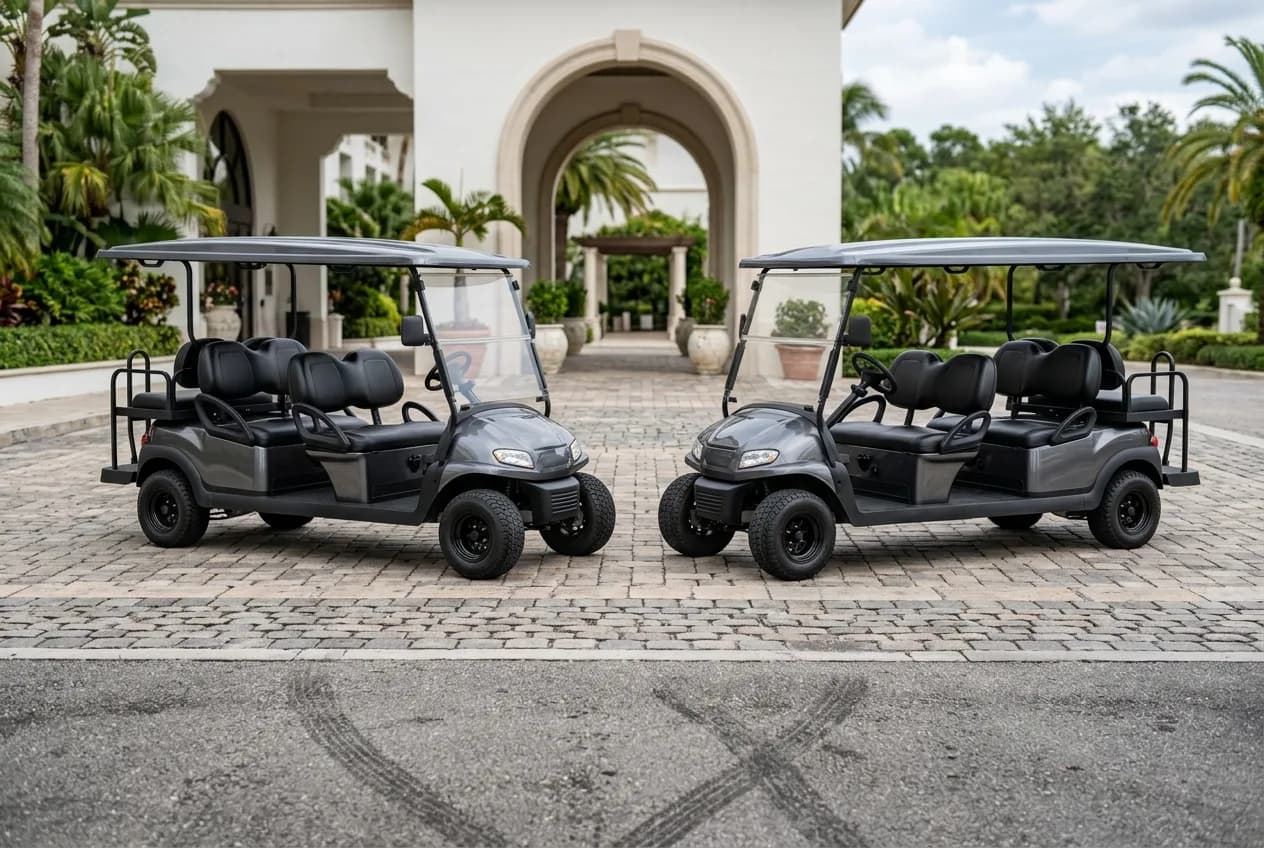
Build the right mix
Two to eight seats, plus utility vehicles for the grounds team, all built to order and branded as your own.
Buy the base, hire the peak
If your demand spikes for a season or a handful of events, you do not have to own for the peak. Many operators buy a core fleet for year-round use and hire extra vehicles for the busy weeks. It keeps capital tied up only where it earns its keep. The team can help you find the right split.
Get a fleet sized to your site
Send us your peak numbers and a rough idea of your routes, and we will recommend a fleet size and mix, honestly, with no pressure to over-buy.
Frequently asked questions
Is there a rule of thumb like buggies per acre?+
People quote them, but they are unreliable. A busy compact site can need more vehicles than a large quiet one. Sizing on peak demand and round-trip time is far more accurate.
Should I size for the average day or the busy day?+
The busy day. A fleet that only copes on quiet days will fail exactly when guests notice. Size for your realistic peak, then add a small margin.
Can I add to the fleet later?+
Yes. Many clients start with a core fleet and add vehicles as demand grows. Because we build to order, additions match the existing fleet.
Does hiring for peaks really work out cheaper?+
Often, yes, if your demand spikes for only part of the year. Owning for a two-week peak ties up capital that sits idle the rest of the time.
Will you help me work out my numbers?+
Gladly. Tell us your peak demand and routes and we will run the sizing with you, and tell you honestly if you need fewer vehicles than you expected.
Related solutions
Ready to explore what we build?
See the vehicles and the setting this applies to, or get a tailored quote built around your site.
Ready to find the right buggy?
Tell us how and where it will work and we will specify a vehicle and a tailored quote built around you. Every build comes with a 3-year warranty and a 24-hour priority call-out.
Our guides are written and reviewed by the Hawke Electric Vehicles team, the people who specify, build, deliver and support the vehicles. We focus on honest, practical advice and flag where a figure depends on the build rather than guessing.
More guides by Hawke