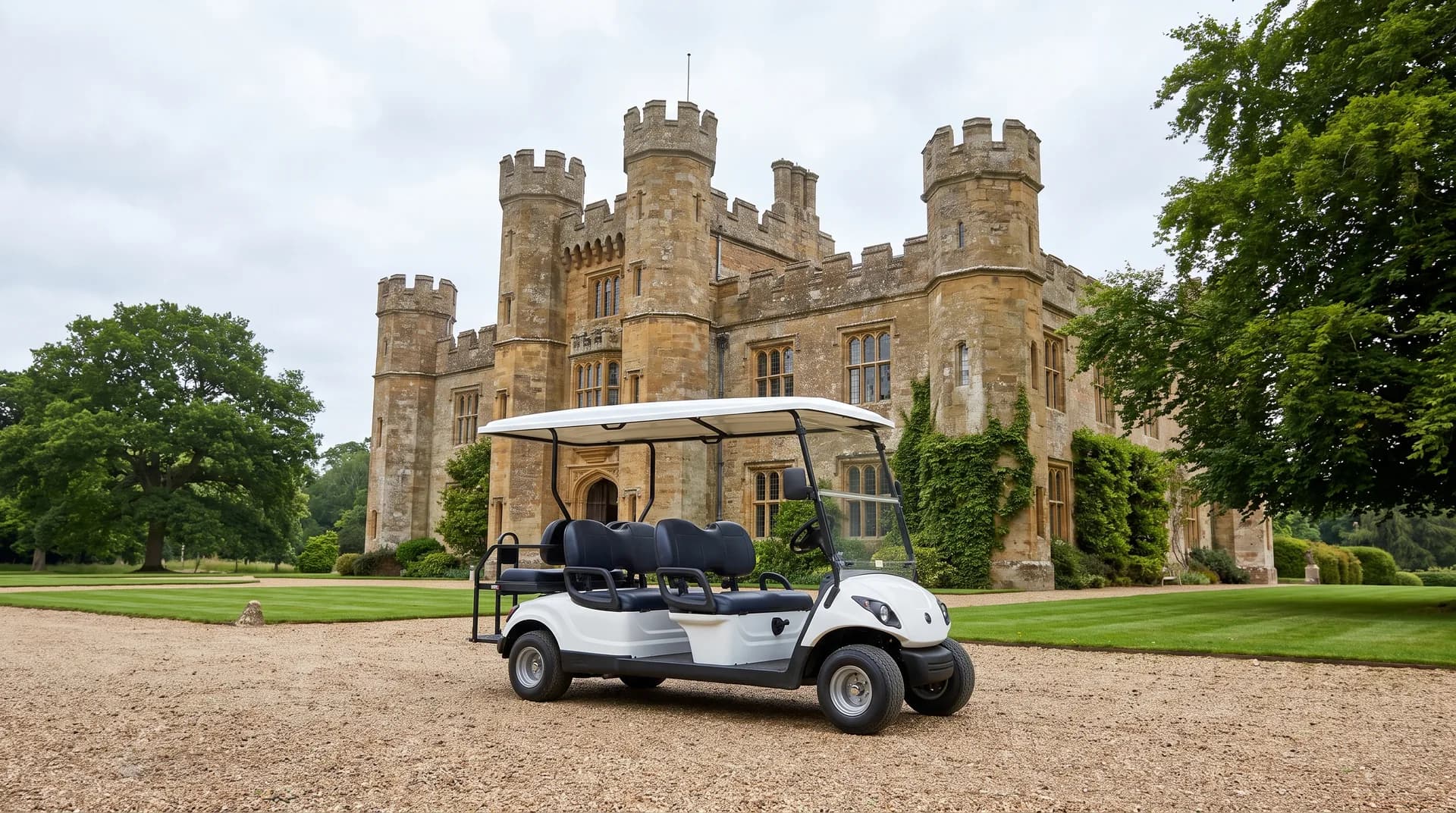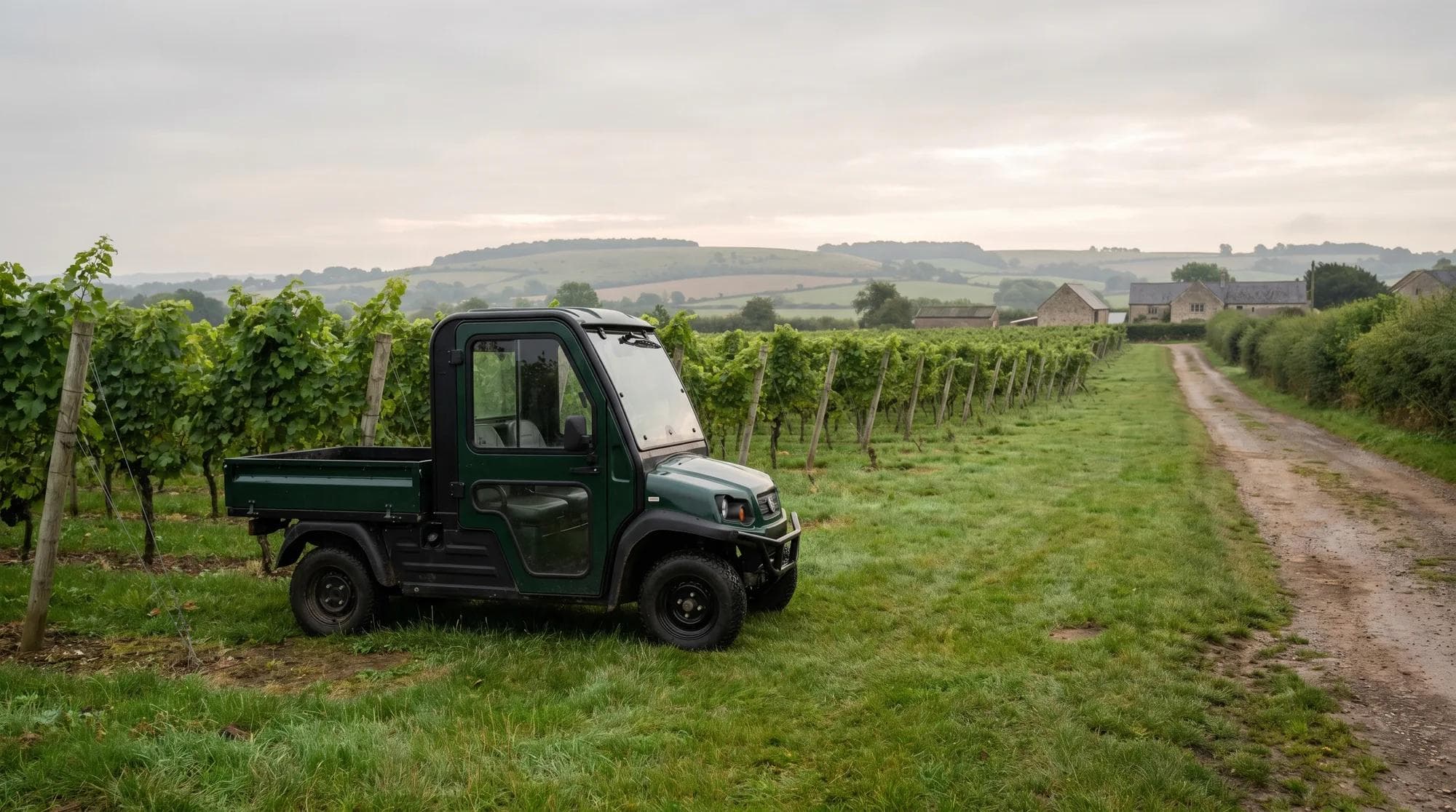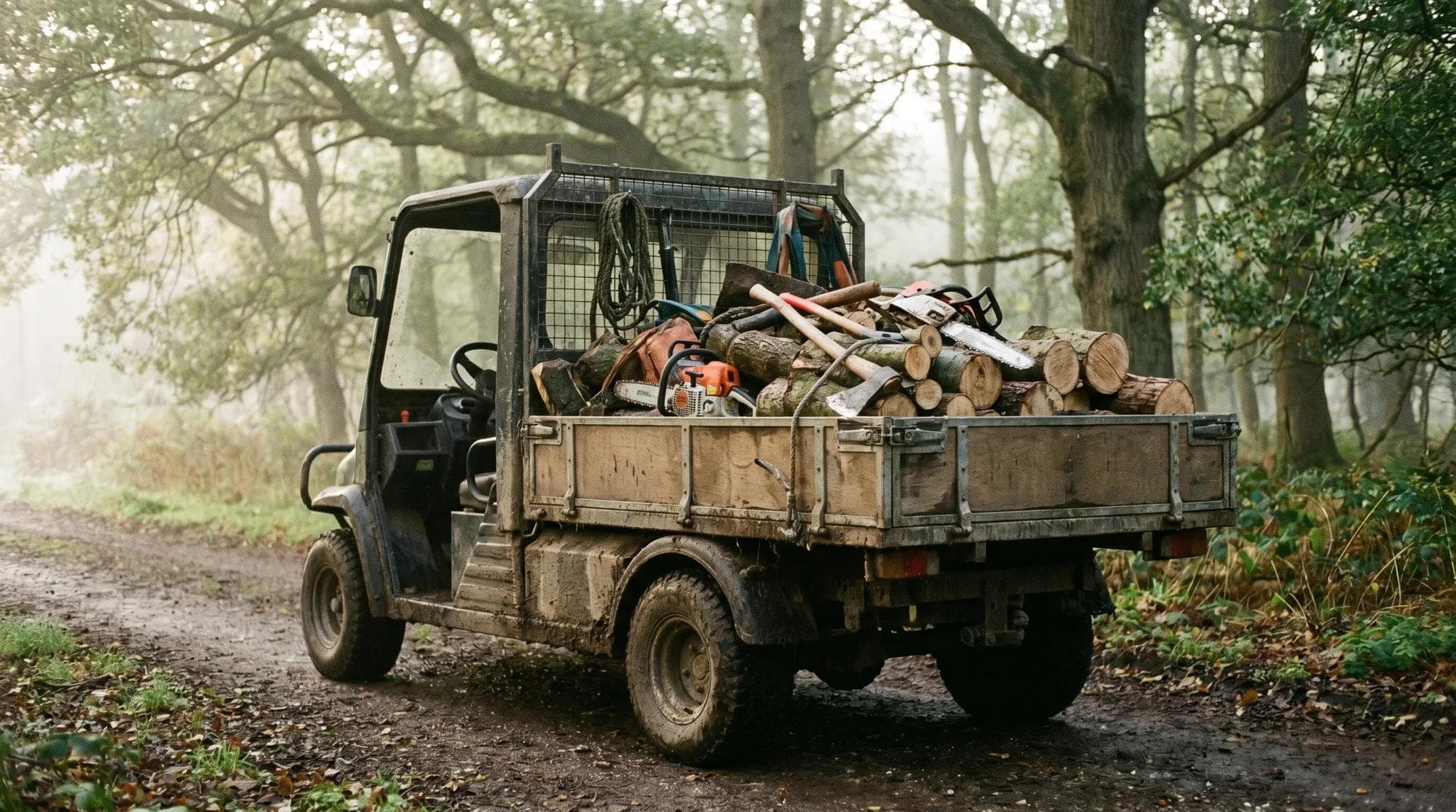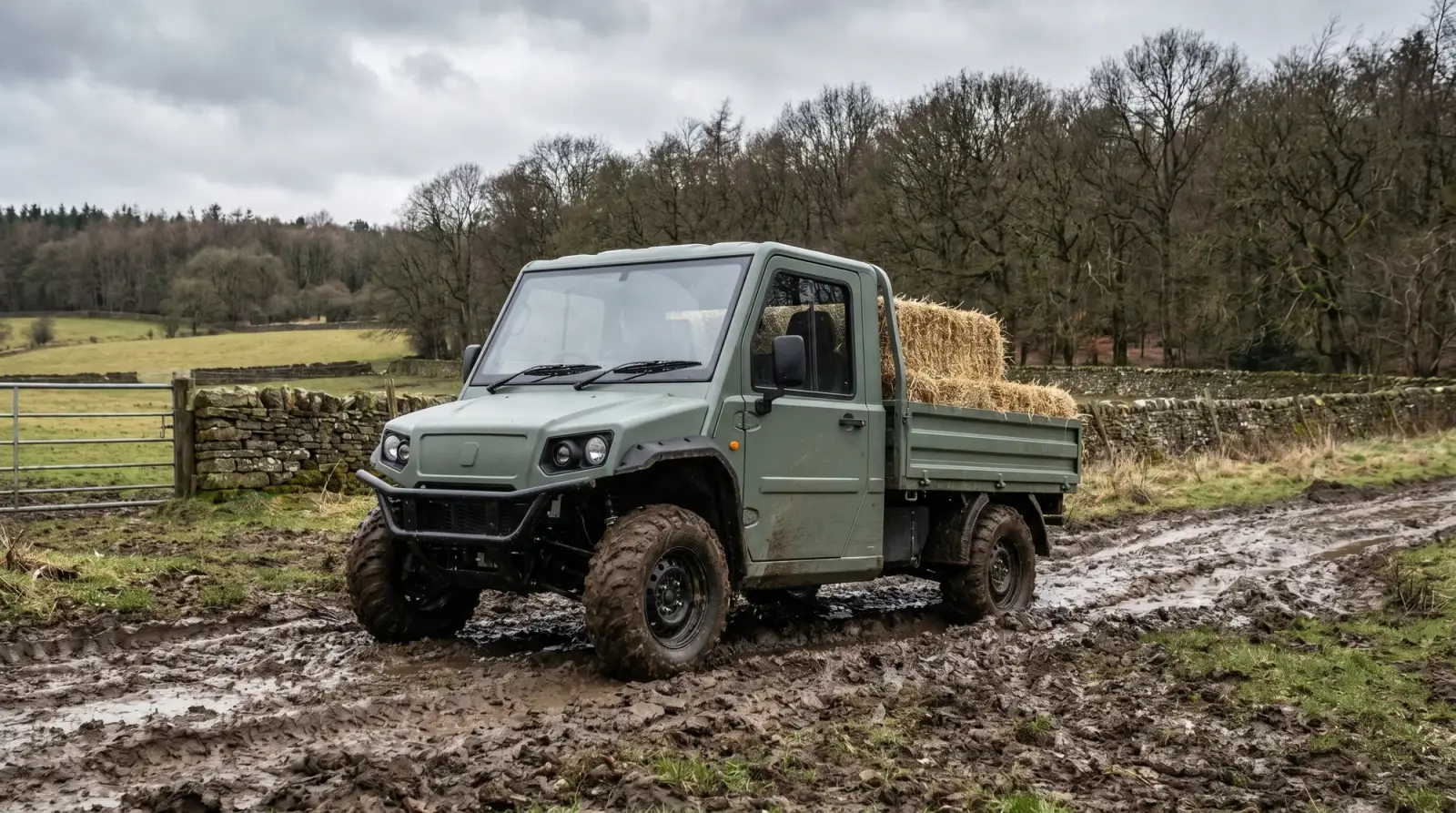
On a shooting or sporting estate the vehicle has a job most others do not: it has to do hard work over rough ground while making as little noise as possible. Petrol engines carry across open country and spook game long before the vehicle arrives, and they leave fumes on ground that is managed for wildlife. An electric utility vehicle does the gamekeeping, the beating-line support and the kit-moving in near silence, which is exactly why sporting estates are moving to them. This guide covers what to look for.
- Near-silent running lets a vehicle approach without spooking game, a genuine operational advantage on a shooting estate.
- The right load bed and towing capacity move guns, kit, feed and game over the estate, within honest rated limits.
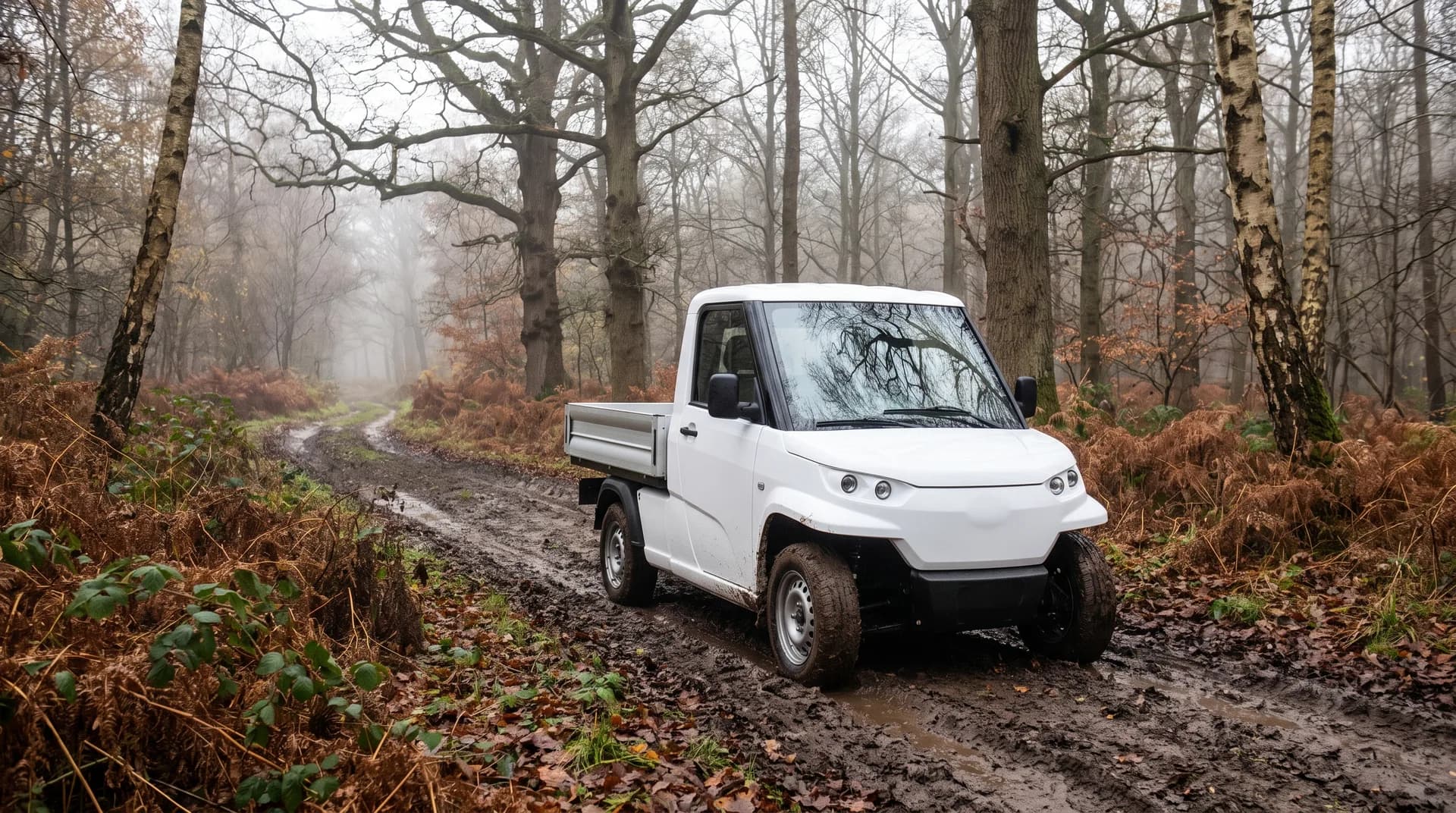
- Specified tyres and drive handle mud, slopes and rough track, the terrain sporting estates actually cover.
- No exhaust keeps fumes off ground managed for wildlife and out of the beaters' and guns' day.
- We scope honestly: where a job exceeds what our vehicles genuinely tow or carry, we say so.
Why quiet is the whole point
Game hears an engine coming. A gamekeeper checking coverts, a vehicle moving up to a beating line, or a run out to feed rides through country where noise carries and matters. An electric drivetrain runs near silently, so the approach is discreet and the disturbance minimal, and the keeper can hear the ground around them as they move. On an estate managed for shooting, that quiet is not a comfort feature, it is the reason the vehicle earns its place.
Load, tow and terrain
The work is physical: guns and cartridges, feed and feeders, fencing and tools, and game at the end of the day. We specify the load bed and the towing capacity around the heaviest regular job, honestly rated so you can plan against real figures, and we fit tyres and drive for the mud, slopes and rough track a sporting estate covers. Electric motors deliver full torque from a standstill, which suits pulling a loaded trailer up a bank. Where a job needs more than our vehicles genuinely tow, we will tell you rather than oversell, the same honest scoping as our materials and equipment carrying work.
On a shooting estate the best vehicle is the one the game never hears coming.
A full day on the ground
Shoot days and keepering days are long, so lithium batteries are specified for reliable all-day stop-start running on a single overnight charge, and the vehicle returns to a charging point in the yard ready for the morning. Where daily mileage across a large estate is exceptional, we discuss the battery sizing and charging at the survey rather than leave it to chance.
Specifying one for a sporting estate
- Set the heaviest regular load and tow, so the vehicle is rated to the real work.
- Map the terrain: mud, slopes, track and open ground, so tyres and drive are specified for it.
- Add the practical fit-out: gun racks, dog guards, load liners and weather protection.
- Plan the charging around the estate day, so the vehicle is ready each morning.
- Keep it honest: confirm what the vehicle tows and carries rather than assume.
Frequently asked questions
Is an electric vehicle really quiet enough not to spook game?+
Yes. Electric running is near silent with no engine note, which is a genuine operational advantage over petrol on a shooting estate, both for approaching game and for hearing the ground as you move.
Will it cope with mud, slopes and rough track?+
Yes, within its rated limits. We specify tyres and drive for the terrain, and electric motors give full torque from a standstill for pulling loaded trailers up a bank. We are clear about gradients and ground a vehicle is not built for.
How much can it carry and tow?+
It depends on the model, from several hundred kilograms in the bed to a tonne or more, with towing rated separately. We quote real figures for the model we recommend and scope honestly rather than imply a capacity we do not supply.
Can it be fitted out for keepering?+
Yes. Gun racks, dog guards, load liners and weather protection are specified as part of the bespoke build rather than added afterwards, so the vehicle suits the work.
Will one charge last a shoot day?+
Lithium batteries are specified for all-day stop-start running on a single overnight charge. For exceptional daily mileage across a large estate we size the battery and charging at the survey.
Specify a vehicle for your estate
Tell us the ground you cover and the work the vehicle does, and we will specify a quiet, capable utility vehicle for your shooting or sporting estate and put a tailored quote together.
Related solutions
Ready to explore what we build?
See the vehicles and the setting this applies to, or get a tailored quote built around your site.
Ready to find the right buggy?
Tell us how and where it will work and we will specify a vehicle and a tailored quote built around you. Every build comes with a 3-year warranty and a 24-hour priority call-out.
Our guides are written and reviewed by the Hawke Electric Vehicles team, the people who specify, build, deliver and support the vehicles. We focus on honest, practical advice and flag where a figure depends on the build rather than guessing.
More guides by Hawke