A residential activity centre is a small village hidden in a wood: dormitories and dining halls, climbing towers and zip lines, a kit store the size of a barn, and hundreds of guests arriving and leaving in waves with luggage to match. Behind every smooth changeover is a site team hauling catering, bedding, luggage and activity kit across paths a van cannot use. This guide covers the electric utility buggy that does that work, and one thing first, plainly: this is a staff vehicle for site operations, driven by trained adults under the centre's own rules. It is not part of the activity programme and never a ride for young visitors.
- A staff-driven site workhorse: catering, luggage, bedding and kit across the site.
- Changeover days, hundreds of bags in hours, are where it earns its keep.
- Quiet, fume-free running suits a site full of children outdoors all day.
- Speed-limited and operated by staff only, under the centre's own rules.
- It also gives less mobile visitors and staff genuine access to a rugged site.
The site-ops workhorse
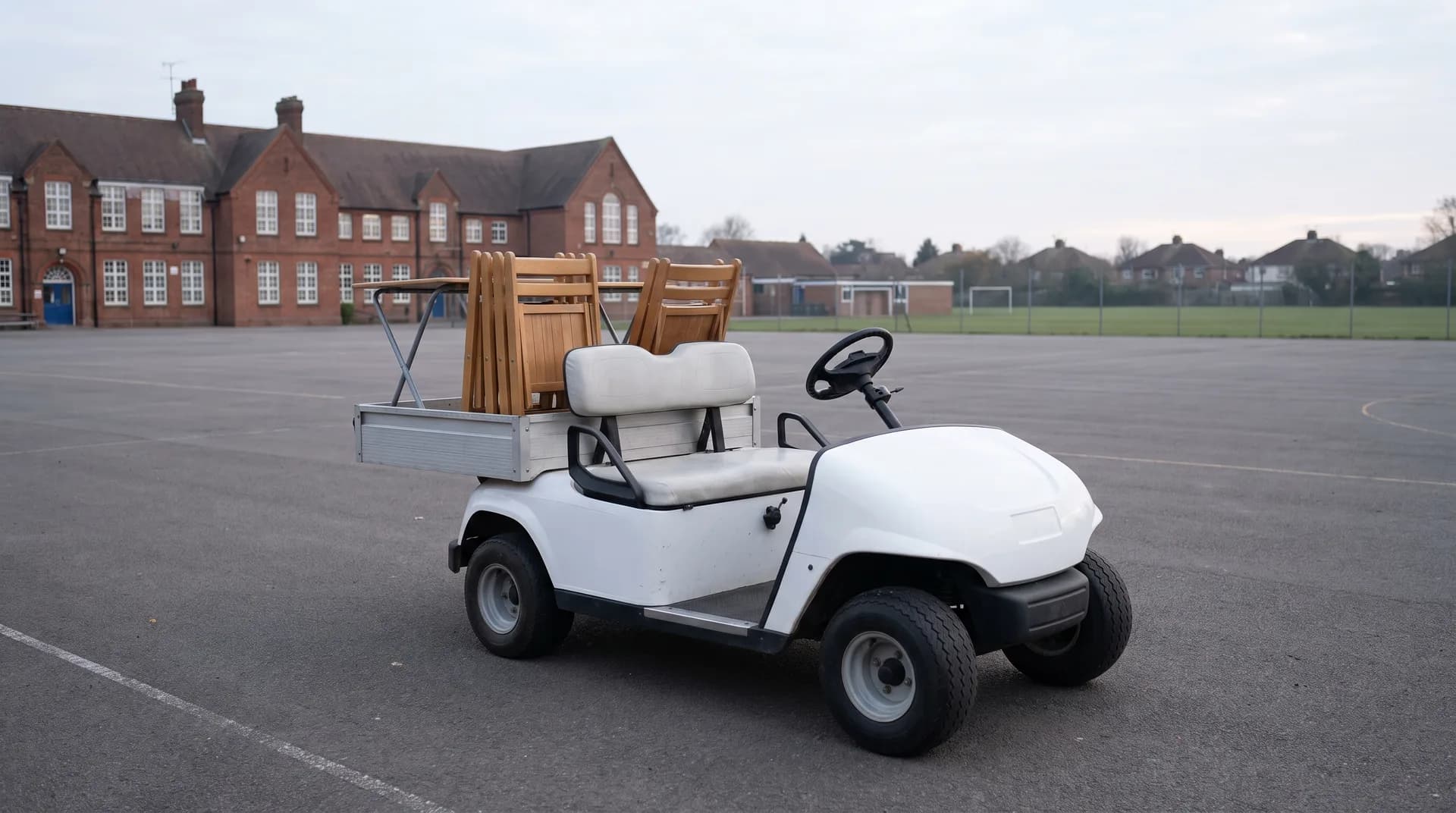
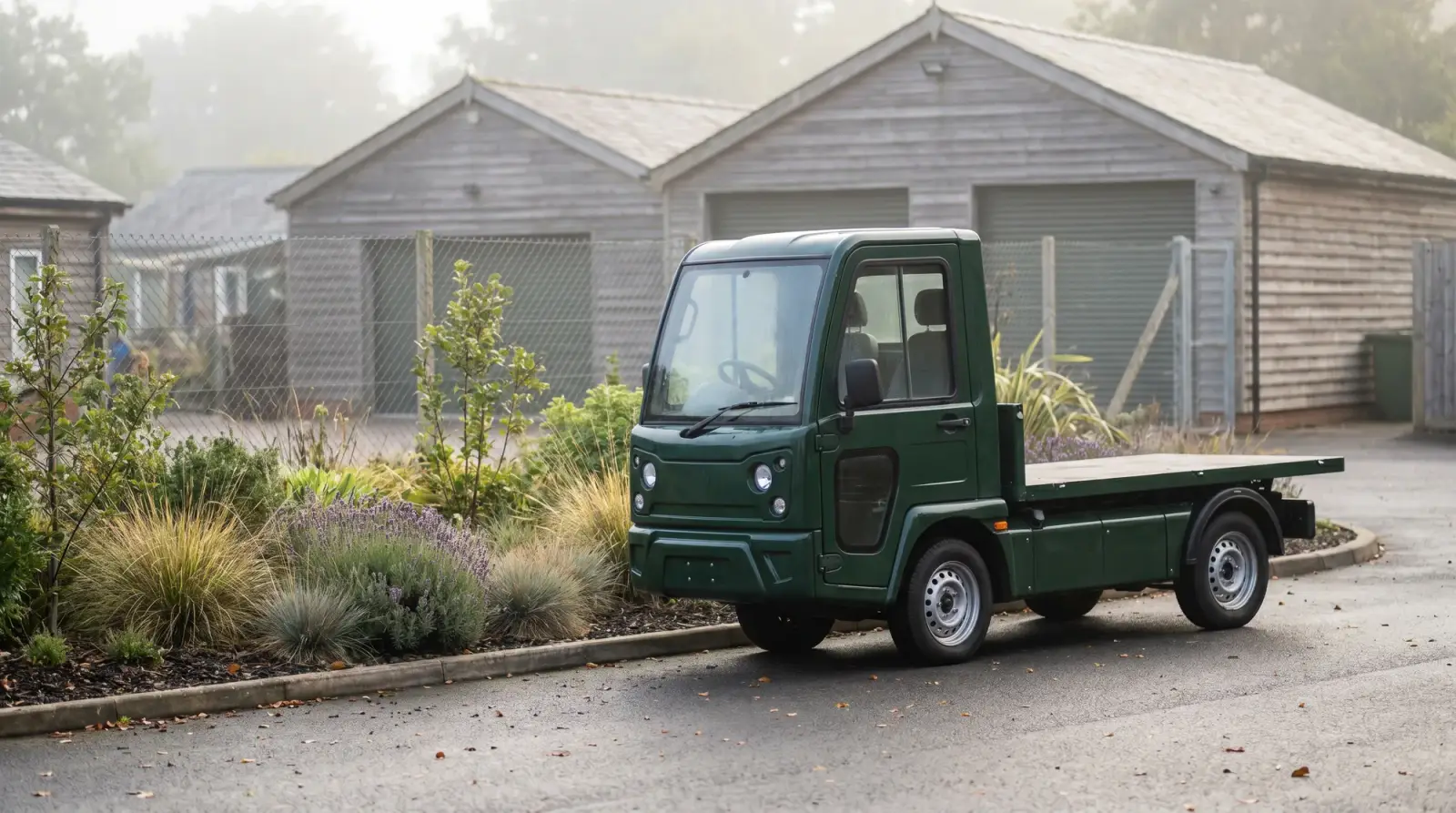
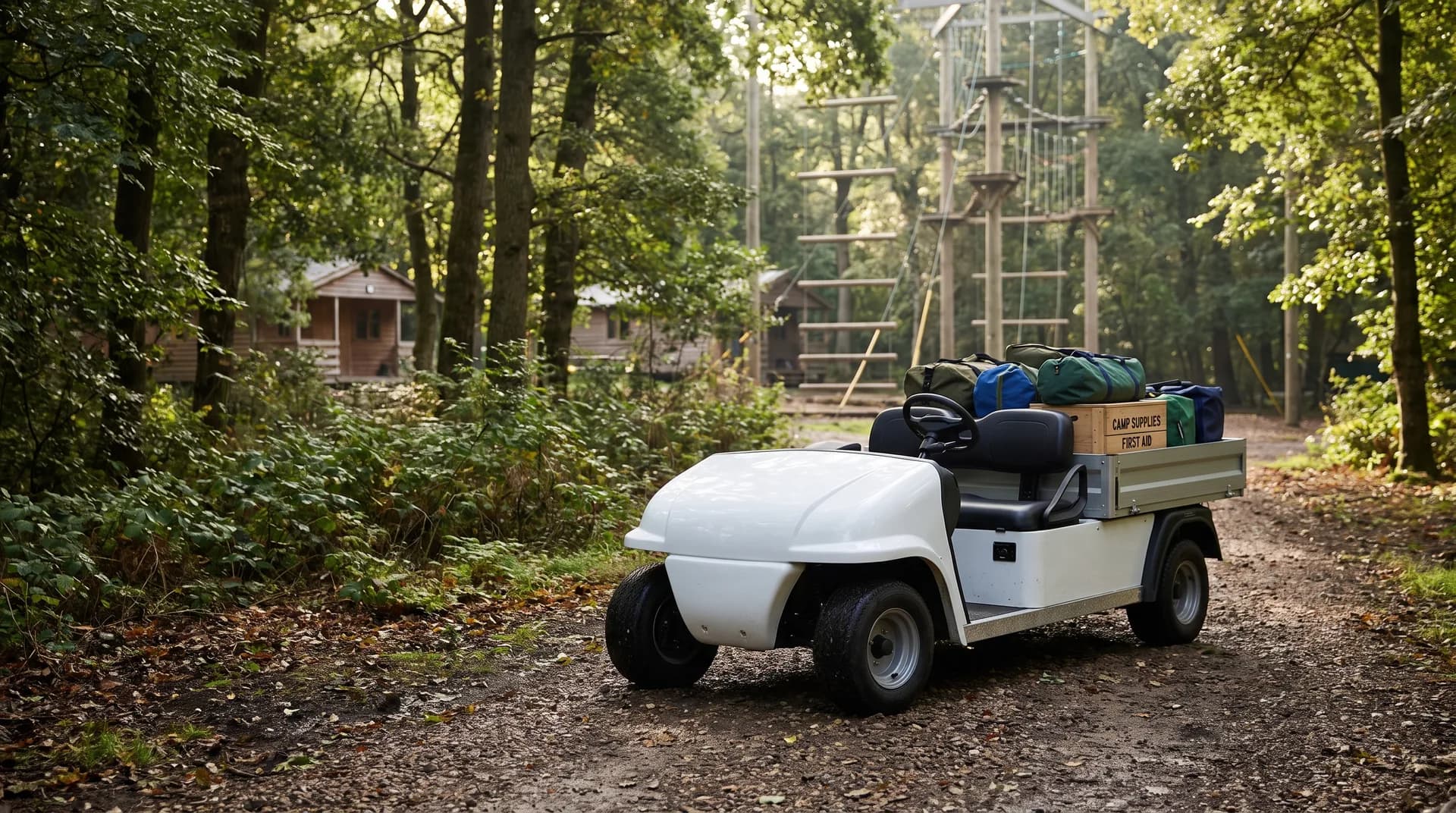
The rhythm of an activity centre is logistics wearing a fleece: breakfast supplies to the far dining hall, packed lunches out to activity zones, bedding and towels on rotation, gas bottles and ropes and buoyancy aids between stores and lakefronts, and the endless maintenance a hard-used site demands. A utility buggy with a load bed turns each of those from a two-person barrow job into a ten-minute run, the same honest carrying as our materials and equipment work, threaded along woodland paths built for boots.
Changeover day, tamed
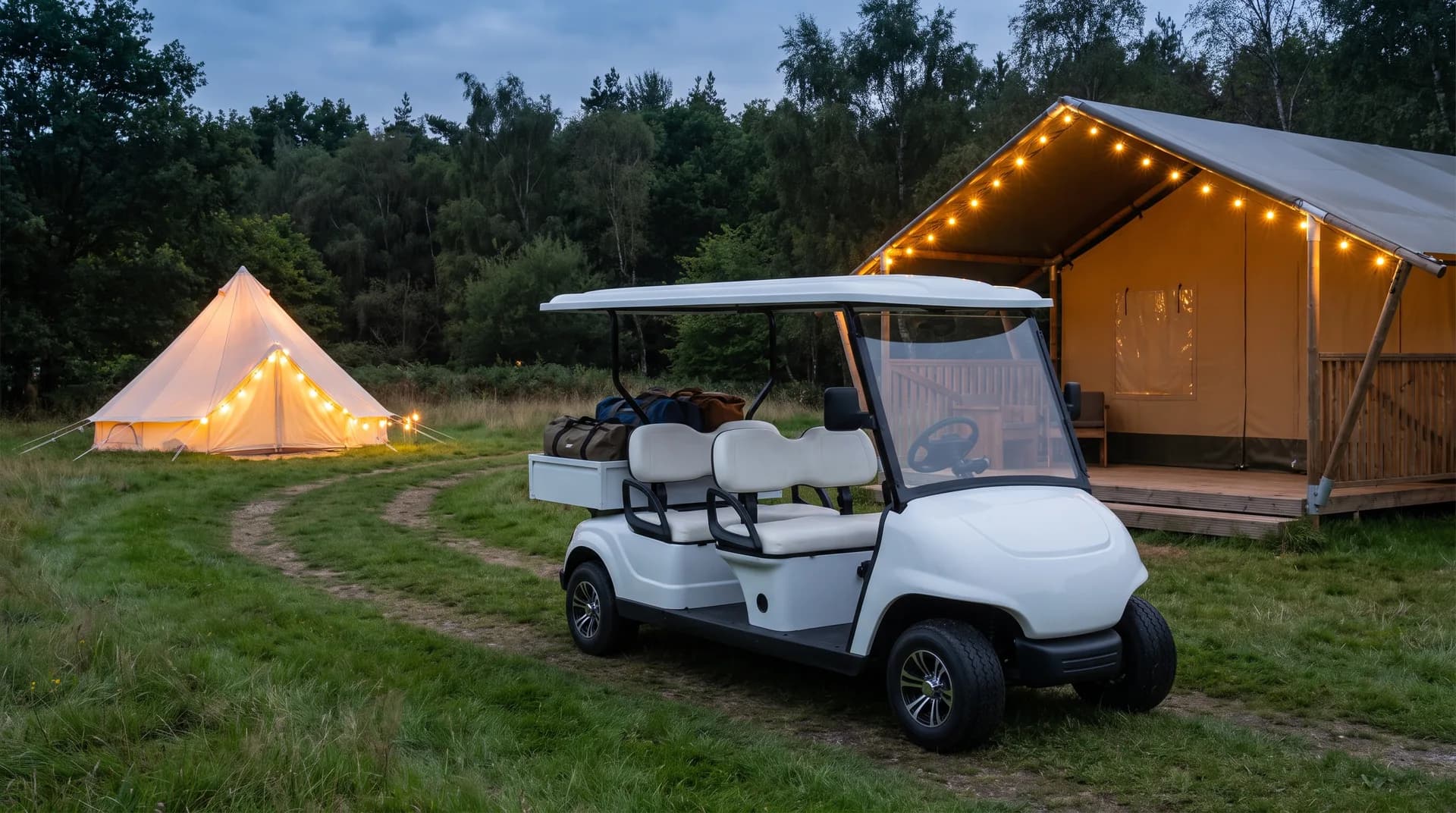
Anyone who has run a Friday changeover knows the crunch: one coachload of luggage out, another in, dorms flipped, catering restocked, all in a few hours. A buggy shuttling luggage between the coach park and the accommodation blocks halves the labour and the chaos, exactly the changeover pattern our glamping and campsites guide describes, at twice the scale. On a wooded site it does it without a diesel engine threading through crowds of excited children.
Specified for a site full of children
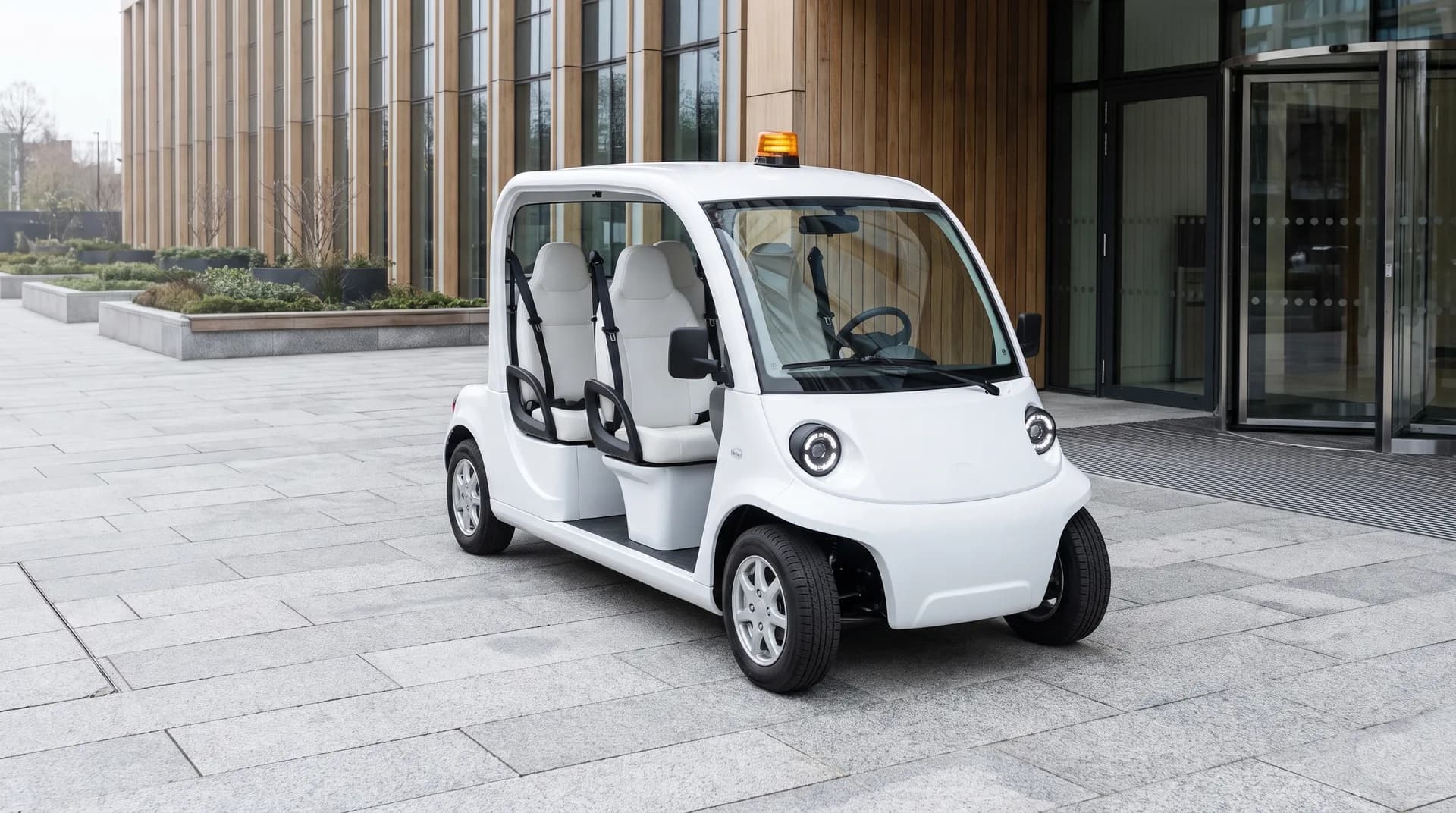
The specification writes itself from the environment: speed limiting for a site where children are always about, good sightlines and a beacon where wanted, staff-only keys and driving under the centre's own safeguarding and site rules, the same discipline as our schools guide. Electric running helps the whole picture: no fumes around outdoor lunch tables, no engine noise across the archery field, and running costs a seasonal budget can live with. For visitors or staff who cannot manage a rugged site, the same vehicle quietly restores access, which for a centre that wants every school group to include every child is not a small thing.
Frequently asked questions
What does an activity centre use a buggy for?+
Site operations: catering and supplies to dining halls and activity zones, luggage on changeover days, bedding rotation, kit between stores, and maintenance runs across paths a van cannot use. It is a staff vehicle, driven by trained adults under the centre's rules.
Do children ride on it?+
No. It is a site-operations vehicle, not part of the activity programme, and never a ride. Where a young visitor with a genuine mobility need must be moved, that happens under the centre's own safeguarding and accessibility policies, which remain the centre's domain.
Is it safe on a site full of children?+
Specified and operated properly, yes: speed limiting, good sightlines, a beacon where wanted, staff-only keys and sensible routing under the centre's rules. Near-silent electric running also never startles, and there are no fumes around outdoor activity.
Will it cope with woodland paths and rough ground?+
Specified for it, yes: all-terrain tyres, honest payload and sensible routes. Activity centres are exactly the mixed hard-path-and-track environment these vehicles are built for.
Can a seasonal business afford one?+
Running costs are pennies, servicing is light and plans into the closed season, and the labour saved every changeover day is the real payback. We quote honestly against a centre's calendar, and hire can cover a first season.
Kit out your site team
Tell us your site, your changeover days and your paths, and we will specify a staff workhorse that tames the logistics, and prepare a site-specific quote.

Ready to find the right buggy?
Tell us how and where it will work and we will specify a vehicle and a tailored quote built around you. Every build comes with a 3-year warranty and a 24-hour priority call-out.
Our guides are written and reviewed by the Hawke Electric Vehicles team, the people who specify, build, deliver and support the vehicles. We focus on honest, practical advice and flag where a figure depends on the build rather than guessing.
More guides by Hawke