If most of your work happens on your own land, a compact electric utility vehicle is usually the better and cheaper tool, while a road-registered pickup truck earns its keep the moment you need long public-road journeys or heavy highway towing. The honest answer for many businesses is that these are not really rivals: they solve different problems, and a lot of sites end up running one of each.
- A pickup is a road vehicle first: taxed, insured and registered for public roads, and built for distance, motorway speeds and heavy towing.
- An electric utility vehicle is a work tool for private land: compact, quiet, zero local emissions and cheap to run around a fixed site.
- For on-site movement, tight yards, footpaths, gateways and working near people or indoors, the electric UTV almost always wins.
- For long public-road trips and serious highway towing, the pickup wins clearly.
- Running costs, manoeuvrability and access usually favour the UTV; outright road capability favours the pickup.
- Plenty of operations buy both and let each do what it is best at.
Start with where the vehicle actually works
Before comparing spec sheets, map where the vehicle spends its day. If it lives on a single site such as a farm, estate, holiday park, factory, distribution yard, golf course, hospital campus or grounds team, and rarely if ever needs the public road, a utility vehicle designed for private land is the natural fit. If the vehicle has to drive itself between sites, collect materials from a distant supplier, or tow heavy loads at speed on main roads, that is pickup territory.
This single question decides more than any other. A vehicle chosen for the road will always compromise on the very things that make on-site work efficient, and a vehicle built for the site will not pretend to be a highway machine. Getting the primary use case right is the whole game.
Road use, registration and legal status
A pickup truck is a fully road-registered vehicle. That brings road tax, insurance, MOT obligations once applicable, and all the usual driver and licensing requirements that come with a road vehicle. In return you get the freedom to go anywhere the public road network reaches.
A compact electric utility vehicle is typically used on private land rather than as a general road vehicle. Some low-speed vehicles can be made road-legal in specific circumstances, but the rules around registration, lighting, speed, insurance and driver requirements are detailed and they change, so this is exactly the sort of thing to confirm for your intended use rather than assume. As a general principle, if you genuinely need routine, unrestricted public-road use, plan around a road-registered vehicle; if your work is on private land, an electric UTV keeps things simple.
Cost to buy and cost to run
On purchase price, a well-specified pickup and a well-specified electric utility vehicle can sit in overlapping ranges, so the sharper difference is usually in running cost. A diesel or petrol pickup carries fuel, road tax, servicing of a complex drivetrain, and the wider maintenance bill of a full road vehicle.
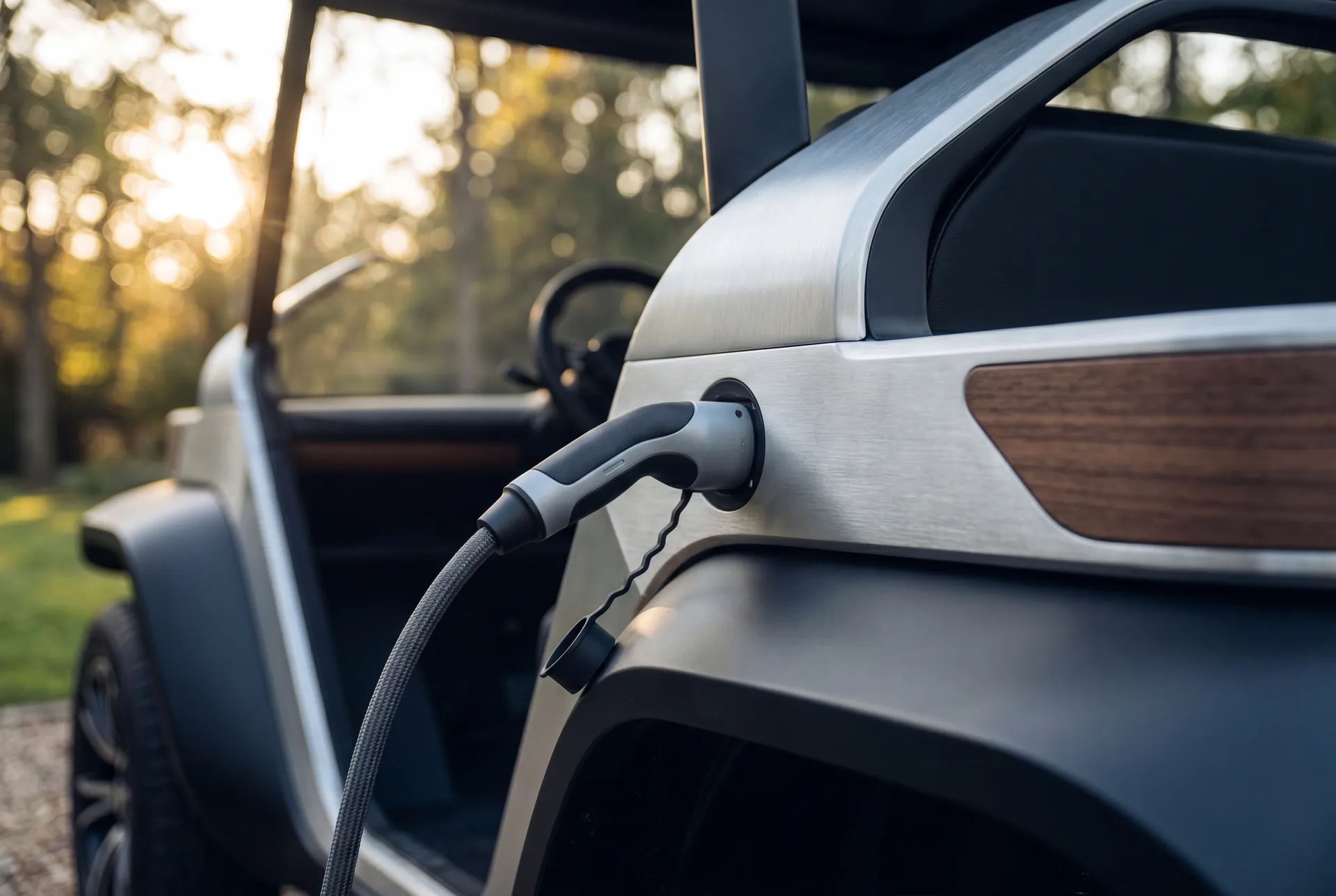
An electric utility vehicle charges from mains electricity, has far fewer moving parts to service, and avoids fuel and many road-vehicle overheads entirely. Over a working life spent shuttling loads around a fixed site, the difference in energy and maintenance cost can be substantial. Electric drivetrains also reward stop-start, low-speed duty cycles, which is precisely what most on-site work looks like.
- Electric utility vehicle
- Private land and mixed on-site work
- Road pickup truck
- Public roads and long distances
- Electric utility vehicle
- Low: mains charging, few moving parts
- Road pickup truck
- Higher: fuel, tax, fuller maintenance
- Electric utility vehicle
- Compact, tight turning, easy access
- Road pickup truck
- Larger footprint, wider turns
- Electric utility vehicle
- Zero local emissions, quiet
- Road pickup truck
- Exhaust emissions, engine noise
- Electric utility vehicle
- Well suited
- Road pickup truck
- Poorly suited
- Electric utility vehicle
- Not the tool for it
- Road pickup truck
- Strong
- Electric utility vehicle
- Limited
- Road pickup truck
- Strong
- Electric utility vehicle
- Genuine work bed, site-sized loads
- Road pickup truck
- Larger bed, higher payload and tow limits
| Electric utility vehicle | Road pickup truck | |
|---|---|---|
| Primary environment | Private land and mixed on-site work | Public roads and long distances |
| Running cost on site | Low: mains charging, few moving parts | Higher: fuel, tax, fuller maintenance |
| Manoeuvrability | Compact, tight turning, easy access | Larger footprint, wider turns |
| Emissions and noise | Zero local emissions, quiet | Exhaust emissions, engine noise |
| Working near people and indoors | Well suited | Poorly suited |
| Long road trips | Not the tool for it | Strong |
| Heavy highway towing | Limited | Strong |
| Payload and bed | Genuine work bed, site-sized loads | Larger bed, higher payload and tow limits |
Manoeuvrability and access
This is where a compact electric utility vehicle quietly outclasses a pickup. A UTV is narrower, shorter and tighter-turning, so it slips through standard gateways, down footpaths and service routes, between glasshouses or stables, along narrow estate tracks, and into loading bays that a full-size pickup simply cannot reach without a fuss.
- Fits through pedestrian gates and narrow openings that stop a pickup at the entrance.
- Turns and reverses in confined yards without repeated shunting.
- Reaches paths, greens and interiors where a large road truck would tear up surfaces or be unwelcome.
- Parks in a fraction of the space, which matters on a busy site.
If your day involves lots of short hops, tight corners and getting close to the actual work, the smaller vehicle saves time on every single trip, and those minutes add up across a season.
Payload and load bed
A pickup will generally carry more and tow more, and its bed is bigger. If you routinely move heavy palletised loads over distance or tow substantial trailers on the road, that headroom is real and worth paying for.
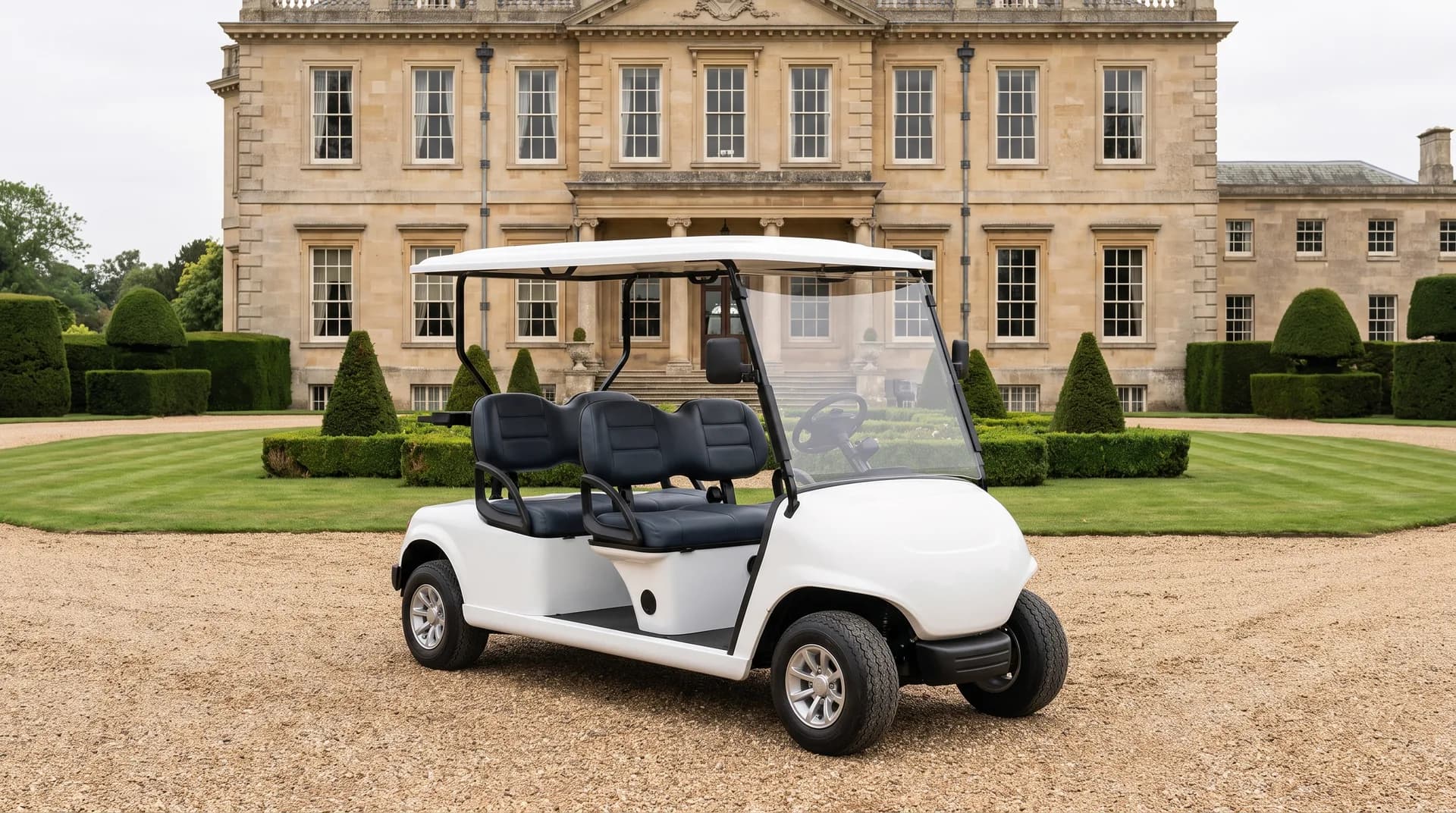
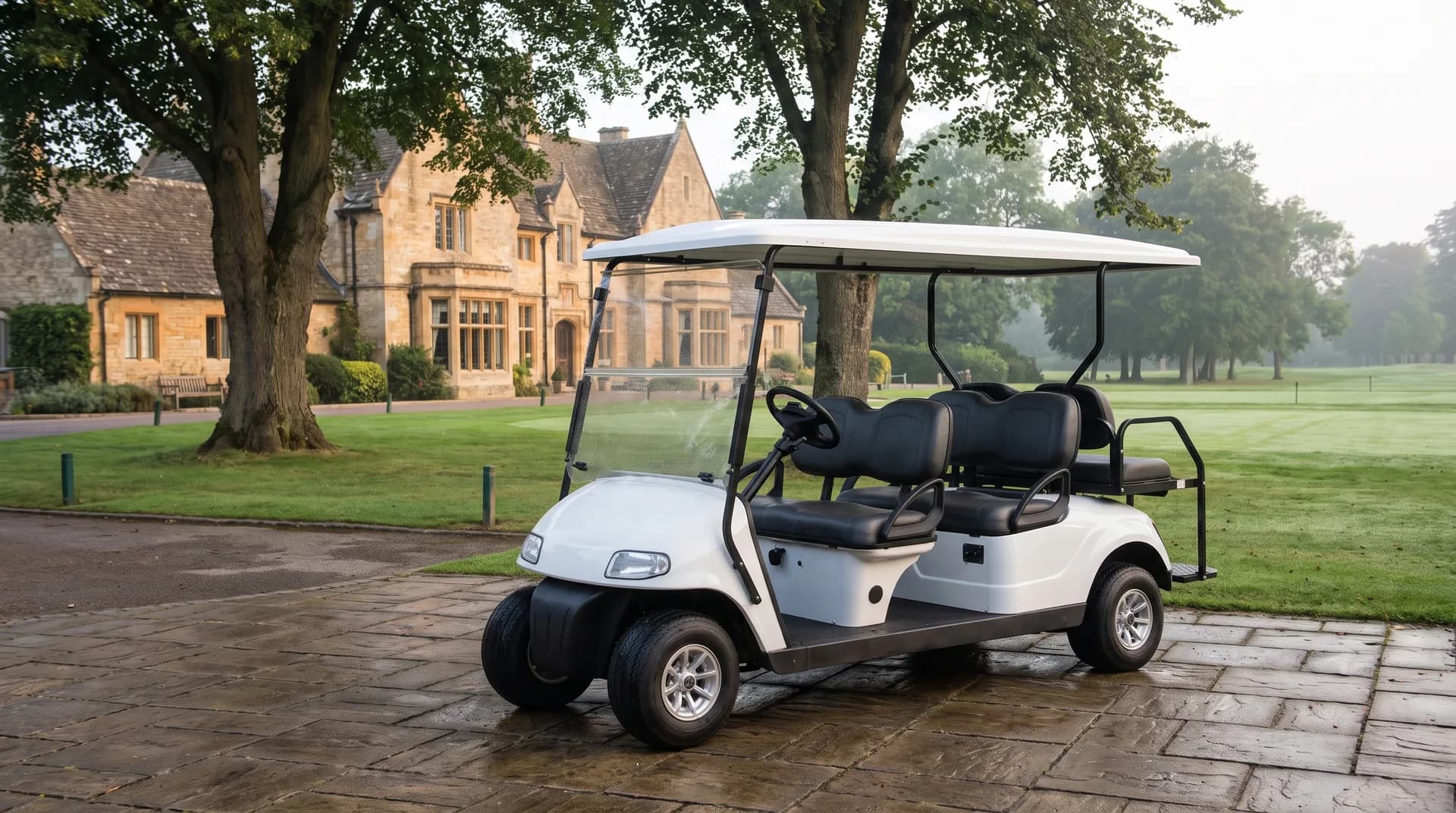
But most on-site tasks do not need road-truck payloads. A purpose-built utility vehicle offers a genuine tipping or flat bed sized for tools, feed, materials, waste and equipment, with load ratings suited to site work. Hawke utility models such as the U1 and U2 are built around a working bed, with pickup and tipper body options, so you get real carrying capability without the bulk of a road truck. The question is not who can carry the absolute most, but who carries what you actually move, where you move it.
Where the pickup genuinely wins
- Long journeys on public roads between sites or to suppliers.
- Heavy towing at road speeds, such as large plant or livestock trailers.
- Mixed road-and-field use where the vehicle must be fully road-registered by default.
- Situations where maximum payload and tow rating are non-negotiable.
Where the compact electric UTV wins
- On-site work: repeated short runs around a fixed location.
- Working near people, in public-facing settings, or indoors and in mixed indoor-outdoor spaces where fumes and noise are unacceptable.
- Tight access: narrow gates, paths, yards and delicate surfaces.
- Low running cost: mains charging and minimal servicing over a hard-working life.
- Clean-air and quiet-operation requirements, including early-morning or late-evening work.
How to decide
- 01
Log a typical week
Note every journey: where it starts and ends, distance, road or private land, load carried and anything towed.
- 02
Split road from site
Separate the genuine public-road, long-distance or heavy-tow jobs from the on-site movement. Be honest about how often each really happens.
- 03
Size the loads
Record real payloads and tow weights, not worst-case fantasies. Most sites need far less than they assume.
- 04
Check access
Walk your tightest gateways, paths and indoor routes and ask whether a full pickup could sensibly use them.
- 05
Cost it over years
Compare energy, tax, insurance and servicing across the working life, not just the sticker price.
- 06
Choose per job, not per habit
If most work is on site, lead with an electric UTV and only add a pickup for the road jobs that truly need one.
Find the right electric utility vehicle for your site
Explore Hawke electric utility vehicles, or tell us how you work and we will recommend the right configuration and give you a like-for-like quote.
Frequently asked questions
Do I need a pickup or a utility vehicle?+
If your work is mostly on private land, in tight spaces, near people or indoors, a compact electric utility vehicle is usually the better and cheaper choice. If you regularly drive long distances on public roads or tow heavy loads at speed, choose a road-registered pickup. Many businesses keep both and use each for what it does best.
Is an electric utility vehicle road-legal like a pickup?+
A pickup is a fully road-registered vehicle by default. Electric utility vehicles are generally used on private land, and any road use depends on the specific vehicle and current rules for registration, insurance, lighting and licensing. Confirm the details for your exact use before relying on public-road use.
Which is cheaper to run?+
For work concentrated on a single site, an electric utility vehicle is typically cheaper to run: it charges from mains electricity, has far fewer moving parts to service and avoids fuel and many road-vehicle overheads. A pickup carries fuel, tax and fuller maintenance costs.
Can a utility vehicle carry and tow enough?+
For most on-site tasks, yes. Purpose-built utility vehicles offer genuine load beds, tipping options and site-appropriate payloads. A pickup still leads on maximum payload and heavy highway towing, so match the choice to the loads you actually move.
What if I need both road trips and on-site work?+
Then running both often makes the most sense: a pickup for the long road and heavy-tow jobs, and one or more electric utility vehicles for daily on-site work. The split keeps running costs down and gives you the right tool for each task.
Related solutions
Ready to explore what we build?
See the vehicles and the setting this applies to, or get a tailored quote built around your site.

Ready to find the right buggy?
Tell us how and where it will work and we will specify a vehicle and a tailored quote built around you. Every build comes with a 3-year warranty and a 24-hour priority call-out.
Our guides are written and reviewed by the Hawke Electric Vehicles team, the people who specify, build, deliver and support the vehicles. We focus on honest, practical advice and flag where a figure depends on the build rather than guessing.
More guides by Hawke