Owners obsess over winterizing a cart, but in much of the country it is summer, not winter, that does the real damage. Sustained heat is hard on batteries, accelerates fluid loss in lead-acid packs, raises tire pressures, fades upholstery and bakes the electronics. In hot states the cart is also working hardest in summer, doing daily errands and ferrying people in the heat. A little hot-weather discipline keeps the pack alive longer, the cart reliable and the people aboard safe. This guide covers what genuine heat does to a cart and the simple habits that counter it.
What heat does to your battery
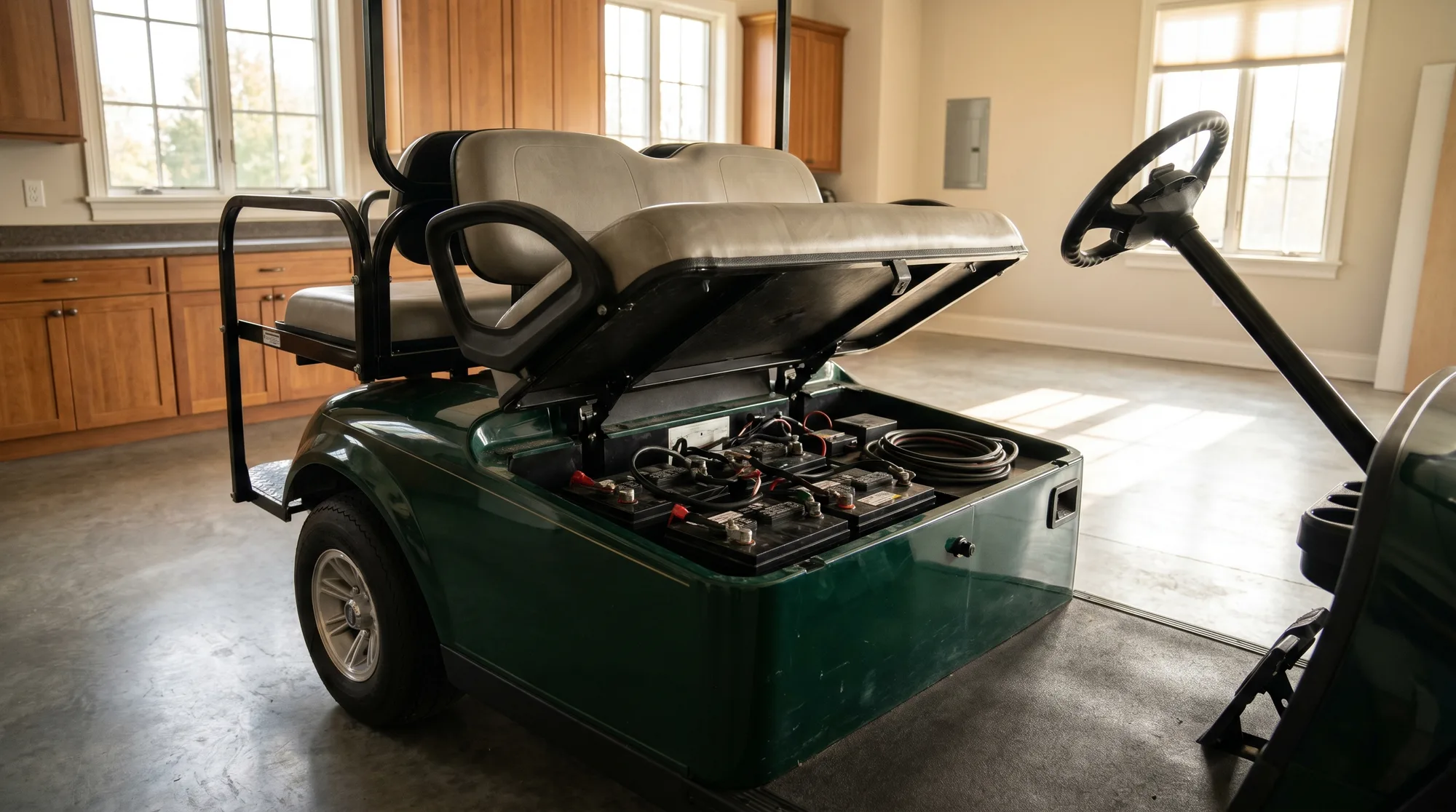
Batteries are where summer bites hardest. Many owners assume cold is the enemy, and it does reduce range temporarily, but sustained heat causes the lasting harm. In flooded lead-acid batteries, heat accelerates water loss through evaporation, so the electrolyte drops faster and the plates risk exposure, which permanently damages the battery. Heat also speeds up the internal chemistry and self-discharge, so the pack ages faster overall. Lithium packs tolerate heat better but still prefer to avoid extreme temperatures and may limit charging or output to protect themselves when very hot.
The practical upshot is simple: in summer, watch your pack more closely. Check water levels in flooded batteries far more often than in cooler months and top up with distilled water as needed, never letting the plates dry out. Our battery care and lifespan guide covers the watering routine in detail, and if performance drops the battery troubleshooting guide helps you find out why.
Charging in the heat
Charging itself generates heat, so charging a hot pack in a hot space compounds the stress. Where you can, charge in the cooler part of the day or in a shaded, ventilated spot rather than a sealed metal shed at midday. Let a pack that has been working hard cool a little before charging if it is extremely hot. Make sure wherever you charge has airflow, since both the batteries and the charger run hot. Our home charging guide covers setting up a safe, ventilated charging point that pays off all year but especially in summer.
Tires, brakes and fluids in summer heat
Heat changes the mechanicals too. Air expands, so tire pressures climb in hot weather; check them when the tires are cool, early in the day, and keep them in the recommended range. Overinflated hot tires wear unevenly and handle poorly, and a badly underinflated tire run hot can fail. Hot pavement is also harder on tires generally. Our tires and wheels guide explains pressure and wear in depth.
- Check tire pressure cool and keep it in spec; heat inflates tires and exaggerates any error.
- Watch brakes that have been working on long hot descents; let them cool and inspect for fade or drag.
- Top up and check any fluids per your manual; heat thins lubricants and speeds evaporation.
- Keep cooling vents and the motor area clear of debris so heat can escape.
- Wash off dust and grime, which trap heat and hide developing problems.
Shade, storage and sun damage
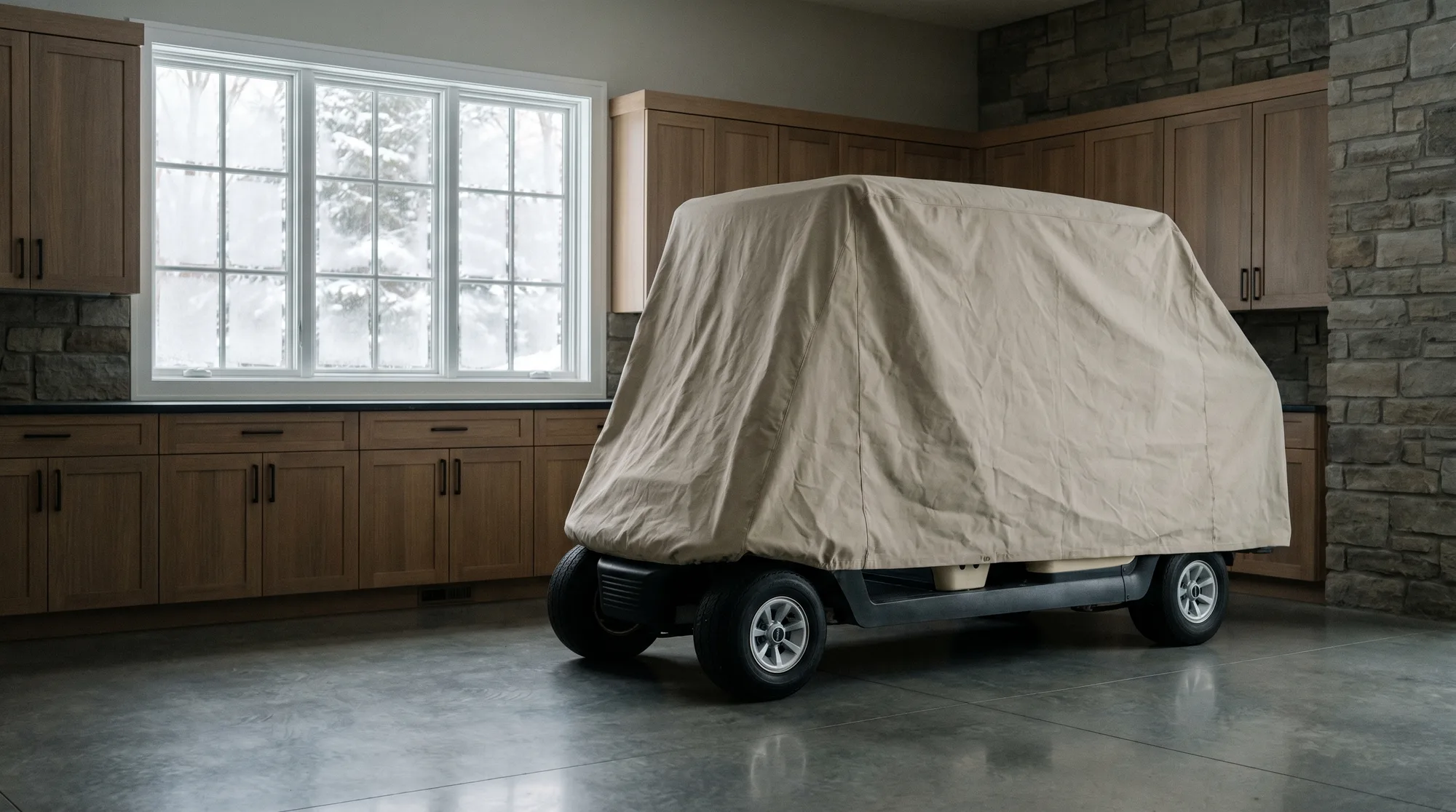
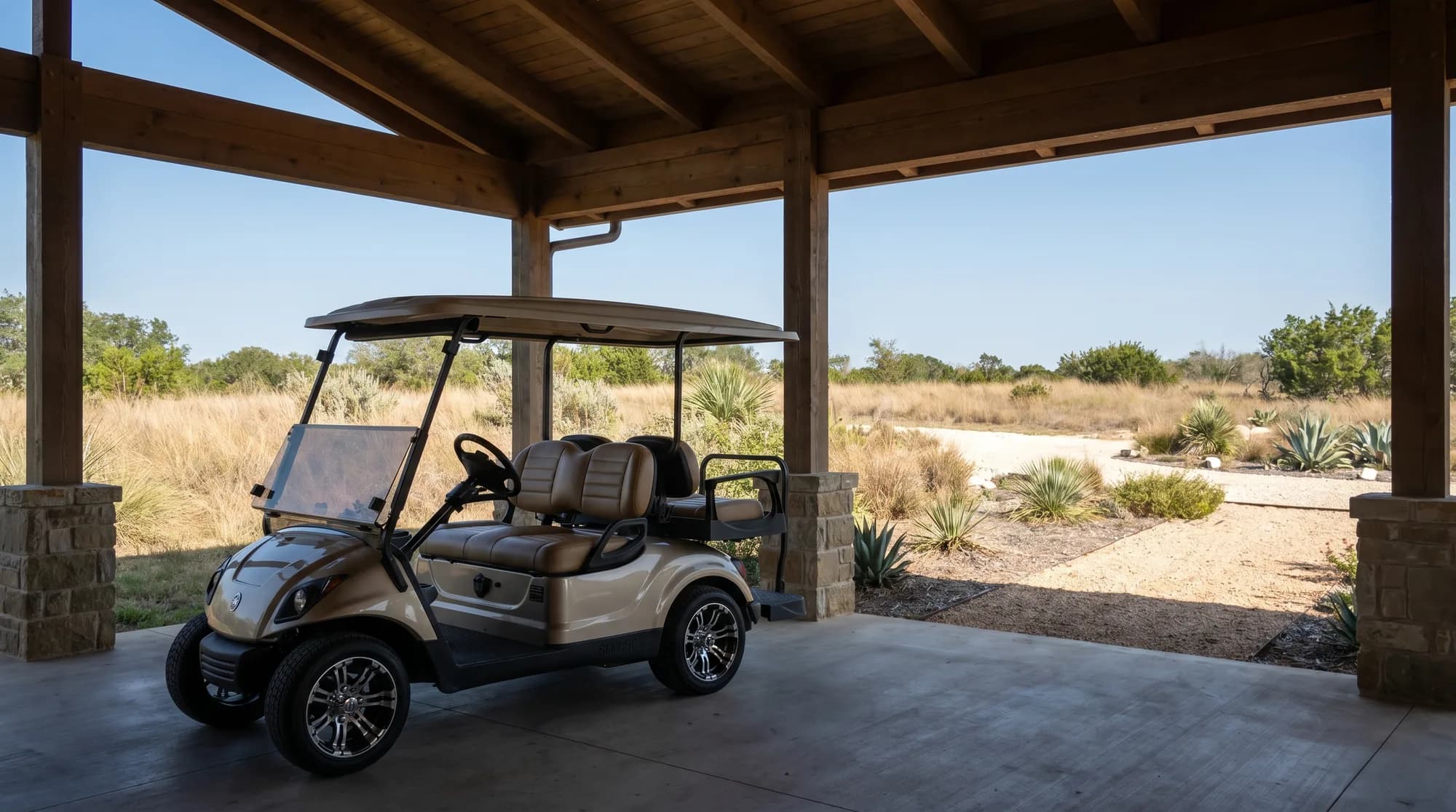
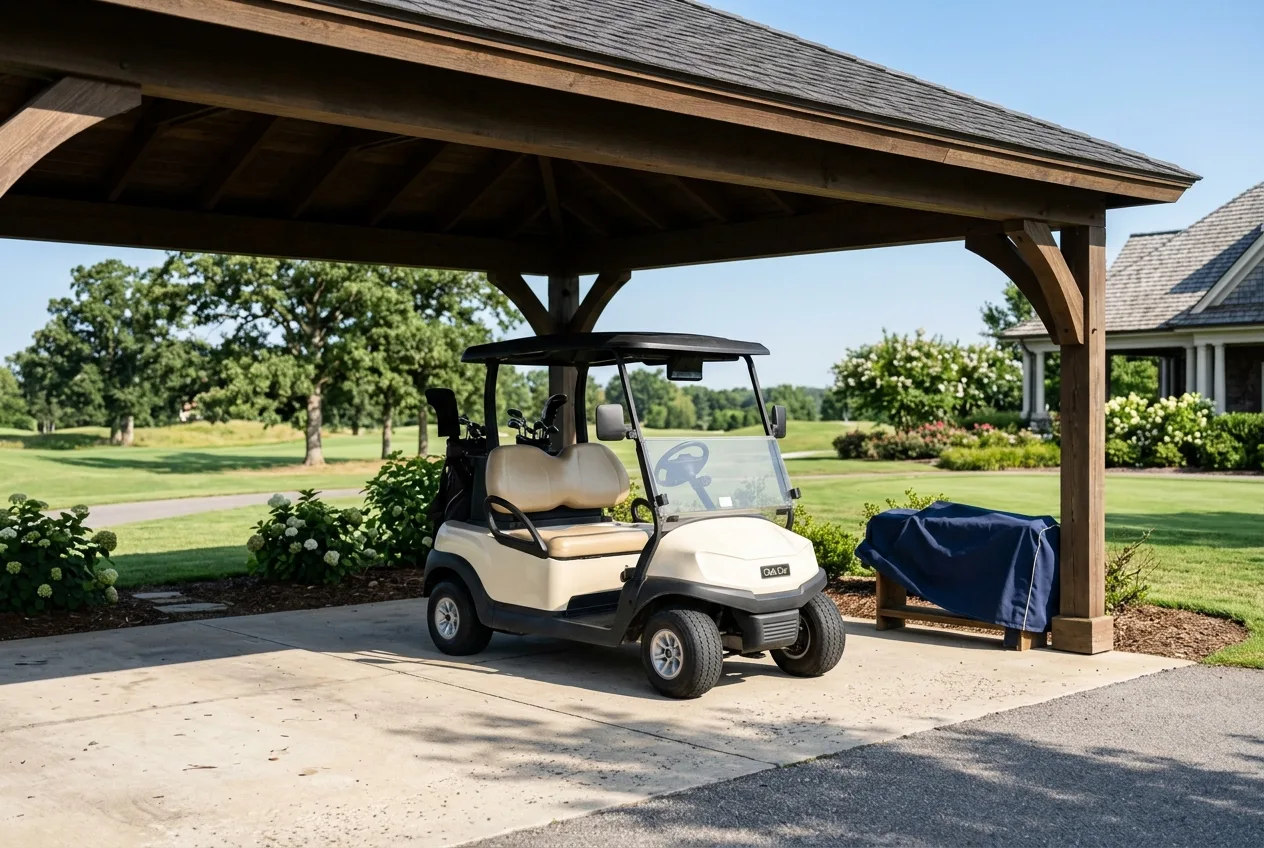
Sun does slow, cumulative damage that owners underestimate: it fades and cracks seats, degrades plastics and trim, and bakes the battery and electronics if the cart bakes in the open all day. The cheapest and most effective protection is shade. Park under a carport, in a garage or beneath a tree, and use a cover or sun shade when the cart sits out. A ventilated cover protects the finish without trapping heat. For longer storage spells, our covers and storage guide covers doing it without cooking the pack.
- Hot weather
- Water loss, faster aging
- Cold weather
- Reduced range, slow charge
- Hot weather
- Check water often, shade it
- Cold weather
- Keep charged, store warm-ish
- Hot weather
- Pressure rises, check cool
- Cold weather
- Pressure drops, top up
- Hot weather
- Shaded and ventilated
- Cold weather
- Dry, off cold concrete
- Hot weather
- Heat, hot surfaces
- Cold weather
- Cold exposure
| Hot weather | Cold weather | |
|---|---|---|
| Main battery risk | Water loss, faster aging | Reduced range, slow charge |
| Key habit | Check water often, shade it | Keep charged, store warm-ish |
| Tires | Pressure rises, check cool | Pressure drops, top up |
| Storage | Shaded and ventilated | Dry, off cold concrete |
| People risk | Heat, hot surfaces | Cold exposure |
Heat safety for riders and pets
Finally, the people and animals aboard. Open carts feel cooling at speed but offer little protection when stopped, and metal and vinyl surfaces get hot enough to burn skin in strong sun. Never leave children or pets in a parked cart in the heat, carry water on long outings, check seat surfaces before letting children sit, and consider a roof or canopy for sun protection on a cart used daily in summer. A heat-safe cart is partly a hardware question and partly a habit one.
People winterize religiously and then let the cart bake all summer. In hot states it is the heat, not the cold, that quietly kills the battery first.
So what should you do?
In summer, watch the battery water levels closely, charge in cool ventilated conditions, check tires cool, keep the cart shaded and protect the people aboard from the heat. None of it is hard, but skipping it costs you a battery pack early. If you want a cart specified for a hot climate, with the right battery, weather protection and ventilation from the start, we are glad to help with honest numbers.
Spec a cart for a hot climate
Tell us where you live and how you use the cart, and we will recommend a heat-ready build with an honest price.
Frequently asked questions
Is heat or cold worse for a golf cart battery?+
Sustained heat causes more lasting damage. Cold temporarily reduces range, but heat accelerates water loss in lead-acid batteries, speeds up internal aging and self-discharge, and can force lithium packs to limit output. In hot climates, summer is when batteries age fastest.
How often should I check battery water in summer?+
Far more often than in cooler months. Heat evaporates the electrolyte quickly, so in a heatwave a flooded battery can drop low enough to expose the plates between normal checks. Check frequently and top up with distilled water, never letting the plates run dry.
Should I check tire pressure differently in hot weather?+
Yes. Heat expands the air inside, so pressures rise. Always check when the tires are cool, ideally early in the day, and keep them in the recommended range. Overinflated hot tires wear unevenly and handle poorly.
Can I leave my golf cart in the sun all summer?+
It is best not to. Sun fades and cracks seats, degrades plastics and bakes the battery and electronics. Park in shade, a carport or a garage, and use a ventilated cover when it sits out. Shade is the cheapest, most effective hot-weather protection.
Is it safe to charge a golf cart in extreme heat?+
Charging generates heat, so charge in a cool, shaded, ventilated spot rather than a sealed shed at midday, and let a very hot pack cool a little first. Make sure the area has airflow, since both the batteries and charger run hot during charging.
Related solutions
Ready to explore what we build?
See the vehicles and the setting this applies to, or get a tailored quote built around your site.
Ready to find the right buggy?
Tell us how and where it will work and we will specify a vehicle and a tailored quote built around you. Every build comes with a 3-year warranty and a 24-hour priority call-out.