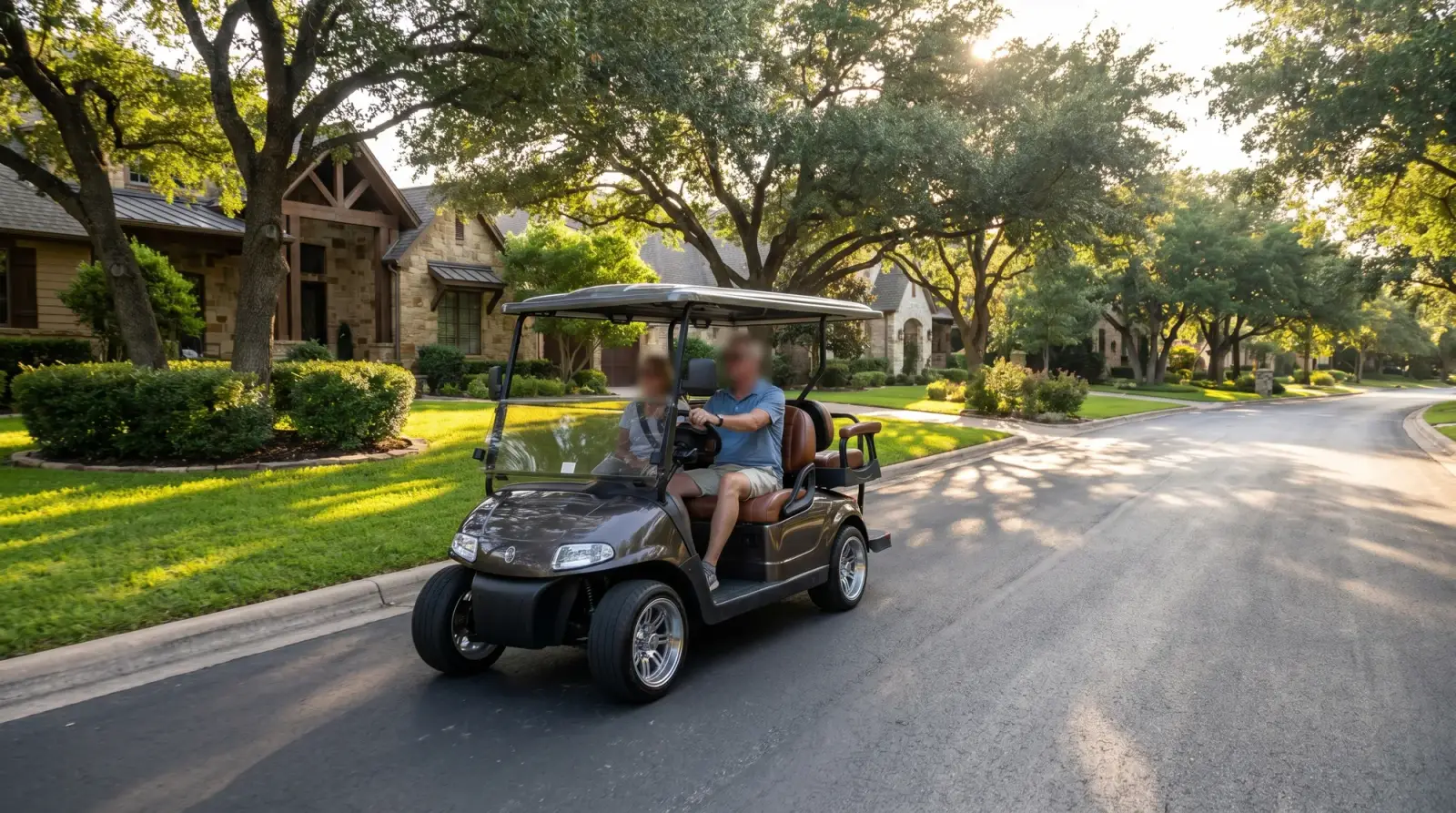
If you live in a homeowners association community, your golf cart answers to two sets of rules: the law of your state and city, and the rules of your HOA. The second set surprises a lot of new residents, because an HOA can be stricter than state law and can fine you for breaking its own rules even when you are doing nothing illegal. This guide explains what HOA golf cart rules typically cover, why they exist, and how to stay on the right side of them so your cart stays a pleasure and not a source of letters.
- An HOA can set its own cart rules on top of state and local law, and can fine residents for breaking them.
- Common rules cover registration or decals, speed limits, where you may drive and park, and who may drive.
- Many HOAs require proof of insurance and a licensed driver for any cart used on community roads.
- Read your community's governing documents; the cart rules are usually in the rules and regulations or covenants.
- When in doubt, ask the HOA board or manager in writing, and confirm public-road rules with your city or county.
Why HOAs regulate golf carts at all
An HOA's job is to protect shared safety, property values and the character of the community, and carts touch all three. Hundreds of carts on shared streets and paths create real safety questions: speed near pedestrians, parking that blocks access, underage or impaired driving. HOAs also care about appearance and noise. So they write rules, and because you agreed to the community's governing documents when you bought, those rules are enforceable, typically through warnings and fines.
None of this is unique to carts, but carts attract attention because they are visible and shared. Understanding the why makes the rules easier to live with, and it explains why two neighboring communities can have quite different policies. For the wider community context, our guides on HOA and gated-community carts and carts for resorts and communities go deeper.
What HOA cart rules usually cover
Although every community is different, HOA cart rules tend to cluster around the same handful of topics. Knowing the categories helps you read your own documents quickly and spot what applies to you.
- Registration or a community decal, sometimes with a small annual fee.
- Speed limits on internal roads and paths, often well below the state limit.
- Where carts may and may not drive, including any path-only or no-cart zones.
- Parking rules: designated areas, no blocking sidewalks, overnight restrictions.
- Driver rules: minimum age, a valid license for road use, and guest driving limits.
- Insurance: proof of liability coverage for carts used on community property.
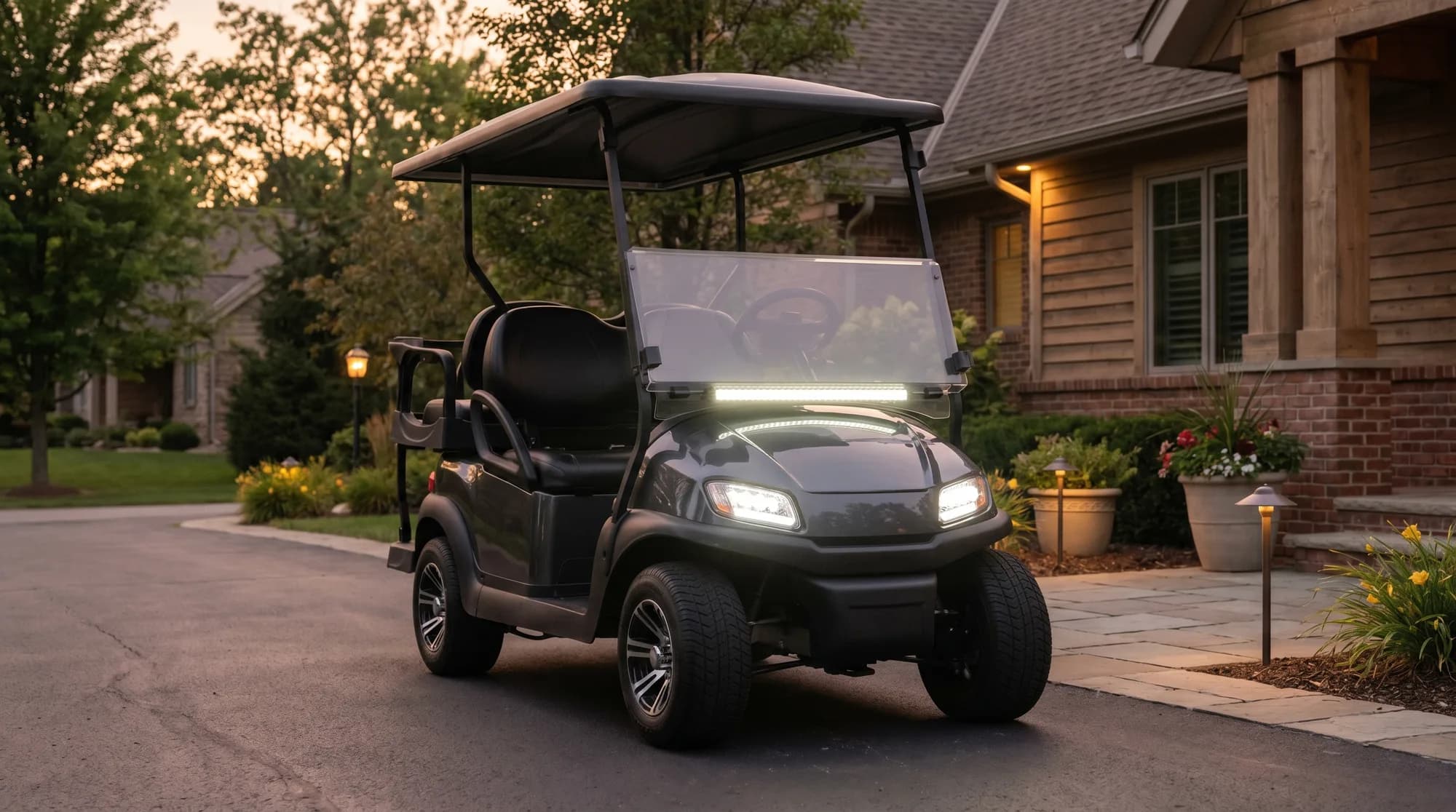
- Equipment and appearance: lights for night use, noise limits, sometimes modifications.
- HOA rules
- Community decal, speed, parking
- State and local law
- Classification, road rights, registration
- HOA rules
- Stricter than the law
- State and local law
- The legal baseline
- HOA rules
- Warnings and fines
- State and local law
- Police and DMV
- HOA rules
- Governing documents
- State and local law
- State statute and city ordinance
| HOA rules | State and local law | |
|---|---|---|
| Sets | Community decal, speed, parking | Classification, road rights, registration |
| Can be | Stricter than the law | The legal baseline |
| Enforced by | Warnings and fines | Police and DMV |
| Found in | Governing documents | State statute and city ordinance |
Registration, decals and proof of insurance
Many HOAs run their own cart registration, issuing a decal that shows your cart is known to the community and that you have met the conditions, often including proof of liability insurance and a valid driver license. This is separate from any state titling of a low-speed vehicle. Carrying the right insurance is wise regardless of the minimum; our insurance guide explains what actually protects you if there is an incident on community property.
Driving, parking and who is behind the wheel
The rules residents trip over most are speed, parking and driver eligibility. HOA speed limits are frequently lower than the surrounding roads because of pedestrian density. Parking rules protect access: blocking a sidewalk, a fire lane or a neighbor's space is a common cause of complaints. And driver rules matter, since many communities set a minimum age and require a valid license for any cart on community roads, with guest driving sometimes restricted.
- 01
Read the documents
Find the cart rules in your community's rules and regulations or covenants. If you cannot find them, ask the manager for the current version.
- 02
Register and insure
Complete any community registration, get your decal and provide proof of insurance and a licensed driver as required.
- 03
Learn the zones
Note the speed limits, the streets and paths carts may use, and the parking rules, then drive to them every time.
- 04
Confirm road rules separately
For any travel on public streets, confirm classification and registration with your city or county and the state DMV.
Staying compliant without the stress
Most cart disputes with an HOA are avoidable and come down to a few habits: register the cart, insure it, drive within the community limits, park where you are supposed to, and make sure only eligible drivers use it. Spec the cart to make compliance easy too, with proper lights for evening use and a sensible, quiet setup. If you are choosing a cart for an HOA community, our size guide helps you pick something that fits the rules and your household.
The residents who never get a letter are not lucky, they read the rules once, set the cart up to match, and then simply drive within them. It is genuinely that simple.
So what should an HOA resident do?
Treat your HOA rules and your state and local law as two layers you must both satisfy. Read the governing documents, register and insure the cart, learn the speed, driving and parking zones, and confirm any public-road rules with your city or county and the state DMV. Do that and the cart stays exactly what it should be: an easy, enjoyable way around your community. If you want a cart specified to fit your HOA's rules, we are happy to help with honest numbers.
Choose an HOA-friendly cart
Tell us your community and its rules, and we will recommend a compliant, well-equipped cart with a real price.
Frequently asked questions
Can my HOA ban or restrict golf carts?+
Yes. An HOA can set its own cart rules on top of state and local law, including registration, speed, driving and parking restrictions, and can enforce them with warnings and fines. You agreed to the governing documents when you bought.
Where do I find my community's cart rules?+
They are usually in the community's rules and regulations or covenants, conditions and restrictions. If you cannot locate them, ask the HOA manager or board for the current version in writing.
Does my HOA require insurance for a golf cart?+
Many do, requiring proof of liability coverage for carts used on community property, along with a valid driver license. Carrying proper insurance is wise regardless of the minimum required.
Can I be fined even if I am following state law?+
Yes. HOA rules can be stricter than the law, so you can be compliant with the state and still breach a community rule, such as the internal speed limit or a parking restriction, and be fined for it.
Who is allowed to drive a cart in an HOA community?+
Many HOAs set a minimum driver age and require a valid license for any cart used on community roads, sometimes with limits on guest drivers. Check your governing documents and confirm public-road rules with your city or county and the DMV.
Related solutions
Ready to explore what we build?
See the vehicles and the setting this applies to, or get a tailored quote built around your site.

Ready to find the right buggy?
Tell us how and where it will work and we will specify a vehicle and a tailored quote built around you. Every build comes with a 3-year warranty and a 24-hour priority call-out.
Our guides are written and reviewed by the Hawke Electric Vehicles team, the people who specify, build, deliver and support the vehicles. We focus on honest, practical advice and flag where a figure depends on the build rather than guessing.
More guides by Hawke