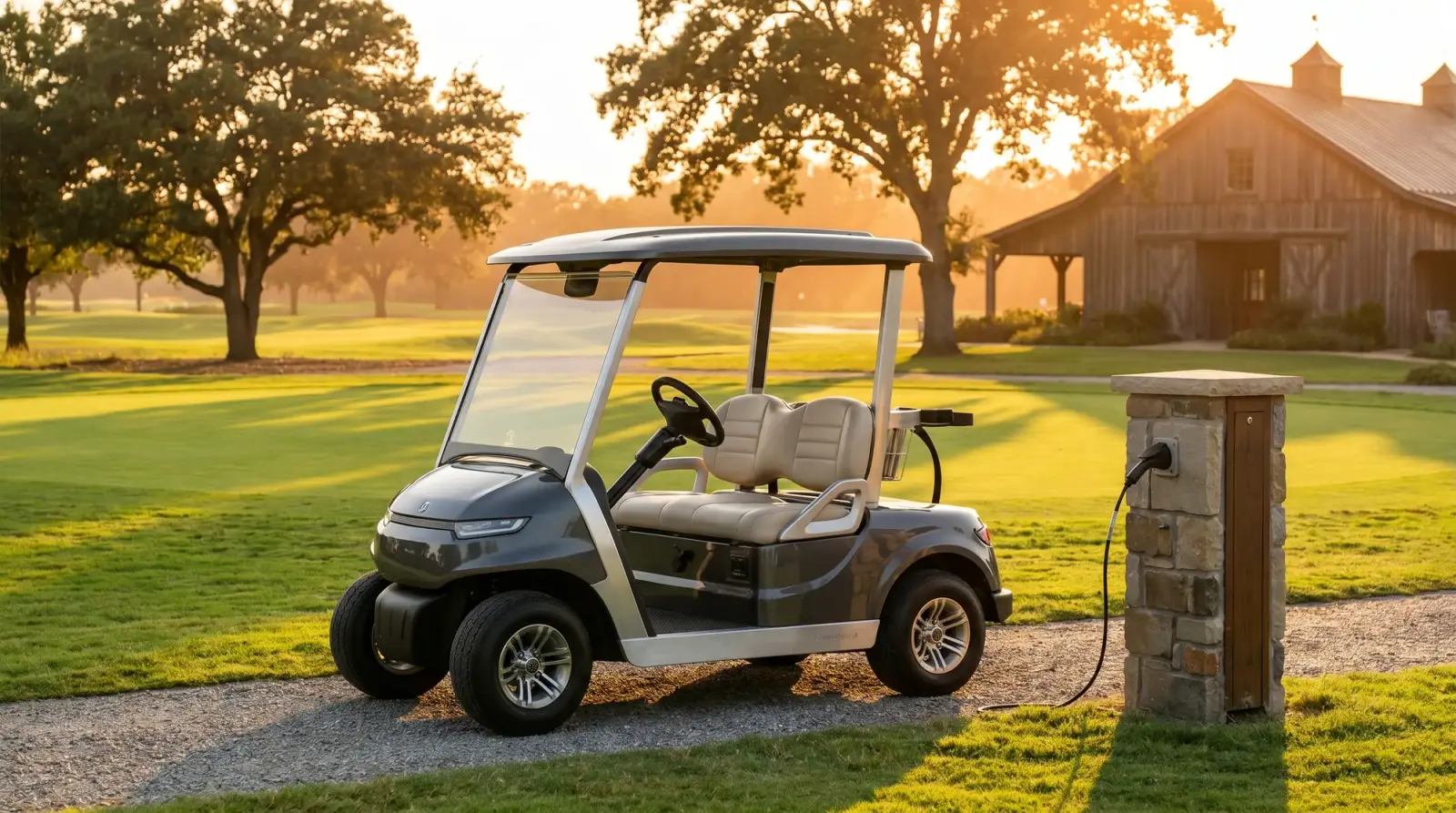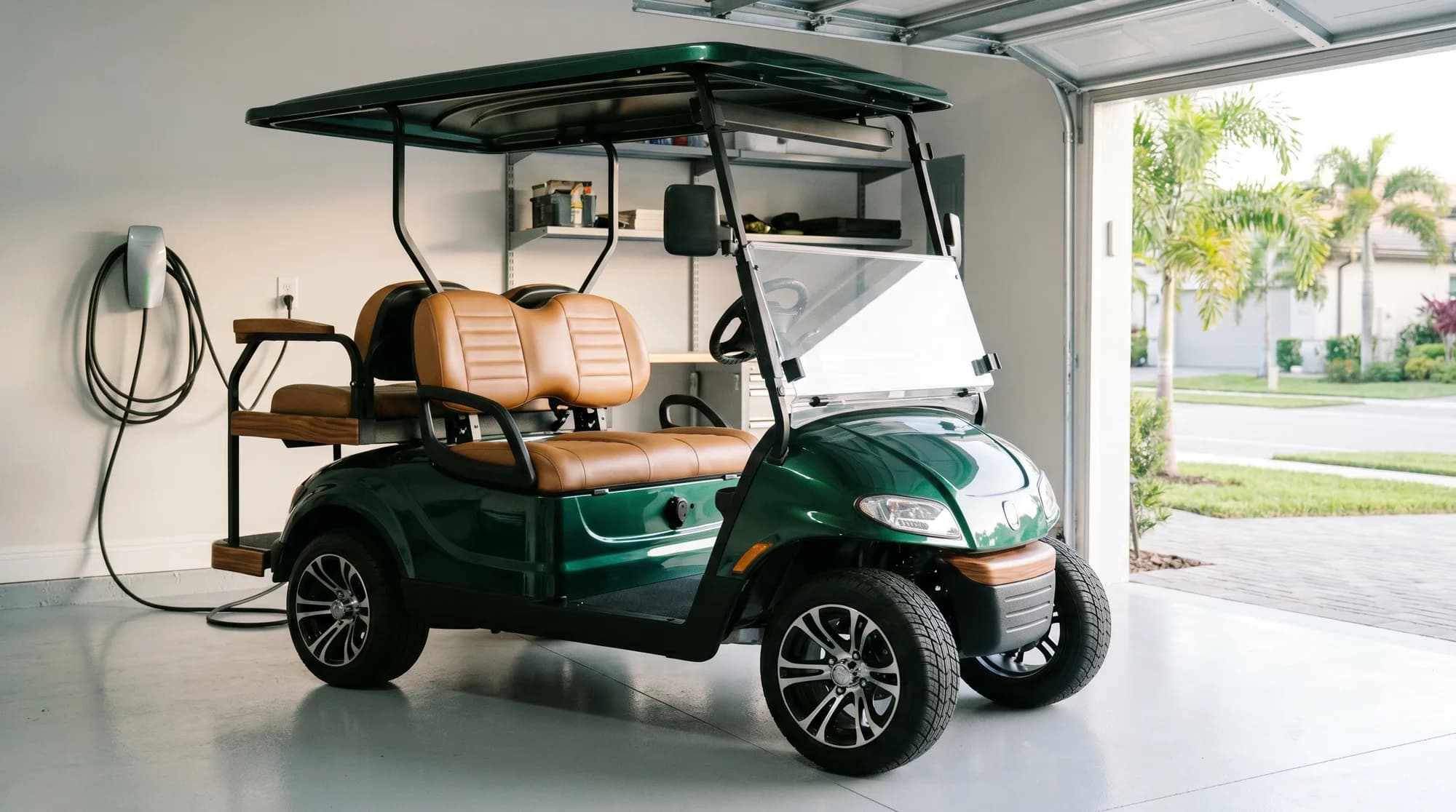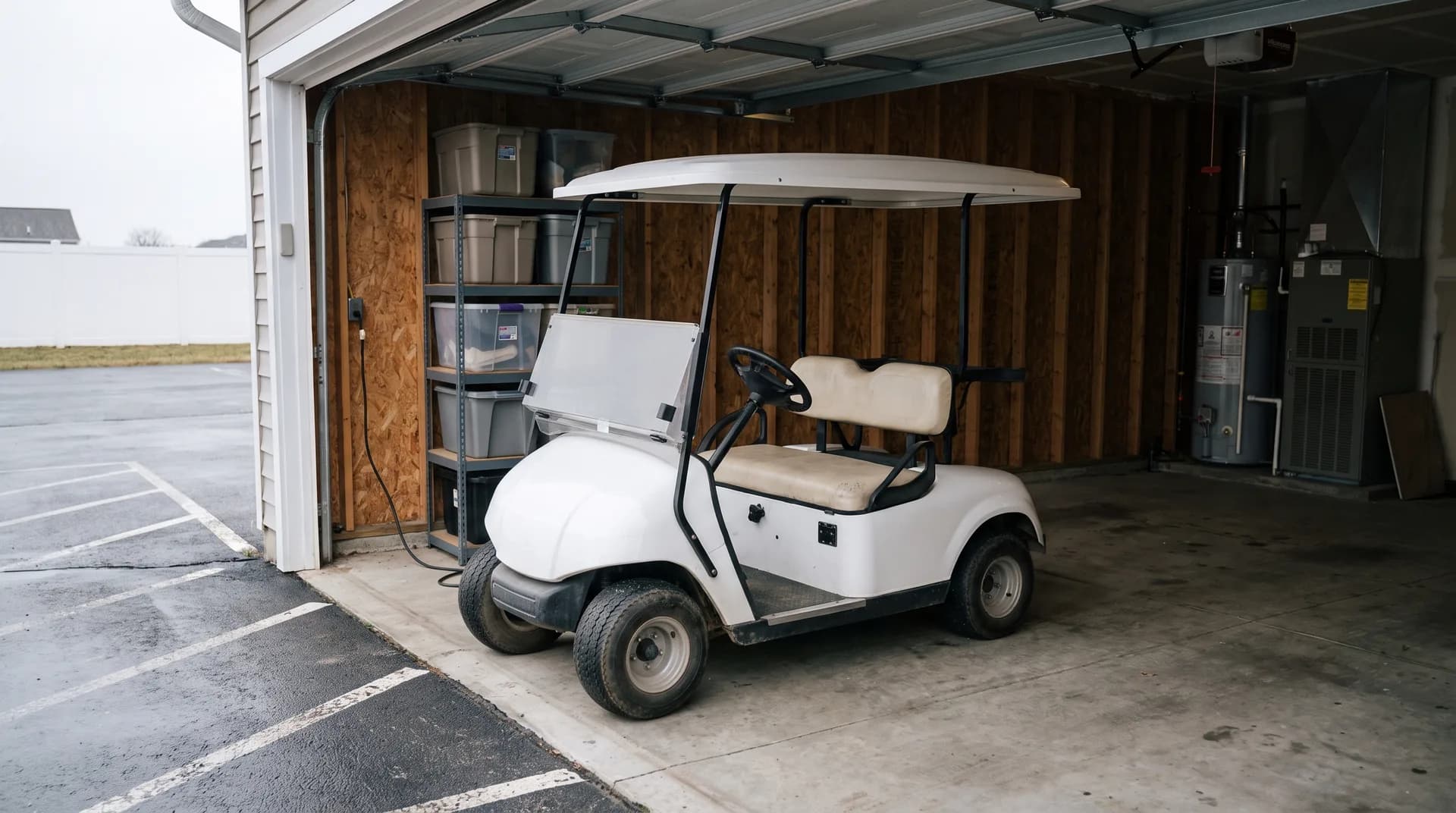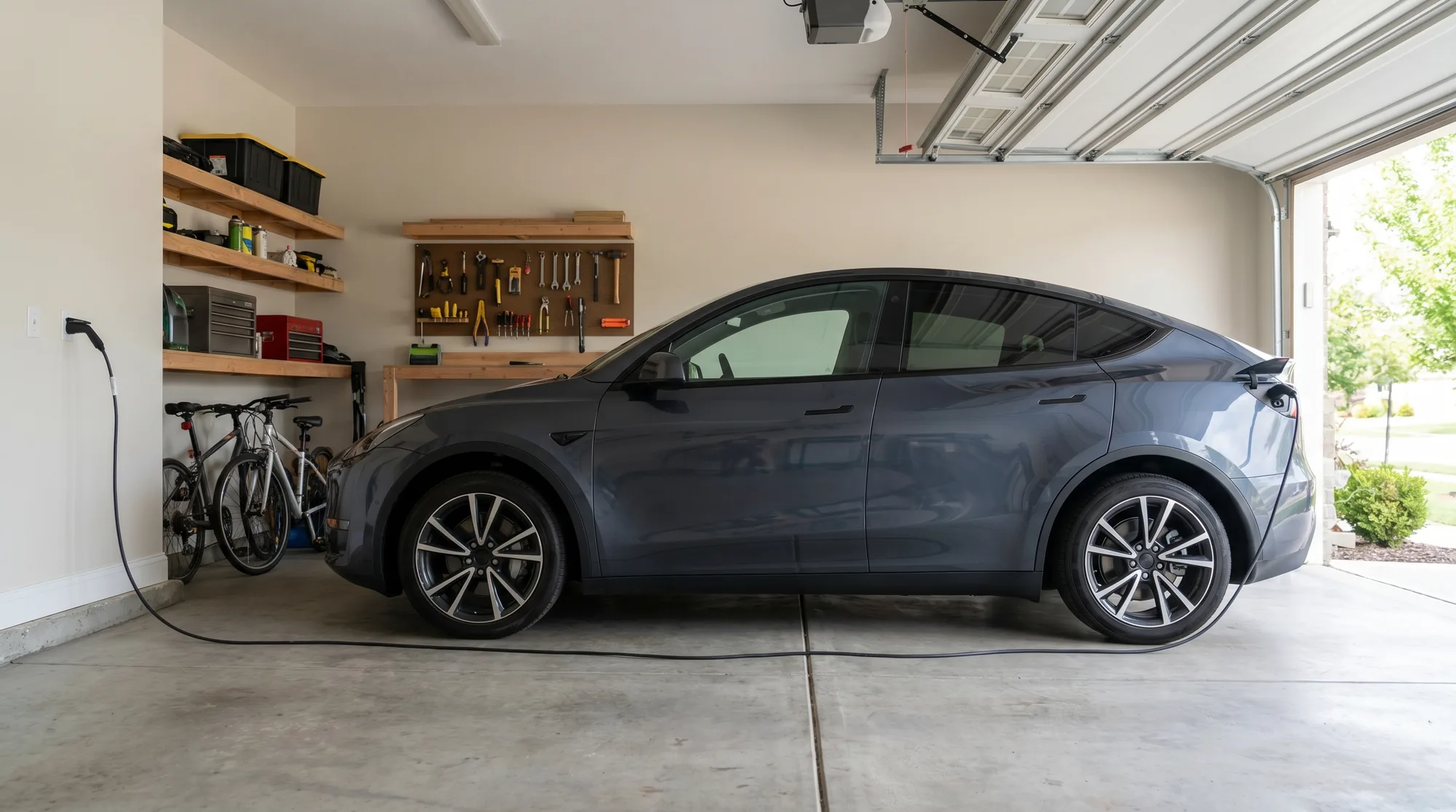
- Charging a golf cart at home is straightforward: plug the charger into a standard household outlet and into the cart.
- Most carts charge from a normal wall outlet, so you usually do not need special wiring.
- Lithium carts charge faster, can be topped up little and often and do not mind a partial charge.
- Lead-acid carts prefer a full charge after each use and dislike being left flat.
- Charge in a dry, ventilated space, use the correct charger for your battery and keep connections clean.
- Good charging habits are the single biggest factor in how long your battery lasts.
Charging a golf cart at home could not be much simpler. In almost all cases you plug the cart's charger into an ordinary household outlet and then into the cart, and it does the rest, usually overnight. Most carts do not need any special wiring, just a standard outlet in a dry, ventilated spot such as a garage or carport. The charger is matched to the battery, so your main job is to use it correctly and form a couple of good habits. Do that and you protect both your range and the life of the battery.
This guide explains how a golf cart battery charger works, where and how to plug in, how long it takes and the habits that matter most, with a clear note on the difference between lithium and lead-acid. We build custom lithium carts to order, so charging is something we set up to be easy. To compare builds see the range, browse our guides, or request a tailored quote for advice on your setup.
How a golf cart charger works
A golf cart charger converts household power into the form your battery needs and manages the charge so it stops at the right point. Modern chargers are smart: they sense the battery, deliver the right current and taper off as the battery fills, then hold or switch off rather than overcharge. Each charger is matched to a battery type and voltage, which is why you should always use the charger supplied or specified for your cart.
- Plug type: most home chargers use a standard household outlet, so no special install is usually needed.
- Smart charging: the charger manages current and stops at the right point automatically.
- Matched to the battery: lithium and lead-acid use different charge profiles, so chargers are not interchangeable.
- On-board or portable: some carts have a built-in charger; others use a separate unit you connect each time.
Where to charge and how to plug in
Pick a dry, ventilated spot. A garage, carport or covered store is ideal. Avoid charging in the rain or in a sealed, damp space. The routine itself is quick.
- 01
Park and switch off
Put the cart in its charging position, switch it off and apply the brake.
- 02
Connect to the cart
Plug the charger lead into the cart's charging port until it seats firmly.
- 03
Plug into the outlet
Connect the charger to a standard household outlet on a circuit that is in good order.
- 04
Confirm it is charging
Check the charger indicator shows it has started. Most will signal when the charge completes.
- 05
Disconnect when done
Once charged, unplug from the outlet first, then from the cart, and store the lead tidily.
How long charging takes
Charging time depends on the battery type, its size and how empty it is. Topping up a half-full battery is quick; filling a deeply drained one takes longer. As a rule lithium charges faster than lead-acid and can be topped up in shorter bursts, while lead-acid is usually left to complete a full cycle. Many owners simply charge overnight and never think about the clock.
- Lithium
- Fine
- Lead-acid
- Less ideal
- Lithium
- Helpful, not essential
- Lead-acid
- Recommended
- Lithium
- Faster
- Lead-acid
- Slower
- Lithium
- Avoid
- Lead-acid
- Avoid strongly
- Lithium
- None
- Lead-acid
- Sometimes needed
| Habit | Lithium | Lead-acid |
|---|---|---|
| Partial top-ups | Fine | Less ideal |
| Charge after each use | Helpful, not essential | Recommended |
| Charge speed | Faster | Slower |
| Leaving it flat | Avoid | Avoid strongly |
| Watering / topping fluid | None | Sometimes needed |
Want charging that just works
Our custom lithium carts are set up so home charging is simple from day one. Tell us about your space and how you will use the cart, and we will recommend the right charger and put it in a tailored quote.
Habits that protect your battery
How you charge has more effect on battery life than almost anything else. A few simple habits keep a battery healthy for years and protect the range you paid for.
- Do not leave a battery flat. Recharge before long storage and during it as needed.
- Keep charging connections and battery terminals clean, dry and tight.
- Charge in a ventilated, dry space and never cover a charger while it runs.
- Use the correct charger and let smart chargers do their job rather than unplugging early.
- For winter storage, follow the guidance for your battery type so it survives the layoff.
Charging and battery life go hand in hand, so it is worth reading how long golf cart batteries last alongside this guide, and lithium vs lead-acid if you are still choosing. Good charging is also the foundation of dependable range, which we cover in how far an electric cart goes.
Frequently asked questions
Can I charge a golf cart at home from a normal outlet?+
In most cases, yes. Standard golf cart chargers plug into an ordinary household outlet, so you usually do not need special wiring. Just charge in a dry, ventilated space on a circuit that is in good order.
How long does it take to charge a golf cart?+
It depends on the battery type, its size and how empty it is. Lithium charges faster and tolerates short top-ups; lead-acid is usually left to complete a full cycle. Many owners simply charge overnight.
Should I charge my golf cart after every use?+
Lead-acid batteries prefer a full charge after each use and dislike being left flat. Lithium is more flexible and happy with partial top-ups, though charging at the end of a day's use keeps you ready for the next.
Can I leave my golf cart plugged in all the time?+
Modern smart chargers manage the charge and stop or hold when full, so brief overnight charging is fine. For long periods, follow the guidance for your battery type, and always use the correct charger for the chemistry.
What charger does my golf cart need?+
Use the charger matched to your battery type and voltage. Lithium and lead-acid use different charge profiles and are not interchangeable. If you are unsure, ask us and we will confirm the right charger for your cart.
Related solutions
Ready to explore what we build?
See the vehicles and the setting this applies to, or get a tailored quote built around your site.

Ready to find the right buggy?
Tell us how and where it will work and we will specify a vehicle and a tailored quote built around you. Every build comes with a 3-year warranty and a 24-hour priority call-out.
Our guides are written and reviewed by the Hawke Electric Vehicles team, the people who specify, build, deliver and support the vehicles. We focus on honest, practical advice and flag where a figure depends on the build rather than guessing.
More guides by Hawke