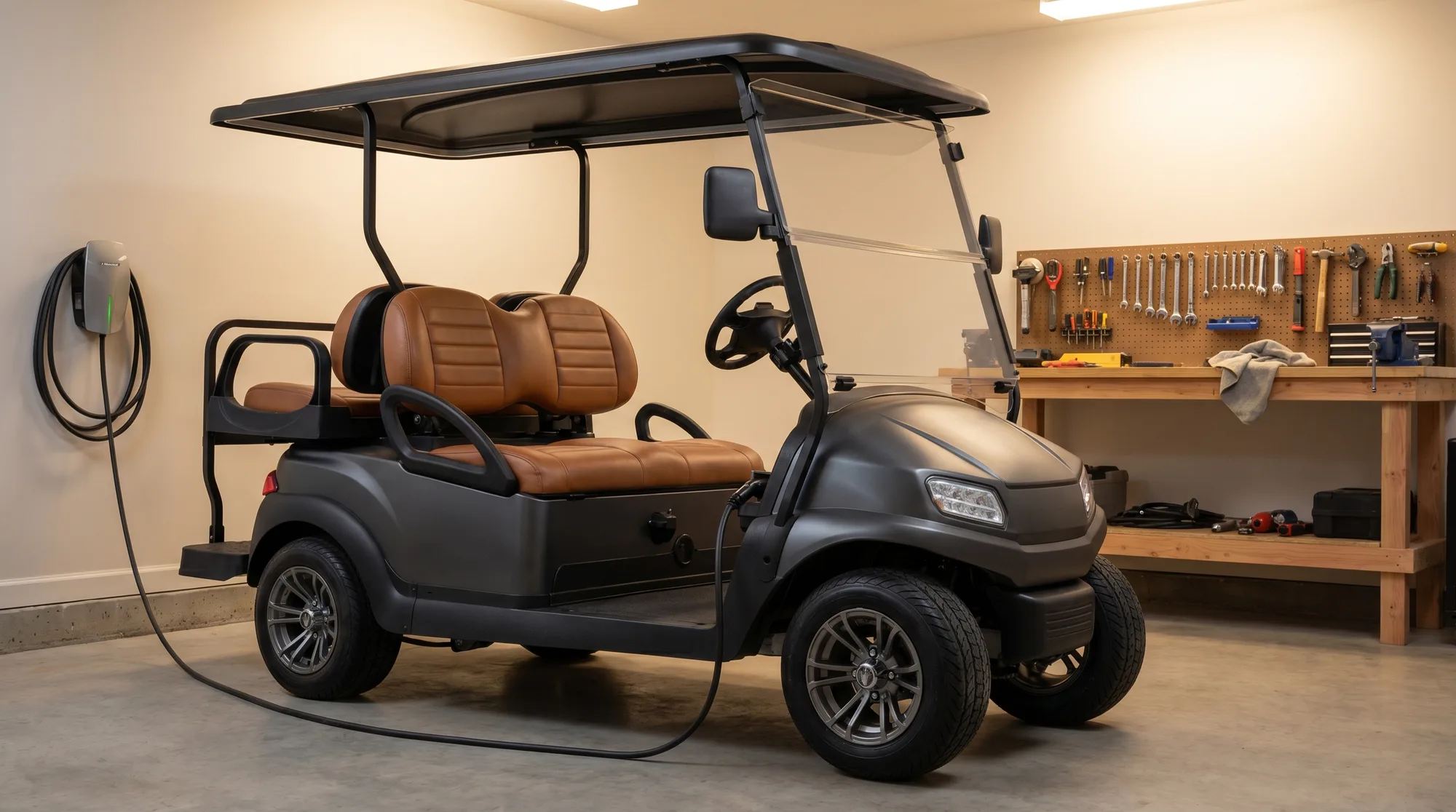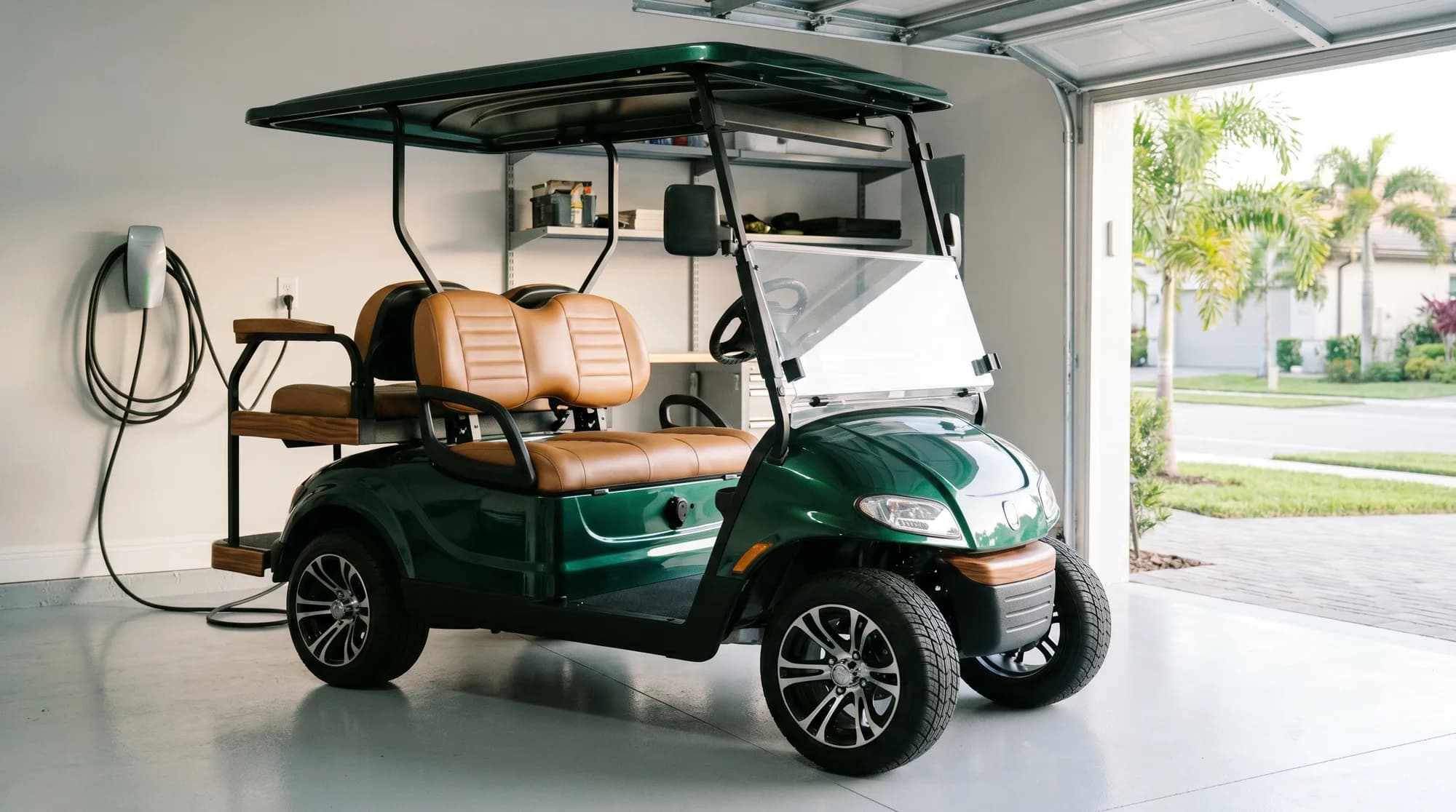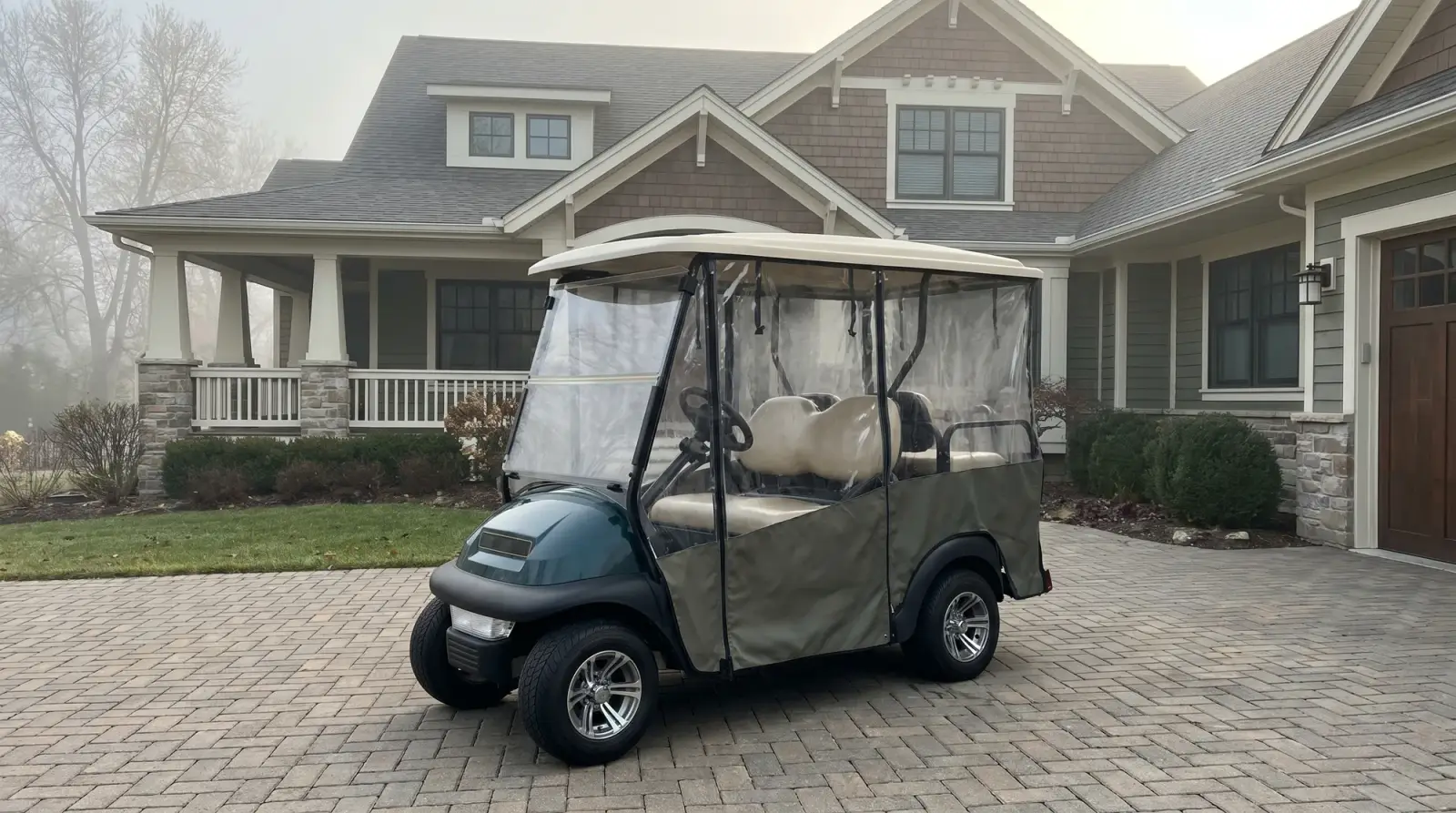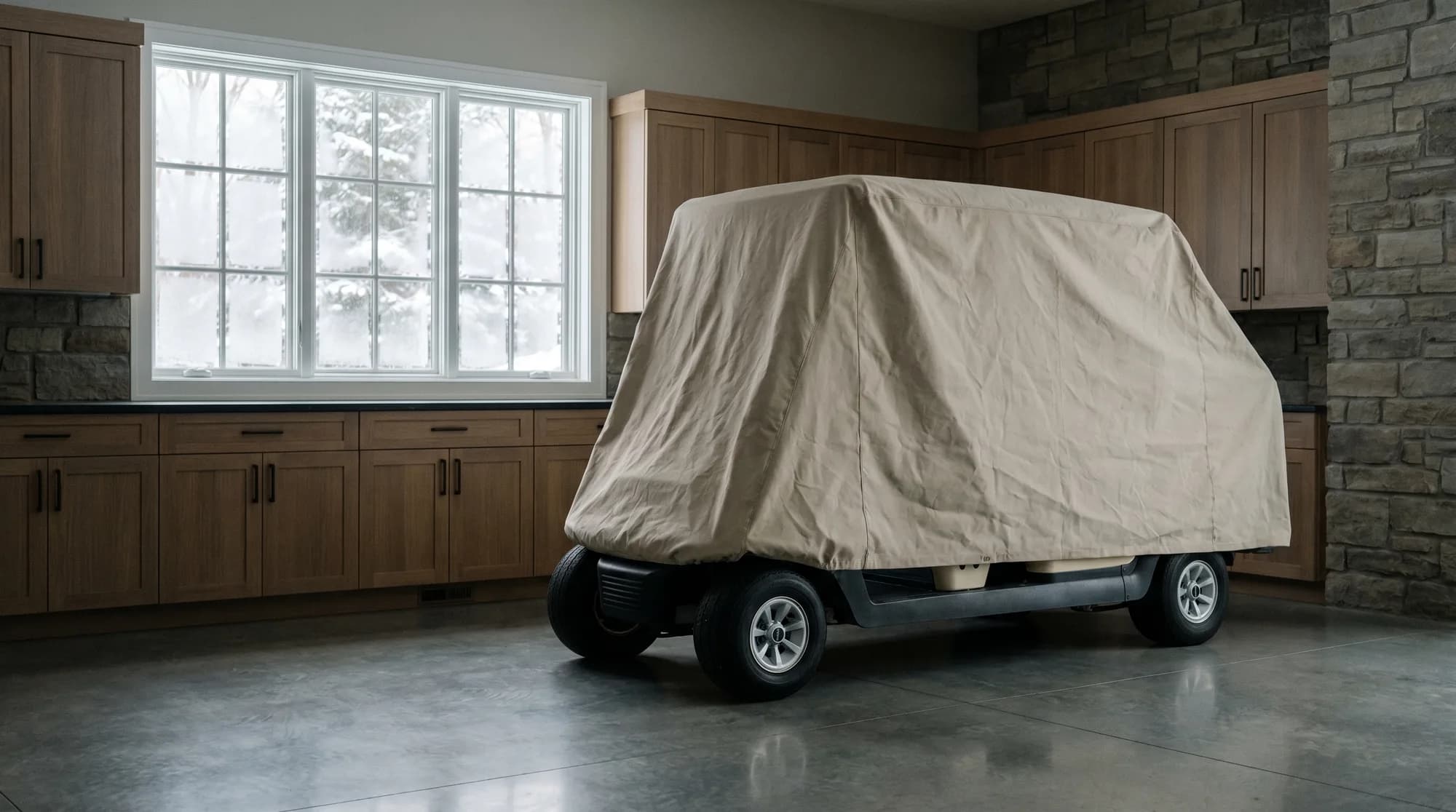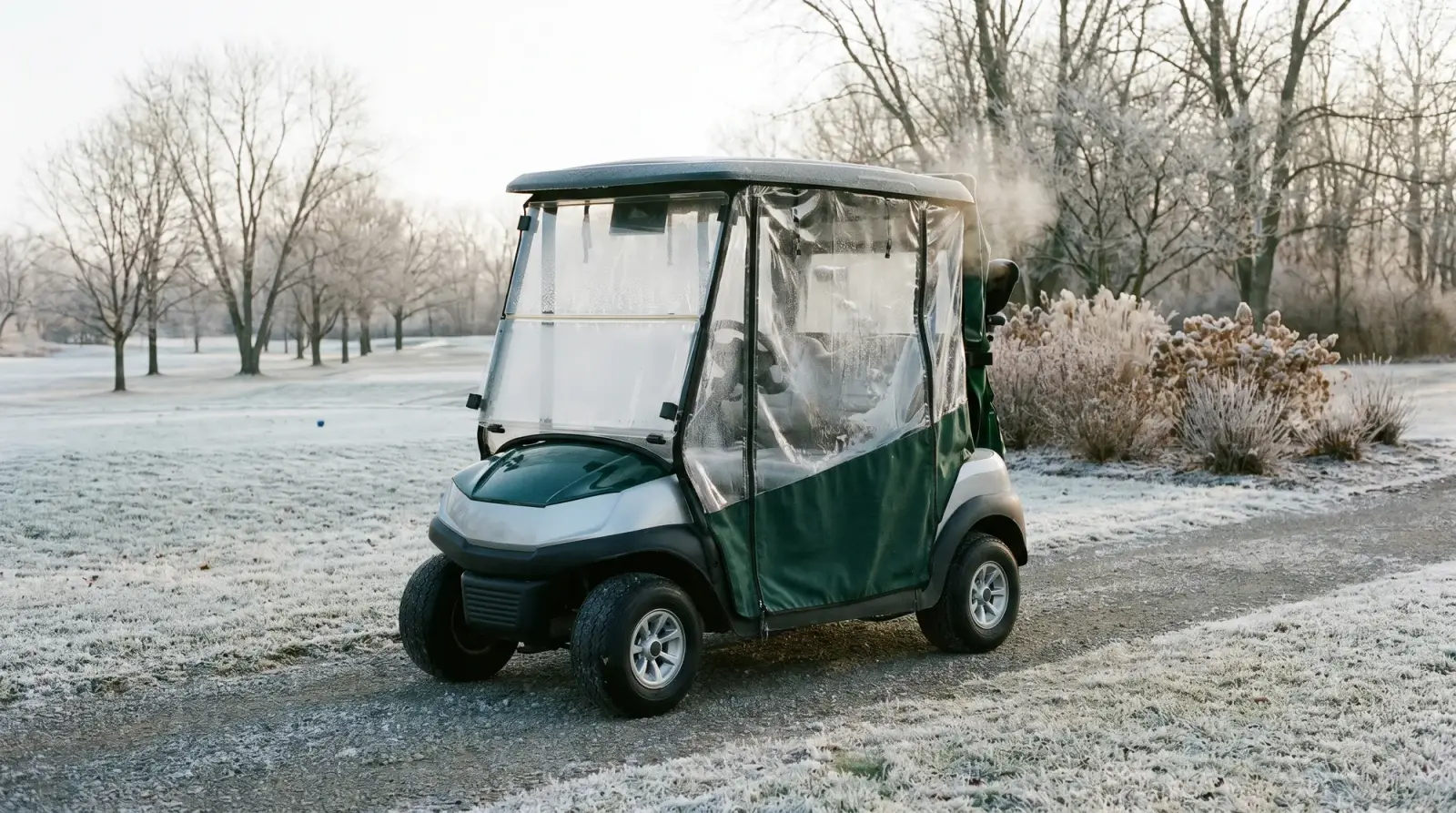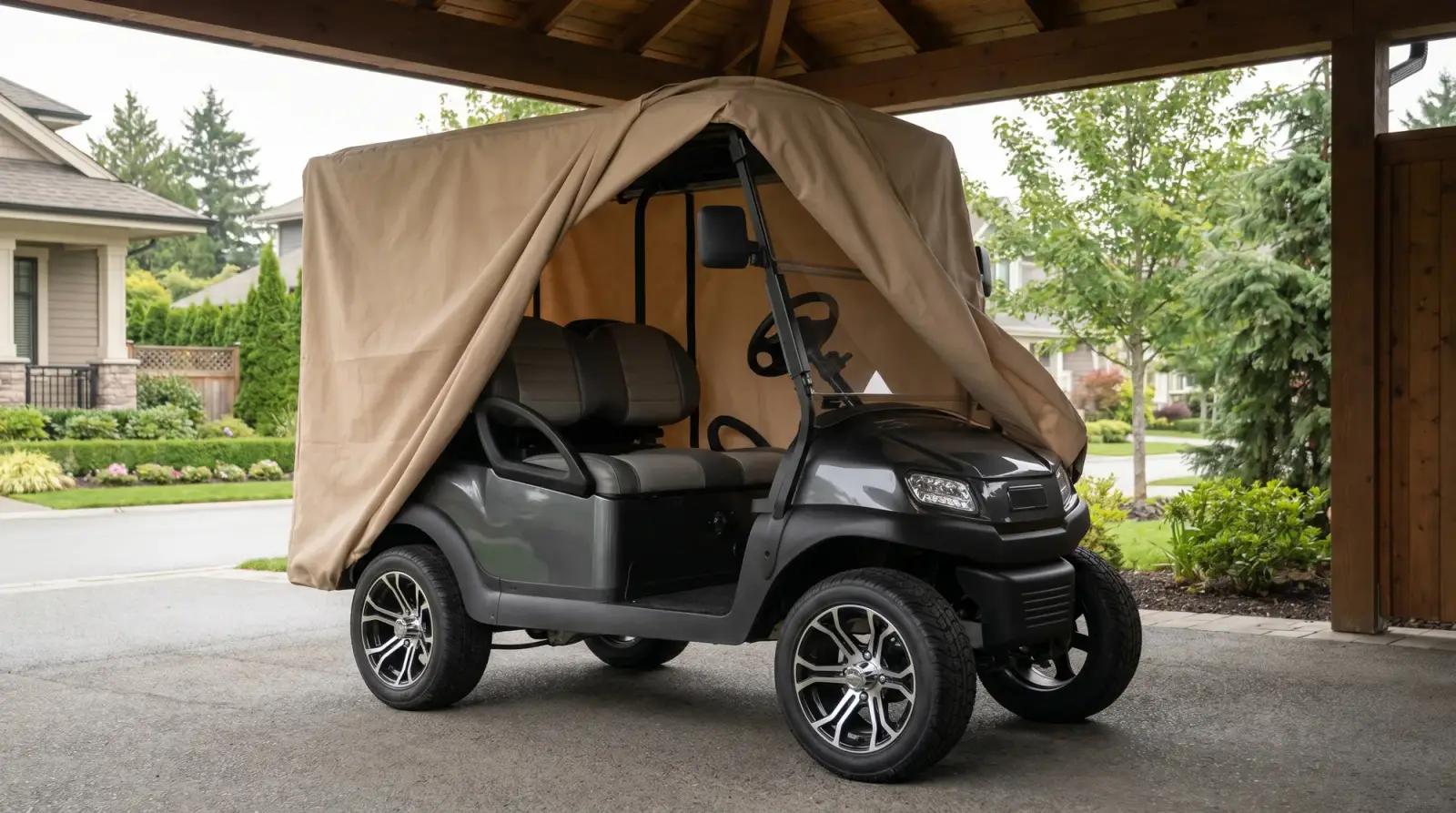
- A good golf cart cover protects against sun, rain, dust and bird mess, the main causes of an aged-looking cart.
- Look for a breathable, water-resistant, UV-stable cover that fits your cart and secures against wind.
- Indoor storage is best; a quality cover is the next best thing if you store outdoors.
- For the off-season, the battery needs as much care as the bodywork.
- A few minutes of preparation before storage prevents most spring-time problems.
- Protecting the cart well keeps its value and its looks for years.
A golf cart cover and a sensible storage routine are the cheapest insurance you can give your cart. Most carts that look tired have simply been left out: the sun has faded the trim, rain has crept into connections and dust has settled into every seam. A good cover keeps off sun, rain, dust and bird mess, and proper storage, ideally indoors, protects the battery and mechanicals through the off-season. None of this is complicated. A little care keeps a cart looking new and running well for years, which protects both your enjoyment and its resale value.
This guide covers how to choose a cover, where and how to store a cart, and how to prepare it for a long layoff, including the battery. We build premium custom carts to order, so we want owners to keep them in top condition. For more on upkeep see our guides and the range, or request a tailored quote if you are planning a new cart and want to specify it for your climate.
Why protecting your cart matters
Outdoor life is hard on a cart even when it is parked. Understanding what does the damage makes it obvious why a cover earns its place.
- Sun: UV fades seats, trim and paint and weakens plastics over time.
- Rain and damp: moisture finds its way into connections and can cause corrosion.
- Dust and pollen: settle into seams and seats and grind in over time.
- Bird mess and tree sap: stain and etch surfaces if left.
- Temperature swings: stress materials and affect the battery, especially in extremes.
Choosing a golf cart cover
Covers vary a lot in quality. A cheap one that does not breathe can trap moisture and do as much harm as good, so it is worth choosing properly.
- Why it matters
- Keeps rain off seats, controls and connections
- Why it matters
- Lets moisture escape so it does not get trapped underneath
- Why it matters
- Resists sun damage so the cover itself lasts
- Why it matters
- A snug fit protects better and resists wind
- Why it matters
- Stops the cover blowing off in wind
| Feature | Why it matters |
|---|---|
| Water resistant | Keeps rain off seats, controls and connections |
| Breathable | Lets moisture escape so it does not get trapped underneath |
| UV stable | Resists sun damage so the cover itself lasts |
| Correct fit | A snug fit protects better and resists wind |
| Secure straps | Stops the cover blowing off in wind |
It is also worth thinking about how easy a cover is to live with day to day. A cover you have to wrestle on and off will end up unused, sitting in a corner while the cart bakes in the sun, so a design that goes on quickly and secures simply tends to get used far more often. The same is true of storage: the more convenient your setup, the more likely you are to actually protect the cart every time rather than only when you remember. Convenience and protection go together, and the easiest routine is usually the one that lasts.
Indoor vs outdoor storage
Where you keep a cart matters as much as the cover over it. Indoors is best, but a good cover makes outdoor storage workable.
- Protection
- Best
- Notes
- Shields from weather and temperature swings
- Protection
- Good
- Notes
- Shade plus a cover handles most weather
- Protection
- Workable
- Notes
- Use a breathable, secured cover and check it
- Protection
- Poor
- Notes
- Ages the cart fastest, not recommended
| Option | Protection | Notes |
|---|---|---|
| Garage / shed | Best | Shields from weather and temperature swings |
| Carport + cover | Good | Shade plus a cover handles most weather |
| Outdoors + quality cover | Workable | Use a breathable, secured cover and check it |
| Outdoors, no cover | Poor | Ages the cart fastest, not recommended |
Building a cart for a tough climate
If your cart will live outdoors or face harsh sun, salt or cold, tell us. We can specify materials and finishes that cope, and recommend the right protection, all in a tailored quote.
Storing a cart for the off-season
If your cart sits idle for weeks or over winter, a short preparation routine prevents most problems. The battery needs as much thought as the bodywork.
- 01
Clean it first
Wash and dry the cart so dirt, sap and salt do not sit on it for months.
- 02
Care for the battery
Charge it appropriately for the battery type and follow the storage guidance for the chemistry. Do not leave it flat.
- 03
Protect the tires
Set correct pressures and, if possible, move the cart occasionally so it does not sit on one spot.
- 04
Cover it
Fit a breathable, secured cover, ideally indoors or under shelter.
- 05
Check periodically
Look in now and then, top up the battery as needed and confirm the cover is still secure.
Battery care is the part owners most often get wrong over a long layoff, so it is worth reading how long golf cart batteries last for the detail. Storage is also part of general upkeep, so maintenance and repair basics pairs well with this. And while you are protecting the cart, do not forget the seats, which our note on seat covers and comfort covers.
Frequently asked questions
Do I really need a golf cart cover?+
If your cart lives or parks outdoors, yes. A cover keeps off sun, rain, dust and bird mess, the main things that age a cart. The best option is indoor storage, with a quality cover as the next best protection.
What should I look for in a golf cart cover?+
Choose one that is water resistant, breathable and UV stable, fits your cart's size and shape, and has straps to secure it against wind. A snug, breathable cover protects far better than a cheap, baggy one.
Can I store a golf cart outside?+
You can, but indoors or under cover is far better. If you must store outdoors, use a breathable, well-secured cover, set tire pressures correctly and look after the battery, and check on it regularly.
How do I store a golf cart for winter?+
Clean and dry it, charge and store the battery according to its type, set tire pressures, fit a breathable cover ideally indoors, and check on it periodically, topping up the battery as needed.
How should I store the battery over winter?+
Follow the guidance for your battery chemistry and never leave it flat. Lithium and lead-acid have different storage needs, so if you are unsure, ask us for the correct approach for your cart.
Related solutions
Ready to explore what we build?
See the vehicles and the setting this applies to, or get a tailored quote built around your site.
Ready to find the right buggy?
Tell us how and where it will work and we will specify a vehicle and a tailored quote built around you. Every build comes with a 3-year warranty and a 24-hour priority call-out.
Our guides are written and reviewed by the Hawke Electric Vehicles team, the people who specify, build, deliver and support the vehicles. We focus on honest, practical advice and flag where a figure depends on the build rather than guessing.
More guides by Hawke