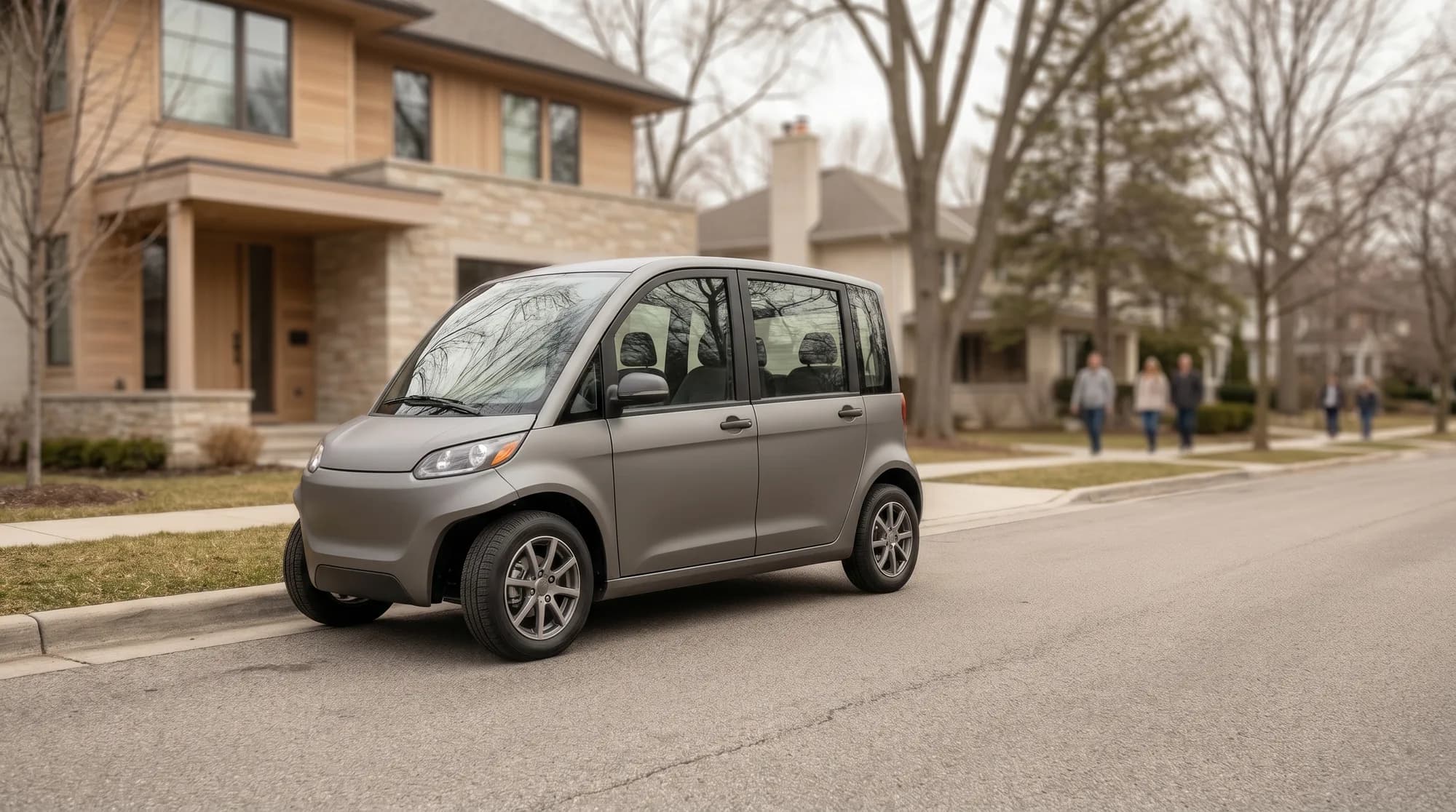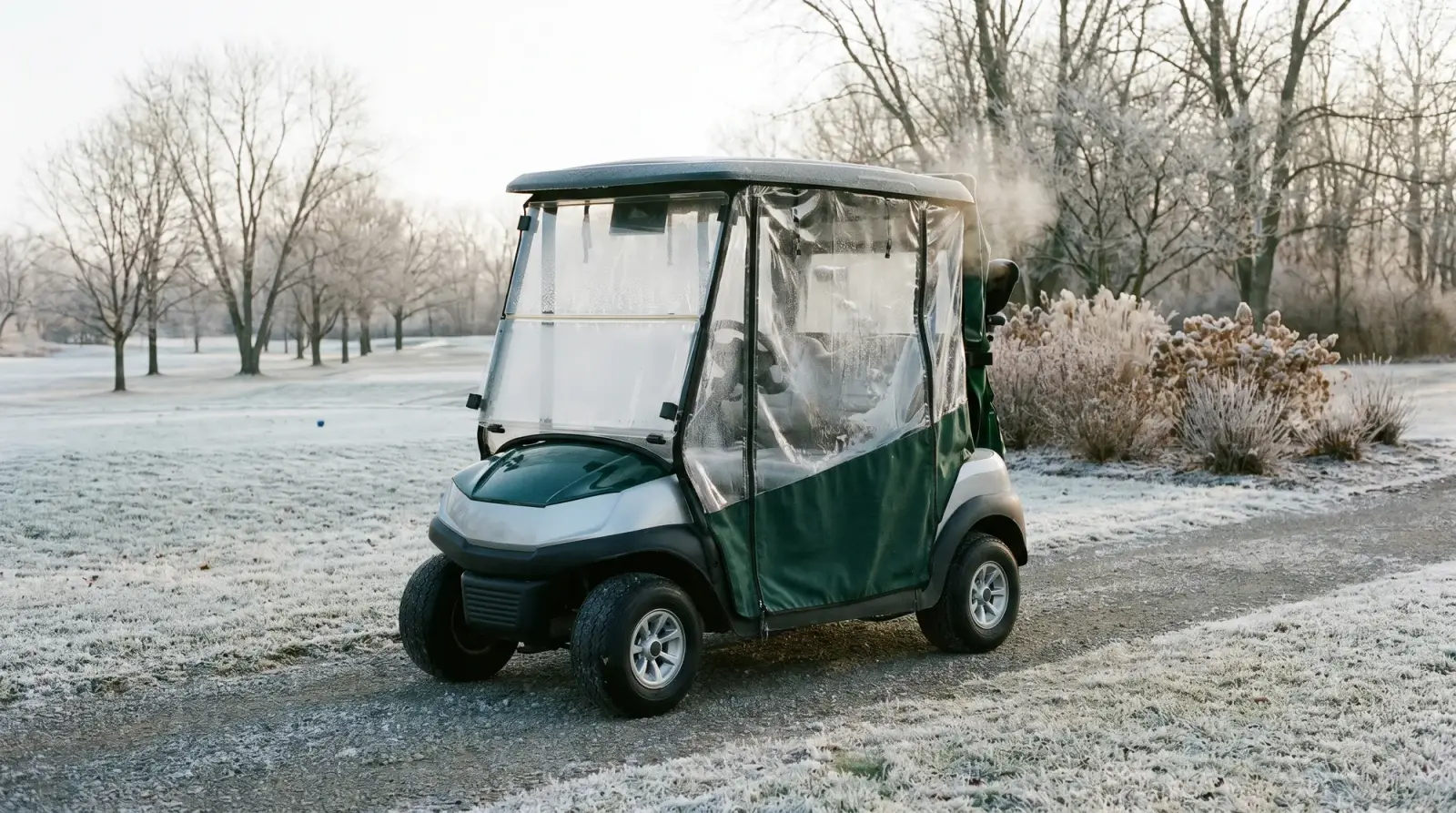
- A golf cart heater plus an enclosure can keep you comfortable enough to use a cart through winter.
- Heaters are usually a combination of an enclosure that traps warmth and a heating element.
- Cold weather reduces battery range, especially for lead-acid, so plan shorter trips in winter.
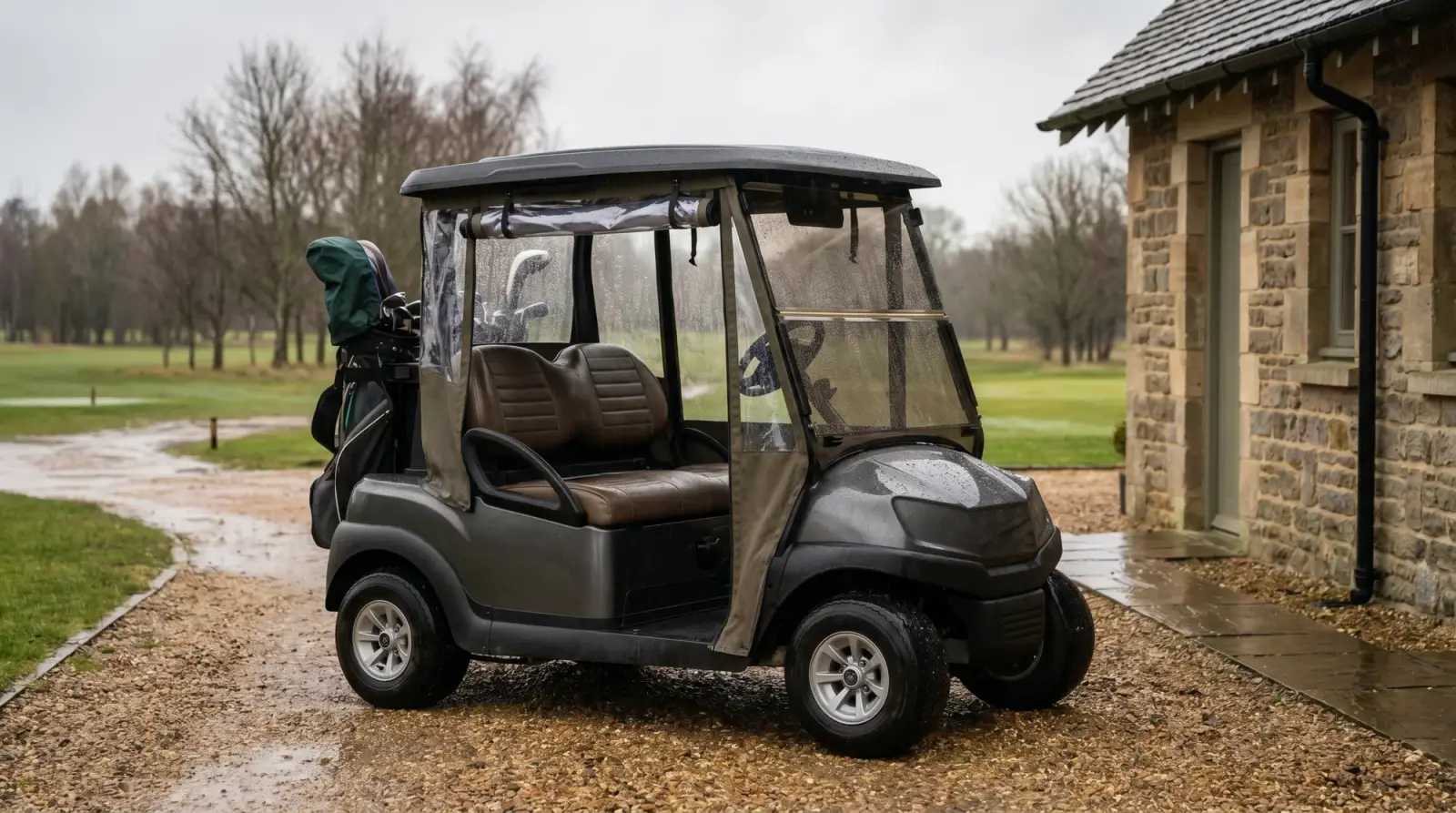
- An enclosure with screens and doors makes the biggest comfort difference of all.
- Lithium copes better with cold than lead-acid, but no battery loves the deep cold.
- If you will use a cart in winter, specify heating and weather protection from the start.
Can you use a golf cart in winter, and do heaters work? Yes on both counts: a golf cart heater combined with a good enclosure can keep you comfortable enough to keep riding through the cold months. The two work together. The enclosure, with screens and doors, traps warmth and keeps out wind and rain, while a heater adds warmth on top. The honest caveat is that cold weather reduces battery range, more so for lead-acid than lithium, so winter trips are best kept a little shorter and the battery looked after. Plan for that and there is no reason to park a cart just because it is cold.
When a cart is built to order, enclosures, heating and weather protection for cold climates can be designed in rather than bolted on later, which is how we approach winter use. The sections below explain how heaters and enclosures work, how the cold affects your battery and what to fit. See the range and our guides, or request a tailored quote to talk through a cold-weather build.
How golf cart heating works
Keeping warm in a cart is mostly about stopping heat escaping, then adding a little back. Get the enclosure right and a modest heater does the rest.
- Enclosure: a fitted set of screens and doors that blocks wind and rain and traps warmth.
- Windscreen: cuts the wind chill that makes an open cart feel bitter even in mild cold.
- Heater element: an electric or fuel-based heater that adds warmth inside the enclosure.
- Floor and seat comfort: insulated mats and warm seating make a surprising difference.
- Sensible layering: warm clothing alongside the cart's own heating, as you would in any vehicle.
Wind chill is the part owners underestimate most. A cart moving at even a modest speed on a cold day creates a wind that makes the air feel far colder than the thermometer suggests, which is why an open cart can be miserable in temperatures you would happily walk around in. A windscreen and side panels cut that chill dramatically, and once the wind is gone, a small amount of added heat is enough to keep you comfortable. It is the difference between dreading the trip and barely noticing the cold.
How cold affects the battery
Cold weather is hard on batteries. They deliver less of their capacity when cold, so range drops, and how much depends on the chemistry. Lithium handles the cold better than lead-acid, but neither loves deep cold, so it pays to plan.
- Lithium
- Some, but more resilient
- Lead-acid
- More noticeable
- Lithium
- Generally steady
- Lead-acid
- Weaker when cold
- Lithium
- Follow guidance
- Lead-acid
- Slower, less efficient
- Lithium
- Easier
- Lead-acid
- Needs careful care
| Factor | Lithium | Lead-acid |
|---|---|---|
| Range loss in cold | Some, but more resilient | More noticeable |
| Cold starting / output | Generally steady | Weaker when cold |
| Charging in the cold | Follow guidance | Slower, less efficient |
| Winter storage | Easier | Needs careful care |
Battery care matters even more in winter, so it is worth reading how long golf cart batteries last for the detail on cold-weather range and storage.
Setting a cart up for winter
A few sensible steps turn a cart into a genuinely usable winter vehicle, whether for getting around a property, a community or a course on milder days.
- 01
Fit an enclosure
Add a fitted enclosure with a windscreen and doors to block wind and rain and trap warmth.
- 02
Add a heater if needed
Specify a suitable heater for the inside of the enclosure to add warmth on the coldest days.
- 03
Plan for reduced range
Keep trips within your lower winter range and recharge in a sheltered spot.
- 04
Look after the battery
Charge and store it according to its type, and avoid leaving it flat in the cold.
- 05
Protect when parked
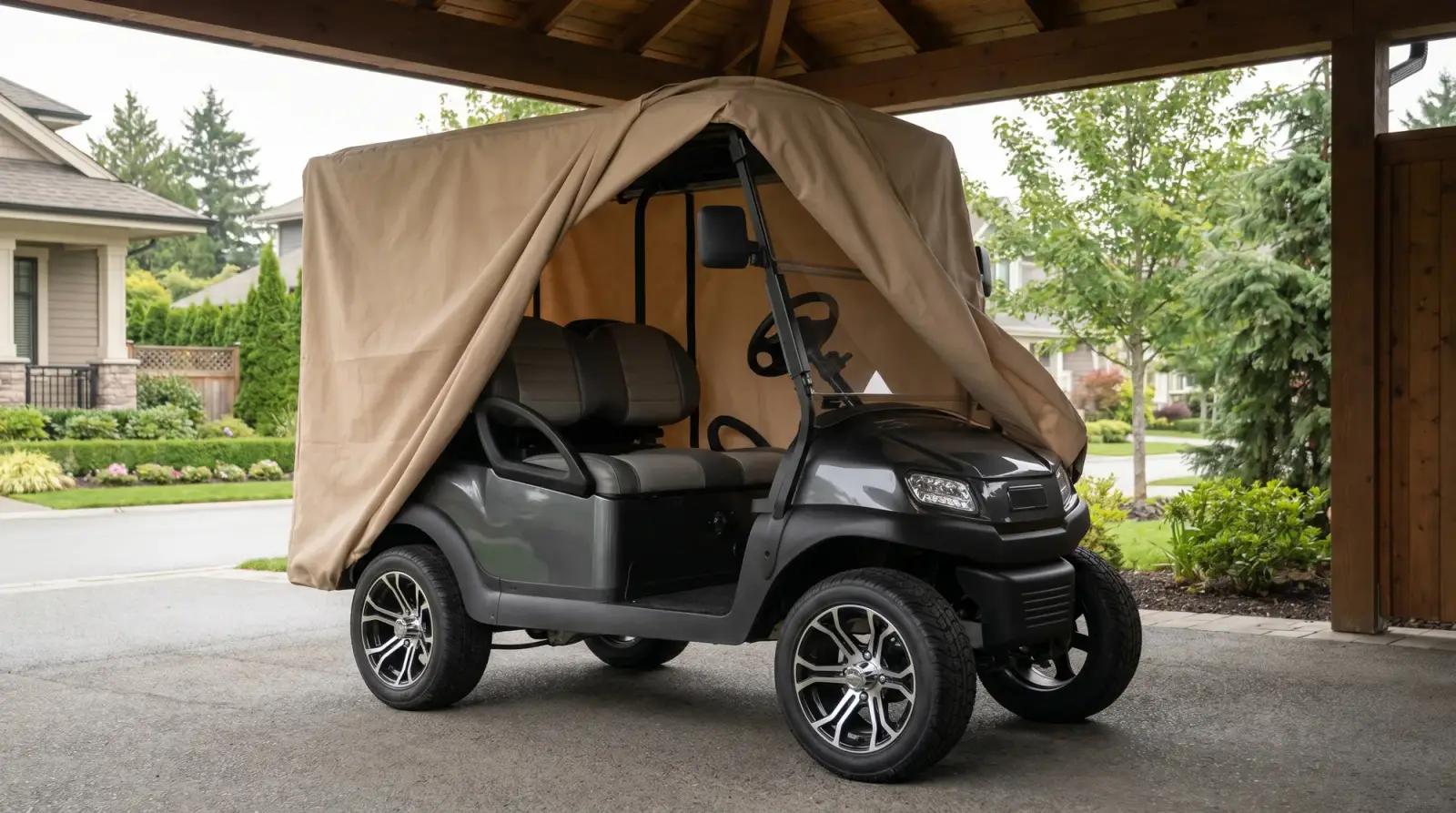
Use a cover and shelter so the cart and its battery are not sitting exposed in the cold and wet.
Building a cart for winter use
If you will use a cart through the cold months, tell us your climate. We will specify an enclosure, heating and weather protection to suit and put it all in a tailored quote.
Storage and protection in the cold
If there are weeks when the cart is not used, how you store it matters as much as how you heat it. A sheltered, ideally indoor space protects the cart and gives the battery an easier time, and a good cover handles the rest. Our guide on covers and storage covers off-season care in full.
If you are deciding which winter extras are worth fitting, our note on accessories worth the money helps you focus on the enclosure and heating that make the real difference rather than gadgets that do not. With the right setup, a cart earns its keep all year.
Frequently asked questions
Do golf cart heaters actually work?+
Yes, particularly alongside an enclosure. The enclosure traps warmth and blocks wind and rain, and a heater adds warmth on top. Together they keep you comfortable enough to use a cart through winter, though the enclosure does most of the work.
Can I use a golf cart in winter?+
You can. With an enclosure, a windscreen and a heater you can stay comfortable, and lithium batteries cope reasonably with the cold. Expect reduced range in low temperatures and keep winter trips a little shorter.
Does cold weather reduce golf cart range?+
Yes. Batteries deliver less of their capacity when cold, so range drops. Lead-acid is affected more than lithium, but both lose some range, so plan for a lower winter range and recharge in a sheltered space.
What is the best way to stay warm in a golf cart?+
Start with a fitted enclosure and windscreen to block wind and rain, then add a heater for the coldest days. Insulated floor mats, warm seating and sensible clothing complete the picture.
How do I protect the battery in cold weather?+
Keep trips within the reduced winter range, charge and store the battery according to its type, avoid leaving it flat, and store the cart somewhere sheltered. Lithium handles cold better, but no battery likes deep cold.
Related solutions
Ready to explore what we build?
See the vehicles and the setting this applies to, or get a tailored quote built around your site.
Ready to find the right buggy?
Tell us how and where it will work and we will specify a vehicle and a tailored quote built around you. Every build comes with a 3-year warranty and a 24-hour priority call-out.
Our guides are written and reviewed by the Hawke Electric Vehicles team, the people who specify, build, deliver and support the vehicles. We focus on honest, practical advice and flag where a figure depends on the build rather than guessing.
More guides by Hawke