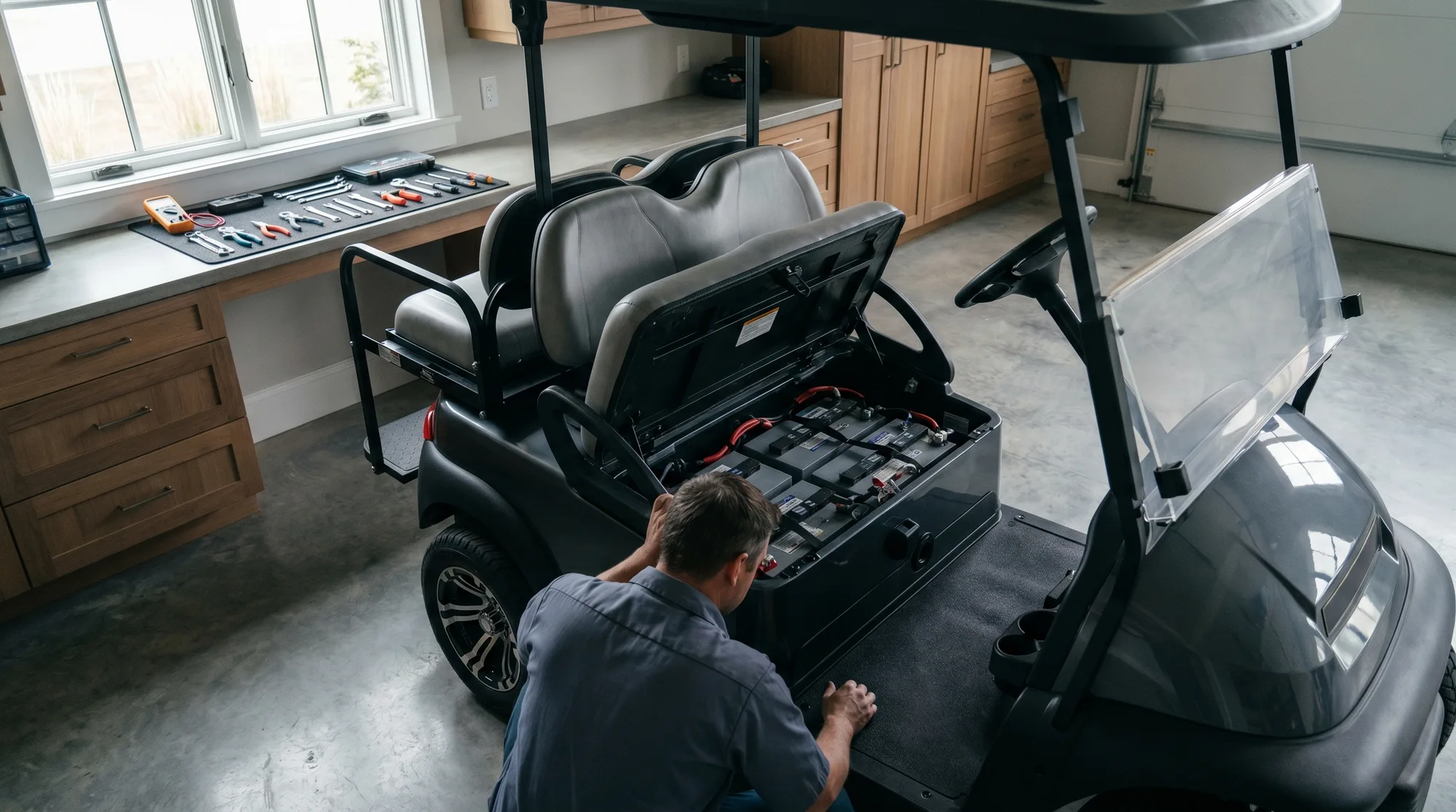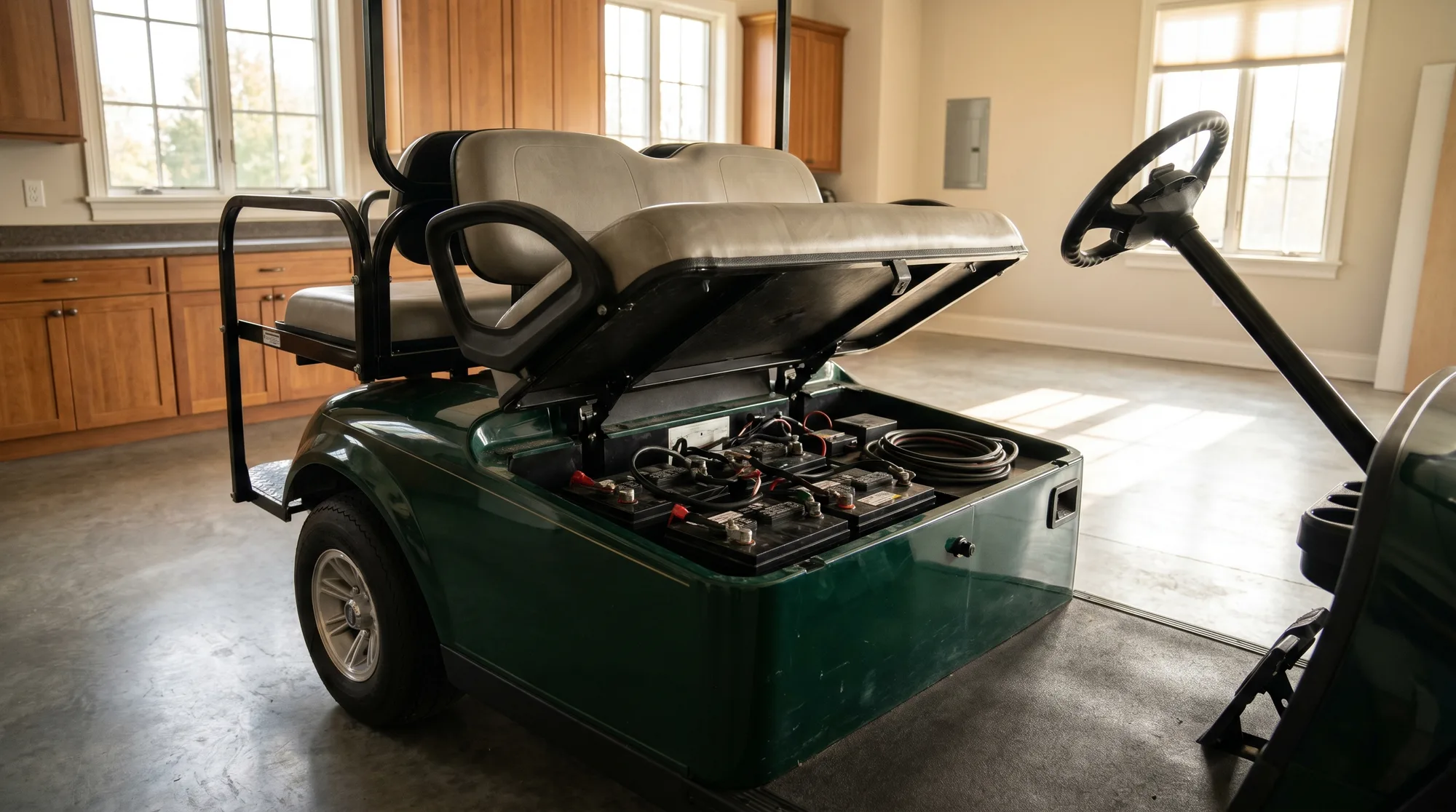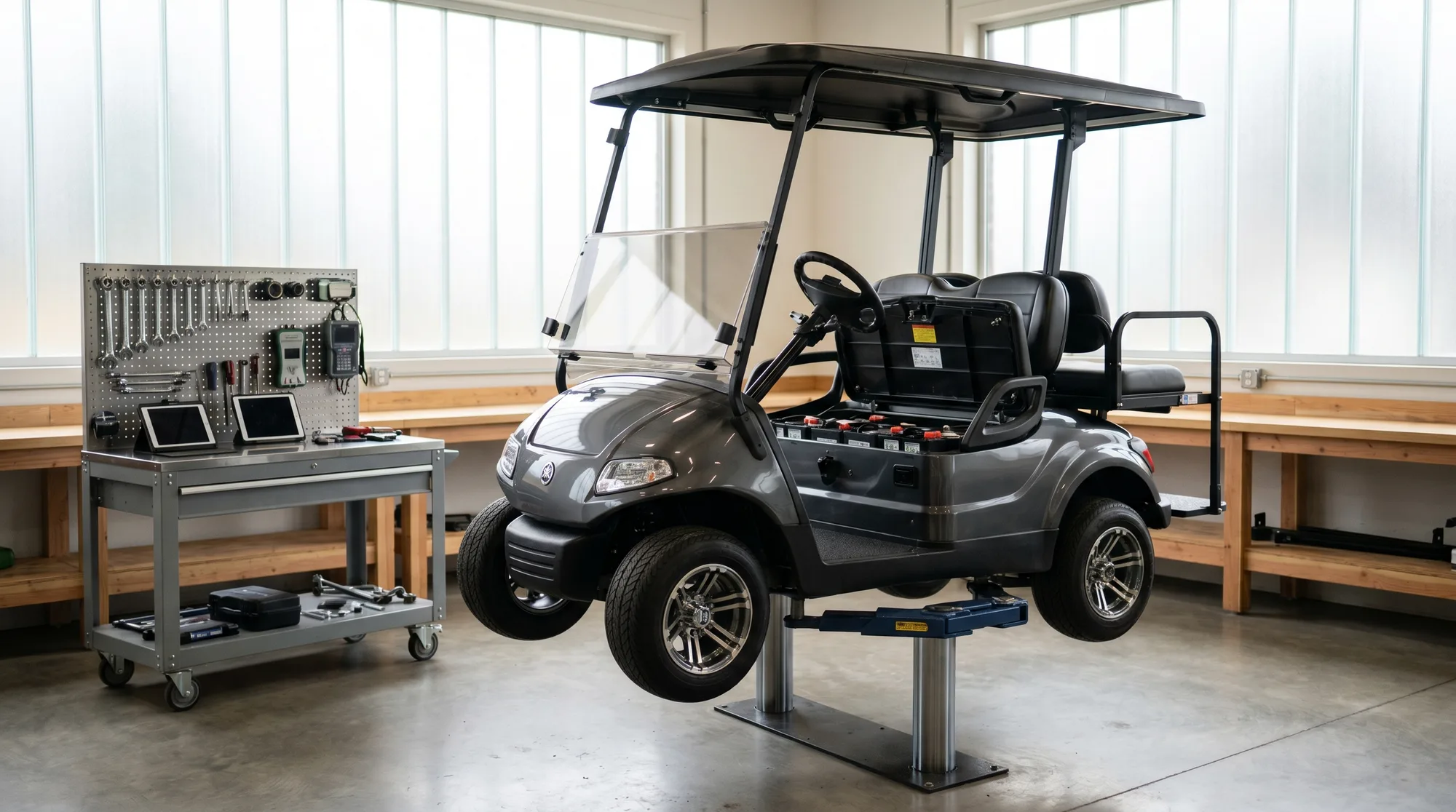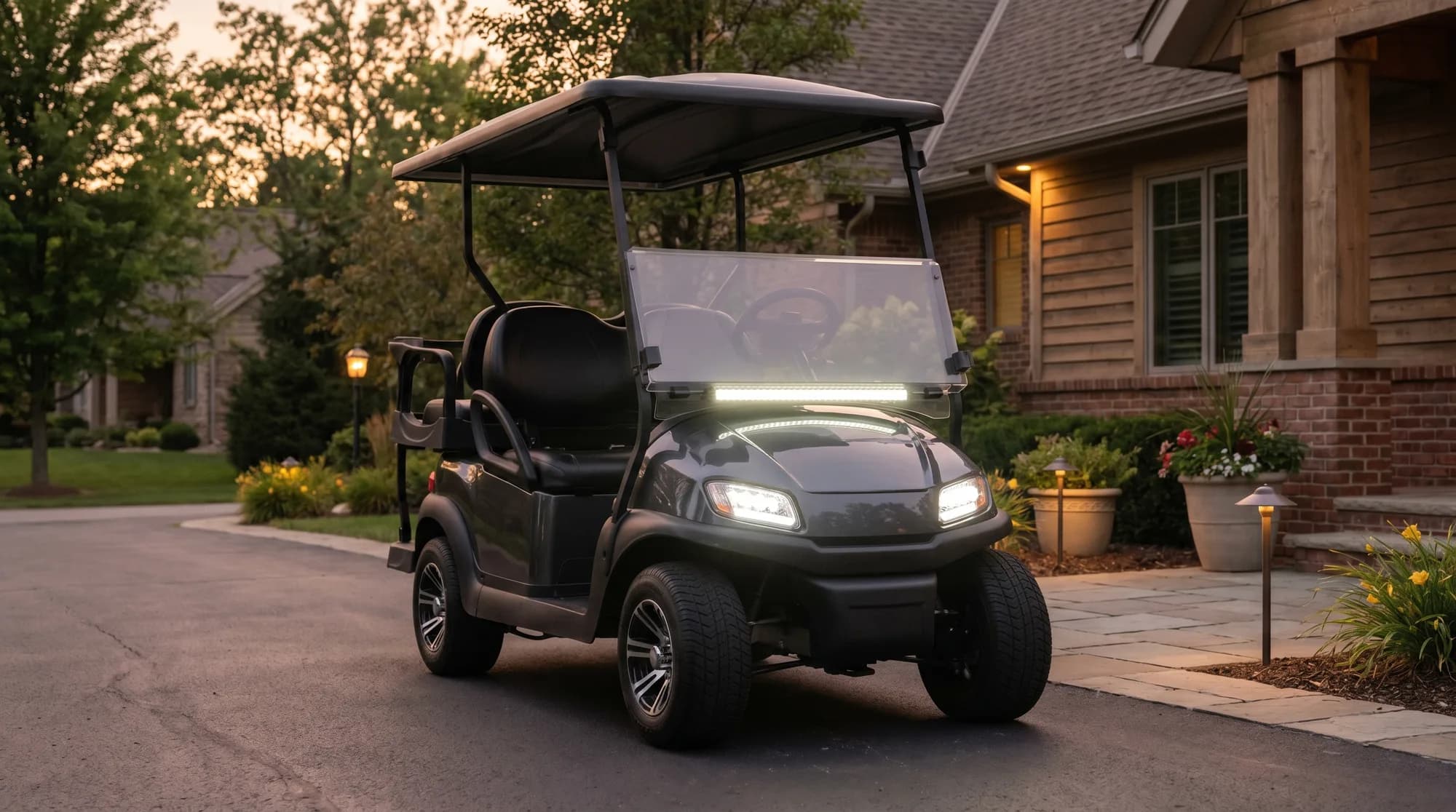
Lighting and audio are the two upgrades almost every golf cart owner ends up wanting, and they are also the two that go wrong most often. A bad lighting install leaves you with flickering LEDs and a fried fuse; a careless audio install drains the pack overnight and adds hum to every song. Done properly, though, both are genuinely worthwhile: a good light package makes a cart safe and street-credible after dark, and a clean sound system turns the evening cruise into the best seat at the party. This guide walks through what actually matters for the electrics, the wiring and the install, so you get reliable results rather than a weekend of troubleshooting.
Why LED is the only sensible lighting choice
If your cart still runs incandescent or halogen bulbs, the first upgrade is simple: switch to LED. LEDs draw a fraction of the current for the same or greater brightness, run cool, last for years and survive the constant vibration that kills filament bulbs. On a battery vehicle the low draw matters even more than on a car, because every watt you save is range you keep. A full LED package of headlights, tail and brake lights, turn signals and a light bar will pull less power than a single old halogen headlight.
The catch is voltage. Most automotive-style LED lights are built for a 12V system, but golf carts run 36V or 48V packs. You cannot wire 12V lights straight to a 48V pack without destroying them, which brings us to the most important component in the whole job.
The voltage reducer: the part everyone forgets
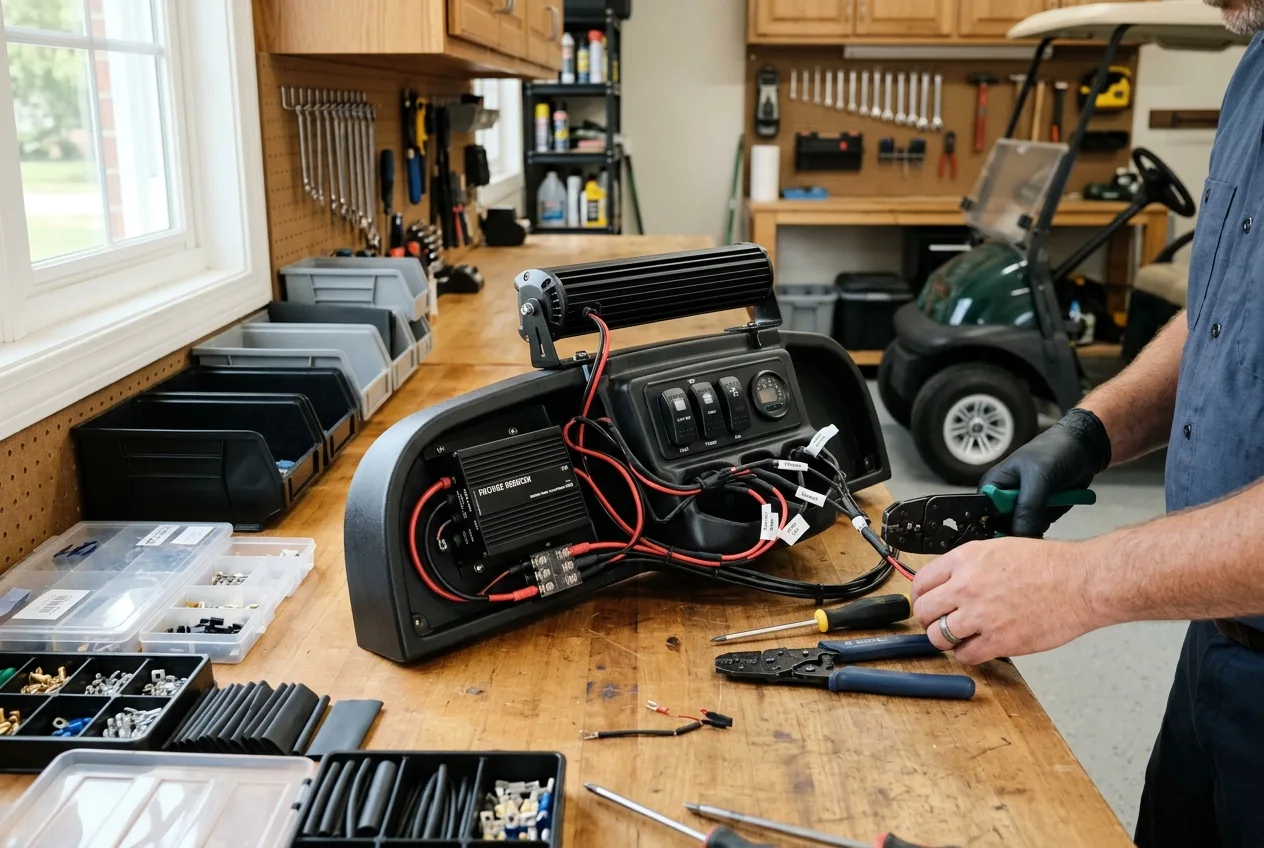
A voltage reducer (sometimes called a converter) steps your 36V or 48V pack down to a steady 12V to run lights, audio, a horn, USB ports and other accessories. Buying one sized for your total accessory load is the difference between a clean install and a melted mess. Add up the draw of everything you plan to run, then choose a reducer rated comfortably above that figure with headroom to spare.
This is also where the relationship to your batteries shows. A heavy accessory load on a tired pack will sag and dim; if your lights flicker at idle, the problem is often the pack, not the lights. If your batteries are due for attention anyway, read our battery care and lifespan guide and, if anything seems off, the battery troubleshooting guide before you blame the new accessories.
Wiring it so it lasts
Most lighting and audio failures are wiring failures, not component failures. The components are usually fine; the install let them down. A methodical approach pays off for years.
- 01
Plan the circuits and load
List every accessory and its current draw. Group them sensibly and size your reducer and wire gauge to the total, with margin.
- 02
Fuse close to the source
Put an inline fuse on each circuit within a few inches of where it takes power. This protects against a short before the wire can overheat.
- 03
Use proper connectors and gauge
Crimp and seal connections; do not twist and tape. Use marine-grade wire and connectors on any cart that sees rain or coastal air.
- 04
Route away from heat and pinch points
Keep wiring clear of the motor, controller heat and moving suspension parts, and secure it so vibration cannot chafe through the insulation.
- 05
Add a master accessory switch
A single switch that kills all accessory power prevents overnight phantom drain and makes fault-finding far easier.
Choosing a light package
Lighting falls into two camps: making the cart safe and visible, and making it look good. Both are valid, but get the safety layer right first.
- Headlights bright enough to see and be seen at dusk, with a clean beam pattern rather than glare.
- Red tail lights with a brighter brake function, so following carts and cars read your intent.
- Turn signals and a horn, which most states require for any road or shared-path use.
- Reflectors front and rear for passive visibility when the lights are off.
- Optional light bars or underglow for looks; keep underglow legal and never colored like emergency lights.
Audio without killing your battery
A sound system is the upgrade that most often surprises owners, because it can quietly drain the pack. The fix is to choose efficient gear and control when it draws power. Start with a marine-rated head unit and marine speakers, since carts live outdoors and a coastal cart sees salt air; consumer car audio corrodes fast in that environment. Bluetooth saves running phone cables and keeps the install clean.
If you add an amplifier and a subwoofer, you are adding real draw, so this is exactly where the master accessory switch and a healthy battery pack matter. A modest, efficient system on a well-maintained cart is no problem; a big amp on a tired pack will leave you flat. If you are planning a sound system on a cart you also use for daily errands, balance it against your range needs and our range extension tips.
- Lighting (LED)
- Very low
- Audio system
- Low to high, depends on amp
- Lighting (LED)
- Wrong voltage, no fuse
- Audio system
- Parasitic drain, corrosion
- Lighting (LED)
- Voltage reducer
- Audio system
- Marine head unit and speakers
- Lighting (LED)
- None if switched off
- Audio system
- Real, use a kill switch
- Lighting (LED)
- Often required for road use
- Audio system
- Keep volume reasonable, stay legal
| Lighting (LED) | Audio system | |
|---|---|---|
| Power draw | Very low | Low to high, depends on amp |
| Main risk | Wrong voltage, no fuse | Parasitic drain, corrosion |
| Key component | Voltage reducer | Marine head unit and speakers |
| Drain when parked | None if switched off | Real, use a kill switch |
| Legal angle | Often required for road use | Keep volume reasonable, stay legal |
When to call a pro
A confident DIYer can fit an LED kit and a simple stereo in a weekend. But if you are running an amplifier, cutting into the factory harness, or you find the new draw is dimming everything else, it is worth having a cart technician check the install and the pack. Electrical work that is wrong is not just unreliable, it is a fire risk, and a good install protects an expensive vehicle. Our maintenance and repair basics guide covers the wider upkeep that keeps any upgraded cart healthy.
Nine out of ten lighting and audio problems we see are not the parts. They are a missing fuse, the wrong voltage feed or a tired battery pack carrying the blame.
So what should you do?
Go LED, feed everything from a properly sized voltage reducer, fuse every circuit, and add a master accessory switch. Keep audio efficient and marine-rated, and never let accessories outpace a healthy battery pack. If you would rather buy a cart that arrives with the lighting and a clean accessory setup already engineered in, we are glad to spec one to how you actually drive, with honest numbers.
Spec a cart with the lighting done right
Tell us how you drive and what you want on board, and we will recommend a clean, reliable build with an honest price.
Frequently asked questions
Can I wire 12V lights directly to my 48V golf cart?+
No. Connecting 12V accessories straight to a 36V or 48V pack will destroy them. Fit a properly sized voltage reducer that steps the pack voltage down to a steady 12V, and feed all your accessories from that.
Will a sound system drain my golf cart battery?+
It can, especially with an amplifier and subwoofer. Choose efficient marine-rated gear, keep volume reasonable, fit a master accessory kill switch so nothing draws power when parked, and make sure your battery pack is healthy.
Do I need to fuse my lighting upgrade?+
Yes. Put an inline fuse on each new circuit close to where it takes power. This protects the wiring against a short before it can overheat, and it is the single most important habit for a safe install.
Are LED lights better for golf carts than halogen?+
Far better. LEDs draw a fraction of the current, run cool, survive vibration and last for years. On a battery vehicle the low draw also protects your range, so there is no good reason to run halogen anymore.
Can I make my upgraded lights street legal?+
Often yes, but you must match the exact equipment your state requires for a road-going cart, typically headlights, brake lights, turn signals, reflectors and a horn. Confirm the rules for where you drive before relying on the cart on public roads.
Related solutions
Ready to explore what we build?
See the vehicles and the setting this applies to, or get a tailored quote built around your site.

Ready to find the right buggy?
Tell us how and where it will work and we will specify a vehicle and a tailored quote built around you. Every build comes with a 3-year warranty and a 24-hour priority call-out.