Most golf cart problems are not mysteries. The same handful of faults account for the vast majority of breakdowns, and many of them are simple to diagnose with a methodical approach and a basic multimeter. This guide is a practical field reference to the issues owners actually run into, organized by symptom: what is probably wrong, how to confirm it, the safe fix, and the point where you should stop and call a technician. Work through it in order, because the cheapest and most common causes come first, and there is no sense replacing a controller when a corroded terminal was the real culprit.
- Most cart faults trace back to batteries, connections or the charger, so always check those first.
- A multimeter and a clean set of connections solve a surprising share of problems for almost no money.
- A clicking solenoid that will not engage is one of the most common no-go faults and is usually diagnosable at home.
- Brake drag, jerky acceleration and dim lights each point to a small set of likely causes.
- Stop and call a tech for controller faults, motor internals and anything that smells hot or smells of burning.
Start with the basics every time
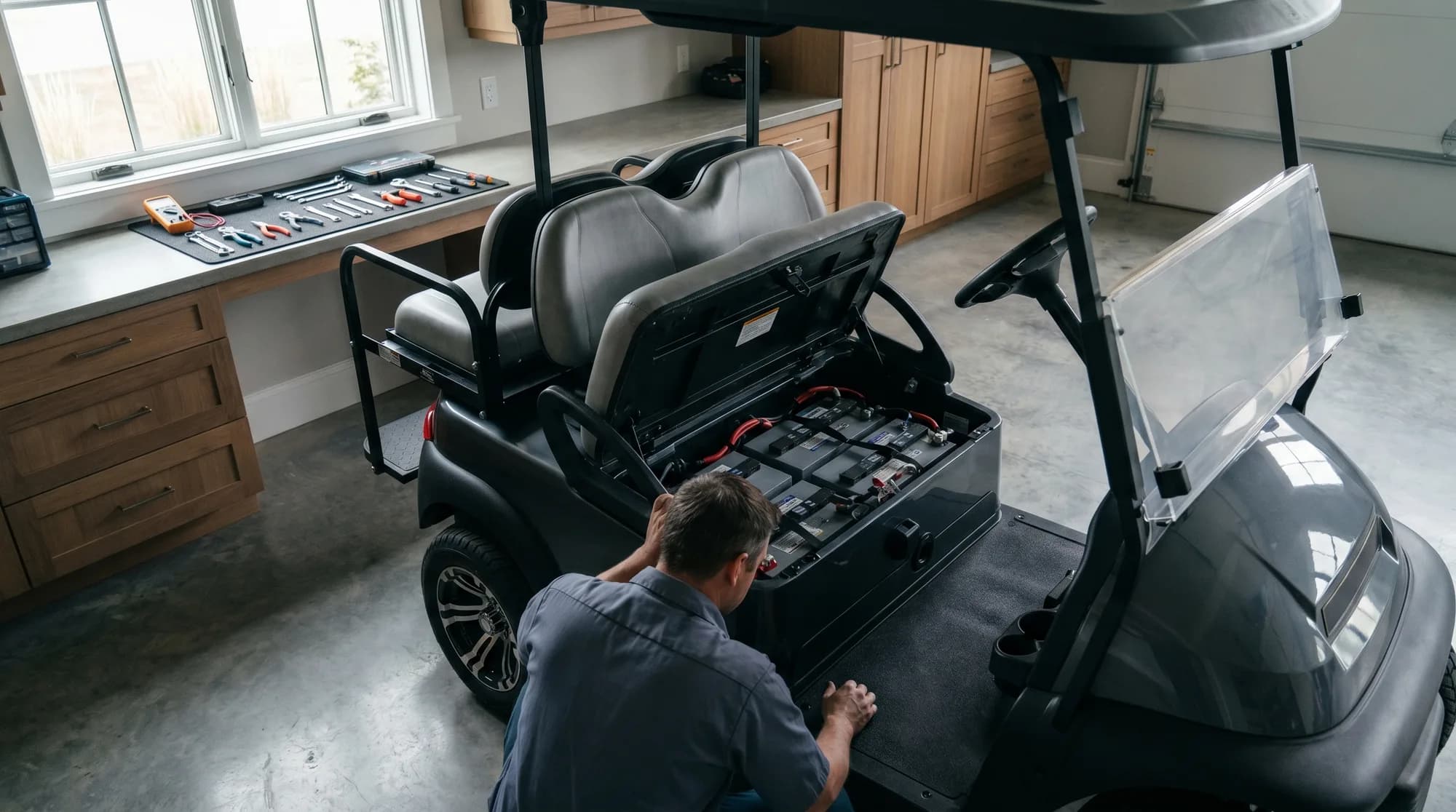
Before chasing any specific fault, run the same opening checks. Is the pack charged and healthy? Are the battery terminals and main connections clean and tight? Is the charger actually working? An astonishing number of cart problems dissolve once corroded terminals are cleaned and a flat or unbalanced pack is properly charged. Loose or corroded connections cause intermittent power, weak performance and phantom electrical faults that send people chasing expensive parts.
Because batteries are behind so many issues, keep our battery troubleshooting guide and battery care and lifespan guide close. If the cart will not move at all, our dedicated will not move troubleshooting guide walks that specific scenario step by step.
Problem: the cart will not start or move
A cart that is silent or refuses to move usually has a power-delivery problem rather than a motor problem. The classic symptom is turning the key and hearing a single click, repeated clicks, or nothing at all.
- A single click and no movement often means the solenoid is engaging but the motor is not getting power, or the solenoid contacts are worn.
- Rapid clicking usually points to a low or unbalanced battery pack that cannot hold the solenoid in.
- Total silence can be a dead pack, a tripped reset, a faulty key switch, or a charge-interlock that thinks the charger is plugged in.
- No power at all after charging can mean a blown main fuse or a popped controller reset button.
Problem: weak power, short range or slow charging
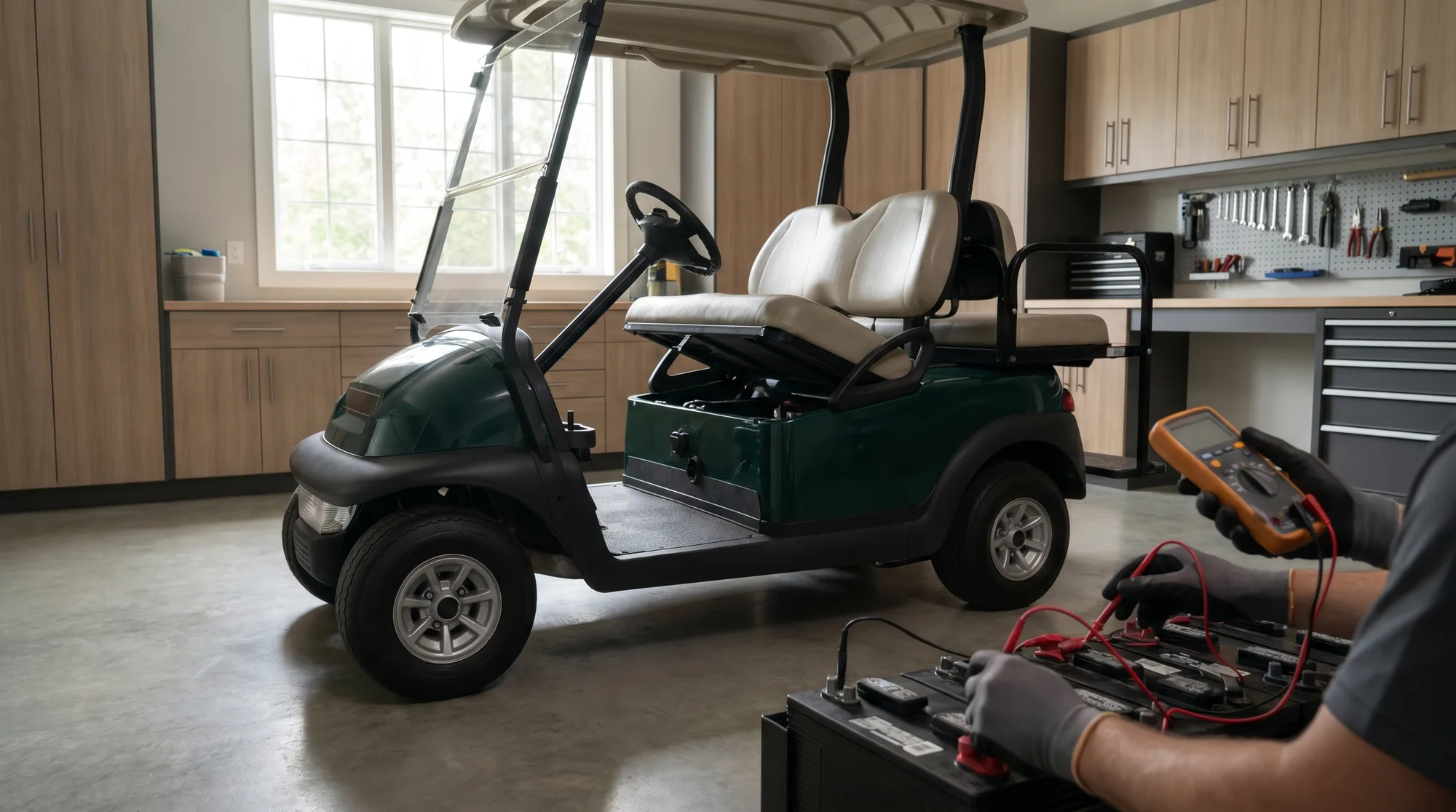
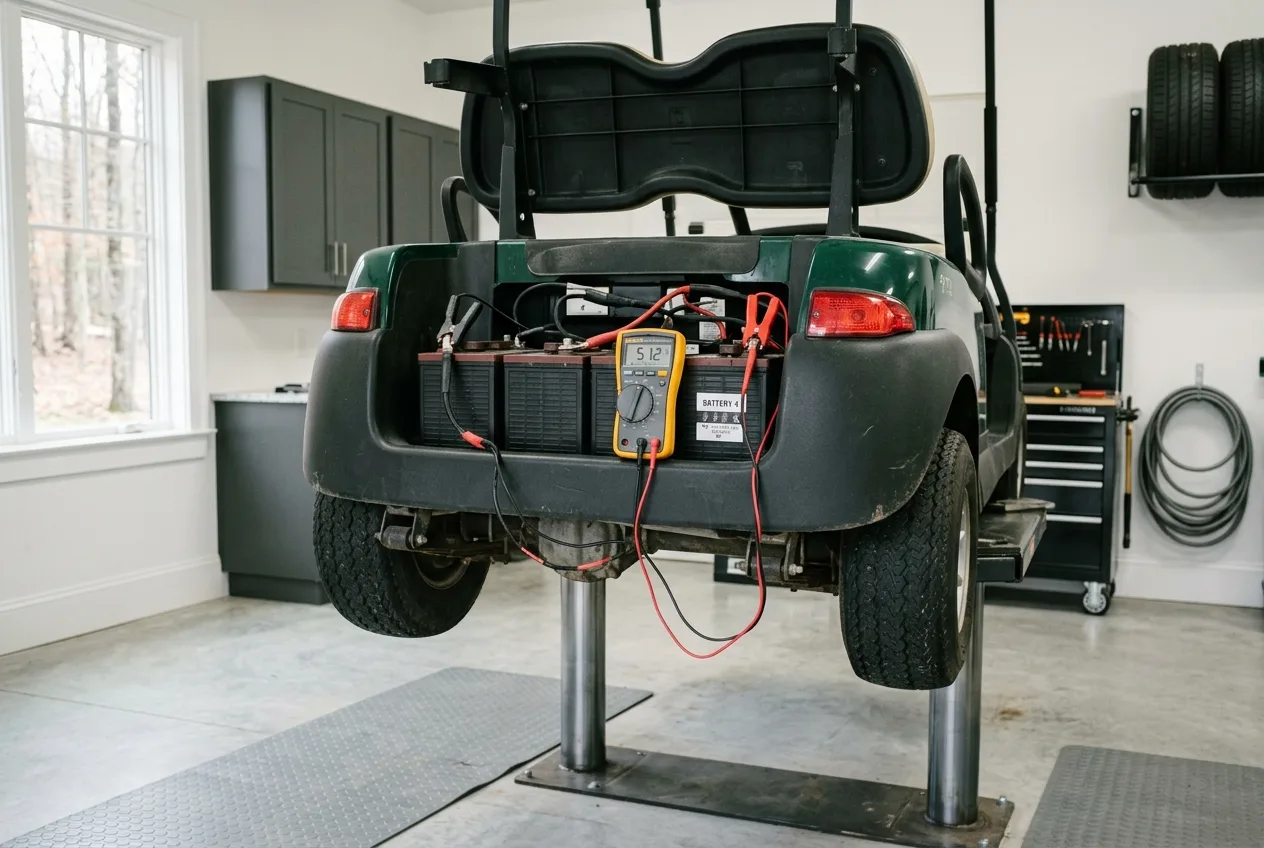
When a cart still moves but feels gutless, dies early or takes forever to charge, the pack is almost always involved. Lead-acid batteries that are old, low on water, or sulfated lose capacity steadily; a single weak battery in the string drags the whole pack down. Confirm with a multimeter by checking each battery's resting voltage, then under load; a battery that sags far below its neighbors is the weak link.
Charging faults show up here too. A charger that clicks on and off, never finishes, or refuses to start can be the charger itself, the pack being too flat for the charger to detect, or a bad connection. If you want to push real-world range further once the pack is healthy, our range extension guide covers tires, weight, driving style and more.
Problem: jerky acceleration or surging
If the cart lurches, hesitates or surges instead of pulling smoothly, the usual suspects are the accelerator (throttle) sensor, a loose connection in the throttle circuit, or the controller. Start at the cheap end: inspect and reseat the throttle wiring and connectors, and check for dirt or wear at the pedal sensor. Surging under load with a tired pack is often just the batteries sagging, which loops back to the basics check.
Problem: brakes dragging, squealing or feeling weak
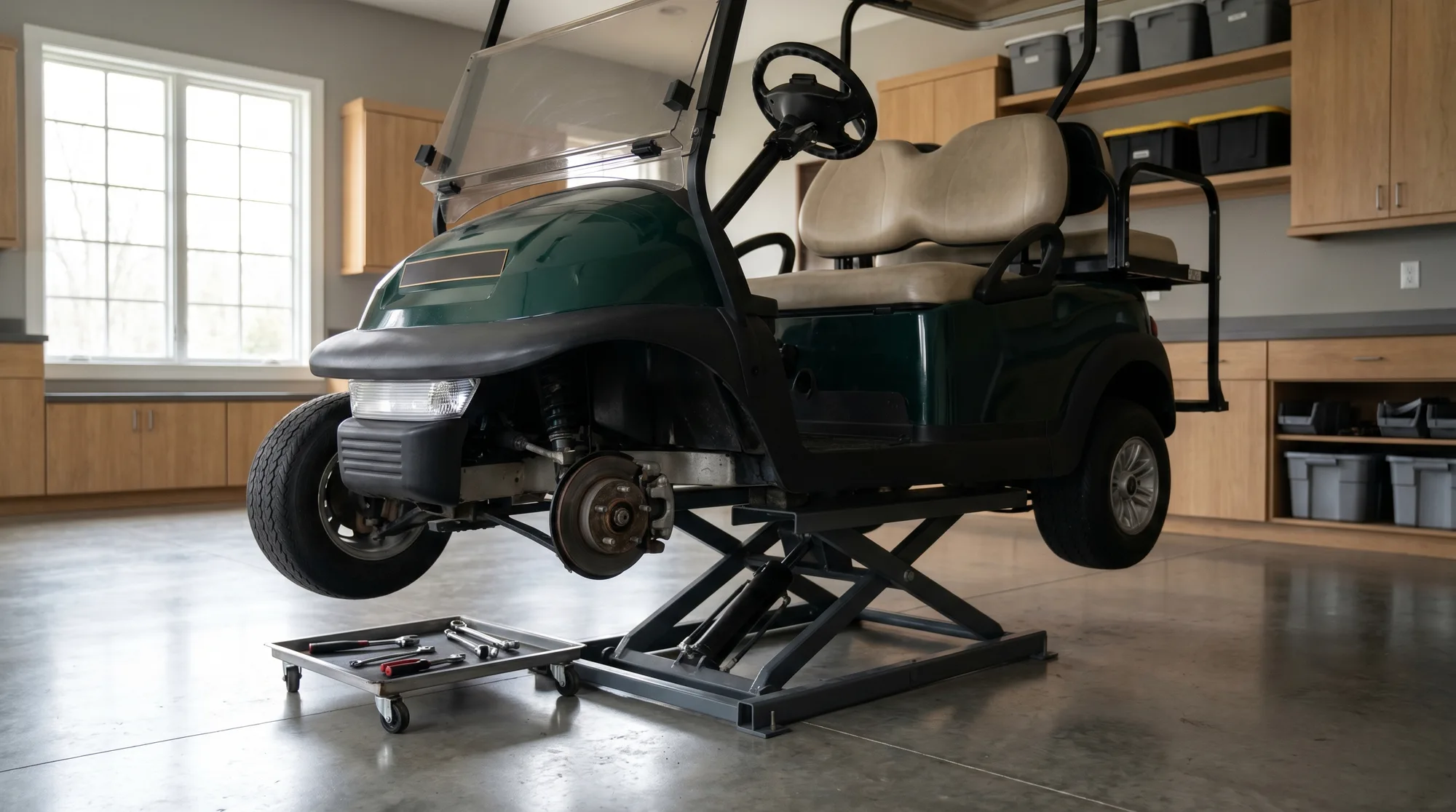
Brake complaints are common and mostly mechanical. A cart that will not roll freely, pulls to one side, or has a soft pedal needs the brakes inspected. Drum brakes can seize from corrosion if the cart sits, shoes wear, cables stretch and adjusters drift out of spec. A grinding noise means metal on metal and needs attention now, not later.
Brakes and suspension are a safety system, not a comfort feature, so it is worth understanding them properly; our brakes and suspension care guide goes far deeper than this summary and covers when a worn brake becomes a do-not-drive situation.
Problem: lights, horn or accessories not working
Electrical accessory faults are usually wiring, fuses or the voltage reducer rather than the lights themselves. A blown fuse, a corroded connector, or a failed reducer feeding 12V gear from a 36V or 48V pack will take out lights and audio together.
- Symptom
- Solenoid or main power path
- Most likely cause
- Check solenoid, fuse, connections
- Symptom
- Low or unbalanced pack
- Most likely cause
- Charge and test each battery
- Symptom
- Tired or weak battery
- Most likely cause
- Test each cell under load
- Symptom
- Throttle sensor or wiring
- Most likely cause
- Reseat connectors, then suspect controller
- Symptom
- Seized drum or adjustment
- Most likely cause
- Inspect and service brakes
- Symptom
- Fuse or voltage reducer
- Most likely cause
- Check fuses and the reducer
| Symptom | Most likely cause | |
|---|---|---|
| One click, no move | Solenoid or main power path | Check solenoid, fuse, connections |
| Rapid clicking | Low or unbalanced pack | Charge and test each battery |
| Weak power, short range | Tired or weak battery | Test each cell under load |
| Jerky acceleration | Throttle sensor or wiring | Reseat connectors, then suspect controller |
| Dragging brakes | Seized drum or adjustment | Inspect and service brakes |
| Dead lights/audio | Fuse or voltage reducer | Check fuses and the reducer |
When to stop and call a technician
DIY diagnosis is genuinely useful, but knowing your limit is part of doing it well. Call a professional if you suspect the controller or motor internals, if anything smells hot or of burning insulation, if you find melted wiring, or if a brake fault means the cart is not safe to stop. None of those are jobs to learn on a vehicle that carries people. Our maintenance and repair basics guide helps you build the routine that prevents most of these in the first place.
The owners who rarely break down are not luckier. They check the boring things first, keep the connections clean and never ignore a noise that is new.
So what should you do?
Work symptom to cause, cheapest and most common first: batteries, connections and charger, then solenoid, throttle, brakes and accessories. A multimeter and clean terminals fix most problems. Know when to hand off the controller, motor and serious brake work to a pro. If your cart has reached the point where repairs outpace its value, we are happy to talk through a reliable replacement with honest numbers.
Tired of chasing faults?
If repairs are mounting up, tell us how you use your cart and we will recommend a dependable build with an honest price.
Frequently asked questions
Why does my golf cart click but not move?+
A single click usually means the solenoid is engaging but the motor is not getting power, often a worn solenoid, a blown main fuse or a bad connection. Rapid clicking usually means a low or unbalanced battery pack. Check the pack, fuses and connections first.
What is the most common golf cart problem?+
Battery and connection issues by a wide margin. Old, low or unbalanced batteries and corroded or loose terminals cause weak power, short range, no-start faults and phantom electrical gremlins. Always check those before anything else.
Why does my cart jerk when I press the pedal?+
Jerky or surging acceleration usually points to the throttle sensor or its wiring, or to a tired battery pack sagging under load. Reseat and inspect the throttle connectors first; if the fault remains with a healthy pack, the controller may need a technician.
Can I fix golf cart problems myself?+
Many of them, yes. Battery, connection, fuse, solenoid and basic brake issues are within reach with a multimeter and care. Leave controller internals, motor rebuilds, melted wiring and any unsafe brake fault to a qualified technician.
When should I call a golf cart technician?+
Call a pro if you suspect the controller or motor, if anything smells hot or burnt, if you find melted wiring, or if a brake problem means the cart cannot stop safely. Those are not jobs to learn on a vehicle that carries people.
Related solutions
Ready to explore what we build?
See the vehicles and the setting this applies to, or get a tailored quote built around your site.

Ready to find the right buggy?
Tell us how and where it will work and we will specify a vehicle and a tailored quote built around you. Every build comes with a 3-year warranty and a 24-hour priority call-out.
Our guides are written and reviewed by the Hawke Electric Vehicles team, the people who specify, build, deliver and support the vehicles. We focus on honest, practical advice and flag where a figure depends on the build rather than guessing.
More guides by Hawke