- Most golf cart repair bills come from small jobs that were ignored: low charge, soft tires, loose connections.
- An electric cart is far simpler to maintain than a gas one. There is no oil, no spark plugs and no fuel system.
- You can safely handle washing, tire pressures, battery care and visual checks yourself.
- Brakes, motor, controller and lithium battery work should be left to a qualified technician.
- A 15-minute monthly check and a proper seasonal service will prevent most breakdowns.
- Quality matters: a well-built lithium cart with a real warranty needs far less repair attention.
Golf cart repair is usually less about big mechanical failures and more about small, preventable problems. The most common reasons a cart stops working are a flat or undercharged battery, soft or worn tires, corroded terminals and a brake that was never adjusted. None of those need a workshop. With a simple routine, a 15-minute monthly check and a proper service once or twice a year, you can keep a cart reliable for many years and avoid most of the repairs people dread.
This guide covers what you can do yourself, what is best left to a technician, and a clear schedule to follow. We build premium custom lithium carts to order, so we see exactly which habits keep a cart healthy. If you are weighing up models before you buy, the range and our guides are a good place to start, and you can always request a tailored quote for advice on a build that suits your conditions.
Electric vs gas: why upkeep is so different
If you are used to a gas cart, electric maintenance will feel almost light. There is no engine oil to change, no air or fuel filter, no spark plug, no carburettor to gum up and no exhaust. An electric cart is essentially a battery, a motor, a controller, a braking system and a set of wheels. That means fewer parts to fail and a much shorter service list, which is one reason so many owners and fleets have moved to electric and to lithium specifically.
- Electric cart
- None
- Gas cart
- Regular
- Electric cart
- None
- Gas cart
- Periodic
- Electric cart
- None
- Gas cart
- Needs attention
- Electric cart
- Main task
- Gas cart
- Starter only
- Electric cart
- Few
- Gas cart
- Many
| Task | Electric cart | Gas cart |
|---|---|---|
| Oil changes | None | Regular |
| Spark plug / filter | None | Periodic |
| Fuel system | None | Needs attention |
| Battery care | Main task | Starter only |
| Typical service items | Few | Many |
Jobs you can safely do yourself
Most owners can comfortably handle the basics. None of these need special tools, and doing them regularly removes the great majority of repair calls before they happen.
- Keep the cart clean: rinse off grass, sand and salt, especially around the underside and connections.
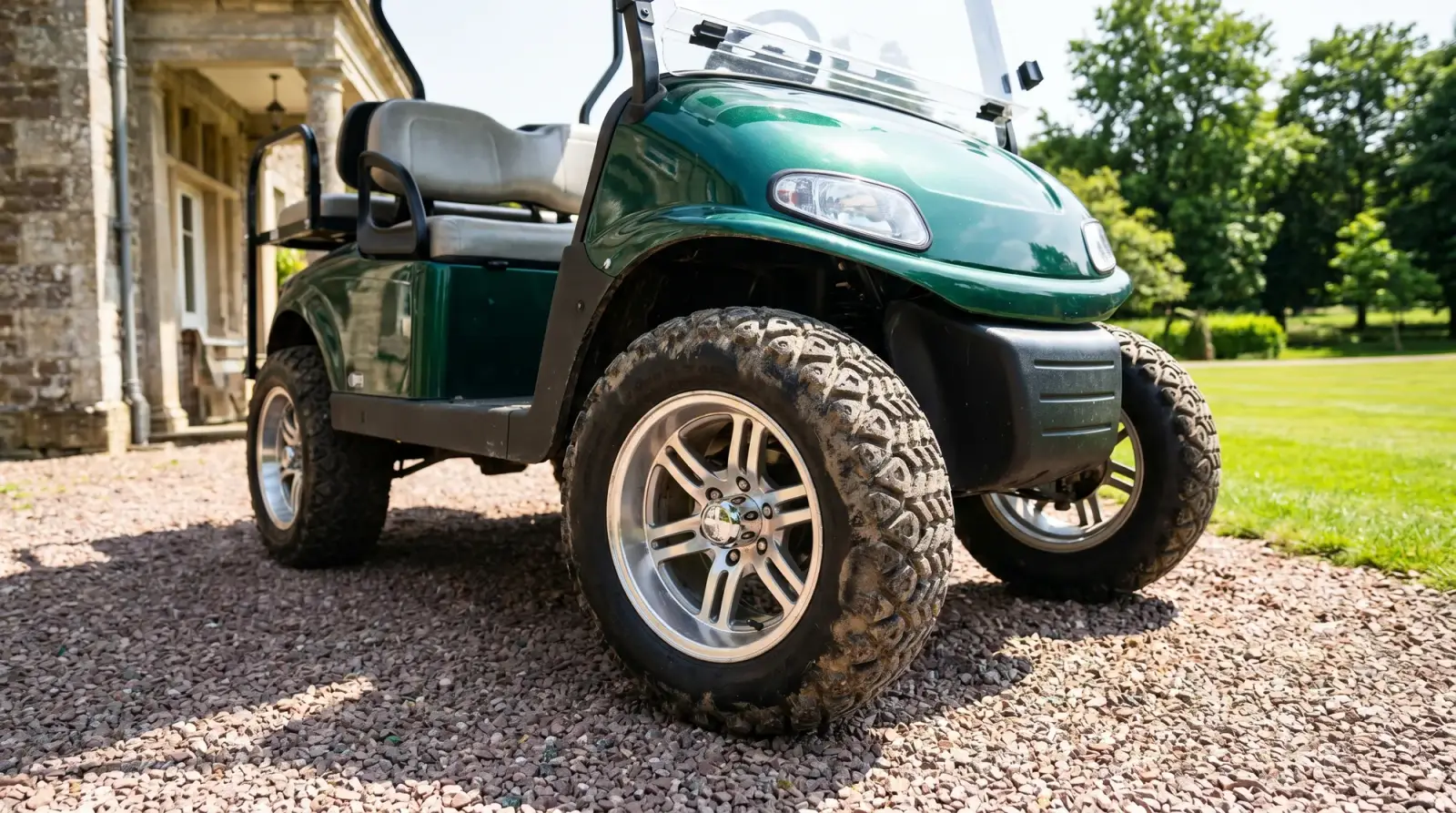
- Check tire pressures monthly and keep them even. Soft tires hurt range, handling and wear.
- Keep battery terminals clean, dry and tight. Corrosion is a leading cause of power problems.
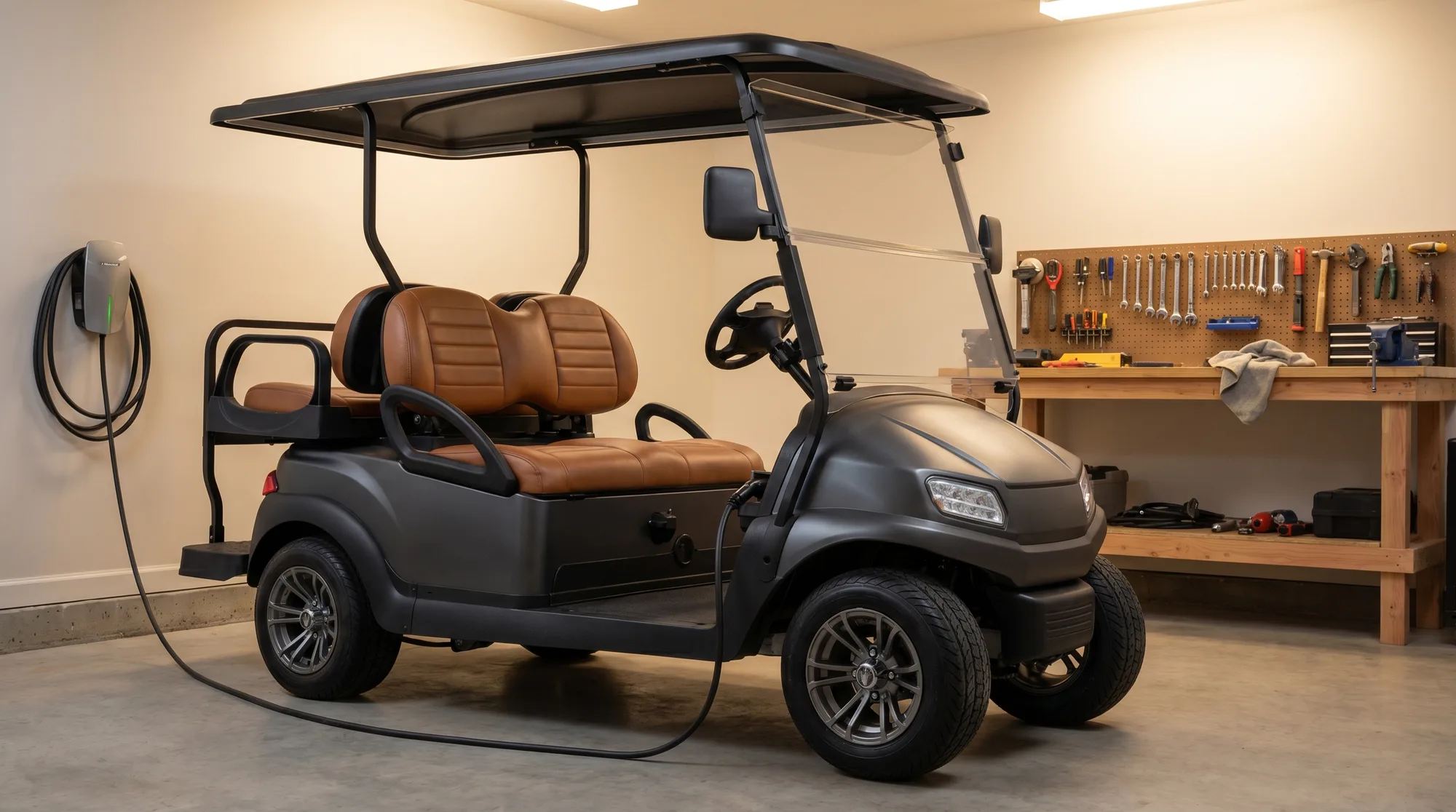
- Charge correctly: follow the charger guidance for your battery type and avoid leaving a cart flat.
- Look and listen: check for loose bolts, frayed wires, worn belts (gas) and unusual noises.
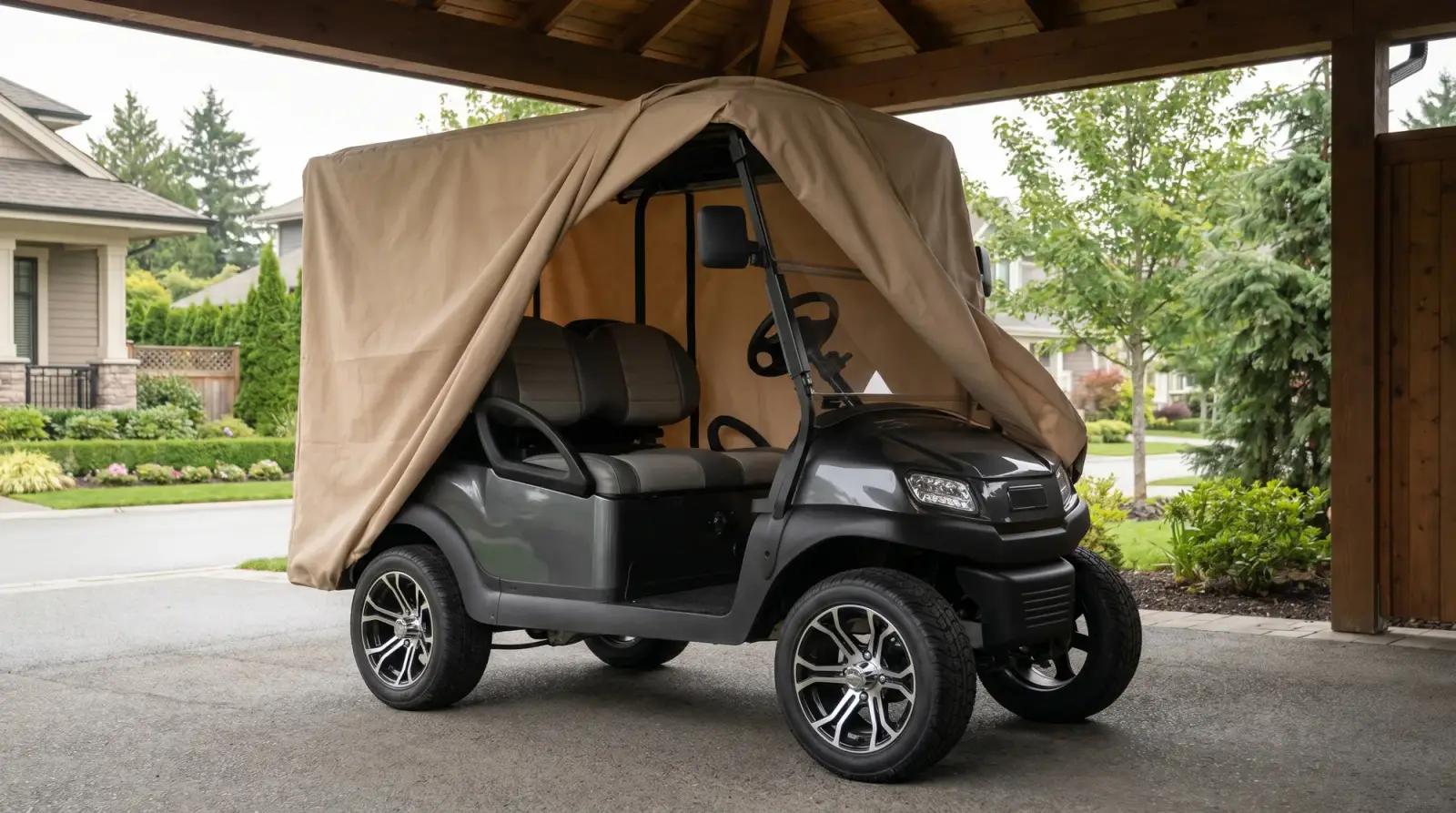
- Store it properly in the off-season, ideally charged and under a cover.
Jobs best left to a technician
Some systems are safety critical or carry real voltage, and these are where a qualified technician earns their fee. Trying to save money here is usually how a small problem becomes a large one.
- Brakes: adjustment, pad or shoe replacement and any braking fault.
- Motor and controller diagnostics, including error codes and power loss.
- Lithium battery management system faults, cell balancing and any battery swelling or damage.
- High-voltage wiring, the solenoid and the charging circuit.
- Steering, suspension and anything that affects how the cart stops or turns.
A simple maintenance schedule
You do not need a complicated logbook. This rhythm keeps almost any cart in good shape.
- 01
Every use
Glance over tires, listen for new noises and make sure the cart charged fully overnight if it was used.
- 02
Monthly
Check tire pressures, clean and tighten battery terminals, wash the cart and look for loose or worn parts.
- 03
Seasonally
Have a fuller check of brakes, steering, charger and battery health, and address anything flagged.
- 04
Yearly
Book a professional service so a technician can inspect the motor, controller, brakes and battery properly.
- 05
Before storage
Clean, charge appropriately for the battery type, protect the tires and cover the cart.
Want a cart that needs less repair, not more
A well-built lithium cart with the right specification simply breaks down less. Tell us your terrain and how you will use it, and we will tailor a build and quote that keeps maintenance light.
How build quality changes the repair story
Two carts can look similar and have very different repair lives. A premium, custom-built lithium cart with quality wiring, sealed connections and a proper battery management system spends far less time in the shop than a budget build. Lithium also removes the messiest maintenance job of all, because there is no acid to top up and no watering schedule to forget. If repair time and reliability matter to you, that is worth weighing when you choose, and it is one of the reasons many buyers compare options across our guides before deciding.
Our carts are built to order and backed by a three-year warranty, which changes how you think about repairs because the most expensive parts are covered while you settle into ownership. If you want to keep tires in good shape too, our note on tires and wheels is worth a read, and charging at home covers the habits that protect your battery.
Frequently asked questions
What is the most common golf cart repair?+
Battery and charging problems are by far the most common, usually from an undercharged or aging battery, or corroded terminals. Soft tires and out-of-adjustment brakes are next. Most of these are preventable with a simple monthly check.
How often should I service a golf cart?+
Do a quick check monthly, a fuller check each season, and a professional service once a year. A cart used hard or in tough conditions may benefit from more frequent attention.
Can I do golf cart repairs myself?+
You can safely handle cleaning, tire pressures, battery terminal care and visual checks. Leave brakes, motor, controller and lithium battery work to a qualified technician, both for safety and to protect any warranty.
Is an electric golf cart cheaper to maintain than gas?+
Generally yes. There is no oil, fuel system, filters or spark plugs, so the service list is much shorter. The main ongoing task is battery care, and lithium makes even that minimal.
How do I keep my golf cart reliable for years?+
Charge it correctly, keep tires and terminals in good order, store it properly off-season and have it serviced yearly. Buying a well-built cart with a real warranty in the first place makes the biggest difference of all.
Related solutions
Ready to explore what we build?
See the vehicles and the setting this applies to, or get a tailored quote built around your site.

Ready to find the right buggy?
Tell us how and where it will work and we will specify a vehicle and a tailored quote built around you. Every build comes with a 3-year warranty and a 24-hour priority call-out.
Our guides are written and reviewed by the Hawke Electric Vehicles team, the people who specify, build, deliver and support the vehicles. We focus on honest, practical advice and flag where a figure depends on the build rather than guessing.
More guides by Hawke