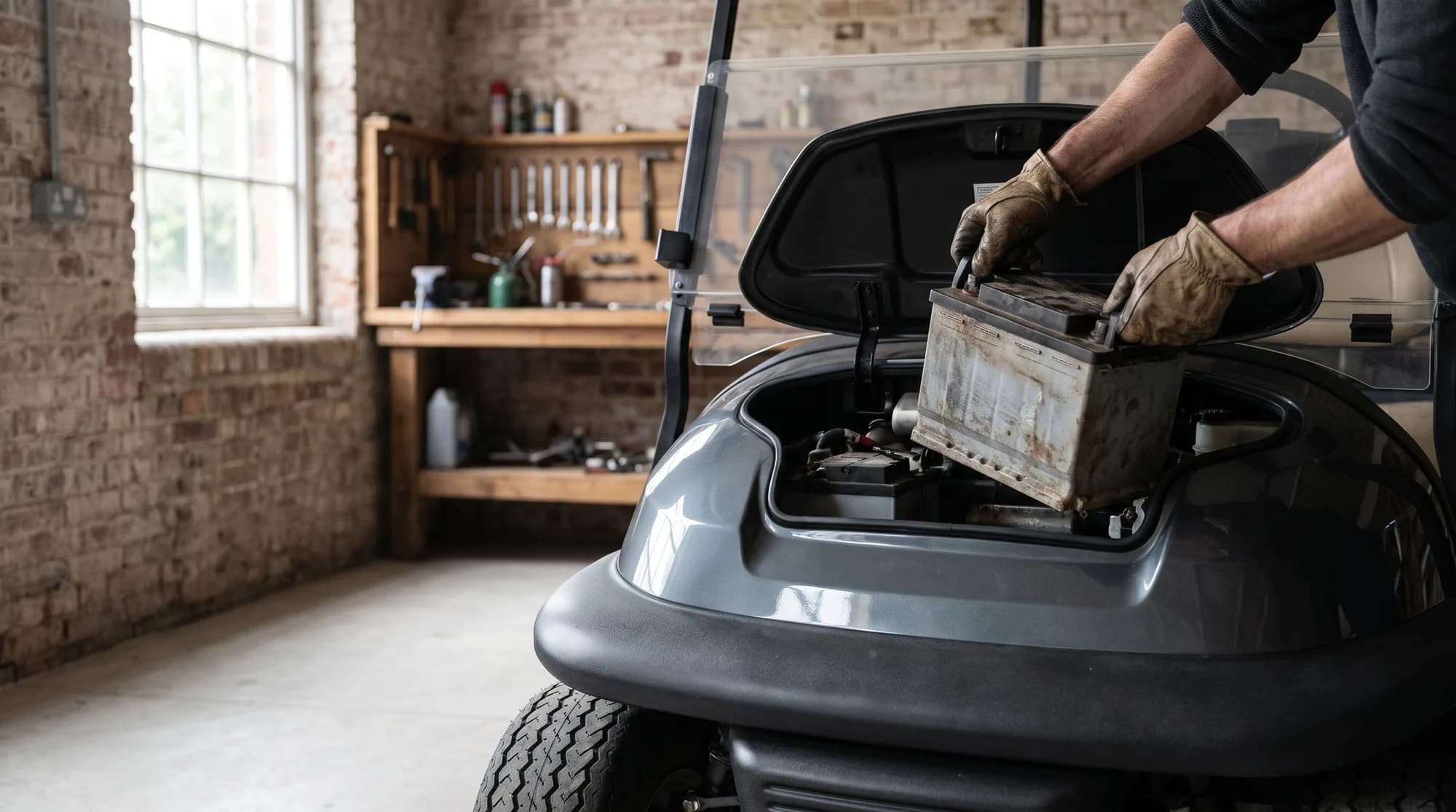
Golf buggy batteries must never go in general waste, and if you're a business, the old lead-acid packs count as hazardous waste with a legal duty of care attached. The good news is that disposal is usually easy and often free, because the battery producer behind the new pack (usually the manufacturer or importer, often acting through the supplier who fits it) is legally obliged to take back the old one, and lead-acid batteries carry genuine scrap value on top.
That legal obligation surprises a lot of club managers who've been quietly stockpiling dead batteries in a shed corner. It shouldn't be there, and it doesn't need to be. Between supplier take-back, scrap metal collectors and household recycling centres, every buggy battery in the UK has a proper route out. Each route is set out below, along with the paperwork businesses must keep and why lithium packs follow completely different rules.
- Lead-acid buggy batteries are classed as hazardous waste in the UK. Businesses have a duty of care: registered waste carriers, consignment notes, records kept for three years.
- Under the Waste Batteries and Accumulators Regulations 2009, battery producers must take back waste industrial batteries when they supply new ones, so ask the supplier fitting your new pack to remove the old one under the producer's take-back scheme.
- Lead-acid packs have real scrap value tied to the lead price, and many collectors pay for them rather than charging.
- Householders can take car-type batteries to most household recycling centres free of charge (check your local site first). Never the wheelie bin.
- Lithium packs are a separate waste stream, must never be mixed with lead-acid, and damaged lithium needs specialist handling.
Are buggy batteries really hazardous waste?
Yes. A lead-acid battery is a box of lead plates sitting in sulphuric acid, and UK waste law classifies it as hazardous accordingly. For a private individual replacing the pack in their own buggy, that mostly means one thing: it can't go in household rubbish, and it needs to reach a proper collection point.
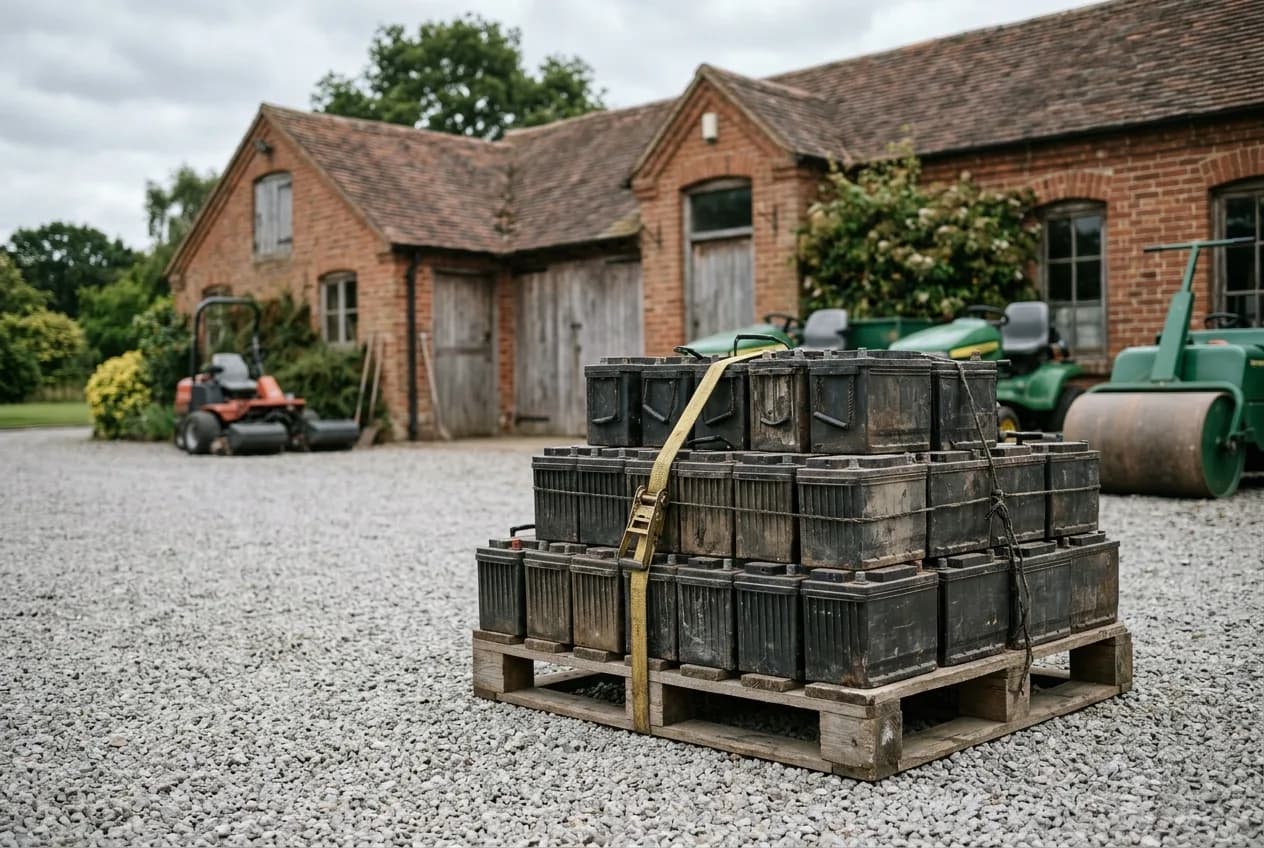
For a business (a golf club, hire operator, holiday park or hotel), the obligations are more formal. The waste duty of care applies from the moment a battery becomes waste. That means the batteries must be stored safely (upright, under cover, on a drip tray or acid-resistant surface), transferred only to a registered waste carrier or authorised collector, moved with a hazardous waste consignment note, and the paperwork kept for three years. If the Environment Agency or your local authority ever asks where last year's 24 batteries went, the consignment notes are your answer.
Your supplier probably has to take them back
There's a rule too few fleet buyers use. Under the Waste Batteries and Accumulators Regulations 2009, the producer of industrial batteries (the manufacturer or importer who first puts them on the UK market, and buggy traction batteries count) is obliged to take back waste batteries when supplying new ones. Usually, the supplier fitting your packs is that producer or acts on their behalf. So when you order replacement packs, the supplier fitting them should take the old ones away as part of the job. Good suppliers do this without being asked, because the scrap value covers their trouble.
Make it a condition of the order, in writing: new packs supplied and fitted, old packs removed with consignment note provided. If a supplier hesitates, that tells you something about the rest of their service too. Batteries typically need replacing every four to six years on lead-acid fleets, so a club with eight buggies is generating a steady stream of hazardous waste, and building take-back into the replacement cycle deals with it permanently. It's one of several hidden costs we cover in our guide to lithium versus lead-acid batteries.
Scrap value: yes, the dead pack is worth money
Lead is a valuable, endlessly recyclable metal, and over 90 per cent of a lead-acid battery gets recycled. That's why scrap dealers and specialist battery collectors will often pay for waste packs rather than charge to remove them. Prices move with the lead market, but a buggy's worth of traction batteries weighs well over 100kg, so a fleet replacement can generate a meaningful credit. Ring two or three local scrap metal or battery collectors and compare against your supplier's take-back terms; sometimes the supplier's fitted-price already reflects the scrap value, sometimes it doesn't. Whoever collects, they must be a registered waste carrier and give you the paperwork. A cash collector with no consignment note leaves the legal risk with you.
What about private owners?
Householders have the simplest route of all. Most household waste recycling centres (the tip, in normal English) accept car-type and leisure batteries from residents free of charge; a buggy battery is the same chemistry, just bigger. Check your council's website first, because sites vary on quantity limits and some ask you to book. Alternatively, the garage or dealer fitting your new batteries will almost always take the old ones, and many motor factors that sell batteries have take-back bins in store. The only wrong answers are the wheelie bin and the back of the garage for a decade.
Lithium packs are a different animal
As fleets switch to lithium, disposal changes completely. Lithium batteries are a separate waste stream and must never be mixed with lead-acid; a lithium pack crushed in a lead recycling line is a fire waiting to happen. The UK's lithium recycling routes are growing fast, and the same 2009 regulations put take-back obligations on producers, so the fitting dealer remains your first call.
Two extra rules matter. First, a damaged, swollen or heat-affected lithium pack is genuinely dangerous and needs specialist handling: don't transport it yourself, isolate it outdoors away from buildings and call a specialist collector. Second, don't be tempted to sell old lithium packs for DIY projects; a traction pack with unknown history is a liability you don't want your name attached to. The consolation is lifespan: lithium packs last far longer than lead-acid, so you'll face the disposal question perhaps once a decade, and looking after the pack properly (see our battery winter care guide) pushes it out further.
Fleet disposal, done compliantly
- 01
Build take-back into the replacement order
When ordering new packs, make removal of the old ones a written condition. The producer behind your new batteries is obliged to take back waste industrial ones under the 2009 regulations, and most fitting suppliers arrange this for them, and most will fit and remove in one visit.
- 02
Store waste packs safely until collection
Upright, terminals protected, under cover, on an acid-resistant surface or drip tray, away from drains. Keep lithium and lead-acid completely separate.
- 03
Use a registered carrier and get consignment notes
Whoever collects, verify their waste carrier registration and insist on a hazardous waste consignment note per movement. No note, no collection.
- 04
Chase the scrap value
Compare your supplier's take-back terms against local battery collectors. Lead-acid packs have real value, and on a full fleet replacement it's worth a phone call.
- 05
File the paperwork for three years
Consignment notes and transfer records must be kept for three years. A simple folder per year is enough, and it's your defence if anyone ever asks.
Frequently asked questions
Can you take golf buggy batteries to the tip?+
Householders usually can. Most household recycling centres accept car-type and leisure batteries free, and buggy batteries are the same chemistry. Check your council's site rules first. Businesses can't use household sites; they need a registered waste carrier.
Are lead-acid buggy batteries hazardous waste?+
Yes. They contain lead and sulphuric acid and are classed as hazardous waste in the UK. For businesses that triggers the duty of care: safe storage, registered carriers, consignment notes and records kept for three years.
Who collects old golf buggy batteries?+
Battery producers and their supplying dealers (producer take-back duty under the 2009 regulations), specialist battery recyclers and scrap metal collectors. Many pay for lead-acid packs. Always check the collector is a registered waste carrier and get the consignment note.
Do suppliers have to take old batteries back?+
Producers of industrial batteries, which includes buggy traction packs, must take back waste batteries under the Waste Batteries and Accumulators Regulations 2009 when they supply new ones; the dealer fitting your pack normally arranges this. Make removal of the old pack a written condition when you order replacements.
How do you recycle lithium buggy batteries?+
Through the supplier or a specialist lithium recycler, never mixed with lead-acid. Damaged or swollen lithium packs need specialist handling: isolate them outdoors and call a professional collector rather than transporting them yourself.
Never treat battery disposal as a separate job; fold it into the replacement purchase, insist on take-back with paperwork, and keep the consignment notes filed. If you're weighing up your next replacement cycle anyway, it's also the natural moment to price a lithium upgrade through a managed service plan, which cuts the weight, the charging time and how often you'll ever face this question again.
Due a battery replacement?
Hawke's service plans cover battery health checks, replacement packs and compliant disposal of the old ones, with UK-wide cover and 24-hour call-out. Let us handle the whole cycle.
Related solutions
Ready to explore what we build?
See the vehicles and the setting this applies to, or get a tailored quote built around your site.

Ready to find the right buggy?
Tell us how and where it will work and we will specify a vehicle and a tailored quote built around you. Every build comes with a 3-year warranty and a 24-hour priority call-out.
Our guides are written and reviewed by the Hawke Electric Vehicles team, the people who specify, build, deliver and support the vehicles. We focus on honest, practical advice and flag where a figure depends on the build rather than guessing.
More guides by Hawke