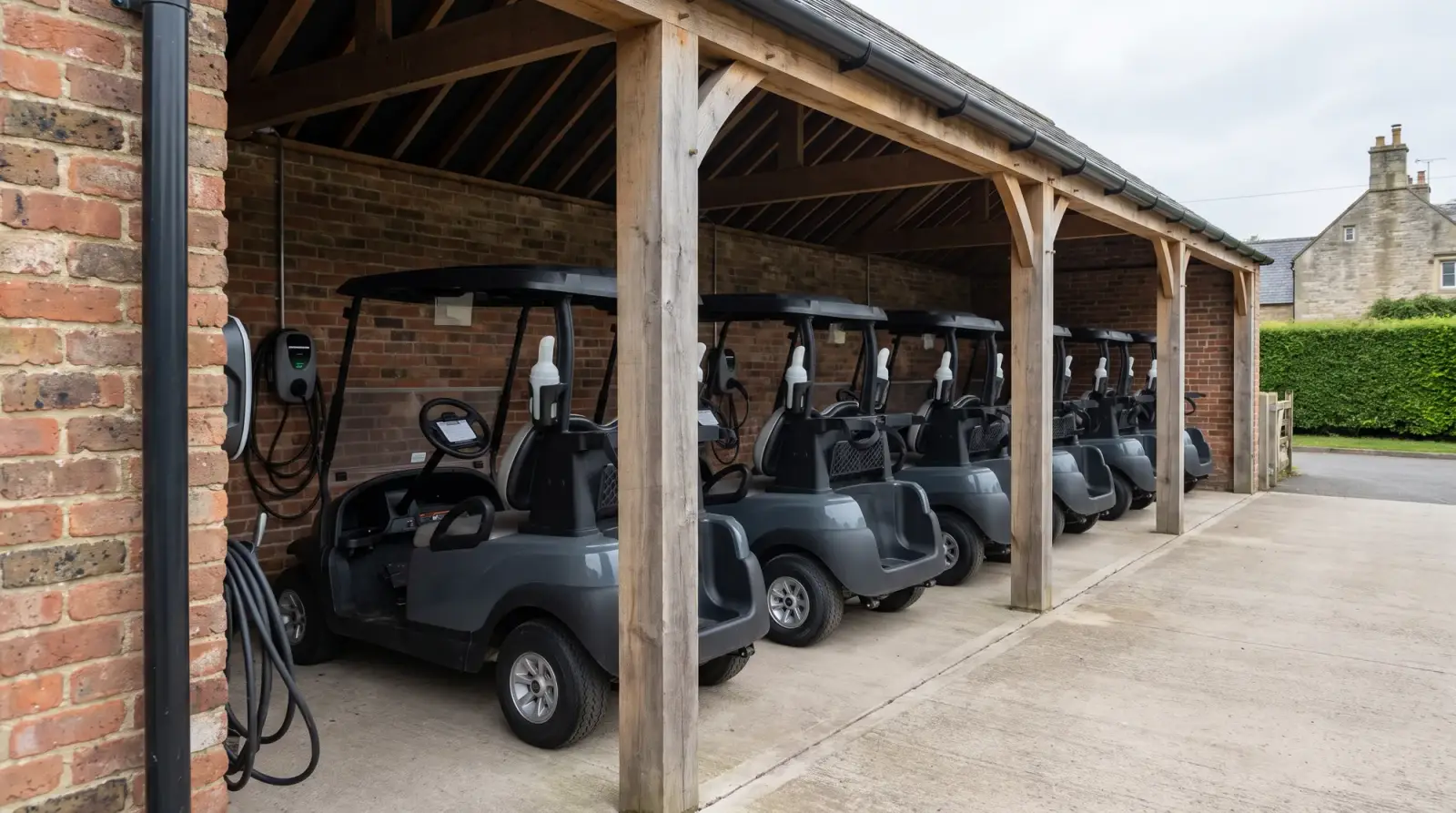
Yes, you can be prosecuted for drink driving a golf buggy in the UK. A buggy is a 'mechanically propelled vehicle' under the Road Traffic Act 1988, and the drink-driving offences in sections 4 and 5 apply on a road 'or other public place', which is a much wider net than most golfers realise.
That five-word phrase does most of the work. Courts have treated pub car parks, club car parks and event sites open to the public as public places, so you don't need to touch tarmac to commit the offence. Below, we set out where the legal line actually sits, the penalties (they're the same as in a car), and why clubs that serve beer at the halfway hut need a written position on the whole question.
- A golf buggy is a mechanically propelled vehicle under the Road Traffic Act 1988, so drink-driving law can apply to it.
- The offences cover any road 'or other public place'. Case law has treated club car parks and event sites the public can access as public places.
- Penalties match a car: a minimum 12-month driving ban, an unlimited fine, and imprisonment in serious cases. The ban applies to your ordinary licence.
- A strictly members-only course is more likely private land, but it's fact-specific, and clubs ban impaired buggy driving under their own rules regardless.
- This is general guidance, not legal advice. If you're facing an allegation, speak to a road traffic solicitor.
Is a golf buggy a motor vehicle in drink-driving law?
The Road Traffic Act 1988 uses two overlapping terms, and the difference matters here. Section 4 (driving while unfit through drink or drugs) applies to any 'mechanically propelled vehicle'. A golf buggy has a motor and propels itself, so it's squarely caught. Section 5 (driving over the prescribed alcohol limit, the breathalyser offence) applies to 'motor vehicles', defined as mechanically propelled vehicles 'intended or adapted for use on roads'.
Is a buggy intended for road use? Arguably not, and that's exactly the sort of point a defence solicitor would take. The courts apply a reasonable-observer test rather than the manufacturer's brochure, and the answer can vary with how the vehicle is actually equipped and used. But don't take comfort from the ambiguity. Section 4 catches buggies without any of that argument, and it carries the same core penalties. We cover the wider classification question in our guide to whether golf buggies are road legal in the UK.
What counts as a 'public place'?
The working test from the case law is whether the public in general has access to the place at the time, with or without payment, rather than access being limited to a specific class of people such as members and their guests. That's why pub car parks have repeatedly been held to be public places during opening hours. The same logic reaches golf club car parks that visitors can drive into, and event sites where anyone with a ticket can walk around.
- Likely status
- A road: offences clearly apply
- Why
- Any driving on a road counts, however short the hop between holes
- Likely status
- Likely a public place
- Why
- The public can access it at the material time, as with pub car parks
- Likely status
- Likely a public place
- Why
- The paying or invited public are on the land
- Likely status
- More likely private, but fact-specific
- Why
- Depends who can actually get on: guests, societies, footpath users all blur it
- Likely status
- Likely a public place
- Why
- Courts have treated ticketed sites open to the public as public places
| Likely status | Why | |
|---|---|---|
| Public road, even briefly crossing one | A road: offences clearly apply | Any driving on a road counts, however short the hop between holes |
| Club car park open to visitors | Likely a public place | The public can access it at the material time, as with pub car parks |
| Course during an open, pro-am or charity day | Likely a public place | The paying or invited public are on the land |
| Strictly members-only course, normal play | More likely private, but fact-specific | Depends who can actually get on: guests, societies, footpath users all blur it |
| Festival or event site with public tickets | Likely a public place | Courts have treated ticketed sites open to the public as public places |
Can you be done on the course itself?
This is where it gets properly fact-specific. A gated, strictly members-only course with no public access is more likely to be private land, where sections 4 and 5 don't reach. But very few UK courses are that pure. Visitor green fees, open competitions, societies, wedding guests at the clubhouse and public footpaths crossing the fairways all widen access, and each one strengthens the argument that the land is a public place at the relevant time. Prosecutions on courses are rare in practice. They are not impossible, and the car park between the 18th green and your car is the riskiest hundred metres of the day.
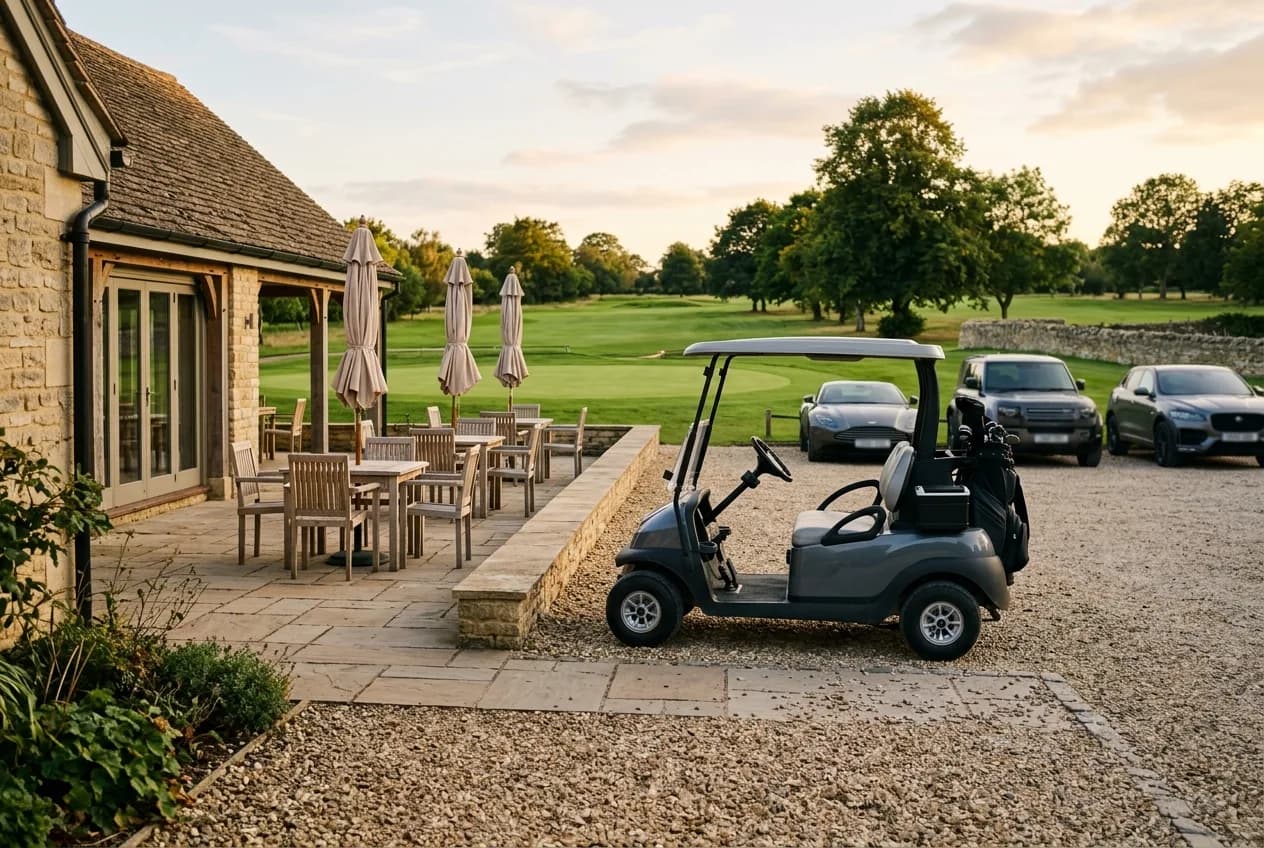
Remember too that criminal law is only one layer. Drive a buggy into someone after three pints and the civil claim will be against you and possibly the club, and any insurance in play may be voided by intoxication. Our guide to golf buggy accidents and liability covers who pays when it goes wrong.
What should clubs do about alcohol and buggies?
Most clubs sell alcohol mid-round, at the halfway hut or from a drinks buggy, and hand out buggy keys at the same pro shop counter. Those two facts need to be managed together. A sensible club position has three parts: buggy hire terms that expressly prohibit driving while impaired, staff who are backed by management when they refuse a key or take one back, and a line in the competition pack so societies hear it before the shotgun start.
None of this needs to be preachy. It's the same duty-of-care logic that stops the bar serving someone who's had too many. Clubs that put it in writing protect their members, their staff and their insurance position all at once. Our golf club buggy policy guide includes the clauses worth adopting word for word.
One more time for the record: this article is general guidance, not legal advice. The public-place question turns on precise facts, so if you or a member is facing an allegation, instruct a solicitor who handles road traffic law.
Frequently asked questions
Is a golf buggy a motor vehicle for drink-driving law?+
It's definitely a mechanically propelled vehicle, so the section 4 offence of driving while unfit applies. Whether it's also a 'motor vehicle' for the section 5 breathalyser offence is arguable, because that requires the vehicle to be intended or adapted for road use. Either route can end in prosecution.
Can you lose your licence for drink driving on private land?+
On genuinely private land the offences don't apply. But if the location counts as a road or public place at the time, a conviction carries a minimum 12-month ban on your ordinary driving licence, exactly as if you'd been in a car.
Is a golf course a public place?+
It depends on the facts. A strictly members-only course is more likely private, but visitor bookings, open events, societies and public footpaths can all make land a public place at the relevant time. Club car parks that visitors can enter are the most exposed area.
Can you drink alcohol while driving a buggy?+
There's no specific offence of holding a drink on private land, but driving while impaired is the offence that matters, and club rules almost always prohibit it anyway. If you're drinking through the round, let someone sober drive.
What do club rules usually say?+
Typical buggy hire terms prohibit driving under the influence, make the hirer liable for damage, and allow staff to withdraw the buggy without refund. Breach can also mean disciplinary action under the club's code of conduct.
Treat the buggy like your car from the moment you'd be over the limit, because the law largely does. And if you run a club, write the one-page policy this week rather than after the incident. It takes an hour and it's the cheapest insurance you'll ever arrange.
Specifying buggies for a club fleet?
Hawke supplies electric golf buggies and people movers to UK clubs with a 3-year warranty, 24-hour call-out and bespoke fleet colours. Browse the range and see what a modern fleet looks like.
Related solutions
Ready to explore what we build?
See the vehicles and the setting this applies to, or get a tailored quote built around your site.

Ready to find the right buggy?
Tell us how and where it will work and we will specify a vehicle and a tailored quote built around you. Every build comes with a 3-year warranty and a 24-hour priority call-out.
Our guides are written and reviewed by the Hawke Electric Vehicles team, the people who specify, build, deliver and support the vehicles. We focus on honest, practical advice and flag where a figure depends on the build rather than guessing.
More guides by Hawke