A golf buggy that used to last all day and now dies by lunchtime is one of the most common complaints we hear, and one of the most diagnosable. The pattern of the fade tells you most of what you need to know: a gradual decline over years is normal ageing, a sudden drop points to a failing cell or a connection, and a dip that arrived with the cold weather is usually not a fault at all. This guide works through the causes in order of likelihood, explains where lead-acid and lithium behave differently, and is honest about the point where replacing the pack beats nursing it.
- Cold weather cuts range in every battery; a winter dip is normal, not a fault.
- Gradual fade over years is ageing; a sudden drop deserves a battery health check.
- In a lead-acid pack, one bad cell drags the whole pack down fast.
- Leaving a pack flat between uses is the quickest way to shorten its life.
- When range no longer covers the day's work, replacement usually beats nursing.
First, rule out the buggy and the conditions
Before blaming the battery, make sure you are comparing like with like. A full buggy on soft, wet or hilly ground will always use more charge than one person on the flat, and under-inflated tyres quietly sap range every trip; set them to the pressure on the tyre wall, typically around 18 to 22 psi, and check both sides are even. Start each test from a genuinely full charge, because even slightly under full noticeably affects hills and range. If range is fine on the flat but poor on your usual route, the route may simply be the harder job.
Cold weather cuts range
Every battery gives less in the cold. Low temperatures slow the chemistry, so a pack that covers the job comfortably in summer can feel short in January, then recover in spring. This is normal behaviour rather than a fault, though lead-acid feels it more sharply than lithium. What winter does punish is a pack left standing partly discharged, which brings us to habits. Our winter care guide covers the seasonal routine in full.
An ageing pack fades; a bad cell falls off a cliff
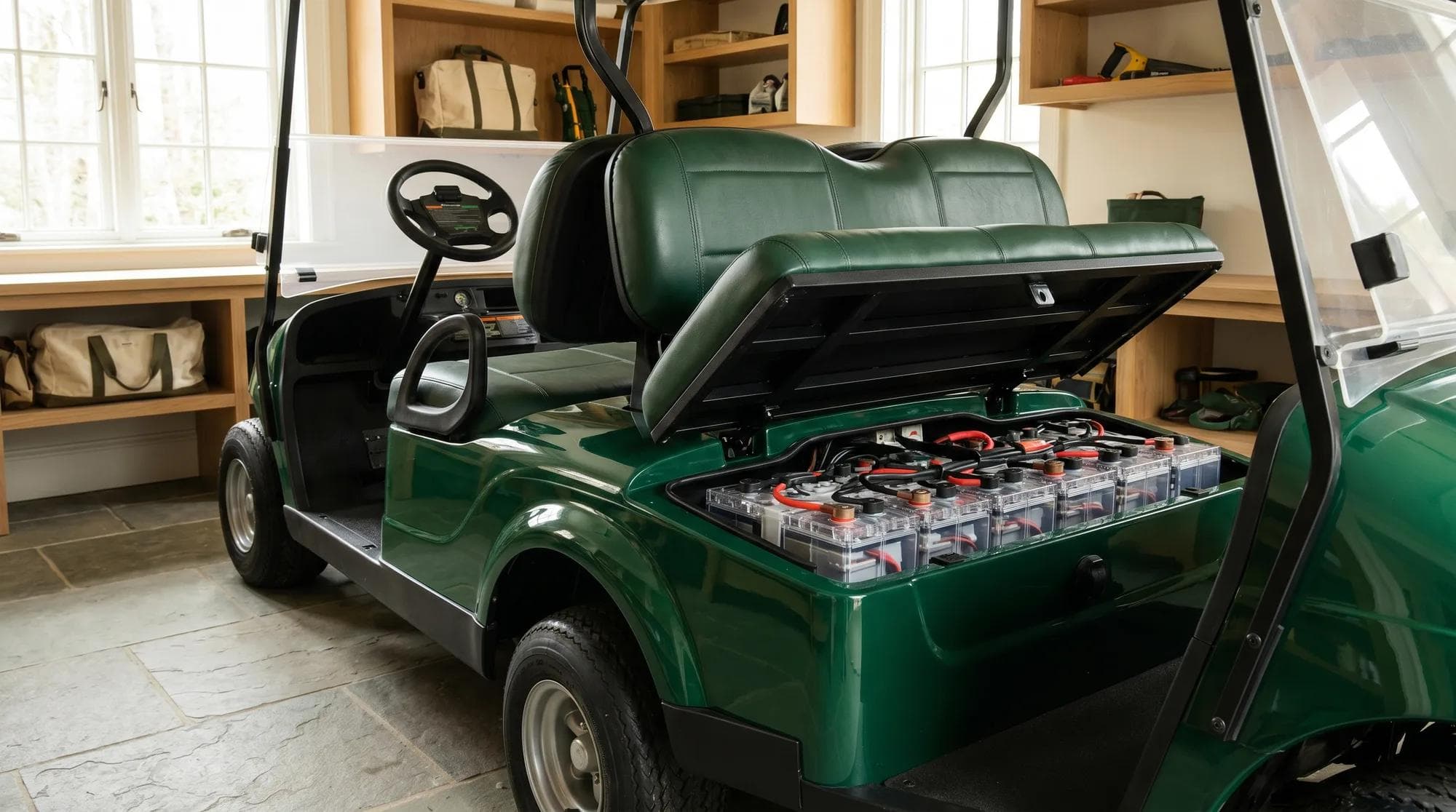
All packs lose capacity with age, and lead-acid ages faster than lithium. That decline is gradual and predictable. What is not gradual is a single failing cell: in a lead-acid pack made of batteries in series, one weak cell drags the entire pack down, so range can halve in weeks rather than years, and the buggy may die suddenly under load. A sharp, recent drop in range is the classic sign, and it is worth a professional battery health check rather than guesswork, because the fix may be one battery rather than a whole pack. Our guide on how long buggy batteries last sets out what normal ageing looks like.
Charging habits make or break a pack
The quickest way to shorten a battery's life is to leave it flat. Lead-acid in particular suffers permanent capacity loss when it stands discharged, so charge after every use day rather than waiting for it to run low, and keep the pack topped up through any layup. Always use the supplied charger, let a full charge finish rather than unplugging early, and charge somewhere dry and ventilated. Lithium is far more forgiving of irregular charging and holds its charge well when standing, but it still should not be left flat for long periods.
- Lead-acid
- Faster, steady fade
- Lithium
- Slower fade over more years
- Lead-acid
- Feels it sharply
- Lithium
- Better tolerance
- Lead-acid
- Permanent damage likely
- Lithium
- Protected, but still avoid
- Lead-acid
- Drags whole pack down
- Lithium
- BMS manages cells
| Lead-acid | Lithium | |
|---|---|---|
| Normal ageing | Faster, steady fade | Slower fade over more years |
| Cold weather | Feels it sharply | Better tolerance |
| Left standing flat | Permanent damage likely | Protected, but still avoid |
| Single bad cell | Drags whole pack down | BMS manages cells |
When replacement beats nursing
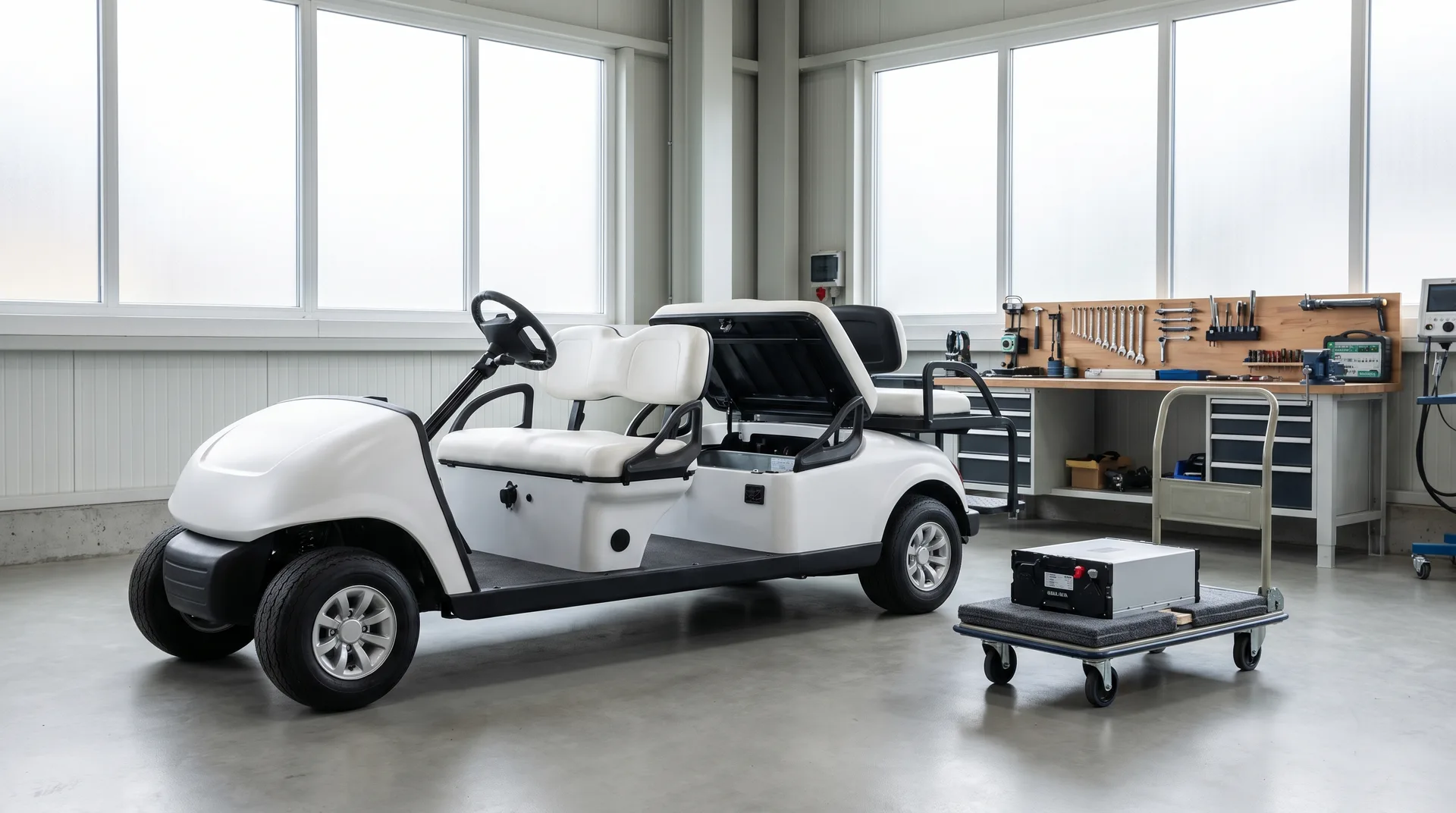
There is a point where topping up more often, trimming routes and hoping is costing more in downtime than a new pack would. If range no longer covers a normal day's work on a full charge, if the pack is several years old, or if one battery in a lead-acid set has failed and the rest are the same age, replacement is usually the sensible call, and it is often the moment to weigh a lithium upgrade. Owners searching for golf cart battery advice will find the same logic applies. Our guide to battery replacement costs in the UK covers what to expect.
Frequently asked questions
Why does my golf buggy battery die so fast?+
The usual causes, in order: cold weather, under-inflated tyres or heavier work, an ageing pack, a single failing cell, or a pack damaged by being left flat. The pattern matters: gradual fade is ageing, a sudden drop points to a cell or connection.
Is it normal for range to drop in winter?+
Yes. Every battery gives less in the cold, lead-acid especially, and performance recovers as it warms. What is not normal is a sharp drop that stays; that deserves a health check.
Can one bad battery ruin the whole pack?+
In a lead-acid pack, yes. The batteries work in series, so one weak cell drags the rest down and can halve range quickly. A load test identifies the culprit.
How do I make my battery last longer?+
Charge after every use day, never leave the pack standing flat, keep terminals clean and dry, keep tyres at the right pressure, and store the buggy charged and under cover through winter.
When should I replace rather than keep charging more often?+
When a full charge no longer covers the day's work, when the pack is several years old, or when cells are failing. At that point a new pack, often lithium, beats nursing the old one.
Range dropped suddenly?
Book a battery health check and we will load-test the pack, find any failing cell and give you an honest repair-or-replace answer.
Related solutions
Ready to explore what we build?
See the vehicles and the setting this applies to, or get a tailored quote built around your site.

Ready to find the right buggy?
Tell us how and where it will work and we will specify a vehicle and a tailored quote built around you. Every build comes with a 3-year warranty and a 24-hour priority call-out.
Our guides are written and reviewed by the Hawke Electric Vehicles team, the people who specify, build, deliver and support the vehicles. We focus on honest, practical advice and flag where a figure depends on the build rather than guessing.
More guides by Hawke