- There are really three choices: gas, electric with lead-acid batteries, and electric with lithium batteries.
- Gas offers long running between fill-ups but is noisy, smelly and needs the most maintenance.
- Electric is quiet, clean and cheaper to run; lithium is the most refined version of electric.
- Lithium charges faster, lasts more cycles, holds power as it drains and needs almost no maintenance.
- For most buyers today, electric lithium is the best all-round choice.
- The right answer still depends on your terrain, daily use and priorities, so match it to your real life.
When people say gas versus electric, there are really three choices to weigh: gas, electric with traditional lead-acid batteries, and electric with lithium batteries. Gas carts run for a long time between fill-ups and feel familiar, but they are noisy, produce fumes and need the most maintenance. Electric carts are quiet, clean and cheaper to run, and lithium is simply the most refined form of electric: faster charging, longer life, steadier power and almost no maintenance. For most buyers today, electric lithium is the best all-round choice. But the honest answer still depends on your terrain, how far you drive and what you value most, so this guide compares all three so you can decide with confidence.
We build premium custom carts to order around lithium, because it is what we would choose ourselves, but we will always be straight about the trade-offs. Below is a clear comparison across cost, range, maintenance and use. See the range and our guides, or request a tailored quote to talk through the right choice for you.
The three options at a glance
Here is how the three compare across the factors most buyers care about. No option is best at everything, which is why your priorities matter.
- Gas
- Loud
- Electric, lead-acid
- Quiet
- Electric, lithium
- Quiet
- Gas
- Fumes
- Electric, lead-acid
- None at use
- Electric, lithium
- None at use
- Gas
- Higher (fuel)
- Electric, lead-acid
- Lower
- Electric, lithium
- Lowest
- Gas
- Most
- Electric, lead-acid
- Moderate (battery care)
- Electric, lithium
- Least
- Gas
- Quick refuel
- Electric, lead-acid
- Slow charge
- Electric, lithium
- Faster charge
- Gas
- Steady
- Electric, lead-acid
- Fades
- Electric, lithium
- Stays strong
- Gas
- Heavier
- Electric, lead-acid
- Heaviest
- Electric, lithium
- Lightest
| Factor | Gas | Electric, lead-acid | Electric, lithium |
|---|---|---|---|
| Noise | Loud | Quiet | Quiet |
| Emissions | Fumes | None at use | None at use |
| Running cost | Higher (fuel) | Lower | Lowest |
| Maintenance | Most | Moderate (battery care) | Least |
| Charge / refuel | Quick refuel | Slow charge | Faster charge |
| Power as it drains | Steady | Fades | Stays strong |
| Weight | Heavier | Heaviest | Lightest |
Gas carts: the case and the catch
Gas carts have their fans, usually for long running and quick refuelling. But the trade-offs are real and grow over years of ownership.
- For: long range between fill-ups and a quick splash-and-go refuel.
- For: useful where charging is genuinely impractical.
- Against: noisy, which spoils the quiet many buyers want around homes and courses.
- Against: fumes and emissions, unwelcome in enclosed or residential settings.
- Against: the heaviest maintenance, with oil, filters, spark plugs and a fuel system to look after.
Electric: lead-acid vs lithium
If you choose electric, the next question is the battery, and this is where the experience really diverges. Lead-acid is the traditional, lower-cost route; lithium is the modern, refined one. Our deeper guide on lithium vs lead-acid batteries goes further, but here is the short version.
- Charging: lithium charges faster and tolerates partial top-ups; lead-acid is slower and prefers full cycles.
- Power delivery: lithium holds output as it drains; lead-acid fades noticeably towards the end.
- Lifespan: lithium lasts far more charge cycles, so it serves longer.
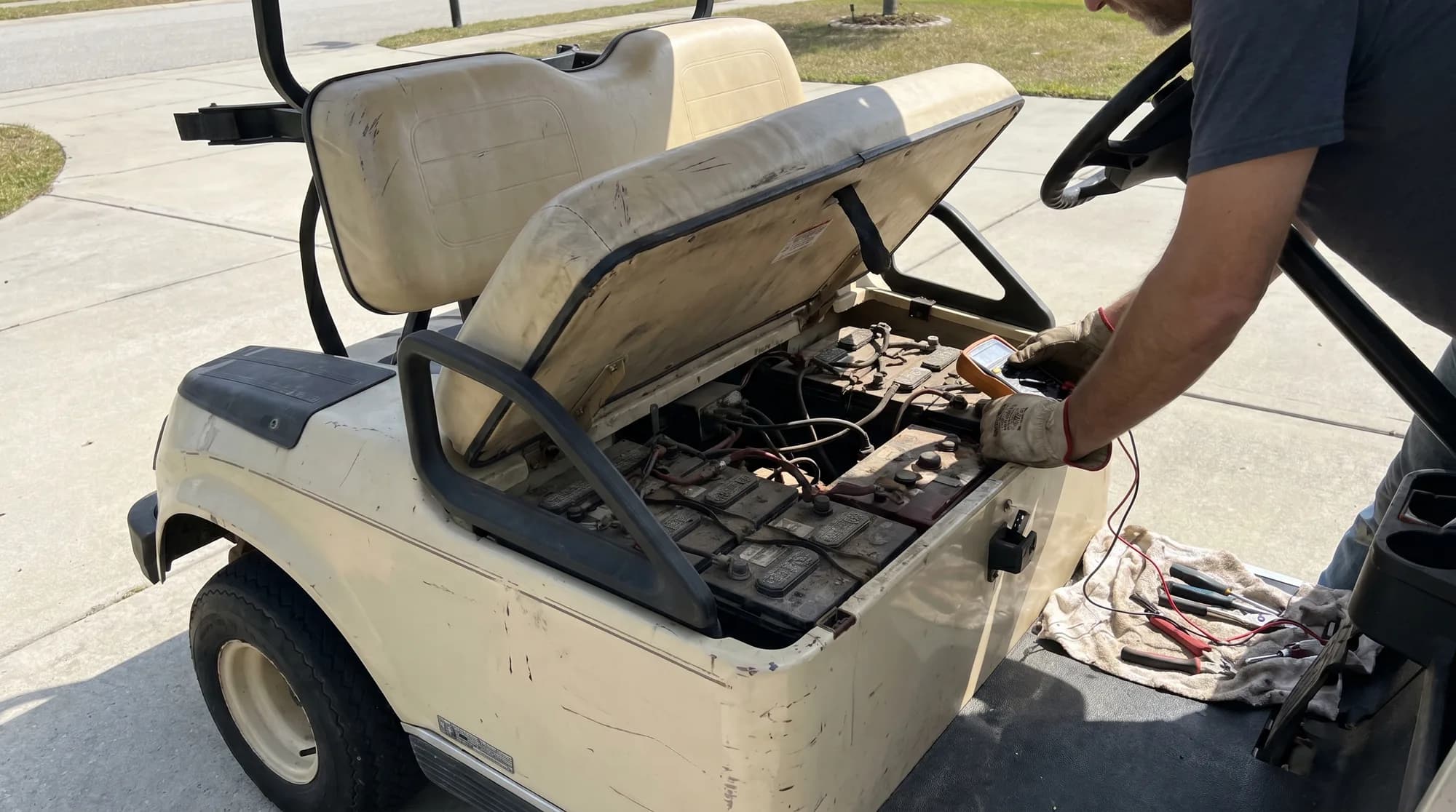
- Maintenance: lithium needs almost none; lead-acid needs regular care and sometimes watering.
- Weight: lithium is much lighter, which helps range and handling.
It is worth being honest about why the old reputation of electric carts persists. For years, electric meant lead-acid, and lead-acid carts really were slow to charge, faded as they drained and demanded regular battery care, so the gas-versus-electric debate genuinely had two strong sides. Lithium has changed that picture. A modern lithium cart charges faster, keeps its power to the end of the charge and asks almost nothing of you between rides, which removes most of the reasons people used to prefer gas. If your impression of electric carts was formed a decade ago, it is worth a fresh look.
Not sure which is right for you
Tell us your terrain, your daily distance and what you value most, quiet, low maintenance, long range, and we will recommend the right setup and put it in a tailored quote.
How to choose for your situation
The best choice is the one that fits your life, not the one that wins on paper. Work through these questions and the answer usually becomes clear.
- 01
Where will it be used
Homes, communities and courses reward quiet, clean electric carts. Remote sites with no power may lean towards gas.
- 02
How far each day
Match the battery to your real daily distance, with headroom for your hardest day.
- 03
What is the terrain
Hills and heavy loads need more capacity and the steady power lithium provides.
- 04
How much maintenance do you want
If you want to just use the cart, lithium electric is the low-effort choice.
- 05
What do you value most
Weigh quiet, running cost, refuel speed and upkeep, then pick the option that matches your priorities.
If you are weighing gas against electric specifically, our focused guide on electric vs gas golf carts digs into that head to head. And if you are considering a used cart of any type, run through our used cart checklist first, because battery condition is where used buyers get caught out.
Frequently asked questions
Is gas or electric better for a golf cart?+
For most buyers, electric, because it is quiet, clean and cheaper to run with less maintenance. Gas suits remote sites where charging is impractical and you want quick refuelling, but you accept noise, fumes and more upkeep.
Is lithium worth it over lead-acid?+
For most owners, yes. Lithium charges faster, lasts far more cycles, holds power as it drains and needs almost no maintenance. It is the most refined form of electric and fixes the classic complaints about older electric carts.
Which is cheapest to run?+
Electric, and lithium lowest of all once you count maintenance and battery life. Gas carries fuel costs and the heaviest service list. Running cost is only part of the picture, though, so weigh it against your other priorities.
Which option needs the least maintenance?+
Electric lithium. There is no engine to service and the battery needs little attention. Lead-acid electric needs regular battery care, and gas needs the most maintenance of all, with oil, filters and a fuel system.
How do I decide between the three?+
Match the choice to your use: where the cart runs, how far each day, your terrain and how much maintenance you want. For homes, communities and courses, electric lithium is usually the best all-round answer.

Ready to find the right buggy?
Tell us how and where it will work and we will specify a vehicle and a tailored quote built around you. Every build comes with a 3-year warranty and a 24-hour priority call-out.
Our guides are written and reviewed by the Hawke Electric Vehicles team, the people who specify, build, deliver and support the vehicles. We focus on honest, practical advice and flag where a figure depends on the build rather than guessing.
More guides by Hawke