- The battery is the biggest risk when buying used golf carts, check its age, type and real-world range carefully.
- Inspect the frame, brakes, steering, tires, motor and electrics in daylight, and always test drive.
- Ask for the cart's history, age, hours, how it was charged and stored, and any service records.
- Walk away from soft brakes, a tired battery sold as new, hidden corrosion or a seller who blocks a test drive.
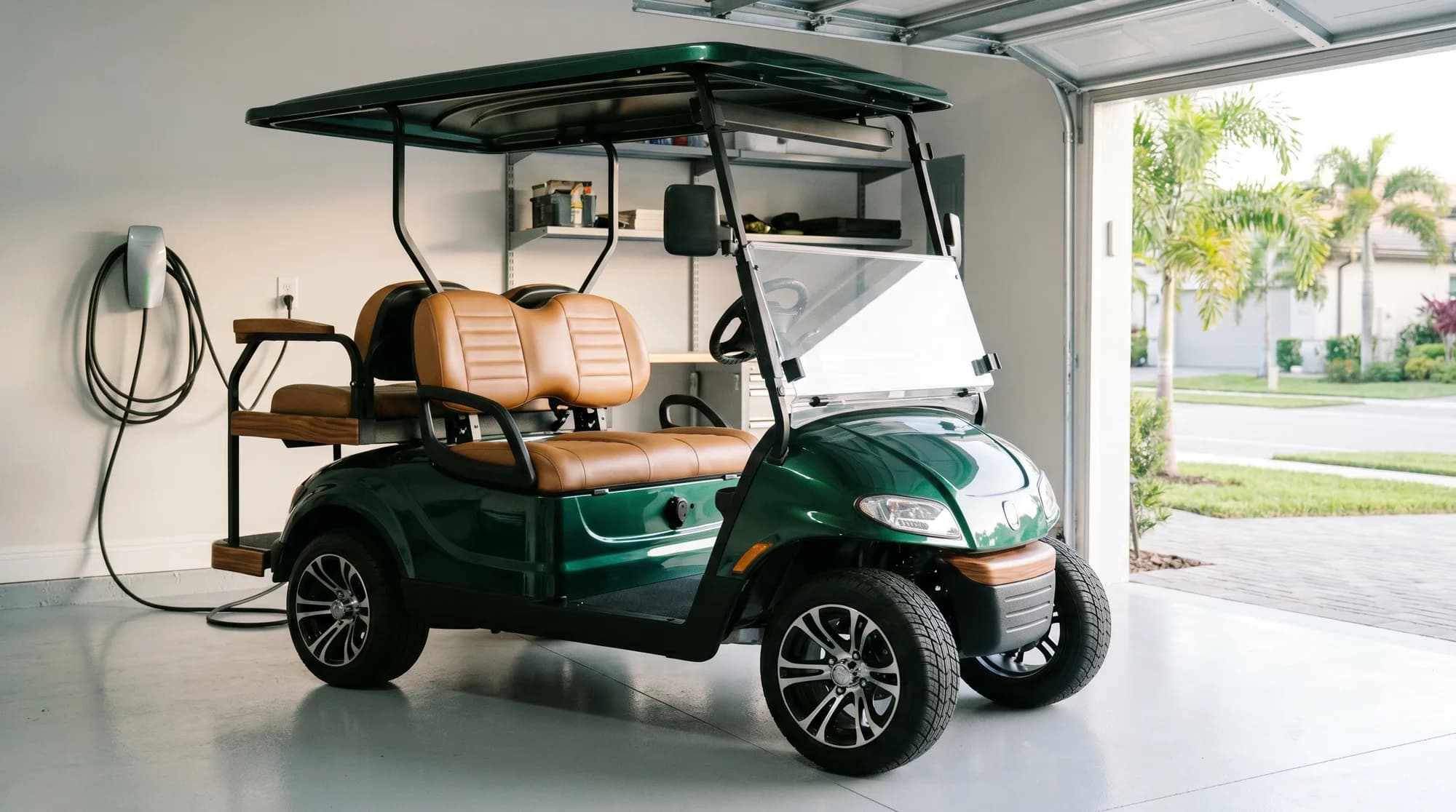
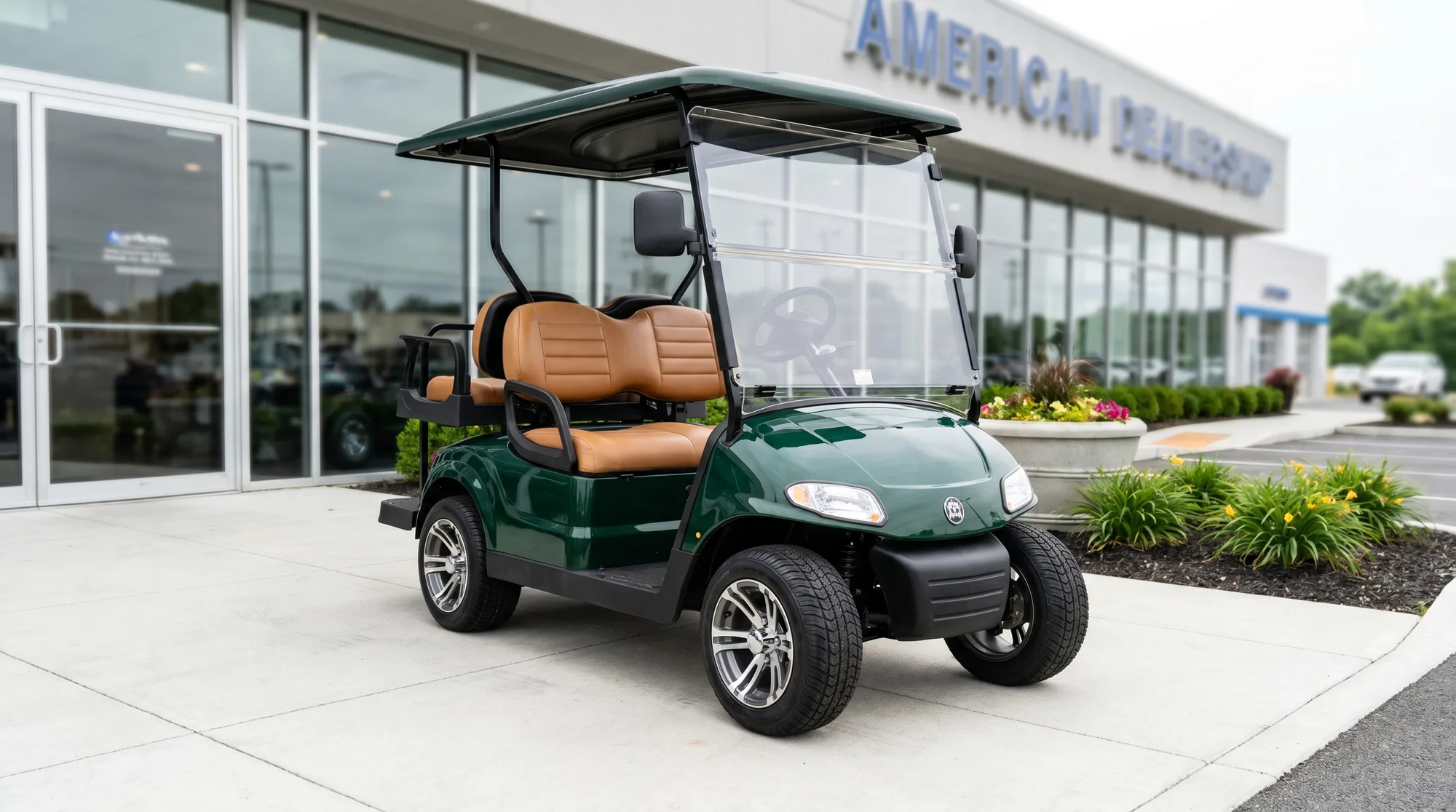
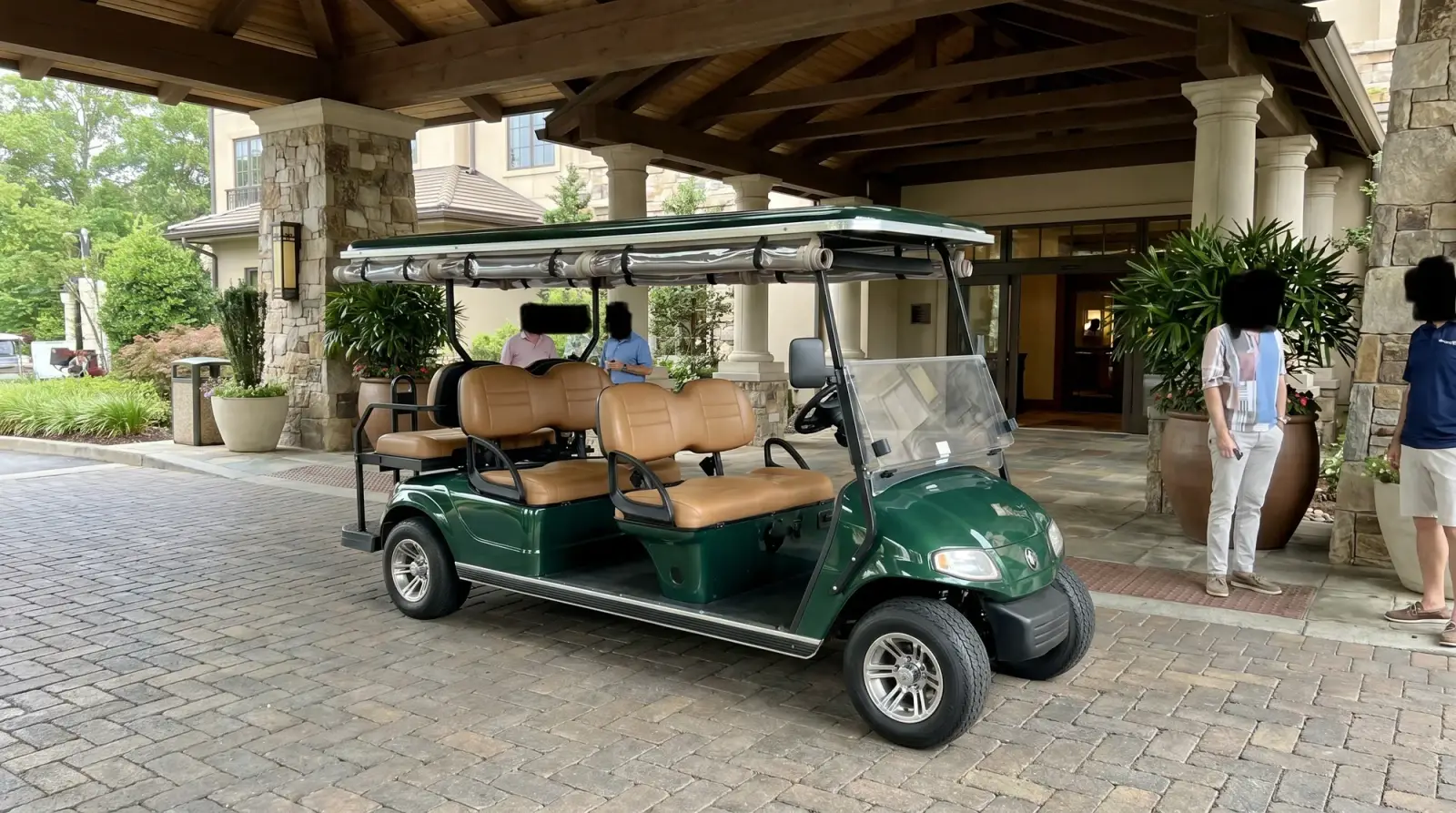
- Buying new and built to order avoids these risks entirely and comes with a 3-year warranty from Hawke.
Buying a used golf cart can be good value, but the single most important thing to check is the battery, because it is the most expensive part to replace and the easiest for a seller to gloss over. Beyond that, inspect the frame, brakes, steering, motor, tires and electrics, always take a test drive, and ask for the cart's history. This checklist walks you through it so you do not inherit someone else's problem.
Start with the battery, it is the big one
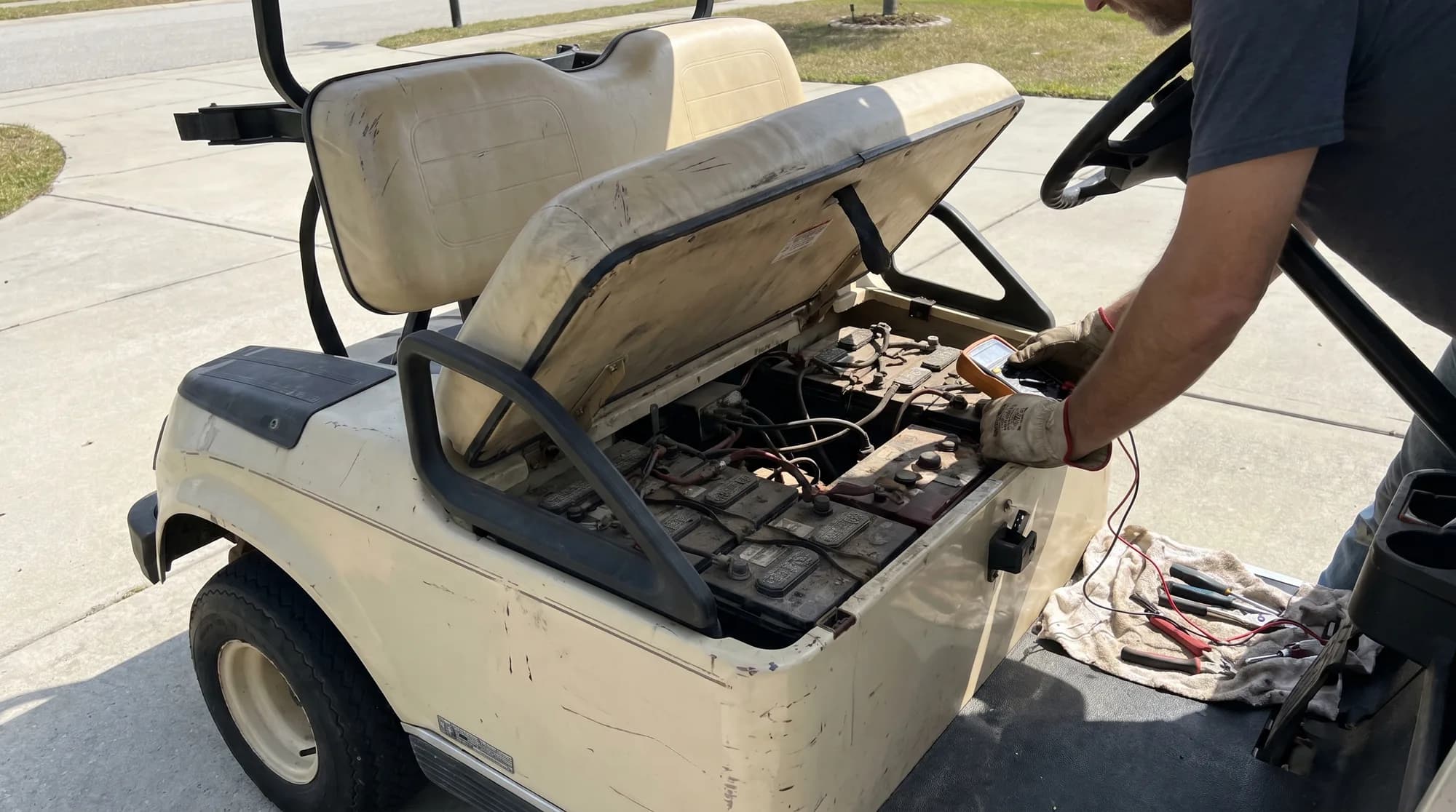
A worn battery can cost a large share of the cart's value to replace, so it deserves the most attention. Find out the battery type (lithium or lead-acid), its age, and how the cart was charged and stored. A tired pack shows up as poor range and weak hill performance. If the seller cannot tell you the battery's age or you cannot verify real range on a test drive, treat that as a serious unknown.
- Ask the battery type and age, lithium lasts far longer than lead-acid (see our battery comparison).
- Check for corrosion, swelling or, on lead-acid, low or dirty fluid.
- Test real range on the drive, not just that it switches on.
- Ask how it was charged and stored, neglect over winter ruins lead-acid (see how long batteries last).
Frame, body and corrosion
Look over the frame and underside in good light. Surface scuffs are normal; structural rust, cracked welds or bent components are not. Check that panels line up, the body is solid and there is no evidence of a hidden accident. A cart used near salt water or left outside for years can hide corrosion underneath a tidy-looking exterior.
Brakes, steering and tires
- Brakes: they should stop the cart firmly and evenly with no sponginess, grinding or pulling to one side.
- Steering: it should feel tight and responsive, with no excessive play or vibration.
- Tires: check tread, even wear and condition. Uneven wear can hint at alignment or suspension issues (see our tires and wheels guide).
- Suspension: listen and feel for knocks or clunks over bumps on the test drive.
Motor, electrics and controls
On the test drive, the motor should pull smoothly and quietly, with no hesitation, jerking or unusual whine, including on any incline. Check that all the electrics work: lights, indicators if fitted, horn, gauges and the charger. Intermittent faults are a warning sign, as electrical gremlins can be slow and expensive to track down.
Paperwork, history and the seller
- 01
Ask for the cart's age and hours
Know roughly how old it is and how heavily it has been used. Light use is generally kinder than years of daily fleet work.
- 02
Request service records
Any history of maintenance, battery replacement or repairs tells you how it was cared for.
- 03
Confirm ownership and any documents
Make sure the seller actually owns it and that any registration or paperwork is in order, especially for road or LSV use.
- 04
Check warranty status
Find out whether any warranty remains and whether it transfers. Most used carts come with none.
- 05
Insist on a test drive
A seller who will not let you drive it properly is hiding something. Never buy unseen and untested.
Prefer to skip the risk and buy new?
A built-to-order cart avoids every used-cart unknown, fresh lithium battery, your spec, your branding, and a 3-year warranty. Tell us what you need.
Used or new: an honest comparison
A good used cart can be sound value if it checks out and the battery has life left. But you take on unknowns, no warranty, possible hidden wear, and a battery that may need replacing sooner than you hope. Buying new and built to order costs more up front but removes the guesswork and gives you exactly the cart you want, backed by a warranty. If you do buy used, choosing a reputable seller matters, see choosing a golf cart dealer, and browse the range to compare against new.
Frequently asked questions
What should I check first on a used golf cart?+
The battery. It is the most expensive part to replace, so check its type and age, look for corrosion or swelling, and test real range on a proper drive rather than just confirming it powers on.
How do I know if a used golf cart battery is good?+
Ask its age and type, inspect for corrosion or swelling, and drive the cart far enough to see how it holds range and power. A pack charged just before you arrive can feel fine briefly then fade quickly.
What are the red flags when buying a used golf cart?+
Spongy or weak brakes, a seller who blocks a proper test drive, hidden corrosion or accident damage, intermittent electrical faults, and no history on the battery's age or how it was stored.
Is it better to buy a used or new golf cart?+
Used can be good value if it checks out, but you take on unknowns and usually no warranty. New, built to order, costs more up front but removes the guesswork and includes a warranty. It depends on budget and how long you will keep it.
Should I get a used golf cart inspected before buying?+
If you are not confident checking the battery, brakes and electrics yourself, an independent inspection is money well spent, especially on higher-value carts. At minimum, never buy without a full test drive.
Related solutions
Ready to explore what we build?
See the vehicles and the setting this applies to, or get a tailored quote built around your site.

Ready to find the right buggy?
Tell us how and where it will work and we will specify a vehicle and a tailored quote built around you. Every build comes with a 3-year warranty and a 24-hour priority call-out.
Our guides are written and reviewed by the Hawke Electric Vehicles team, the people who specify, build, deliver and support the vehicles. We focus on honest, practical advice and flag where a figure depends on the build rather than guessing.
More guides by Hawke